

Professional Trim Installation for Nokomis Homes
For Nokomis homeowners, professional trim installation in Nokomis, FL is a practical way to finish a renovation, replace worn details, or give an ordinary room a more intentional look. Trim is not just decoration: baseboards cover the floor-to-wall transition, door and window casing frames openings, and exterior trim helps create clean edges around visible parts of the home.
Finish carpentry can also add architectural character. Crown molding defines the wall-to-ceiling line, while wall paneling, feature walls, and custom applied molding turn a flat surface into a focal point. The right approach depends on the room's proportions, the condition of the walls and flooring, the profile and paint look you want, and whether the project is indoors or exposed to exterior moisture and weather.
A well-planned installation accounts for uneven walls, existing flooring heights, corners, and transitions so the finished work looks integrated rather than added on. Tight joints, thoughtfully handled returns, and trim that is prepared for paint make a visible difference in the final result. Exterior trim repair has a different purpose: replacing or restoring damaged details while addressing the exposure conditions at that location.
This page walks through the options for Nokomis homes, from practical replacement work to decorative upgrades. Homeowners looking beyond the immediate area can also explore service information for Venice and Sarasota County.
Baseboards, Window Casing, Door Casing, and Finish Details
Flooring changes often reveal the need for new baseboards. Baseboards run along the bottom of a wall, creating a finished edge where the wall meets the floor. They are commonly replaced after new flooring is installed, when an older profile looks dated, or when removed trim no longer fits the revised floor height. For baseboard installation in Nokomis, FL, the goal is a profile and height that suits the room while meeting the flooring cleanly without trying to disguise significant wall or floor problems.
Shoe molding and quarter round are smaller pieces installed at the baseboard-to-floor line. Shoe molding has a taller, narrower curve; quarter round has a more evenly rounded profile. Either can help cover a narrow, consistent edge at that transition, especially where flooring does not reach perfectly to the wall. It should look like a deliberate finish detail, not a bulky workaround for an oversized gap.
Window casing frames the perimeter of a window opening, while door casing surrounds a doorway and creates a visual transition from wall to jamb. Matching casing throughout a room can make a renovation feel cohesive; changing to a simpler or more substantial profile can update an older interior without altering the opening itself. A baseboard replacement in Nokomis may also be the right time to coordinate casing, so the floor line and openings share a consistent style.
The finish is decided in the fitting. Accurate measurements help keep reveals even around doors and windows. Clean miter joints at outside corners, carefully fitted inside corners, and returns where trim ends visibly prevent awkward raw edges. After fastening, small seams and nail holes are addressed with appropriate prep work, caulking, and paint-ready finishing. That attention is what makes interior trim installation in Nokomis look continuous across room edges rather than like a collection of separate pieces.
Crown Molding and Custom Architectural Trim
Crown molding changes the line where the wall meets the ceiling, giving the room a more deliberate top edge and helping the ceiling plane feel connected to the walls. It is different from decorative treatments installed lower on the wall: crown frames the room's perimeter overhead, while applied molding and panel layouts create detail across a wall surface. For crown molding in Nokomis, FL, the most successful choice usually relates to the room rather than competing with it.
Profile scale matters. A compact, uncomplicated crown profile can give a bedroom, condo room, or lower-ceiling space a crisp finished look without making the ceiling feel crowded. Taller rooms and more formal spaces may accommodate a deeper profile or a built-up design made from several pieces. Ornate patterns, however, can look visually heavy when nearby doors, cabinetry, and casing are simple. The practical takeaway is to choose a profile that echoes the home's existing lines and leaves the room feeling balanced.
Paint-grade trim is intended for a smooth painted finish, making it a natural choice when crown will match white walls, ceilings, or existing painted casing. Stain-grade wood is selected when the wood grain itself is meant to remain visible, so color, grain direction, and joint placement become part of the finished appearance. Custom trim in Nokomis, FL can also include ceiling beams, wrapped openings, picture-frame-style details, or tailored transitions that carry a design idea from one area into the next.
Corner work is especially noticeable at crown level. Inside corners need to meet tightly despite small wall variations, while outside corners should hold a clean, even line without a conspicuous opening. A careful trim carpenter in Nokomis, FL plans the layout, fits corners precisely, and uses returns at exposed ends so the molding looks finished from every viewing angle.
Wall Paneling, Feature Walls, and Decorative Molding
A wall treatment can make a blank dining room, entry, hallway, or bedroom feel deliberately composed without changing the room's footprint. Wainscoting places a finished panel treatment on the lower portion of the wall, often capped with a horizontal rail, for quieter definition around a room. Board and batten uses vertical strips over a wall surface to create a rhythmic grid; it reads bolder and is often chosen for an entry, stair wall, nursery, or dining area.
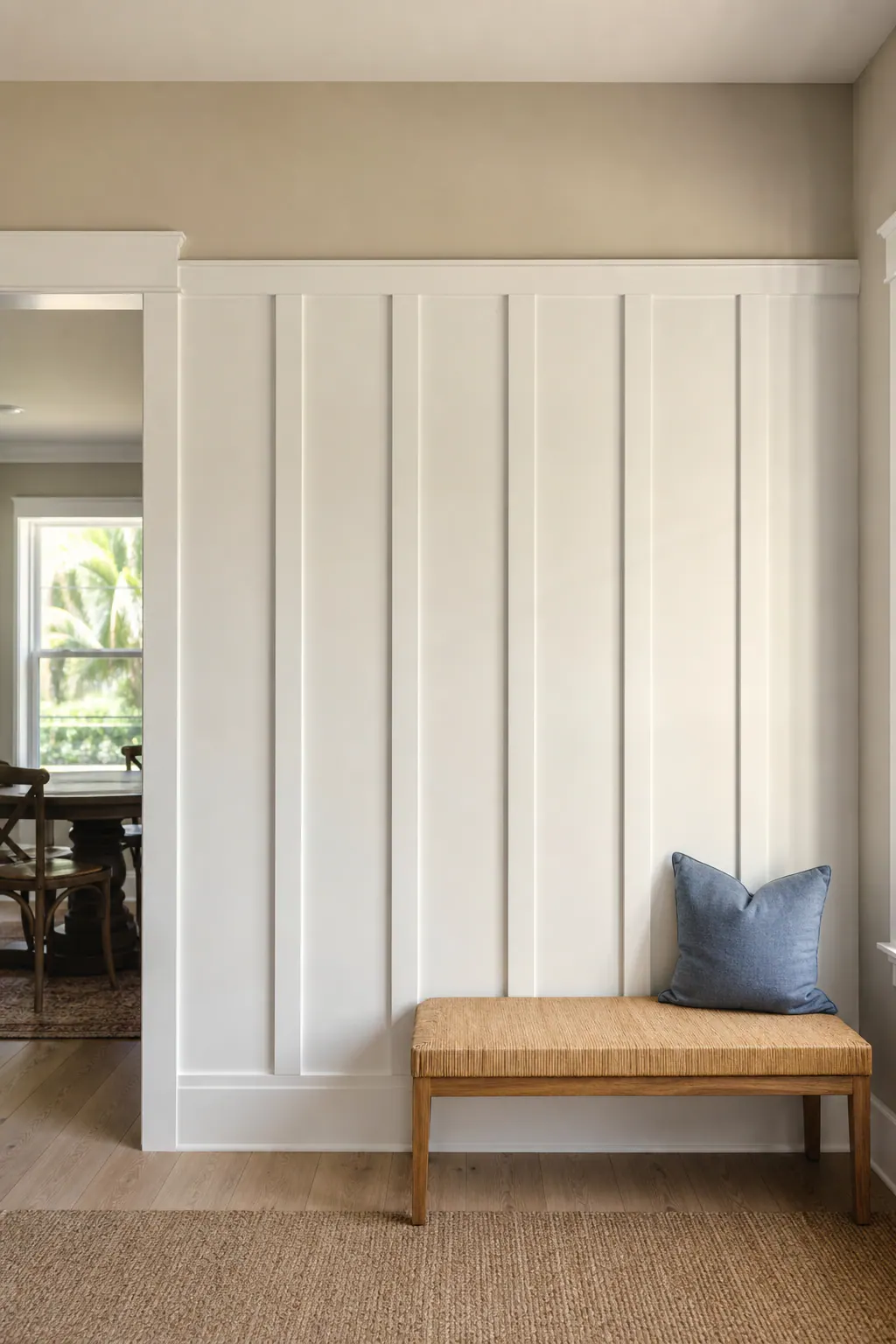
Shiplap-style treatments use horizontal boards or routed lines to create repeated courses across a wall. They can provide a relaxed, textured backdrop, while a painted accent wall relies on color rather than raised detail. For the strongest focal effect, homeowners may reserve paneling or shiplap for one fireplace wall, bed wall, or dining-room wall rather than carrying it through every space. Applied decorative molding offers another middle ground: slim rectangular or square frames can add tailored wall definition while leaving most of the wall surface open.
The choice comes down to visual presence. A low wainscot or restrained picture-frame molding can support existing furnishings and casing without taking over the room. Full-height board and batten, a dark painted feature wall, or a more pronounced panel pattern becomes the feature itself. Custom trim in Nokomis, FL should relate to nearby door casing, ceiling height, and the room's purpose, rather than introducing competing lines and proportions.
Layout planning is what keeps decorative work from looking crowded. Panels should be sized and spaced around doors and windows instead of ending in random narrow strips. Outlet covers, switches, return vents, and wall imperfections also affect where rails, battens, and seams can land. A measured layout can center a focal wall on a bed or fireplace, maintain balanced margins at each side, and make necessary interruptions appear intentional before finish carpentry begins.
Choosing Trim Materials for Interior and Exterior Locations
The material behind a crisp painted line affects both the look of the trim and where it makes sense to use it. For many interior baseboards, casing, crown, and applied wall details, paint-grade MDF offers a smooth, uniform surface with no visible grain to manage. It is often selected when the goal is a clean painted finish that matches existing white trim. Its wide range of ready-made profiles can also make it easier to keep a consistent look from room to room.
Wood is another interior option, particularly when a homeowner wants a stained or clear-coated finish that lets natural grain remain part of the design. It can also suit painted work when a project calls for a particular profile, a custom-sized piece, or a closer match to existing woodwork. The practical distinction is finish expectation: MDF is usually chosen to disappear under paint, while wood can become a visible design element. Either choice needs thoughtful placement; areas exposed to repeated moisture or leaks deserve more caution than a dry bedroom, living room, or hallway.
Exterior and otherwise exposed trim repair calls for a more location-specific decision. A piece near an opening, roof edge, corner, or other water-exposed area may involve different material choices than an interior casing replacement. The existing condition matters too: loose joints, failed paint, soft areas, gaps, and the path water may be taking all shape the repair plan. For finish trim installation in Nokomis, the useful takeaway is not that one material is always best, but that the proposed product and installation approach should suit the exact location, exposure, and manufacturer-designated use before work begins.
Exterior Trim Repair and Replacement in Nokomis
A cracked corner board or deteriorated window surround can make an otherwise tidy exterior look unfinished. Exterior trim repair in Nokomis may address visible details around doors and windows, outside corners, and fascia-adjacent edges where joints have opened, paint has broken down, or a section no longer sits firmly and evenly.
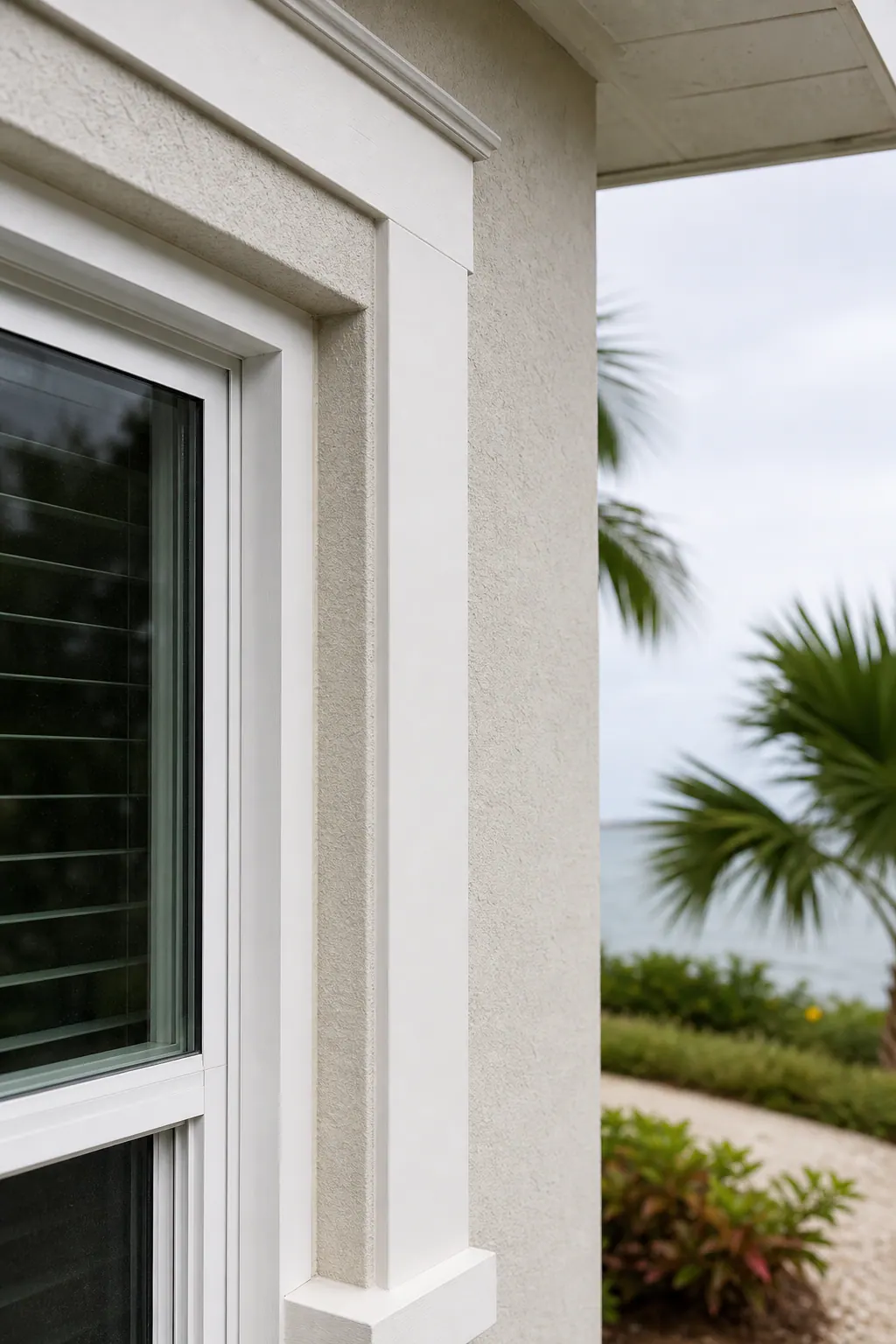
Localized repair is most practical when the affected area is limited and the adjoining trim remains stable enough to accept a cleanly fitted replacement piece. Broader replacement becomes the better-looking option when deterioration extends beyond one short section, neighboring pieces no longer provide a sound attachment point, or patching would leave mismatched lines, weak joints, or an uneven finished edge. The goal is not simply to cover a damaged spot, but to restore a detail that looks continuous from normal viewing distance.
An in-person look is the right starting point before selecting a scope or material approach. The assessment can compare the damaged section with nearby trim, examine seams and fastening locations, and determine whether surrounding areas can support a lasting repair. From there, Nokomis homeowners can receive a practical recommendation for a targeted repair or a more complete replacement with a paint-ready finish.
How to Start a Trim Project in Nokomis
Begin by choosing the exact room, wall, doorway, window, or exterior detail you want addressed and defining the outcome: repair visible damage, replace mismatched trim, finish a renovation, or add a decorative focal point. A few photos are useful, especially when they show the full area as well as corners, floor transitions, and nearby openings. If you have an inspiration image or a preferred profile, bring it along; it helps turn a general style preference into a workable layout.
A productive project conversation covers more than the trim itself. Share approximate dimensions, the type and height of existing flooring, noticeable wall irregularities, and whether adjacent flooring, painting, drywall, cabinetry, or electrical work is still planned. Explain whether the trim will be painted or stained: paint allows a unified color treatment, while stain keeps the material's grain visible and calls for closer visual matching. Also discuss access to the work area and the finish level you expect, from a straightforward replacement to detailed, paint-ready architectural work.
For an exterior detail or a home within a managed community, permit and HOA questions can depend on the specific property, scope, and association rules, so they should be resolved for that project rather than assumed.
Ready to plan trim installation in Nokomis, FL? Reach out to discuss your space and request an assessment for your Nokomis home, with service also available in Venice and nearby Sarasota County communities.
Plan the next step
Compare the broader Trim Installation service.
Review the Nokomis, FL service area for local planning context.
When you are ready, request a free estimate with the rooms, trim goals, city, and available photos.
FAQs
What types of trim can be installed in a Nokomis home?
Common interior options include baseboards, shoe molding, quarter round, window and door casing, crown molding, wainscoting, board and batten, shiplap-style paneling, and applied decorative molding. Exterior work can include repair or replacement of window surrounds, corner boards, door trim, and fascia-adjacent details.
What is the difference between crown molding and decorative wall molding?
Crown molding is installed at the wall-to-ceiling line to define the room’s upper perimeter. Decorative wall molding, including picture-frame layouts, wainscoting, and board and batten, adds detail across the wall surface or along its lower portion.
Can new baseboards be installed without replacing flooring?
Yes, new baseboards can be installed without replacing flooring when the existing floor edge allows a clean fit. Shoe molding or quarter round can cover a narrow, consistent gap between the baseboard and floor, but it should not be used to hide major wall or flooring problems.
Is MDF or wood better for baseboards in Florida?
Paint-grade MDF is well suited to dry interior rooms because it provides a smooth, uniform surface for painted baseboards, casing, and crown. Wood is a better choice when a stained or clear-coated grain finish is desired, while moisture-prone or exterior locations require materials selected for the exact exposure and manufacturer-designated use.
Can damaged exterior trim be repaired instead of replaced?
Localized exterior trim repair works when damage is limited and surrounding trim is stable enough to support a cleanly fitted replacement piece. Full replacement is the better option when deterioration extends beyond one section, attachment points are unsound, or patching would leave mismatched lines, weak joints, or uneven edges.