
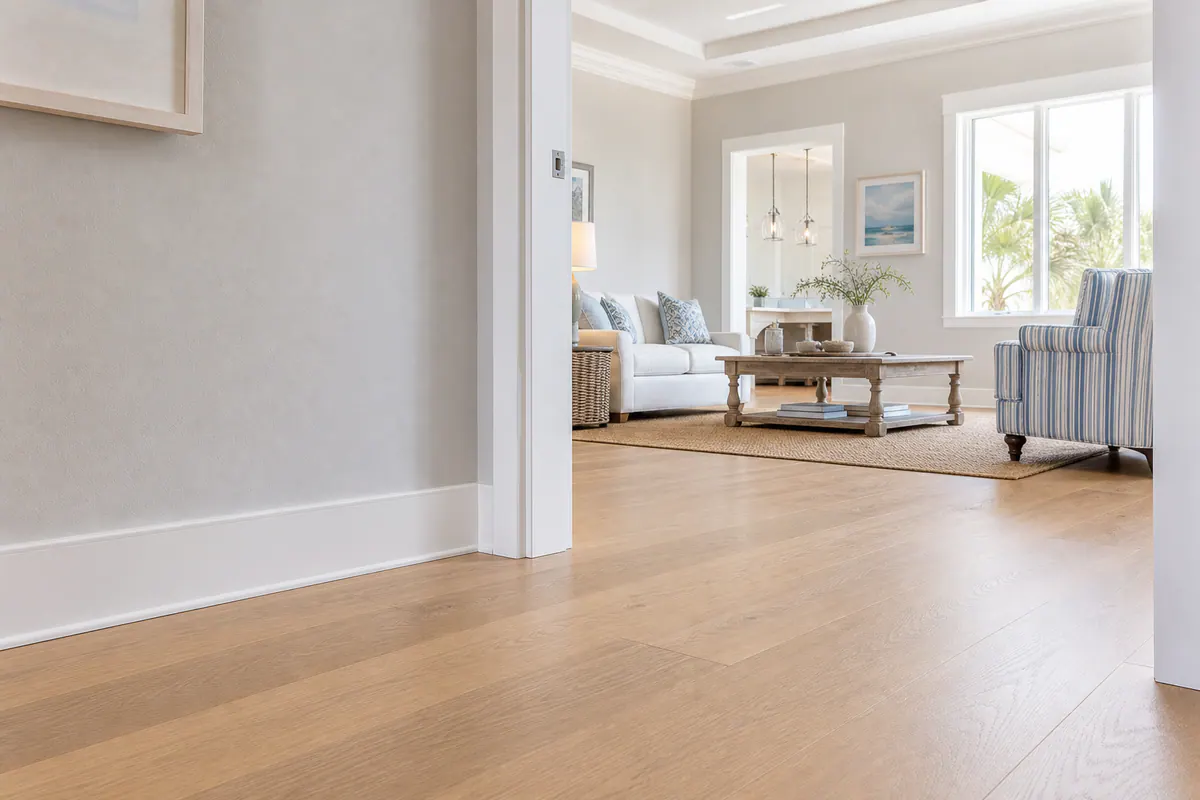
Baseboard Installation That Makes Rooms Look Complete
After new flooring goes in, the gap at the wall edge is often the detail that makes an otherwise updated room still look incomplete. Fresh baseboard trim covers that transition, frames the perimeter with a deliberate line, and can make scuffed, mismatched, swollen, or missing molding far less distracting. It is also a practical response to uneven wall edges and interiors whose older trim no longer suits the paint or overall style.
Professional baseboard installation is not simply fastening boards in place. The scope can include installing new trim, replacing dated runs, repairing localized damage, and preparing the finished surface with neatly treated joints, filled nail holes, controlled caulk lines, and paint. A strong finished result has consistent spacing and clean transitions; weak results often show open corners, irregular gaps, visible fasteners, or a wavy line where trim meets the wall.
For Sarasota County and Venice homes, updated baseboards can pull together a room with new flooring or a refreshed paint scheme without turning every interior surface into a full remodel. The work can be tailored to a whole-home style change, a single renovated room, or isolated areas where worn or damaged molding is distracting.
New Baseboards, Replacement, and Targeted Trim Repairs
A remodeled room with bare wall edges calls for new baseboards: trim can be selected to suit the new flooring, casing, and paint plan, then run continuously around the space for a unified finish. This is also the straightforward choice when a flooring change has left old molding too short, incomplete, or unrelated to the updated room.
Baseboard replacement makes more sense when the problem extends beyond one board. Outdated profiles, inconsistent heights from prior repairs, widespread dents, heavy paint buildup that softens the molding's detail, or repeated separation along multiple walls can make patching look like a series of compromises. Swollen edges, severe splits, and trim affected by recurring water exposure are also poor candidates for cosmetic repair; replacing the affected run creates a cleaner, more consistent line.
Targeted trim repairs are useful when damage is truly local, a gouge near a doorway, one cracked outside corner, or a short section removed for another repair, and the existing profile can still be matched. Matching means more than finding a similar shape: the new piece should relate to the existing height, material, finish, and paint color so it does not stand out after installation. A practical assessment separates repairable sections from room-wide condition or style issues, helping Sarasota County homeowners choose baseboard installation services that fit the actual scope rather than automatically replacing everything.
Choosing Heights, Profiles, and a Style That Fits the Home
The profile chosen for a replacement or upgrade sets the room's visual tone before paint color or furnishings enter the picture. Height is the first decision: a standard-height baseboard keeps the wall-to-floor transition understated, while tall baseboards create a more deliberate architectural border. Taller trim can give a room with higher ceilings or substantial door casing more presence, but an oversized board in a compact room with narrow casing can make the lower wall feel visually heavy.
Modern flat-stock baseboards are simple rectangular boards with little or no routed detail. Their clean face and crisp top edge suit contemporary interiors, wide-plank flooring, and streamlined casing. They are also a useful choice when the goal is to simplify a mix of older trim rather than reproduce it. The important visual checkpoint is alignment: flat stock looks intentional when its height and thickness relate to adjacent door and window trim, not when it appears to stop short of or overpower those elements.
Traditional decorative profiles add shaped detail along the top edge or face of the board. Colonial, stepped, and other contoured styles introduce shadow lines that work well beside existing detailed casing, paneled doors, or more classic architectural features. They can make a formal room feel cohesive, but combining an ornate baseboard with plain, minimal casing can look accidental unless the entire trim scheme is being intentionally updated.
- Choose a standard height when the room is modest in scale or existing trim is narrow and restrained.
- Consider tall baseboards when ceiling height, wider casing, and the desired level of detail support a stronger perimeter line.
- Use samples against the wall, flooring, and casing to compare the profile's shadows, width, and visual weight before committing to a full run.
A thoughtful baseboard installation considers these relationships room by room, especially where an addition, renovated space, or prior update has introduced different casing or millwork. The aim is not to make every room identical; it is to make each transition look purposeful.
Materials and Trim Accessories for Floors, Walls, and Moisture Conditions
Material choice affects both the look of the trim and how forgiving it will be in the room where it is installed. MDF baseboards are a common painted option because their smooth, uniform face supports a clean painted finish and is available in many familiar profiles. They suit dry interior spaces where a crisp, consistent appearance is the priority, but areas showing repeated moisture exposure or prior swelling call for a closer look at the source of the problem before new trim is selected.
Wood baseboards offer natural grain and can be painted or stained, making them useful when surrounding casing, doors, or architectural details have a wood finish worth continuing. Wood also gives a solid edge at active doorways and other areas prone to bumps, though its natural variation should fit the desired finish rather than be treated as a flaw. PVC trim is a practical consideration for locations where moisture is a persistent design concern; its smooth, paint-ready appearance can coordinate with painted trim, although its available profiles and visual character may differ from wood or MDF.
Shoe molding and quarter round are small floor-edge pieces, but they solve different visual problems. Either can cover a necessary perimeter gap beside flooring or soften an irregular transition where the floor and wall do not meet evenly. Shoe molding has a narrower, more flexible-looking profile; quarter round has a fuller, rounder face. Neither is an automatic add-on: on a clean floor edge, extra molding can create unnecessary bulk. The best choice follows the flooring, the baseboard thickness, and the room's overall trim language.
What Professional Baseboard Installation Involves
The difference often shows up before the first piece is set in place. A professional assessment looks at wall flatness, changes in floor level, door casing relationships, room transitions, and visible damage that may affect how the trim meets the room. It also establishes whether the scope includes removal and disposal of old baseboards, minor surface preparation, new trim installation, and later finish work.
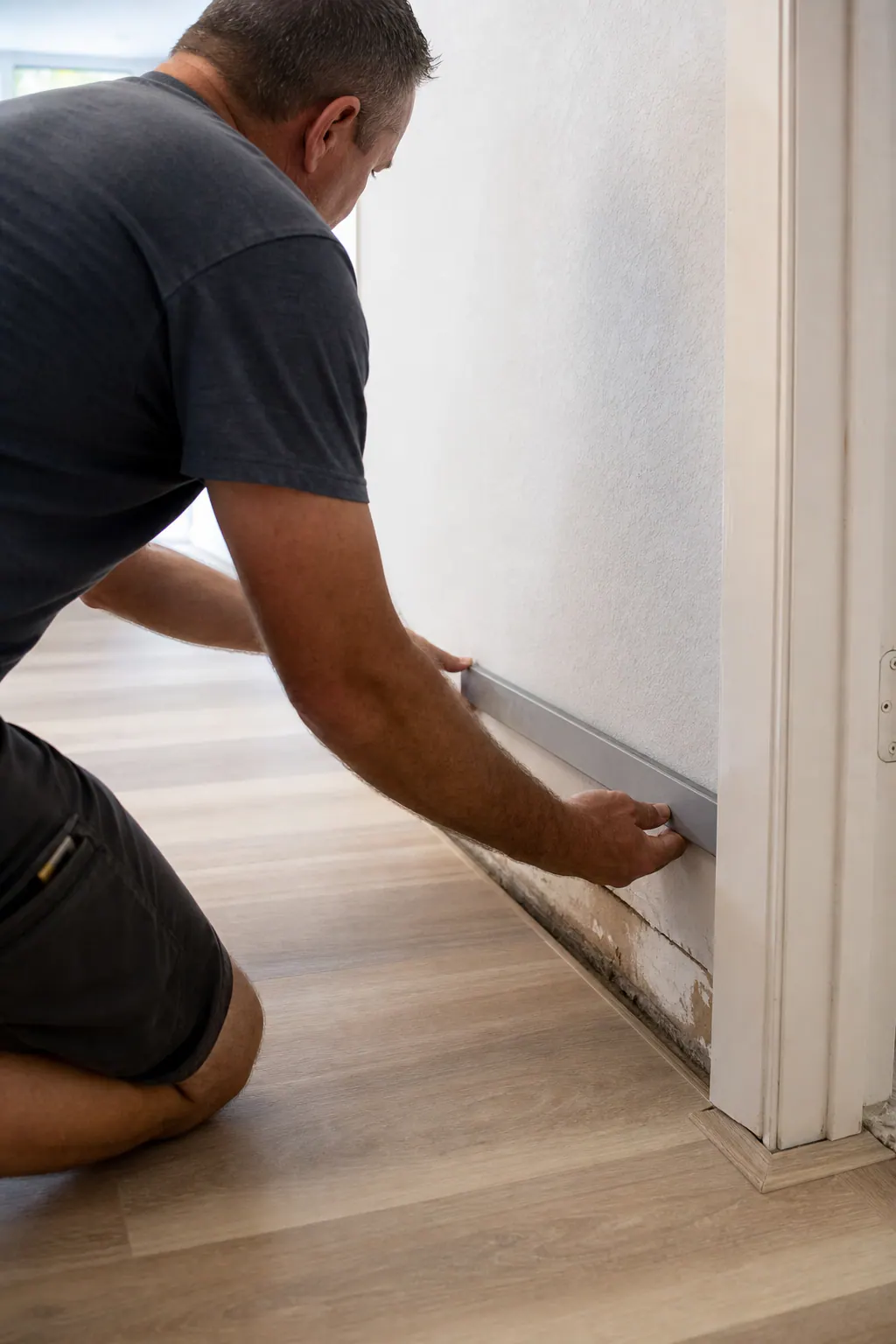
For baseboard installation, runs are measured and planned around doorways, returns, closets, and adjoining rooms so the layout reads as intentional rather than pieced together. Existing walls rarely provide a perfectly straight surface. A scribe fit is a shaped edge cut to follow a wall's contour, allowing the baseboard to sit closer to an uneven wall instead of leaving a distracting shadow line.
Corner treatment matters just as much. Inside corners are often coped, meaning one profile is cut to nest against the face of the adjoining piece; this can produce a tighter-looking joint than relying on two angled cuts alone. Outside corners require clean, properly aligned miters because their exposed edge catches the eye and is vulnerable to separation. Consistent alignment where baseboard meets casing, along with secure fastening that holds each run in position, helps the room keep a continuous visual line.
Flooring deserves equal attention. A perimeter gap may be needed at some floor types, while an irregular edge may call for a carefully chosen accessory rather than forcing the baseboard down to hide every variation. The goal is a clean transition that respects the floor's movement needs without adding unnecessary trim.
After installation, the trim is ready for the detail work that makes joints and fasteners recede visually. Existing drywall damage, loose flooring, hidden conditions behind removed molding, and walls that vary more than expected can change the preparation or repair needed before the final finish is applied.
Caulking, Nail-Hole Filling, Finishing, and Painting
A tight fit still needs a finish plan. On paint-grade trim, filled nail holes, prepared seams, and a controlled bead of caulk turn separate boards and fasteners into a continuous painted surface. The finished checkpoint is simple: holes do not telegraph through the paint, joints read cleanly, and coverage looks even from one run to the next.
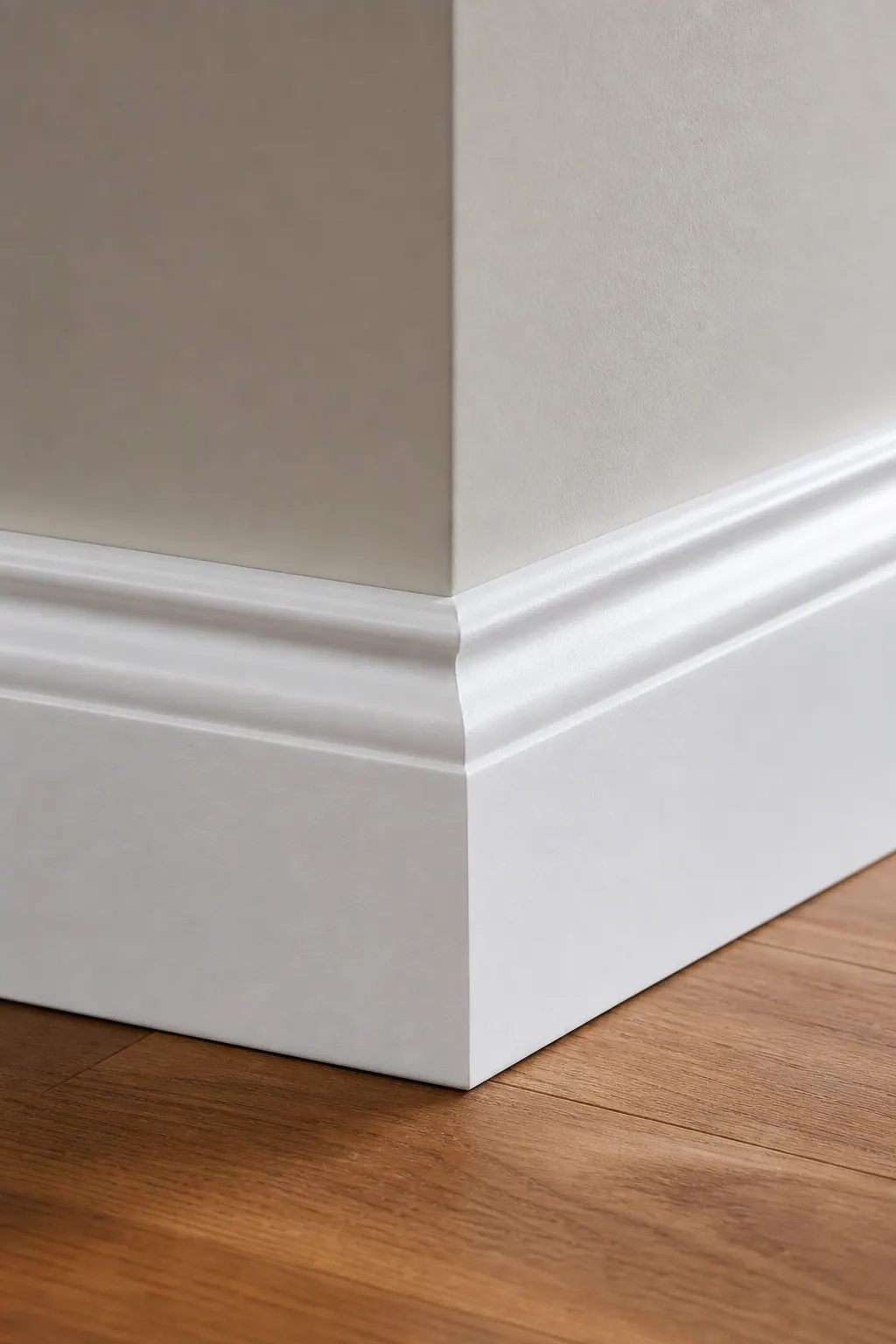
Caulking belongs at the wall-to-trim joint when a small, stable gap would otherwise create a dark line. It refines minor irregularities; it is not a remedy for a bowed wall, a shifting floor, loose trim, damaged drywall, or a moisture-related condition. Larger or changing gaps should be addressed at their cause before finish work attempts to disguise them.
Paint-grade baseboards are intended to receive this surface preparation and paint system, allowing filled seams and minor repairs to blend into a uniform color. Stain-grade wood is different: its grain and natural color remain visible, so filler, joint treatment, and sheen need to be selected to match the surrounding millwork rather than covered with opaque paint. A clear decision early on, paint, stain, or match existing woodwork, keeps the finish from looking improvised.
Careful caulking and painting are the details that let precise installation show. Clean, narrow caulk lines and smooth paint make the trim look integrated with the wall; smeared caulk, visible nail holes, rough seams, or uneven sheen draw attention back to every joint.
Planning Baseboard Work for Sarasota County Homes
Room conditions often determine whether a straightforward trim update stays straightforward. In moisture-prone areas, signs of past leaks, softened drywall, staining, or swelling at the lower wall change the conversation from covering an edge to addressing what the new baseboard will meet. A sound, dry surface may support a simple replacement; active-looking damage or loose wall material may call for repair and preparation before new trim and paint can look consistent.
Floor details matter just as much. A slab-floor transition, an uneven perimeter, or recently installed flooring can leave gaps that affect the baseboard height, its bottom edge, and whether a small accessory trim creates a cleaner transition. Shoe molding can provide a lighter finishing line, while quarter round has a fuller curve and more visual presence. Neither should be treated as an automatic add-on when the floor-to-wall relationship already reads neatly.
Older Sarasota County interiors may also have patched walls, layers of prior paint, mismatched casing, or trim that has been altered room by room. A site review lets a baseboard installer in Venice, FL assess those details alongside the preferred profile and finish: retain and repair a matchable section, replace an inconsistent run, or establish a deliberate new trim standard. The result is a scope based on the home's actual walls, floors, exposure history, and visual goals, not a one-size-fits-all material or installation approach.
Request a Baseboard Installation Consultation
Ready to define the scope? Request a Sarasota County baseboard installation consultation and share photos of each room, the approximate number of rooms or wall runs, and whether flooring is staying, being replaced, or newly installed. Include the trim direction you prefer, tall, flat-stock, traditional, repaired, or replaced, plus any need for shoe molding, caulking, and painting. Photos of casing, corners, floor gaps, and damaged areas help shape a practical plan and the desired paint color and sheen complete the finish conversation.
Plan the next step
Compare the broader Baseboard Installation service.
When you are ready, request a free estimate with the rooms, trim goals, city, and available photos.
FAQs
Can damaged baseboards be repaired instead of replaced?
Localized damage such as a single gouge, cracked outside corner, or short missing section can be repaired when the existing profile, height, material, finish, and paint color can be matched. Replace a full run when there are widespread dents, inconsistent heights, severe splits, swelling, heavy paint buildup, or repeated moisture exposure.
What is the difference between shoe molding and quarter round?
Shoe molding has a narrower, more flexible-looking profile, while quarter round has a fuller, rounder face. Both can cover a flooring perimeter gap or irregular floor-to-wall transition, but neither is needed when the floor edge already looks clean.
Do new baseboards need to be caulked and painted?
Paint-grade baseboards need filled nail holes, prepared seams, controlled caulk lines at small stable wall-to-trim gaps, and paint for a continuous finish. Caulk should not be used to hide bowed walls, loose trim, shifting floors, damaged drywall, or moisture-related damage.
How do I choose between modern flat baseboards and traditional profiles?
Choose modern flat-stock baseboards for contemporary interiors, wide-plank flooring, and streamlined casing because their rectangular face has little or no routed detail. Choose traditional Colonial, stepped, or contoured profiles when the home has detailed casing, paneled doors, or classic architectural features.
Are MDF baseboards a good choice for Florida homes?
MDF is a good painted baseboard option for dry interior spaces because it has a smooth, uniform face and comes in many familiar profiles. For areas with repeated moisture exposure, swelling, stains, or softened drywall, address the moisture source first and consider PVC trim for persistent moisture concerns.