

Trim Installation and Finish Carpentry for Englewood Homes
Trim installation in Englewood, FL can cover the small details that make a remodel feel complete as well as the exterior pieces that need attention after weather exposure. Interior finish carpentry includes baseboards at the wall-to-floor transition, door and window casing that frames openings, crown molding at the ceiling line, and custom touches such as bench trim, built-in surrounds, and tailored shelving details.
Decorative wall work offers a different kind of upgrade: board-and-batten adds vertical rhythm, picture-frame molding creates formal panels, and shiplap-style paneling gives a more relaxed texture. The right choice depends on the room's scale and the look of the surrounding home, not simply on choosing the most detailed profile.
Material and installation details matter in Florida conditions. MDF can provide a smooth, paint-ready interior profile in dry spaces, while solid wood suits stained or more traditional details. PVC is often a practical exterior option where repeated moisture is a concern. Near the coast, seasonal humidity, strong sun, and salt-laden air make properly sealed joints, sound flashing transitions, and durable exterior materials especially important.
Exterior trim repair may be appropriate for isolated damaged boards or failed caulk lines. Soft wood, recurring staining, widespread rot, pest activity, or damage extending behind the trim calls for a closer look before cosmetic replacement. Finish carpentry in Englewood, FL should leave clean transitions and a finished appearance without hiding an unresolved moisture problem.
Baseboards, Casing, and Interior Trim That Fit the Room
A coordinated trim package gives each room a clear edge and keeps new flooring, painted walls, doors, and windows from looking like separate projects. Baseboards protect and finish the wall-to-floor line; a simple 3¼-inch to 4¼-inch profile often suits compact condos and casual coastal cottages, while 5¼-inch or taller boards can give ranch homes and updated rooms with higher ceilings a more deliberate, finished proportion. Flat stock with a small eased edge reads clean and current, whereas a stepped or ogee profile brings more traditional detail.
Shoe molding and quarter round are narrow pieces installed at the baseboard's lower edge, but they create different looks. Shoe molding is taller than it is deep and has a softer, less bulky profile; quarter round is a true quarter-circle and projects farther into the room. Either can cover a small flooring-edge gap left for expansion or conceal an uneven cut along an existing floor. It is especially useful when replacing baseboards without removing finished flooring, although a room with crisp new floors may look cleaner with baseboards sized and installed to stand on their own.
Door and window casing frame openings, hide the joint where wall finish meets the jamb, and establish a visual rhythm from room to room. Narrow, square-edged casing works well in streamlined interiors, while wider backbanded or more shaped casing can complement an older ranch or cottage character. For baseboard installation in Englewood homes, the strongest result comes from matching casing thickness and baseboard transitions rather than ending one abruptly against the other.
Interior trim installation is judged in the close-up details: consistent reveal lines around jambs, tight miters at outside corners, clean coped or tightly fitted inside corners, and smooth caulk lines where trim meets the wall. Gaps that are simply filled can telegraph through paint; well-fitted joints, controlled caulk, filled nail holes, and a sanded, paint-ready surface make the finished lines look intentional instead of patched together.
Choosing MDF, Wood, or PVC Trim for Florida Conditions
Material choice starts with where the trim will live, not just the profile you want. MDF trim gives painted baseboards, casing, and wall details a smooth, uniform face and can be a sensible fit in dry, climate-controlled bedrooms, living rooms, and hallways. Its weak fit is anywhere that repeatedly gets wet: an unprotected bath vanity toe-kick, a laundry-area wall with splash exposure, or exterior use. A small spill is one thing; recurring moisture at an edge or joint is the condition to plan around.
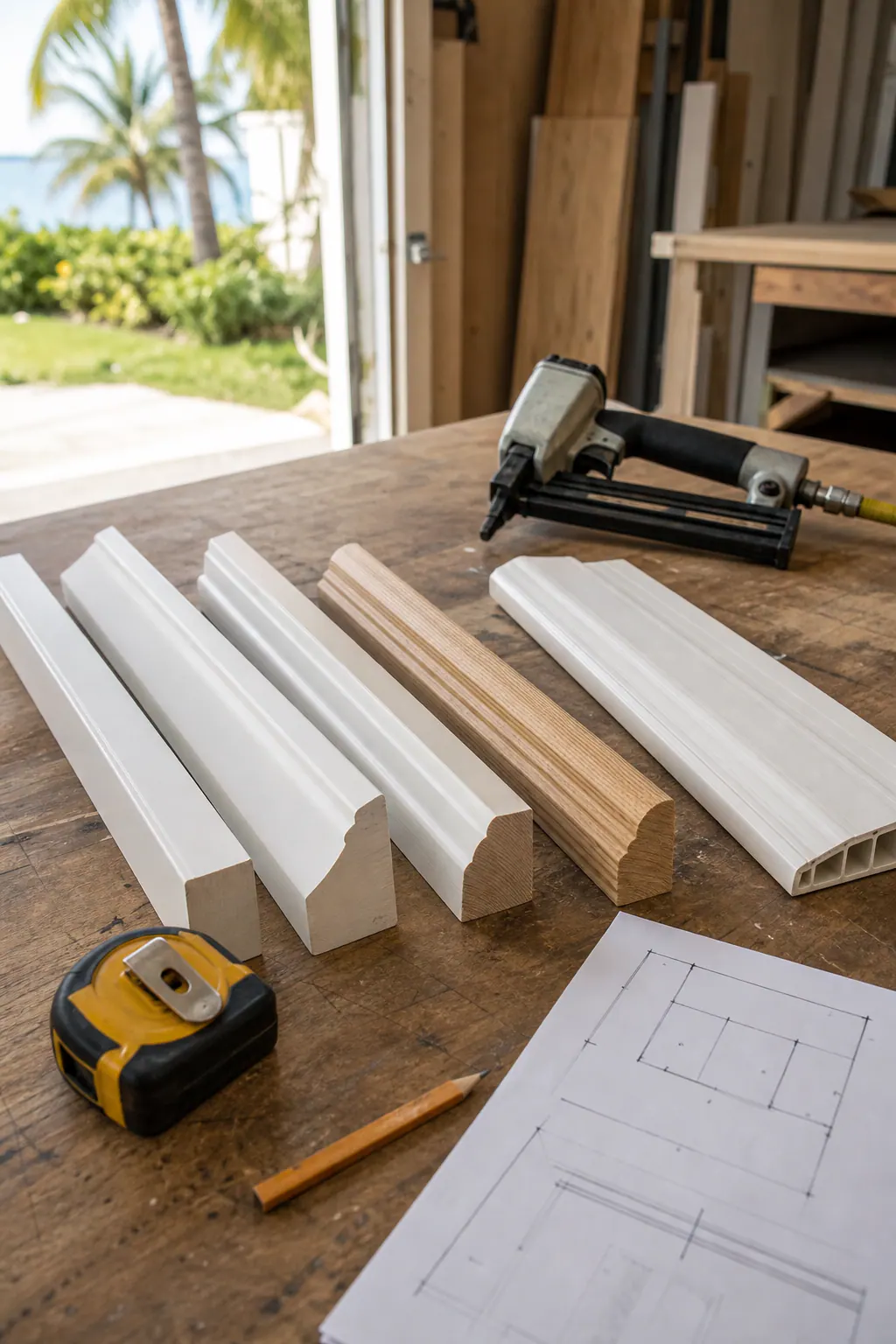
Wood remains the natural choice when the goal is a stain-grade finish that shows grain, a custom-milled profile, or a repair that must blend with existing solid-wood millwork. It can also be painted, but paint does not eliminate the need for a complete finish system and attention to moisture-prone joints. In an Englewood home, wood is best treated as a material that needs deliberate protection from humid air, incidental water, and exterior weathering rather than as a set-it-and-forget-it option. Select wood when its appearance or custom detail is central to the design and the maintenance expectation matches it.
For exterior boards, trim close to wet areas, and locations exposed to coastal air or frequent rain, cellular PVC is often the stronger practical option. PVC trim does not provide the grain or stain-grade character of wood, but it can be shaped into many painted profiles and is well suited to exterior casing, fascia details, column wraps, and replacement pieces around vulnerable openings. Direct sun can make dark finishes and long runs more demanding, so the profile, fastening approach, and finish should be planned as a system. The clear takeaway is simple: keep MDF indoors and dry, choose wood for appearance-driven interior work with appropriate finishing, and use PVC where moisture exposure is part of the job.
Crown Molding and Ceiling Details for Finished Interiors
The ceiling line is where a room's proportions become especially visible. Crown molding bridges the wall-to-ceiling transition, but its scale should support the room rather than overpower it: a modest crown or simple cove profile usually suits an 8-foot ceiling and an uncomplicated coastal interior, while taller ceilings can carry a deeper, more layered profile without making the room feel top-heavy.
For crown molding in Englewood, FL, the design choice often comes down to visual weight and detail. A one-piece crown creates a finished edge with a clean silhouette. Cove molding is softer and simpler, curving gently into the ceiling with less ornament. Built-up assemblies combine separate pieces, such as a flat frieze board, crown, and small lower molding, to create a wider, more formal ceiling treatment. They work best where ceiling height, larger rooms, and existing door or window trim can support that extra presence.
Vaulted and angled ceilings need their own layout instead of a standard profile installed room by room. A crown that sits neatly against a level ceiling may leave uneven contact points where a slope begins, changes direction, or meets a short return wall. Measuring each run, locating transitions, and deciding whether the molding should follow the slope or terminate into a planned detail prevents improvised gaps and awkward visual breaks.
Corner work is equally important. Outside corners generally use miter joints, while inside corners may be coped or carefully mitered so the profile meets cleanly despite minor wall variation. Good finished work shows aligned runs, controlled seams, consistent spring angle, and caulk used to refine small paint-line irregularities, not to disguise a poorly planned joint. The strongest crown installation makes the ceiling geometry look intentional from every doorway.
Wall Paneling, Decorative Trim, and Custom Interior Finishing
A feature wall can give a room a focal point without adding heavy detail across every surface. Wainscoting places a lower wall treatment beneath a cap rail, helping an entry, dining room, or long hallway feel more grounded. Board and batten uses vertical battens over a flat backing to create a taller, more structured rhythm; it suits bedrooms, mudroom-style drop zones, and simple accent walls, but closely spaced battens can make a narrow room feel busy.
Picture-frame molding creates shallow rectangular panels directly on the wall, bringing a tailored look to a dining room, formal entry, or primary bedroom. Shiplap-style wall paneling uses horizontal boards or routed panel lines for a more relaxed texture and is often strongest on one fireplace, bed, or media-wall backdrop rather than throughout a small home. The layout should relate to door heads, windows, and baseboards so panels do not end in thin, accidental-looking strips.
Before installation, the wall needs a workable, reasonably even surface and a plan for outlets, switches, vents, and wall-mounted items. Trim can be designed around those elements, but simply covering them with mismatched cut pieces weakens the finished appearance. Panel height, rail placement, and batten spacing should also fit the room's scale; a tall treatment can crowd a low ceiling, while undersized boxes may disappear on a broad wall.
Paint unifies decorative trim with the wall or sets it apart: matching colors create subtle shadow lines, while a contrasting finish makes the pattern more prominent. Lower-sheen wall paint can soften minor surface variation, whereas glossier trim highlights profiles and seams. In bathrooms, laundry areas, or rooms with recurring humidity, choose moisture-tolerant panel and trim materials instead of standard MDF at vulnerable lower edges. Custom built-ins, such as window seats, shelving surrounds, or bench storage, work best when their face frames, trim profile, and paint finish connect to the room's existing millwork.
Exterior Trim Repair or Replacement in Englewood
Outside, trim does more than frame the façade. Boards around windows and doors, along soffit and fascia transitions, at column wraps, and where siding changes direction cover exposed edges and help create a finished path for paint and sealant. When those pieces begin to fail, exterior trim repair in Englewood is as much about finding the extent of the problem as restoring the home's appearance.
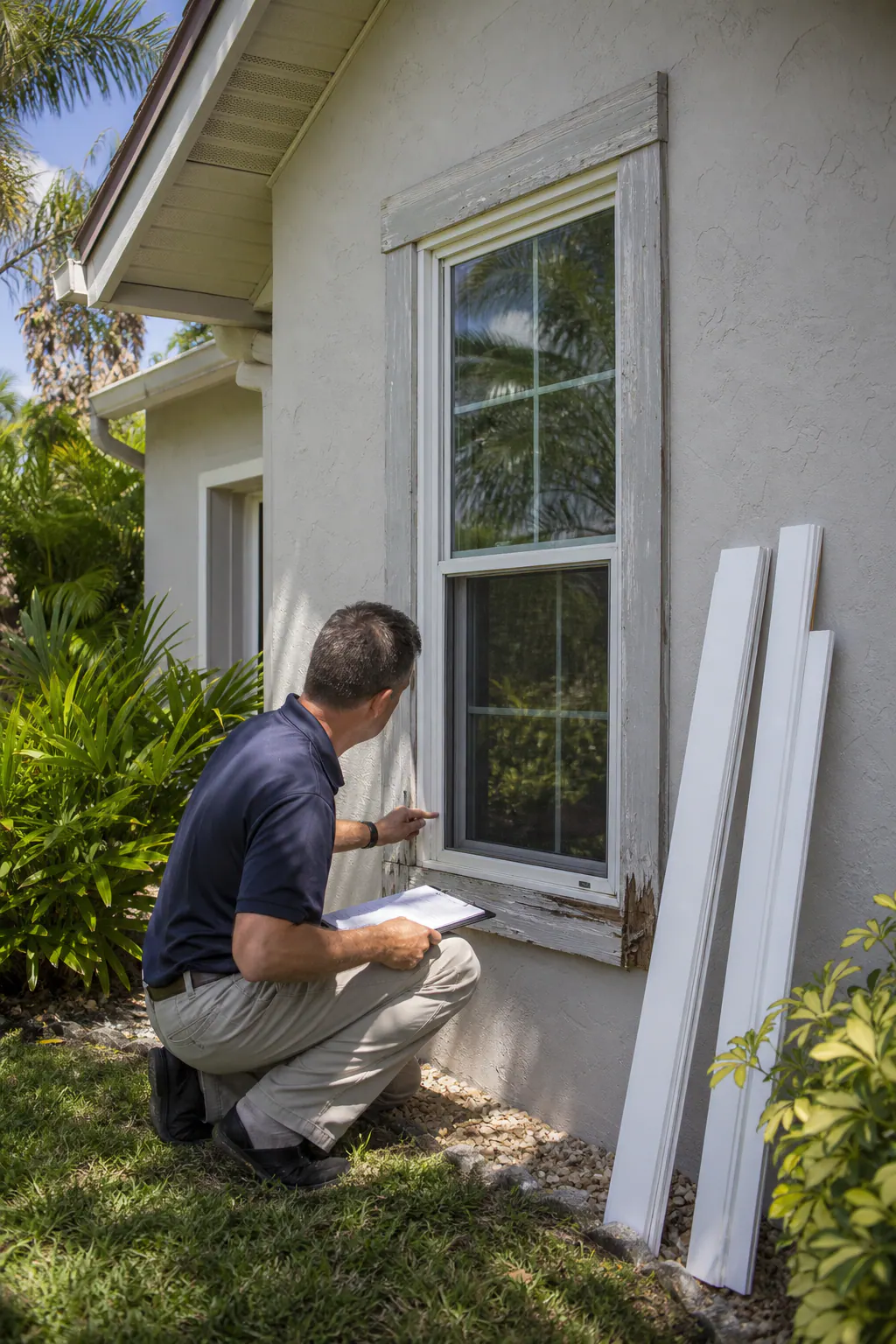
Early warning signs include open or split caulk lines, peeling paint that quickly returns, dark staining at joints, soft or crumbling wood, loose boards, insect-damaged areas, and trim shifted or cracked after a storm. A single softened section at the bottom of otherwise firm window casing may be a localized repair: remove the compromised piece, assess the surrounding material, and rebuild the joint so it can be properly sealed and painted. A fresh coat of paint alone is a weak fix when the board is soft or staining continues from behind it.
Replacement becomes the more sensible path when decay runs across connected boards, damage repeats in the same location, or water appears to be entering behind the trim through a failed flashing or siding detail. In that case, new trim should not simply cover the symptom; the water-management detail needs correction before the finished surface goes back on. Cellular PVC trim is a strong painted option for highly exposed areas because it avoids the rot concerns associated with wood, though it does not reproduce wood grain for a stain-grade look. Properly finished exterior wood can still suit a traditional profile or an existing wood façade, but it needs sound detailing and a maintained coating system, especially on sun- and moisture-exposed elevations.
Planning a Trim Installation Project in Englewood
Begin by separating finished-room upgrades from areas that need old trim removed or moisture issues addressed first. List each room or exterior elevation, note where new work must meet existing baseboards or casing, and choose materials by location: paint-grade MDF for dry interiors, stain-grade wood where visible grain matters, or PVC where repeated exterior moisture is a concern.
- Mark flooring transitions, newly installed doors, repaired drywall, outlets, vents, and built-ins that affect trim layout. Baseboards are best fitted after flooring is in place, while wall repair should be complete before decorative paneling or picture-frame molding is laid out.
- Decide whether paint is part of the finished scope. That includes surface preparation, priming where needed, caulking trim-to-wall seams, filling fastener holes, and choosing whether trim blends into the wall color or stands out with a contrasting sheen.
- For exterior work, identify soft material, recurring stains, open joints, and locations where moisture corrections need to happen before replacement boards are installed.
Bring photos of adjoining rooms, existing trim details, and any walls, ceilings, or openings that do not sit square or flat. A finish carpenter in Englewood FL can use those details to match the home's architecture, establish clean transitions between old and new work, and select durable details for the exposure level. Before trim installation in Englewood FL begins, confirm exactly what removal, disposal, surface preparation, installation, caulking, and final paint-ready finishing are included.
Plan the next step
Review the Englewood, FL service area for local planning context.
When you are ready, request a free estimate with the rooms, trim goals, city, and available photos.
FAQs
What size baseboards work best in Englewood homes?
Simple 3¼-inch to 4¼-inch baseboards often suit compact condos and casual coastal cottages. Ranch homes and rooms with higher ceilings can support 5¼-inch or taller boards for a more deliberate proportion.
Is MDF a good choice for baseboards in a Florida home?
MDF is a good paint-grade choice for dry, climate-controlled rooms such as bedrooms, living rooms, and hallways because it has a smooth, uniform surface. It should not be used where edges or joints face recurring moisture, such as exterior locations, splash-prone laundry areas, or vulnerable bathroom toe-kicks.
Can crown molding be installed on vaulted ceilings?
Yes, but vaulted and angled ceilings require a custom layout for each run and transition. The molding may need to follow the slope or terminate into a planned detail so it does not leave uneven contact points or awkward gaps.
How do I know if exterior trim damage is caused by rot or moisture?
Common signs include soft or crumbling wood, dark staining at joints, recurring peeling paint, split caulk lines, loose boards, insect damage, and storm-related cracks. Continuing stains or soft material can indicate water is entering behind the trim through failed flashing or siding details.
Should damaged exterior trim be repaired or replaced in Englewood?
Repair can work for an isolated damaged board or a localized failed caulk line when surrounding material is firm and the joint can be properly sealed. Replace connected boards when decay is widespread, damage repeatedly returns, or moisture is entering behind the trim, and correct the flashing or water-management issue before installing new material.
Priority services
Services in Englewood
Local trim pages for Englewood, FL
Explore focused planning pages for every residential trim and finish-carpentry service available in Englewood.
Baseboard Installation in Englewood, FL
For baseboard installation in Englewood, FL , the goal is more than adding a strip of trim at the bottom of the wall. Baseboards cover the perimeter gap left where flooring meets drywall, help shield lower wall edges from everyday bumps and cleaning, and create a deliberate visual line between the floor, wall color, and door casing.
View serviceBoard and Batten Walls in Englewood, FL
Board and batten gives a plain wall a more intentional architectural role. For board and batten Englewood FL homes, the treatment is built from horizontal rails and vertical battens arranged into repeating framed panels. That relief adds shadow lines and visual order without turning a bedroom, hallway, or entry into a busy space.
View serviceCabinet and Built-In Trim in Englewood, FL
That custom look usually begins at the edges: the small transitions that make cabinetry appear designed with the room rather than simply set against a wall. Cabinet trim in Englewood, FL can close an awkward space above upper cabinets, soften a visible cabinet end, or carry the line of existing baseboards and door casings into a vanity, bookcase, or refrigerator surround.
View serviceCoffered Ceilings in Englewood, FL
Coffered ceilings in Englewood, FL are a finish-carpentry feature built from a grid of trim or box-beam elements that creates recessed ceiling panels. Unlike a structural beam, this decorative assembly is intended to shape the room's visual ceiling plane, not carry the home's loads. It can give a living room, dining area, or taller great room a more deliberate focal point without changing the room's basic layout.
View serviceCrown Molding Installation in Englewood, FL
A slim crown profile can keep a lower-ceiling bedroom or updated living area from feeling visually heavy, while still giving the ceiling perimeter a deliberate edge. It covers the ceiling-to-wall transition, the joint where those two surfaces meet, and creates a defined line that can tie the ceiling to nearby trim. In an open-plan space, that detail can help the ceiling read as part of a cohesive room rather than an unfinished expanse.
View serviceCustom Feature Walls in Englewood, FL
Custom feature walls give an otherwise plain surface a clear job: anchor the room, frame a focal point, and make the finish feel intentional. For custom feature walls in Englewood, FL , the strongest choice begins with the room, not a one-size-fits-all pattern. A living room may need a composed backdrop for seating, a bedroom may benefit from quieter character behind the bed, and a TV wall often calls for texture that still leaves the screen visually dominant.
View serviceCustom Finish Carpentry in Englewood, FL
That final layer is where an interior begins to feel designed rather than merely finished. Custom finish carpentry brings proportion and continuity to the room through coordinated trim, tailored millwork, decorative wall details, ceiling treatments, built-ins, and crisp transitions between surfaces.
View serviceDoor and Window Trim in Englewood, FL
Start at the joint where the jamb meets the wall: swelling, open caulk lines, or an uneven transition after a remodel are practical signals that an opening needs closer attention. Near exterior-facing openings and in moisture-prone rooms, those details can be especially important in Englewood homes.
View serviceExterior Trim Repair and Replacement in Englewood, FL
Exterior trim does more than frame the home's appearance. Fascia and other roofline boards finish the eaves, while window and door casing, corner boards, and trim at siding transitions cover joints and help create clean edges where exterior materials meet. In Englewood, those exposed edges contend with humidity, strong sun, wind-driven rain, and salt air, conditions that can wear down paint and leave vulnerable seams more exposed to moisture.
View serviceFireplace Mantels and Surrounds in Englewood, FL
A fireplace earns its place as a focal point when it reads as part of the room's architecture, not as a separate box on the wall. A well-planned fireplace mantel Englewood FL project can combine a warm wood shelf, a tailored surround, and a finished wall treatment into one composed feature.
View serviceNew Construction Trim Packages in Englewood, FL
Trim should fit the home's design, transition cleanly between rooms, and arrive ready for the paint process, not feel like a collection of boards installed at the end of the build. A coordinated package brings baseboards, door and window casing, crown or other ceiling details, interior doors, and transition pieces into one finish-carpentry plan.
View serviceRemodel Trim Packages in Englewood, FL
Rather than treating each molding as a separate purchase, remodel trim packages in Englewood, FL bring the room's finish details into one plan. Baseboards create the transition from wall to flooring; casings frame doors and windows; crown or other decorative pieces can complete the wall-to-ceiling transition. When their profile, size, and paint treatment relate to one another, new flooring, refreshed doors, and updated walls read as part of the same remodel.
View serviceShiplap Installation in Englewood, FL
For shiplap installation Englewood FL homeowners can treat as a custom interior finish, the best result starts with the room, not a one-size-fits-all board choice. A painted living-room feature wall, a welcoming entry, bedroom paneling, dining-area detail, or a covered interior ceiling can each use the same clean horizontal rhythm while calling for different layout, trim, and finish decisions.
View serviceStair Trim and Wainscoting in Englewood, FL
For an interior stairway that feels unfinished or collects marks along the wall, stair trim in Englewood, FL can add a clear architectural edge without changing the stair's structure. A skirt board follows the angled stair run where treads meet the wall, creating a crisp boundary. Staircase wainscoting covers the lower wall with finished paneling and trim, giving the space a more deliberate backdrop.
View serviceTrim Installation in Englewood, FL
For homeowners considering trim installation in Englewood, FL , the right details do more than decorate a room. Interior finish trim creates intentional transitions where floors meet walls, doors and windows meet drywall, and walls meet ceilings. Baseboards cover the floor-to-wall edge, casing gives openings a clean frame, and crown molding can soften the wall-to-ceiling transition. Well-fitted pieces keep reveals even, joints tight, and surfaces ready for a smooth painted finish.
View serviceTrim Repair and Replacement in Englewood, FL
Interior trim is easy to overlook until a room starts to feel unfinished: chipped or dented baseboards, caulk lines that have pulled apart, swollen molding, pet claw marks or tooth damage, loose door casing, and a replacement piece that does not blend with the rest of the room. Trim repair in Englewood, FL focuses on these visible details around floors, doors, windows, and ceilings, not a broad remodel.
View serviceWainscoting and Wall Paneling in Englewood, FL
Wall paneling earns its place when it does more than follow a design trend. In an Englewood home, it can give an open room visual structure, bring a relaxed coastal note to a remodel, and create a durable-looking lower-wall treatment where bags, chairs, and everyday traffic leave their mark.
View serviceWhole-Home Trim Packages in Englewood, FL
For many Englewood homeowners, trim looks best when it is planned as one interior finish rather than a series of isolated baseboard fixes. A coordinated whole-home trim plan considers the visual line from room to room: baseboard height and profile, door and window casing style, paint color and sheen, and the way trim meets each flooring surface.
View service