
Trim materials compared is less about finding one winner than matching the material to the job. Start with location: a dry, climate-controlled living room asks very different things of baseboard or crown molding than an exterior window surround that sees rain, heat, and sun.
MDF is a smooth, machined sheet material that excels at crisp painted interior profiles, but standard MDF is a weak choice where it may be repeatedly wet. Wood can deliver the grain and character needed for a stain-grade finish, while painted wood performance varies with species, grade, coating, and upkeep. Cellular PVC brings strong moisture resistance to exterior details, though heat-related movement matters on long or highly exposed runs. Composite trim is an engineered category rather than one uniform product, so its finish, moisture behavior, and approved uses vary by manufacturer.
Florida makes those distinctions especially practical. A covered porch on an inland home has a different exposure pattern than a west-facing coastal elevation hit by wind-driven rain, intense UV, heat, humidity, and termites. Direct sun can change how materials move and how coatings age; sheltered locations may place far less demand on the trim.
Before choosing, weigh the finish you want, paint versus visible wood grain, the profile's level of detail, expected maintenance, and budget alongside exposure. The best trim material for a Florida home is the one that fits those conditions, not simply the material with the longest list of advertised benefits.
Trim Materials Compared Side by Side
A side-by-side view makes the tradeoffs easier to spot before a material is matched to a particular profile or elevation.
| Material | Best-fit location | Moisture & exterior use | Finish, detail & movement | Upkeep, pests/rot & cost position |
|---|---|---|---|---|
| MDF | Dry, painted interior baseboards, casing, crown, and built-in details. | Standard MDF is a poor fit for repeated wetting and generally not an exterior trim choice. | Exceptionally smooth for paint and easy to machine into consistent profiles; it is not stain-grade. Movement is usually modest in a stable interior, but swollen edges can be difficult to repair. | Needs protection from water damage. It offers no wood grain to attract pests or rot, but moisture damage remains the key limitation. Typically the lowest material-cost position. |
| Solid or finger-jointed wood | Stain-grade interiors, painted interiors, and selected exterior applications. | Exterior performance depends heavily on species, grade, priming, paint system, drainage, and maintenance. | Solid wood is the choice for visible grain; both solid and finger-jointed wood can be painted. It can expand, contract, cup, split, or check as conditions change, and detailed milled profiles are widely available. | Coatings and joints need ongoing attention outdoors. Untreated or poorly maintained wood can be vulnerable to rot and insects. Cost ranges from moderate to high, especially for clear stain-grade stock. |
| Cellular PVC | Painted exterior trim, including window and door surrounds, corner boards, and fascia details. | Highly resistant to moisture and rot, making it a strong exterior candidate; it is not intended for a stained wood appearance. | Paintable, with many profiles available, though very fine traditional details may be more limited than wood. Heat can cause noticeable linear movement, particularly on dark-painted or long, sun-exposed runs. | Does not provide food for termites or rot like wood. Cleaning and coating care are still part of a finished exterior. Typically a mid-to-upper material-cost choice. |
| Engineered composite | Product-approved exterior trim and some painted interior applications. | Moisture performance and exterior suitability vary because "composite" can mean different engineered formulations. | Usually paint-grade rather than stain-grade. Profile selection, fastening methods, edge treatment, and movement characteristics vary more by product line than by the category name. | Many products are positioned to reduce rot and insect concerns, but that does not make every composite identical. Cost commonly sits between wood and premium PVC, depending on the product and profile. |
Read the chart as a fit guide, not a set of absolute ratings. "Moisture resistant" does not mean every joint, cut edge, or installation detail can stay wet without consequence. Likewise, wood is not automatically a weak exterior choice, but it asks more of the species selection, coating system, and maintenance plan.
For MDF vs. wood vs. PVC trim, the clearest dividing lines are finish and exposure: MDF favors smooth painted interiors; wood is the practical route to real grain; and PVC is built around painted exterior moisture resistance. Composite deserves its own line item because its performance follows the specific product, not the label alone. The Materials & Profiles page can help narrow the profile and finish options after the material category is chosen.
MDF vs. Wood Trim for Baseboards, Casing, and Crown Molding
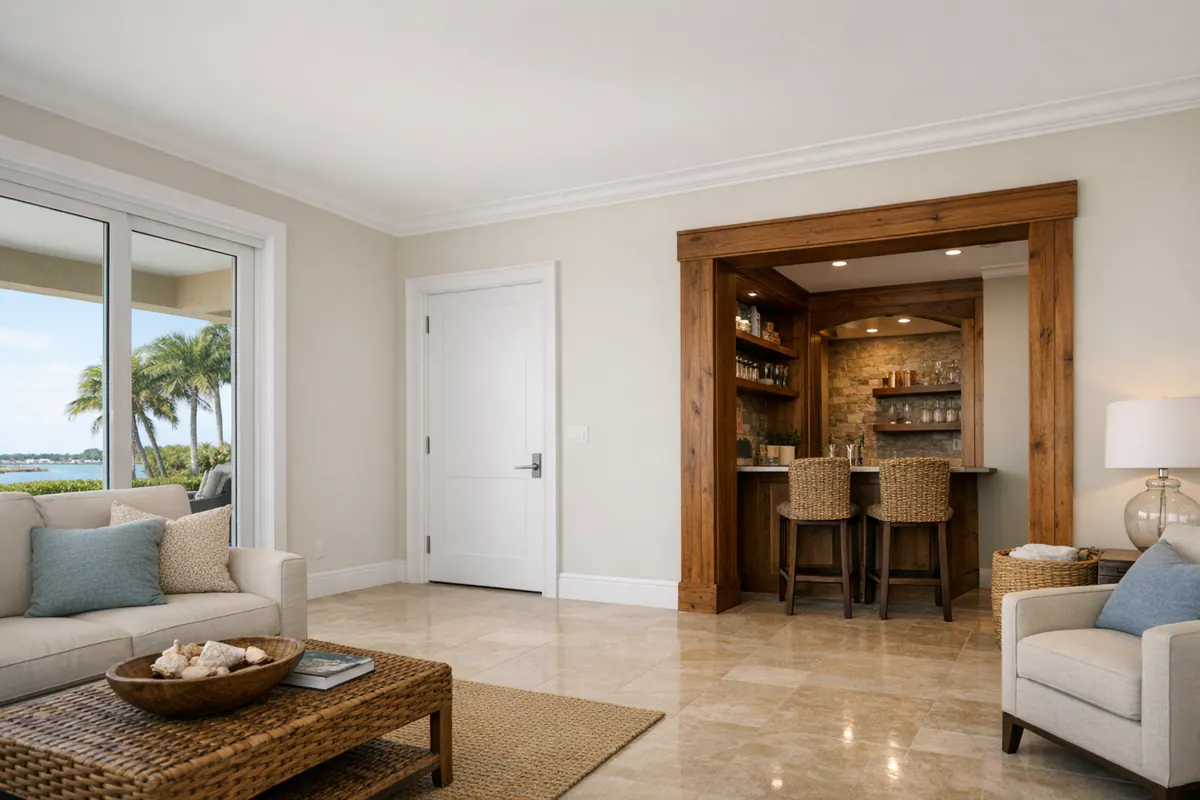
An all-painted living room is where the MDF-versus-wood decision is often simplest. MDF delivers a very smooth, uniform paint-grade face, so baseboards, door casing, window trim, and crown molding can carry one crisp color without grain variation showing through. In a dry, conditioned room, its consistent profile is especially appealing when several openings need to match.
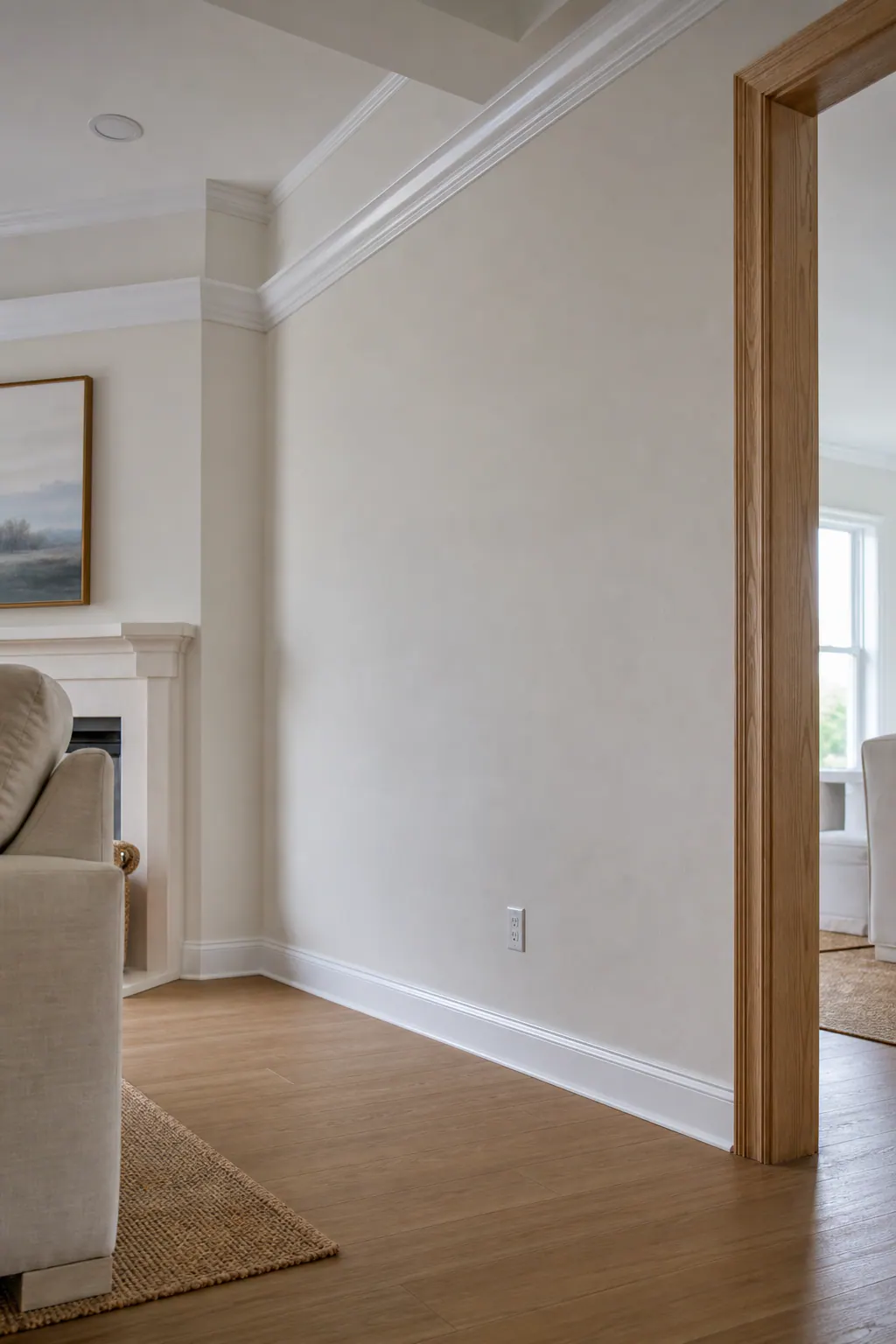
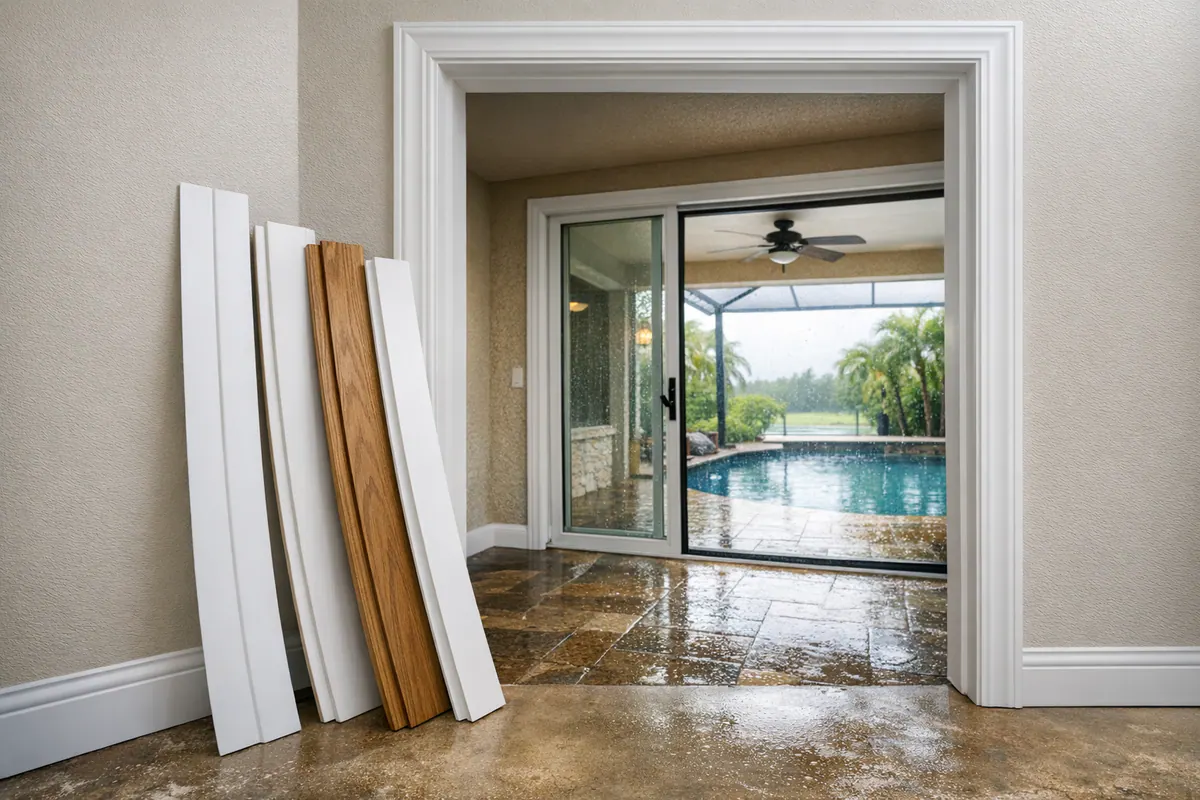
That advantage has a firm boundary: ordinary MDF is not an exterior material and is not a dependable choice anywhere repeated moisture exposure is expected. A bathroom floor spill, laundry-room leak, wet mopping along baseboards, or rain tracked through a frequently used exterior door can damage edges and joints. Once MDF swells or breaks down, a painted touch-up rarely restores a clean profile. Moisture-resistant MDF may offer more tolerance for incidental humidity, but "moisture resistant" is not the same as waterproof.
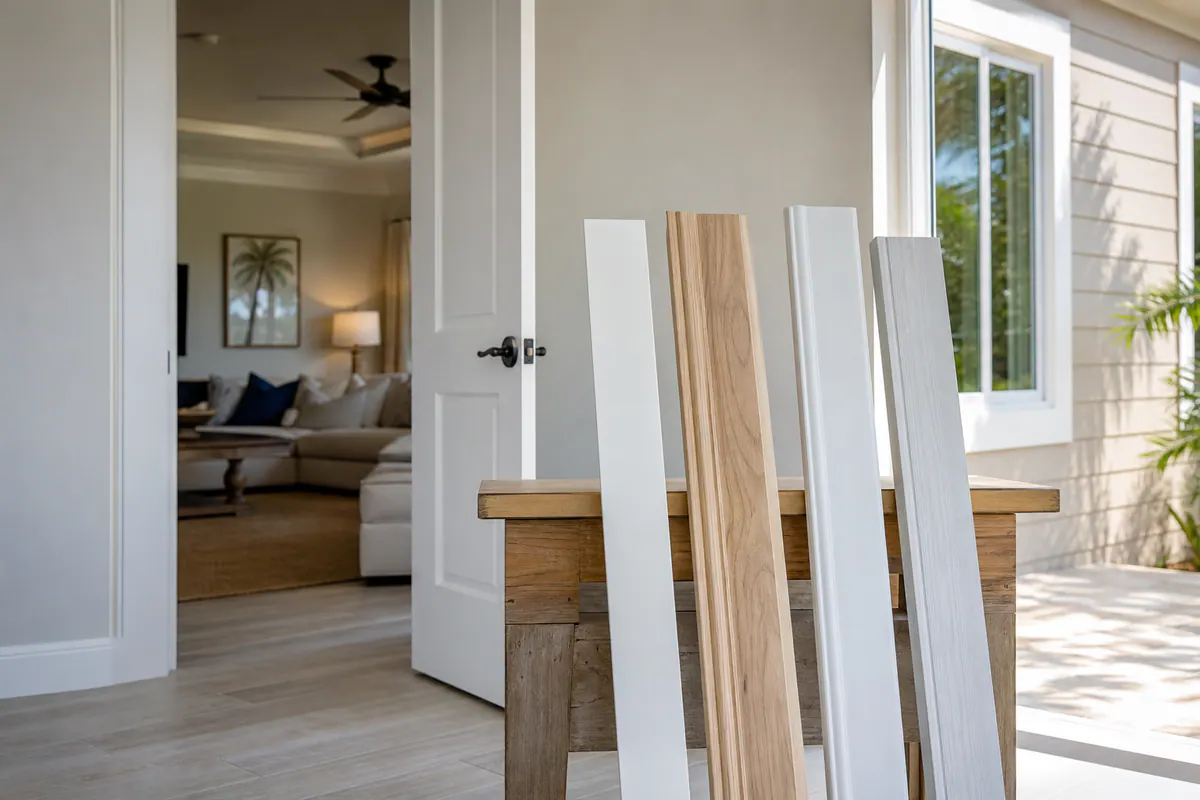
Wood earns consideration when the trim itself is meant to be seen rather than simply painted. Solid wood offers natural grain, color variation, and a stain-grade appearance that MDF cannot duplicate. It also gives a damaged corner or dent a more repairable path in many cases, and it can suit long runs or traditional details where a particular species and grain pattern matter. The tradeoff is variation: boards can differ in color, grain, straightness, and how they respond after installation.
- Choose MDF for a polished painted interior look in dry bedrooms, halls, living areas, and formal crown molding runs.
- Choose solid wood when the goal is stain, visible grain, a historic-style detail, or a trim feature worth preserving and repairing.
- Consider finger-jointed wood for painted trim when a wood substrate is preferred but visible clear grain is not. Its joined sections are intended to disappear under paint, not under stain.
For MDF vs. wood trim, the practical checkpoint is the finish first, then the room's exposure. A flawless opaque paint finish points toward MDF in a reliably dry interior. A transparent or semi-transparent finish points toward carefully selected wood. In either case, acclimating wood before installation and planning joints around long runs helps the finished casing, crown, or baseboards look intentional rather than stressed by changing indoor conditions.
PVC Trim vs. Wood Trim vs. Composite for Exterior Applications
Exterior trim has to keep its shape and finish through far more than an occasional splash. Window and door surrounds, fascia, soffit details, and corner boards all depend on the material and on a design that sheds water instead of trapping it at joints, end cuts, and horizontal ledges.
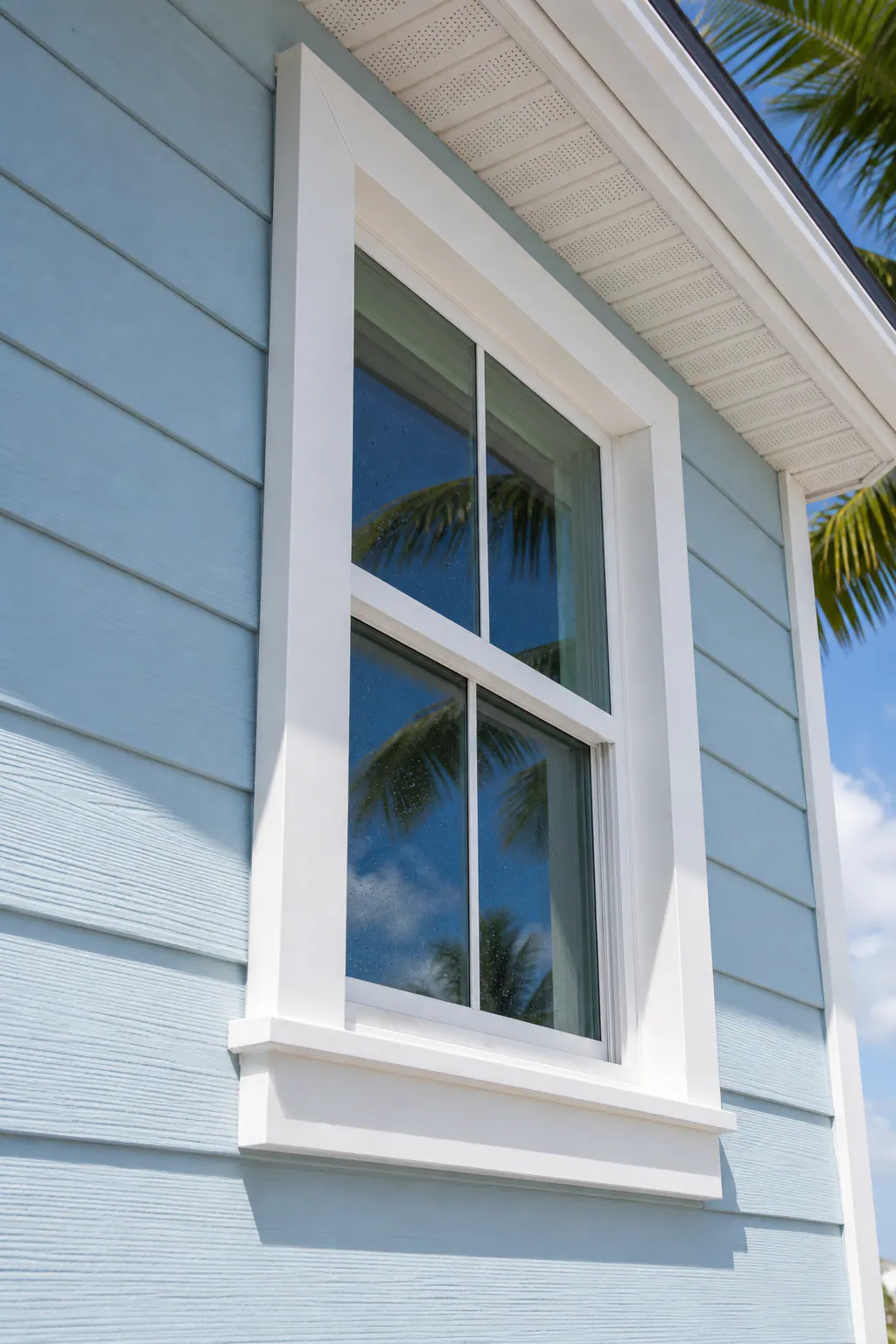
Cellular PVC is a paint-grade exterior trim material chosen primarily for its resistance to moisture and rot. It works well where painted boards face repeated rain, humidity, and damp conditions, including exterior casing and corner boards. PVC is not stain-grade, but compatible exterior coatings can provide a custom color. Darker colors deserve extra planning because PVC moves with temperature changes; long runs, scarf joints, fastening patterns, adhesive choices, and expansion allowances all need to work together so joints do not open or boards distort in strong sun.
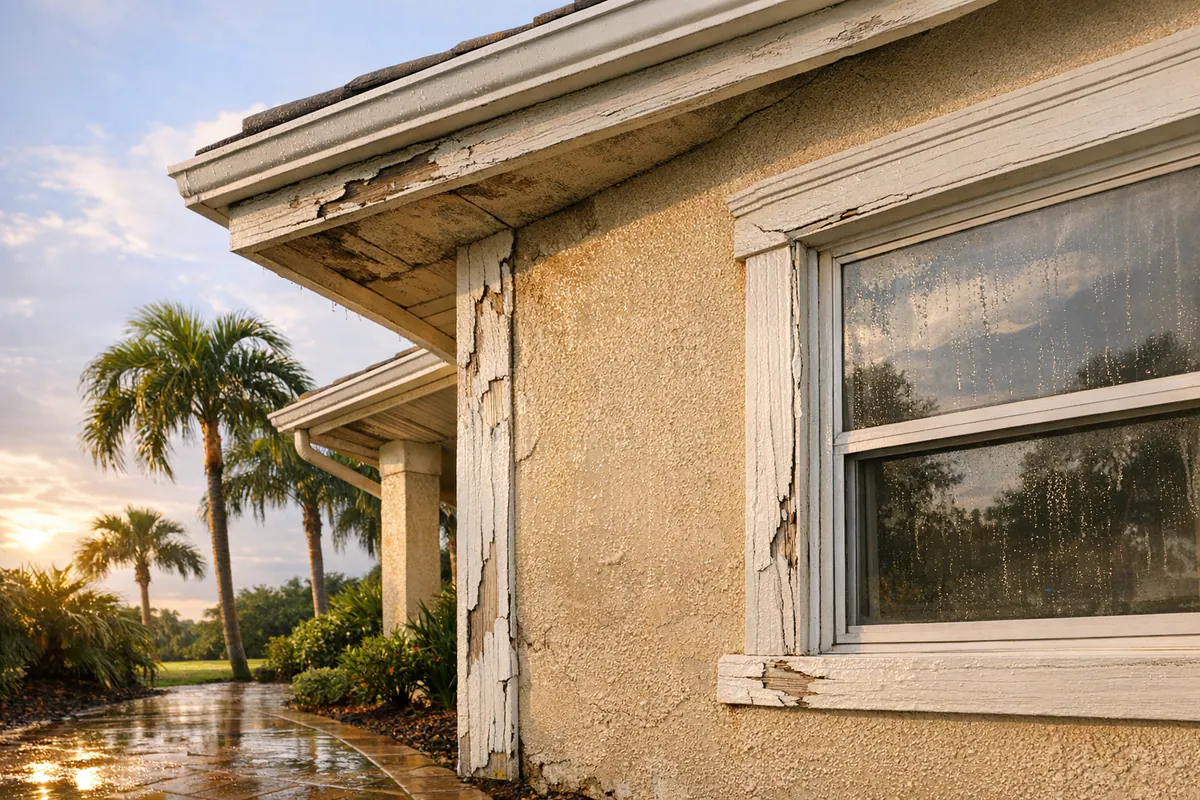
Wood brings the visual qualities PVC cannot replicate: real grain, sharp traditional detailing, and the option for a stain or clear finish where the trim is meant to be a feature. For painted exterior work, its result depends heavily on the species and grade, thorough priming and sealing, especially at cut ends, and a coating system maintained before water reaches bare wood. Good drainage and flashing matter just as much. Wood can be an appealing choice for a protected porch detail or a period-style façade, but persistent wetting around a poorly drained opening is a weak setting for any painted wood trim.
Composite trim is a broad category rather than one uniform material. It generally combines engineered ingredients into boards intended to offer a balance of exterior durability and familiar workability, but the formula, density, surface, approved profiles, and exposure limits vary by product line. Some composite products suit exterior fascia, soffit, trim boards, and other painted details; that does not mean every composite board is interchangeable with cellular PVC or appropriate for every location.
- PVC: a strong starting point for painted, moisture-resistant trim at exposed openings and corners, provided movement and fastening are designed into the installation.
- Wood: the route to authentic grain and highly traditional detail, with the tradeoff of ongoing finish care and careful protection from standing or driven water.
- Composite: worth considering when its specific profile and exterior rating suit the detail, especially for homeowners weighing a wood-like working feel against improved weather tolerance.
For PVC trim vs. wood trim, the practical dividing line is usually finish intent and exposure: visible wood points to a suitable wood species, while a durable painted exterior surround often points toward PVC or a purpose-built composite. In Florida, direct sun, wind-driven rain, deep shade, and protected overhangs can produce very different demands on the same elevation, so the joint layout and water-management details deserve as much attention as the board itself.
Best Trim Material for Florida: Match the Material to the Exposure
A room-by-room shortlist makes the choice more useful than a single statewide ranking. For dry, painted bedrooms, living rooms, and halls, MDF is often the budget-conscious starting point when a smooth, uniform finish matters most. For stain-grade casing, crown, or feature millwork, wood is the clear visual choice because the grain is part of the finished look, not something paint is meant to hide.
- Bathrooms and laundry rooms: Treat splash zones, leak risk, and wet-floor cleaning differently from ordinary indoor humidity. Standard MDF is a weak fit where trim may be repeatedly wetted. Painted wood, PVC, or a suitable composite can be better candidates, with the final choice shaped by the profile, paint system, and how well the room controls direct water.
- Covered openings and shaded elevations: Protection from roof overhangs can reduce direct rain and sun, but it does not eliminate wind-driven moisture or drainage problems. Painted wood may suit a detail where its look justifies finish upkeep; composite trim in Florida can be a practical alternative when a product's profile and exposure rating fit the job.
- Fascia and exposed window trim: For boards facing intense sun, rain, and coastal weather, painted PVC or an exterior-rated composite is often the stronger starting point. PVC's moisture tolerance comes with a tradeoff: thermal movement needs to be accommodated in board lengths, joints, and fastening rather than treated as an afterthought.
- High termite concern: A material that does not provide wood food value can reduce one vulnerability, but it does not solve gaps, wet framing, failed flashing, or other assembly conditions that invite pests and water damage. Detail the whole opening, not just the face trim.
To narrow the best trim material for Florida, follow a simple path: first choose painted or stain-grade; then separate dry interior work from direct-water or exterior exposure; then assess sun orientation, overhang depth, drainage, and maintenance tolerance. Finally, select a product and profile that suit the board width, joint layout, and finish you want. That sequence keeps a low initial material cost from becoming the only decision factor.
Choose the Profile and Finish Along With the Material
The board design can change the answer. Broad exterior boards and long, uninterrupted runs make joint placement and movement allowances more visible; a scarf joint, an angled overlap between boards, can help a painted run read more continuously than a square butt joint. Deeply detailed trim profiles also deserve a material that can deliver the crisp edges and finish quality you expect.
Finish is equally decisive. Stain and clear coats keep wood grain on display, while opaque paint opens the door to paint-grade MDF, PVC, wood, and composite. On exterior PVC and composite, darker colors, board length, fastening pattern, joint treatment, and approved coating systems all work together; color can affect how much heat the trim absorbs, while fastening and joint details affect the finished appearance.
- Location and exposure: Is it dry interior work, a damp room, or a sun- and rain-facing exterior detail?
- Moisture frequency and finish: Will it be repeatedly wet, and do you want paint or visible grain?
- Profile and upkeep: Does the desired profile include broad boards, long runs, or fine detail, and how much maintenance suits the project?
- Product details: Match the selected manufacturer, dimensions, paint color, fastening, and installation method to the design.
Explore our Materials & Profiles options, or request help pairing the trim material and profile with your project.