
On homes in Venice and nearby Southwest Florida communities, exterior trim takes a beating almost every day. Humidity hangs around, seasonal rain hits hard, storms can push water sideways, the sun bakes paint and caulk, and salt-laden coastal air adds another layer of wear. That is why fascia boards, soffit edges, rake boards, corner boards, window trim, and door trim are common spots for Florida home trim rot.
The problem usually starts when water gets trapped where it should have drained or dried out. A small opening in caulk, a cracked paint edge, an unsealed trim end, or a roof-edge detail that holds water can let moisture sit behind the finish. Heat and sun can make those gaps worse, so the trim keeps cycling between wet, hot, and damp until the wood softens.
Rotted trim is not always just a surface blemish. A soft corner board may be isolated, but a sagging fascia board or stained soffit area can point to moisture moving into the roof edge or wall assembly. That is why rotted trim repair in Venice FL should start with the "why," not just the damaged board. The sections ahead break down the main causes, the warning signs that matter, and how to decide whether repair or replacement is the smarter long-term fix.
The Main Florida Conditions That Cause Trim to Rot
The toughest part for trim in Venice and nearby coastal communities is the constant cycling: damp air, hard rain, heat, sun, then damp air again. That pattern matters because exterior trim depends on its outer coating to shed water. Once that coating is stressed, moisture intrusion can reach the wood fibers underneath instead of staying on the surface where it can dry.
High humidity keeps trim from drying quickly after rain or irrigation overspray. A board that would dry out faster in a milder climate may stay damp around joints, lower edges, nail heads, and shaded soffit areas. That lingering dampness is one reason Florida home trim rot often shows up first in protected-looking spots, not just on the most exposed face of the board.
Afternoon storms and wind-driven rain are harder on trim than straight-down rainfall because water can be pushed into roof edges, fascia lines, window trim, door trim, and corner boards. Fascia and soffit areas are especially vulnerable because they sit near roof runoff and gutter activity, so a small weakness can stay wet longer than a flat wall surface.
Sun exposure creates the other half of the problem. Heat and UV wear down paint and caulk, making them brittle, thin, or cracked. Once those protective layers open up, the next rain has a path into the trim; then the next sunny stretch heats and dries the surface while dampness can remain deeper inside the board.
Salt-laden coastal air adds stress around exposed edges, fastener points, and older finishes. The practical takeaway is simple: trim closer to roof edges, gutters, windows, doors, and ocean-facing exposures deserves closer attention because those areas combine weather exposure with more opportunities for moisture intrusion.
How Caulk, Paint, Seams, and Drainage Problems Let Water In
Most trim rot begins at the weak spots: the joint, the cut end, the nail hole, the corner, or the place where water runs too often. Caulk is supposed to bridge small gaps where trim meets siding, windows, doors, or another board. When caulking failure leaves a crack, water does not need the whole board to be exposed; it only needs one opening where moisture can slip behind the finish and stay there.

Seams matter for the same reason. A mitered corner, fascia joint, roof return, window head trim, or door casing joint creates an edge where two pieces meet. If that joint opens, water can wick into the board from the side or end instead of hitting the painted face and running off. Unsealed cut ends are especially vulnerable because they give water a direct path into the wood fibers rather than just onto the surface coating.
Paint protects trim by forming a weather-shedding skin, but paint failure changes that job. Thin, chalky, cracked, peeling, or bubbled paint can let moisture in, then slow drying once the sun heats the surface again. That is why simply painting over soft or swollen trim rarely solves the problem. If water is still entering through a seam, nail hole, cracked caulk line, or open edge, the new paint may only hide water damaged trim repair needs for a little while.
Drainage problems make small openings worse. Overflowing gutters can soak fascia boards from behind or above. Roof-edge runoff can dump repeated water onto trim below a drip line. Poor flashing details around roof returns, windows, and doors can direct water toward trim instead of away from it. Even landscaping and sprinklers can keep lower trim damp when plants hold moisture against the wall or irrigation spray hits the same board day after day.
The useful distinction for a homeowner is whether the weak point is isolated or part of a pattern. One opened caulk joint around a window may be a straightforward repair once the wood is still firm and the water path is corrected. Repeated caulking failure, recurring paint failure, or several soft spots along a fascia line usually points to a moisture-management problem that needs more than another coat of paint.
Warning Signs That Trim Rot May Be More Than Cosmetic
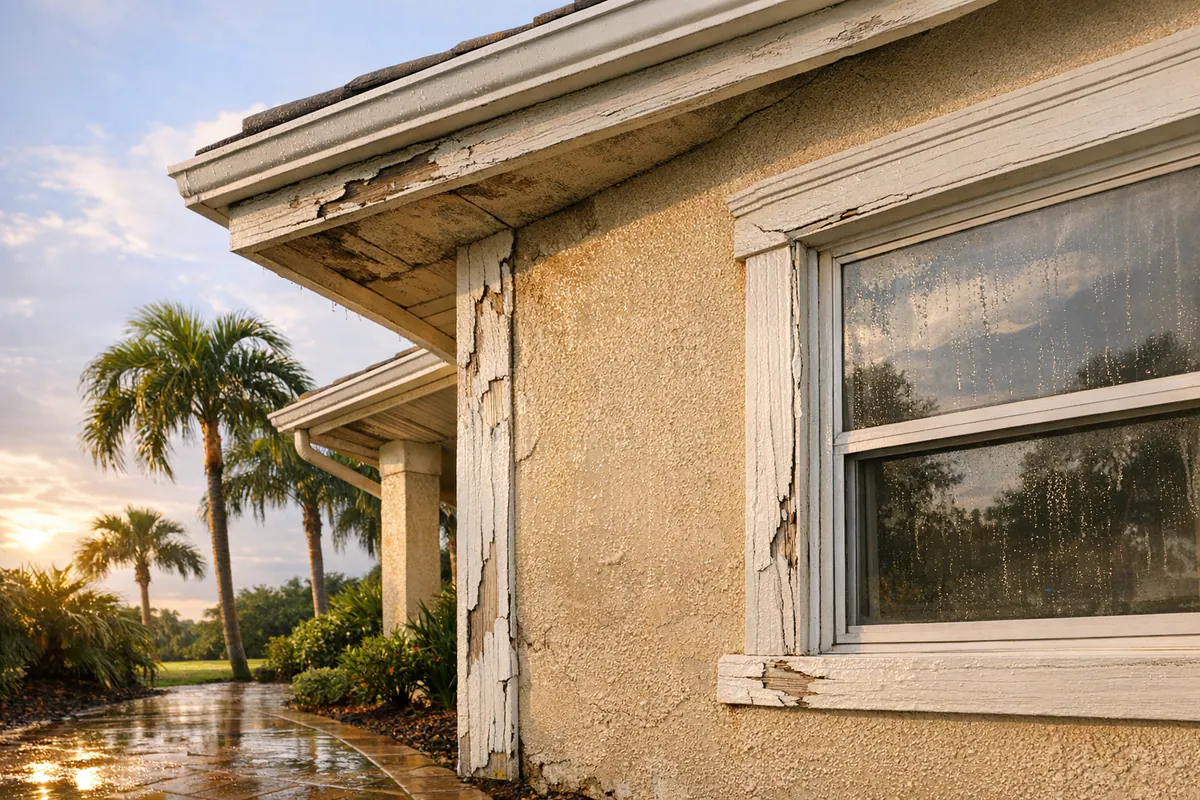
A board can look only a little tired from ten feet away, but the surrounding clues often tell you whether the problem is deeper. Superficial paint wear usually stays on the surface: fading, chalking, or light flaking with firm wood underneath. Rot is more suspicious when the trim feels spongy, dents easily, crumbles at an edge, or shows soft wood near a seam, corner, nail line, or bottom edge.
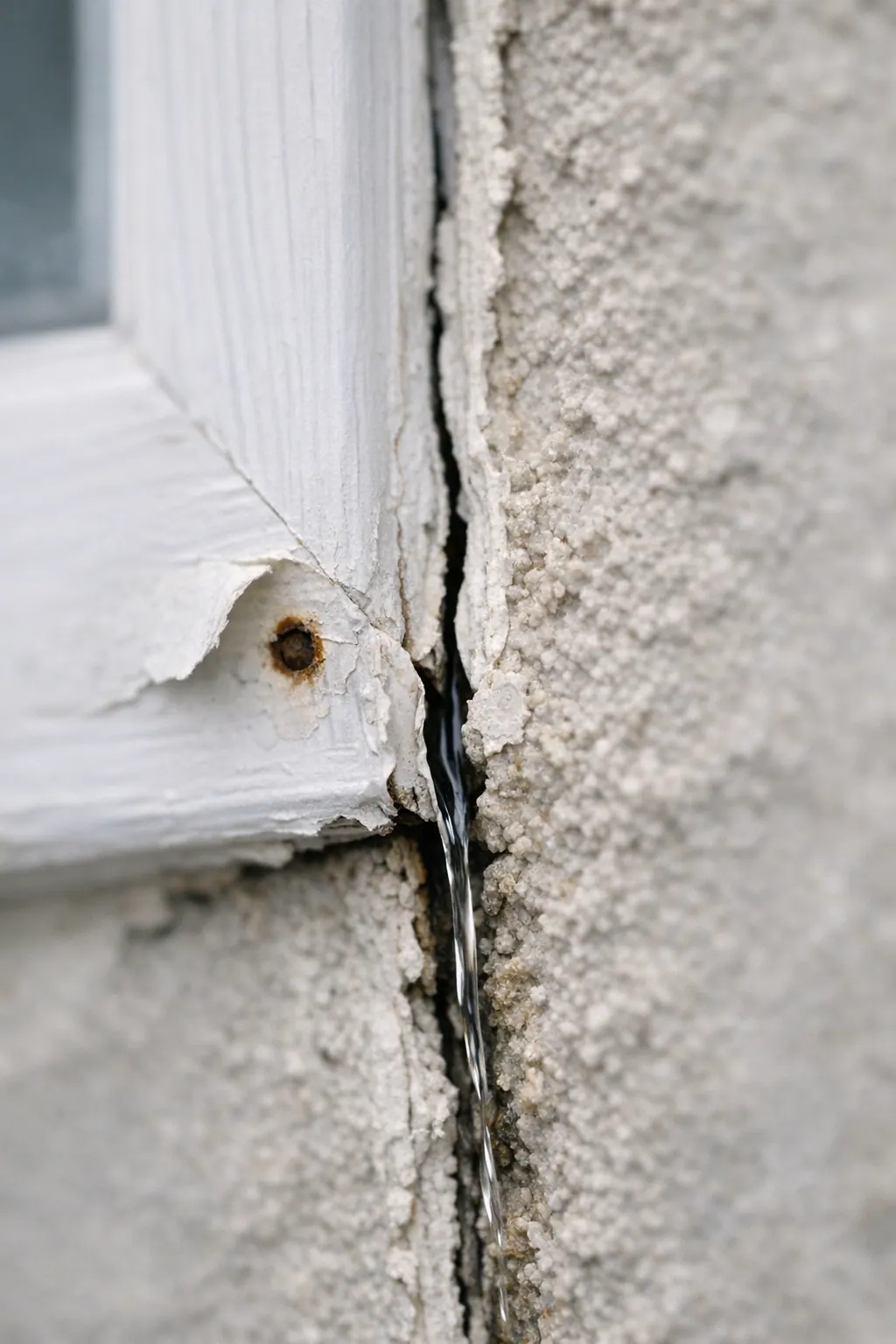
Look for wood swelling, dark staining, blistering paint, peeling paint that returns soon after repainting, gaps opening at joints, and trim that has started to pull away from the wall. Visible fungal growth or a musty-looking dark patch is another warning sign because it suggests the area has stayed damp long enough for more than normal weathering. If stains reappear after rain, the issue may be an active water path rather than old discoloration.
Pay close attention to fascia boards, soffit edges, window trim, door trim, and roof-edge details. Sagging fascia, staining on the soffit below a roof edge, or a long soft section behind a gutter can point to moisture moving where you cannot see it. Around windows and doors, swollen lower corners or repeated paint bubbles may mean water is getting behind the trim and possibly into the surrounding wall area.
Small clues matter most when they repeat in the same place. One chipped corner is less concerning than the same corner staying damp, attracting pest activity, opening at the seam, and staining after every storm. For high fascia or roof-edge trim, a ground-level look with binoculars or phone zoom can help you spot sagging, gaps, stains, and peeling areas before deciding whether a closer professional evaluation is needed for rotted trim repair Venice FL.
When Rotted Trim Can Usually Be Repaired
Repair is strongest when the damaged area has a clear edge: a shallow soft spot, a small corner, or a short section where the surrounding board still feels firm. "Localized" means the decay is confined instead of running along the length of the board or showing up on neighboring pieces. For a homeowner, the takeaway is simple: if most of the trim still holds its shape, feels solid, and is not part of a load-bearing or roof-edge support issue, repair may be reasonable.
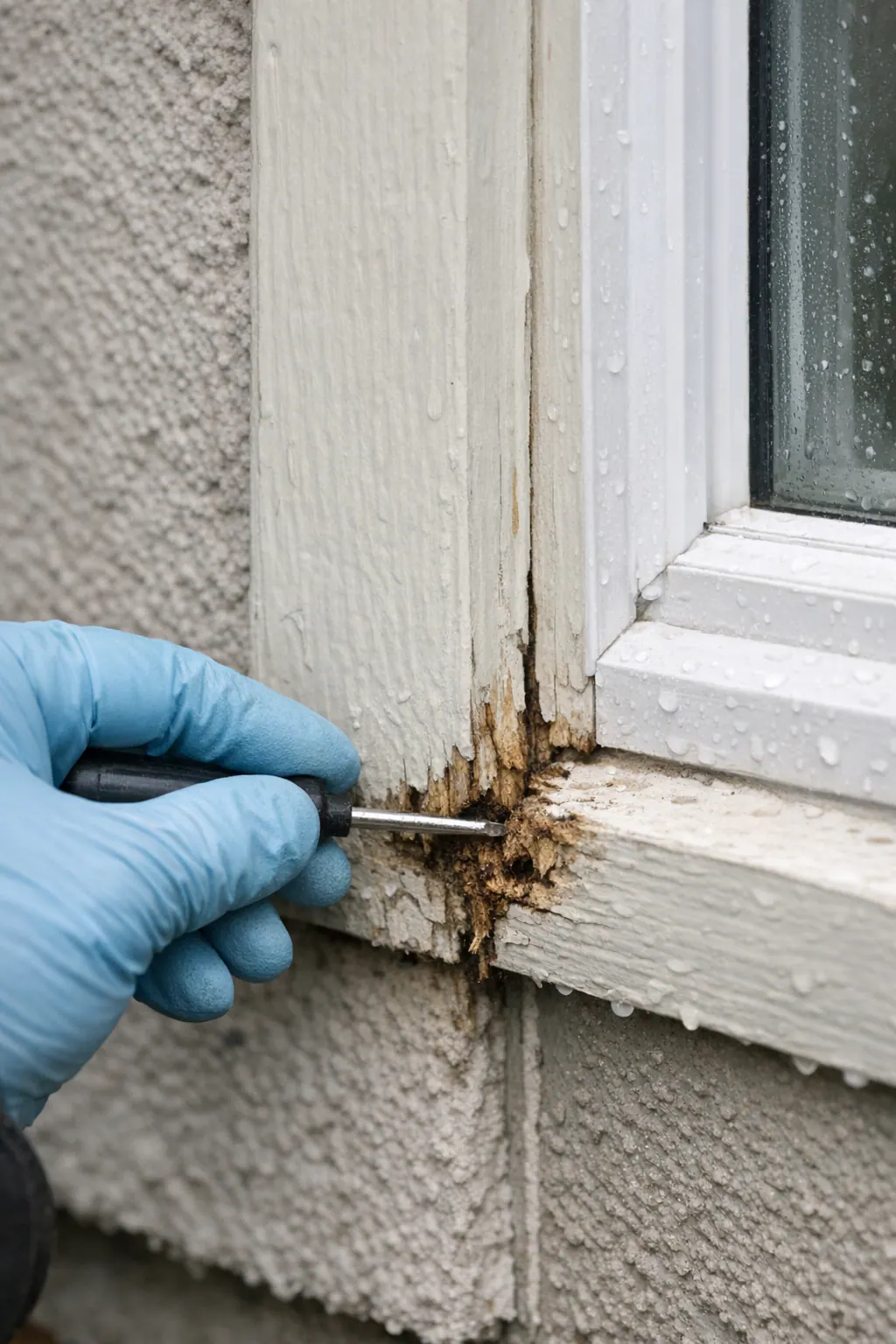
The moisture source matters as much as the soft wood. If the opening that let water in has been corrected, such as a failed caulk joint, an exposed end grain, or a small drainage splash point, water damaged trim repair has a better chance of lasting. If that water path is still active, patching the surface can trap the same problem behind fresh filler and paint.
Good repair candidates are often small, non-structural areas around window trim, door trim, or decorative boards where nearby siding, fascia, and soffit surfaces are dry and intact. A weak candidate is a trim piece surrounded by staining, sagging, recurring paint bubbles, or softness spreading into adjacent boards, because those clues can point to moisture beyond the visible face.
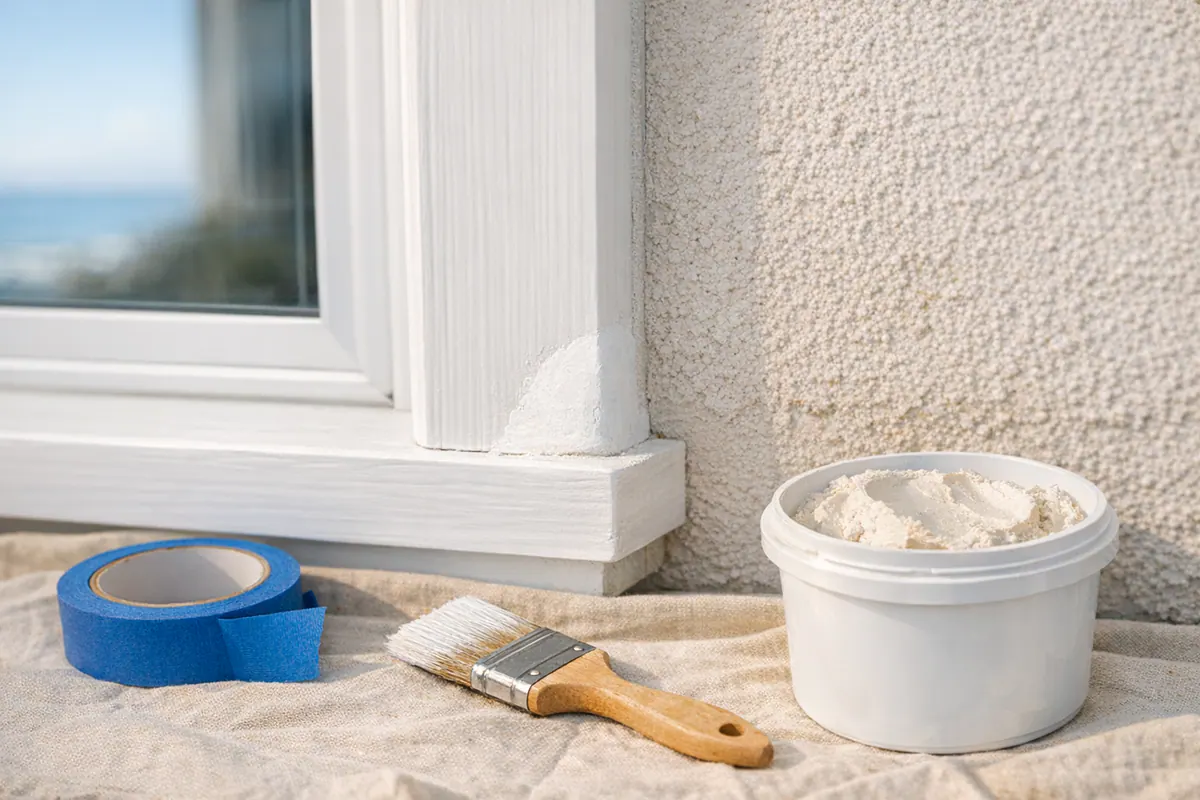
A typical repair rotted trim Florida home approach may include removing decayed material, treating or consolidating a small remaining area, filling minor voids, replacing a short section, then sealing, priming, and repainting so water sheds off the surface again. For rotted trim repair Venice FL, the practical goal is not just making the board look better; it is restoring a tight, dry, paintable exterior detail that does not invite the same rot back next rainy season.
When Replacement Is the Better Long-Term Choice
Replacement starts to make sense when the board has stopped acting like a board. If rot goes through the full thickness, the edge crumbles when touched, or nails and screws no longer hold because the wood around them is soft, a surface patch is not restoring strength; it is only covering a failed piece. That is where exterior trim replacement Florida homeowners consider is less about appearance and more about putting back a solid, sealable part of the exterior.
Spread is the next big clue. One damaged corner may be repairable, but multiple soft boards, open joints along a long run, or paint that keeps bubbling in the same area suggests moisture is still moving behind the trim. In that case, repeated rotted trim repair Venice FL service on the same boards can turn into a cycle: patch, paint, reopen, soften again. Replacing the affected run after correcting the water path often gives the home a cleaner reset than chasing one weak spot at a time.
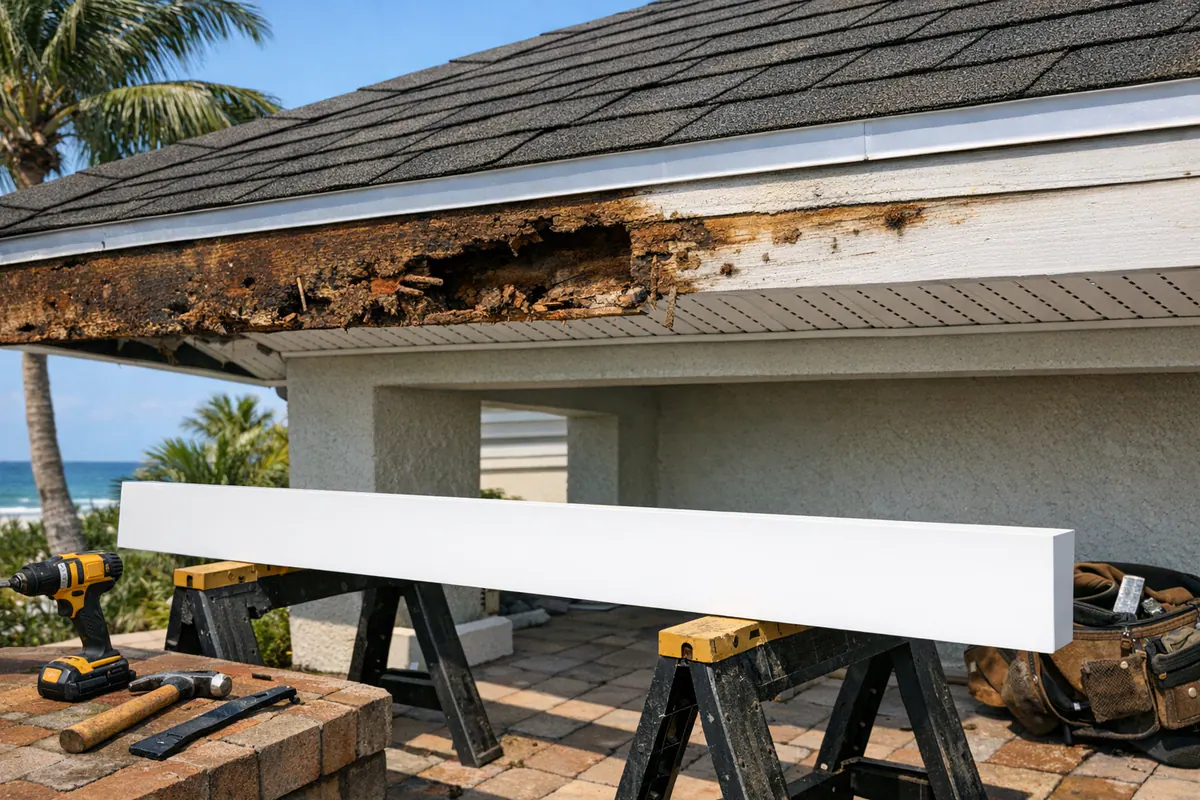
Be more cautious around fascia and soffit areas because those pieces help protect the roof edge. Fascia is the vertical board along the roofline, often near gutters; soffit is the underside area beneath the overhang. If fascia is sagging, soft behind a gutter, stained below roof edges, or paired with soffit discoloration, the issue may involve drainage or roof-edge water behavior rather than just a bad trim board. That is why fascia board repair Southwest Florida projects often become replacement work once the damaged section no longer holds fasteners or protects the edge properly.
Soffit repair Venice FL deserves the same judgment. A small cosmetic mark is one thing; soft soffit edges, loose panels, staining near vents, or decay where the soffit meets fascia can point to trapped moisture in a more vulnerable roof-edge detail. The practical takeaway is simple: patching is best for isolated, shallow damage, while replacement is usually the better long-term choice when the board is structurally weak, the damage is spreading, or the moisture source is tied to gutters, roof runoff, or an exposed overhang.
Wood, Engineered Trim, and PVC: Which Materials Hold Up Better in Florida?
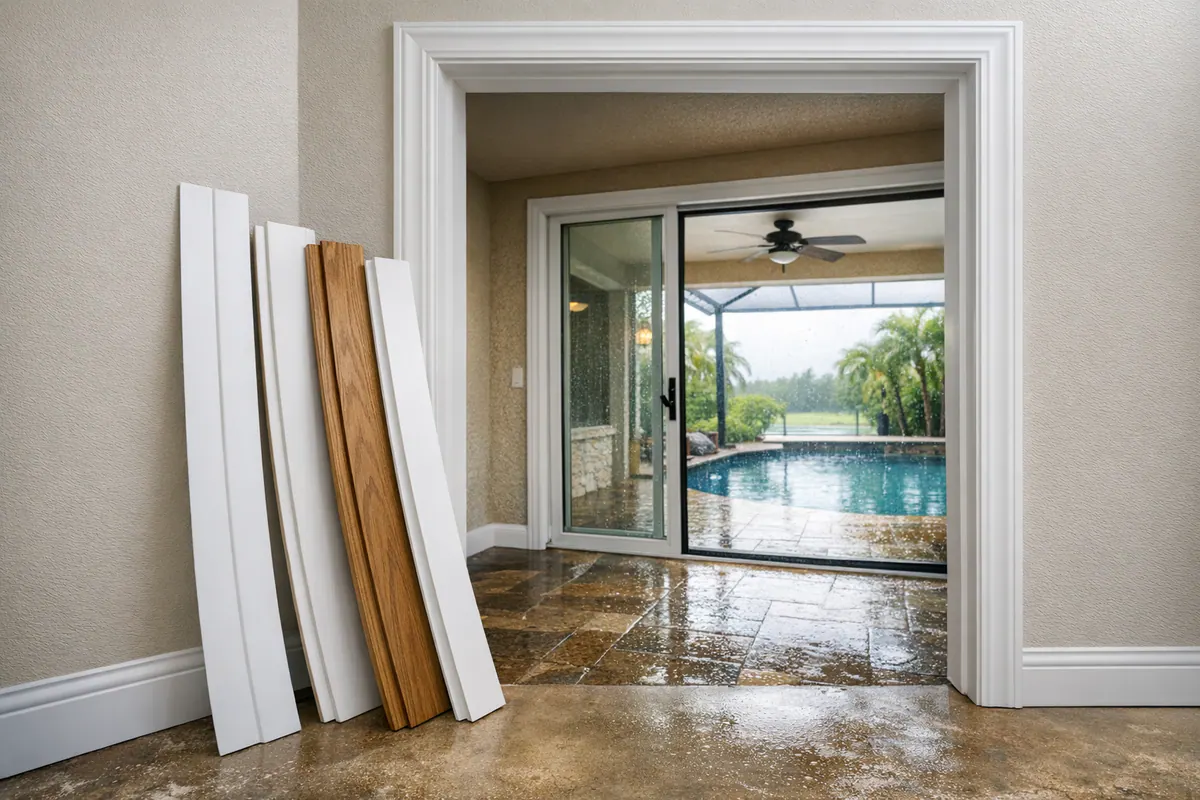
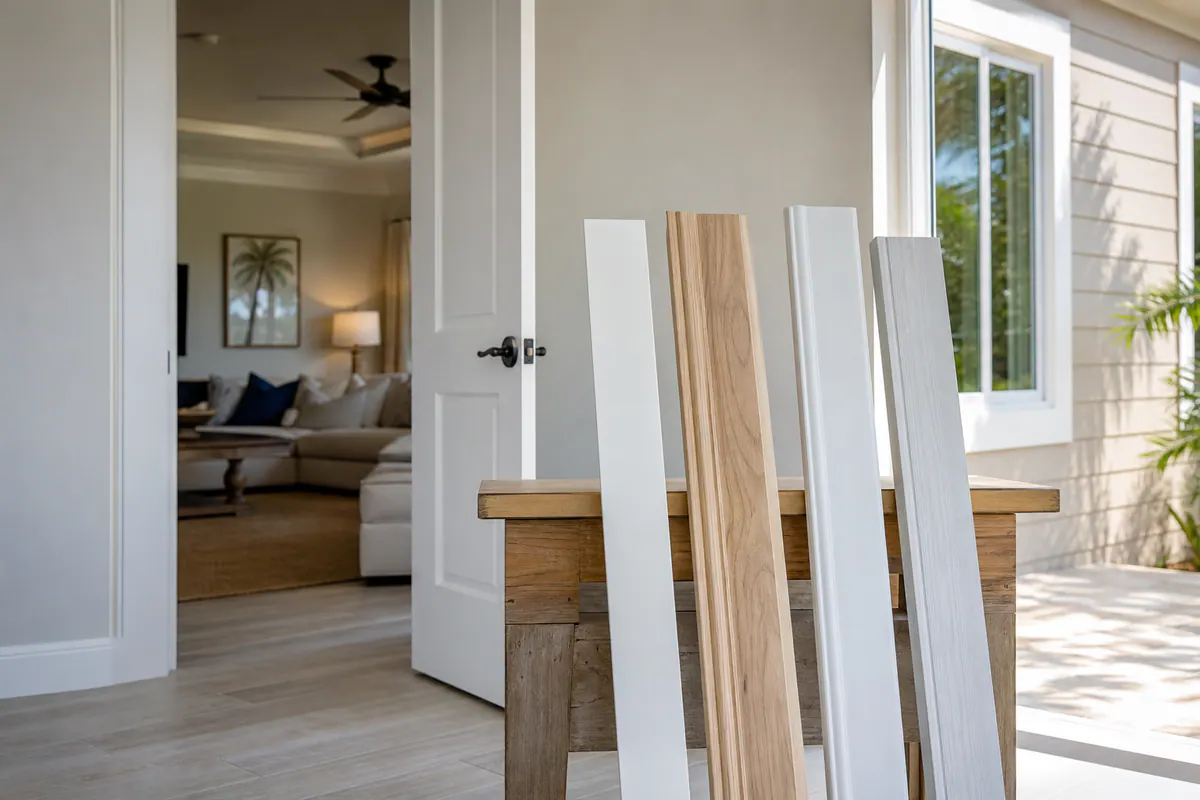
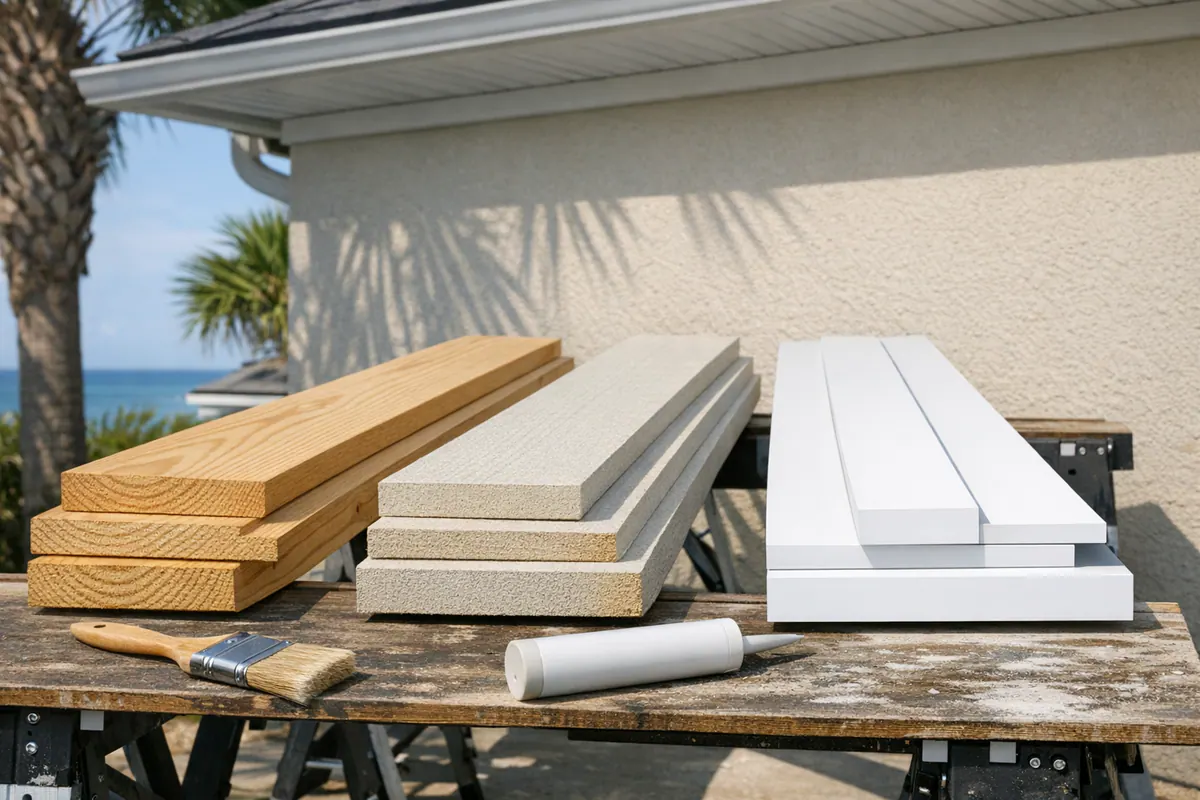
Material choice does not fix a bad water path, but it can change how forgiving the new trim is once Florida moisture, roof-edge exposure, and coastal conditions start working on it. Traditional wood trim looks familiar and paints well, but it depends heavily on sealed faces, sealed cut ends, sound caulk, and intact paint. If water gets behind that protective layer and stays there, wood can soften again, especially around fascia, soffit edges, windows, and doors.
Treated wood is still wood, but it is manufactured to resist decay better than ordinary lumber. The tradeoff is that it still needs careful finishing: cut ends, nail holes, and joints remain important because moisture usually enters at weak details rather than across the middle of a board. It can be a reasonable choice when the area is not repeatedly soaked and the home needs a wood-based repair that blends with existing trim.
Engineered or composite trim is designed to be more stable and moisture-resistant than basic wood trim, depending on the product. It can be useful for exterior trim replacement Florida homes need in exposed but manageable areas. The practical distinction is that composite trim may reduce some wood-rot risk, but it still relies on correct fastening, sealed joints where required, and a paint or finish system that keeps water from sitting in seams.
PVC trim upgrades are often considered for recurring trouble spots because PVC trim does not decay the same way wood does when exposed to moisture, and it is not a food source for wood-destroying insects. That makes it a strong candidate for fascia returns, lower trim edges, and other areas that have seen repeat water damaged trim. The balanced takeaway: PVC trim can reduce recurring rot risk, but it is not "install it and forget it." It needs proper expansion gaps, compatible fasteners, secure joints, and periodic cleaning and inspection so movement, open seams, or trapped debris do not create new problems around the surrounding materials.
How to Prevent Trim Rot From Coming Back
The best prevention plan is less about one big project and more about keeping water from lingering in the same places month after month. For homes around Venice and coastal Southwest Florida, make trim inspection a simple seasonal habit: look it over at least once a year, again before the rainy season, and after major storms that push water into roof edges, window trim, door trim, fascia, and soffit areas.
Focus on the small openings first. Cracked caulk, minor paint breaks, exposed nail holes, open miters, and tiny gaps at trim-to-siding joints are early warning points because sun and heat can open seams, then rain can keep feeding moisture behind the finish. Catching caulking failure while the board is still firm is a much better signal than waiting until the trim swells, stains, or turns soft.
Also look beyond the board itself. Keep gutters clear so water does not spill over fascia, correct roof runoff that dumps onto one trim section, trim shrubs and palms back from walls so surfaces can dry, and adjust sprinklers that spray windows, doors, or lower trim every morning. If the same spot keeps showing peeling paint or dark staining, treat it as a water-path problem before scheduling Venice FL exterior trim repair or rotted exterior trim repair in Venice Florida.
Know When to Repair Trim, and When Replacement Protects the Home Better
The deciding moment is when you stop looking only at the damaged face and ask what the board is telling you. A small, shallow soft spot with firm trim around it points toward repair after the opening is sealed and repainted. A board that stays wet, keeps peeling, opens at the same seam, or feels soft beyond the visible blemish points toward a bigger water-entry problem.
Replacement protects the home better when decay runs through the board, spreads into nearby pieces, affects fascia or soffit edges, or returns after prior patching. Those signals matter because damaged trim can be a clue that moisture is moving behind the exterior surface, especially around roof edges, windows, doors, and coastal exposures where Florida weather is hardest on the building.
For homeowners comparing rotted trim repair Venice FL options, the best path is usually straightforward: inspect early, repair isolated damage before it expands, correct the drainage or sealing issue that fed it, and choose exterior trim replacement Florida homes can rely on when the existing material is too compromised to hold paint, caulk, or fasteners well.
If the same trim area has failed more than once, treat the project as prevention, not just repair. Better sealing, sound paint, improved water flow, and a more durable replacement choice can reduce repeat trouble. Start with a close look at suspect trim, then get a professional assessment before hidden moisture turns a small repair into a larger exterior repair project.