
The short answer: the best trim material Florida homeowners can choose is not one material for the whole house. It depends on where the trim sits, how much water it sees, whether it will be painted or stained, and how much maintenance you want to keep up with.
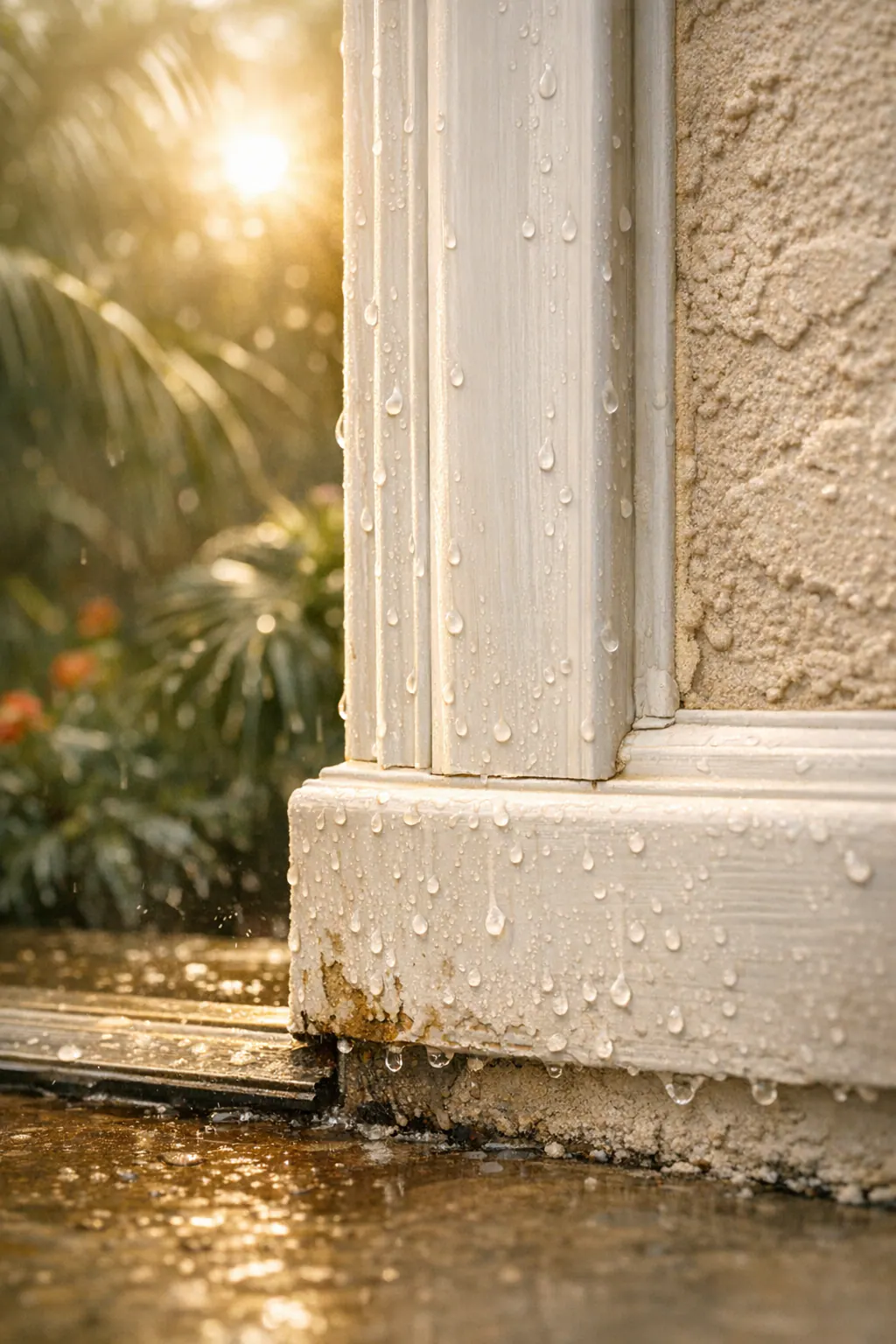
Southwest Florida makes that decision more important because trim can live in very different conditions on the same property. Exterior boards may face humidity, heavy rain, storm-driven water, heat, insects, and salt air near the coast, while interior trim usually lives in a drier, air-conditioned space. A material that works well around a dry bedroom door may be a poor choice around an exterior entry or a wet garage opening.
For exposed exterior trim, such as door casing, garage trim, fascia, porch details, and areas hit by wind-driven rain, PVC trim in Southwest Florida often makes sense because it is a synthetic board rather than a wood-fiber product. High-quality composite trim can also be a strong exterior choice when the budget allows, especially where durability matters more than the lowest upfront cost.
For dry interiors, MDF can be practical for paint-grade baseboards, door casing, and crown molding. MDF is an engineered fiberboard with a smooth surface, so it paints well and is usually treated as a budget-friendly interior option. Its weak spot is water: once moisture reaches the core, it can swell and lose its clean profile.
Finger-jointed pine is a stronger painted interior middle ground because it is made from joined pieces of real wood. Solid wood is the better fit when you want a stained finish, a richer profile, or a more traditional look, but it asks for better sealing and upkeep where moisture or insects are a concern. In practical terms: use PVC or exterior-rated composite outside, MDF only in dry painted interiors, finger-jointed pine where painted trim needs more toughness, and solid wood where appearance justifies the maintenance.
How to Compare Trim Materials in a Florida Home
Before comparing brands, profiles, or prices, it helps to judge trim by exposure. The same baseboard that performs well in a dry bedroom may be a poor choice at a patio door, garage opening, laundry room, or exterior fascia where water, heat, and insects put more pressure on the material.
For trim materials for Florida homes, the main yardstick is moisture behavior. Moisture resistance means how well the material handles direct rain, damp indoor air, wet mopping, plumbing leaks, slab moisture, or water wicking up from the bottom edge. Rot resistance is different: it is about whether the material can decay after staying damp. Termite and insect resistance matters because natural wood products can be vulnerable if they are not protected, while synthetic or engineered exterior products are usually chosen to reduce that risk.
Dimensional stability is another big one. Trim expands, contracts, cups, swells, or opens at joints depending on the material and the conditions around it. In Southwest Florida, air-conditioned interiors, humid outdoor air, summer heat, and sun exposure can all pull trim in different directions. A moisture resistant trim product is not automatically perfect if it moves too much, takes paint poorly, or needs special fastening and joint planning.
Finish expectations also change the answer. Paintability favors smooth, paint-grade materials like MDF, finger-jointed pine, PVC, and many composites. Appearance favors solid wood when you want stain, visible grain, or a traditional wood profile. Cost level is the upfront budget question, while repairability is the later question: can a dent, swollen edge, rotten end, or failed joint be patched cleanly, or does the piece usually need replacement?
One more distinction matters: "wood trim" is not one material. It can mean finger-jointed pine, solid pine, hardwood, cedar, or another species. This article separates finger-jointed pine from solid wood because they behave differently in strength, appearance, price, and finish options. That makes it easier to choose the best trim for humid climates by room, exposure level, and maintenance tolerance.
Quick Comparison: PVC, MDF, Finger-Jointed Pine, Solid Wood, and Composite Trim
Here is the side-by-side view to keep in mind before getting into specific rooms and exterior details.
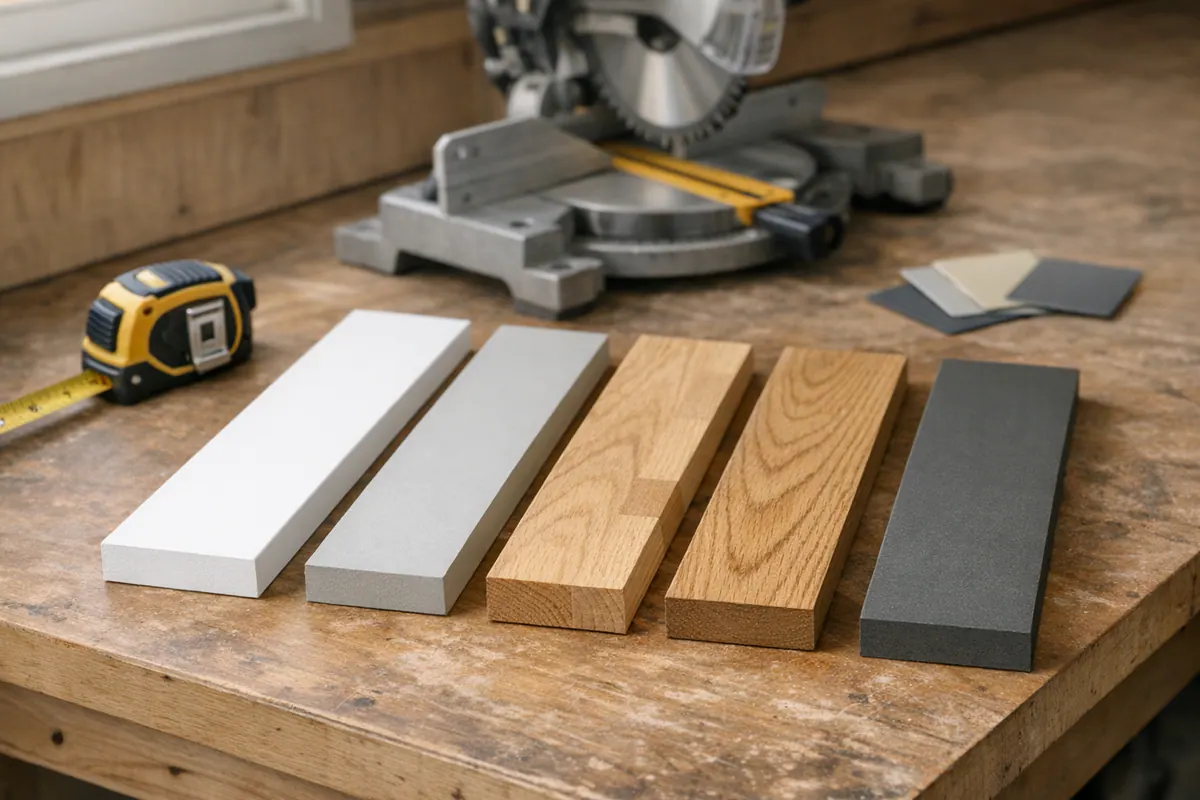
| Material | Moisture resistance | Termite risk | Exterior use | Interior use | Appearance | Paintability | Movement | Maintenance | Relative cost |
|---|---|---|---|---|---|---|---|---|---|
| PVC trim | Excellent; a strong moisture resistant trim choice | Very low | Excellent for exposed door, garage, fascia, and porch trim | Good, though sometimes more than needed indoors | Smooth, paint-grade, not stain-grade | Good with the right paint system | Can expand and contract with heat | Low | Mid to premium |
| MDF trim | Poor if water reaches the fiber core | Low to moderate, depending on conditions and product | Weak choice | Good for dry, air-conditioned rooms | Very smooth, paint-grade only | Excellent for crisp painted profiles | Stable when kept dry | Low in dry rooms; poor after swelling | Budget to mid-range |
| Finger-jointed pine | Fair; better protected when fully primed and painted | Moderate | Limited, mostly protected areas | Very good for painted casing and baseboards | Paint-grade; joints are usually hidden by paint | Very good | Can move like wood, but often straighter than lower-grade solid boards | Moderate | Mid-range |
| Solid wood | Fair to good by species and finish | Moderate to higher if unprotected | Possible in protected details with upkeep | Excellent when appearance matters | Best option for stain-grade grain and traditional character | Good, but often chosen for stain | Can expand, contract, cup, or split | Moderate to high | Mid to premium |
| Composite trim | Good to excellent, depending on product type | Usually low, depending on material makeup | Good to excellent when exterior-rated | Good, though often selected for exterior durability | Usually paint-grade; texture varies | Good to excellent by surface type | Varies by product | Low to moderate | Mid to premium |
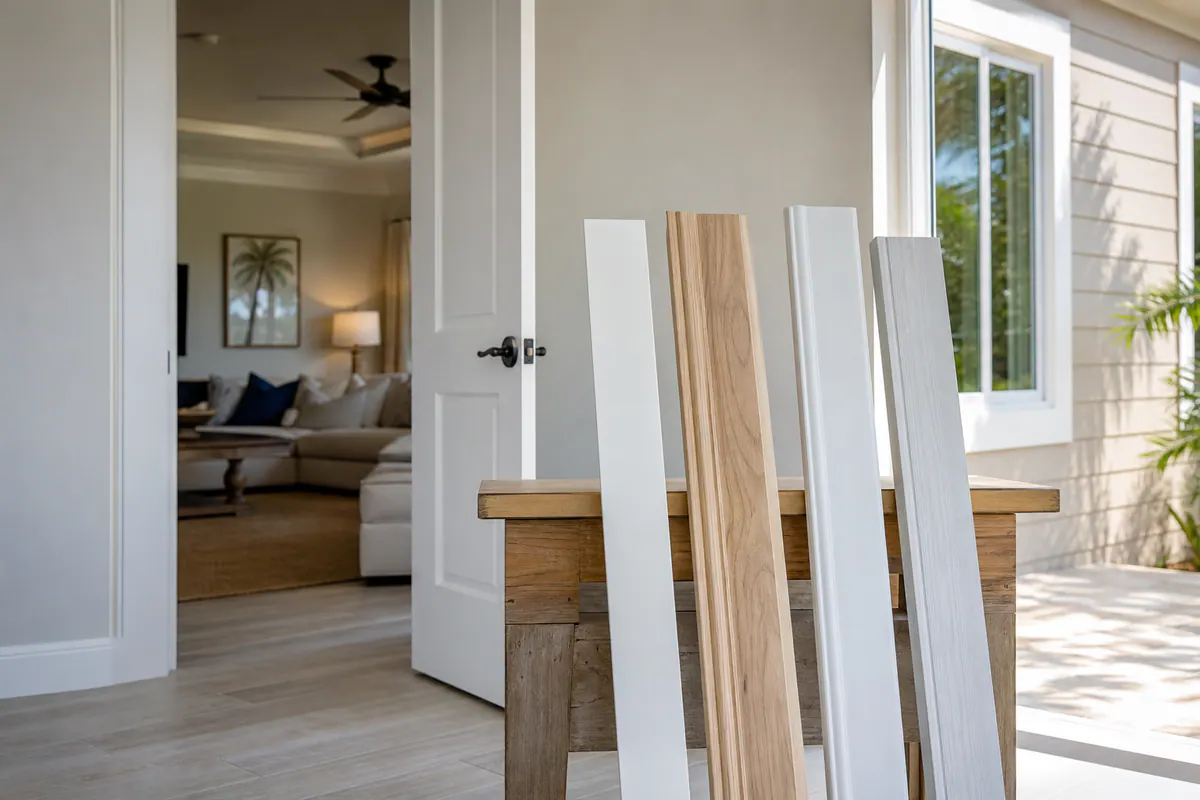
Two comparisons usually drive the decision. In PVC vs wood trim, PVC wins in wet exterior exposure, while wood wins when natural grain or stain-grade appearance matters. In MDF vs wood trim, MDF is smoother and budget-friendly for dry painted interiors, while wood options handle impacts, repairs, and finish upgrades better.
Composite trim needs a little extra care in the comparison because it is not one single material. The label can include engineered wood composites, fiber-cement trim, polymer-based boards, and other manufactured exterior boards. The practical takeaway: treat composite as a category, not a guarantee, and judge the specific board by whether it is made for exterior exposure, wet edges, heat, paint, and the profile you want.
Best Choices for Exterior Trim: Door Casing, Garage Trim, Fascia, Soffit, and Porch Details
Outside, the trouble spots are usually the pieces that catch splashback, roof runoff, wind-driven rain, or water sitting at a horizontal edge: exterior door casing, garage opening trim, fascia accents, soffit returns, porch column wraps, and trim at covered entries.
For those exposed areas, PVC and high-quality exterior-rated composite are usually the strongest choices. PVC trim is a synthetic board that does not rely on wood fiber, so it is well suited to wet edges, lower door trim, garage trim near the driveway, and porch details that get soaked during summer storms. The tradeoff is that PVC can move with heat, so it needs the right fasteners, spacing, paint color, and joint planning. That is why PVC trim Southwest Florida projects tend to work best when the installer treats it like its own material, not like pine with a different label.
Exterior-rated composite trim can also be a good fit, especially for fascia, soffit trim, porch wraps, and broader trim boards where a manufactured product offers consistent profiles and lower maintenance than wood. The important distinction is that "composite" is a category: some boards are polymer-based, some are engineered wood, and some are fiber-cement or other blends. For the homeowner, the takeaway is simple: use composite outside only when the product is built for exterior moisture, painted exposure, and the specific profile being replaced.
MDF is the weak choice outdoors. It is smooth and useful inside, but exterior trim exposes cut edges, nail holes, bottom ends, and joints to water. Once water reaches the fiber core, swelling and paint failure can turn a neat casing or fascia detail into a soft, uneven repair. Untreated finger-jointed pine has a different problem: it is real wood assembled from shorter pieces, so it can paint nicely, but outside it still needs full protection from moisture and insects. If it is used in a wet exterior location without enough sealing and maintenance, it is usually a false economy.
Solid wood still has a place outside when appearance, restoration work, or a historically appropriate detail matters. It can make sense for protected porch features, decorative brackets, or traditional trim profiles where the grain and crisp edges are part of the look. But the wood species, end-grain sealing, primer, paint coverage, drainage, and maintenance schedule matter more outside than they do indoors. In exposed, low-maintenance situations, wood is usually not the easiest moisture resistant trim option.
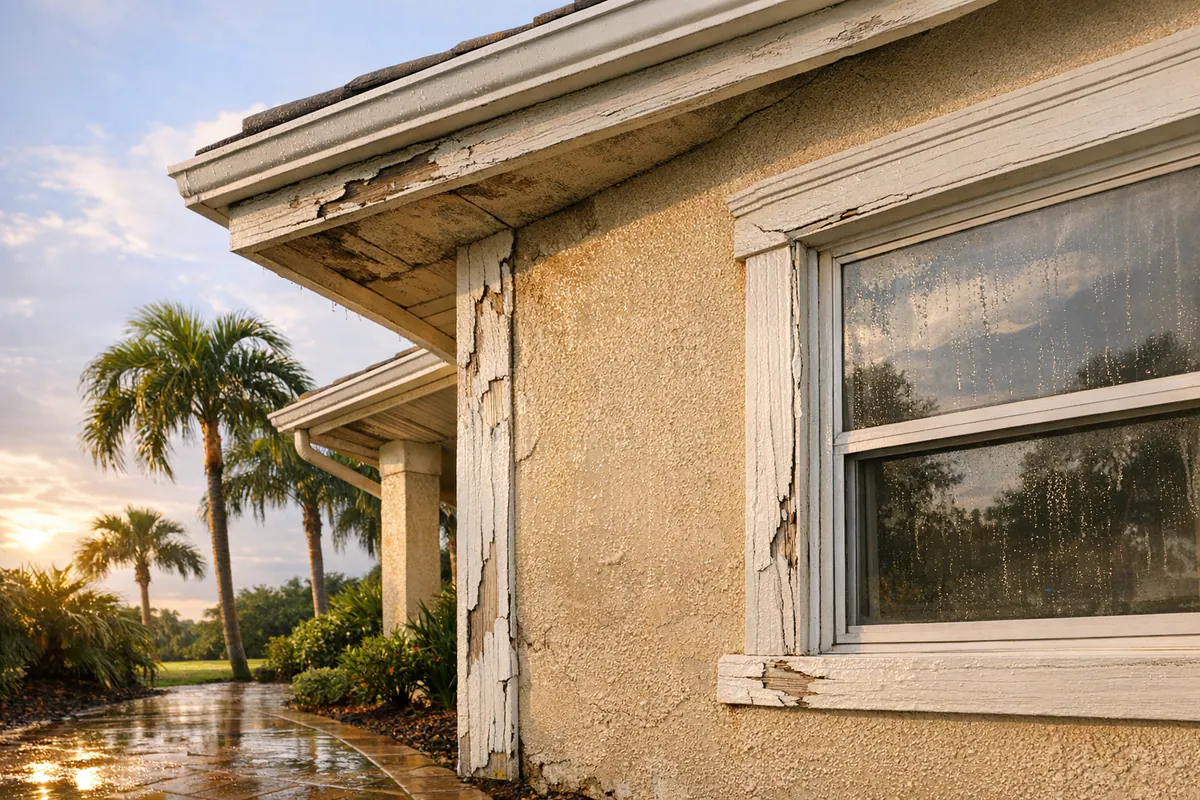
For exterior trim repair Florida homeowners often face a second decision: patch the damaged piece or upgrade the whole vulnerable run. A small isolated rot spot on one protected board may justify a localized replacement. But if the bottom of a door casing, both sides of a garage opening, or a long fascia run is repeatedly soft, swollen, termite-damaged, or peeling, replacing only the worst piece can leave the same failure pattern in place. That is when upgrading the exposed run to PVC or a durable exterior-rated composite usually makes more sense than rebuilding the same problem in wood.
Best Choices for Interior Trim: Baseboards, Door Casing, Window Casing, and Crown Molding
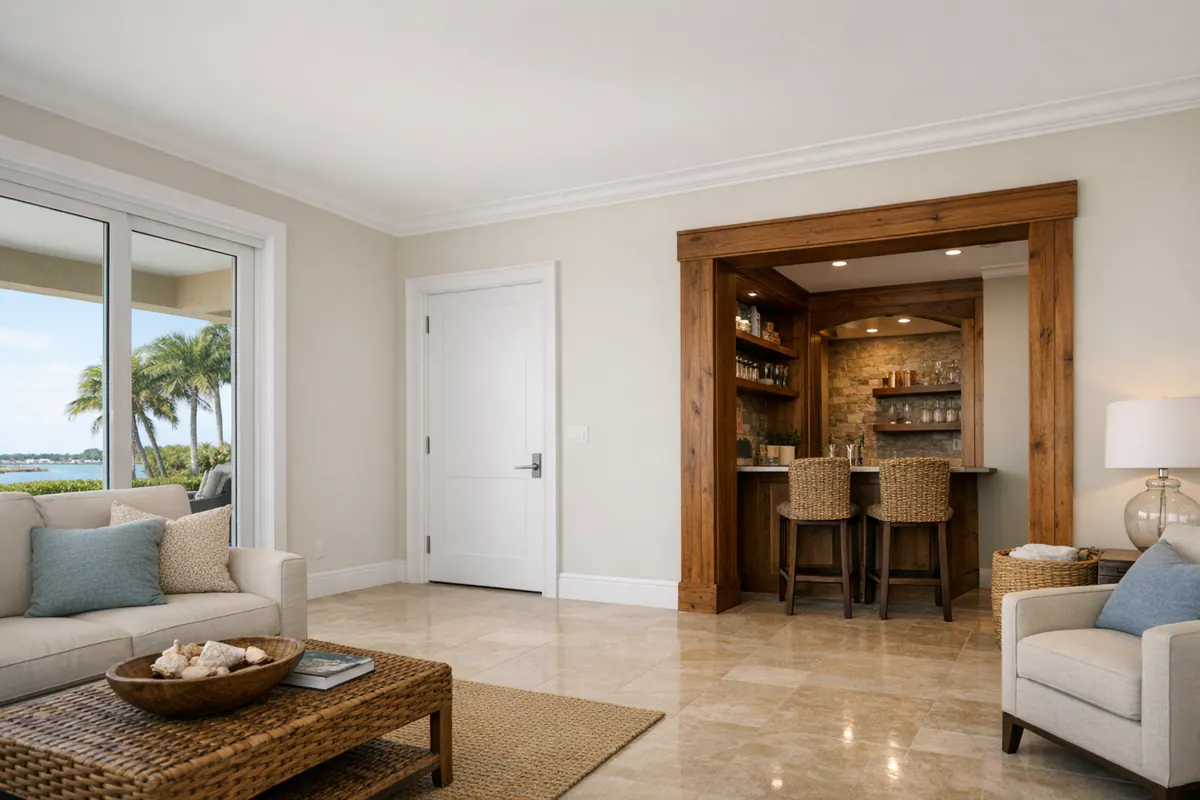
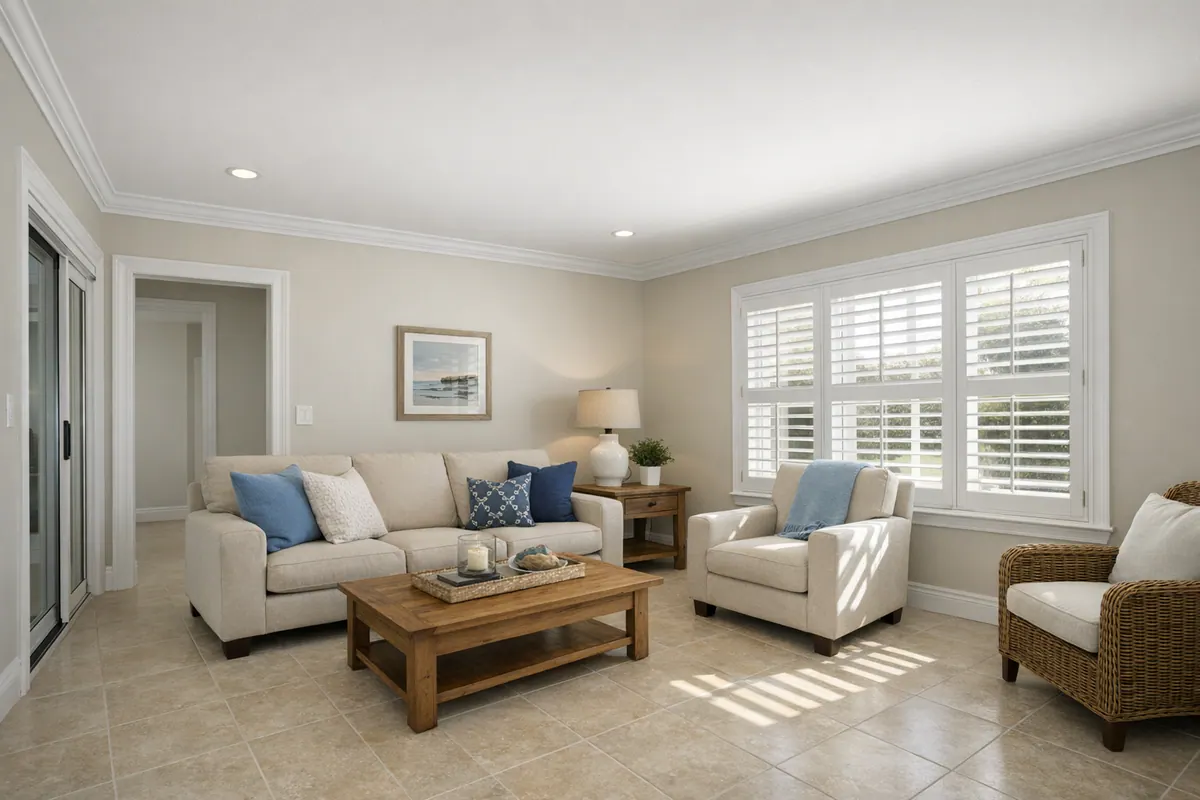
Inside the house, the decision gets more forgiving because air conditioning lowers the day-to-day moisture load. For painted baseboards, door casing, window casing, and crown molding in bedrooms, living rooms, halls, and other dry spaces, MDF is often a practical choice among interior trim materials. It has a smooth face, takes paint well, and is typically used when the goal is a clean painted finish rather than visible wood grain.
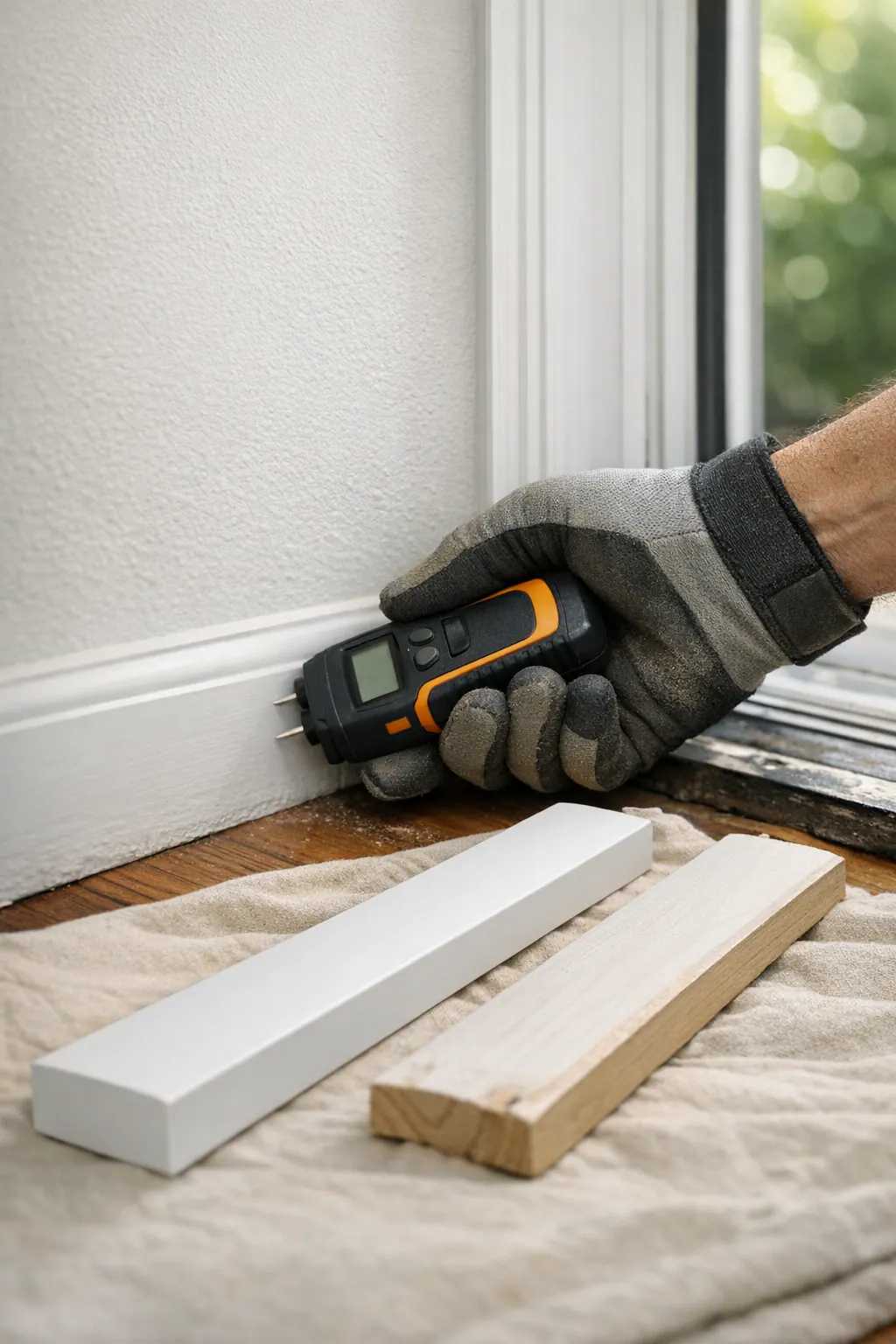
The weak spot is water at floor level. MDF can perform acceptably in conditioned rooms, but it is not a great match where baseboards may see repeated mopping, pet water bowls, toilet overflows, plumbing leaks, damp tile edges, slab moisture, or wind-driven rain near an exterior door. That is the real issue with MDF trim in humid climates: ordinary indoor humidity is not the same problem as liquid water reaching an exposed edge, nail hole, or damaged paint film.
Finger-jointed pine is the stronger painted-wood middle ground. It is made from shorter pieces of pine joined into longer trim boards, so it still paints like wood trim, but it generally gives better nail and screw holding, better impact resistance, and more tolerance for small bumps than MDF. In an MDF vs wood trim decision for interior baseboards, finger-jointed pine is often worth considering for busy hallways, kids' rooms, door casing that gets touched often, and areas where furniture or vacuum cleaners tend to hit the trim.
Solid wood is the upgrade choice when appearance matters more than saving money. It makes sense for stain-grade casing, premium crown molding, custom built-ins, historic-style details, or rooms where the grain and sharper profile edges are part of the design. The tradeoff is cost and upkeep: wood needs a better finish system and more attention around moisture-prone spots than MDF or PVC.
PVC can be used indoors, especially in bathrooms, laundry rooms, mudroom-style entries, and other wet-prone areas, but it is usually more material than a dry bedroom needs. Composite trim can also work indoors when the product profile and finish fit the project, though many composite choices are selected mainly for exterior durability. For most Southwest Florida interiors, the practical split is simple: MDF for dry painted rooms, finger-jointed pine where you want tougher painted trim, solid wood for stain or premium details, and PVC for wet-prone interior edges.
Material-by-Material Breakdown: Strengths, Weaknesses, and Best Uses
A useful way to sort the choices is to think of each material as having a "comfort zone" where it performs well and a "danger zone" where its weaknesses show up fast.
- PVC trim: PVC is a synthetic trim board, so its main advantage is that it does not rot like wood and is not attractive to termites as a food source. It is a strong choice for exterior door trim, garage openings, fascia accents, porch details, and wet-prone interior spots. The tradeoff is movement in heat, so long runs and dark paint colors need more care than a simple bedroom baseboard. It usually costs more than MDF or basic pine, but maintenance is lower when it is installed and painted appropriately.
- MDF trim: MDF is a smooth, paint-grade fiberboard. Its best use is dry, air-conditioned interior trim where the goal is a crisp painted finish at a budget-friendly cost. It is a weak fit for exterior trim, damp bathrooms, laundry rooms with floor water, or entry doors where rain can reach the baseboard. When water gets into the core, swelling is the concern. Insect risk is not the main reason to avoid it; moisture is. Maintenance mostly means keeping paint intact and replacing damaged swollen sections rather than trying to nurse them along.
- Finger-jointed pine: Finger-jointed pine is made from shorter pieces of pine joined into longer boards, and it is usually intended for paint rather than stain. It gives you real-wood workability, better edge strength than MDF, and a mid-range cost. It is a good choice for painted interior casing, baseboards, and trim in rooms that see bumps and traffic. It should be avoided in exposed exterior locations unless the product and finish system are truly suited for that use, because pine can still rot or attract insects when moisture protection fails.
- Solid wood trim: Solid wood is a broad category, not one performance level. It can mean affordable paint-grade pine, more stable or decay-resistant species, or higher-end hardwoods used for stain-grade trim. Its strength is appearance: grain, sharp profiles, and a more traditional feel. Its weakness is maintenance. Wood moves with humidity, can decay when water sits against it, and may be vulnerable to insects if left unprotected. Use it where the look matters enough to justify sealing, painting or staining, and periodic upkeep.
- Composite trim: Composite trim is a manufactured category, so performance varies by product. Some options are engineered for exterior moisture resistance and can be a premium alternative to PVC in broad boards, fascia, soffit trim, and porch wraps. Others are better suited to protected areas. The practical difference is that composite trim may offer a wood-like look or specific profiles while reducing some rot concerns, but it is not automatically maintenance-free. Expect mid-range to premium pricing and choose it when durability, profile consistency, and lower upkeep matter more than lowest upfront cost.
For most homeowners comparing PVC vs wood trim, the real dividing line is exterior exposure. For most homeowners comparing MDF vs wood trim, the dividing line is dry painted interior work versus areas that may get wet or take abuse.
What Southwest Florida Does to Trim: Humidity, Heat, Rain, Salt Air, and Insects
The reason those dividing lines matter is that Southwest Florida gives trim two different jobs. Indoors, air conditioning usually keeps rooms drier, but it can also create moisture swings around exterior walls, windows, doors, and bathrooms. Outdoors, trim has to handle humid air, rain splash, storm-driven water, and fast drying in sun. That is why the best trim for humid climates is less about one label and more about whether the material can survive the exact exposure.
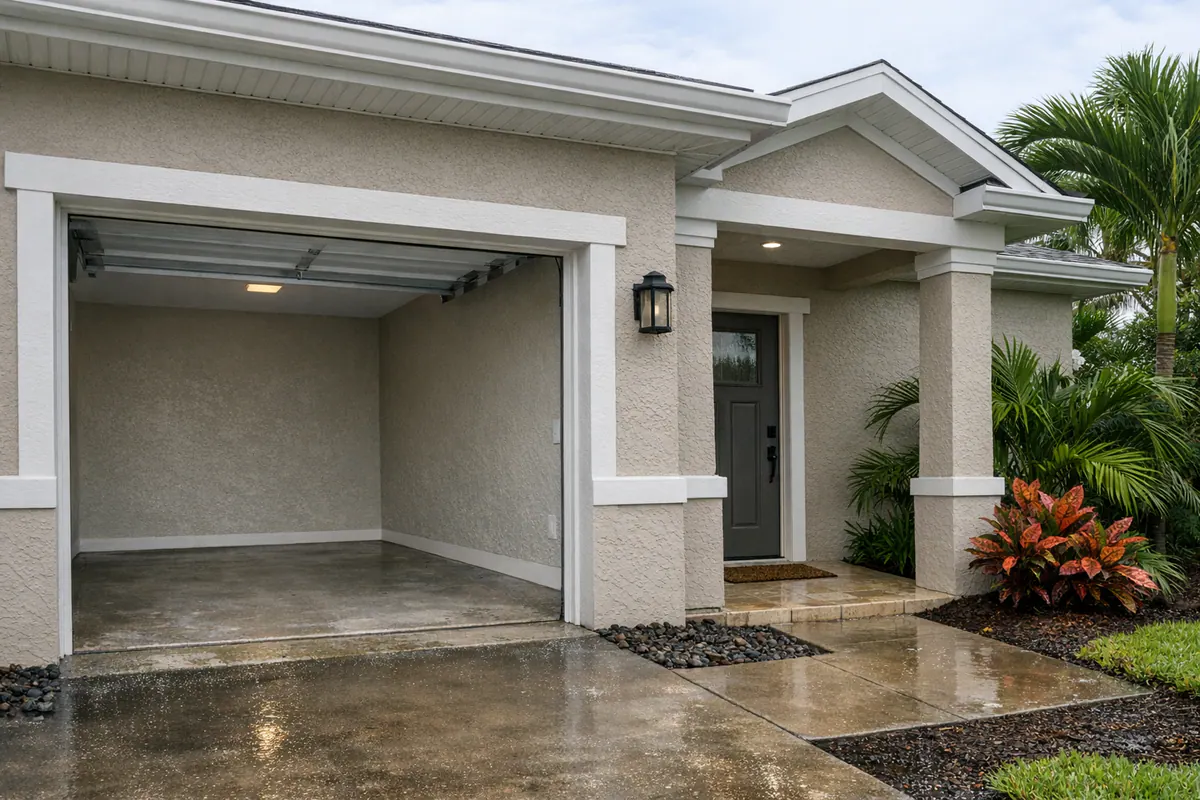
Water usually starts the damage cycle at edges, end cuts, joints, nail holes, and the bottom of trim near concrete or tile. A small paint crack on wood, finger-jointed pine, or MDF may not look urgent at first, but once water reaches an absorbent core or unsealed wood fiber, swelling and rot can spread behind the painted face. PVC and many exterior composites reduce that risk because they are chosen as moisture resistant trim for Florida homes, but they still need smart joints, drainage, and coatings that match the exposure.
Heat adds a separate issue. Strong sun and dark paint can make trim surfaces much hotter than the surrounding air, especially on garage trim, fascia, and west-facing details. PVC trim expands and contracts more noticeably than wood, so long runs, tight joints, and dark colors can become trouble spots if the product and detailing are not suited to that location. Composite trim varies by formula, so some products handle heat, paint color, and movement better than others.
Near the coast, salt air is another stressor because it is hard on fasteners, coatings, and exterior assemblies. Insects matter too: wood-based trim can become vulnerable when moisture, cracks, or hidden gaps give pests an easier path. The practical takeaway is simple: dry interiors can use smoother, budget-friendly materials; wet-prone interiors need tougher choices; and exposed exterior trim should be treated as a weather assembly, not just decoration.
Which Trim Should You Choose? Room-by-Room and Exterior-by-Exterior Recommendations
For the final decision, match the material to the spot first, then refine by finish, budget, and how often you want to repaint or repair.
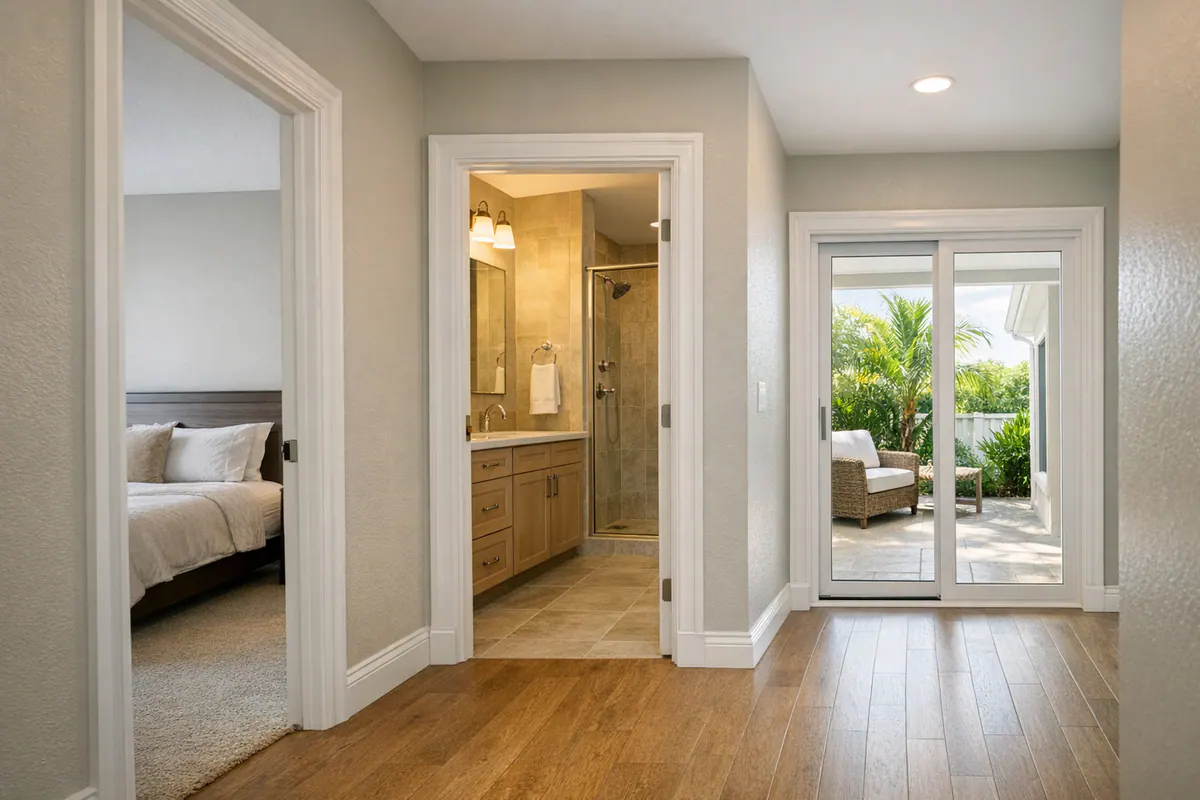
- Dry bedrooms, living rooms, and hallways: Choose MDF for budget-friendly painted baseboards and casing, finger-jointed pine for a tougher painted option, or solid wood when you want sharper profiles or a premium feel. Avoid PVC unless the room has a specific moisture issue; it is usually more exterior-minded than these spaces need.
- Bathrooms and laundry rooms: Choose PVC, exterior-rated composite, or well-sealed wood where splashes, damp towels, mops, and appliance leaks are realistic. Use moisture-resistant MDF only cautiously and away from repeated water contact. Avoid standard MDF at floor level.
- Kitchens: Choose finger-jointed pine, solid wood, PVC, or composite near sinks, dishwashers, sliding doors, and tile floors. MDF can work in drier wall areas, but avoid it where cleaning water or spills can sit against the baseboard.
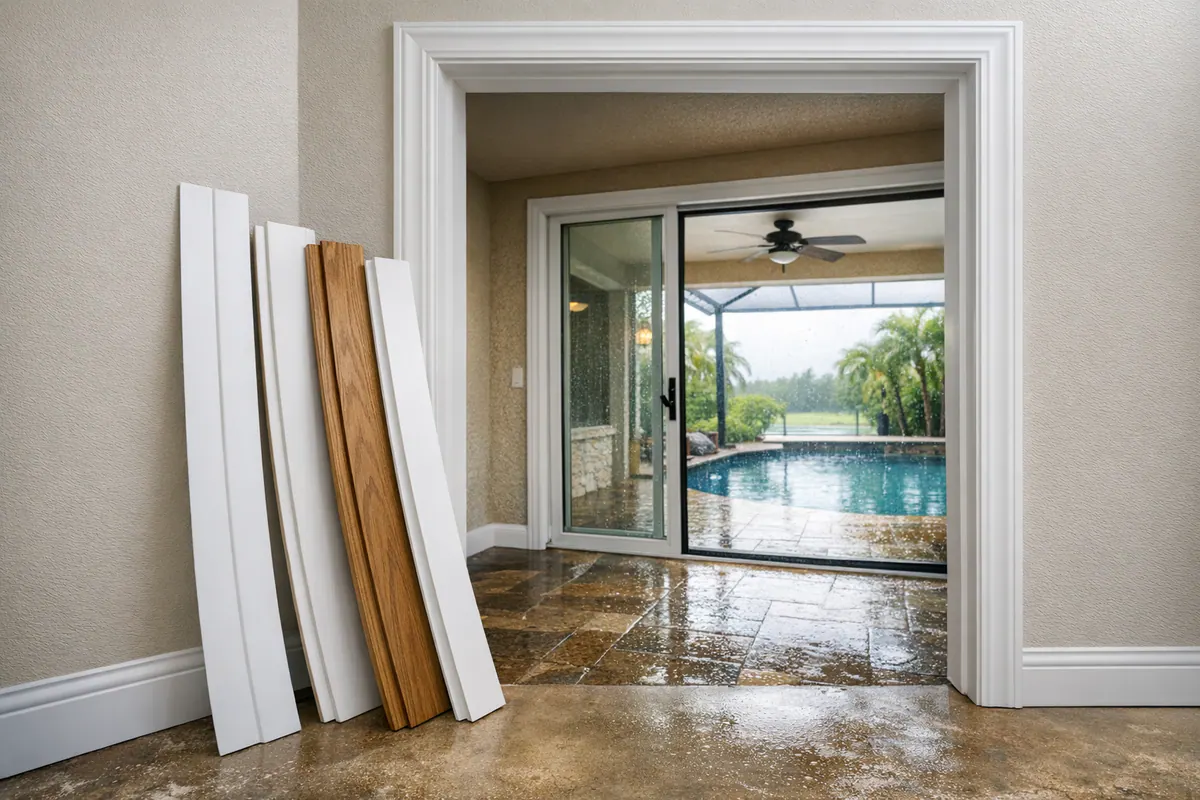
- Exterior doors and patio-door interiors: Choose PVC or composite for the lower legs and threshold-adjacent trim, where rain tracking and wet shoes are common. Avoid MDF and unprotected pine at the bottom of these openings.
- Interior window trim: Choose MDF or finger-jointed pine for painted dry-room windows, and solid wood for stain-grade casing. Around condensation-prone or leaky windows, step up to PVC, composite, or well-protected wood.
- Garage trim: Choose PVC or exterior-rated composite around garage doors and side entries because these areas see heat, splash, and abuse. Avoid MDF and lightly sealed wood.
- Porch, lanai, fascia, and soffit trim: Choose PVC or exterior-rated composite for the lowest-maintenance exterior trim repair or replacement. Use solid wood only for protected architectural details where repainting and upkeep are acceptable.
- Stain-grade feature areas: Choose solid wood because MDF, PVC, and many composites are mainly paint-grade materials. Avoid forcing a stain look onto materials that are designed to be painted.
So the best trim material for Southwest Florida is not a single product; it is the material that fits the exposure. Dry interiors give you the widest range of interior trim materials. Wet-prone interiors need more moisture resistance. Exposed exterior trim deserves PVC or a proven composite unless you are deliberately choosing wood for appearance and accepting the maintenance that comes with it.