

Professional Trim Installation for Osprey Homes
New flooring often exposes the need for taller baseboards or a better wall-to-floor fit; updated doors and windows can leave unfinished edges that need coordinated casing. In an Osprey home, a trim update may also replace dated or damaged molding, refresh paint-grade details during a remodel, or add crown and wall paneling to give a plain room more definition.
Each detail has a different job. Baseboards protect and finish the wall-to-floor transition; casing frames doors and windows while covering the joint at the opening; crown molding softens or emphasizes the wall-to-ceiling line; and paneling or built-up trim adds deliberate architectural structure to a wall. Exterior trim repair is different again: it addresses the finishing boards and surrounds exposed to rain, sun, and changing moisture conditions.
For trim installation in Osprey, FL, the best result is not simply more molding. Proportions should suit the room, casing should line up across related openings, and transitions should look intentional rather than patched together. Cleanly fitted joints, straight visual lines, filled fasteners, and smooth paint-ready caulk lines are the small details that make new trim read as part of the home.
That level of coordination matters across Sarasota County's mix of newer residences and established homes. Humidity, coastal moisture exposure, and uneven existing walls can affect material choices and finishing work. A thoughtful scope accounts for the trim's location, whether the desired finish is painted or stained, and whether damaged material or underlying moisture concerns need attention before the new details go in.
Interior Trim Options: Where Each Detail Works Best
Start with the details the eye meets at floor level and around openings. Baseboards create a finished lower edge in living areas, halls, bedrooms, and kitchens; a simple square or eased profile suits clean-lined rooms, while a taller, shaped board gives a more traditional room greater presence. Shoe molding or quarter round is the smaller strip at the baseboard's bottom edge, useful for covering a narrow irregular gap at flooring without replacing the full baseboard. For baseboard installation in Osprey, FL, the profile should relate to the casing rather than compete with it.
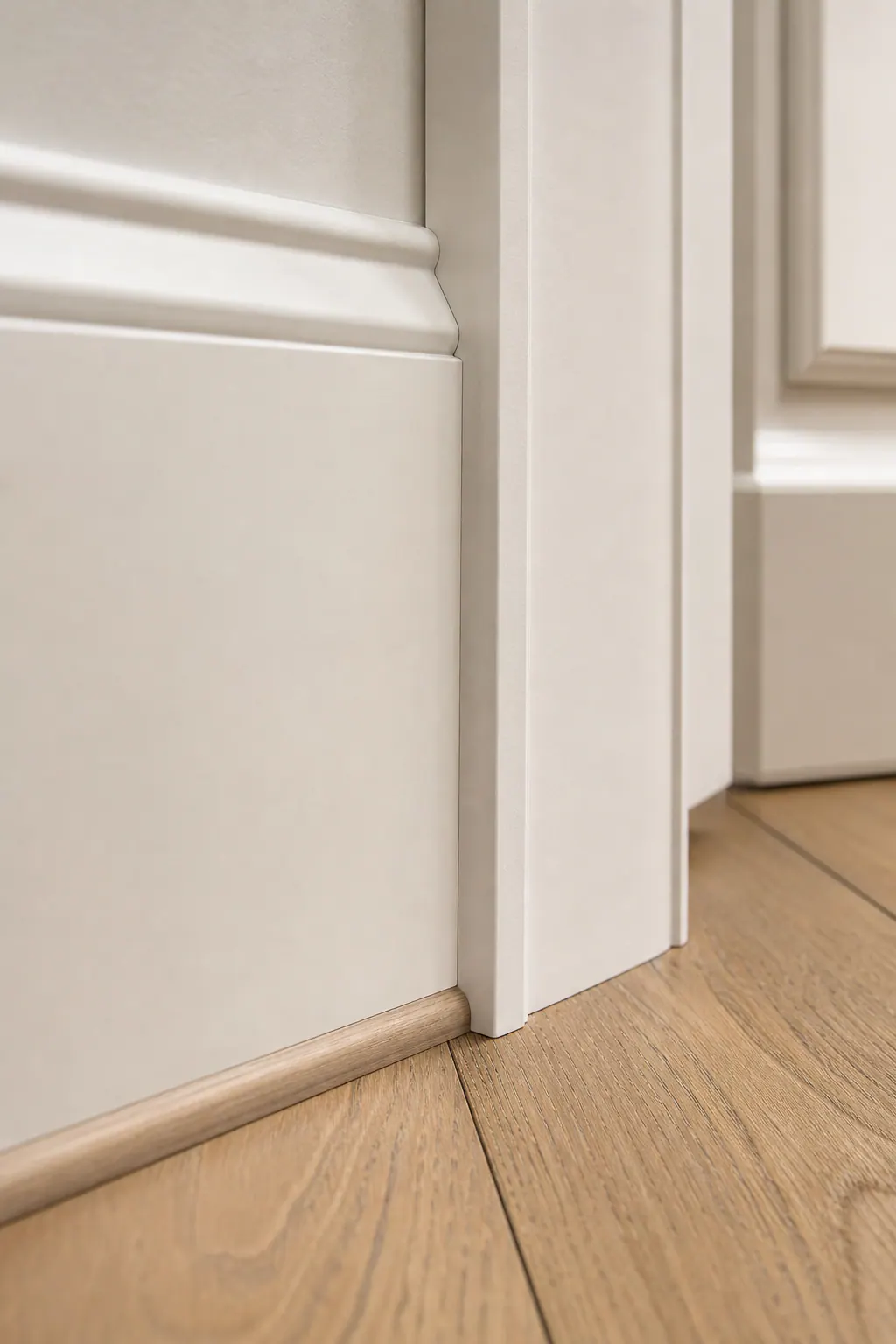
Door and window casing frames an opening and disguises the drywall-to-jamb transition. Narrow, flat casing keeps a contemporary remodel quiet; wider casing, a backband, or a built-up header makes a larger opening feel more formal. At windows, a stool is the projecting interior ledge, while the apron is the trim directly beneath it. Together, they give a window more visual weight than casing alone and work especially well in rooms where the windows are meant to read as architectural features.
Crown molding occupies the wall-to-ceiling junction. Modest crown can finish an average-height room without making it feel busy, while a deeper or layered treatment has more visual room in taller spaces. Chair rail divides the wall horizontally, often as the upper boundary of a lower-wall treatment. Decorative applied molding, wall panels, board and batten, and wainscoting add pattern and depth: board and batten uses vertical battens over a flat wall, while wainscoting typically creates a more continuous paneled lower section. These treatments can give a dining room, entry, stair hall, or feature wall structure without requiring every room to receive the same detail.
A coordinated interior trim installation in Osprey, FL considers the room as a system: casing widths, baseboard height, crown scale, panel spacing, and paint color should feel related. An isolated replacement is often the practical choice after flooring or localized damage, but it needs a close profile and finish match to avoid looking patched in. A whole-room package allows more freedom to update proportions and use a single paint color or intentional contrast across the baseboards, casing, crown, and wall treatment.
Choosing Wood, MDF, PVC, or Composite Trim in Osprey
Material choice becomes most noticeable when the room has a different exposure level than the rest of the house. For protected living rooms, bedrooms, halls, and other dry interior spaces, paint-grade MDF is often a practical way to achieve a crisp, smooth painted profile. It works well for broad baseboards, simple casing, and layered painted details where an even finish matters more than visible grain. The tradeoff is location: MDF is a weaker fit where repeated moisture exposure is likely, so it deserves caution near frequently wet bathroom areas, laundry rooms, or leaks.
Wood offers a different look and set of options. Solid wood is the natural choice when the goal is a stain-grade finish that shows grain, or when a project calls for a particular wood species or a more specialized carved, shaped, or built-up detail. Finger-jointed wood is generally intended for painted trim, combining shorter wood sections into longer lengths. Both can suit interior work, but wood responds to changing conditions; careful finishing and thoughtful joints help keep that movement from becoming conspicuous over time.
For exterior-facing work and higher-moisture locations, PVC and composite trim are worth considering. PVC is a cellular plastic trim material with no grain to stain; it is commonly selected for painted exterior casing, fascia-adjacent details, and other areas exposed to rain and sun. Composite trim can provide another paint-ready exterior option, with its own profile and finish characteristics. Neither choice is simply "install and forget": PVC expands and contracts, so the layout, fastening, joint treatment, and allowance for movement must suit the product.
In a custom trim installation in Osprey, the useful starting point is exposure first, finish second. A dry, painted guest room may favor MDF; a stained interior feature may call for solid wood; and a covered entry or damp-prone utility area may point toward PVC or composite. Good material selection also accounts for the existing condition beneath the trim. New exterior boards should not merely cover soft substrate or moisture damage, and an interior replacement should address the condition that caused visible swelling or deterioration before the finish work begins.
Custom Finish Carpentry That Fits the Home
A room's proportions should drive the detail plan. Taller baseboards can give a high-ceilinged living area a grounded, deliberate look, while an oversized profile can crowd a lower ceiling. Casing deserves the same restraint: its width should frame a door or window without making a narrow opening feel pinched. Custom finish carpentry in Osprey, FL can either carry an existing millwork language through an addition or remodel, or establish a cleaner updated scheme with coordinated baseboards, casing, and crown.
Built-up headers, window seats, shelving surrounds, and other integrated details need layout before material is cut. Wall paneling and board-and-batten are especially dependent on planning: rails and vertical battens should relate intentionally to windows, door openings, outlets, furniture placement, and focal features rather than ending in arbitrary narrow strips. A strong layout uses consistent spacing where the room allows it and makes deliberate transition choices where it does not. For door casing installation in Osprey, FL, aligned margins around the jamb and a balanced relationship to nearby baseboard are small details that make the opening read as finished.
Finish expectations also change the carpentry. Paint-grade trim can use filled fasteners, caulked edges, and a uniform painted surface to visually unify joints and materials. Stain-grade work leaves the wood more exposed, so species selection, grain direction, color matching, joint fit, and finish consistency become much more visible. Existing homes may add another layer: textured ceilings, bowed walls, and out-of-square older openings can call for scribed baseboards, shims behind casing, or tailored transition pieces. Those adjustments are not shortcuts; they are how custom trim is fitted to the house rather than forcing the house to look square on paper.
Exterior Trim Repair and Replacement for Coastal Florida Conditions
Outside, the question is less about matching a room and more about managing exposure. Fascia-adjacent boards, window and door surrounds, soffit transitions, column wraps, porch trim, and decorative brackets all sit at points where rain, sun, and changing moisture conditions can test joints and finishes. For exterior trim repair in Osprey, FL, the scope should distinguish a weathered paint surface from material that has softened, separated, or lost a secure attachment.
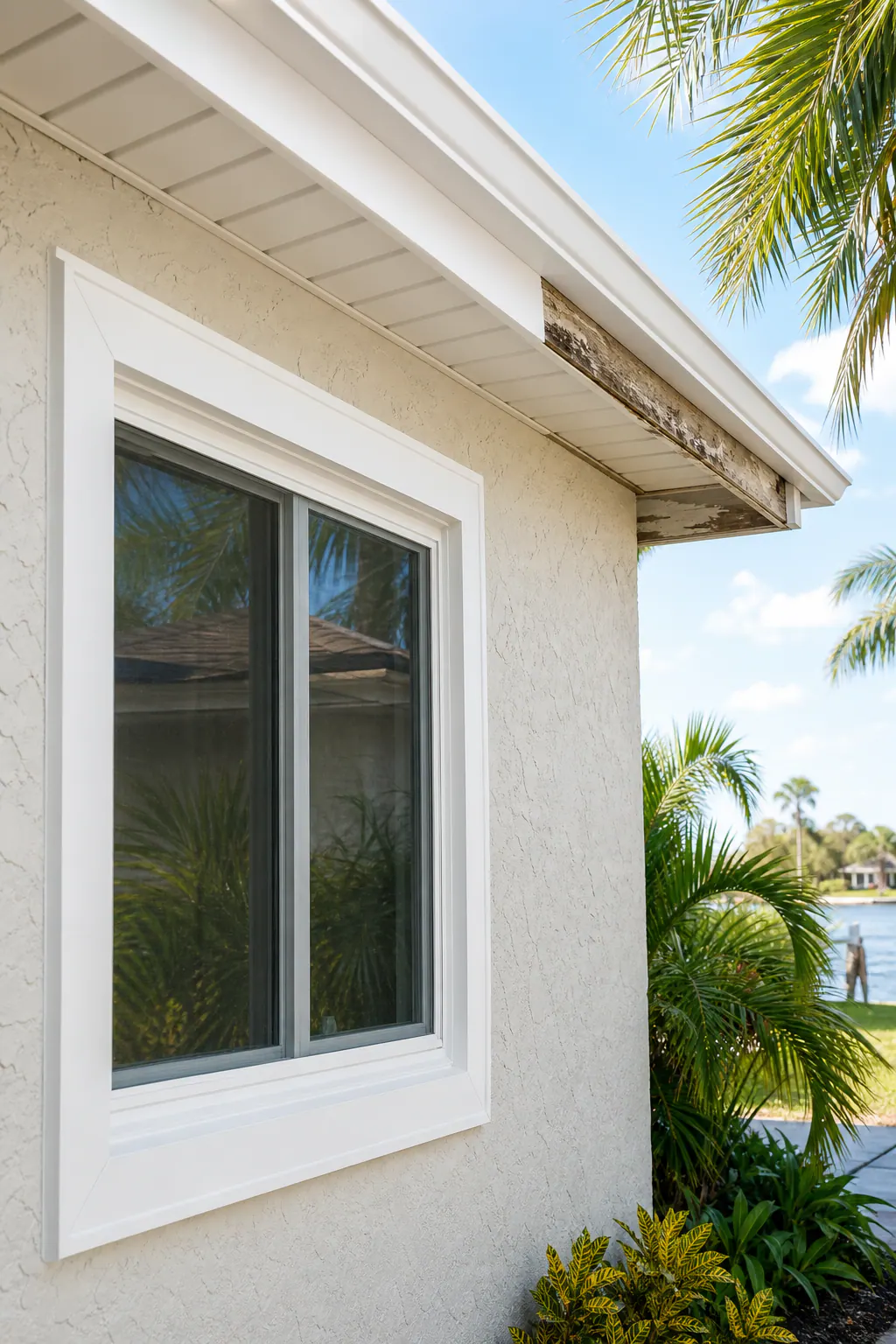
A localized repair can make sense when deterioration is confined to a small area and the adjoining trim remains solid, aligned, and dry. A replacement becomes the more durable choice when damage extends along a run, sections are loose, moisture marks keep returning, or the material behind the trim has been affected. Covering an open joint or damaged edge with new trim may improve the appearance briefly, but it does not resolve the condition allowing water to reach that area.
Material and preparation should suit the location. Exterior-rated PVC or composite can be practical for painted wraps, porch details, and exposed surrounds; wood may be selected where its profile or appearance is important, with careful protection of cut ends and exposed surfaces. A well-planned repair also accounts for the flashing path above the trim, cleanly tooled caulk lines where joints need sealing, compatible primer, and thorough paint preparation. Those details help exterior trim read as a finished part of the façade rather than a series of patched edges.
What Quality Trim Installation Should Look Like
The best way to judge finish carpentry is to look closely at the transitions, not just the overall room. Accurate measurement and layout keep a chosen profile consistent through a run, while baseboards that meet an uneven floor should be scribed, cut to follow its contour, instead of leaving a wide, irregular gap. Around doors and windows, casing should hold an even reveal, the narrow exposed line between the jamb and trim, so the opening reads square and deliberate.
Joints deserve the same attention. Inside corners are often coped or otherwise fitted so the faces meet tightly; outside miters should align cleanly without a stepped edge. Fasteners need to hold the material securely without splitting it or leaving conspicuous holes. Small, controlled finishing gaps can be filled and caulked for a painted installation, but caulk should create a smooth edge, not disguise poor cuts, loose material, or an oversized joint.
Preparation affects the finished result as much as cutting does. A professional trim installer in Osprey, FL should protect flooring, walls, and nearby furnishings during removal and installation, then address nail holes, seams, and paintable edges before coating begins. Stain-grade trim calls for especially precise joints because the finish leaves the wood and its joinery visible.
Painting and touch-up should also be plainly assigned in the scope: whether the work includes primer, finish coats, caulk, patching, color matching, or only trim installation ready for a painter. Poor fit, mismatched material, weak fastening, or incomplete sealing can leave visible gaps, cracking, movement, and earlier deterioration, details that become more apparent after paint is applied.
How to Choose a Finish Carpentry Provider in Osprey
Begin by asking for a site visit or detailed measurements, not a price based only on a room photo. Review work comparable to your scope: painted MDF baseboards differ from stain-grade casing, built-up wall paneling, or exterior PVC repair. Look for photos that show corners, door reveals, transitions, and finished surfaces, not only wide remodeling shots.
Before work begins, settle the material, profile, and finish expectation. Ask how uneven floors, bowed walls, existing damage, removal, and paint touch-up will be handled. A written scope should separate installation from prep, painting, repairs, and change-order work, so added conditions are not confused with the original plan.
Scheduling and cost depend on linear footage, profile complexity, removal needs, material, finish level, custom layout, and exterior repair conditions. To discuss trim installation Osprey FL, share your home's goals, preferred style, and the areas you want included.
Plan the next step
Compare the broader Trim Installation service.
Review the Osprey, FL service area for local planning context.
When you are ready, request a free estimate with the rooms, trim goals, city, and available photos.
FAQs
What does professional trim installation include in an Osprey home?
Professional trim installation can include baseboards, door and window casing, crown molding, shoe molding, paneling, board and batten, and wainscoting. Quality work includes accurate layout, tightly fitted joints, filled fasteners, smooth paint-ready caulk lines, and protection of nearby floors and walls.
What is the best material for baseboards in Florida homes?
For dry interior rooms, paint-grade MDF provides a smooth, crisp painted finish for baseboards and casing. In damp-prone areas or exterior locations exposed to rain and sun, PVC or composite trim is better suited because MDF should be avoided where repeated moisture exposure is likely.
Can crown molding be installed on textured ceilings?
Yes, crown molding can be installed in rooms with textured ceilings, but the ceiling and wall conditions affect the fit. Textured ceilings, bowed walls, and out-of-square openings may require tailored transition pieces, shims, or scribing for clean visual lines.
What should I look for in quality baseboard and door casing installation?
Look for baseboards scribed to uneven floors instead of leaving irregular gaps, plus casing with an even reveal around the jamb. Inside corners should fit tightly, outside miters should align without stepped edges, and caulk should finish small paintable gaps rather than conceal poor cuts.
When should exterior trim be repaired instead of replaced?
Repair is appropriate when deterioration is limited to a small area and the adjoining trim remains solid, aligned, and dry. Replacement is the better choice when damage extends along the run, boards are loose, moisture marks return, or material behind the trim has been affected.