
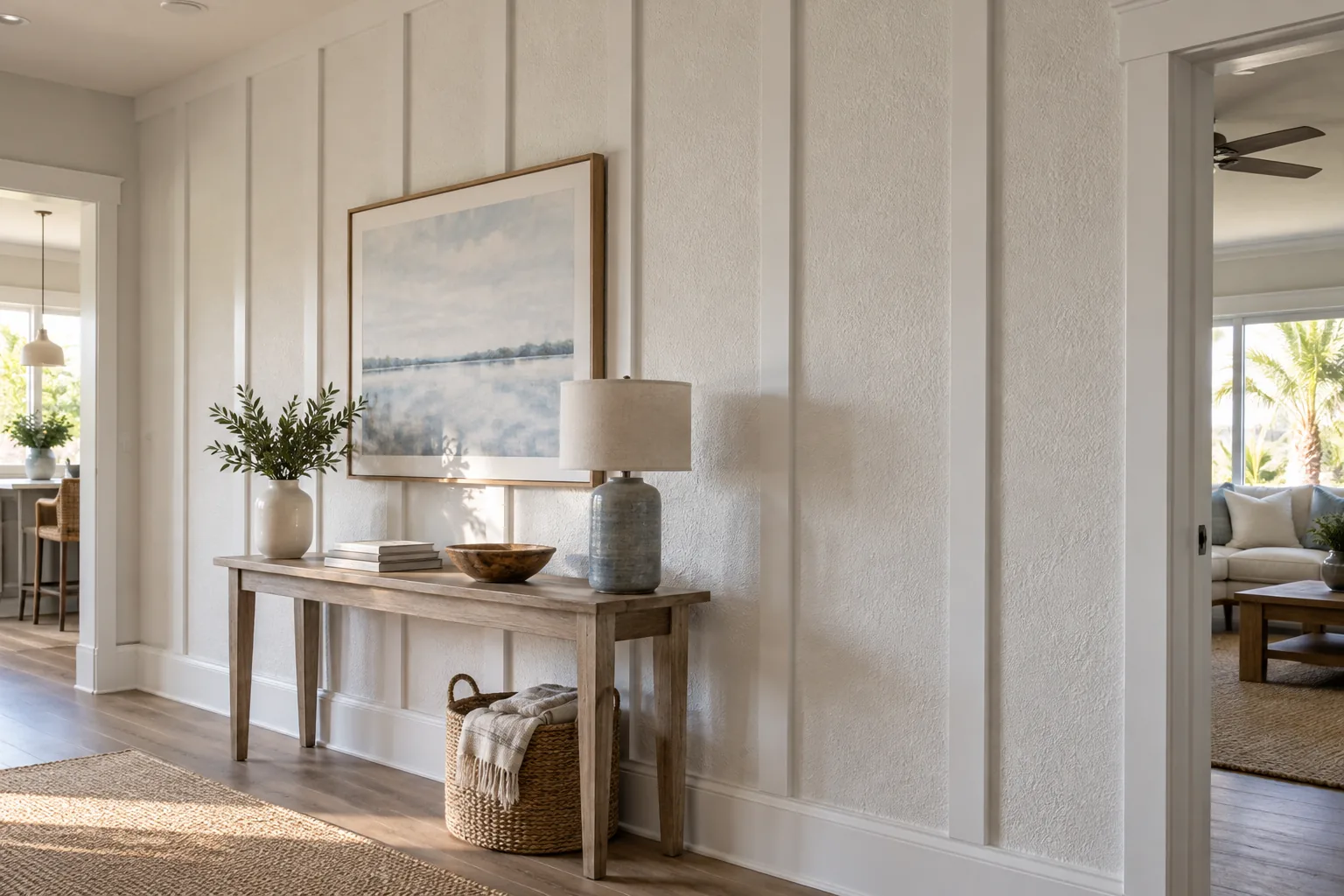
Look at the spaces between the planned battens: would you be happy seeing the wall’s current texture there after painting? If so, applied trim can leave it visible. For a smoother field, a skim coat finishes the existing wall, while smooth backing creates a new surface behind the trim. That finish decision gives a Sarasota County homeowner a starting point for discussing preparation. If the wall has unresolved moisture or damage, have it evaluated and addressed before choosing a treatment that would cover it. The EPA advises fixing water problems rather than concealing them.
Three Preparation Options at a Glance
These choices differ in what forms the visible surface, the field, between the battens. Painting the whole wall one color does not make those surfaces identical.
| Choice | Field between battens | Added wall work and projection | Best fit |
|---|---|---|---|
| Trim over existing texture | Original textured wall remains visible. | Assess and prepare the existing surface; trim adds projection, but no new field layer is added. | You like the texture as part of the finished look. |
| Skim coat, then trim | Smoothed existing wall. | Add surface-finishing work; the field is still the original wall, not a backing panel. | You want a smoother field with an applied-trim treatment. |
| Smooth backing, then trim | New panel or other specified backing. | Add a field layer and its thickness; plan its edges and adjoining finishes. | You want a new smooth field behind the battens. |
Option 1: Leave the Texture Visible Between Battens
With trim applied over the existing wall, the spaces between boards remain textured. On a knockdown wall, for example, the knockdown pattern will still be there after painting; angled light can make surface variation more noticeable. That can be an intentional finish choice, but it will not look like a smooth panel between the battens. USG’s drywall-finishing guidance discusses how lighting and paint finish affect the visibility of surface variation.
This approach avoids the broad smoothing work or added field layer of the other options. It does not mean skipping wall preparation: the surface still needs to be suitable for the agreed work. Ask whether existing paint, loose texture, patches, or uneven areas need attention before trim and finish paint are applied. A repaired spot may look different from the surrounding texture, so decide whether that variation is acceptable before work starts.
Option 2: Skim Coat for a Smooth Field
A skim coat smooths the existing wall before the trim is applied. The wall itself remains the field between battens; there is no separate backing panel. Compared with leaving texture exposed, this gives that field a smoother-looking finish while retaining an applied-trim approach.
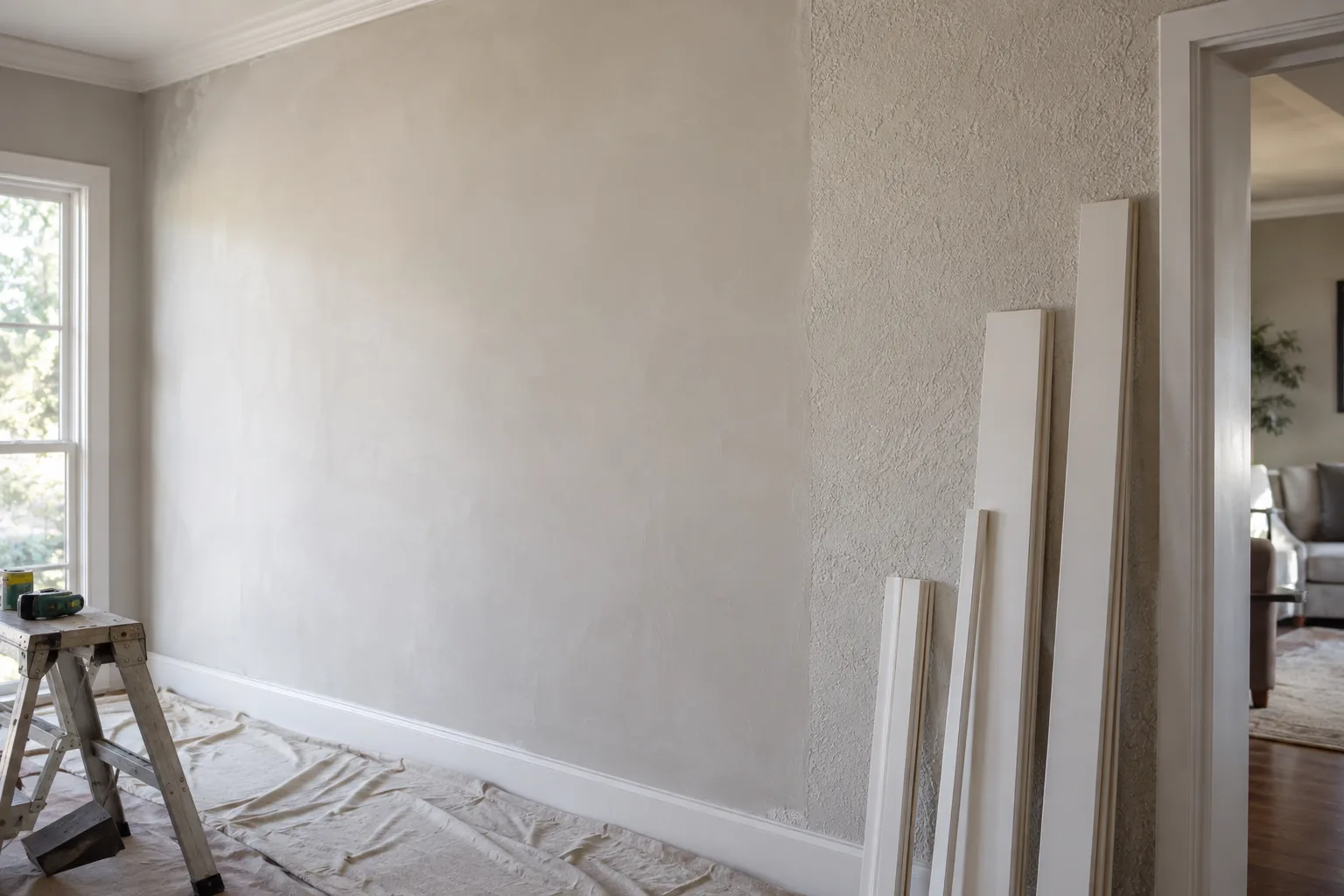
The added scope is drywall finishing across the areas to be smoothed, not just filling gaps around the boards. USG’s finishing guidance describes allowing compound to dry, sanding as needed, removing dust, and priming before decoration; some conditions may take more than one coat. Specify how much of the wall should be skim coated and the finish you expect, rather than assuming one pass will erase every texture.
Because this choice does not add a backing panel, its change in wall projection is different from a fully backed treatment. The applied boards still have thickness, though, so their meeting points with existing trim deserve attention.
Option 3: Add Smooth Backing
Smooth backing creates a new visible field: a specified panel or other suitable backing covers the textured wall, and the battens sit in front of that new surface. This is a fully backed treatment, not another name for skim coating or for boards attached directly over texture. The backing adds its own thickness, with the amount depending on the material selected.
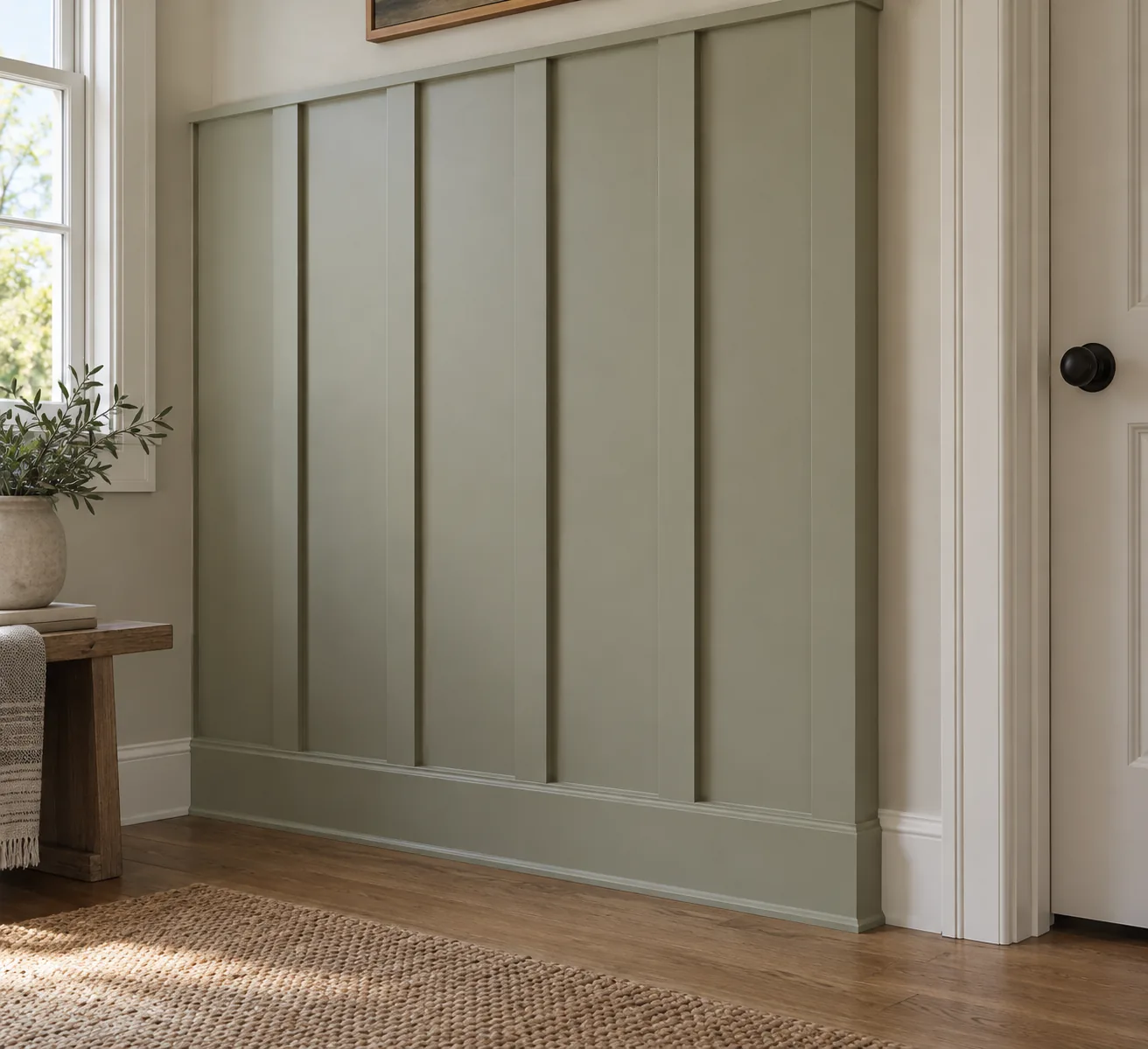
Discuss where the backing starts and stops and how its joints and exposed edges will be finished. If gypsum panels are proposed, include their joints and edges in the finish plan so the field reads as a continuous surface. Other backing materials need a material-specific plan for seams and edges. The contractor’s proposed backing should be named in the quote so you can judge its appearance and thickness alongside the trim.
Backing hides the old texture from view; it does not repair an unresolved water problem or damaged wall beneath it. Have those conditions evaluated and addressed before the new surface goes on.
How Each Choice Meets the Rest of the Room
Thickness becomes noticeable at the edges of the treatment. With either applied-trim choice, ask how the boards will meet the existing baseboard and door or window casing. With smooth backing, ask the same question about both the backing and the boards: the field now projects from the original wall, which can change the appearance at a baseboard, casing, wall end, or corner. A change to adjoining trim may be appropriate at one junction without being needed throughout the room.
Locate outlets and switches in the proposed treatment area before settling the layout and thickness. If either creates a device adjustment, have an appropriately qualified professional assess and handle that work. The quote should say who coordinates it; the decorative wall plan should not silently assume the existing devices will meet the new finished surface as intended.
What to Specify in a Contractor Quote
To compare proposals, give each contractor the same preferred finish and ask for a written scope that answers these questions:
- What is the condition of the existing wall, including patches, loose material, damage, or signs of moisture? What must be addressed before it is covered?
- Will texture remain visible, will specified areas be skim coated, or will a named backing material create a new field? What should the completed field look like?
- What are the proposed trim dimensions and, if used, backing thickness? How will seams and visible edges be finished?
- How will the treatment meet the baseboards, door and window casing, wall ends, and corners? Are any changes to adjoining trim included?
- Where are the outlets and switches, and who will coordinate any necessary assessment or adjustment by an appropriately qualified professional?
- Who is responsible for wall repairs, skim-coat or backing preparation, primer, and finish painting? Which surfaces receive each finish, and what work is excluded?
These are questions to include in a request, not a list of services automatically included in a contractor’s price. SuncoastTrim lists board-and-batten work and directs homeowners to request an estimate with project details and available photos. Include a photo of the current texture and nearby trim, along with the finish option you prefer.
Choose the Finish Before Choosing the Preparation
Choose the surface you want to see between the battens first. Keep the texture if you like it; request a skim-coated field if you want the existing wall smoothed; or specify backing if you want a new smooth surface behind the trim. Then make the preparation, edge transitions, and painting responsibilities explicit in the quote.
Frequently Asked Questions
Is smooth backing the same as skim coating?
No. Skim coating smooths the existing wall surface; backing adds a new layer behind the battens. Ask the contractor to name the proposed preparation method and, for backing, the material and thickness.