

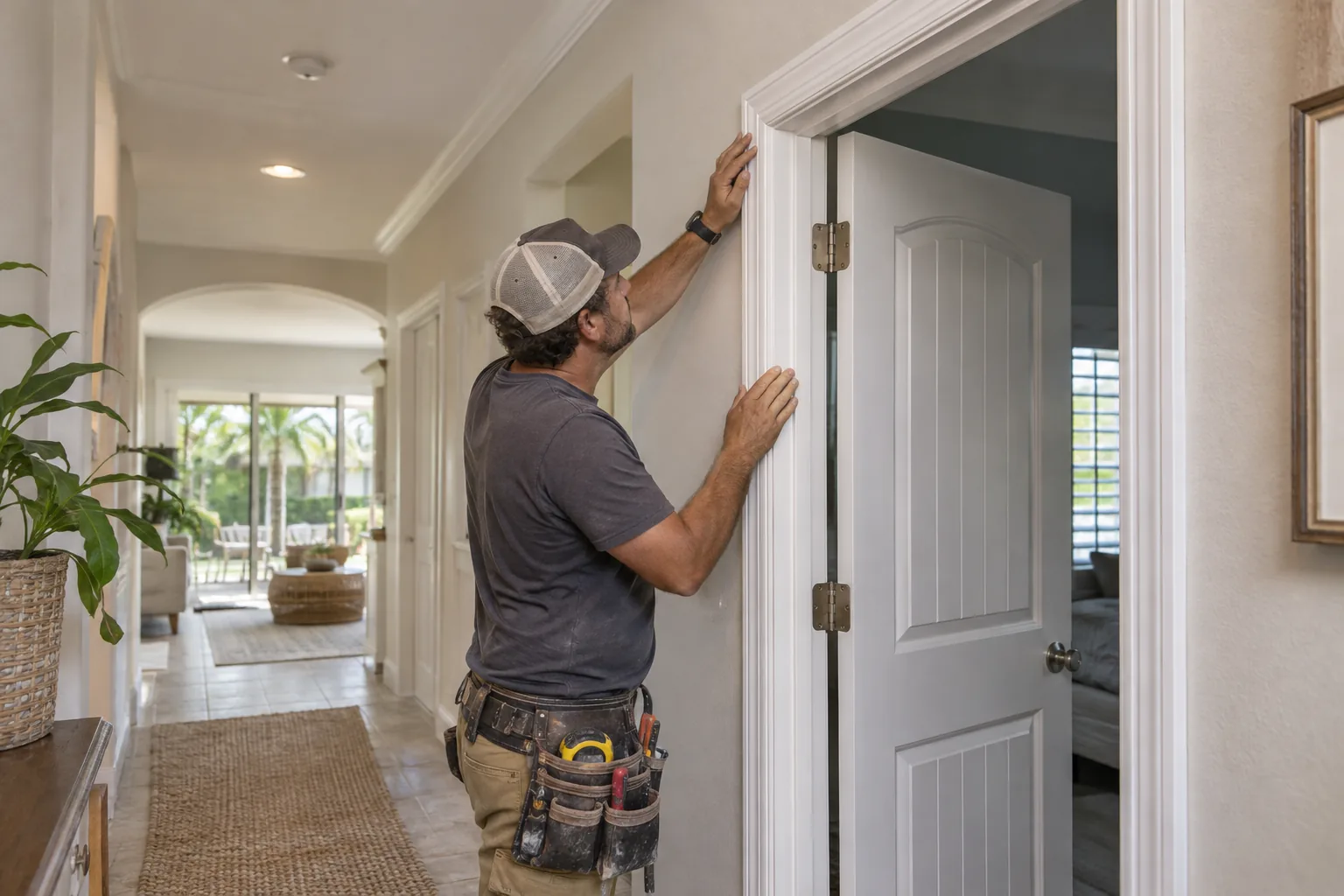
Start with the existing opening: does the door swing and latch normally, and is the jamb sound? If so, yes, new interior casing can be fitted while the door and jamb stay in place.
For a Sarasota County homeowner, the next question is how much work surrounds that trim change. The wall exposed when old casing comes off and the finish you want afterward determine whether the job stays trim-only or also includes surface repairs and painting.
What Stays When You Replace Interior Door Casing?
Casing, jamb, and door slab do different jobs. The casing is the visible finish trim around the opening where the jamb meets the wall. The jamb lines the opening and carries the hinges and latch hardware. The slab is the door panel that swings. Those parts are separate, so changing the casing does not, by itself, require a new slab or jamb. Andersen’s door terminology glossary is a useful reference if you are identifying parts before discussing the work.
In a casing-only replacement, the old trim comes off and new pieces are fitted around the opening. The working door, sound jamb, hinges, and latch remain in place. That is the practical difference between replacing interior door casing and replacing the door or its frame.
Look closely at the narrow strip of jamb visible between the inside edge of the casing and the opening. That strip is the reveal. Its width can vary by job, but an even reveal makes the new trim look intentional rather than crooked. Fitting also includes clean joints where the side pieces meet the top piece; simply choosing a board that covers the wall is not enough.
When Is Casing Replacement Not Enough?
Open and close the door before deciding on the scope. If it swings freely, closes as expected, and the jamb feels secure, new casing may be all the doorway itself needs. If a jamb is loose, split, or otherwise damaged, have that condition assessed separately. New trim can cover the joint beside it, but it cannot make the supporting frame sound.
A door that rubs, sticks, swings unexpectedly, or will not latch also calls for attention beyond casing. The cause may involve the door’s fit, its hinges, its latch, or the opening. Installing trim over the same opening does not change how the slab moves or closes. Sort out the operating problem before treating the doorway as a cosmetic trim project.
There is a middle ground, too: the door may work while the jamb-to-wall fit or surrounding surface needs attention. That does not automatically mean replacing the door. It means identifying the repair as its own part of the job instead of assuming the new casing will conceal or correct it.
Will New Casing Cover Old Paint Lines and Wall Damage?
Old casing can leave more than a clean outline. Removing it may expose paint lines, bonded caulk, fastener holes, or torn wall surface. Careful removal helps limit damage, but paint and caulk that bridge trim and wall can pull at the finish when the trim comes away. Lowe’s trim replacement guide shows how cutting the paint seam before removal helps protect the surrounding finish.
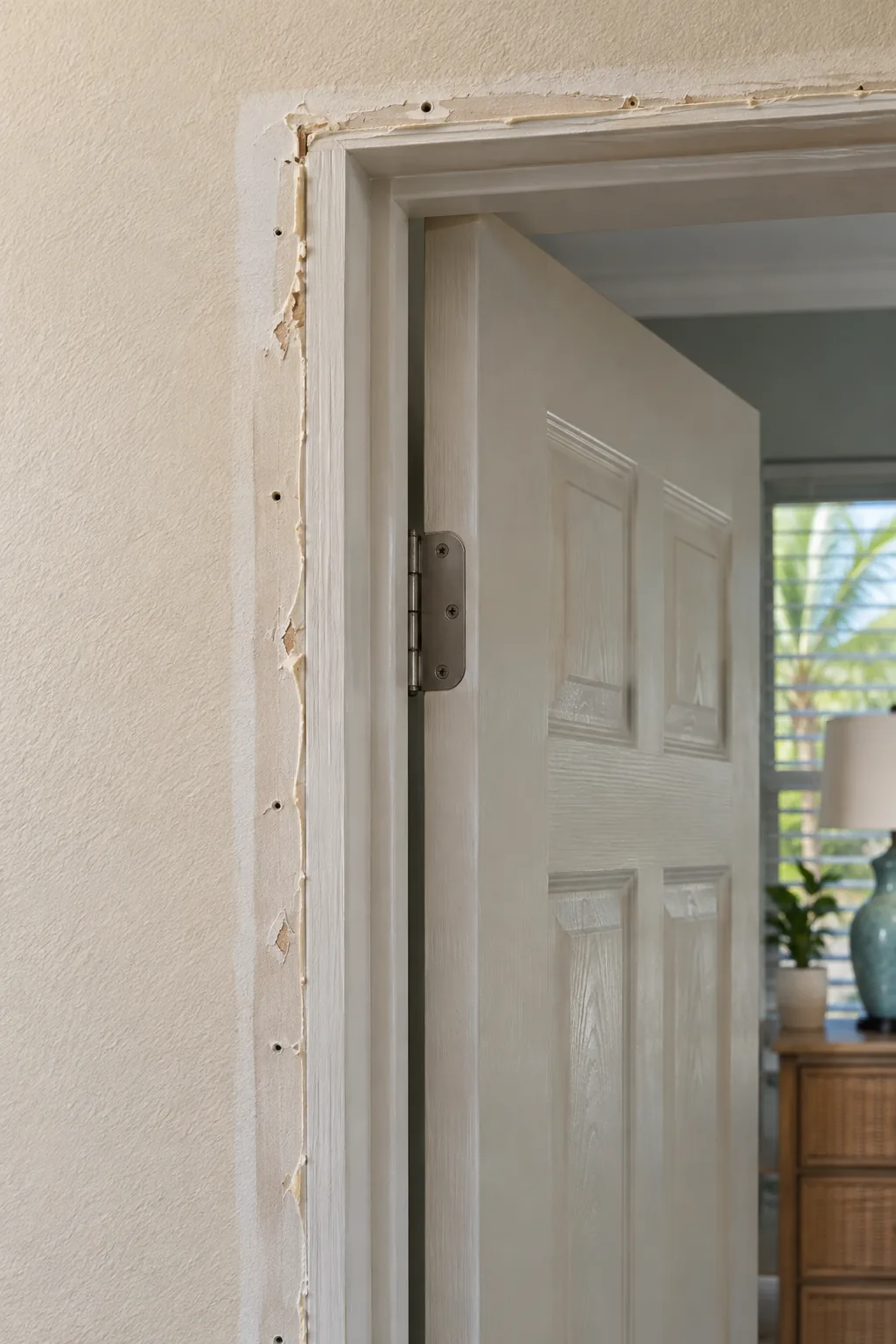
Wider door casing can sometimes cover the former trim’s finish boundary. The deciding detail is where the outer edge of the new, fitted casing lands relative to that boundary, not the nominal width of the material alone. If an old paint edge or damaged patch remains visible beyond the new trim, the wall needs preparation and possibly painting. A wider board cannot cover a mark that lies outside its final position.
This is where two similar-looking trim requests become different scopes. On a sound wall, the work may be removal, fitting, filling, caulking, and finishing the casing. Where removal exposes torn drywall or a visible color change, add drywall repair or surface preparation and decide how far the wall paint should extend. A small touch-up and painting an entire wall are different finish expectations; make that choice before the work is quoted.
How Does New Casing Fit Around Hinges, Walls, and Baseboards?
Keeping the existing door normally means the hinges stay put and the swing stays the same. Still, new casing must fit around the space the door and hinge hardware use. A thicker or more projecting profile near the hinge side needs a clearance check with the door open, not just a check that the trim fits while it is closed.

The wall beside the opening matters as much as the doorway. A nearby return wall or another trim piece can limit casing width. Pieces also need to follow an even reveal and meet neatly at the top; changes in the opening or wall surface can affect how the miters fit. Compare the proposed trim with the actual opening rather than choosing its width from a sample alone.
Check the door trim and baseboard junction at the floor, too. A wider or thicker casing may no longer meet the existing baseboard neatly. The choice may be to adjust that termination or include adjoining trim work; it should not be left as a surprise after the casing is installed.
What Should a Trim-Only Quote Include?
For an interior door trim replacement quote, describe each opening and agree on the finish, not just the new casing. Suncoast Trim’s door and window trim page covers casing work. Settle these details when requesting your quote:
- Does the scope include removing and disposing of the old casing?
- Who supplies the new material, and is fitting included on one side or both sides of each opening?
- How will the casing meet the existing baseboard, and are joint fitting and adjustments included?
- Who handles exposed paint lines, fastener holes, wall patching, and surface preparation?
- Are filling, caulk, primer, and finish painting included? If painting is included, does it cover the trim only or adjoining wall areas?
Identify any jamb repair or door-operation work separately. That keeps a quote for new casing from being mistaken for a quote to repair the opening.
Keep the Door, Define the Trim Scope
If the door works and its jamb is sound, you can keep the existing door and replace the trim. The remaining decision is how much fitting, wall finishing, and painting you want included, and whether any separate repair is needed.
If you are planning this change in Sarasota County, request an estimate from Suncoast Trim with details about the door you have, the casing you want, and the finish you expect around it. That gives the conversation a clear scope from the start.
Frequently Asked Questions
Can I replace the casing on only one side of a doorway?
Yes. Specify which side needs new casing when requesting a quote, since fitting and finishing one side is a different scope from doing both.
What can I do if new casing does not meet the existing baseboard neatly?
The baseboard end or casing termination may need adjustment. A plinth block can also provide a transition if the design and available space suit it.
Can uneven walls make new casing look crooked even when the door works?
Yes. An uneven wall can affect the reveal and corner joints, so the casing may need additional fitting or shimming to sit neatly. That does not, by itself, call for a new door.