

A bead of caulk can soften a visible seam, but it cannot hold molding that has pulled away from the ceiling. For a stable opening with firmly attached trim, caulk may be an appropriate cosmetic finish. It cannot correct a poor fit against a wall or ceiling or resolve a suspected moisture problem. Before deciding what to fill, note where the opening is and what has changed. Those observations will help you describe the problem without having to diagnose your house.
When Caulk Can Finish an Open Joint
A narrow opening at a joint, inside corner, or ceiling line can be a finishing issue when the molding appears firmly attached and the adjoining surfaces are dry and sound. A suitable paintable caulk can make the seam less noticeable before painting. BEHR identifies crown molding as an intended use for its siliconized acrylic caulk; its instructions call for clean surfaces. Product directions matter because caulks have different application limits.
Think of caulk and paint as the visible finish, not a way to hold the joint together. Loctite describes painter’s caulk as a finish for gaps with minimal movement. If an opening has returned after being filled, make a note of that history rather than assuming a thicker bead will solve it. There is no single gap-width cutoff that decides whether caulk is the right repair: attachment, movement, surface condition, and the chosen product all matter.
When the Molding Itself Needs Attention
An open joint is different from a piece of molding that appears displaced. At an inside corner, the two ends may no longer meet neatly; along a wall, one length may stand visibly away from the surface. Caulk can cover part of the opening, but it does not restore trim attachment or make mismatched ends fit. Installation guidance separates fitting and fastening molding from caulking the remaining joints as a finish.
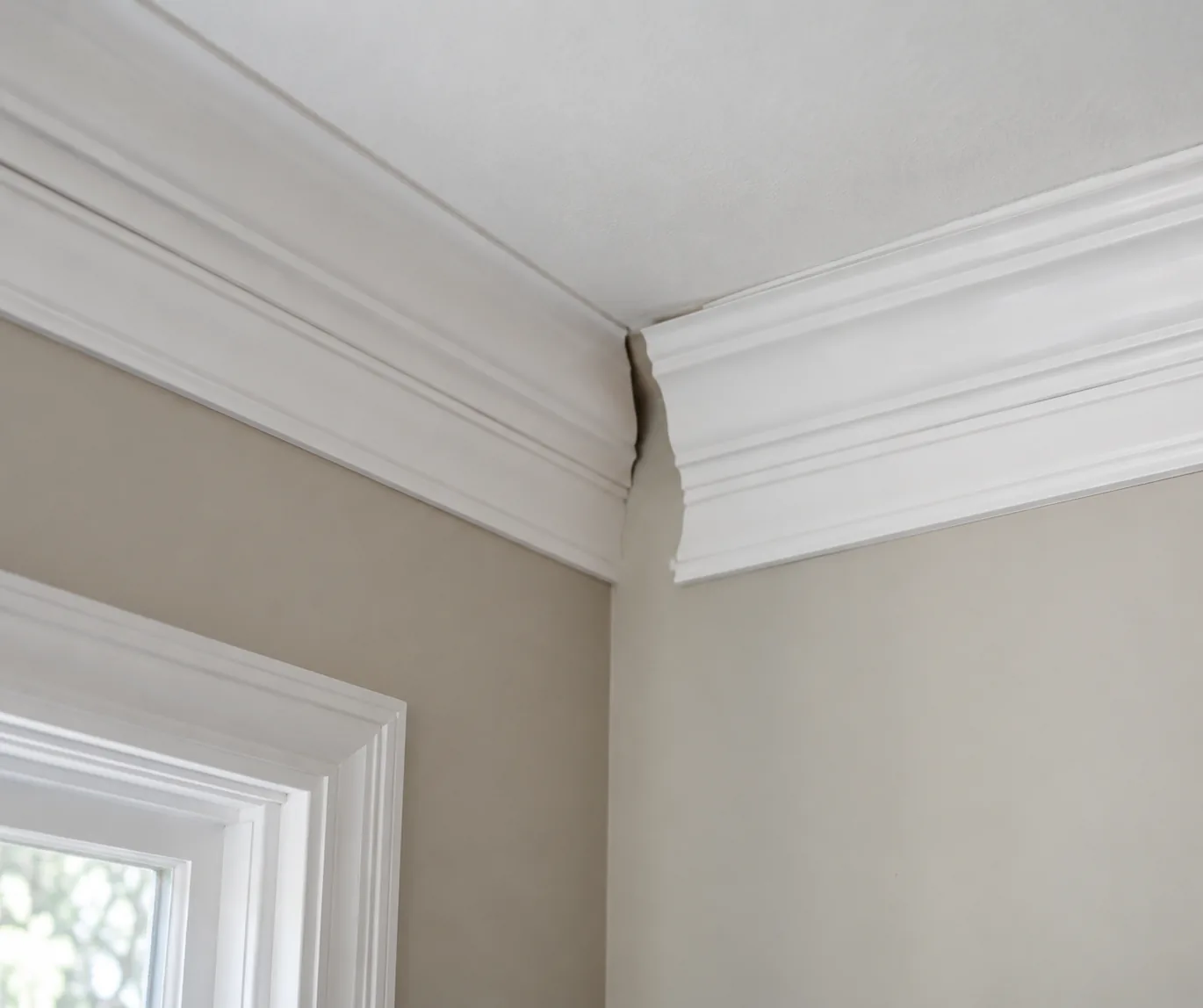
From normal room access, note where a piece appears out of line with the adjoining trim and whether that opening is growing or has reopened since an earlier finish repair. There is no need to pull on loose crown molding to test it. A professional can assess whether the appropriate scope is securing a piece, improving the joint fit, replacing damaged trim, or simply finishing a sound connection. Those possibilities call for different work, even if the visible symptom is the same open seam.
When the Wall or Ceiling Line Is Uneven
A gap that widens and narrows along a run can reflect the way crown molding meets an uneven wall or ceiling, even when the trim does not appear loose. Notice whether the opening is concentrated at one spot or continues across much of the room. A bead of caulk may soften the look of an appropriate small opening, but it cannot flatten the adjoining surface or straighten the molding line.
For a more pronounced fit problem, the conversation may be about fitting the trim to the surface rather than filling the entire space. Finish-carpentry guidance on scribing crown molding illustrates one way installers accommodate a wavy ceiling; it is not a prescription for every existing installation. Describe the changing width and location of the gap instead of assigning a cause to the wall or ceiling from its appearance.
When Staining or Other Changes Call for Closer Attention
Visible staining near a gap deserves a different conversation from an otherwise clean seam. Staining does not, by itself, tell you whether moisture is present now or where it came from. But if the area also looks wet, changes after rain, or shows other concerning signs, ask for an appropriate assessment before treating it as a paint-and-caulk job. EPA guidance calls for addressing moisture problems and advises against painting or caulking over moldy surfaces.
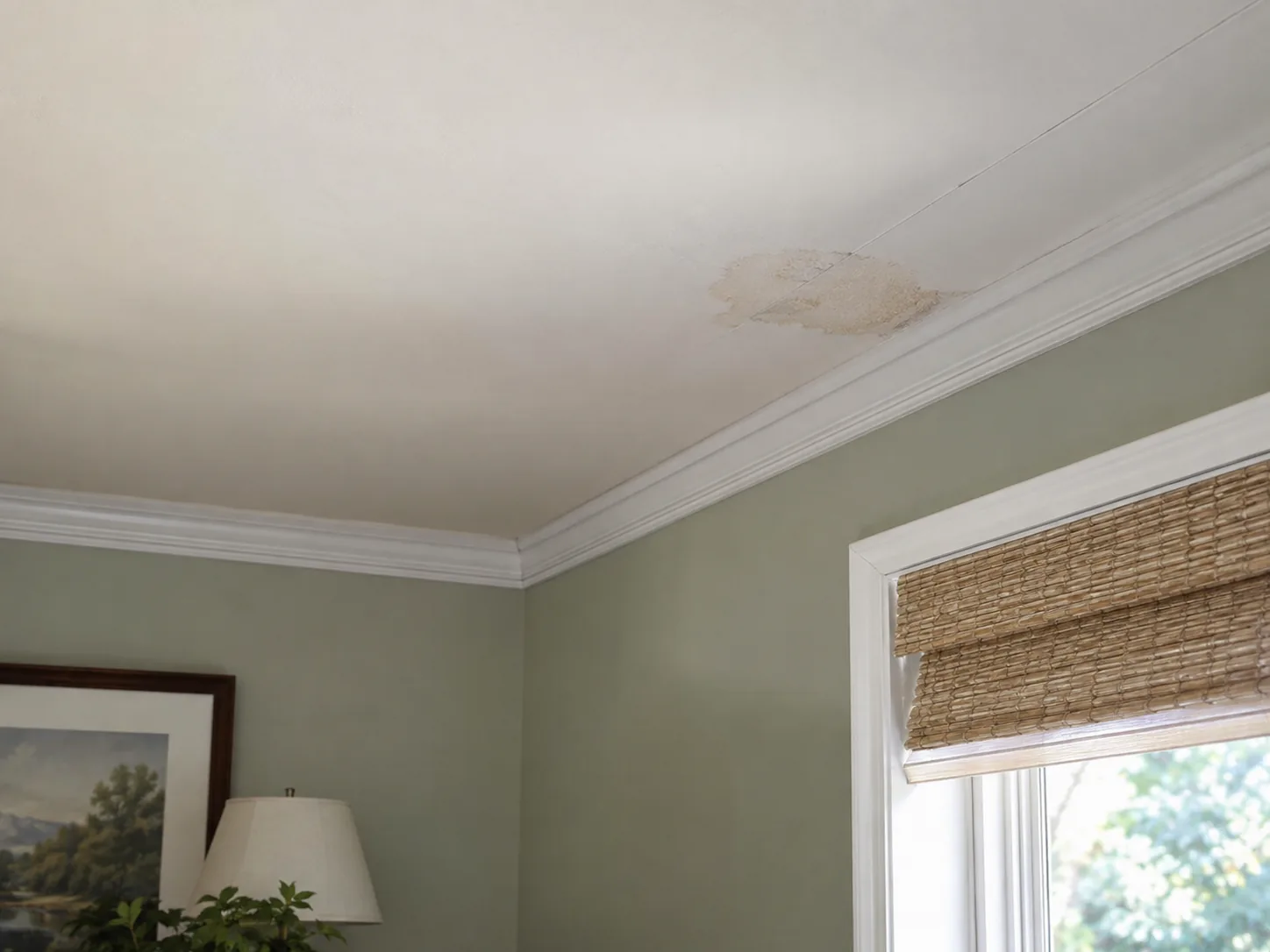
Likewise, a recurring gap or new cracks in molding are reasons to record the pattern, not reasons to conclude there is structural damage. Note when you first noticed the change, whether an earlier repair held, and what else changed nearby. If a piece is visibly loose or an opening is widening, share that information when you request an assessment; filling it first could hide the condition the professional needs to see.
What to Share When Requesting an Assessment
A useful assessment request starts with a short description and photos taken from normal room access. You do not need to reach the ceiling, remove trim, or decide what caused the gap. Include:
- A room-wide photo showing the molding run, plus close-ups of the opening and any adjoining joint.
- The room and exact location; whether the opening is at an inside corner, between molding pieces, along the wall, or along the ceiling; and its approximate length and width if you can estimate them safely.
- When you noticed it, whether it has changed or returned after caulking, and whether a piece looks displaced or there is visible staining nearby.
If you contact Suncoast Trim, its trim repair and replacement page describes sharing photos or arranging an on-site review. Its estimate request guidance asks for existing-condition details, photos, and approximate dimensions when available. A photo may help start the conversation; an on-site review may still be needed to decide the work.
Ask what the proposed repair scope addresses: Is the trim securely attached? Do the ends or the wall-and-ceiling fit need attention before finishing? Is caulk and paint the entire job or the last step? If staining or another moisture concern is present, ask whether its source needs assessment before the visible seam is covered. These questions let you compare a finishing-only proposal with one that addresses what is happening at the joint.
Choose the Repair Scope Before the Finish
A stable cosmetic opening may need little more than an appropriate finish. A loose piece, an awkward fit, or a concerning change calls for a closer look before that finish is chosen. Share what you can see in photos and notes, then agree on the repair scope before anyone covers the gap.
Frequently Asked Questions
Should I remove old caulk before refinishing a seam that has reopened?
Yes. Remove the old caulk and clean and dry the joint before applying new caulk. If the opening keeps returning, have the trim fit and attachment assessed rather than repeatedly covering it.
Could indoor humidity be contributing to a gap that changes over time?
Changes in indoor humidity can contribute to trim separation, but they do not establish the cause of a particular gap. Note when the opening changes and whether the molding appears displaced so a professional can assess the joint.
Would backer rod make a large ceiling-line gap suitable for caulk?
Not necessarily. BEHR specifies backer rod for gaps larger than one-half inch by one-half inch when using its siliconized acrylic caulk, but backer rod and caulk will not secure loose molding or correct a poor fit.