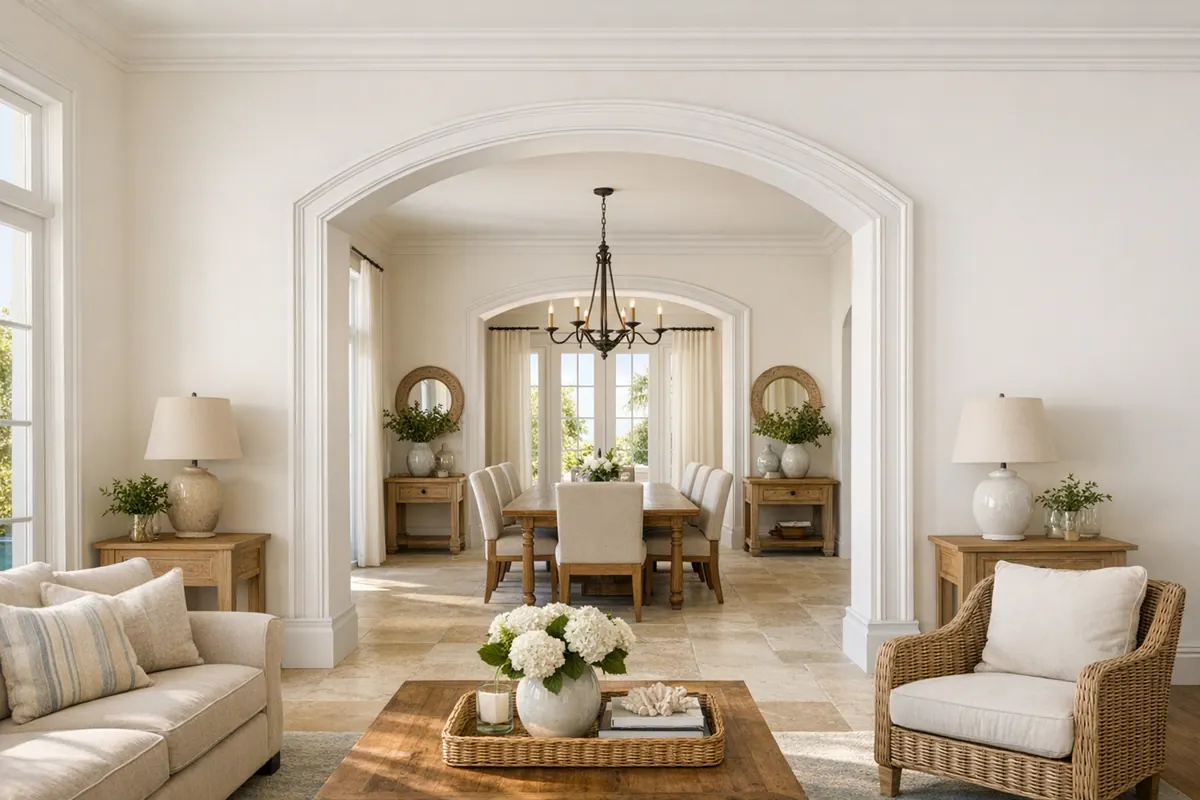

An arched opening already has more personality than a square passage, but when the edge is only painted drywall, it can feel like a construction detail that never received its final layer. That is especially noticeable in Mediterranean-inspired homes, where arches are a characteristic part of the style; the right arched opening trim helps the curve look planned instead of leftover.
Think of trim as the bridge between the opening and the rest of the room. It should relate to nearby baseboards, door casings, crown moulding, wall texture, and paint finish. A strong signal is an arch whose reveal, color, and profile feel connected to the surrounding trim; a weak signal is heavy arched doorway trim next to very slim baseboards, or a plain drywall return beside detailed casing.
The main choices are fairly easy to separate. Flexible moulding is used when you want a trim profile to follow the curve. A fully cased arch gives the opening a more built-in doorway look. A clean drywall return keeps the curve simple and modern when the finish work is crisp. Decorative passageway trim adds panels, layered moulding, or accent details when the opening should become a focal point. The best interior arch trim depends on the home's style, the arch geometry, and how formal or relaxed you want the room to feel.
Start With Style, Radius, and How Much Detail You Want
Before choosing a profile, look at the arch as part of the whole room rather than as an isolated curve. Home style sets the design lane: Mediterranean rooms can usually carry more weight and shadow, coastal rooms often look better with lighter, simpler lines, and transitional rooms need enough detail to relate to traditional trim without becoming ornate. Existing baseboards and door casing matter just as much; if they are slim and square, a bulky arched opening trim package may feel pasted on.
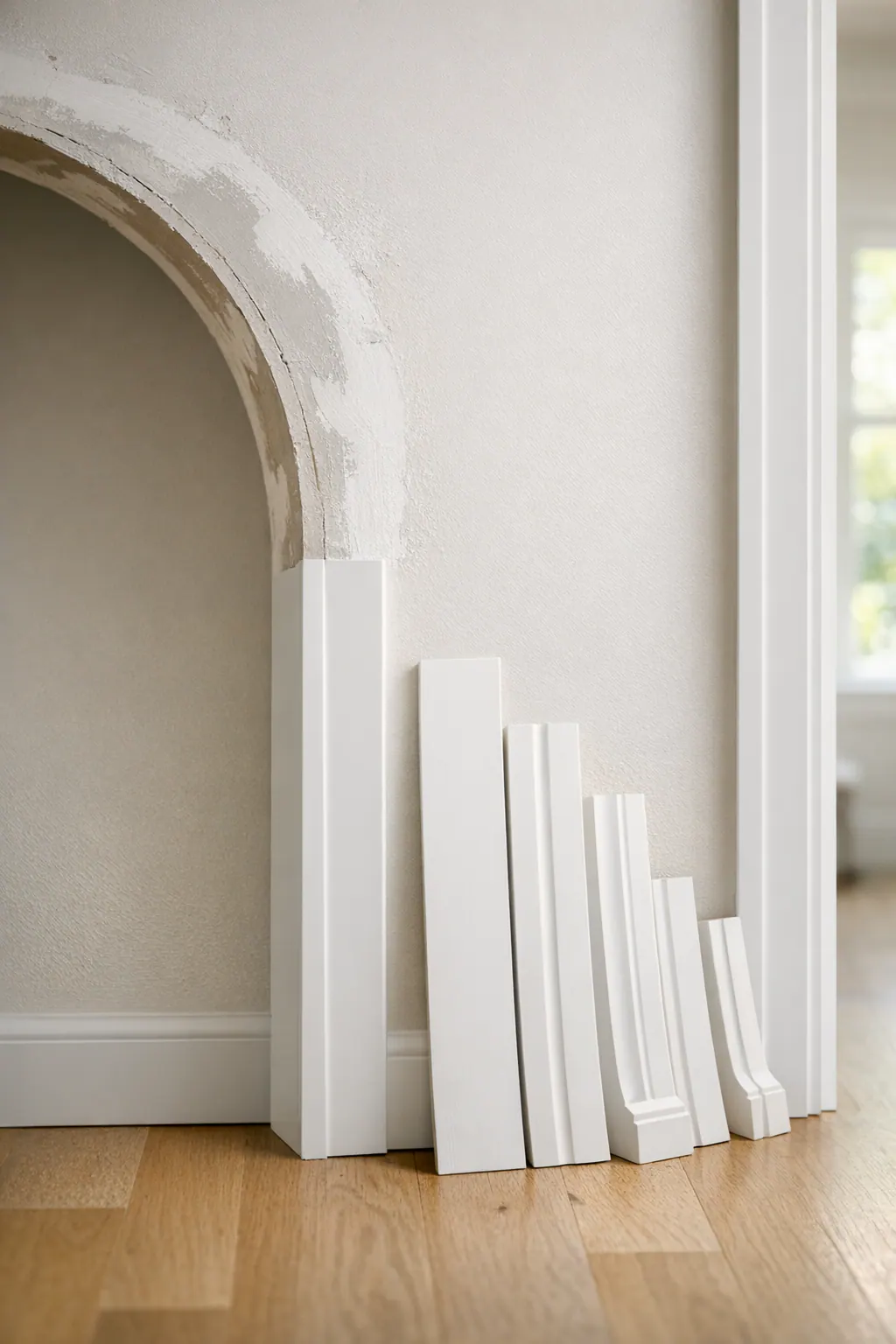
The arch shape controls what is practical. The radius is the size of the curve, and a tighter radius usually makes trim harder to bend or fabricate cleanly. The spring line is where the straight sides begin turning into the arch; when trim changes direction at that point, the joint needs to look intentional rather than accidental. Jamb depth is the thickness of the passageway wall from one face to the other, and it affects whether the opening can take a full built-out treatment or should stay simpler. A reveal is the small, consistent step-back between the edge of the opening and the trim; even reveals make the work look crisp.
Finish choice also narrows the options. Paint-grade trim is more forgiving because joints, flexible pieces, and built-up layers can be caulked and painted into one clean surface. Stain-grade trim is less forgiving because the wood grain, color, and joints remain visible, so it works best when the material and craftsmanship are meant to be seen. Finally, decide whether the opening should blend in or become a focal point. Subtle trim for arched openings repeats nearby profiles and colors; a focal-point treatment uses more depth, layering, or contrast. Neither is automatically better, the right choice is the one that fits the room's style, geometry, and level of formality.
Flexible Moulding for Smooth Curves and Matched Profiles
Flexible moulding is the option to look at when the straight trim in the room already works and the arch simply needs the curved portion to join the party. Instead of changing the whole opening to a new design, a flexible piece can follow the curve while the straight legs use a matching or closely related casing profile. The practical takeaway: it is best for paint-grade arched door opening trim where continuity matters more than making the arch look like a separate feature.
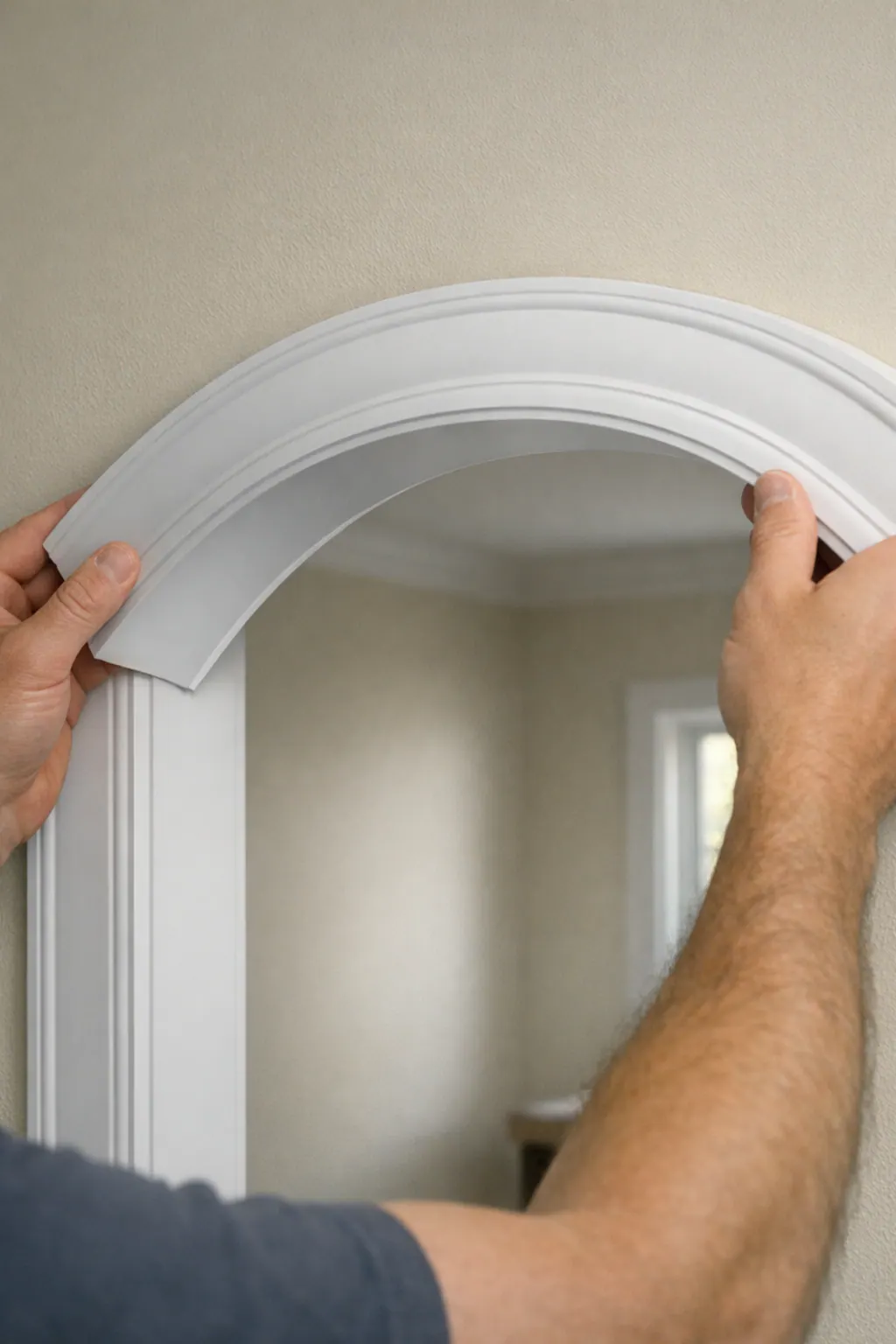
Compared with wood, flexible polyurethane or PVC moulding is more willing to follow a curve, so it can create a smooth line around an arch without custom-milling a curved wood casing. Wood still has the advantage when you want a crisp stain-grade finish, visible grain, or a perfectly traditional material match. In a coastal or transitional room, a simple painted flexible profile can disappear nicely into the surrounding trim; in a Mediterranean room, it can work if the profile has enough depth to relate to heavier nearby casing and baseboards.
The weak spots usually show up at the tightest parts of the curve, at seams, and where the flexible piece meets rigid straight trim. A very tight radius can make some profiles distort, flatten, or fight the wall rather than sitting cleanly. Seams are less noticeable when they land at natural transition points, such as near the spring line, and when the whole opening is painted the same color. If the room has stained doors, stained casing, or high-contrast trim, flexible moulding is usually harder to hide and may feel like a compromise instead of an upgrade.
A good use of flexible moulding looks intentional because the profile, reveal, paint sheen, and surrounding trim all relate to each other. A weak use looks like a curved strip was added after the fact: mismatched thickness, uneven reveals, bulky caulk lines, or a profile that does not connect visually with the straight casing below. Treat it as a design shortcut for matching curves, not as a magic fix for every arch.
Cased Arches for a More Finished Doorway Look
For an opening that needs more presence than a narrow curved profile, a cased arch treats the passage almost like a door frame without the door. The opening gets jamb extensions across the inside depth of the wall, then casing is applied around the face of the arch. That casing can be installed on one side only when the main room deserves the finished view, or on both sides when the opening connects two equally important spaces.
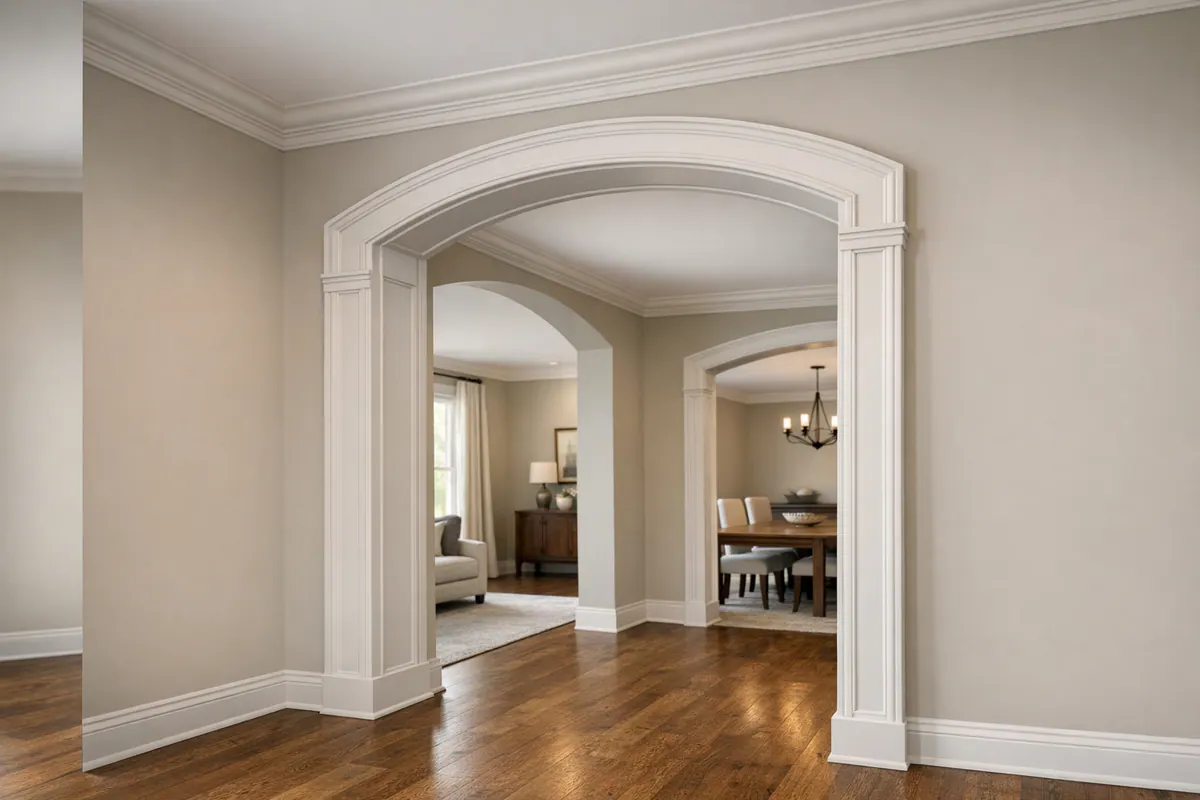
The big visual difference is depth. A drywall return keeps the edge flat and quiet; arched doorway casing adds shadow lines, thickness, and a clear border between rooms. That makes it a strong choice for dining rooms, foyers, living rooms, and thicker walls where the opening should read as an architectural threshold instead of a simple cut-through.
Plinth blocks help solve the bottom of the trim package. These are thicker square or rectangular blocks at the floor where the side casing lands, giving the baseboard a clean place to stop or die into. Without that transition, a tall baseboard and curved casing can collide awkwardly, especially when the casing is wider or more traditional than the trim nearby.
This approach works best when the home already has substantial door casings, crown, taller baseboards, or a more formal trim language. In that setting, arched passageway trim feels connected to the rest of the interior. In a room with very slim square baseboards and minimal doors, the same package can feel too heavy unless the casing profile is simplified.
The tradeoff is commitment. A fully cased opening costs more visual space and detail than a clean drywall return, and it draws attention to the accuracy of the curve, reveal, and baseboard transitions. Choose it when you want the arch to become a finished feature; keep the return simpler when the goal is a quieter, more modern edge.
Mediterranean Homes: Warm, Layered, and Substantial Trim
A Mediterranean room usually rewards trim that has shadow, depth, and a little warmth rather than a razor-thin outline. For Mediterranean arch trim, think in terms of a substantial casing profile, a slightly thicker jamb treatment inside the opening, and a finish that relates to nearby tile, textured walls, ironwork, wood beams, or heavier baseboards.
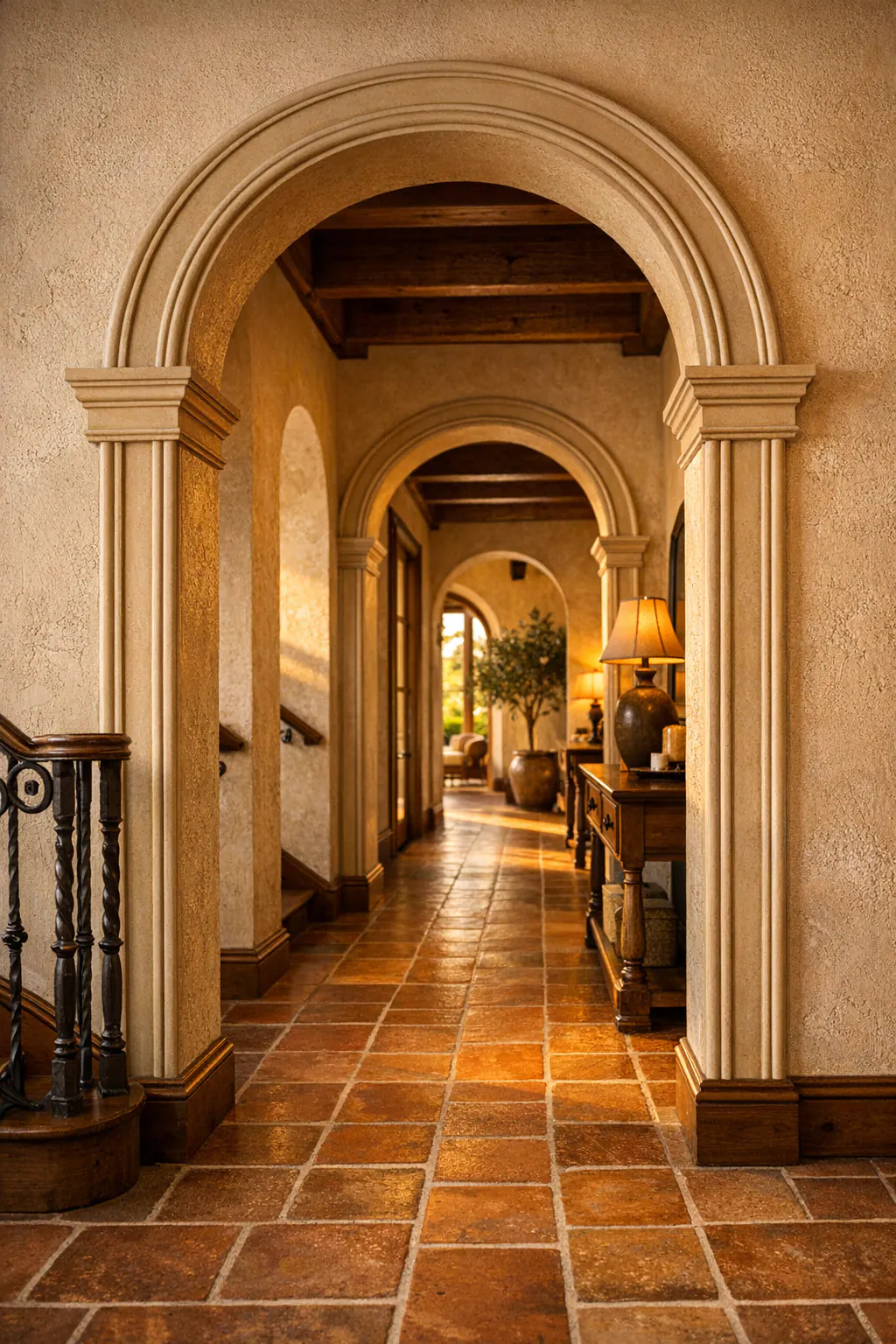
Layered trim is often the strongest direction. That might mean a main casing with a small backband around the outside edge, or a built-up profile that creates two or three shadow lines instead of one flat border. The practical difference is that a single thin casing reads casual and builder-grade, while a layered package gives the arch enough presence to stand up to traditional Mediterranean details without turning it into a museum piece.
Finish matters just as much as profile. Warm white, cream, soft taupe, or painted trim with a satin finish can keep the opening bright while still feeling grounded. Stained wood can also work, especially when the room already has wood doors, beams, or cabinetry, but it needs cleaner joinery because color and grain make seams more visible than paint.
A subtle keystone can be a nice accent at the top of the curve. It is a small center block or raised detail that marks the crown of the arch, giving the opening a more traditional focal point. Keep it restrained: a modest block feels architectural, while an oversized or highly carved one can make everyday passageways feel too theatrical.
The weak signals are easy to spot. Ultra-minimal arched opening trim can feel disconnected in a home with warm floors, textured walls, and substantial surrounding moulding. On the other hand, too much decorative passageway trim, deep carvings, stacked bands, heavy blocks, and strong contrast all at once, can overwhelm the curve. The best Mediterranean version feels substantial, coordinated, and edited.
Coastal Homes: Light, Simple, and Airy Arch Details
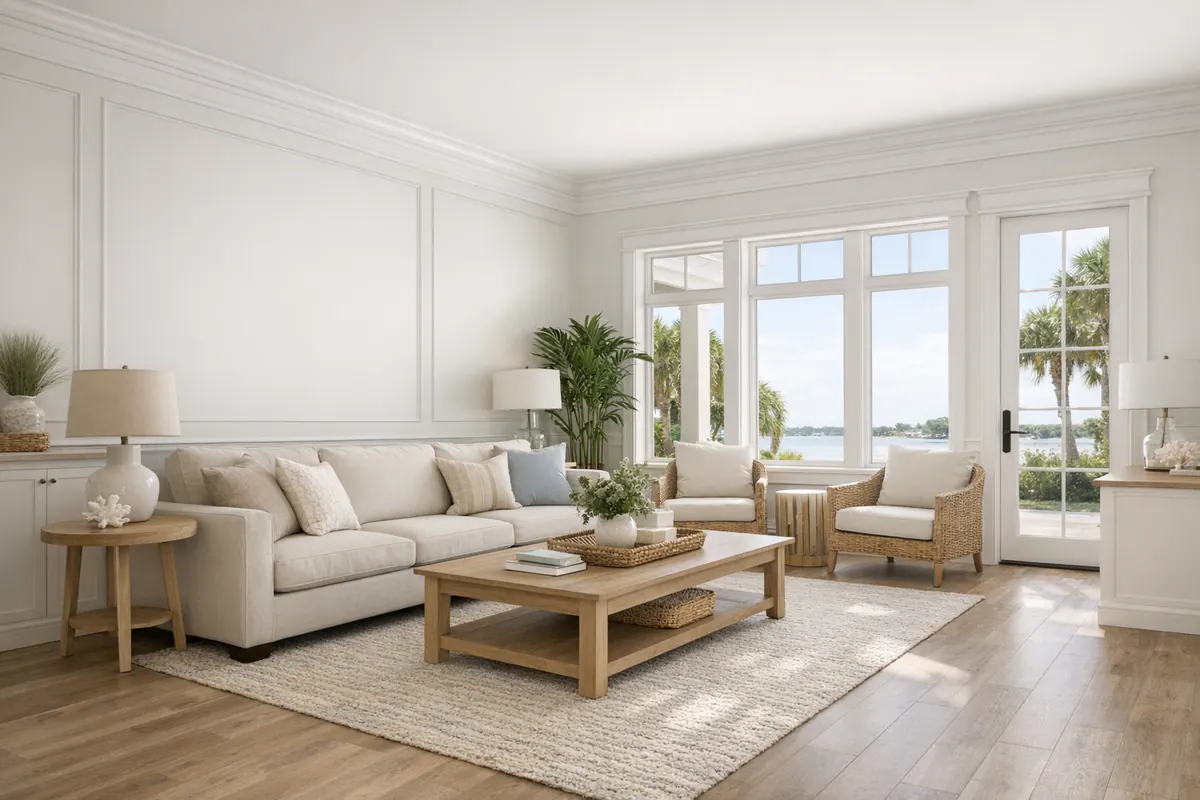
Coastal interiors usually look best when the arch keeps the room feeling open instead of framed like a formal entry. White, off-white, pale greige, or soft sand-colored paint helps the curve blend with bright walls and natural textures, while simple coastal interior trim keeps the edge finished without adding too much visual weight.
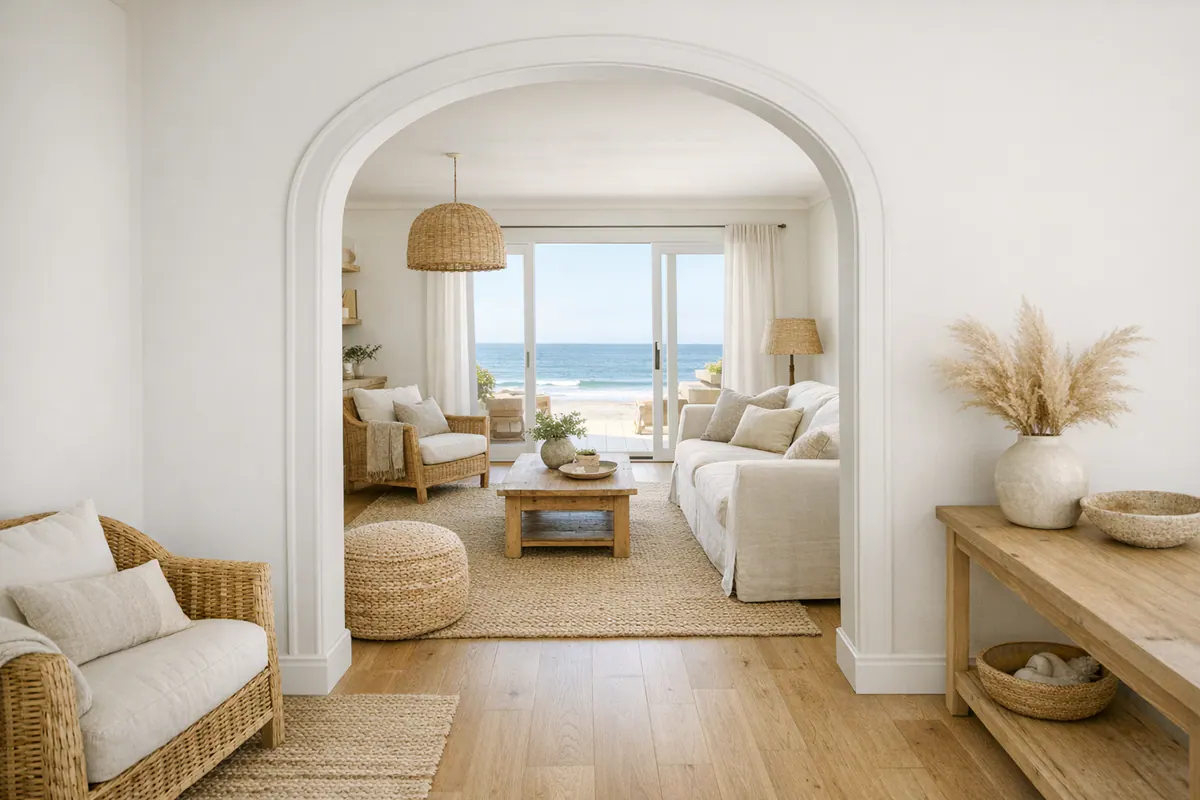
A clean drywall return is the simplest option: the inside of the opening is finished as smooth wall surface rather than wrapped in casing. It works well when nearby baseboards and door casings are also simple, because the arch reads as a soft architectural shape instead of a separate decorative object. The tradeoff is that the finish has to be crisp; wavy texture, rough corners, or uneven paint will make the opening feel neglected rather than intentionally minimal.
A bullnose corner gives the arch a rounded edge where the wall turns into the opening. Compared with a square drywall return, it feels softer and more relaxed, which can suit beachy rooms, casual hallways, and open living spaces. It is less formal than a cased arch, but it still gives the curve a finished profile.
If the room needs actual arched opening trim, choose a slim cased arch with a narrow reveal and a low-profile casing. Think flat stock, small eased edges, or a modest bead rather than stacked backbands or heavy blocks. A good coastal interior trim package should relate to the existing baseboards, but it should not make the passage feel narrower, darker, or more formal than the room around it.
The weak signal is ornate trim fighting the mood of the house: carved details beside linen upholstery, pale floors, woven shades, and simple cabinetry can feel overworked. In a coastal home, restraint is often the upgrade. Smooth curves, clean reveals, and light paint let the arch do its job without stealing the air from the room.
Transitional and Modern Looks: Clean Lines With Just Enough Detail
Transitional rooms sit in the middle lane: they can handle more structure than a beach-casual opening, but they usually look better when the details are edited. Good transitional home trim ideas often start with square-edge casing, modest profile depth, and a reveal that stays consistent around the legs and curve. The goal is not to hide the arch; it is to make the curve feel aligned with nearby baseboards, door casings, crown, cabinetry, and wall finishes.
A simplified cased arch works well when the rest of the house already has traditional trim. Use a clean casing profile with fewer grooves, avoid oversized plinth blocks, and keep the inside jamb smooth so the opening reads tailored rather than formal. This is a good arched opening trim choice when a bare edge would look too plain beside taller baseboards, but a layered Mediterranean-style treatment would feel too heavy.
For a more modern archway trim look, the strongest options are a crisp drywall return, a minimal shadow reveal, or flat-stock casing. A drywall return keeps the inside of the opening as finished wall surface. A shadow reveal creates a narrow recessed line that separates surfaces and adds definition without a raised moulding profile. Flat-stock casing is simple rectangular trim with little or no decorative shaping; it gives the arch a clean frame while staying much quieter than a traditional profiled casing.
The deciding test is how finished the surrounding room already feels. If the opening sits between rooms with slab doors, square baseboards, smooth walls, and minimal crown, a fully cased arch may look dressed up in the wrong outfit. If the room has paneled doors, substantial baseboards, and visible casing everywhere else, a bare arch can look like the only unfinished edge in the space. Transitional design usually succeeds when the arch borrows just enough detail from the traditional side, then simplifies the lines so the opening still feels current.
Decorative Passageway Trim: Panels, Chair Rails, and Built-Up Details
Decorative passageway trim is where the arch stops acting like a simple edge treatment and starts behaving like part of a larger wall composition. Instead of only framing the curve, the trim may extend onto the wall with panel moulding below the spring line, layered casing around the opening, or a small keystone at the top of the arch. The takeaway is simple: this approach works best when the surrounding room already has enough trim detail to support it.
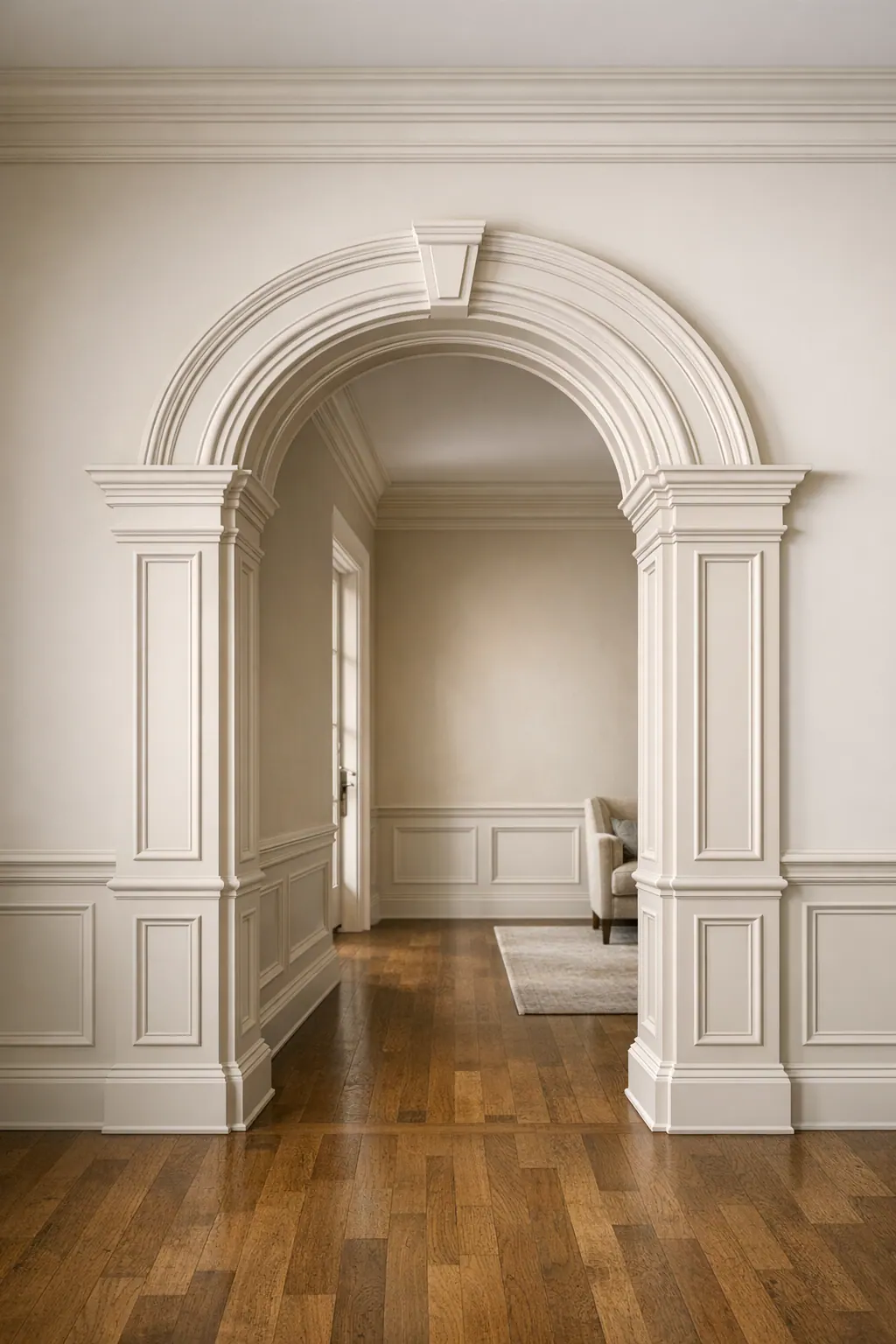
Panel moulding is the thin applied trim used to create framed rectangles or wall panels. Around an arched passage, it can sit on the straight wall areas below the curve so the opening feels anchored rather than floating. A chair rail can also continue through adjacent rooms, lining up with panel tops or wall treatments so the arch connects both spaces visually. If those horizontal lines stop randomly at the opening, the trim package can look pieced together.
Layered casing adds depth by stacking a flat back band, a shaped casing, or a smaller accent moulding. A keystone is the centered detail at the crown of the arch; in Mediterranean rooms it can add a subtle traditional note, while in transitional rooms it should usually be flatter and cleaner. For coastal homes, these details need a lighter hand, often limited to simple casing and soft paint.
The strong signal is alignment: baseboards meet cleanly, wall panels relate to nearby doors, and the arched opening trim feels like it belongs to the whole room. The weak signal is crowding: too many bands, panels, blocks, and contrast colors competing with furniture, tile, crown, or textured walls.
When to DIY and When to Hire a Finish Carpenter
Some arch updates are reasonable homeowner projects because they change the finish more than the structure of the opening. Repainting an existing drywall return, smoothing a rough edge before paint, or adding simple straight-leg casing below the spring line can clean up the look without forcing you to solve the whole curve. Off-the-shelf flexible moulding may also be approachable on a gentle, forgiving radius if the profile is paint-grade and the surrounding trim is simple.
Custom finish carpentry makes more sense when the arch has to match existing door casing, continue trim on both sides of the wall, or meet baseboards in a visible way. It is also the better lane for stain-grade work, tight curves, uneven wall surfaces, and any arched doorway trim where seams, reveals, and profile alignment will be easy to notice. Those details are what separate "nice idea" from "built with the house."
A good checkpoint is how much forgiveness the finish allows. Painted, simple, low-profile trim can hide small adjustments more gracefully. Dark stain, layered casing, decorative blocks, and high-contrast paint make every joint and transition more obvious, so the layout and fitting need to be cleaner from the start.
- Mediterranean: lean toward custom finish carpentry when the opening needs heavier casing, layered trim, or a warm wood look.
- Coastal: DIY-friendly updates often work when the goal is a smooth painted return or a light, simple casing.
- Transitional: choose the middle path, clean profiles, accurate reveals, and enough detail to connect with nearby trim without overbuilding the arch.
Choosing the Right Arch Trim for a Finished, Intentional Look
By the time you are comparing final options, the useful question is not "Which arch treatment is best?" but "Which one belongs in this room?" A simple painted return keeps the opening quiet and wall-like. Flexible moulding adds a curved profile when the arch needs to connect with existing straight casing. A fully cased arch gives the passage more depth and doorway presence. Decorative passageway trim turns the opening into a larger wall feature. Each can look right when the style, curve, and level of formality line up.
For Mediterranean homes, where arches are already a natural part of the architectural language, trim can usually carry more substance as long as it relates to nearby baseboards, doors, tile, texture, and warm finishes. Coastal rooms usually benefit from lighter restraint, while transitional rooms often need the middle ground: enough casing to feel finished, but not so much detail that the arch looks overdressed.
The strongest arched opening trim looks like it was planned with the rest of the house, not added as an afterthought. If the opening needs precise curves, matched profiles, clean baseboard transitions, or built-up detailing, custom finish carpentry can help the passage feel cohesive from one side to the other.