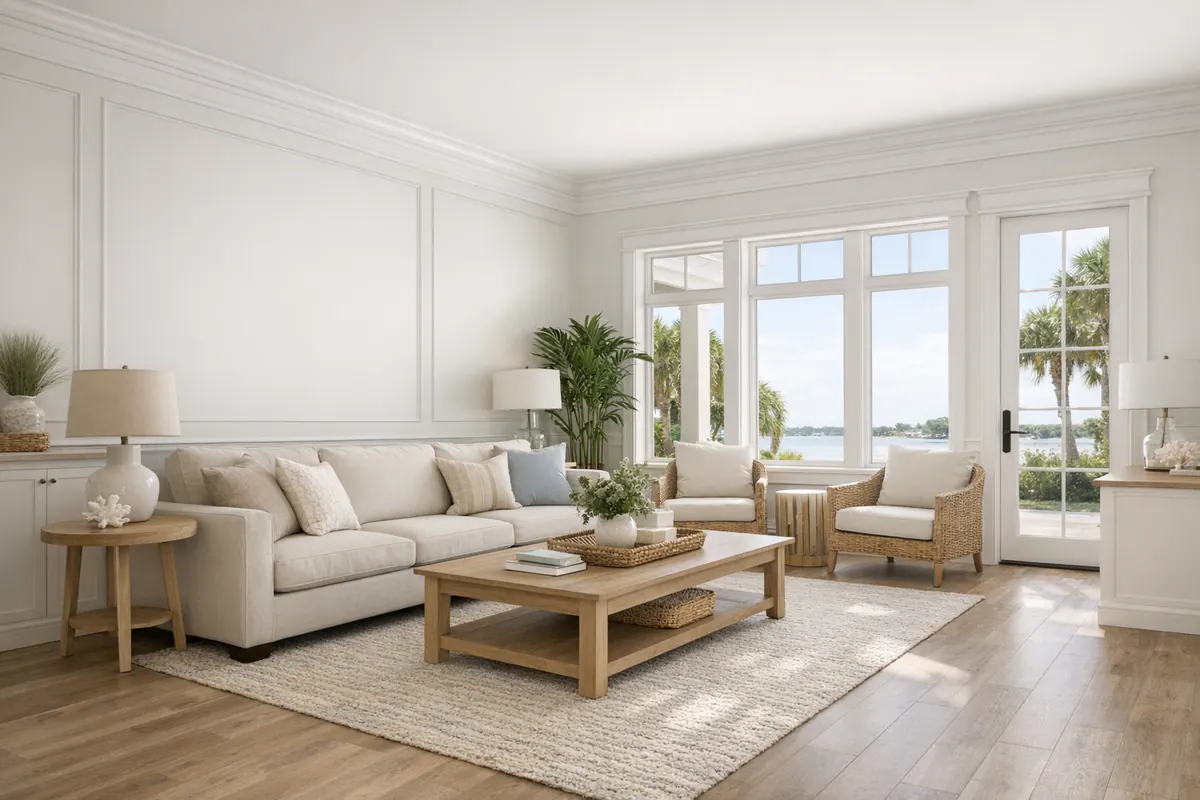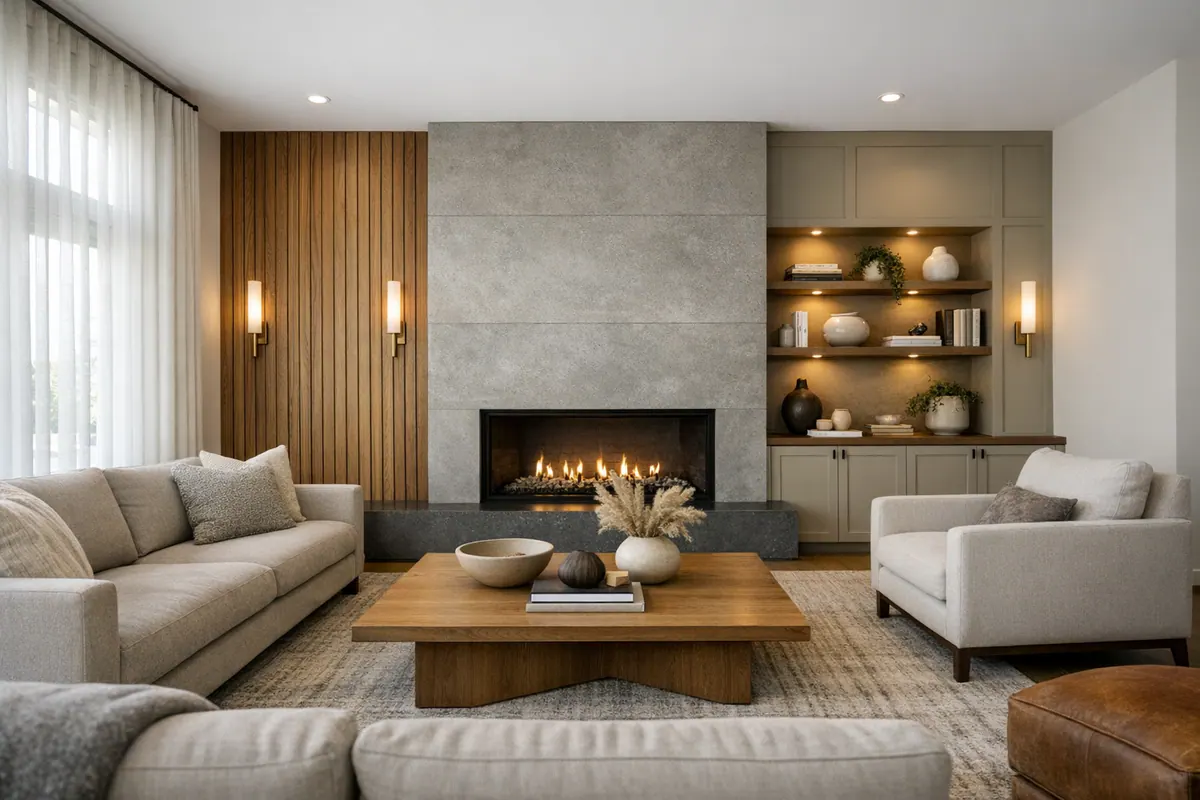
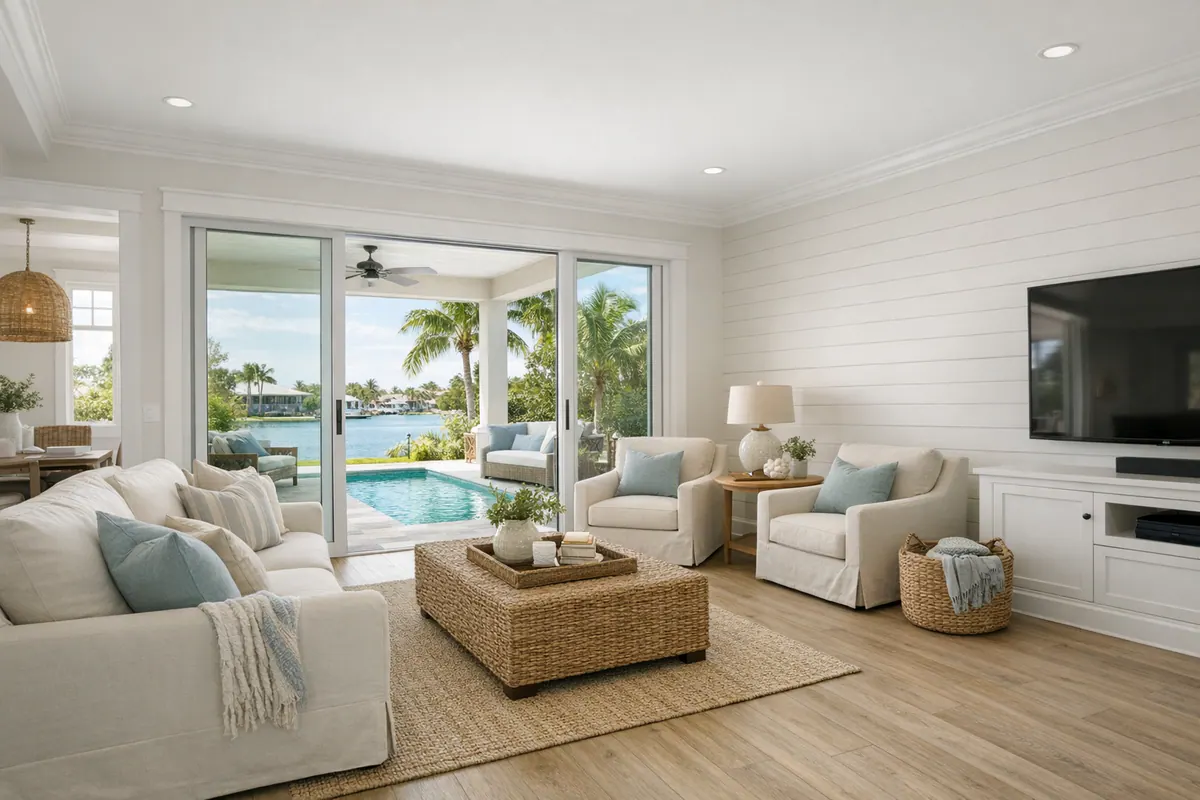

Interior trim is one of the most visible ways to make a Venice or Southwest Florida home feel more finished without reworking the floor plan. The edges of a room, the floor line, doorways, windows, ceiling transitions, and accent walls, shape how clean, current, and intentional the space feels, especially in light coastal interiors.
This guide compares the interior trim upgrades Florida homeowners are most likely to consider when they want a coastal look that feels polished rather than overdone. Taller baseboards define the floor line and can make tile or LVP transitions look cleaner. Door and window casing frames openings so rooms feel more architectural. Crown moulding finishes the ceiling line, but it works best when the profile fits the ceiling height and room scale. Wainscoting adds texture and wall protection, while feature walls, such as shiplap, board and batten, or picture-frame moulding, create a focal point without trimming every wall.
The best choice depends on what you want the room to do. A casual great room may call for simple, clean profiles; a dining room may handle a more formal wall treatment; a bedroom may only need one accent wall. Home style, room size, ceiling height, budget, visibility, and moisture exposure all matter, so the goal is not to add every trim detail, it is to choose the upgrade that makes your coastal home feel balanced, durable, and complete.
What Makes Trim Choices Different in Coastal Florida Homes
In this part of Florida, trim has to work with both the house and the climate. Venice, Sarasota County, and Southwest Florida homes often lean casual coastal or transitional: bright walls, lots of natural light, open living areas, tile or luxury vinyl plank floors, and air conditioning running much of the year. That combination usually favors coastal interior trim upgrades with clean lines, crisp paint, and enough size to be visible without feeling heavy.
Humidity matters because trim sits at the edges where walls, floors, doors, and windows move slightly over time. Properly primed MDF, finger-jointed pine, PVC in select interior applications, careful caulking, and high-quality paint systems are all part of a humidity-conscious conversation. The takeaway is not that one material is always best; it is that poorly sealed or overly delicate trim is more likely to show swelling, gaps, or paint failure in a coastal setting.
Scale is just as important as material. A narrow baseboard can disappear in a high-ceiling great room, especially beside large-format tile and tall sliders. On the other hand, a deep, ornate crown or busy casing profile can feel too formal in a modern coastal style home with simple cabinets, open sightlines, and relaxed furniture. Good trim should look intentional from across the room, not fussy up close.
Use the home's proportions as the first filter for Florida interior trim ideas: taller rooms can handle taller baseboards and more defined casing, while smaller rooms often look better with simpler profiles. Bright natural light also exposes seams, shadow lines, and uneven paint, so clean installation and a smooth finish matter as much as the profile itself.
Taller Baseboards: The Most Universal Upgrade for a Cleaner, Newer Look
If you want one upgrade that changes almost every room without making the house feel decorated, start at the floor line. Taller baseboards, often around 5.25 inches or more depending on ceiling height, give walls a stronger visual "stop," cover the wall-to-floor transition more gracefully, and help older rooms feel cleaner and more current. They are especially effective in Florida homes with tile or luxury vinyl plank because those hard flooring surfaces make the perimeter of the room very noticeable.
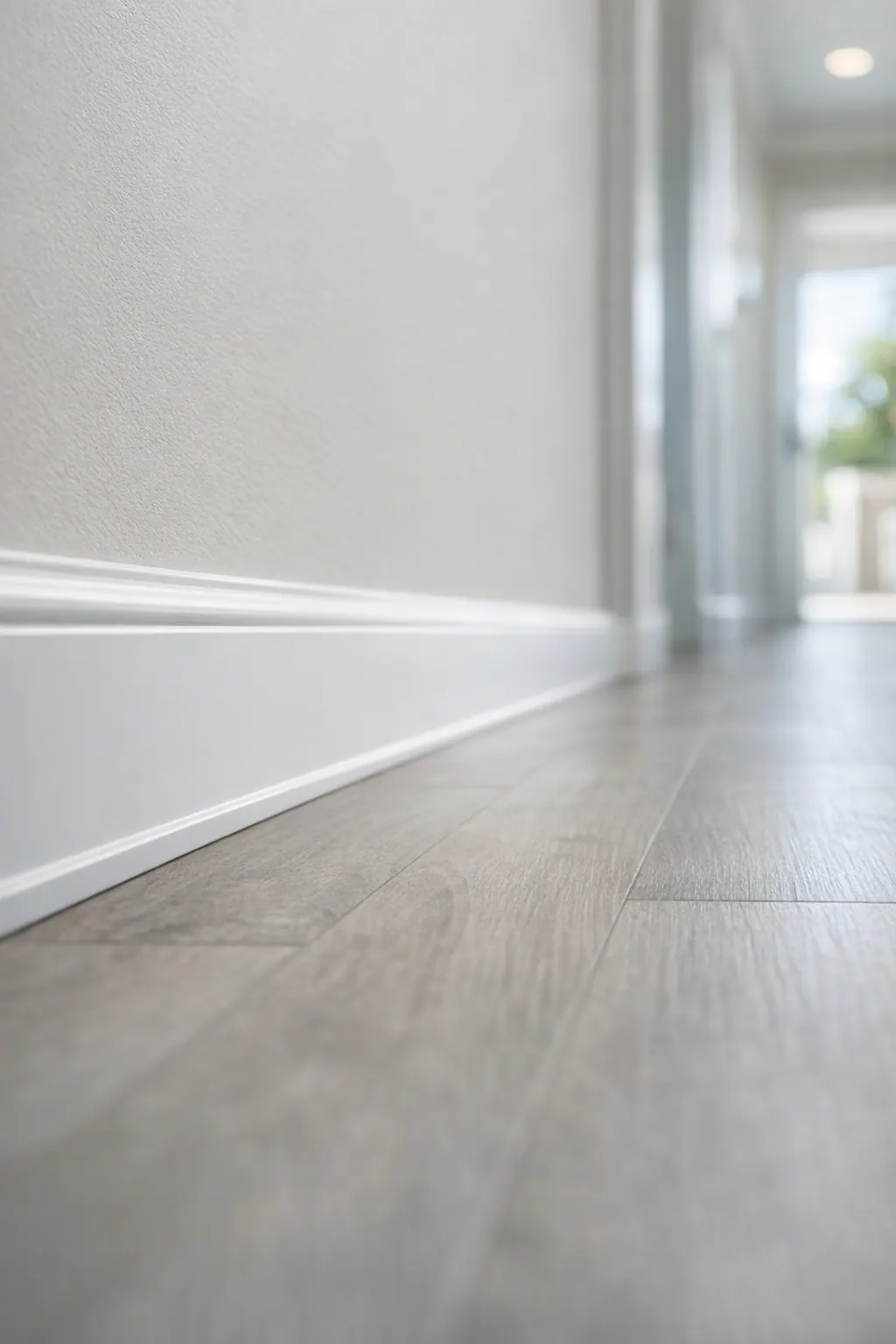
For modern baseboards Florida homes usually look best with restraint. A square-edge profile is flat and crisp, which suits contemporary coastal rooms. An eased-edge profile softens the top corner slightly, making it practical where you want a clean look without a sharp visual line. Flat stock has a simple board-like face and works well with transitional interiors, while a subtle decorative profile adds a small curve or step for homeowners who want a little more detail without going ornate.
The best rooms for taller baseboards are the spaces you see every day: main living areas, bedrooms, hallways, and open rooms where light wall colors need a crisp edge. They can also make long runs of tile feel more finished because the base creates a clean border around the room. The weaker fit is a very small room with a bulky or heavily layered profile; in that case, a taller but flatter design usually gives you the upgrade without making the walls feel crowded.
Clean-Lined Door and Window Casing for Better Architectural Definition
The next place the eye goes is every opening: bedroom doors, hallway pass-throughs, sliders, and windows that line up across an open floor plan. Upgraded door casing and window casing act like picture frames for those transitions, so the home feels more intentional from room to room instead of relying on thin builder trim that can disappear against light walls.
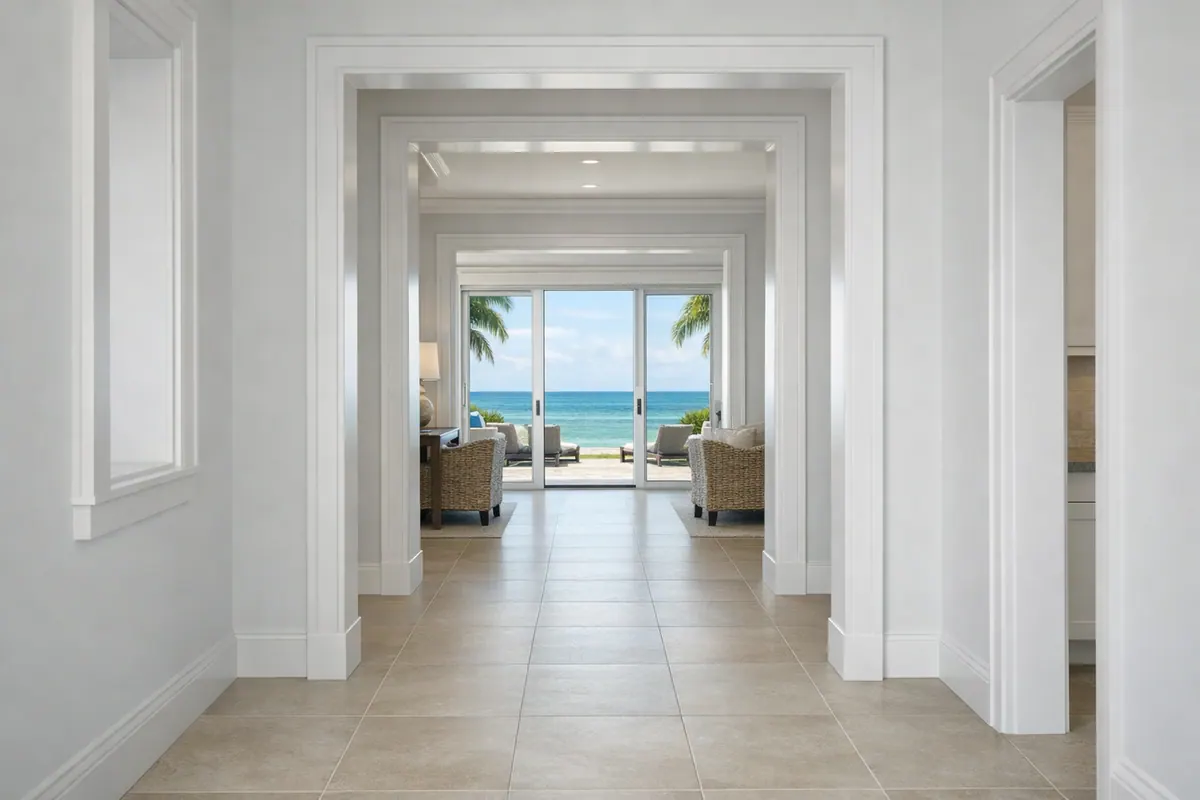
Simple flat-stock casing is the cleanest option: it uses straight, squared boards for a relaxed coastal or modern look. Craftsman-inspired casing adds a wider head piece or subtle cap, giving doors and windows more presence without becoming formal. Slightly more detailed profiles introduce small curves, steps, or eased edges, which can work well in transitional homes when the baseboards have a similar level of detail.
Casing does not have to match the baseboard exactly, but it should coordinate in thickness, width, and style. A flat baseboard with flat casing feels calm and current; a softly profiled baseboard can pair with casing that has one modest detail. The weak signal is too many profiles competing at once: ornate door casing, modern baseboards, heavy crown, and a feature wall can make a coastal room feel busy rather than custom.
Good finish work shows in the small lines: consistent reveals around jambs, tight corners, smooth caulk lines, and casing width that looks proportional to the ceiling height and room size. In bright Florida interiors, those details are easy to see, so clean execution matters as much as the profile you choose.
Crown Moulding: Best When It Matches Ceiling Height and Home Style
At the ceiling line, proportion matters even more because crown moulding changes how tall, formal, and finished a room feels. For crown moulding coastal homes can wear well when the profile is scaled to the ceiling height: lower ceilings usually need a slimmer, simpler crown, while high ceilings can handle a deeper projection or a built-up look without feeling top-heavy.
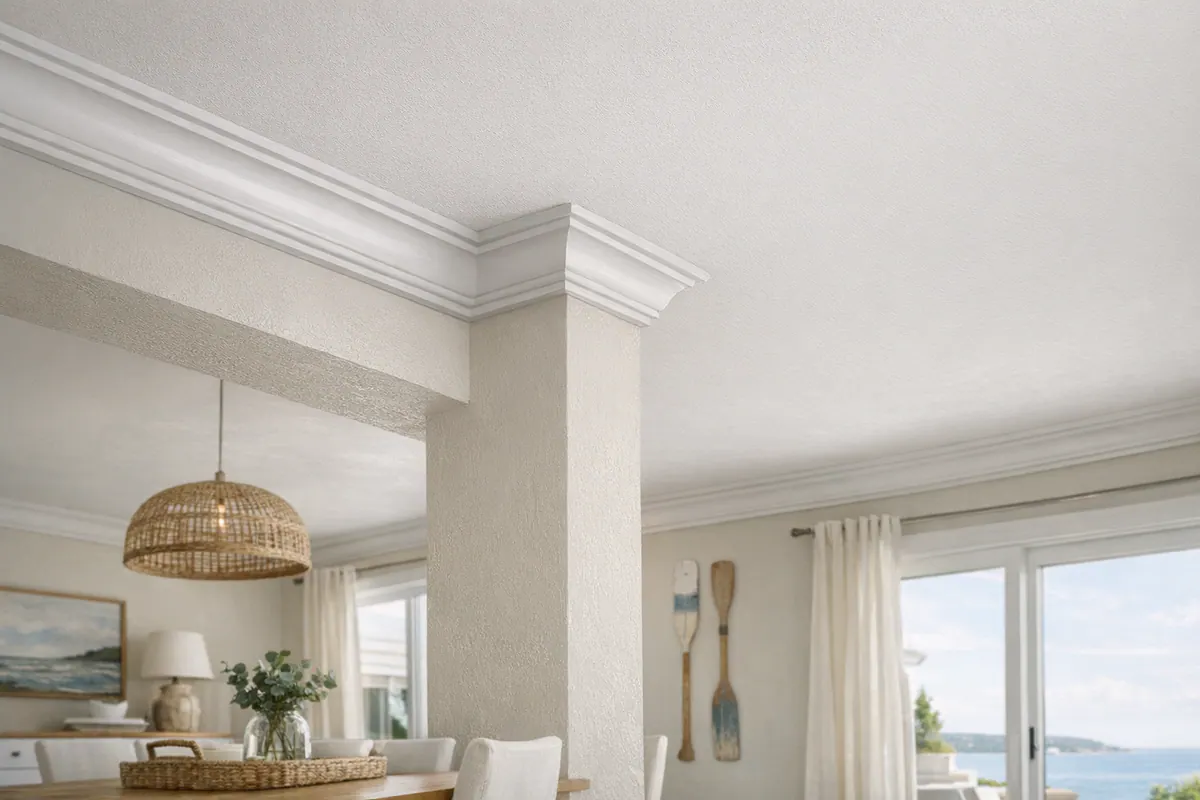
A simple painted crown is the most relaxed option. It creates a clean transition where the wall meets the ceiling and works well in living rooms, bedrooms, and open coastal spaces with light walls and simple casing. A stepped crown adds one or more flat ledges or layered pieces, giving the room more shadow and definition; this can be a strong fit for foyers, primary suites, dining rooms, and tray ceilings. More formal profiles have extra curves, beads, and depth, so they read dressier and are best suited to rooms that already support that level of detail.
The best signal for crown is a room that feels unfinished at the ceiling transition: a dining room that needs polish, a foyer that needs a stronger first impression, a living room with high ceilings, or a tray ceiling that would look better with a framed edge. Crown does not have to run through the entire home to be successful; using it selectively can make key rooms feel more intentional without adding visual weight everywhere.
The weaker fit is oversized or ornate crown in a casual coastal room, especially when the ceiling is low or the rest of the trim is clean and modern. If the baseboards and casing are simple, crown moulding should usually stay balanced with that language. The takeaway: crown is still a beautiful interior trim upgrade, but in Southwest Florida homes it works best as a scaled finishing detail, not an automatic add-on for every room.
Wainscoting and Wall Paneling for Texture, Protection, and a More Custom Feel
Wall treatments bring the detail down to eye level, which is why they can change the mood of a room faster than another ceiling detail. Wainscoting usually covers the lower portion of a wall with panels, boards, or trim boxes, giving the room texture while helping the wall feel less plain in high-visibility areas.
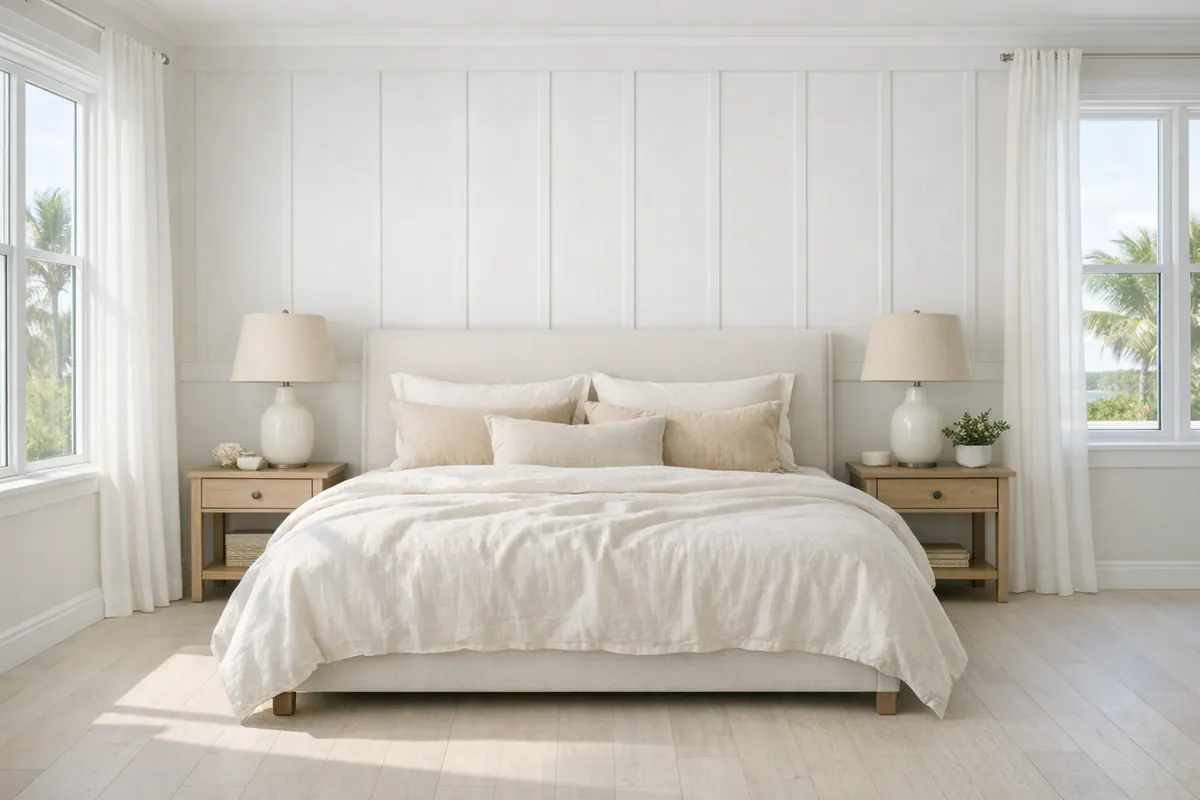
Beadboard-style panels have narrow vertical grooves, so they read casual, cottage-like, and coastal; they work especially well in powder baths, breakfast nooks, entries, and short hallway runs. Raised or recessed panel looks feel more traditional because the wall is divided into framed sections with more depth and shadow. A chair rail can cap either approach, creating a clean stopping point and helping the lower wall feel intentional rather than randomly decorated.
Picture frame moulding is the lighter, more flexible option: trim is applied in rectangular frames directly to the wall, often below a chair rail or across a full accent area. It is a strong fit for dining rooms, stair walls, long hallways, and primary bedroom sitting areas because it adds dimension without the heavier look of full paneling. For wainscoting Florida homes tend to look best when panel height and spacing match the room: lower, simpler panels feel breezy, while taller panels and tighter spacing feel more formal.
The main caution is restraint. These upgrades shine when they solve a specific problem, such as protecting a busy entry wall, dressing up a dining room, or breaking up a long blank stair wall. Used in every room, or layered with ornate crown, heavy casing, and busy feature walls, wainscoting can make a coastal interior feel crowded instead of custom.
Feature Walls: Shiplap, Board and Batten, and Picture-Frame Accents
Sometimes the better move is to concentrate the detail on one wall instead of wrapping the whole room. A feature wall works well when a space needs a focal point, not full-room coverage: think primary bedroom headboard walls, dining room end walls, entry areas, home offices, powder baths, or a living room wall that feels too plain from the main seating area.
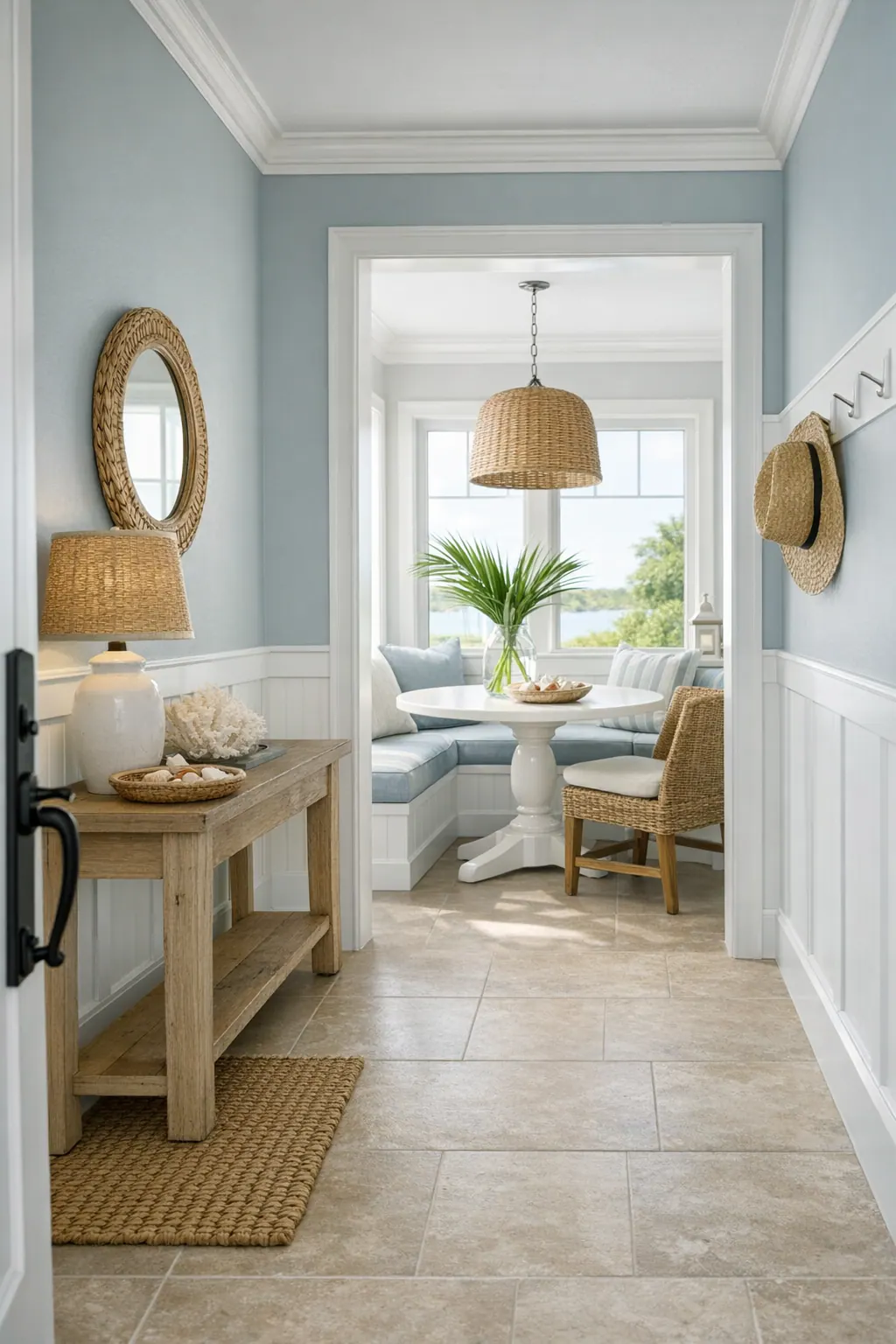
Shiplap gives the most casual coastal texture. Its horizontal lines can make a wall feel relaxed and beach-house inspired, especially in bedrooms, breakfast spaces, and small baths where you want interest without a formal panel layout. The tradeoff is that too much shiplap can start to feel theme-heavy, so it is often strongest as an accent wall rather than a full-room treatment.
Board and batten creates vertical dimension with flat boards and narrow battens that break the wall into taller sections. It usually feels cleaner and more modern than beadboard, making it a good fit for home offices, entry walls, dining rooms, and primary bedrooms where you want structure without ornate trim. Picture-frame accents are the more polished option; they create a transitional look that pairs well with dining rooms, foyers, and living spaces that already have a slightly dressier style.
Scale is the deciding factor. A tall wall can handle wider spacing, larger panels, or a stronger board and batten layout, while a compact powder bath may need tighter proportions and a simpler paint color. Avoid adding an accent wall where the room already has a dominant feature, such as patterned tile, large sliders, a stone fireplace wall, heavy built-ins, or a dramatic window view. Among interior trim upgrades Florida homeowners consider, feature walls are best when they support the room's focal point instead of competing with it.
How to Choose the Best Trim Upgrade by Room, Budget, and Remodeling Goal
A simple way to narrow the choice is to rank the room by visibility, wall wear, ceiling height, and how much change you want to feel when you walk in. As you compare interior trim upgrades for Florida homes, the strongest choice is usually the one that solves the most obvious visual problem in that room.
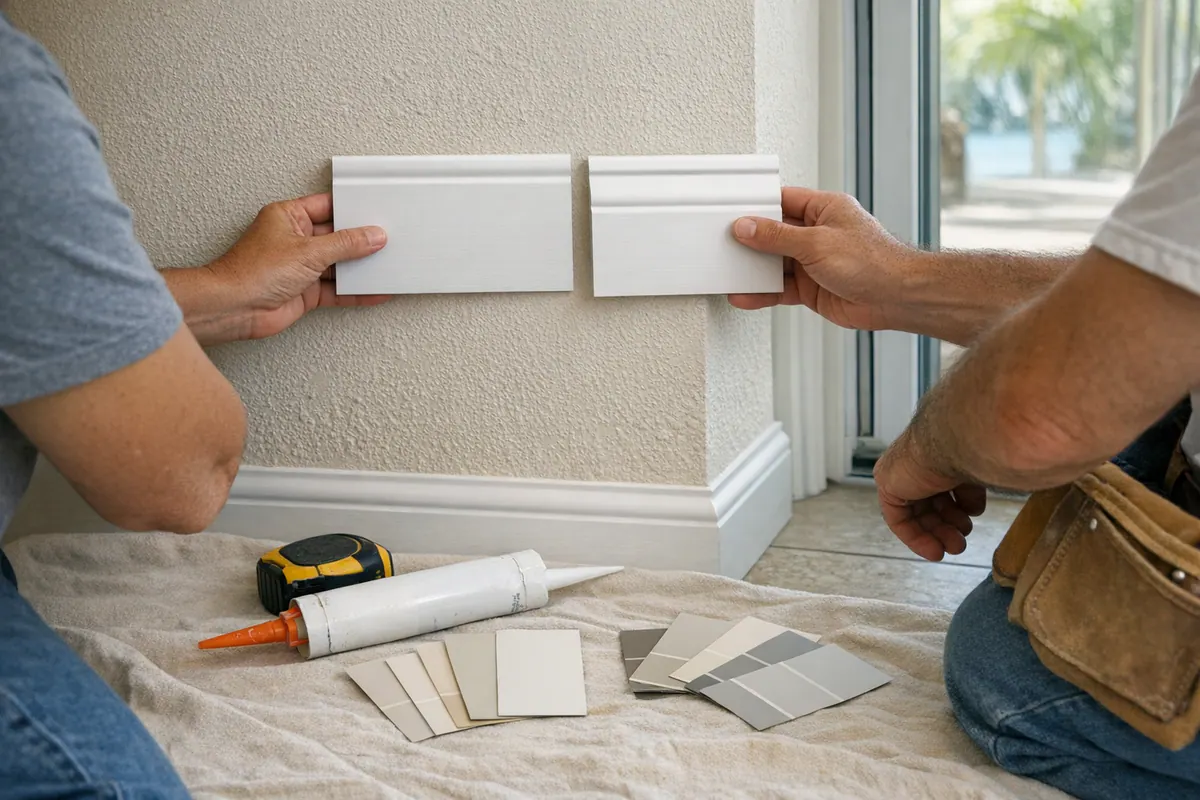
- For the highest overall refresh, start with taller baseboards and coordinated casing. This option costs more as a whole-home project because it touches many rooms, but it also changes the most sightlines: floors look cleaner, doorways look more intentional, and open layouts feel more consistent.
- For the most formal finish, use crown moulding in selected rooms with the height and style to support it, such as a foyer, dining room, tray ceiling, or high-ceiling living area. The practical tradeoff is that crown adds polish at the ceiling line, while simpler base and casing upgrades usually feel more casual and universal.
- For wall protection and texture, choose wainscoting or paneling in entries, hallways, dining rooms, powder baths, or other walls that feel plain or get daily contact. It is more room-specific than baseboards, but it adds a custom layer where people see and touch the wall.
- For targeted impact on a tighter scope, choose one feature wall. It will not refresh the whole house, but it can make a bedroom, office, dining wall, or entry feel designed without committing every room to a heavier trim package.
If you are preparing to sell, the safest path is usually clean foundational trim, consistent profiles, and a fresh painted finish rather than a highly personal accent wall in every space. If you are updating a dated coastal home for yourself, baseboards and casing can reset the style first, then crown, wainscoting, or a feature wall can be added where the room needs more character.
For a longer-term custom remodel, quality matters as much as the trim type: look for straight lines, balanced proportions, consistent profiles from room to room, smooth painted surfaces, and details that match the home's coastal style. If you are planning finish carpentry Venice FL projects, a local trim conversation can help turn these choices into a room-by-room plan without overbuilding the look.
Choosing Trim That Fits Your Coastal Home
Think of the finished plan as layers, not a shopping list. Architecture tells you whether the trim should feel casual, transitional, or formal; ceiling height controls how much profile the room can carry; moisture exposure affects material, paint, and caulk choices; budget decides whether to work whole-home or room-by-room; and visibility shows where the upgrade will matter most day to day.
For most Venice and Southwest Florida homes, the strongest first layer is still baseboards plus door and window casing. Baseboards sharpen the floor line, casing defines the openings, and together they create the broadest whole-home improvement before any decorative wall or ceiling detail is added.
After that foundation is in place, add the more decorative pieces where they truly help the room. Crown moulding in coastal homes works best when the ceiling height and room style support it. Wainscoting is strongest where walls need texture or protection. A feature wall is best when one surface needs focus, not when every wall is competing for attention.
The practical takeaway: choose durable, well-proportioned trim that fits the home you actually live in. Clean profiles, smooth painted finishes, and consistent scale usually age better in bright coastal interiors than oversized or overly ornate details. Start with the trim that improves the whole house, then use crown, paneling, or accent walls to support your longer-term remodeling goals.