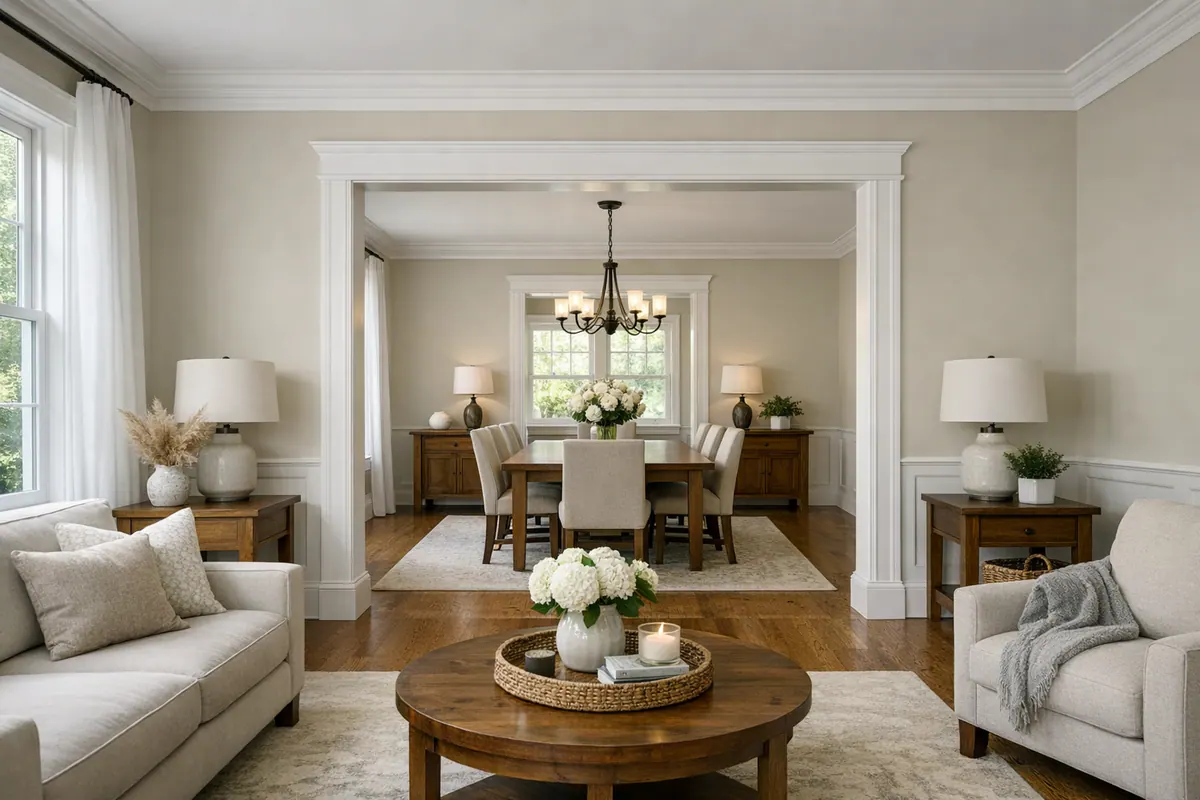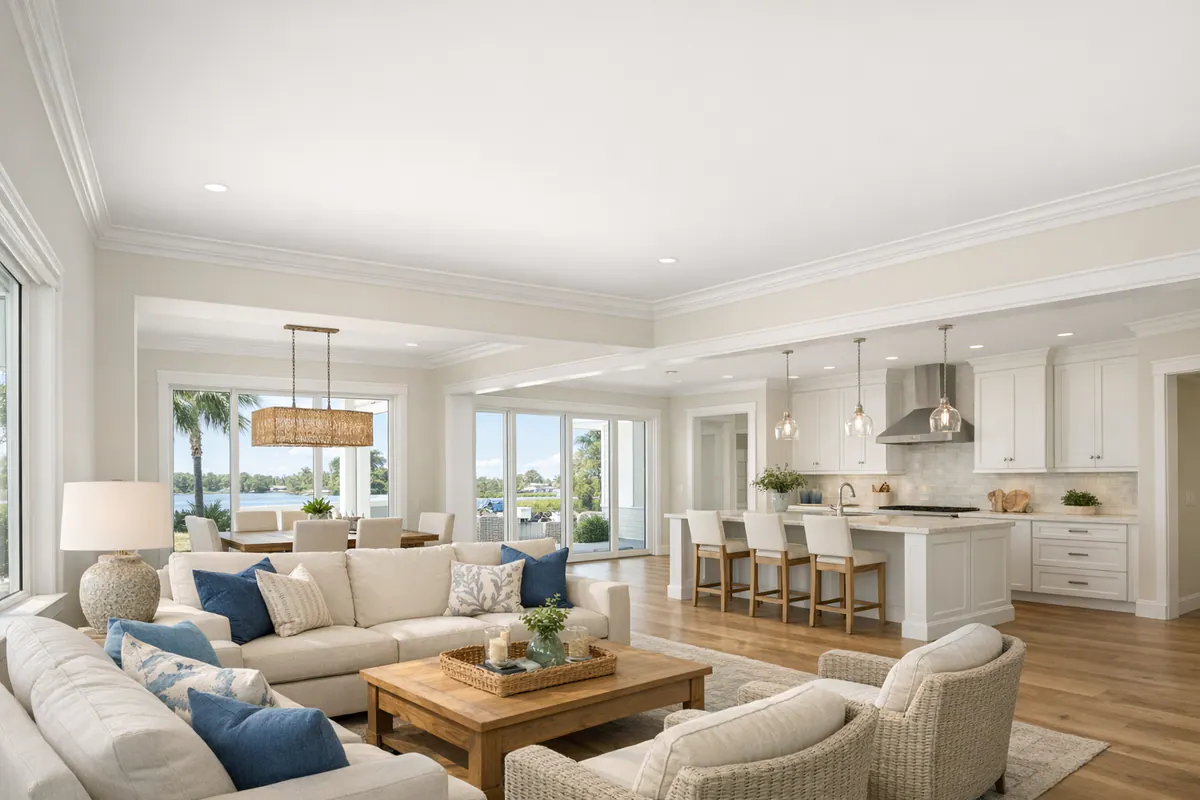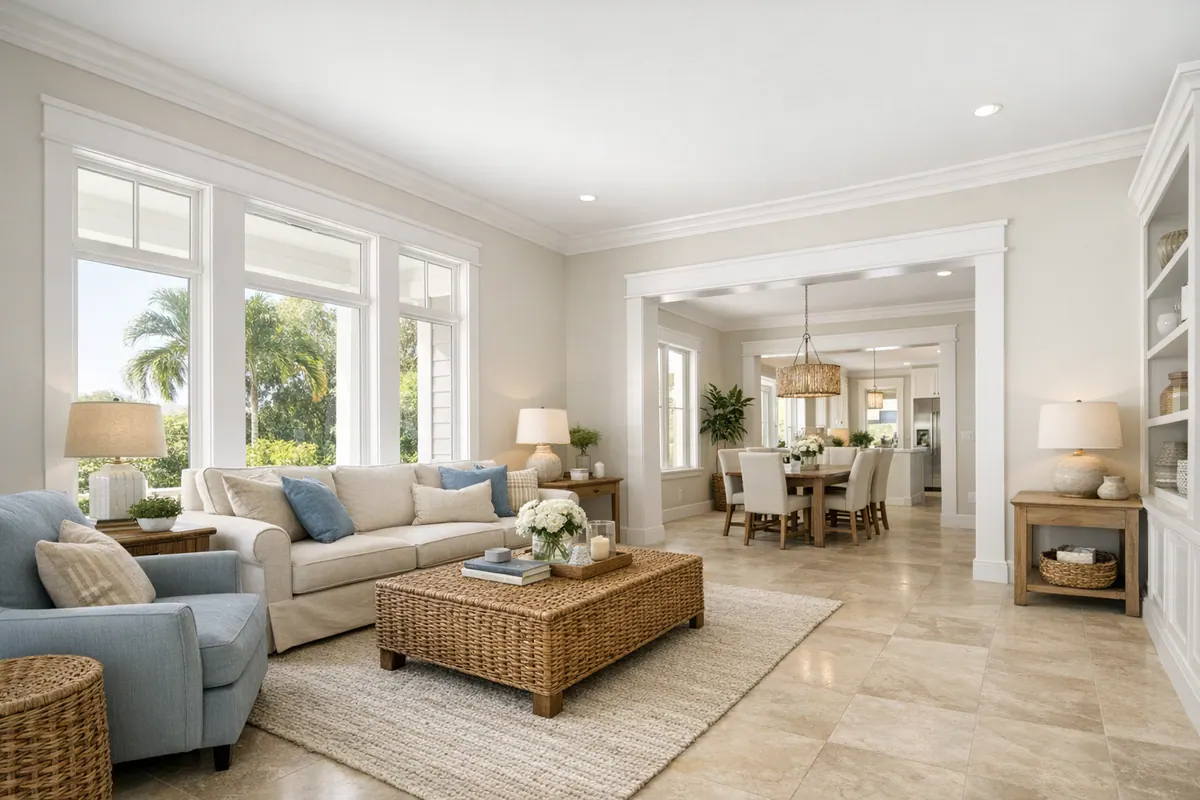
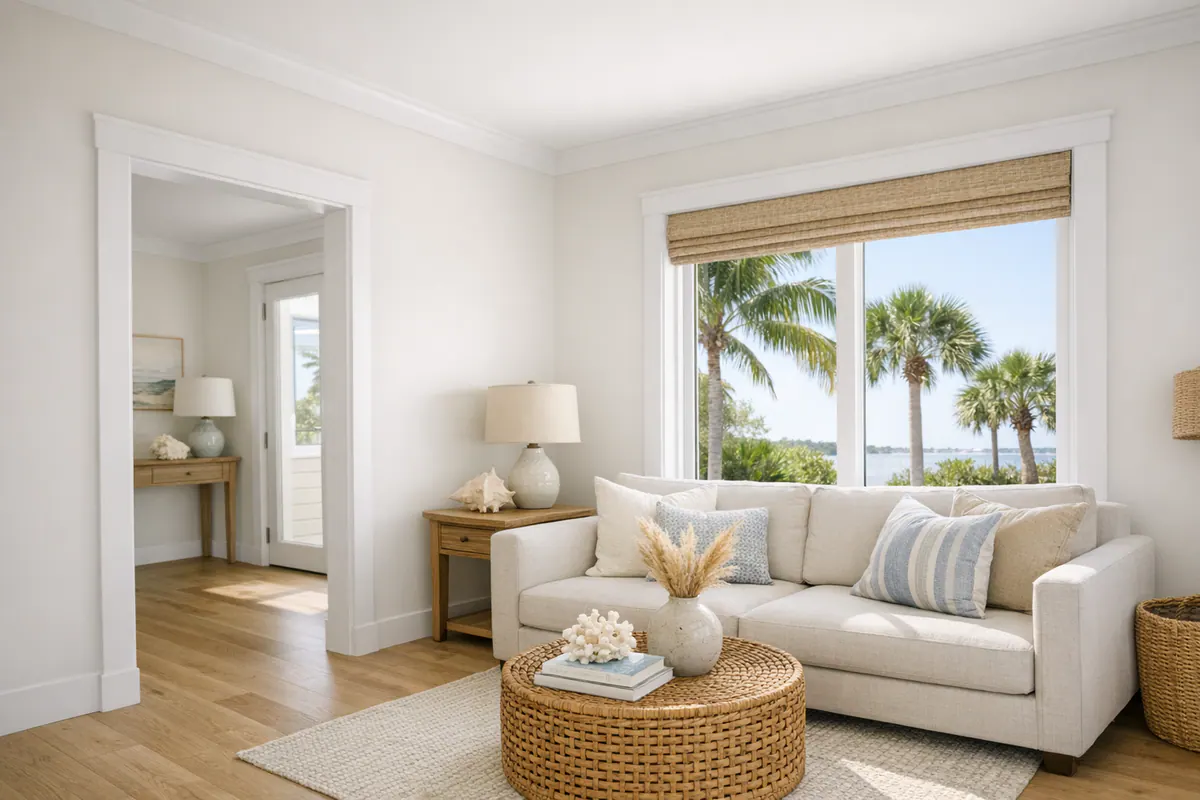

Casing is the trim that surrounds the place where a wall meets a door or window, and it has a bigger visual job than many people realize. Door casing gives the opening a clean edge instead of letting the wall simply stop at the jamb. Window casing does the same around glass, turning the window into a framed feature rather than a cutout in the wall.
That framing effect is why upgraded casing can make a room feel finished so quickly. Thin, plain trim can leave doors and windows looking basic, especially when the rest of the room has updated flooring, fresh paint, or newer furnishings. A better-proportioned casing creates a more deliberate border, adds a subtle shadow line, and helps the opening look like it belongs in the design instead of feeling leftover.
This is also what makes casing different from a major remodel. You are not moving walls, changing the floor plan, or replacing the window itself. You are improving the architectural finish around the openings that already shape the room. For homeowners looking at interior trim upgrades Sarasota homes can benefit from, that distinction matters: the impact is visible, but the concept is still focused and practical.
In Sarasota County homes, especially spaces with bright walls, open living areas, tile floors, or transitional updates, door casing and window casing can help the room feel more complete. The goal is not to make every home look formal or heavily decorated. It is to give each opening enough definition that the walls, doors, windows, and surrounding finishes feel connected.
How Casing Changes the Look of a Room Without Moving Anything
The difference shows up most when you look across a room, not just at one doorway. Stronger interior casing gives your eye a clear line to follow from wall to opening to the next space. Around a door, that line makes the passage feel deliberate. Around a window, it gives the glass a finished edge so the view, the wall color, and the surrounding trim feel like parts of the same design.
Shadow is part of the effect. Even a simple casing profile creates a slight raised edge where trim meets drywall, and that edge catches light differently than a flat wall. In a plain room, those small shadow lines can make doors and windows read as architectural features instead of blank cutouts. This is why many door and window trim ideas focus less on decoration and more on proportion, depth, and clean edges.
Visual weight matters, too. Very narrow builder-grade trim can make a tall door or wide window look under-framed, especially in open interiors where several openings are visible at once. Wider or better-scaled casing adds enough presence to balance the opening without changing the wall, the floor plan, or the actual location of the door or window.
That is the practical appeal of interior door and window trim upgrades: the room can feel more orderly without being rebuilt. Cleaner wall-to-door transitions reduce the "unfinished edge" feeling, while consistent casing from one opening to the next helps separate rooms feel connected. For homeowners considering interior trim upgrades Sarasota properties can benefit from, casing is often about refining the finish layer that is already there, not making the home larger or more complicated.
Popular Door and Window Casing Styles for Sarasota County Interiors
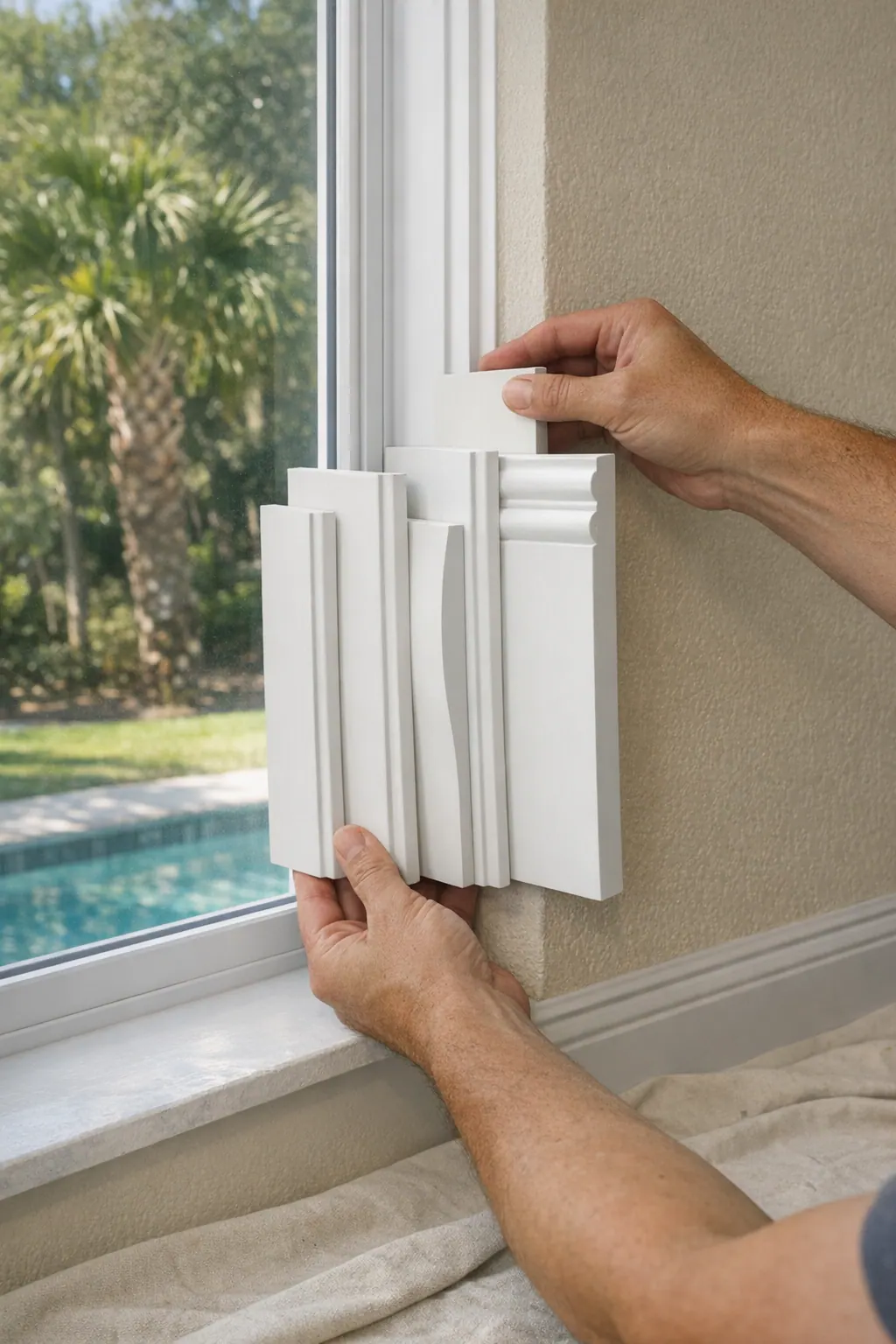
Once you start comparing profiles, the better question is not "Which trim is nicest?" It is "Which line belongs in this room?" Door casing and window casing can feel clean, structured, formal, familiar, or quietly upgraded depending on the profile, width, and how much detail the surrounding space can support.
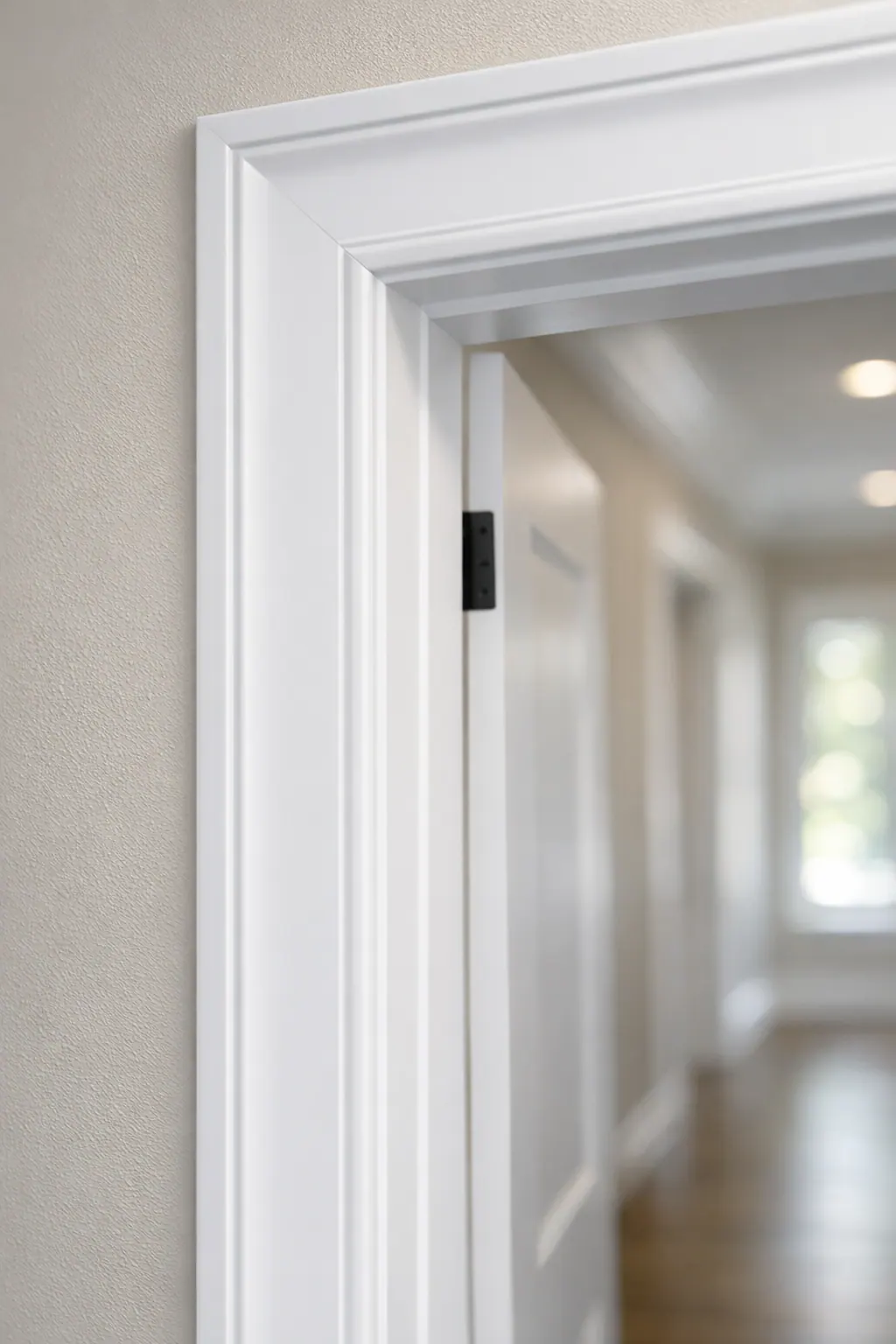
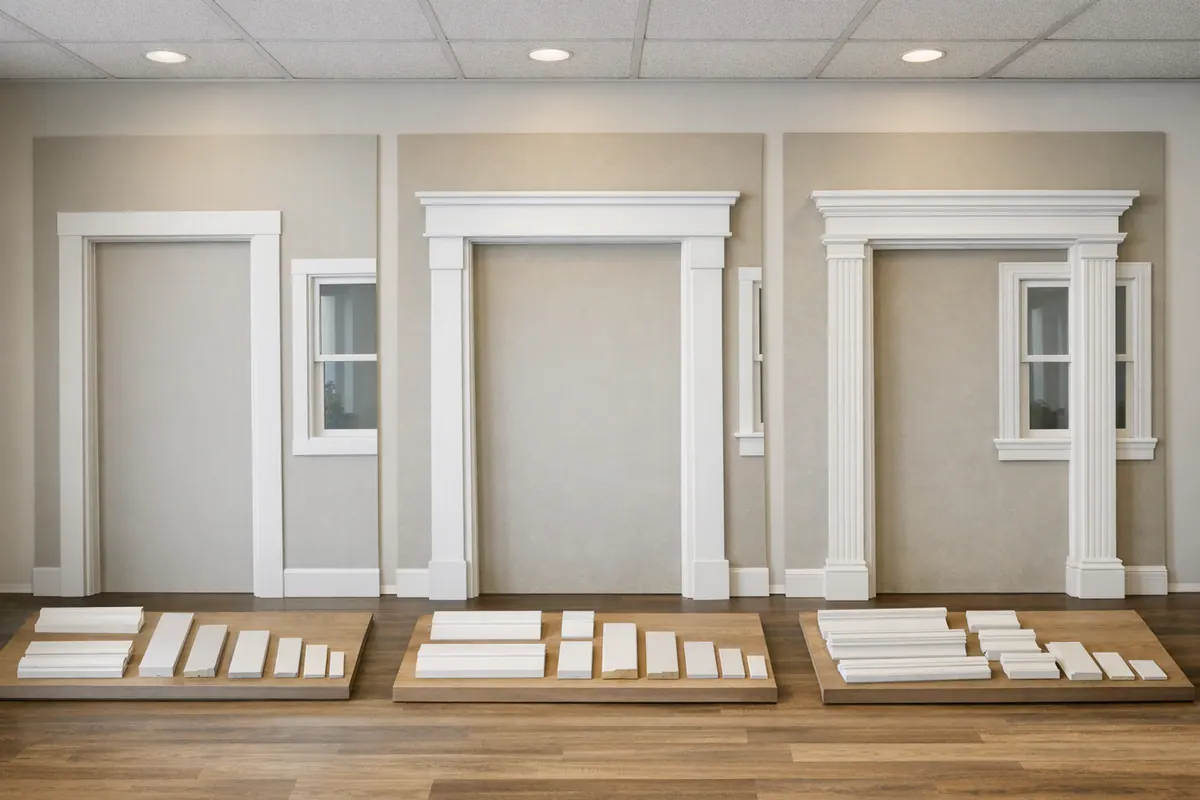
- Modern flat-stock casing is the simplest-looking option: straight boards with square edges, usually with very little curve or ornament. It creates crisp outlines around doors and windows, which works especially well in coastal contemporary rooms, white or soft-neutral interiors, and spaces with simple shaker doors. For homeowners searching for modern window casing Florida ideas, this is often the look they are picturing. The weak match is a room full of ornate baseboards, raised-panel doors, or traditional cabinetry; flat-stock trim can feel too plain if the rest of the room is more decorative.
- Craftsman-style trim has stronger geometry, often with wider side pieces and a more defined header across the top. Around a doorway, it makes the opening feel grounded and substantial. Around a window, it gives the glass a more architectural frame without becoming fancy. Craftsman-style trim works nicely in casual transitional homes, updated ranch layouts, and Venice FL interiors that need warmth and structure. It can feel heavy, though, in a very narrow hallway, a low-ceilinged room, or a space where every other finish is sleek and minimal.
- Decorative surrounds use more layered pieces, built-up headers, backbands, or sill details to make an opening look more formal. They are best when the room has enough scale to carry the extra detail, such as a dining room, foyer, primary suite, or traditional living area. The practical takeaway is balance: a decorative window surround can look elegant when it relates to crown molding, paneled doors, or substantial baseboards, but it may look oversized in a simple coastal room with light walls and minimal furnishings.
- Colonial casing is the familiar curved or eased profile many people recognize from traditional and transitional homes. It adds more movement than flat-stock trim but less formality than a fully decorative surround. This style can be a good bridge when a home has classic baseboards, older interior doors, or a mix of traditional and updated finishes. The mismatch happens when colonial casing is paired with very modern slab doors, ultra-clean cabinetry, or a strictly contemporary design plan.
- Simple upgraded paint-grade profiles are for homeowners who do not want a dramatic style shift. These casings may be slightly wider, cleaner, or better proportioned than builder-grade trim, but they still paint out neatly with the rest of the room. They are often the safest move for transitional interiors because they improve the frame around doors and windows without forcing the home into a strong design category.
Why Door and Window Casing Should Feel Coordinated
A room starts to feel pieced together when the door trim is speaking one design language and the window trim is speaking another. If a hallway has narrow colonial door casing but the living room windows have wide flat-stock surrounds, your eye notices the disagreement before it notices the individual details. Coordinated casing helps the openings feel intentional rather than added one at a time.
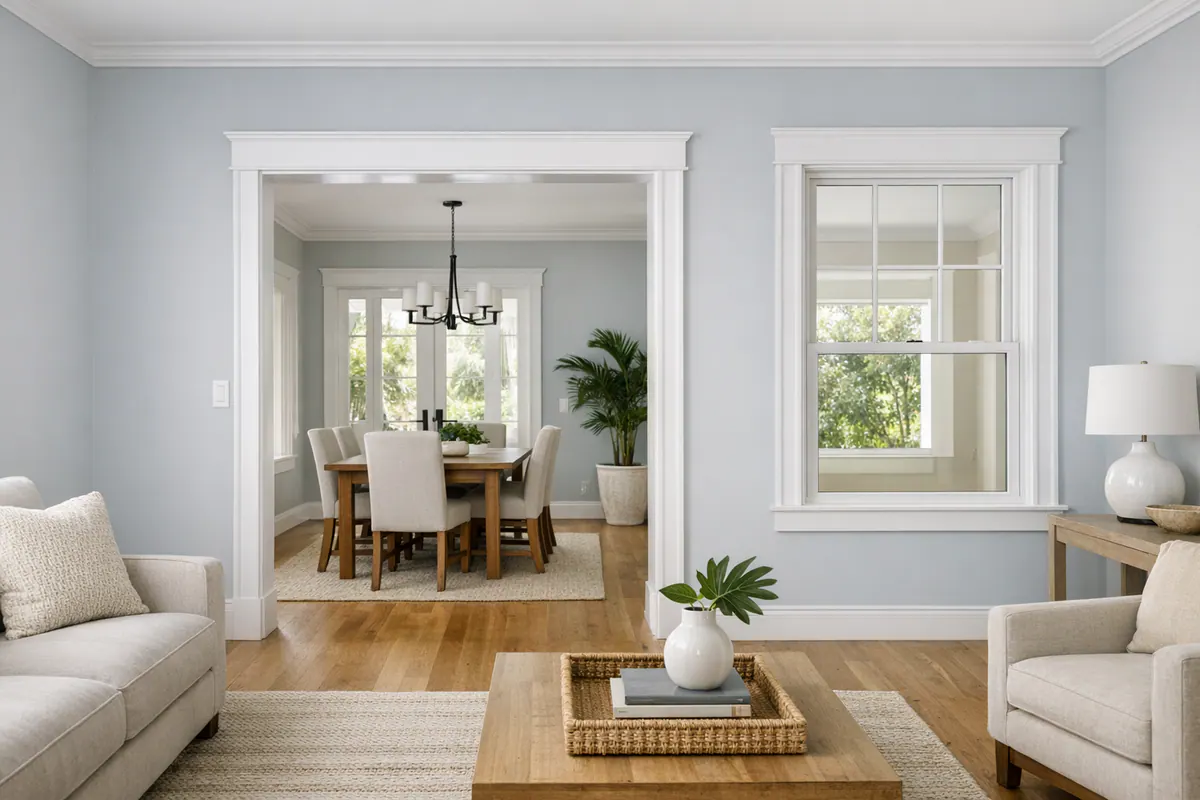
Exact matching is usually the cleanest choice in open areas where doors and windows are visible at the same time. The same profile, width, paint color, and corner treatment create a steady rhythm across the room. This is especially helpful in bright Sarasota County interiors, where white or soft-neutral walls make trim lines more noticeable.
Coordinated but not identical casing can also work. For example, windows may have a slightly deeper sill or a more defined header while the nearby doors use simpler side casing. The key is proportion: the pieces should feel related in width, edge shape, and visual weight. Mitered corners create a more continuous framed outline, while square butt joints feel cleaner and more structured, so mixing those joint styles too casually can make the finish look inconsistent.
Before a door casing installation in Sarasota County or a window casing installation in Venice FL, it helps to compare the full room, not just one opening. Look at the reveal, which is the small setback between the jamb and the casing; when reveals vary widely, the trim can look uneven. Also compare paint color, sheen, casing width, and how heavy the trim feels next to baseboards and interior doors. The takeaway is simple: the casing does not have to be fancy, but it should look like it belongs to the same plan.
Choosing the Right Casing Size, Profile, and Visual Weight
The safest way to choose casing is to judge how much attention the opening should carry. Size is the width of the trim face; profile is the shape of its edges and grooves; visual weight is the overall "heaviness" your eye feels once the trim is painted and installed. Wider, simpler casing creates a clean frame. Narrower, more detailed casing feels lighter but busier. The right choice should make the door or window look settled into the wall, not pasted on top of it.
Ceiling height is one of the first checkpoints. Taller rooms can usually support wider casing because the wall has enough vertical space for stronger trim lines. In lower-ceiling rooms, oversized casing can crowd the wall and make doors feel squat. Window size matters for the same reason: a large living room window may look underdressed with very thin trim, while a small bathroom or hallway window may look crowded with a heavy decorative surround.
Door style should guide the level of detail. A simple Shaker-style door usually pairs well with flat-stock or lightly stepped casing because the lines are clean and squared off. A raised-panel door can handle more profile detail, especially in traditional rooms. For transitional interiors, the sweet spot is often a casing that has more presence than builder-grade trim but not so much ornament that it fights the doors, cabinets, or flooring.
Wall color and natural light change how bold the casing feels. Bright white trim can sharpen coastal interiors, especially against soft sand, pale gray, or muted blue-green walls, but the same white can feel stark if the wall color is too cool or the room gets intense afternoon light. In those cases, a softer white or simpler profile may give the opening definition without making every edge glare.
Room scale and adjacent trim are the final reality check. Open living areas in Sarasota or Venice can often handle stronger casing because multiple openings are visible at once, while narrow halls and small bedrooms usually benefit from simpler profiles. Baseboards do not need to become the focus, but they should feel proportional: very wide door casing next to tiny baseboards can look top-heavy. Good door and window trim ideas should make the whole room feel balanced, which is the real value of thoughtful interior trim upgrades Sarasota homeowners can see without changing the layout.
Can Casing Be Upgraded Without Replacing Doors or Windows?
In many homes, the practical scope is simpler than homeowners expect: the door or window can stay, while the surrounding casing is replaced to create a cleaner, more intentional edge. That is why Sarasota interior trim updates can be so appealing when the layout works but the openings look thin, plain, or unfinished.
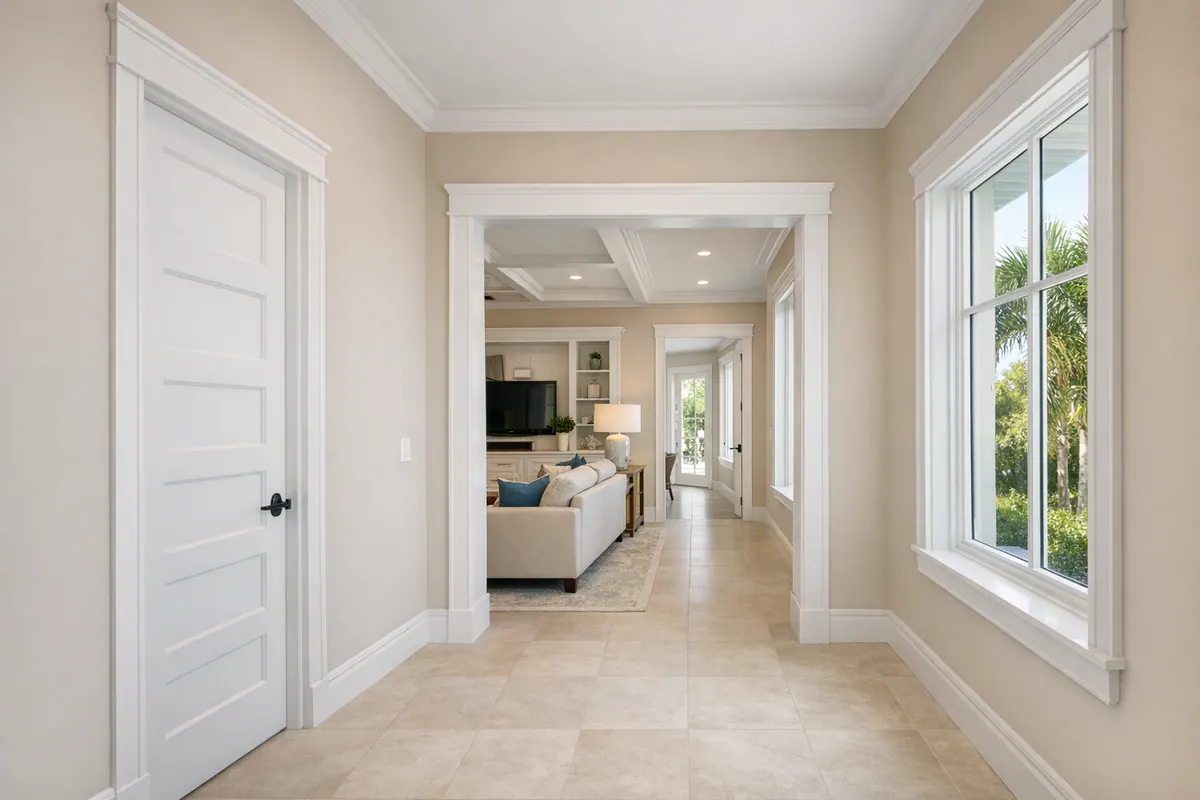
A casing-only upgrade focuses on the trim where the wall meets the door or window opening. It is different from replacing the actual door, window, or opening size. For example, a standard bedroom door may keep the same slab and jamb while the narrow builder-grade trim is swapped for wider flat-stock casing. A window may keep the same glass and frame while receiving a stronger surround that makes it look more finished from inside the room.
The catch is that new casing only looks as clean as the surface it is working with. Damaged jamb edges, uneven drywall, old gaps, moisture-stained areas, or previous rough cuts can interrupt the consistent reveal that makes casing look intentional. In those situations, the trim choice may still be right, but the surrounding edge needs attention so the finished result does not highlight the very flaws it was meant to cover.
This is where finish carpentry Sarasota County homeowners hire for matters more than the profile alone. Clean joints, even reveals, straight lines, and paint-ready transitions are what make upgraded wood trim look built-in rather than simply added on. If the existing doors and windows are sound and the openings are reasonably straight, casing can often deliver the polished effect without turning the project into a larger remodel.
What Works Well in Sarasota, Venice, and Coastal Florida Homes
Local style usually rewards restraint first, then detail. In many coastal or contemporary rooms, flat-stock casing works well because its square edges create a clean outline without adding curls, grooves, or extra ornament. For modern window casing in Florida, that simpler line can keep the focus on light, wall color, and the view instead of making every opening feel busy.
Open-plan interiors often need casing with enough presence to connect several doors and windows at once. Too narrow, and the openings can disappear into the wall. Too ornate, and the trim may compete with tile floors, casual furniture, and soft coastal finishes. A slightly wider simple profile is often the middle ground: visible from across the room, but still relaxed.
Condos and smaller rooms usually benefit from crisp proportions rather than heavy surrounds. A restrained window casing installation in Venice FL, for example, might use clean side pieces and a simple header so the window feels finished without shrinking the wall visually. Larger homes, taller ceilings, or more formal rooms can usually carry more detail, such as layered headers or decorative back banding.
Older ranch homes and transitional renovations need a bridge between original character and updated finishes. Craftsman-style casing can add structure without becoming formal, while a very decorative surround may feel disconnected if the doors, baseboards, and cabinets are otherwise simple. When upgrading interior trim in Sarasota homes, the best choice is the one that makes the openings look intentional in that specific room, not the one that looks most dramatic on its own.
The Takeaway: Casing Is a Small Detail With a Big Finishing Effect
The strongest casing choices usually feel inevitable once they are installed. Door and window casing frames the openings where walls meet doors and glass, so the room reads with cleaner edges, stronger lines, and fewer unfinished transitions. Proportion means the trim width suits the height of the ceiling and size of the opening; consistency means doors and windows feel related; style fit means the profile supports the room instead of fighting it.
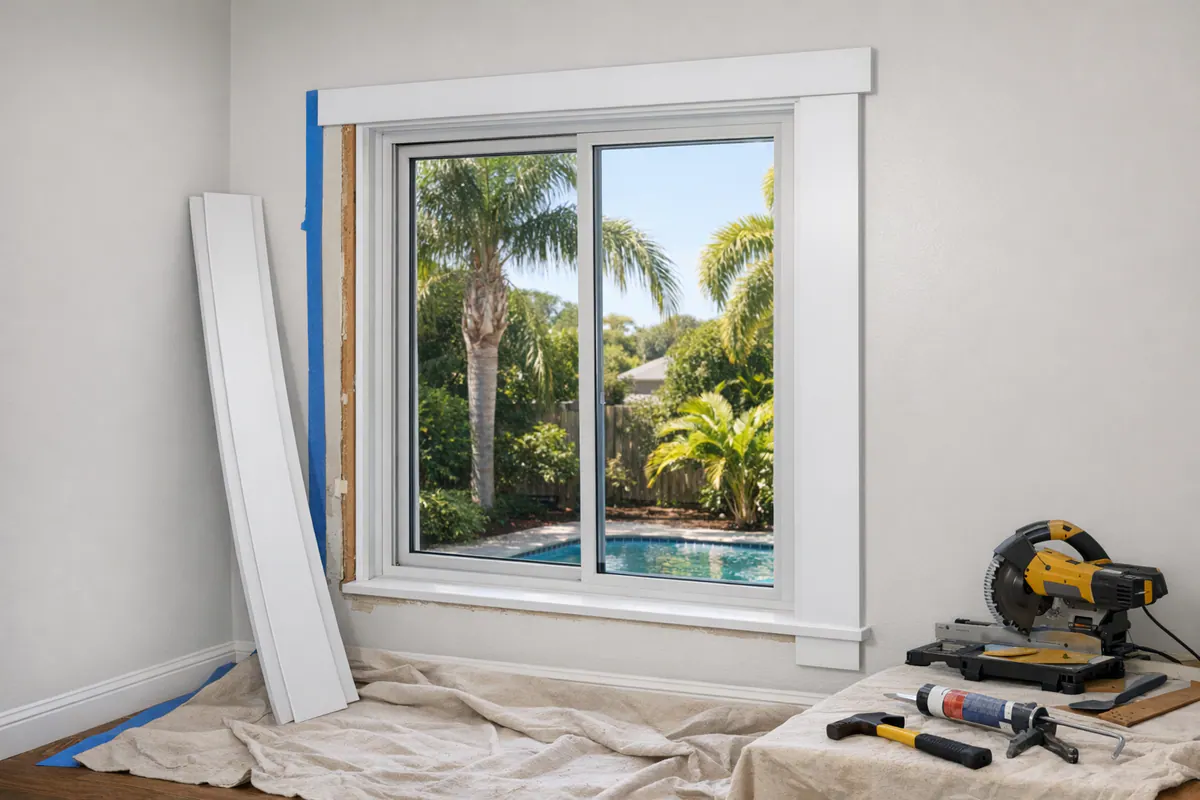
That is the real value of interior trim upgrades Sarasota homeowners notice: the improvement is visual and finish-oriented, not a layout change or major construction project. A simple flat profile can make a coastal room feel calm, Craftsman-style casing can add structure, and a decorative surround can suit a more traditional space. The best door and window trim ideas are not the most elaborate ones; they are the ones that make the home's existing openings look planned, balanced, and complete.