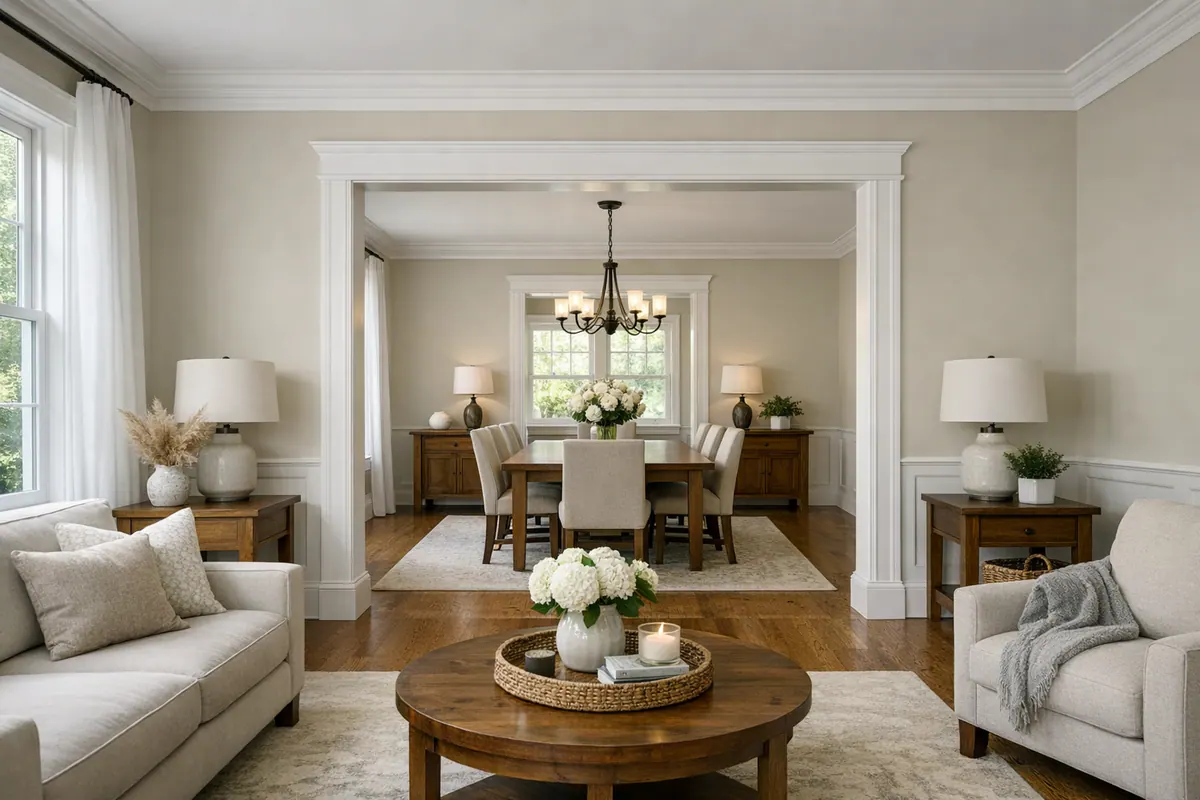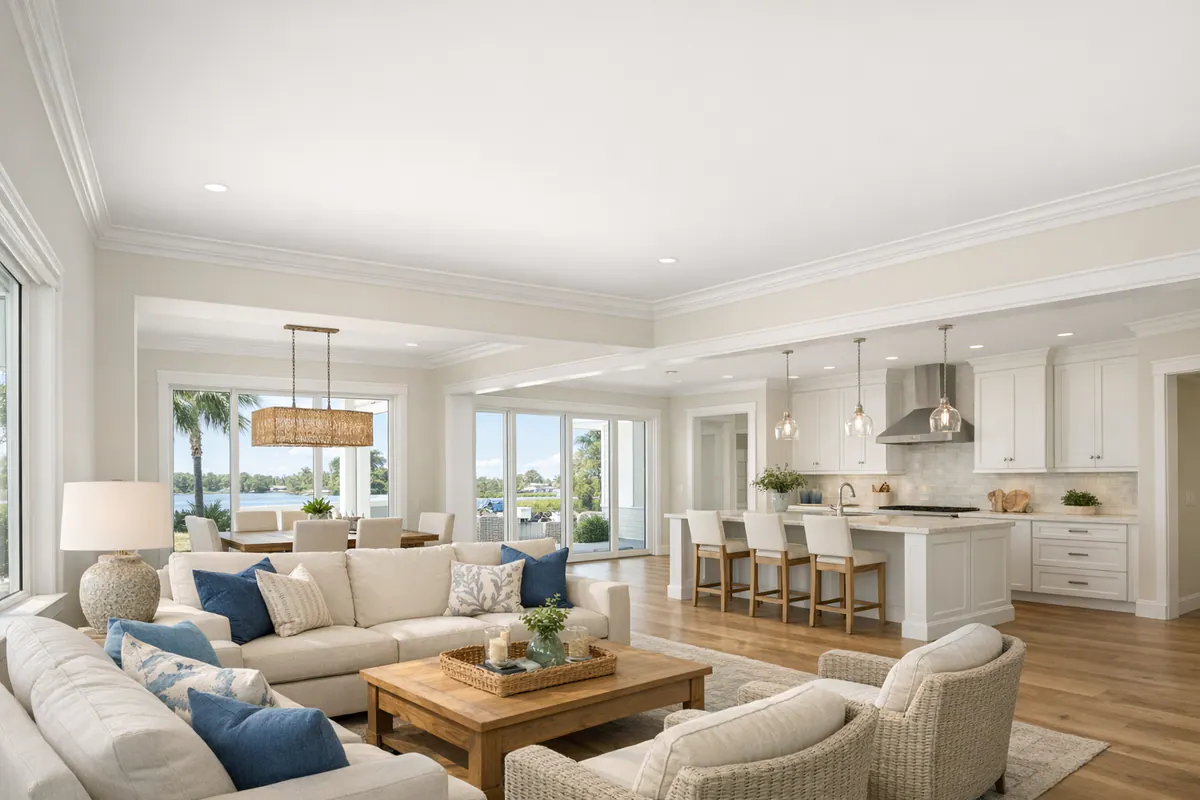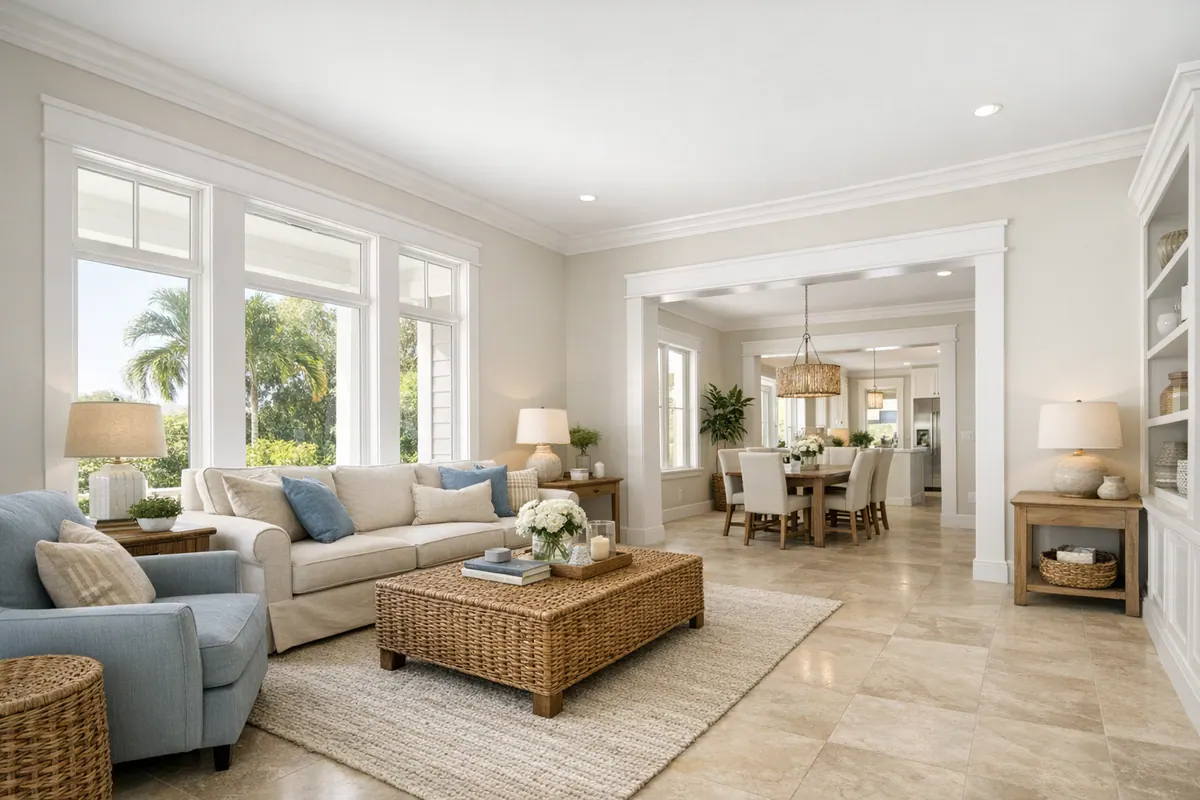
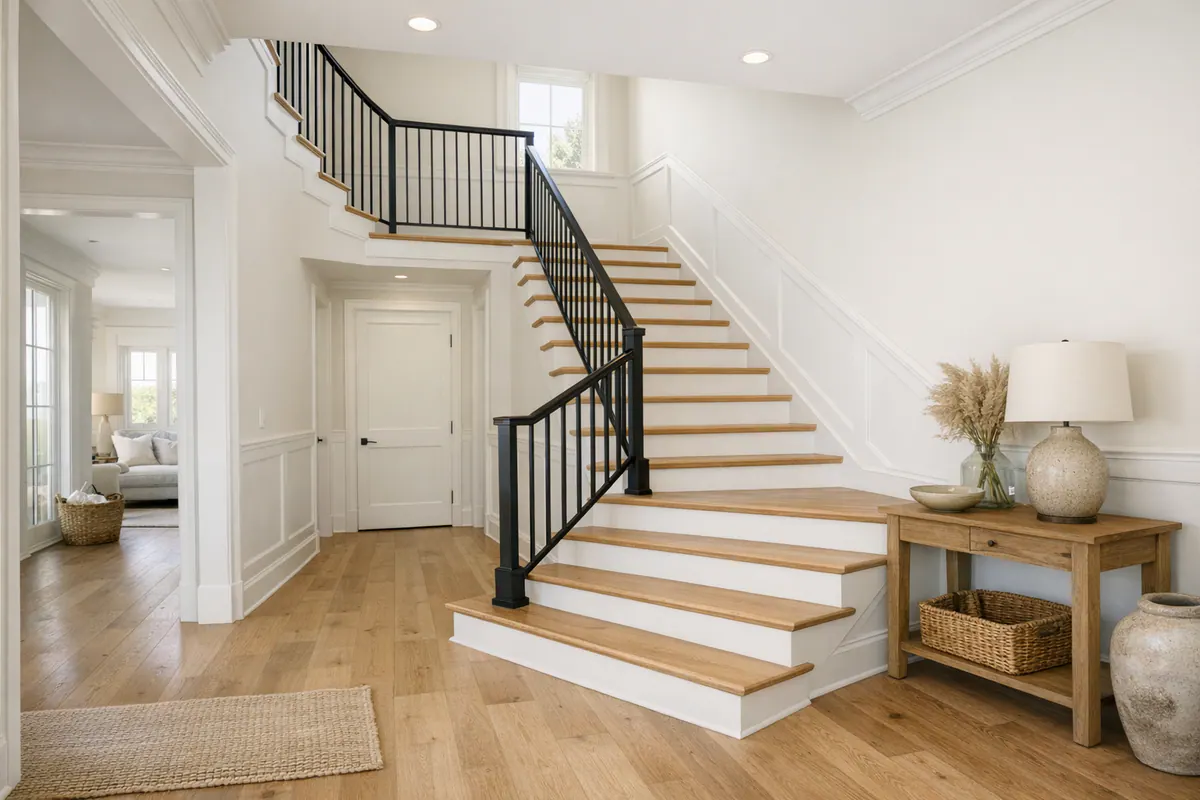

A staircase can be perfectly functional and still feel a little unfinished. The treads may be in place, the railing may do its job, and the walls may be painted, but if the edges look plain or unresolved, the whole stair area can read as builder-basic. That is where stair trim Sarasota County homeowners notice most: not as a huge remodel, but as the finish layer that makes the staircase feel connected to the architecture around it.
In finish carpentry, stairs rely on clean transitions and intentional shadow lines. A bare drywall edge beside the steps can look flat; a properly planned trim line gives that edge a beginning and an end. A blank stair wall can feel like leftover space; moulding or paneling can give it rhythm. Even a small baseboard that stops awkwardly at a landing can make the staircase feel pieced together instead of designed.
This article is about staircase trim ideas, not replacing treads, changing railings, installing carpet, or reworking the stair structure. We'll focus on the visible details: skirt boards that clean up the stair-to-wall line, riser trim that defines each vertical face, landing trim that resolves direction changes, stair wall moulding that organizes long angled walls, and wainscoting that adds depth and protection without overcomplicating the space.
What Looks Right in Sarasota County Homes
In Sarasota County, the best stair trim usually feels light, clean, and connected to the rest of the house rather than heavy for its own sake. Coastal and transitional interiors can handle crisp painted profiles, while Mediterranean-influenced homes may look better with a slightly more substantial profile that echoes arched openings, taller baseboards, or formal ceiling details.
The first design checkpoint is the trim already in the home. Baseboard height, door casing width, crown moulding, flooring color, and wall color all tell you how formal the staircase should feel. A slim skirt board beside chunky baseboards can look under-scaled; oversized stair wall panels in a simple beachy entry can feel forced. Good Sarasota County stair trim either matches those existing lines or steps them up just enough to make the stair feel special.
Sightlines matter, too. In open entries, two-story foyers, and staircases visible from the living area, natural light makes uneven lines, awkward stops, and mismatched profiles easier to notice. That is why paintable, stable trim materials and restrained profiles tend to work well in bright coastal homes: they create clean shadow lines without making the stair wall feel crowded.
Skirt Boards: Cleaning Up the Stair-to-Wall Transition
The first place many stairs start to look more intentional is along the wall line. A skirt board is the long trim board that runs up the stair wall, covering the exposed seam where treads and risers meet drywall. Instead of seeing a zigzag of step edges, caulk lines, and small paint breaks, you get one clean diagonal line that frames the staircase.
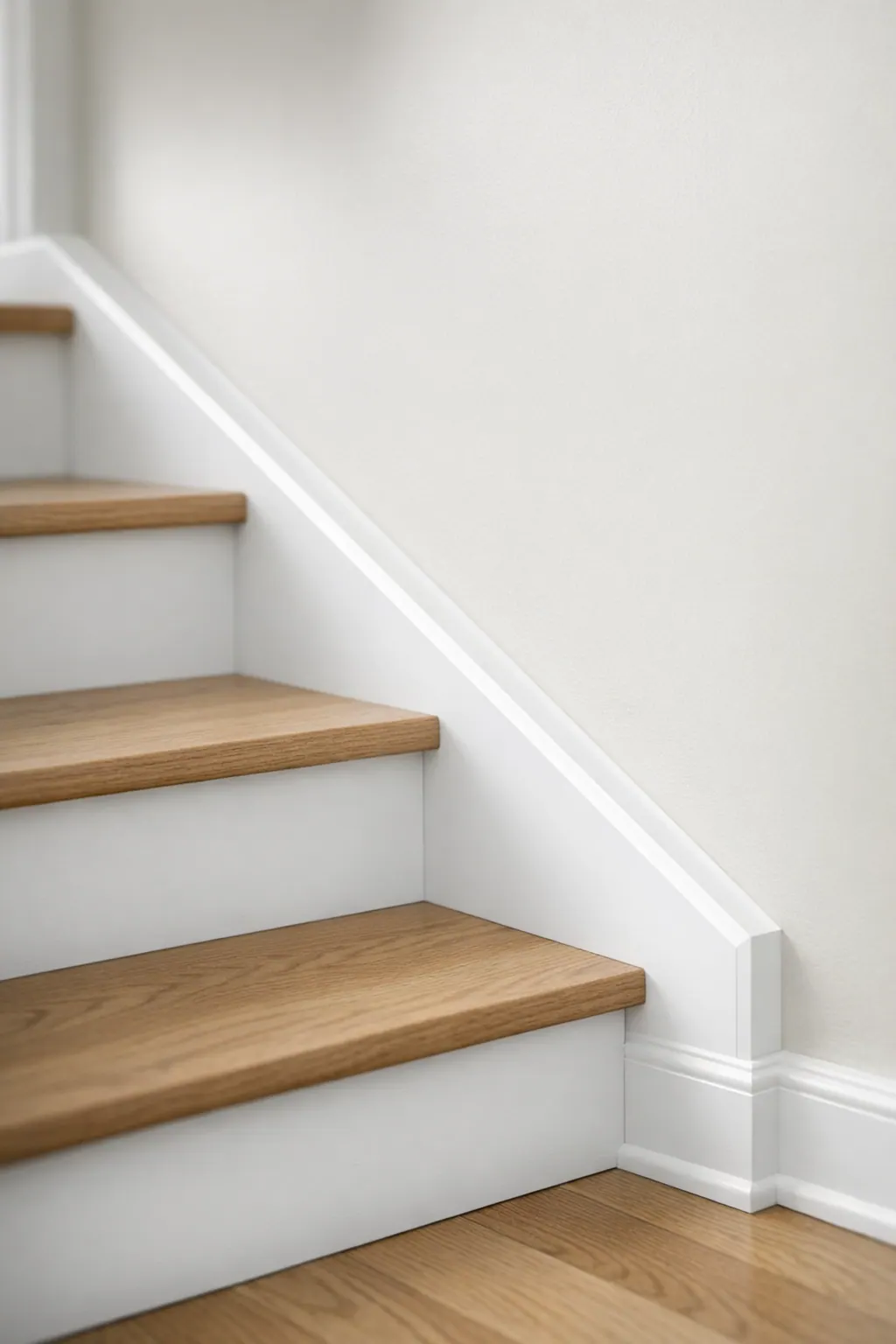
That is why skirt boards are such a high-impact stair trim detail. They organize the stair-to-wall transition, help protect the lower wall from scuffs, and visually connect the stairs to nearby baseboards and mouldings. In an open foyer or a two-story living area, a well-fitted board makes the stairs look built into the architecture rather than pushed against the wall after the fact.
They are especially useful on painted stairs, bright coastal interiors, and staircases where the drywall-to-step intersection is easy to see. A good stair skirt board installation has tight scribing against the wall, a consistent reveal along the treads and risers, smooth paint or stain, and a top and bottom termination that dies cleanly into the landing or baseboard. Weak work shows up as gaps, wavy caulk, mismatched thicknesses, or a board that stops abruptly with no relationship to the trim around it.
The practical tradeoff is that skirt boards are simple visually but not always simple to add after the stairs are finished. Uneven walls, tight flooring conditions at the bottom step, and older stair framing can make clean fitting harder, especially where sloped trim has to meet level baseboard. In those cases, stair stringer trim may still improve the look, but the best result depends on resolving the visible edges rather than forcing a board over conditions it cannot hide.
Riser Trim: Adding Definition Without Overdecorating Each Step
Where a skirt board cleans up the side of the staircase, stair riser trim works on the front face of each step. It is the small trim or moulding applied to the vertical riser, so the eye reads each step as a finished panel instead of a plain painted board. That distinction matters: the skirt board resolves the wall transition, while the riser detail emphasizes the repeated faces of the stairs.
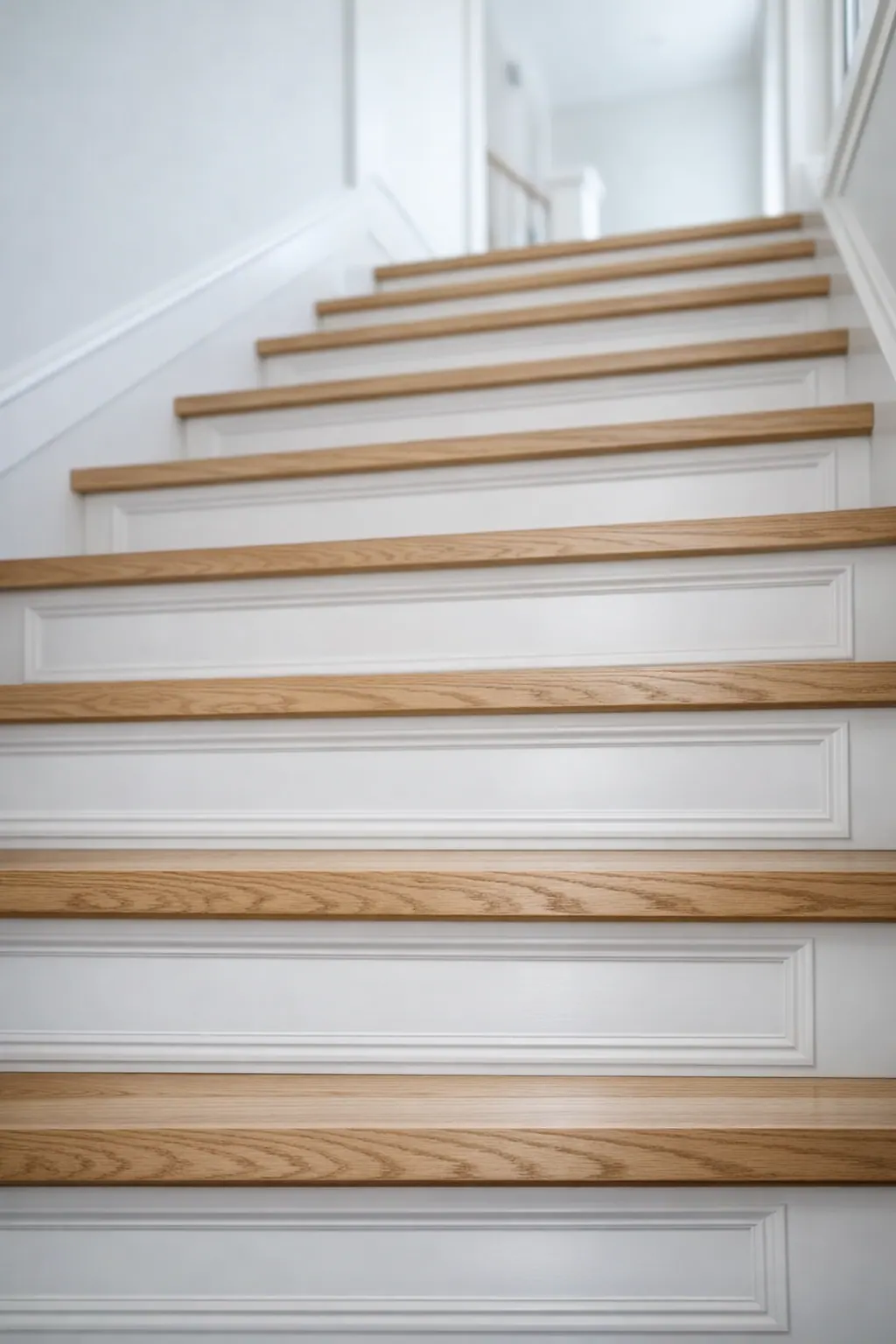
The simplest version is a small cove or riser moulding tucked where the tread meets the riser, creating a soft shadow line without making the stair look ornate. Panel-style riser trim frames each riser like a miniature wall panel, which can look sharp in a formal entry or a traditional-to-transitional home. Apron trim, used as a narrow band below a tread edge or along the riser face, gives the step a more defined horizontal break. The takeaway is to match the amount of detail to the home's existing baseboards, casing, and overall trim profile.
Riser trim works especially well on painted risers, staircases visible from the front door, and bright Sarasota County interiors where small shadow lines show clearly. It can look too busy on very narrow stairs, with patterned runners, highly detailed flooring, or railings that already carry a lot of ornament. A strong result has consistent spacing, clean mitered corners, and a durable painted finish on surfaces that get bumped by shoes and cleaning tools; a weak result looks like separate decorations pasted onto every step.
Landing Trim and Baseboard Transitions: Resolving the Awkward Spots
The trickiest spots are often not the long stair runs, but the moments where the staircase changes direction. At a landing, the trim has to shift from a sloped line to a level line, turn a corner, or meet flooring, drywall, casing, or another piece of baseboard. When those junctions are planned well, the landing reads like an intentional pause; when they are not, it can look like leftover space between two stair sections.
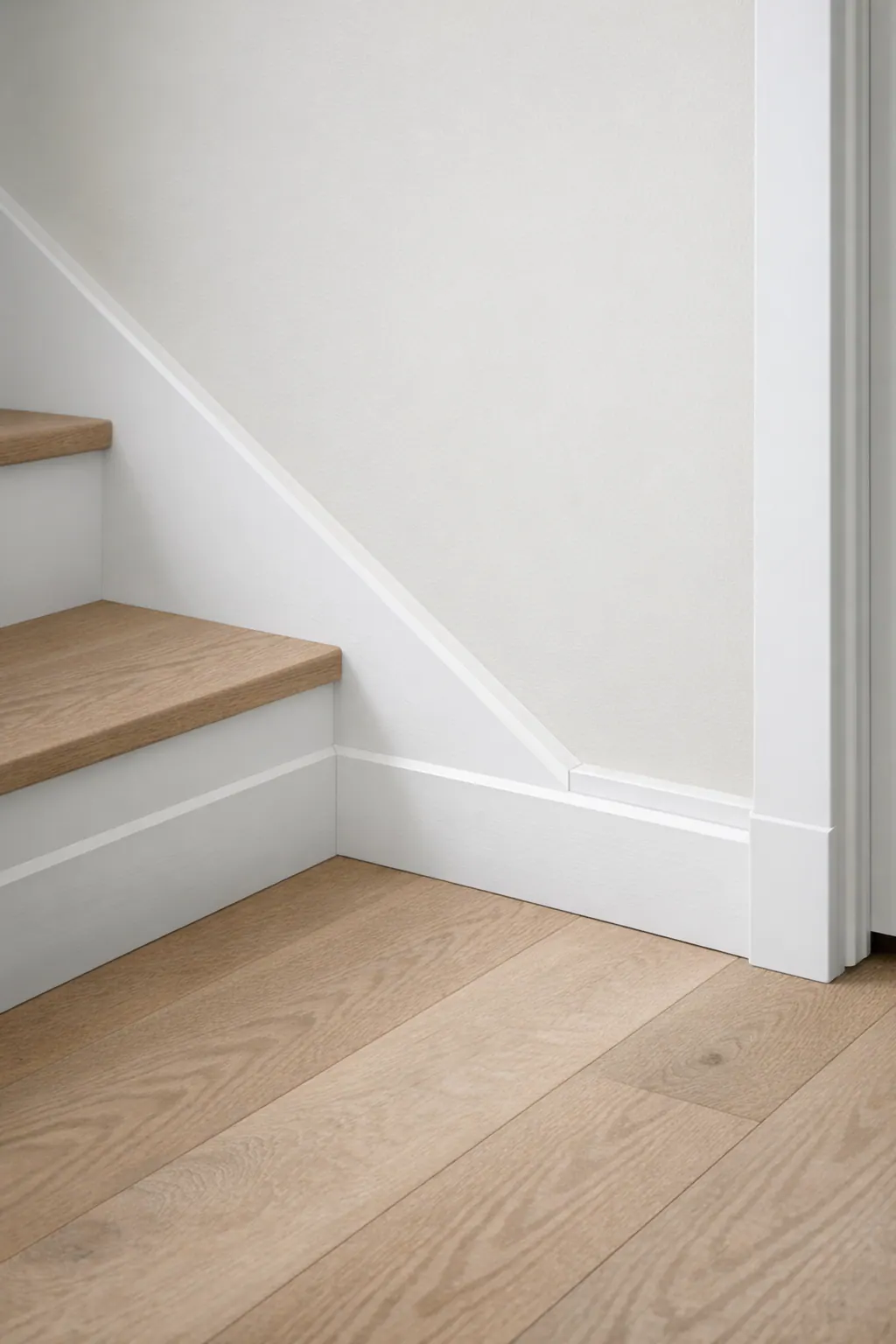
Landing trim is the finish detail that frames that flat area, usually by continuing the home's baseboard profile around the landing or adding a small apron or border where the stair opening, wall, and floor meet. Baseboard transitions are the places where level baseboard meets sloped skirt board or stair trim. A strong transition keeps the profiles related in height, thickness, and style. A weak one has abrupt stops, mismatched trim heights, exposed end grain, or a sloped board that simply runs into a wall with no clear ending.
Good finish carpentry gives those edges a place to land. That might mean clean mitered corners around a landing, a return detail where a moulding turns back into the wall, or a plinth block where a thicker stair trim piece needs to meet door casing or taller baseboard. The goal is not to make the corner busier; it is to make the stop look deliberate. In visible two-story Sarasota County entries, these small baseboard transitions can be the difference between "trim was added here" and "the staircase was designed this way."
Stair Wall Moulding: Creating Rhythm Along the Slope
A long angled stair wall can either feel like empty drywall or like part of the staircase composition. Stair wall moulding helps by breaking that incline into measured visual sections, so the eye moves up the stairs in a steady rhythm instead of landing on one broad blank surface.
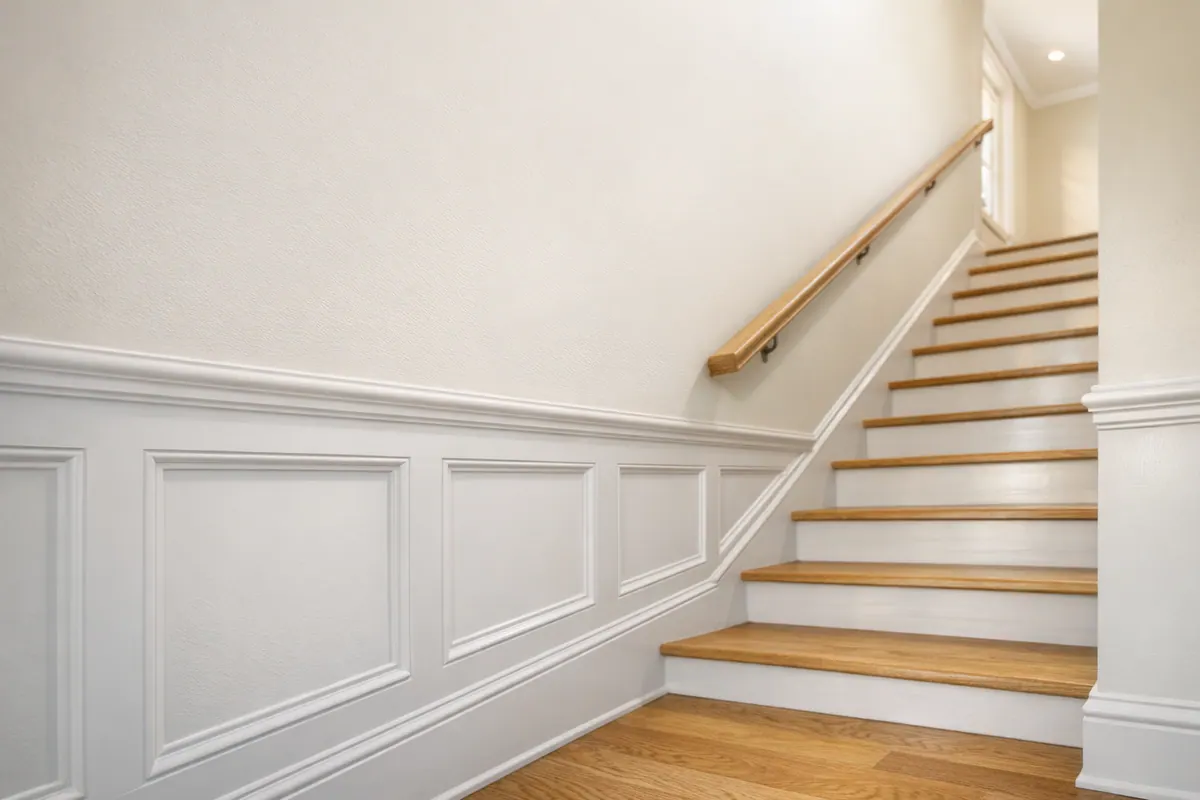
The main options are simple but have different effects. Picture frame moulding creates individual rectangular or sloped "frames" on the wall, adding definition without covering the whole surface. A chair rail is a continuous trim line that can follow the stair pitch and separate the lower wall from the upper wall. Panel moulding uses applied trim to suggest larger wall panels, which can make a tall stairwell feel more architectural. The practical takeaway: the more lines you add, the more important the spacing becomes.
Layout matters more on stairs than on a flat hallway wall because the panels have to relate to the stair slope, the landing breaks, and the sightlines from the entry, lower floor, and upper hall. A strong layout keeps panel tops and bottoms feeling parallel to the stair angle, gives each section enough breathing room, and stops cleanly at landings or casing. A weak layout fights the pitch, creates odd clipped shapes, or leaves one tiny panel at the top because the spacing was not planned around the full run.
For narrow staircases, restraint is the difference between polished and crowded. Lighter profiles, fewer panels, and wider spacing can still give the wall a custom look without making the stair feel squeezed. Stair wall moulding works especially well in open two-story entries, transitional Sarasota County interiors, and homes that already have painted trim elsewhere; it is usually worth simplifying when the stair has a busy railing, low wall height, windows, or artwork competing for attention.
Staircase Wainscoting: Protection, Depth, and a More Architectural Wall
If the lower half of the stair wall is the part everyone touches, brushes, and sees first from the entry, staircase wainscoting gives that zone more purpose. Instead of treating the wall as one flat painted surface, it creates a defined lower section with depth, shadow lines, and a stronger connection to the baseboards and other trim nearby.
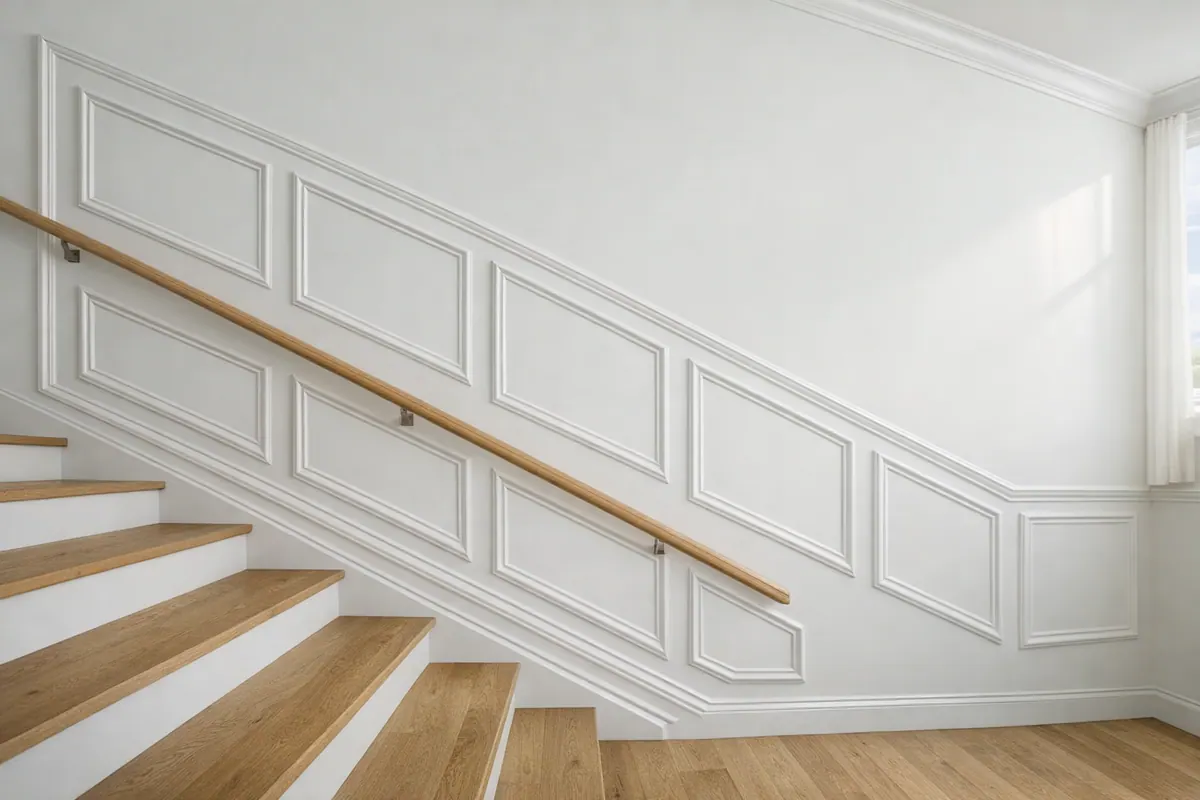
The style changes the mood quickly. Raised-panel wainscoting has projecting center panels and layered moulding, so it tends to feel more formal and substantial. Recessed-panel wainscoting is flatter and cleaner, making it a better fit for many transitional homes. Board and batten uses vertical battens over a flat field, which can feel casual, coastal, or modern farmhouse-influenced when the spacing is simple. A painted wainscot with minimal cap and base trim is the quietest option, adding structure without making the stair wall the loudest feature in the room.
This can work especially well in Sarasota County homes with visible entry stairs, bright open foyers, and painted trim palettes because the added lower-wall detail gives the staircase more architectural weight without needing a darker or heavier finish. Stable, paintable trim also makes sense in bright coastal interiors where crisp lines and durable painted surfaces are usually easier to integrate than ornate stained millwork.
Scale is the checkpoint. Strong staircase wainscoting follows the stair pitch, stops cleanly at landings, and leaves enough open wall above it so the stairwell still breathes. Weak wainscoting ignores the angle, crowds a narrow stair, or uses profiles so ornate that they fight a relaxed coastal interior. The takeaway: choose enough detail to protect and ground the stair wall, but not so much that the trim overwhelms the staircase itself.
Profiles, Finishes, and Restraint: Making the Trim Feel Like It Belongs
The detail that makes stair trim feel "built in" is usually not the fanciest profile; it is the match between the staircase and the trim language already in the house. Baseboard height, door casing thickness, crown moulding style, flooring tone, railing shape, and the paint palette all give clues. A slim modern casing paired with heavy ornate stair panels can feel pasted on, while a skirt board that lines up with the existing baseboard looks intentional before anyone notices why.
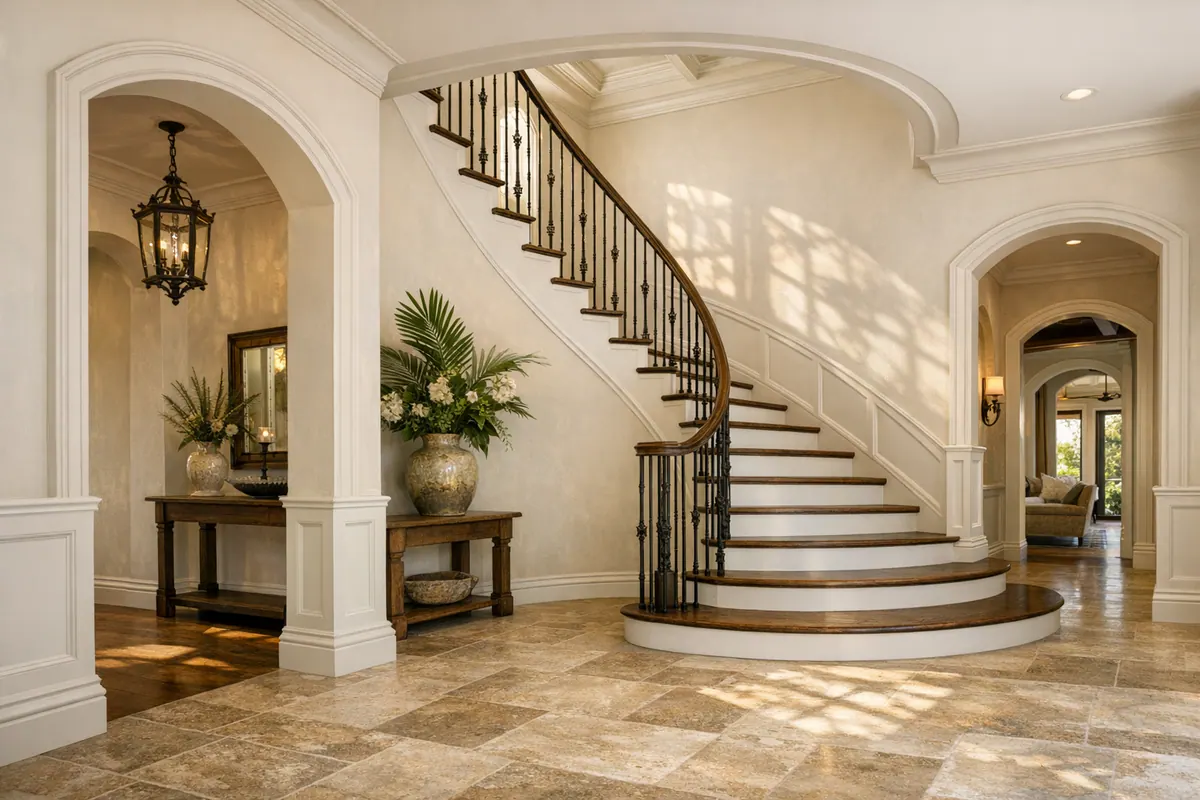
Finish choice matters just as much. Paint-grade trim is made to be painted, so it works well for crisp white or soft coastal palettes, especially in transitional Sarasota County interiors. Stain-grade trim is meant to show wood grain, so it usually belongs where wood is already a major feature, such as stained treads, wood railings, or warm-toned flooring. Mixing stained riser panels, painted wainscoting, and a third wood tone on the handrail can make the stair feel less custom, not more.
Restraint is the finishing move. Clean caulk lines, consistent reveals, aligned profiles, and purposeful shadow lines do more for the staircase than adding every possible detail. A strong combination might be a well-fitted skirt board and simple riser trim, or wall moulding with a clean landing transition. A weaker one tries skirt boards, ornate risers, picture-frame moulding, wainscoting, and heavy caps all at once. The staircase does not need to show every trim idea; it needs the right few to look like they belong there.
How to Choose the Right Stair Trim Combination for a More Custom Look
The simplest way to choose is to start with what the staircase actually needs. If the stairwell is narrow and mostly seen from the side, a skirt board alone may be the cleanest upgrade. If the stairs face the entry, a skirt board plus simple riser trim gives the steps more definition without turning every tread into a focal point.
For a visible foyer stair, wall moulding plus carefully resolved landing trim often works better than heavily detailed risers because the long wall and direction changes are what people notice first. For a more architectural result, wainscoting can carry the eye up the stair, but it usually looks strongest when the risers stay simpler and the baseboard transitions are restrained.
Before settling on custom stair trim Sarasota ideas, weigh four things: visibility, home style, traffic, and existing trim. Bright coastal or transitional homes often benefit from paintable, stable profiles, while homes with taller casing or more formal millwork can handle a stronger stair treatment. Good finish carpentry stairs are not about adding trim everywhere; they are about planning the right pieces around the actual staircase so the finished result looks intentional, not patched together.
Pulling the Stair Trim Details Together
A finished stair does not come from one dramatic add-on; it comes from the small junctions agreeing with each other. The skirt board controls the side seam, stair riser trim gives the step faces a cleaner rhythm, landing trim gives angled and level pieces a place to meet, and wall moulding or wainscoting keeps the stair wall from feeling like leftover drywall.
The strongest combinations usually have a clear hierarchy. If the wall panels carry the visual weight, the risers can stay quiet. If the steps are the feature, the wall treatment can be simpler. Strong stair trim Sarasota County projects also pay attention to alignment with baseboards, casing, flooring, and paint color, because those details decide whether the stair feels built into the home or added after the fact.
For many coastal or transitional homes, that means paintable, stable trim profiles, clean shadow lines, and just enough detail to handle the problem areas: scuffed lower walls, plain risers, awkward landings, or exposed stair-to-wall edges. The best stair trim combination is not the most elaborate one; it is the one that fits the home's architecture, traffic patterns, and existing finish details.