
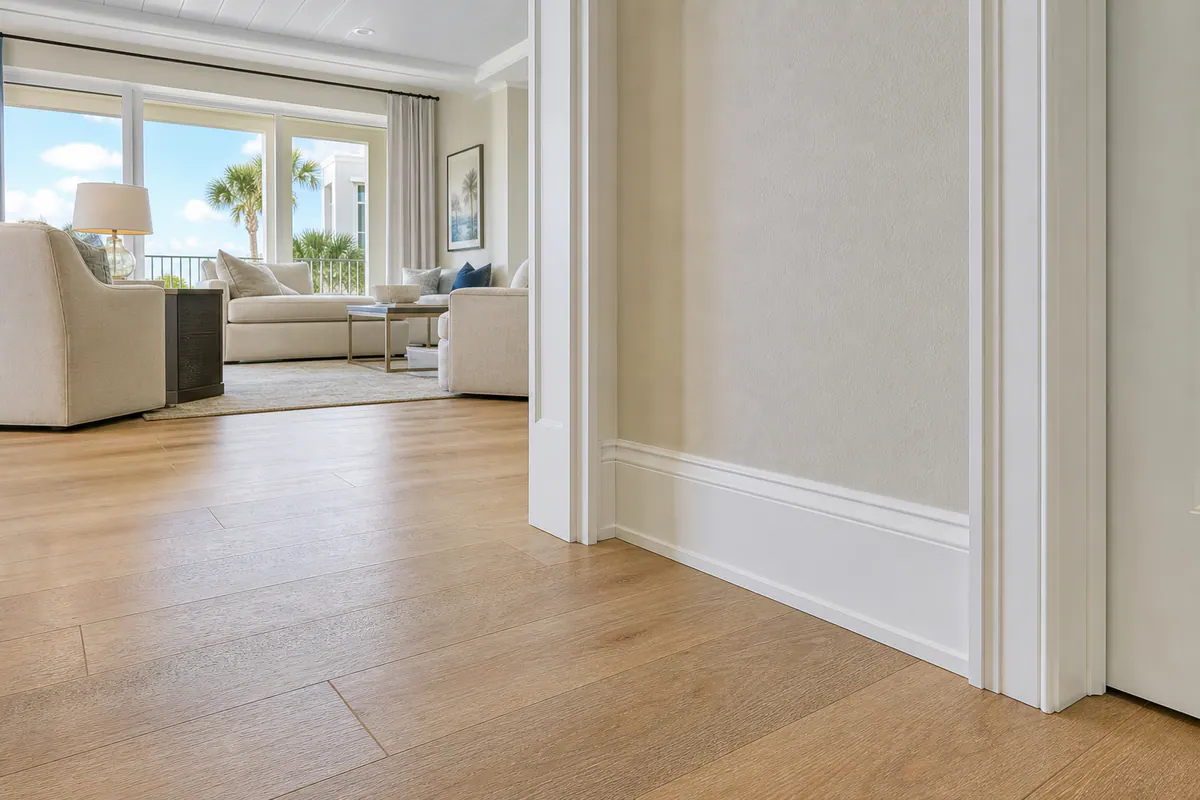
Baseboard Installation That Makes Osprey Homes Feel Complete
Baseboards do more than cover the joint where wall meets floor: they set the visual finish line for the room. When the profile, height, and fit feel right, walls, flooring, door trim, and paint read as one intentional design. When they do not, even an otherwise updated space can look unfinished.
SuncoastTrim provides detail-focused baseboard installation in Osprey, FL, helping homeowners choose and replace trim for living rooms, bedrooms, hallways, kitchens, and other residential spaces. The approach is not one-size-fits-all. A standard-height profile can give a room a quiet, familiar outline; tall baseboards create a more substantial wall-to-floor transition and need to suit the room's proportions; modern baseboards use simpler, cleaner lines for a streamlined look.
Before a selection is made, the important questions are practical: How high are the ceilings? What profile is already on the door casing or in adjoining rooms? Does the new trim need to cover a flooring edge? Is the goal to blend in or make the baseboards a visible architectural detail? SuncoastTrim plans around those relationships, with attention to layout, corners, transitions, uneven floor lines, clean joints, and finish-ready preparation, details that separate a deliberate result from trim that merely fills a gap.
When to Replace Baseboards Instead of Repairing or Repainting
Repainting can refresh a sound baseboard, but it cannot correct a board that has lost its shape, coverage, or visual continuity. Swollen sections, soft or crumbling lower edges, repeated dents, separated joints, and wide caulk seams are all signs that touch-up work may only disguise the underlying problem. The same is true when trim no longer reaches the flooring edge cleanly or leaves drywall gaps that would require an overly heavy bead of caulk to hide.
Replacement can also be a design decision rather than a damage-only decision. A short, dated profile may feel undersized after new flooring, taller door casing, or a broader renovation changes the room's scale. Likewise, mixing an ornate existing baseboard with streamlined updates can make a finished space feel pieced together. Baseboard replacement in Osprey, FL can mean installing a matching run in one damaged area, finding a close existing-profile match for a partial update, or changing the full room to a consistent profile when a match would remain visibly awkward.
The useful distinction is whether the baseboard still creates a crisp, proportionate transition after preparation and paint. If its damage is isolated and its profile remains compatible with nearby trim, selective replacement may be the sensible route. If irregular walls, flooring changes, mismatched reveals, or outdated proportions affect the room as a whole, a full-room update may produce the cleaner result. An in-home evaluation lets SuncoastTrim assess those conditions before recommending the appropriate scope for your baseboards.
Choosing Baseboard Height and Profile for Your Home
Scale is the starting point. Ceiling height and room proportions help determine whether the baseboard should recede or carry more visual weight. In a room with generous wall height, a taller board can create a stronger lower-wall line and make the walls feel more substantial. In a compact bedroom, narrow hallway, or low-ceilinged space, an extra-tall profile may draw attention downward and feel out of proportion. The goal is not simply to choose the largest trim available, but to select a height that looks intentional from across the room.
Door casing provides an especially useful reference point. A broad, squared casing can often support a more substantial baseboard, while a slim casing may look disconnected beside an oversized decorative profile. Looking through open doorways matters, too: adjacent rooms do not have to match perfectly, but abrupt changes in height or ornament can make a connected area feel patchworked. SuncoastTrim can compare those sightlines and existing trim details before recommending a direction for tall baseboards in Osprey, FL.
Profile determines the character of that height. Simple square-edge boards have a crisp, architectural face; eased-edge versions soften the sharpness with a slight rounded edge. These modern baseboards in Osprey, FL tend to suit clean-lined interiors, contemporary casing, and rooms where the paint color and uncluttered geometry do the visual work. Traditional baseboard profiles use steps, beads, curves, or layered shapes to add shadow lines and decorative depth. They can complement more detailed casing and established architectural features, but a highly ornamental profile can compete with otherwise streamlined updates.
A helpful comparison is to view sample baseboard profiles beside the casing rather than in isolation. Notice whether the heights relate comfortably, whether the profile's detail echoes or conflicts with nearby trim, and whether the choice feels appropriate in the next visible room. That measured approach helps SuncoastTrim create a coordinated finish instead of treating each wall as a separate decision.
MDF, Wood, and PVC Baseboards: Material and Finish Considerations
The finish plan often narrows the material choice quickly. MDF baseboards are engineered, paint-grade boards with a smooth, uniform face that suits an opaque painted finish. They can create a clean, continuous look in bedrooms, living areas, and other dry interior spaces, particularly when the surrounding casing is also painted. Their tradeoff is that lower edges deserve careful consideration where repeated wet cleaning, leaks, or damp conditions have been an issue.
Wood baseboards are the natural choice when the goal is a stained finish or a visible wood grain that coordinates with existing wood casing, doors, or built-ins. Grain, color variation, and species selection become part of the design rather than something paint conceals. Wood can also be a useful match for an older profile that needs to blend into established trim. The practical checkpoint is the finished appearance: a new stained board should relate to the color, grain direction, and sheen of the woodwork already in view, not merely share a similar profile.
PVC baseboards are a non-wood option often considered where moisture resistance is a priority, such as a laundry area, bathroom, or another room with a history of water exposure. They are generally intended for paint rather than stain, so they make more sense in a painted trim scheme than beside natural woodwork. Their face and edge detail may read differently from wood or MDF, making a sample comparison worthwhile when the new run meets existing trim.
No one material is automatically right for every room. SuncoastTrim can weigh the planned finish, the condition at the wall-to-floor edge, everyday impact around doors and traffic paths, and the need to match nearby casing before installing replacement trim. That conversation helps avoid a visually inconsistent mix, for example, a painted PVC section beside stained oak, or a material choice that does not suit the room's conditions.
The Finish Carpentry Details Behind a Clean Baseboard Installation
A clean result begins before the first length is cut. Accurate measuring and layout establish where full boards, shorter returns, joints, and casing transitions will fall, rather than leaving conspicuous small pieces at the end of a wall. The visual checkpoint is consistency: baseboards should meet door casing with an intentional reveal or termination, not crowd the casing or stop at an arbitrary-looking gap.
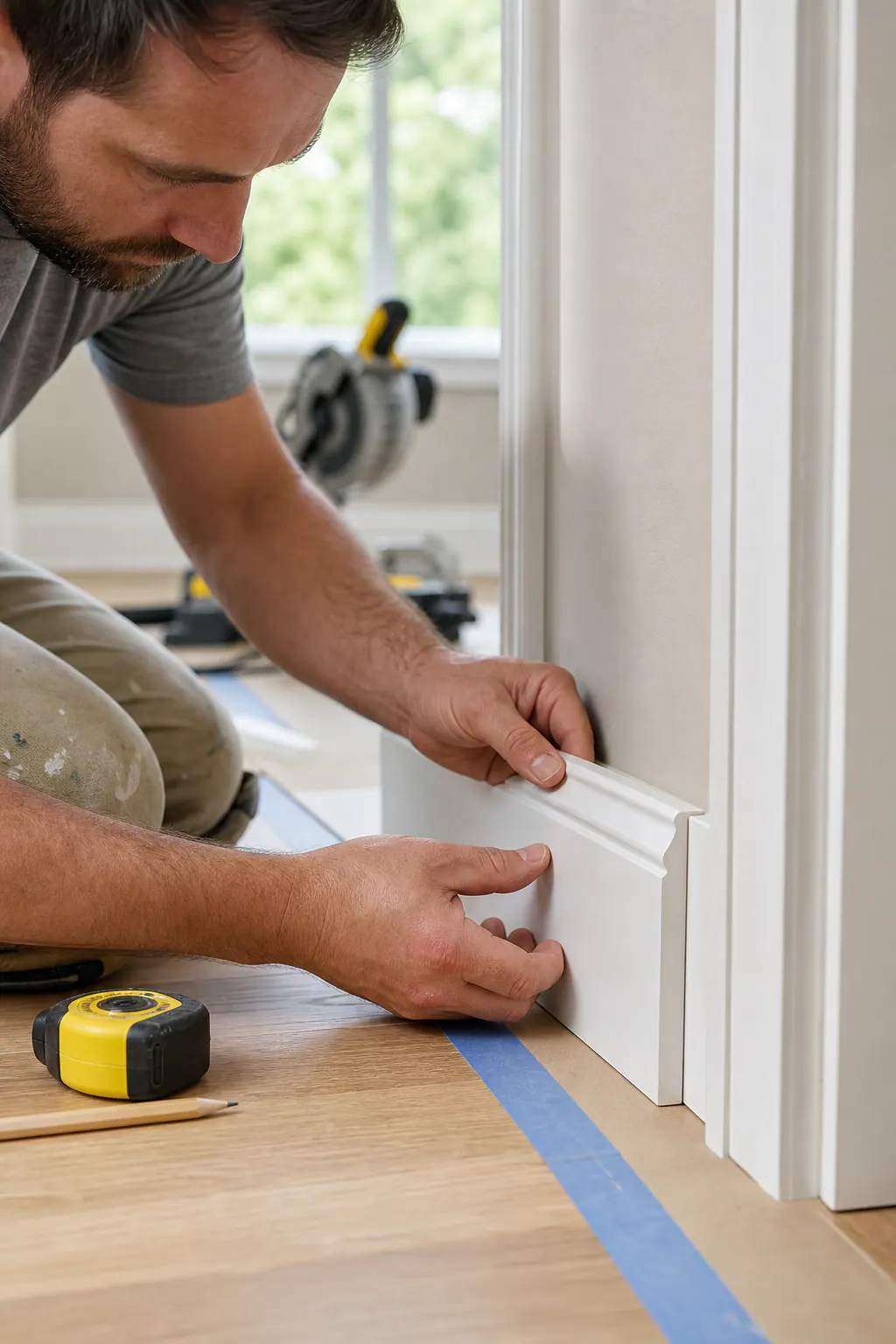
Walls and floors are rarely perfectly straight. A detail-focused installer reads those irregularities before fastening trim, then fits the board so its top edge follows the wall as neatly as possible and its lower edge does not advertise every dip in the floor. Scribing can refine the fit where a floor undulates; it removes material selectively from the baseboard so the installed piece follows the surface instead of relying on a heavy caulk bead to conceal an open line.
Corner work is equally revealing. Mitered corners are angled cuts that wrap an outside corner, creating a continuous-looking profile when the faces align tightly. Inside corners may be coped, meaning one profile is cut to nest against the face of the adjoining board. That approach can produce a more controlled joint when walls are not perfectly square. In either case, separated corner lines and visibly shifting profile detail are weak signals; a crisp, aligned corner reads as part of the architecture.
Shoe molding and quarter round are smaller trim pieces used selectively at the floor line. They can help bridge a specific transition where flooring variation leaves an otherwise difficult gap, but they should coordinate with the baseboard rather than look like an afterthought. Neat, restrained caulk at the wall edge and carefully prepared joints create the finish-ready surface homeowners notice after paint: clean shadow lines, uninterrupted corners, and trim that still looks deliberate from across the room. That is the level of fit a finish carpenter Osprey FL homeowners consider should bring to the room.
Updating Baseboards While Keeping Existing Flooring
Keeping finished flooring in place is often part of a baseboard replacement plan, but the trim cannot be chosen by height or style alone. Before old boards come off, the wall-to-floor edge needs a close look: a new profile may need to cover paint lines left by the old trim, a gap at the perimeter, or an exposed flooring edge. The installer also needs to account for flooring that requires perimeter space to move and for transition areas at tile, carpet, or adjoining rooms. A board that appears wide enough in a sample can still leave an inconsistent reveal once the existing trim is removed.
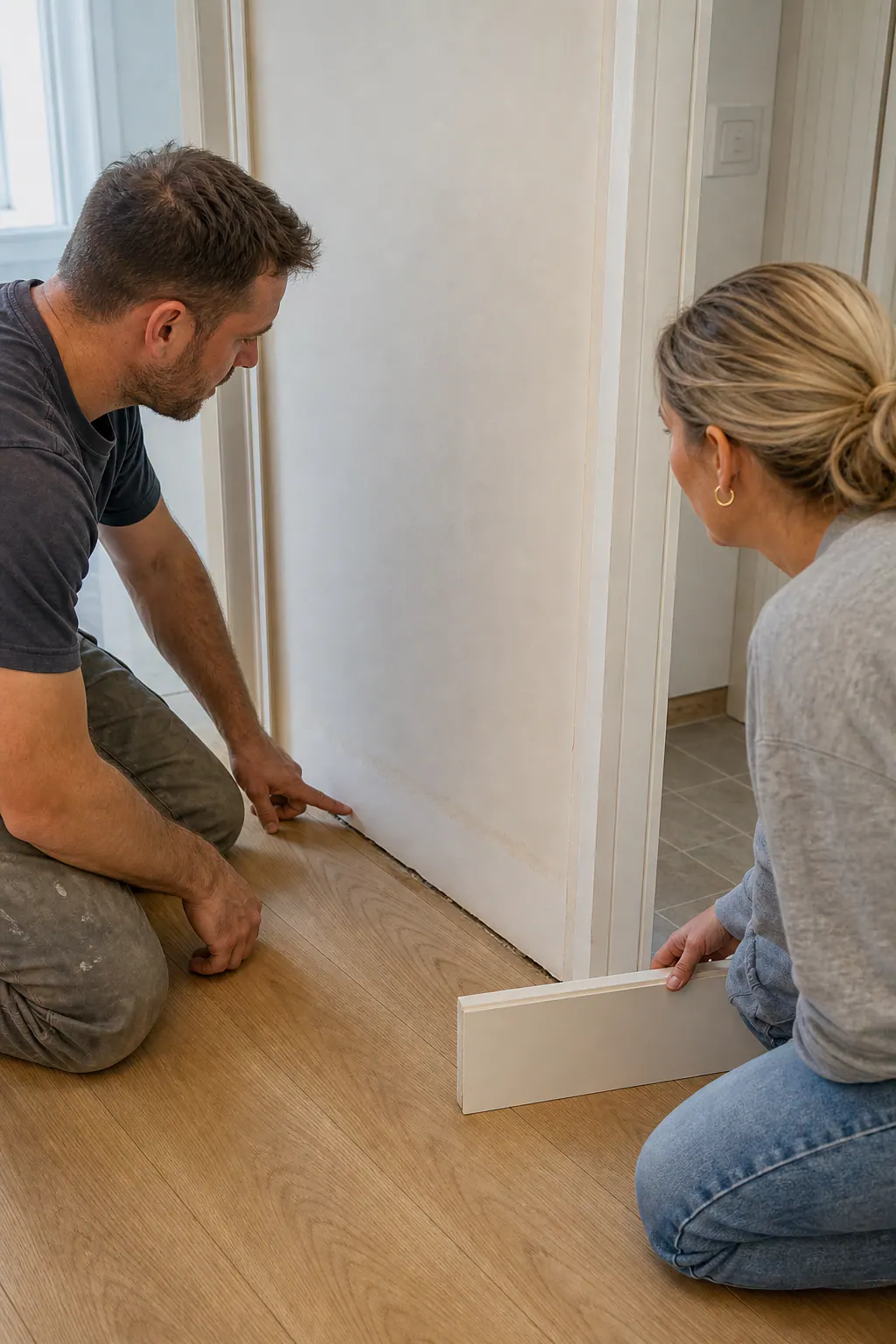
Shoe molding or quarter round may be useful when a narrow, irregular gap remains at the floor line, but neither is an automatic add-on. These smaller pieces change the look of the baseboard and can conceal a specific transition; where the new board fits cleanly on its own, omitting them often preserves a simpler profile. An in-home review lets SuncoastTrim assess the existing flooring, protect adjacent finished surfaces during removal, and plan baseboard installation in Osprey, FL around the conditions actually present rather than assumptions about the floor beneath the old trim.
Work With SuncoastTrim for Baseboard Installation in Osprey
A productive consultation starts with the room in front of you: its ceiling height, door casing, flooring edge, adjoining spaces, and the look you want when the work is complete. SuncoastTrim helps Osprey homeowners compare a coordinated match for existing trim with a purposeful update. Tall baseboards add a more substantial lower-wall detail where the room can carry the scale, while modern baseboards use cleaner, simpler lines for a more streamlined interior. The right direction is the one that relates comfortably to the rest of the home rather than looking chosen in isolation.
For baseboard replacement in Osprey, FL, the review should also identify what the new trim must solve, damaged lower edges, mismatched profiles, uneven wall lines, exposed flooring margins, or joints and caulk lines that no longer look clean. From there, SuncoastTrim can recommend an appropriate profile and material approach, coordinate transitions with casing and adjacent rooms, and plan the detail work that makes the installation feel deliberate: balanced layout, well-fitted corners, consistent reveals, and finish-ready joints.
If you are considering baseboard installation in Osprey, FL, request a consultation or project estimate from SuncoastTrim. Bring photos, inspiration, or a sample profile if you have them; the conversation can turn those preferences into a trim plan suited to your home's existing conditions and style.
Plan the next step
Compare the broader Baseboard Installation service.
Review the Osprey, FL service area for local planning context.
When you are ready, request a free estimate with the rooms, trim goals, city, and available photos.
FAQs
When should I replace baseboards instead of repainting them?
Replace baseboards when they have swollen sections, soft or crumbling lower edges, repeated dents, separated joints, or wide caulk seams. Replacement is also appropriate when the trim no longer covers the flooring edge cleanly or looks undersized after flooring or casing updates.
What height baseboards look best in a Florida home?
Choose baseboard height based on ceiling height, room size, and nearby door casing. Taller baseboards suit rooms with generous wall height and substantial casing, while narrower profiles usually look more proportionate in compact, low-ceilinged bedrooms and hallways.
What is the difference between baseboard and shoe molding?
Baseboard is the primary trim board that creates the wall-to-floor transition, while shoe molding or quarter round is a smaller piece installed selectively along the floor line. Shoe molding can cover narrow, irregular flooring gaps, but it is not needed when the baseboard fits cleanly on its own.
Are MDF, wood, or PVC baseboards best for Osprey homes?
MDF is a smooth, paint-grade choice for dry interior rooms, while wood is best for stained finishes or matching visible wood grain in existing casing and doors. PVC is a paintable, moisture-resistant option for bathrooms, laundry areas, and spaces with a history of water exposure.
Can new baseboards be installed without replacing flooring?
Yes, new baseboards can be installed while keeping finished flooring in place if the new profile covers old paint lines, perimeter gaps, and exposed flooring edges. The installer should also account for flooring expansion space and transitions at tile, carpet, and adjoining rooms before selecting the trim.