
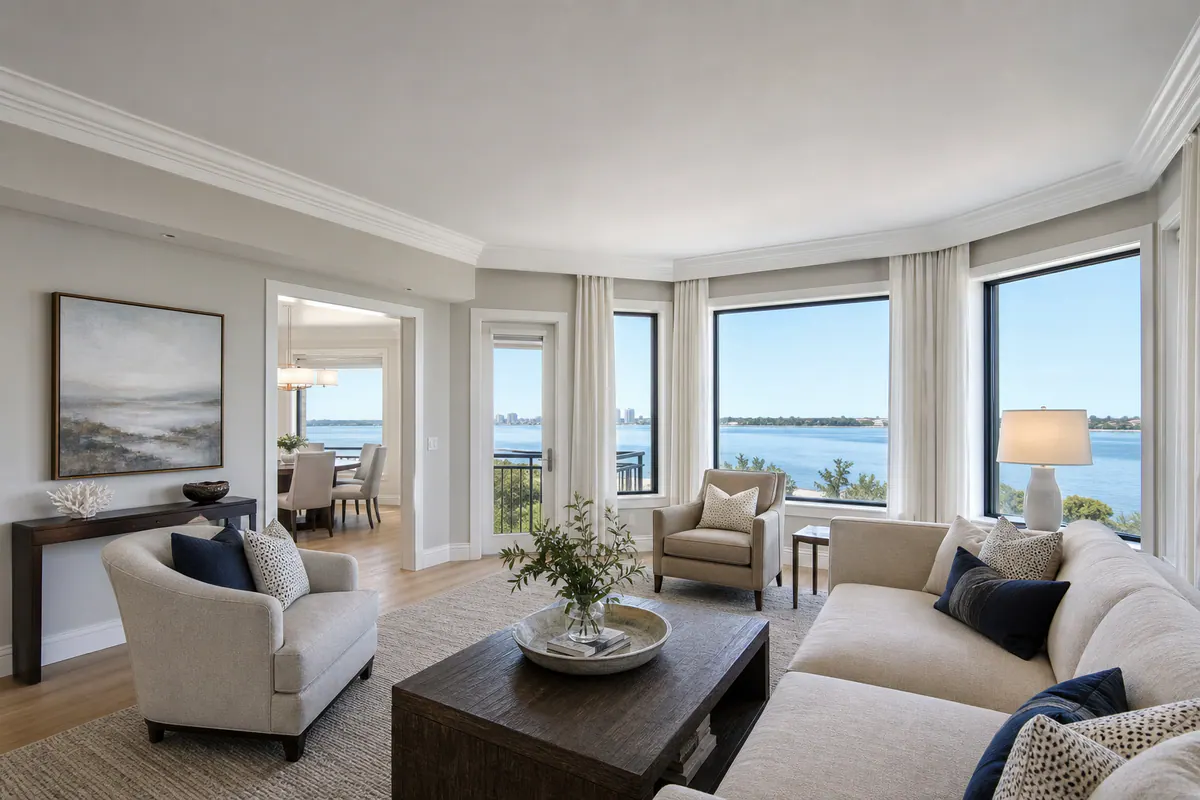
In a waterfront home, a condominium living room, or an updated renovation space, crown molding gives the wall-to-ceiling transition a deliberate, finished edge. Rather than reading as an abrupt corner, the room gains a framed perimeter that can make paint colors, window treatments, cabinetry, and other trim feel more connected. Thoughtful crown molding installation in Longboat Key is less about adding ornament for its own sake and more about choosing a detail that belongs in the room.
The visible result depends on several decisions working together. Ceiling height and room scale influence whether a modest, clean-lined profile or a deeper, more formal shape will look balanced. Ceiling and wall variations affect how consistently the molding meets each surface. In an interior where humidity is part of everyday life, material selection and a coordinated paint system deserve the same attention as the profile itself.
Finish carpentry shows in the small details: even reveals along the ceiling, tidy transitions at cabinets or beams, joints fitted to read as continuous molding, and seams finished so they do not distract from the line of the room. A weak installation can make an elegant profile look uneven; a carefully planned one helps the molding appear integrated with the architecture. That distinction matters whether the project is a single refreshed room or part of a broader Longboat Key renovation.
Choosing a Crown Molding Profile for Ceiling Height and Room Style
Proportion is the starting point. A crown profile has both face height and projection, the amount it extends across the ceiling, and those dimensions determine its visual weight. In a room with a taller ceiling, a deeper profile can hold its own against broad walls, substantial window casings, or a formal dining area. In a lower-ceiling condominium, that same detail may feel crowded, so a narrower, quieter line often preserves a more open impression.
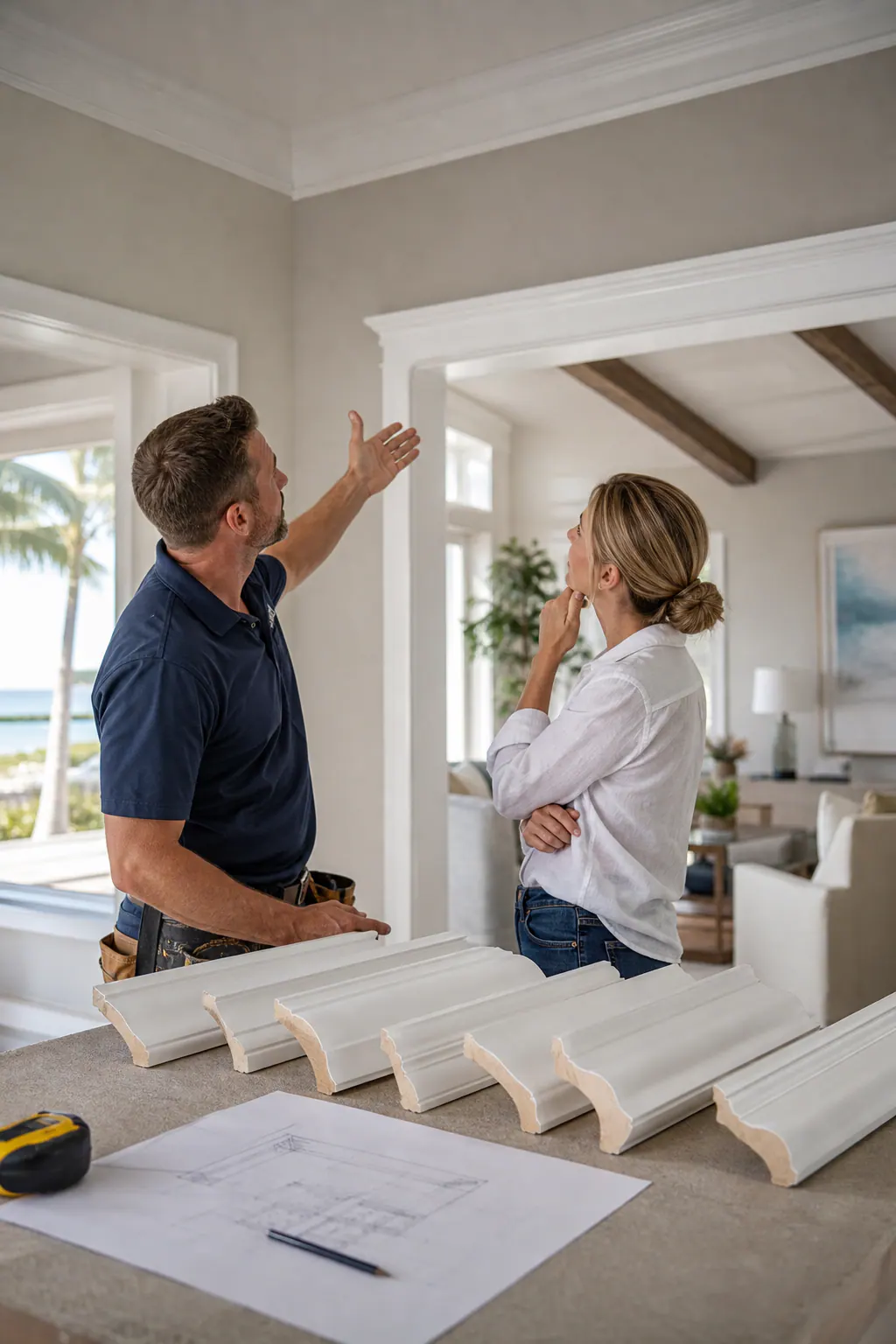
Simple contemporary crown usually relies on flat planes, a small cove, or a restrained angled shape. It gives a clean perimeter without competing with modern cabinetry, minimal door trim, or a bright coastal palette. Traditional curved profiles introduce more contour, such as an ogee or rounded cove, creating a softer, more decorative transition that can complement raised-panel doors, detailed casings, and classic furnishings. The practical choice is not which style is more elaborate, but whether its character matches the room's existing architecture.
Stepped crown uses distinct horizontal levels rather than a continuous curve. That geometry can echo square-edged cabinetry, ceiling beams, and contemporary millwork while adding more presence than a single small molding. Built-up or layered assemblies combine multiple pieces into one custom crown molding Longboat Key detail. They offer greater depth, shadow lines, and formality, making them especially effective where a tall ceiling or large open living area needs a stronger upper-wall finish. They also demand careful planning so the layers relate cleanly to nearby trim instead of looking added on.
Look beyond the ceiling when selecting scale. Crown should feel intentional beside the door casing, cabinet uppers, soffits, and window treatments; a very heavy profile above slim, plain trim can look disconnected, while undersized crown may disappear in a generously proportioned room. A well-chosen profile creates a clear hierarchy: related details, not identical ones. For coastal homes with relaxed interiors and for lower-ceiling condos, restraint is often the more polished decision. For a formal residence or renovation with taller volumes, additional depth and layering can provide the architectural emphasis the space can carry.
Crown Molding Materials for Coastal Florida Conditions
Material changes both the appearance of crown molding and the way it is managed in a conditioned coastal interior. Painted wood, MDF, polyurethane, and PVC can all support a refined result, but they do not behave or finish in the same way. Indoor humidity, periods when air-conditioning is reduced, and rooms near frequently opened exterior doors or windows all belong in the selection conversation alongside the profile and paint color.
- Painted wood brings a traditional millwork feel, crisp edges, and the option of either a smooth painted surface or a deliberate natural-grain finish. It is a strong choice when matching existing wood trim or when stain is central to the design. Wood movement is part of the tradeoff: seasonal environmental changes can affect joints and finish lines, so acclimation, well-fitted connections, and realistic touch-up expectations matter.
- MDF is a smooth, paint-grade composite material often chosen for a clean, uniform painted look. It can deliver sharp profile detail and a consistent paint-ready finish in dry, stable interior areas. Its practical limitation is that it is less forgiving of repeated moisture exposure, making placement near vulnerable openings or locations with persistent dampness an important consideration.
- Polyurethane is a lightweight molded option that can reproduce detailed traditional profiles as well as simpler shapes. It is easy to handle overhead and works well where a painted finish and low structural weight are priorities. The finished look still depends on careful seam treatment and paint work; lightweight material does not eliminate the need for clean transitions.
- PVC is another lightweight, paintable option that is often considered for areas where everyday moisture exposure is a greater concern. Its smooth surface suits many painted interiors, though the available profile character and surface feel should be reviewed against adjacent trim. It can be a practical choice for selected applications, rather than an automatic answer for every room.
For a crisp white or softly tinted coastal palette, paint-grade alternatives can create an especially unified look with painted doors, casings, and cabinetry. Natural wood remains appropriate when its grain is meant to be seen and the homeowner understands its movement and finish expectations. In coastal finish carpentry Longboat Key projects, comparing physical samples beside the wall color and existing trim helps reveal differences in edge definition, sheen, and visual warmth before installation begins.
The right material is therefore not simply the one that looks best in a showroom. It should suit the room's finish goal, its day-to-day indoor conditions, and the level of detail the chosen crown profile needs to carry.
What Professional Installation Adds to the Finished Look
A refined result begins before the first length of crown goes up. Walls and ceilings are rarely perfectly straight or square, particularly where additions, soffits, beams, or prior renovation work meet. Professional crown molding installation in Longboat Key starts by reading those conditions and planning the layout so the most visible lines feel balanced rather than letting a slight dip, bow, or changing ceiling plane dictate the finished appearance.
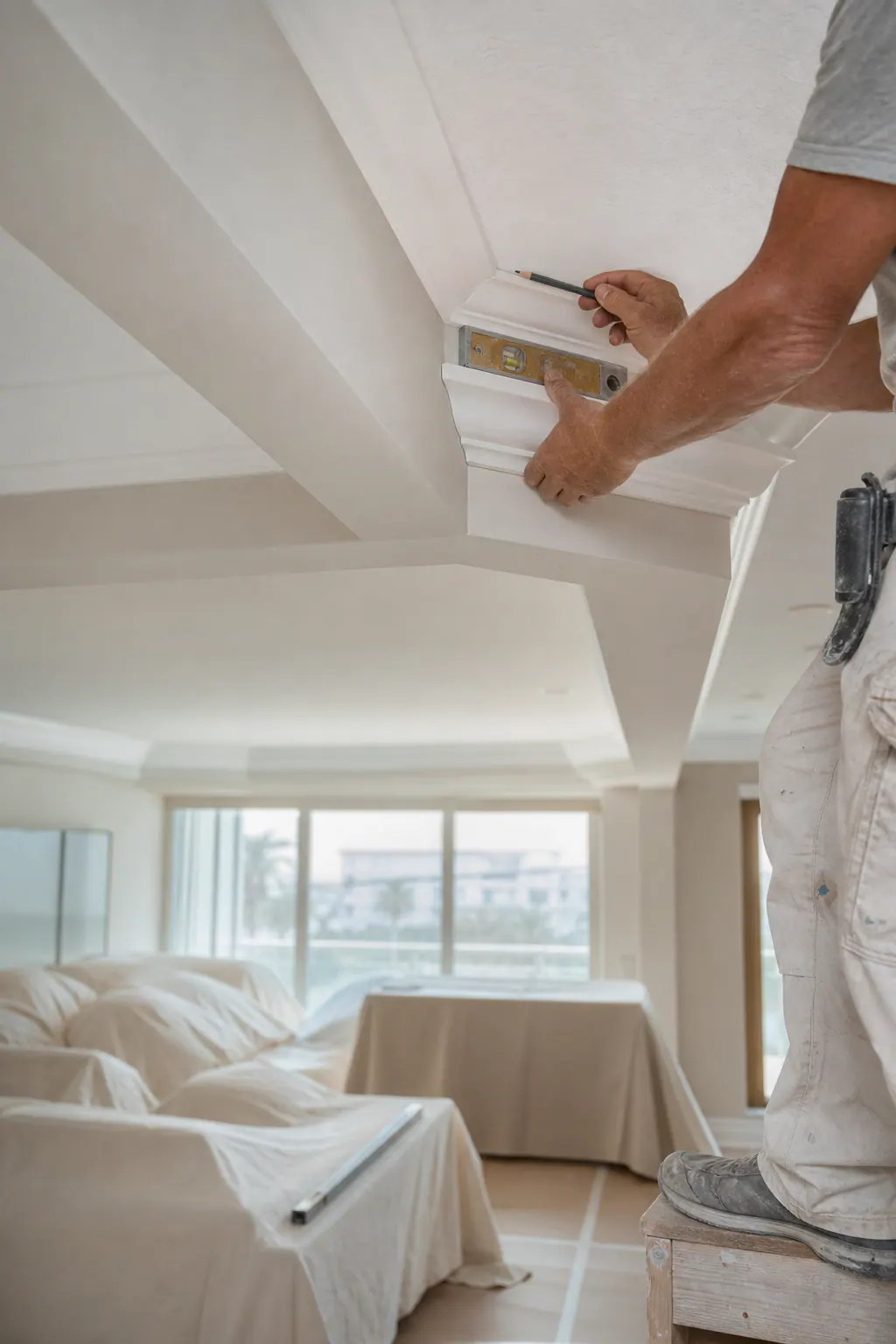
Corner treatment is one of the clearest signs of finish carpentry. Miter joints are angled cuts that meet at an outside corner, where a clean, sharp point is especially visible. Inside corners may be mitered or coped; coping shapes one piece to fit the face of the adjoining profile, which can create a more forgiving, closely fitted connection when walls are not perfectly square. The goal is not merely to make pieces touch, but to preserve the molding's continuous profile around the room.
- Thoughtful fastening secures the molding along a planned line while limiting unnecessary surface disruption. It helps keep the crown seated consistently against the wall and ceiling instead of leaving sections that appear to float or pull away.
- Intentional seam placement keeps unavoidable length joints away from the room's most prominent sightlines where possible. A well-managed seam follows the profile cleanly and is prepared to disappear into the painted finish rather than breaking the perimeter into obvious segments.
- Controlled caulking and filling address small transitions at the wall or ceiling and prepare nail holes and joints for paint. Caulk should soften minor visual gaps, not become a heavy, rounded substitute for a properly fitted joint.
Paint preparation brings those decisions together. Sanding filled areas smooth, refining joint edges, and coordinating the crown's sheen with surrounding trim helps the profile read as one finished architectural detail. In a condo with long, open sightlines or a living room where daylight grazes the ceiling, small inconsistencies can be easier to notice; careful preparation matters as much as the cut itself.
The strongest finish carpentry does not pretend that an existing room has no irregularities. It manages ceiling transitions, outside corners, and uneven surfaces with measured adjustments so the eye follows a cohesive line, not the compromises required to create it.
Crown Molding for Longboat Key Condos, Homes, and Renovations
Project timing can shape the result just as much as the selected profile. In an occupied condominium, a living-room refresh may be planned around furniture protection, elevator or loading access, and keeping the space usable between work stages. A single-family home can offer more flexibility for moving materials and working room by room, while a whole-home renovation makes it easier to carry one continuous trim language through connected spaces.
When new crown meets existing interior trim in Longboat Key homes, the goal is continuity rather than a near match that looks accidental. The existing door casing, baseboards, beam details, and window trim provide useful visual references. A successful match repeats key details such as overall thickness, stepped edges, or paint color; a weak match may place a heavily ornamented crown above minimal square-edged trim with no visual connection.
Kitchen work introduces another decision: whether cabinet crown should relate to the ceiling crown. Cabinet crown finishes the top of upper cabinets, while ceiling crown frames the room perimeter. Where cabinets stop below the ceiling, coordinating their scale and finish can make the wall feel composed without forcing both profiles to be identical. Where soffits, dropped ceilings, or a change in ceiling height interrupts the run, clean returns and intentional stopping points prevent the detail from looking improvised.
Sequencing also protects the finish. Crown is commonly coordinated after major ceiling changes and cabinetry locations are established, but before final paint touch-ups. Lighting locations, vents, and built-ins should be considered early so the molding does not compete with a fixture or require awkward cuts later. Condo owners may also need to coordinate access, work hours, material delivery, common-area protection, or alteration procedures with their association before work begins; those expectations vary by property and renovation scope.
A Thoughtful Approach to Longboat Key Crown Molding Installation
A productive consultation turns an appealing idea into a trim plan that suits the room already in front of you. For Longboat Key crown molding installation, that begins with measuring the perimeter, looking at ceiling changes and wall transitions, and comparing the proposed crown with nearby casings, cabinetry, beams, and baseboards.
The conversation also clarifies the scope. A simple replacement follows an existing visual direction when the current profile is worth preserving. Trim matching carries details from established casing or millwork into a new area. A custom-built profile combines separate molding elements to create more depth or a particular architectural look, while renovation crown can be planned alongside new cabinets, paint, lighting, or ceiling work. Reviewing painted and natural-wood finish preferences, along with the room's interior conditions, helps narrow the material choice before material is ordered.
Before installation, ceiling lines, outside corners, soffit returns, and irregular wall areas are identified so transitions can be planned rather than improvised. The work can then focus on fitted joints, consistent alignment, controlled seam treatment, and surfaces prepared for coordinated paint touch-ups. Whether the project is one refreshed room or part of a larger remodel, an on-site discussion is the right place to define the desired detail and a clear finish-carpentry scope.
Plan a Crown Molding Detail That Fits Your Space
The final selection should make the room read as one composition: ceiling height sets the profile's visual weight, casing width and cabinet crown establish the surrounding trim scale, and the paint palette determines whether the molding recedes quietly or becomes a defined border. A low-ceiling condo with slim casings may benefit from a restrained painted profile, while a taller home with broader door trim can support a layered detail. The visible quality check is equally specific: consistent reveals, clean returns at beams or soffits, tightly fitted corners, controlled seams, and paint touch-ups that do not interrupt the line.
For a tailored recommendation, bring photos of adjoining rooms, cabinet-door samples, paint colors, and a close photo or measurement of trim you want to continue. Those references let a professional compare profile scale, paint-grade or natural-wood direction, and moisture-aware detailing for an air-conditioned coastal interior. Discuss your Longboat Key home, condo, or renovation project with a crown molding installer, and review a finish-carpentry gallery for examples of corner work, ceiling transitions, and completed painted finishes.
Plan the next step
Compare the broader Crown Molding Installation service.
Review the Longboat Key, FL service area for local planning context.
When you are ready, request a free estimate with the rooms, trim goals, city, and available photos.
FAQs
What type of crown molding is best for Longboat Key homes?
The best crown molding balances the room’s ceiling height, existing trim style, and coastal indoor conditions. Restrained painted profiles suit lower-ceiling condos and relaxed interiors, while deeper or layered crown works well in taller rooms with substantial casings or cabinetry.
How do I choose the right crown molding size for my ceiling height?
Choose a narrower profile with less face height and projection for lower ceilings so the room remains open. Taller ceilings and larger open rooms can support deeper profiles, stepped crown, or built-up assemblies with more shadow lines.
Is MDF crown molding suitable for a humid coastal Florida home?
MDF provides a smooth, paint-ready finish and sharp profile detail in dry, stable interior areas. It is less forgiving of repeated moisture exposure, so it should be used carefully near frequently opened exterior doors, windows, or persistently damp locations.
What is the difference between painted wood, MDF, polyurethane, and PVC crown molding?
Painted wood offers traditional millwork character and can be stained, but seasonal movement can affect joints and finish lines. MDF is smooth and paint-grade, polyurethane is lightweight and molded for detailed profiles, and PVC is lightweight, paintable, and useful where everyday moisture exposure is a greater concern.
Can new crown molding match existing interior trim in a Longboat Key renovation?
Yes, new crown can relate to existing door casings, baseboards, window trim, beams, and cabinet details by repeating overall thickness, stepped edges, or paint color. The new profile does not need to be identical, but it should avoid mismatches such as ornate crown above minimal square-edged trim.