
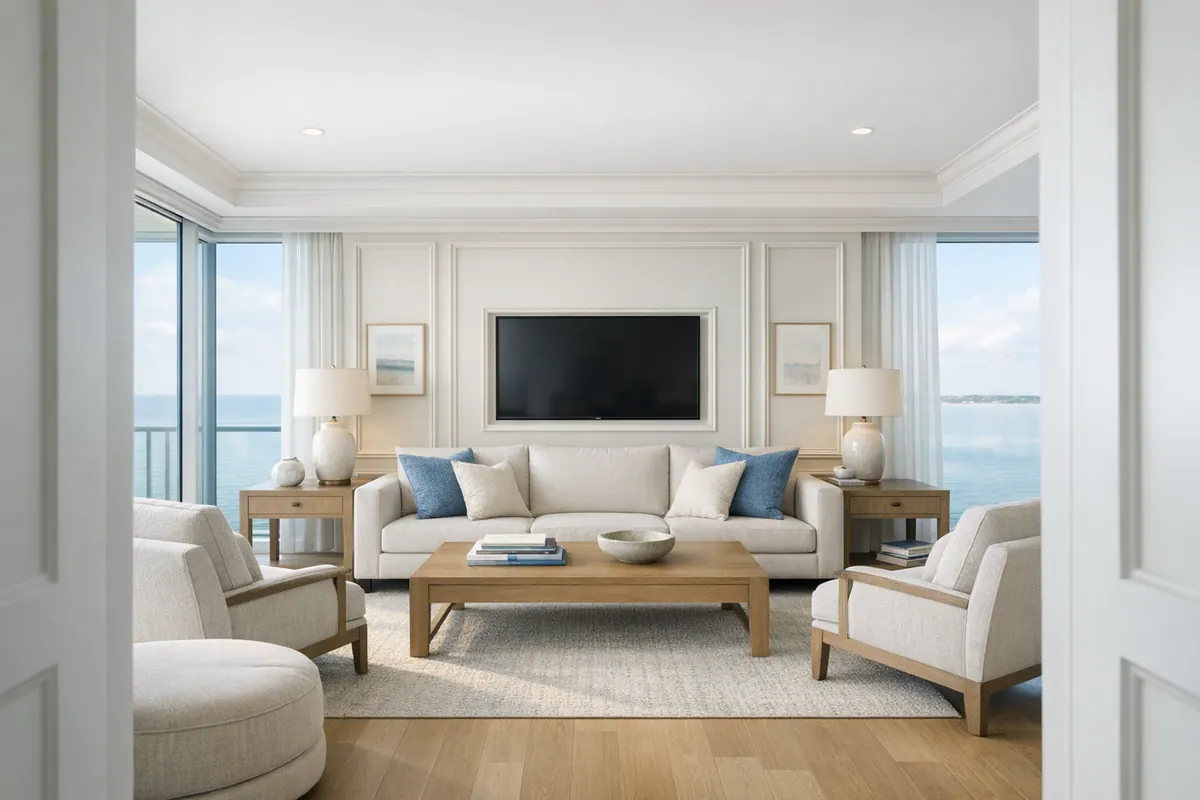
Custom feature walls in Longboat Key work best as tailored finish carpentry, not as a decorative afterthought. A thoughtfully detailed wall can give an open living room a stronger focal point, bring a bed wall into better proportion, or lend an entry or dining space a more deliberate sense of arrival.
The right treatment begins with the room itself: ceiling height, the wall's width, window and door placement, natural light, furniture scale, and the profiles already used at the baseboards and crown. In coastal interiors, restraint matters. The goal is usually texture, shadow, and architectural rhythm that supports the view and furnishings rather than competing with them.
Picture frame molding uses measured trim panels to create refined, traditional or transitional structure; it is especially effective on a dining-room or foyer wall where symmetry is an asset. Shiplap relies on repeated horizontal or vertical lines for a cleaner, relaxed coastal-contemporary character. Slat walls introduce vertical rhythm and warmth behind a television, console, or entry bench, while geometric trim uses intentional angles, grids, or custom layouts for a more sculptural contemporary statement.
Polished results come from more than the pattern. Careful layout keeps panels aligned with room sightlines, transitions at existing trim clean, and paint sheen coordinated with the surrounding finishes. A design conversation should weigh those details against the home's architecture and furnishings, so an accent wall Longboat Key homeowners choose feels built in, not simply added on.
How to Choose the Right Feature Wall for the Room
Start by identifying the wall the room naturally presents first: the surface seen from the entry, across the main seating area, or behind the bed. That primary sightline matters more than choosing the most elaborate pattern. A living room focal wall should also work with the sofa, artwork, and television rather than turn each into a competing centerpiece.
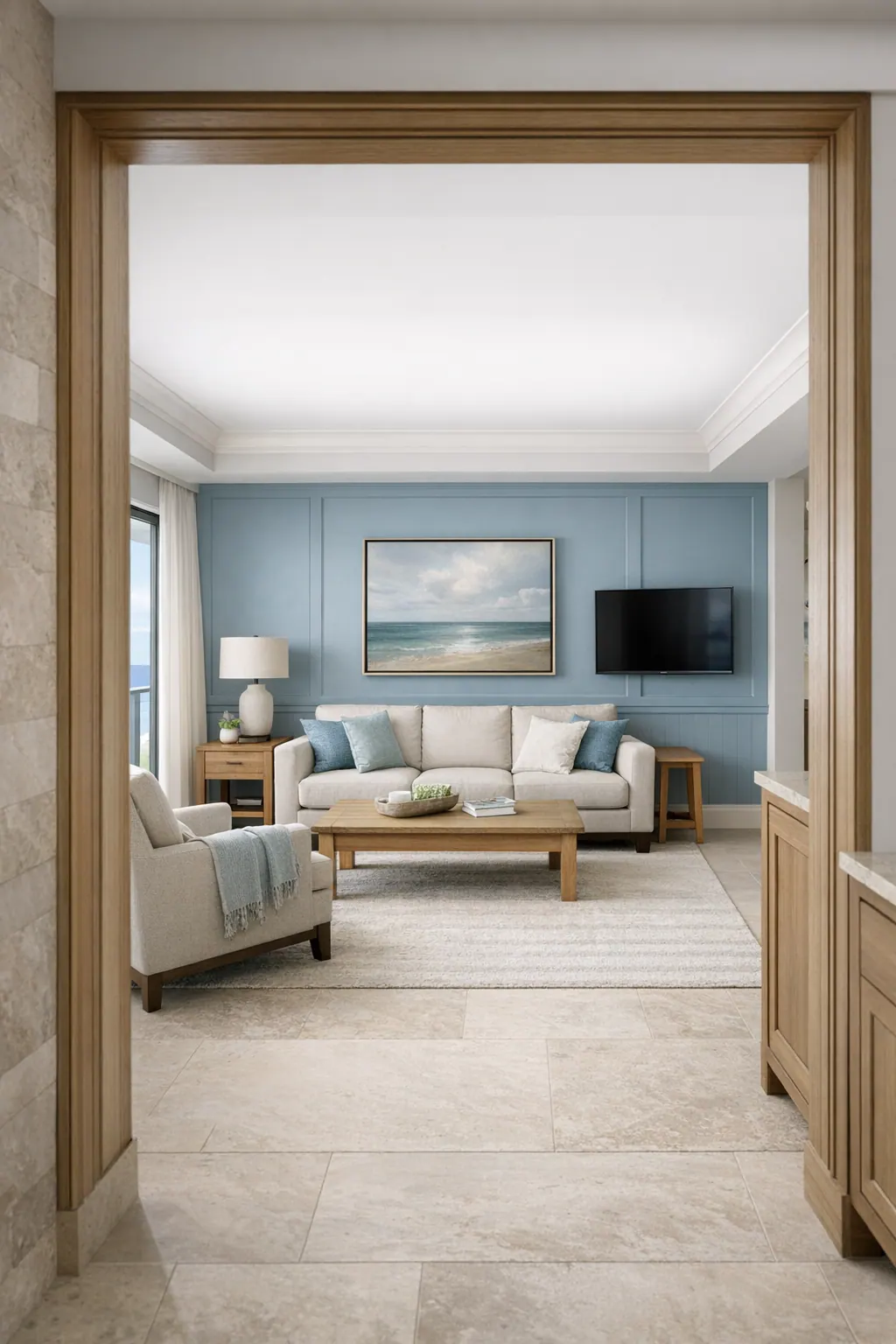
Scale guides the level of detail. In a compact bedroom or condo room, low-contrast trim or a vertical treatment can add height and quiet definition without making the perimeter feel busy. A broad, uninterrupted wall with generous ceiling height has more visual capacity for deeper relief, wider panel fields, or a layered composition. The furniture should anchor the design: a narrow console or bed benefits from a layout centered on it, not a pattern that ignores its edges.
TV walls need especially disciplined planning. The screen, soundbar, outlet locations, and any floating console establish a working centerline; the surrounding treatment should frame that arrangement cleanly without awkward partial panels or distracting seams. Existing baseboards, crown, and door casings set another visual rule. A new detail that meets those profiles deliberately reads as integrated, while a nearly matching profile often looks accidental.
Open-plan homes benefit from a wall that holds its own at a distance yet remains restrained from adjoining spaces. In a more compartmentalized condo layout, a bedroom accent wall or small entry can carry a more self-contained gesture. Longboat Key feature wall design is often strongest where daylight reveals texture softly, not where a wall is already fragmented by doors, windows, vents, shelving, and switches. Likewise, a room with dramatic stone, bold wallpaper, and heavily patterned furnishings may need less, not more, architectural emphasis.
Picture Frame Molding for Refined, Architectural Detail
Picture frame molding brings order to a wall through applied decorative trim set into measured rectangles or squares. The panels create shallow relief and a tailored rhythm, making this treatment a natural fit for a dining room, foyer, long hallway, formal bedroom, or a transitional living space that needs definition without a dramatic change in material.
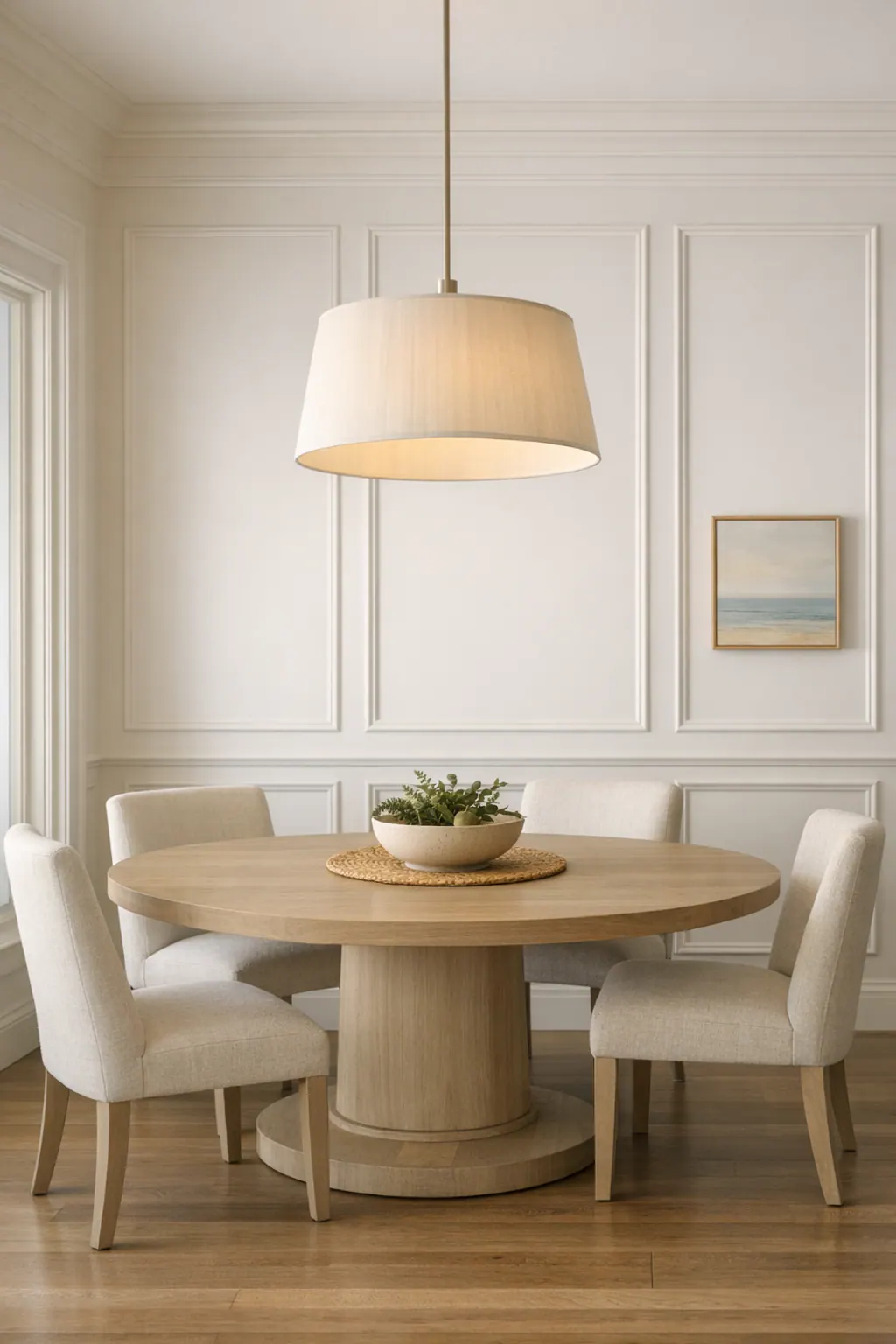
Proportion is what keeps picture frame molding elegant. A tall dining-room wall can support larger, more vertical panels with generous spacing; a lower-ceiling hallway generally looks better with fewer, wider rectangles. When a chair rail is part of the composition, it should read as an intentional dividing line: smaller panels below, larger panels above, or a full-height arrangement that relates clearly to it. Baseboard height and profile matter, too. Panels should land with consistent reveals above the baseboard and below crown rather than appearing squeezed into leftover space.
Paint-grade trim is often the polished choice for this kind of accent molding. Painting the molding and wall in the same soft white, warm neutral, or muted coastal tone lets shadow lines do the work. A matte or low-sheen finish keeps the treatment quiet and architectural, while a glossier contrast makes every panel more pronounced. In a relaxed Longboat Key interior, restraint usually wins: overly dense grids and ornate trim profiles can make an otherwise airy room feel overly formal.
The finished impression depends on layout discipline as much as the profile itself. Clean joints, matched panel spacing, aligned centerlines, and deliberate transitions around doors, outlets, and existing trim allow the molding to feel built into the room rather than added on afterward.
Shiplap Feature Walls With a Clean Coastal Character
Shiplap takes a softer, more linear approach: evenly sized boards create a continuous field of narrow shadow lines rather than the irregular texture of a rustic plank wall. For a polished result, the joints should be consistent and the board edges crisp, not heavily distressed, deeply beveled, or varied in width. That restraint makes painted shiplap a natural coastal feature wall Longboat Key homes can use without leaning into a themed, beach-house look.
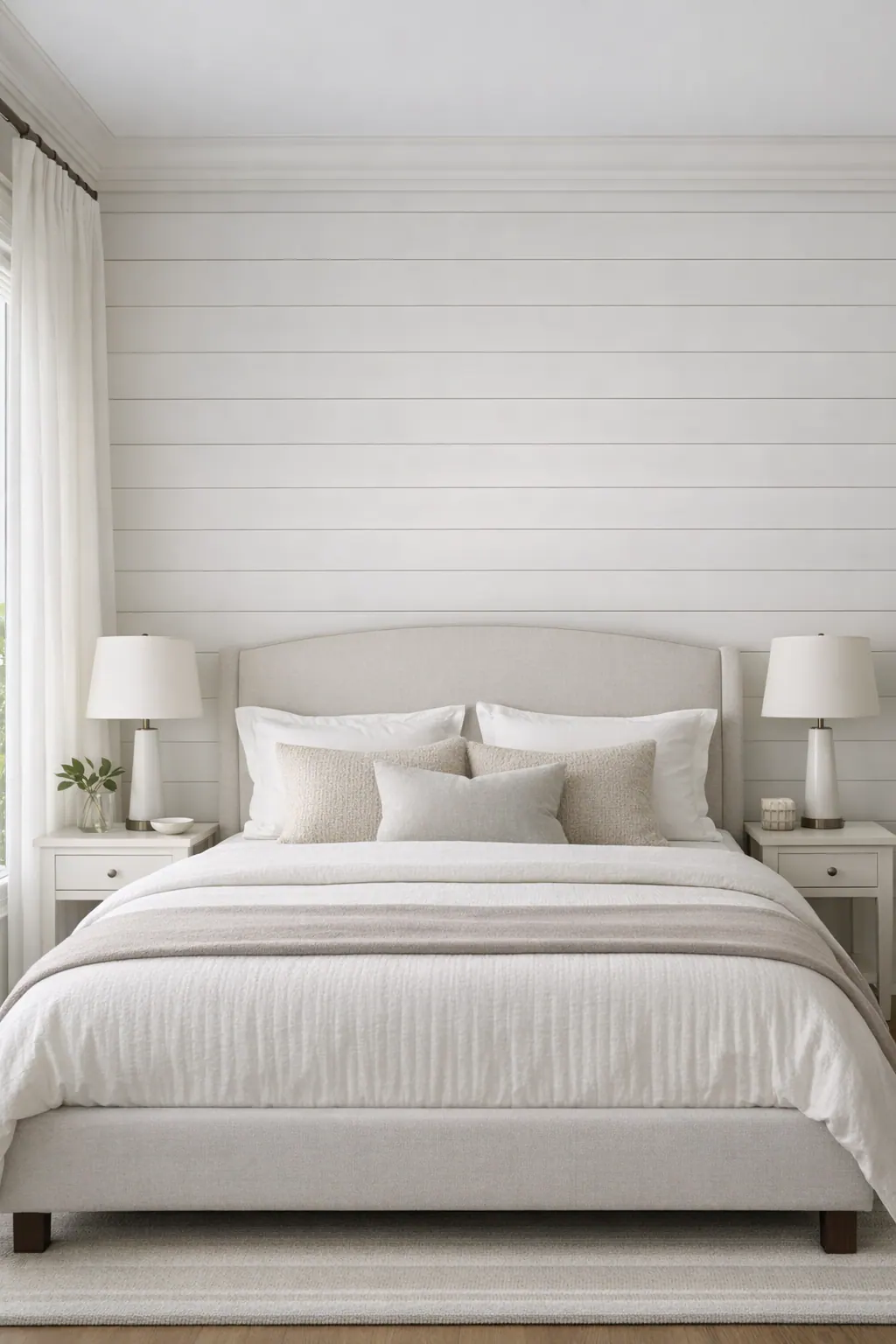
Orientation changes the room's apparent proportions. Horizontal shiplap visually stretches a wall, lending welcome width and an easygoing rhythm behind a sofa, in a breakfast area, or along a broad bedroom wall. Vertical boards lead the eye upward, so they can give a modest entry, a narrow wall, or a bed wall more sense of height. Unlike board and batten, which relies on wider vertical battens over a backing surface, shiplap reads as a closely spaced run of full wall paneling.
Paint color and trim integration determine whether the treatment feels tailored. A soft white, warm sand, pale blue-gray, or muted green can keep the lines subtle in a bright coastal-contemporary room; painting boards and surrounding wall trim together makes the surface feel intentional rather than pieced together. Board courses should terminate cleanly at baseboards, crown, window casing, corners, and electrical boxes, with planned cuts that avoid thin, awkward strips at the edges.
A single painted shiplap wall can provide enough texture for an open living area or condo bedroom. Carrying a weathered finish across every room, or adding pronounced artificial wear, can compete with clean furnishings, stone, and the natural light that give many Longboat Key interiors their calm character.
Slat Walls for Texture, Warmth, and Modern Definition
A slat wall introduces a more contemporary kind of depth: evenly spaced vertical slats, in wood or wood-look finishes, set over a contrasting backing surface. The open reveals between each piece make the backing color part of the composition. Narrow slats with generous spacing and a pale backing feel light and tailored; wider slats, closer spacing, and a charcoal or deep bronze backing produce a denser, more dramatic focal point. A natural oak-toned finish can add warmth beside stone, plaster, and clean-lined furnishings without making the room feel overly rustic.
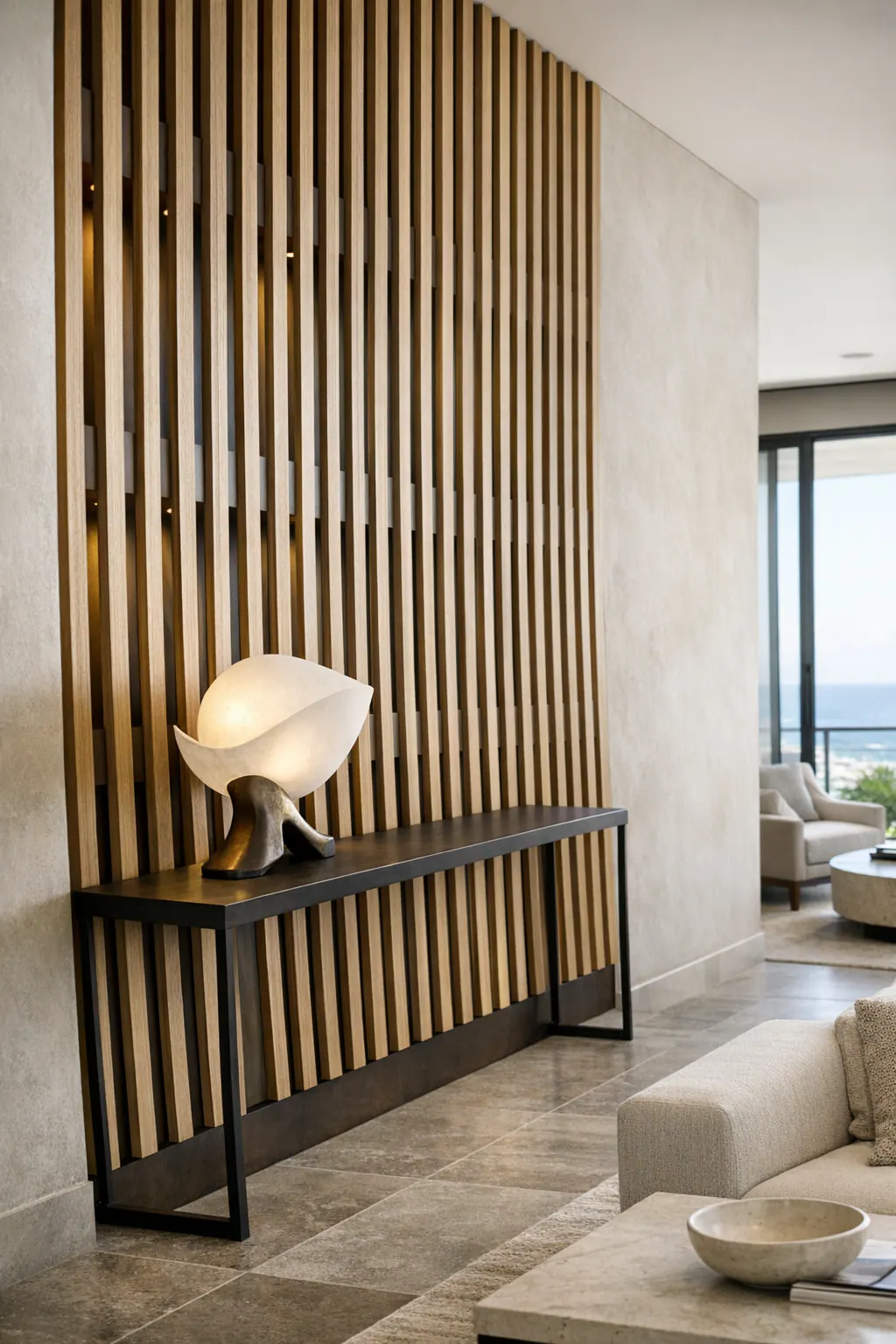
Behind a bed, vertical slats give the headboard wall a calm sense of height while leaving room for restrained bedside lighting. In an entry, they can define the arrival wall without the formality of applied molding. A living room slat wall works best when its rhythm relates to the scale of the seating and adjacent cabinetry, rather than becoming a busy backdrop. For custom feature walls Longboat Key homes and condos, the strongest installations use consistent spacing, straight runs, and clean edge treatment where the field meets baseboards, crown, corners, or built-ins.
A TV wall deserves to be designed as a complete assembly before any slats are installed. The television location, mount position, cable route, outlet access, and any equipment ventilation all affect the layout. Planning those elements early avoids a visible cord path, an awkwardly interrupted slat, or a mount that lands off-center. The backing finish should also coordinate with nearby paint, cabinetry, and metal details so the wall reads as an integrated architectural feature rather than a separate decorative layer.
Geometric Trim for a More Custom, Sculptural Accent Wall
For a wall that should read more like a composed architectural gesture than a repeated surface treatment, geometric trim offers greater freedom. Linear trim can form angled bands, offset grids, arches, diamonds, or deliberately asymmetric shapes, creating a sculptural accent wall with stronger visual movement. It is particularly effective in a powder room, on a bedroom headboard wall, along a staircase, or within another contained focal area where the pattern has room to register.
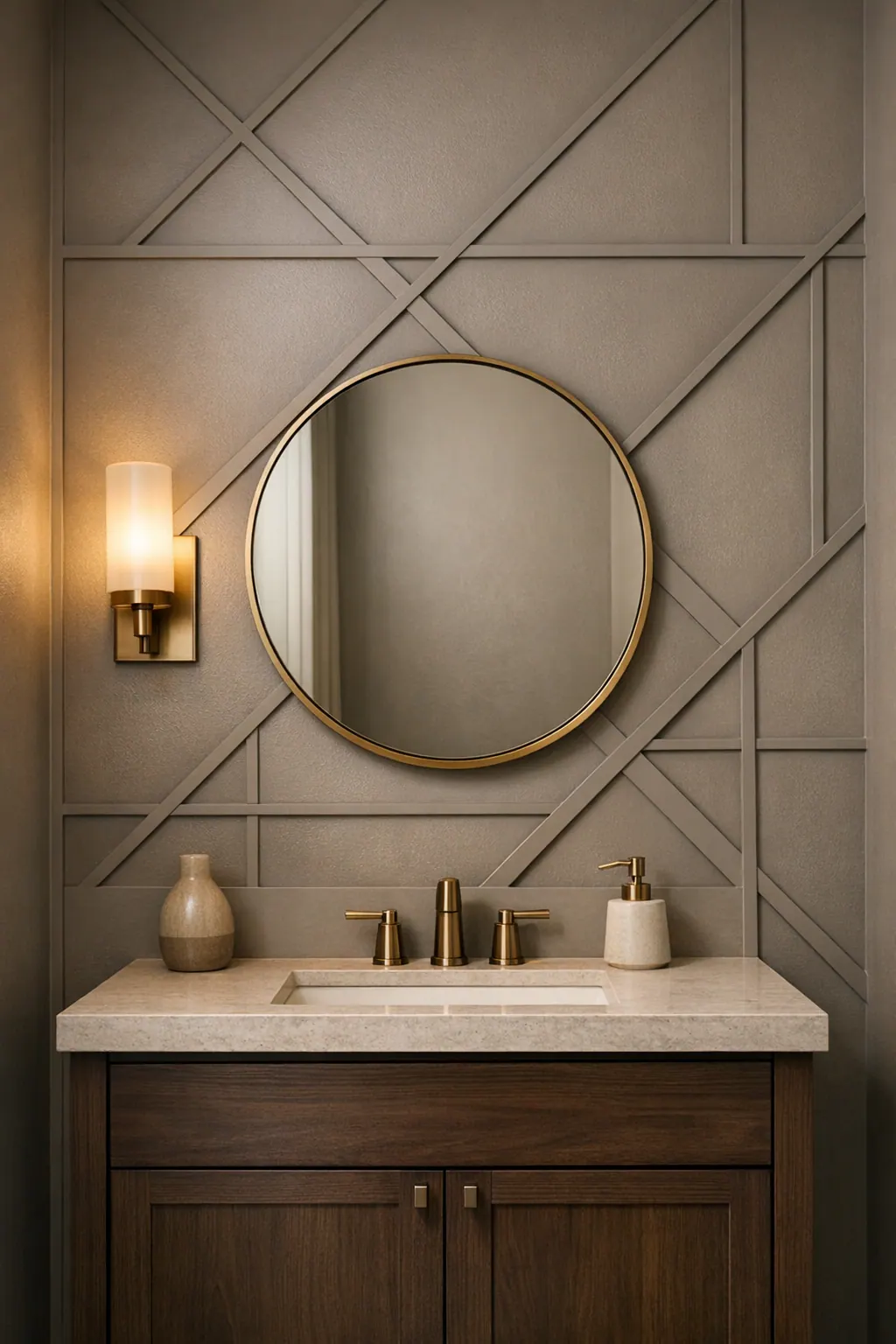
The difference between confident geometric trim and a busy pattern is the layout. A scaled drawing or wall mockup establishes centerlines, margins, and the negative space around the composition before pieces are cut. A symmetrical grid feels calm and ordered; diagonal or asymmetric forms feel more contemporary, but still need visual balance. Clean intersections, consistent trim widths, and intentional stopping points at baseboards, corners, or crown keep the finished wall precise.
Paint controls how assertively the design speaks. A single tonal color in matte paint can soften the relief and let shadows do the work, while a deeper contrasting color emphasizes every angle and joint. For custom accent walls Longboat Key homeowners and condo owners often favor, this can be an effective way to introduce personality without adding another material finish.
Geometric trim is a weaker choice on a wall interrupted by several doors, windows, switches, or vents, where the pattern may feel fragmented. It can also compete with crowded furnishings, elaborate drapery, or architecture that already carries substantial visual detail. In those rooms, a quieter treatment is usually the more polished decision.
Materials, Finishes, and Finish-Carpentry Details That Matter
The quality of the finish is often most visible at the edges. A well-executed wall begins with a straight, secure surface, then uses a measured layout that keeps seams, panel lines, and reveals intentional from one end of the wall to the other. Tight joinery at corners, neat outlet cuts, and clean returns into existing baseboards or crown are the details that let the work read as part of the home rather than an applied overlay.
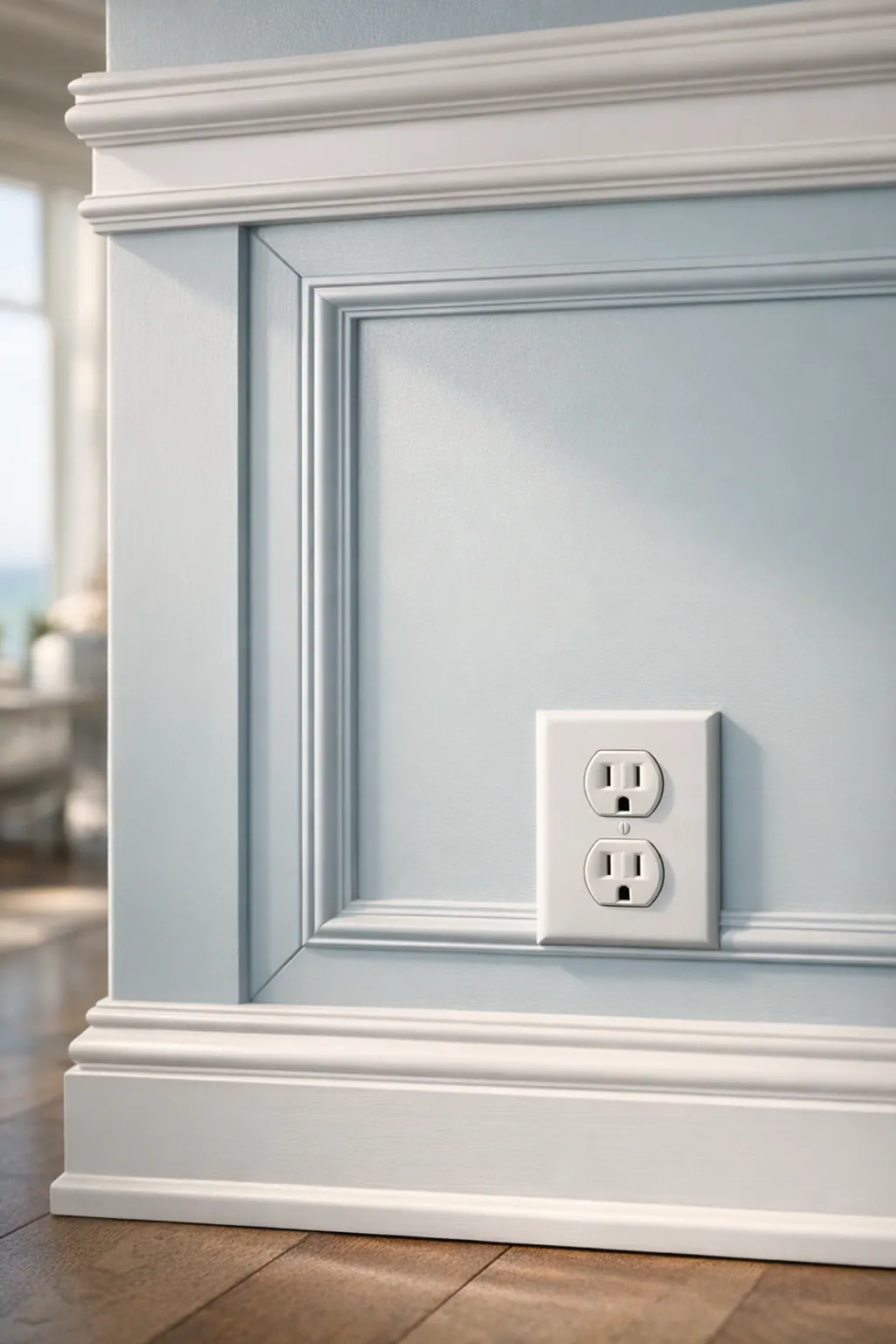
Material and finish should suit both the design and the room. Paint-grade trim and paneling support a smooth, unified color treatment; a stained finish brings out grain and variation, making it better suited to a slat wall or another detail where natural warmth is part of the composition. Coordinating sheen matters as well: a restrained wall color can emphasize relief without making every joint overly prominent. A finish carpenter Longboat Key homeowners choose should review samples in the room's actual light and consider its exposure, ventilation, and moisture conditions before settling on materials or coatings.
Preparation also protects the surrounding room. Floors, furnishings, nearby walls, and existing trim should be covered before cutting, fastening, filling, caulking where appropriate, and final painting begin. In a condo, feature wall installation may also require practical coordination around elevator access, work hours, delivery routes, and protective measures for common areas. Building and association requirements vary by property, so owners should establish the applicable rules before scheduling work that affects access or building operations.
Plan a Feature Wall That Belongs in Your Home
A productive consultation starts with the room as it is lived in: the view on entry, the furniture that will remain, the light at different times of day, and any television, artwork, or lighting the wall needs to accommodate. From there, the treatment and finish can be selected for the right level of presence, quiet painted molding, linear shiplap, warm slats, or a more expressive geometric composition.
Before installation, the layout should be resolved on the actual wall, not only from an inspiration image. Centerlines, panel or slat spacing, trim profiles, paint sheen, and transitions at doors, baseboards, and crown all determine whether the finished wall feels composed. For condo owners, access, work-hour, and common-area protection arrangements can be coordinated before work begins.
For custom feature walls Longboat Key homeowners can enjoy for years, the objective is a room-specific architectural finish rather than a passing trend. Share inspiration images, plans for a particular room, or a preferred wall treatment with a feature wall contractor in Longboat Key to begin a tailored design and installation conversation.
Plan the next step
Compare the broader Custom Feature Walls service.
Review the Longboat Key, FL service area for local planning context.
When you are ready, request a free estimate with the rooms, trim goals, city, and available photos.
FAQs
What type of feature wall works best in a Longboat Key condo?
A restrained treatment such as low-contrast picture frame molding, painted shiplap, or a vertical detail usually works best in a Longboat Key condo. Compact rooms benefit from designs that add height and definition without making the perimeter feel busy.
Is shiplap a good choice for coastal homes in Longboat Key?
Yes, painted shiplap suits coastal-contemporary interiors when it uses crisp, consistently sized boards instead of distressed or heavily beveled planks. Horizontal boards visually widen a wall, while vertical boards draw the eye upward and can make a narrow wall or entry feel taller.
What is the difference between picture frame molding and board and batten?
Picture frame molding uses applied trim to form measured rectangles or squares, creating shallow relief and a refined traditional or transitional appearance. Board and batten uses wider vertical battens over a backing surface, while shiplap is a closely spaced run of full wall boards.
Can a slat wall be installed behind a TV?
Yes, but the TV location, mount position, cable route, outlet access, equipment ventilation, and floating console should be planned before the slats are installed. This keeps the screen centered and prevents visible cords, awkward interrupted slats, and inaccessible outlets.
What should I look for in a finish carpenter for a custom accent wall?
Look for a finish carpenter who plans centerlines, panel or slat spacing, trim transitions, outlet cuts, and paint sheen on the actual wall before installation. Quality work includes consistent reveals, tight corner joinery, clean returns into baseboards and crown, and protection for floors, furnishings, and nearby finishes.