
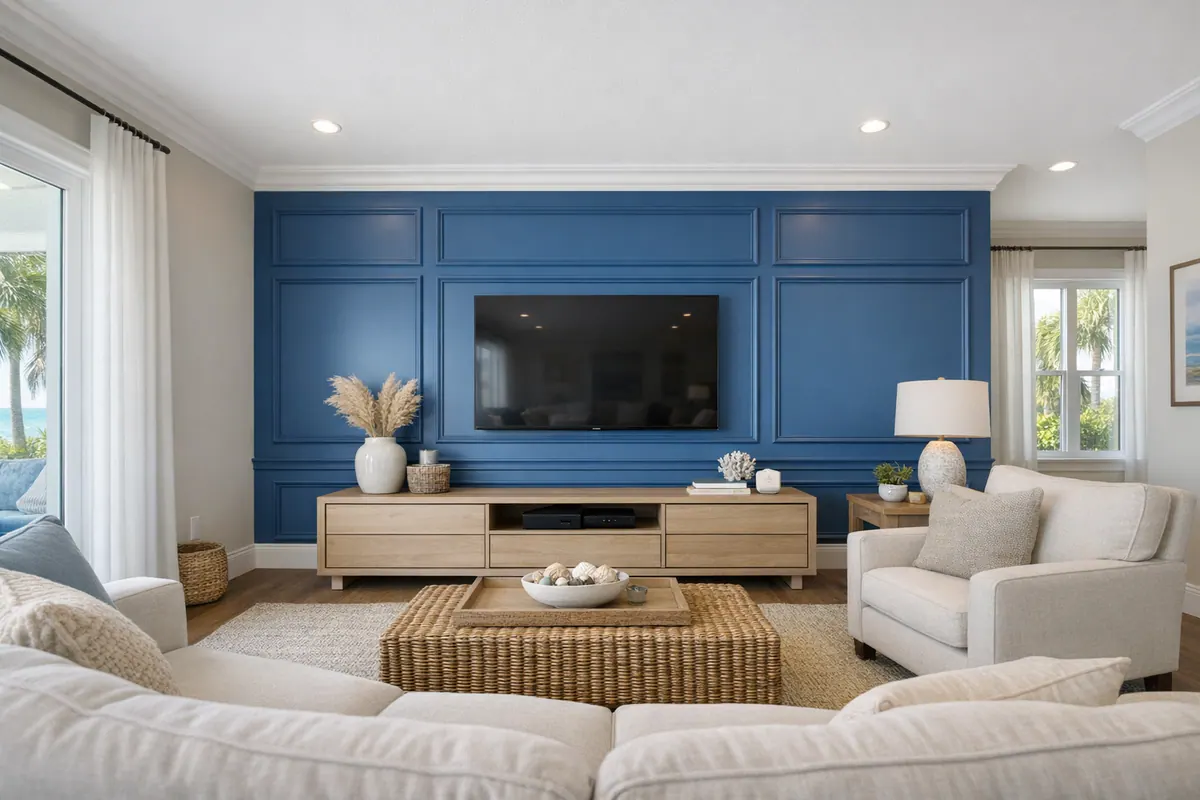
Custom feature walls in Venice, FL give a plain surface a deliberate role in the room instead of leaving it as background. In a living room, that may mean creating a composed backdrop for seating or a television. In a bedroom, it can anchor the bed wall; in an entry or dining area, it can add definition without changing the entire space.
The right focal wall is less about choosing the busiest pattern and more about matching the treatment to the wall's purpose and the finishes already in place. Picture frame molding uses slim applied trim to create refined rectangular panels, making it a natural fit for a dining room or formal entry. Box molding creates deeper, more graphic panel divisions and can suit a broad, relatively uninterrupted wall. Both are typically painted for a tailored, architectural look.
For a more linear effect, horizontal shiplap emphasizes width and brings a relaxed, layered texture; it often works well on a simple living-room or entry wall. Vertical slat walls introduce narrow repeated lines, often in a stained wood tone, and can give a bed wall warmth and height. Geometric trim creates a bolder painted pattern, but it is usually a weaker choice on a wall crowded by windows, doors, switches, or shelving.
Custom accent walls work best when the layout accounts for proportions, ceiling height, outlets, nearby trim, and what the wall needs to frame. Start with the room you want to emphasize, then request a feature-wall conversation built around that specific surface, not a one-size-fits-all pattern.
Why a Custom Layout Matters More Than a Wall Treatment Alone
A layout earns its keep in the measurements. A wide wall with a low ceiling may need broader, fewer panels to avoid a compressed look, while a taller wall can carry more vertical rhythm without feeling crowded. Wall proportions also affect where trim begins and ends: balanced margins at the ceiling, baseboard, and side walls keep the composition intentional rather than like a pattern that simply stopped where it had to.
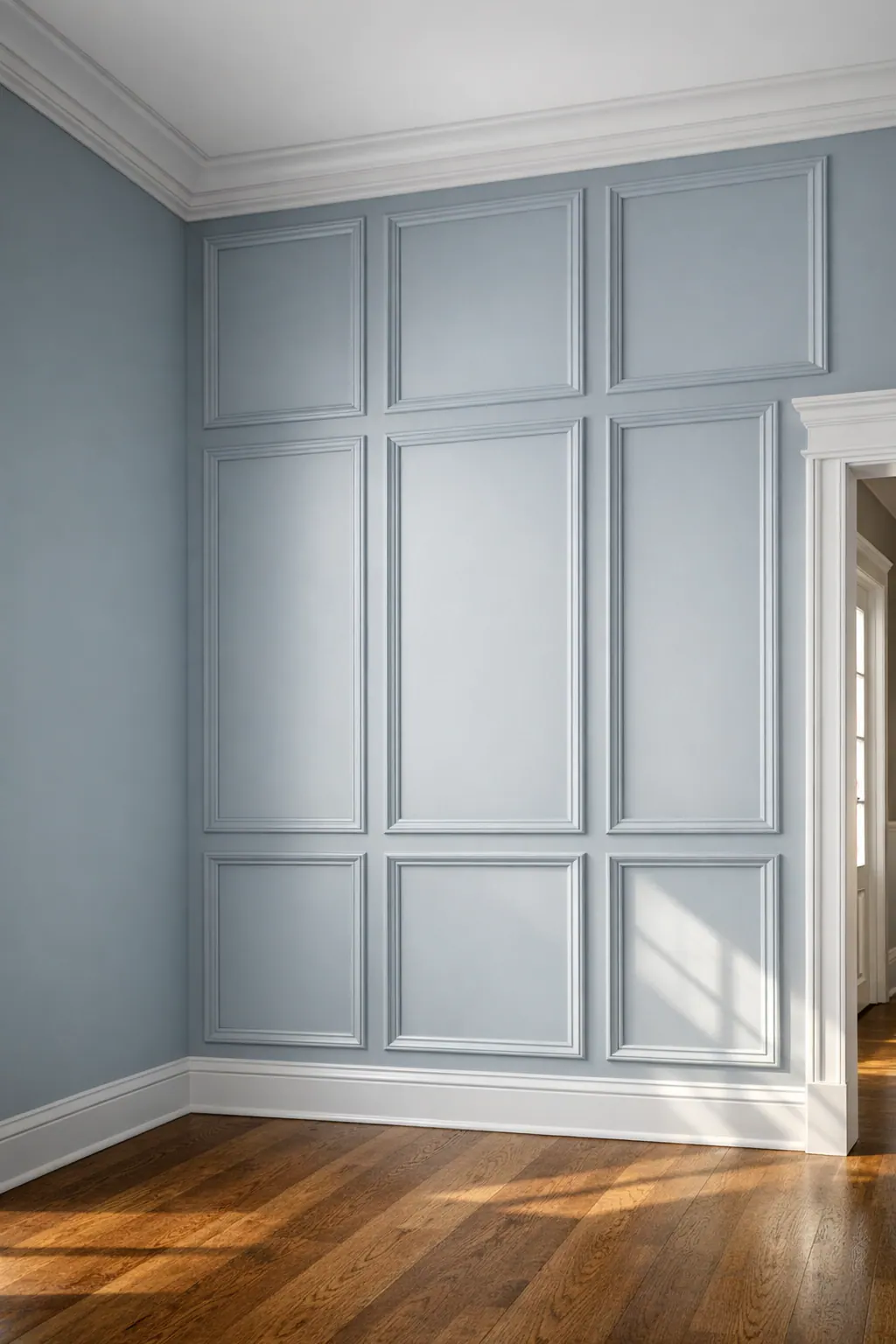
Existing details set the boundaries. Baseboards and crown molding establish visual lines that new trim should respect, while a bed, console, dining table, or television helps determine the feature wall's center point. Paint contrast and natural light change how strongly the pattern reads; a high-contrast treatment can make every joint and panel edge more prominent, whereas a tonal finish lets the texture sit more quietly in the room.
Interruptions are where a one-size-fits-all accent wall in Venice, FL often loses its polish. Windows, doors, outlets, switches, and vents may call for adjusted panel widths, shifted seams, or a deliberately simplified area rather than forcing a repeated pattern across each obstacle. The same picture-frame or slat treatment can feel refined on an open wall and overly busy on a broken-up one. Planning around those conditions before installation gives the finished wall a composed, furniture-aware result.
Feature Wall Styles for Different Rooms, Looks, and Design Goals
The character you want the wall to carry should narrow the field quickly: some treatments create calm structure, while others bring pattern, texture, or a stronger sense of movement. The five most common directions each ask something different of the room.
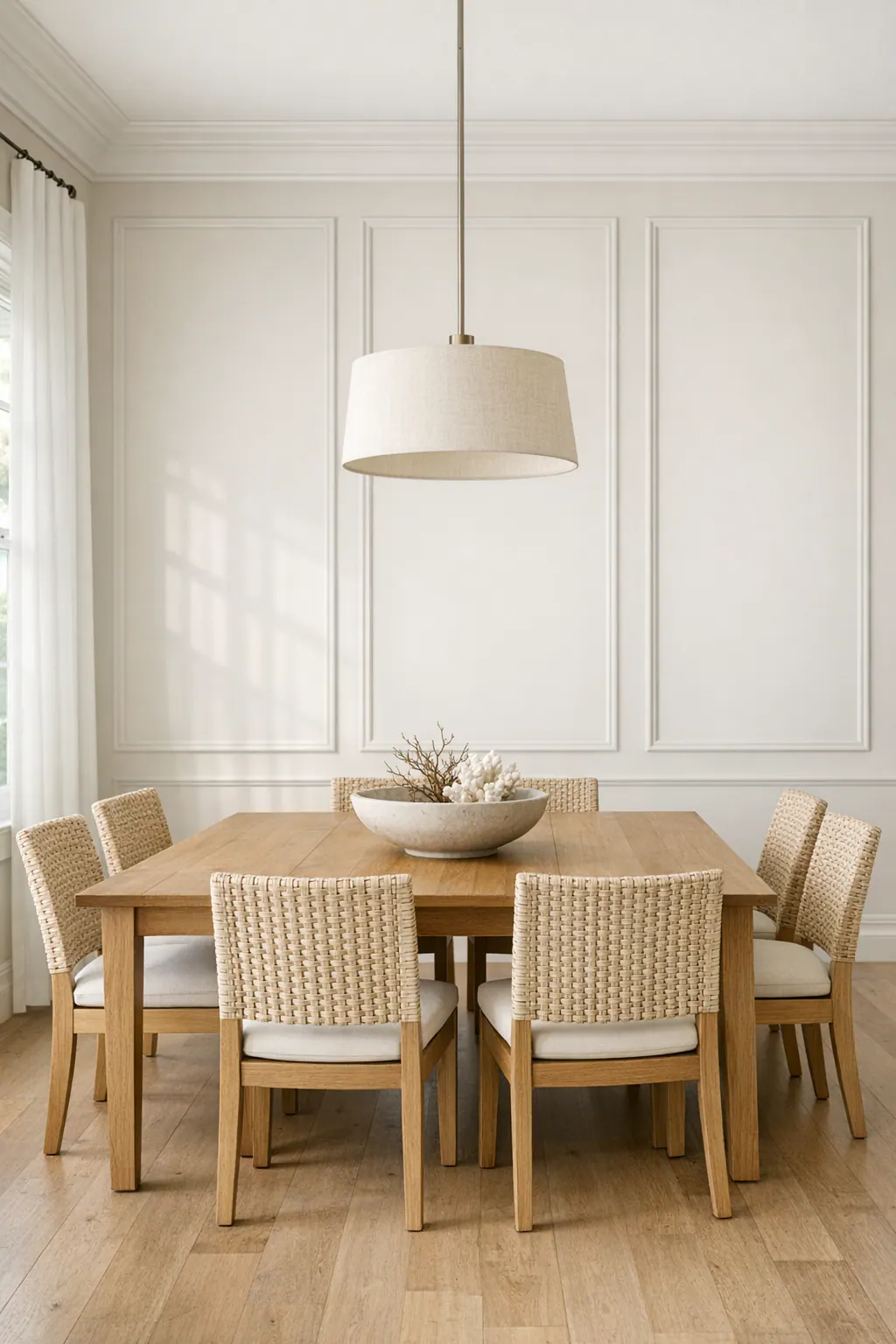
Picture frame molding uses applied trim to create inset-looking rectangular frames across the wall. It brings traditional-to-transitional formality, especially when painted in one color with the surrounding wall or finished in a restrained contrasting tone. Picture frame molding in Venice is often a natural fit for a dining room, entry, or bedroom with classic baseboards and crown, where its repeated rectangles can feel established rather than ornate. It is a weaker choice on a wall broken up by several doors, windows, and switches, since too many partial frames can make the composition feel fussy.
Box molding is a more direct grid of square or rectangular applied trim. Its clean, balanced panel arrangement can read tailored and current when the boxes are generously sized and aligned around a central furniture piece, such as a dining-room buffet or a bed. This wall paneling approach suits transitional living areas and bedrooms that need definition without a highly decorative profile. On a narrow wall, however, a dense grid of small boxes may feel busy; fewer, larger panels usually give the pattern room to breathe.
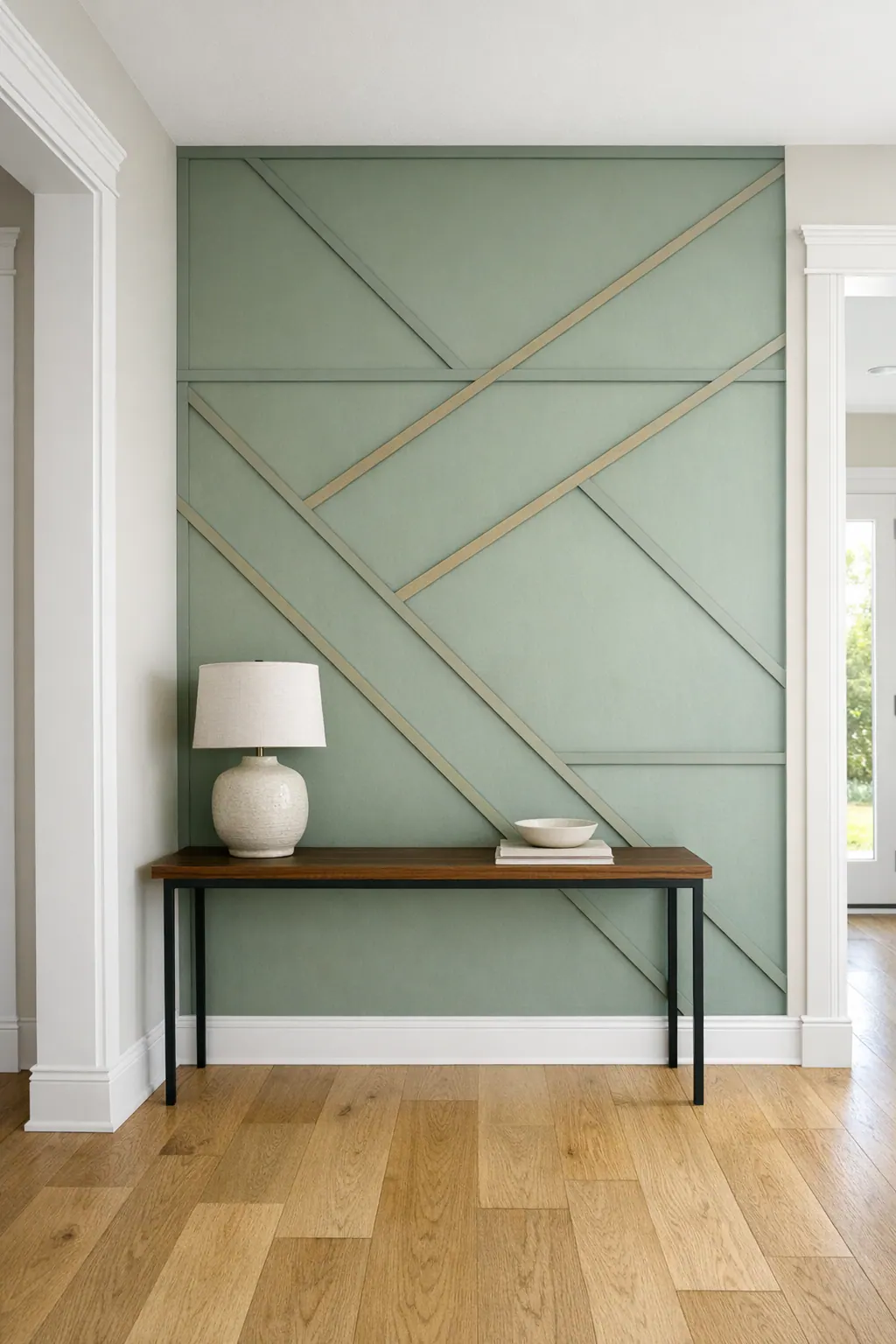
Geometric trim uses angled, intersecting, or asymmetrical pieces of decorative millwork to create a graphic pattern rather than a formal panel system. It can give a contemporary bedroom, playroom, office, or streamlined living space a sense of energy, particularly on one broad, open surface. The practical tradeoff is visual intensity: a high-contrast geometric pattern makes every line part of the statement, so it can compete with bold artwork, heavily patterned furnishings, or a wall already interrupted by a television, windows, or shelving. It tends to work best when the room needs one clear modern gesture.
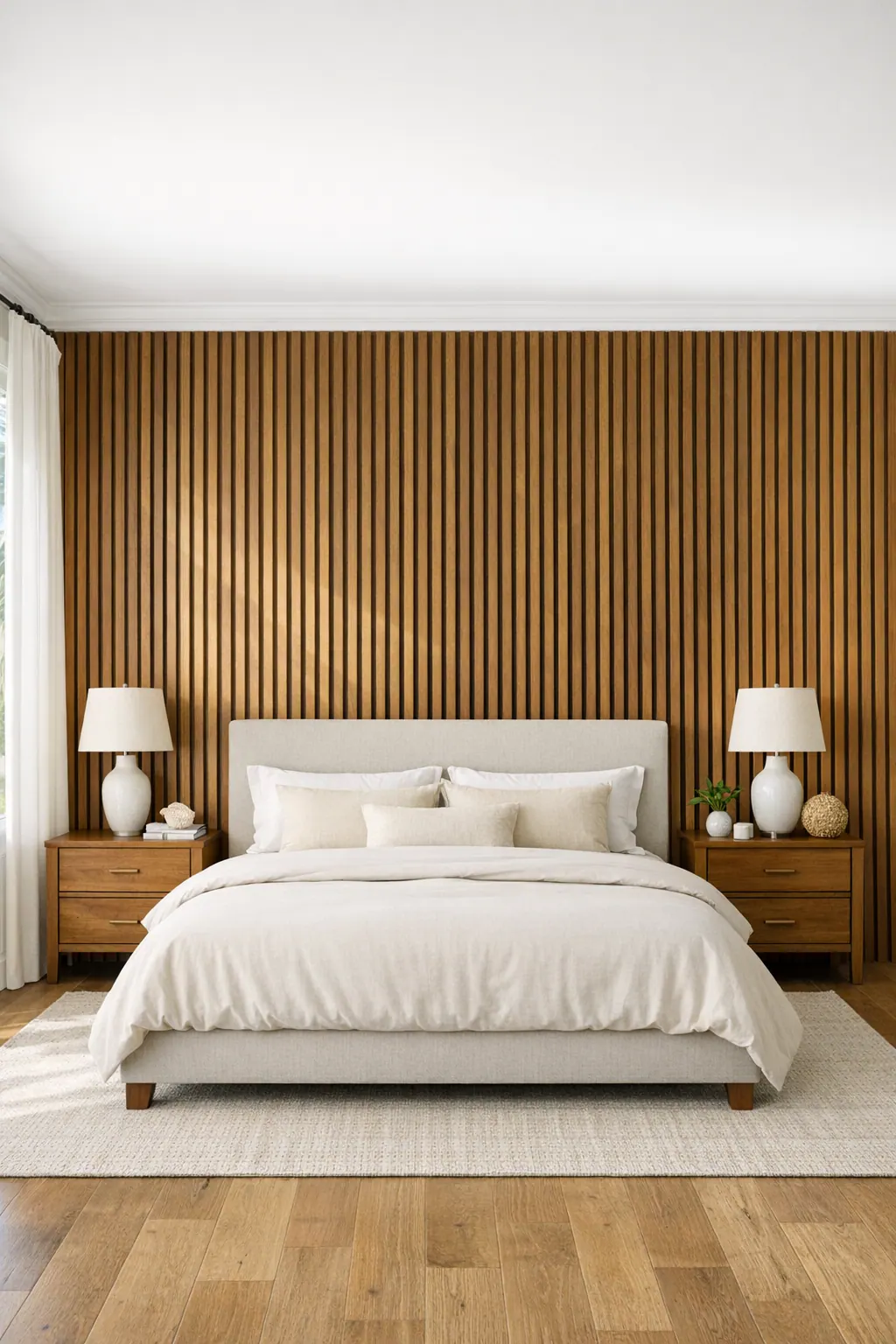
Vertical wood slats create closely spaced upright lines, adding warmth, shadow, and a tactile backdrop. Behind a bed, a seating area, or a television, slats can provide a softer architectural effect than a painted trim pattern. Stained wood shows grain and tonal variation, giving the wall a natural, furniture-like presence; paint-grade trim is smoother and more uniform, so it emphasizes the pattern and paint color instead. Slats are often strongest where the wall can remain visually open. A crowded surface with multiple small interruptions can turn the regular rhythm into visual clutter unless the layout deliberately incorporates them.
Shiplap uses horizontal boards or horizontal reveal lines to produce a restrained coastal, cottage, or modern-rustic character. Its left-to-right direction can make a simple entry, dining wall, or living-room backdrop feel broader and more relaxed. A painted finish keeps the effect subtle and lets the shadow lines do the work; a heavier contrast makes every course more pronounced. Shiplap can be a weaker match when the rest of the home is highly formal or when the room already has several competing linear elements, such as strong striped furnishings or prominent horizontal shelving.
The best choice is not necessarily the most detailed one. A formal dining room may benefit from picture frame molding, a clean bedroom from box molding or stained slats, and a contemporary open wall from geometric trim. Comparing paint samples, trim profiles, slat tones, and the wall's existing visual activity helps make the final treatment feel intentional rather than simply added on.
Where Custom Feature Walls Work Best in the Home
A feature wall has the most impact when it organizes what already happens in the room. Behind a bed, the headboard provides a natural centerline: box molding or vertical slats can extend beyond both sides of the bed and visually anchor nightstands without crowding the rest of the bedroom. A narrow bed wall may call for a simpler painted panel arrangement, while a broad uninterrupted wall can support taller slats or more generous frames.
A television wall needs a different kind of planning. Good TV wall design treats the screen, mount, outlet locations, soundbar, shelving, and component access as part of the composition rather than obstacles added afterward. Slat spacing can be centered on the television, or panel lines can land symmetrically beside it; either approach is stronger than cutting a pattern at random around cords and boxes. Highly active geometric trim is usually a weaker fit here, particularly if the wall also has built-ins, windows, or several openings competing for attention.
In a dining room, applied molding can align with the dining table or buffet to give the furniture a deliberate backdrop. Picture-frame or wainscoting-style panels tend to suit a room viewed at closer range, where even margins and clean intersections are easy to appreciate. In an entry, horizontal shiplap can bring quiet texture to a simple landing wall, while one restrained panel layout can add definition without making a smaller pass-through feel busy.
For a living-room focal wall, start with the main seating view. A wide wall seen from across the room can carry larger-scale panels, shiplap courses, or slats; a short wall between doors may look better left simple or treated with a modest finish. Existing fireplaces, windows, beams, and built-ins should guide the layout. The goal is to give the room a clear destination, not force a pattern onto every available surface.
Choosing Contrast, Materials, and Finish Details
Color is often the quiet decision that determines whether the new work feels built in or simply added on. A tonal approach, using the wall treatment in the same color family as the surrounding walls, lets panel shadows, slat spacing, or shiplap lines provide the interest. It is a strong choice when existing flooring, cabinetry, or furnishings already bring plenty of contrast. Higher paint color contrast, such as deep blue molding against pale walls or warm wood slats beside a light painted room, makes the feature wall more graphic and draws the eye there first.
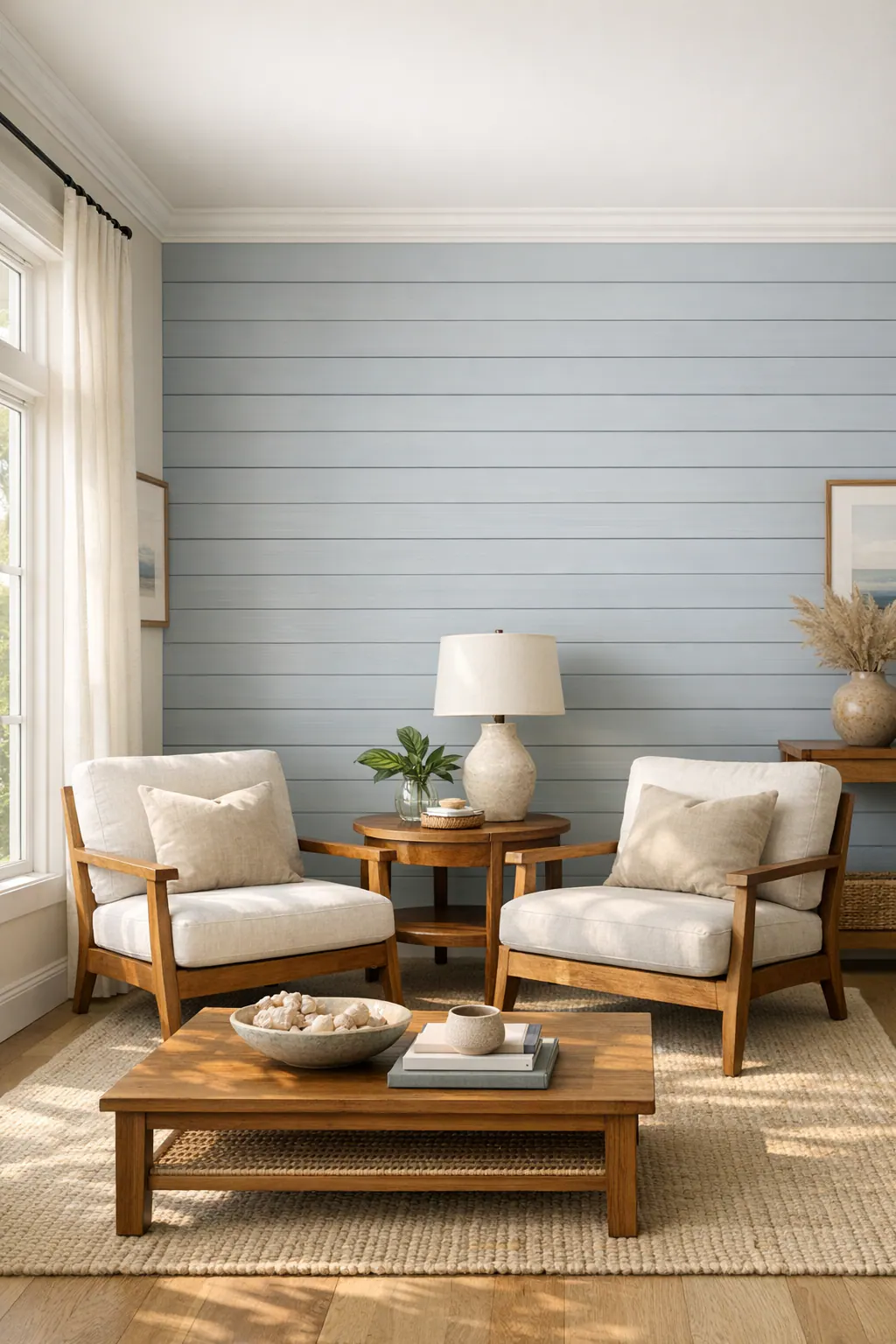
Trim profile and depth should follow the home's existing language. A slim, low-profile painted molding keeps picture-frame or box panels crisp and restrained; a thicker profile creates deeper shadow lines and a more pronounced traditional effect. For slat walls, material selection shapes the mood: smooth paint-grade elements blend easily with painted doors and baseboards, while visible wood grain introduces warmth that should relate to nearby flooring, cabinetry, or furniture rather than compete with it. Comparing samples beside the wall, door casing, and floor helps reveal undertones that are easy to miss in isolation.
The small finish details matter because they are what the eye follows at close range. Even spacing, tight joints, filled nail holes, careful caulking, and thorough paint preparation help applied trim read as one intentional composition. Painted surfaces may need occasional dusting and touch-up where hands, chairs, or daily traffic mark the wall; wood-grain slats benefit from routine dusting along their channels. The goal is a focal point that belongs with the room's doors, trim, and finishes, not decoration layered over them.
What to Expect From a Venice, FL Finish Carpentry Consultation
A useful consultation starts at the wall itself, not with a preselected pattern. A finish carpenter in Venice, FL can look at the wall's width and height alongside the baseboards, door casing, nearby flooring, and adjacent walls so the new work has a clear relationship to the room. Homeowners can make the conversation more productive by gathering a few inspiration images, paint or stain samples, and a sense of whether the wall should feel subtle, traditional, warm, or graphic.
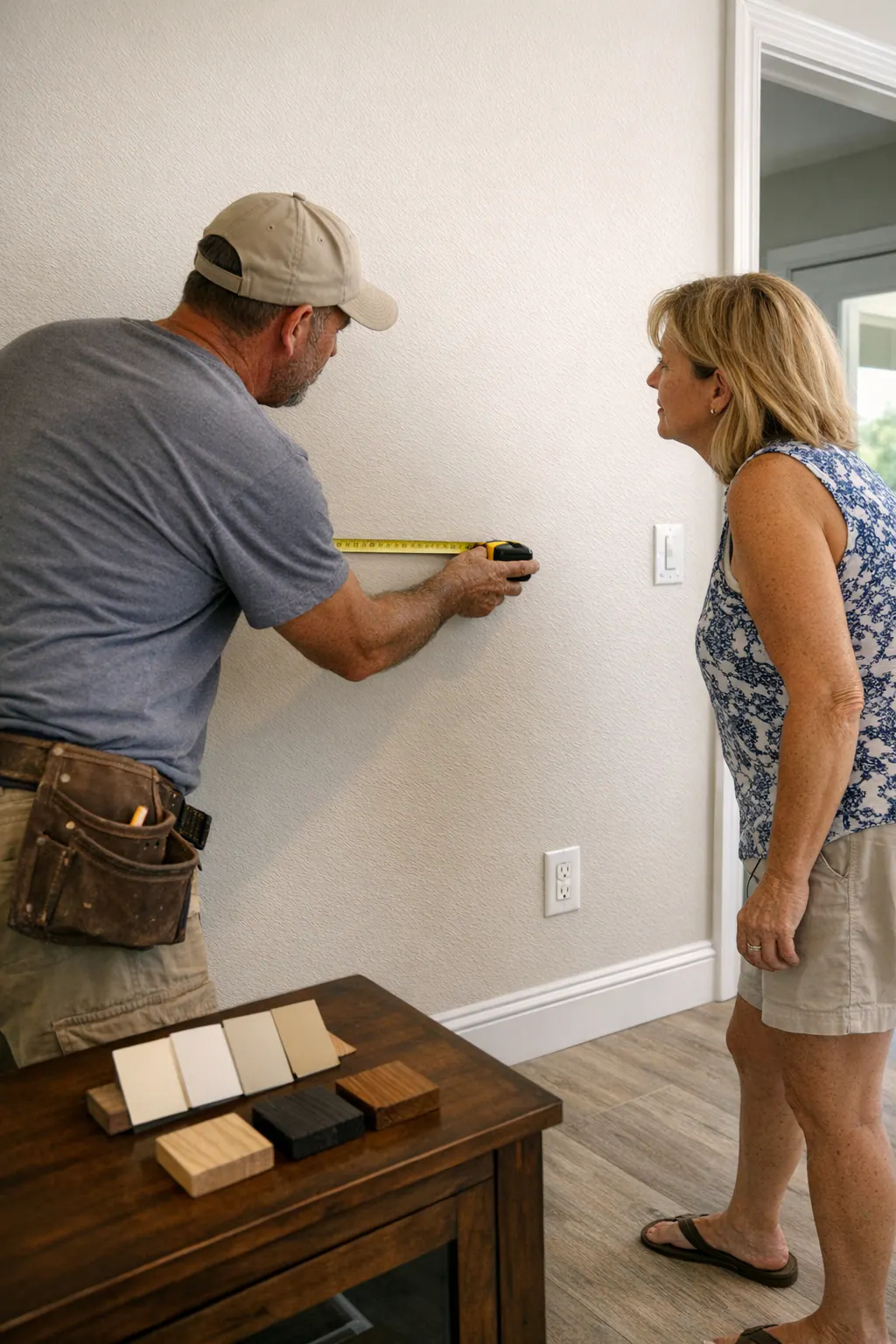
The planning discussion should turn those preferences into a workable layout. That means measuring the surface and mapping the placement of outlets, switches, vents, windows, doors, and any television or mounting equipment. A sketch or layout view helps show where panel lines, shiplap courses, or slat spacing will land before installation begins. For example, a TV wall may need a centered open field for the screen and equipment, while a bed wall may be organized around the bed's centerline rather than the wall's exact midpoint.
A Venice FL feature wall contractor can also compare trim profile, paint-grade versus stained materials, and the level of contrast that fits the existing room. Those decisions define the scope of work and make project-specific pricing possible; a blanket price cannot account for wall conditions, interruptions, material choices, or layout complexity. During installation, the focus is on straight reference lines, balanced spacing, clean joins, filled fasteners, caulking, and finish-ready surfaces so the completed wall reads as one composed element rather than a collection of added pieces.
Plan a Feature Wall That Fits Your Venice Home
Before choosing a pattern, gather photos that show the full wall, adjacent trim, and nearby furniture, along with room dimensions, inspiration images, and notes on television placement, outlets, baseboards, or casing. That context helps distinguish picture frame molding's traditional rectangular frames from box molding's simpler grid, shows whether geometric trim has enough open space for its angles, and clarifies whether stained slats behind a bed or horizontal shiplap suit the room better. Browse the project gallery for finished-work ideas to share.
Schedule a consultation for custom feature walls in Venice, FL to compare those options against the room's focal point and your preferred paint or stain contrast. A TV size or bed width helps center the composition on the screen or headboard rather than an arbitrary midpoint. Bring the finishes already in the room, and begin shaping a feature wall that belongs with the rest of your home.
Plan the next step
Compare the broader Custom Feature Walls service.
Review the Venice, FL service area for local planning context.
When you are ready, request a free estimate with the rooms, trim goals, city, and available photos.
FAQs
What is the difference between picture frame molding and box molding?
Picture frame molding uses slim applied trim to create refined rectangular panels and suits formal entries or dining rooms. Box molding uses a more direct grid of square or rectangular panels, with fewer, larger boxes helping broad walls feel tailored rather than busy.
Are vertical slat walls a good choice behind a TV or bed?
Vertical slat walls work well behind a bed, seating area, or television because they add warmth, height, and tactile texture. For a TV wall, slat spacing should be centered on the screen while allowing for outlets, soundbars, mounting equipment, and component access.
Can a finish carpenter add a feature wall around outlets, doors, and windows?
Yes, a custom layout can adjust panel widths, seams, and slat spacing around outlets, switches, vents, doors, and windows. Walls with many interruptions may need simplified areas because forcing repeated trim or geometric patterns around every obstacle can look cluttered.
How do I choose a paint color and contrast level for an accent wall?
Use a tonal color in the same family as surrounding walls when flooring, cabinetry, or furnishings already provide contrast. Choose higher contrast, such as deep blue molding on pale walls or warm wood slats beside light paint, when the feature wall should become the room’s main focal point.
What is the best type of feature wall for a living room in Venice, FL?
A wide, open living-room wall can support larger box panels, horizontal shiplap, or vertical slats, depending on whether the goal is tailored structure, relaxed texture, or warmth. The best choice accounts for the main seating view, ceiling height, fireplaces, windows, built-ins, and whether the wall needs to frame a television.