
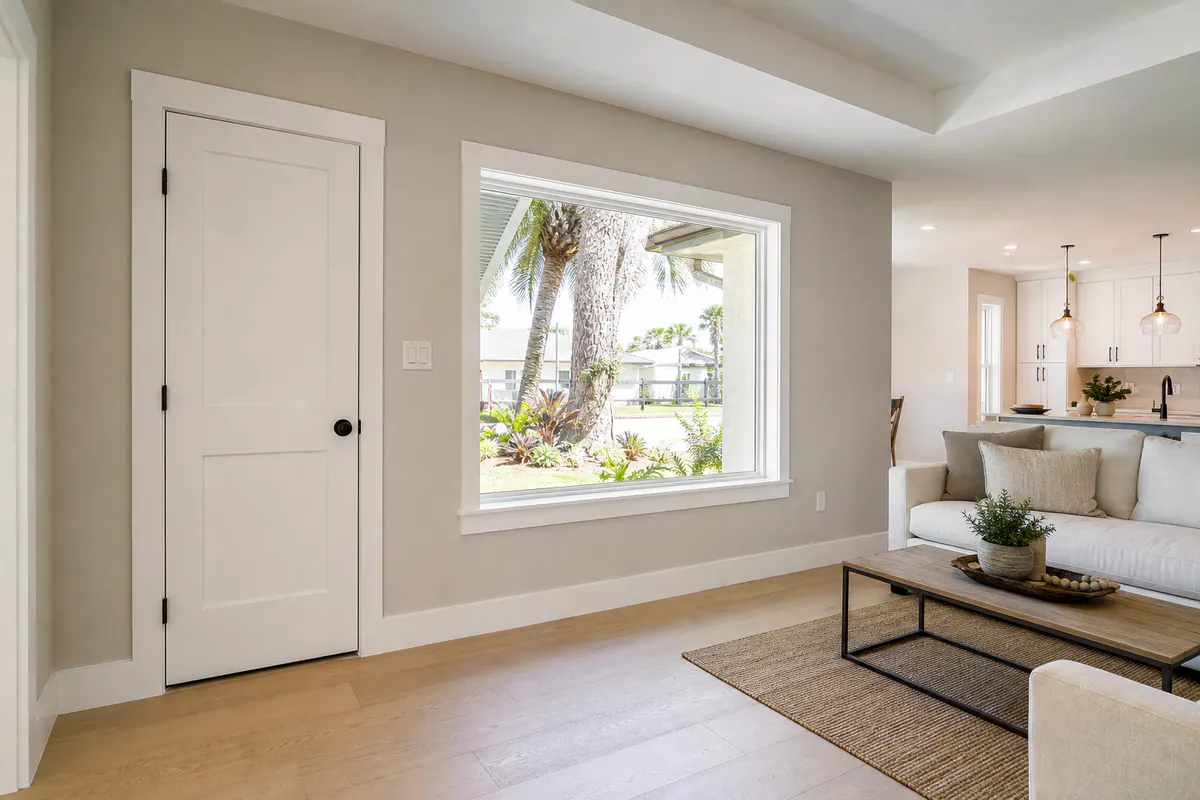
Start at the opening itself: uneven spacing, loose corners, or a visible line where the jamb meets the wall can keep an otherwise updated room from looking complete. Well-fitted casing covers that transition, frames the opening with a clean edge, and gives paint, flooring, and furnishings a more polished backdrop.
Our interior trim work includes door casing, window casing, decorative surrounds, interior sills, and replacement of worn, incomplete, or mismatched pieces. Door casing outlines an interior doorway; window casing creates the same clean border around a window. A surround adds layered or more decorative framing for a stronger focal point, while a sill provides the finished horizontal ledge at the bottom of a window opening.
Small fitting details make the difference. Even spacing around an opening, aligned vertical casing legs, tight corner joints, and trim that transitions naturally into nearby baseboards help a room read as cohesive rather than pieced together. In contrast, gaps at the wall, bulky old profiles beside clean modern finishes, or inconsistent casing from room to room can make an otherwise attractive interior feel unfinished.
Whether the goal is a subtle refresh or a more tailored look throughout the home, professional interior trim in Venice, FL can give ordinary openings a deliberate, custom-built presence.
What Door and Window Casing Does in a Room
At each opening, the jamb is the interior frame surface of the door or window, while the reveal is the small, deliberate strip of jamb left visible beside the trim. Casing sits on the wall around that frame. Its practical job is to cover the transition where drywall meets the jamb; its visual job is to create an even border that makes the opening look square and intentional.
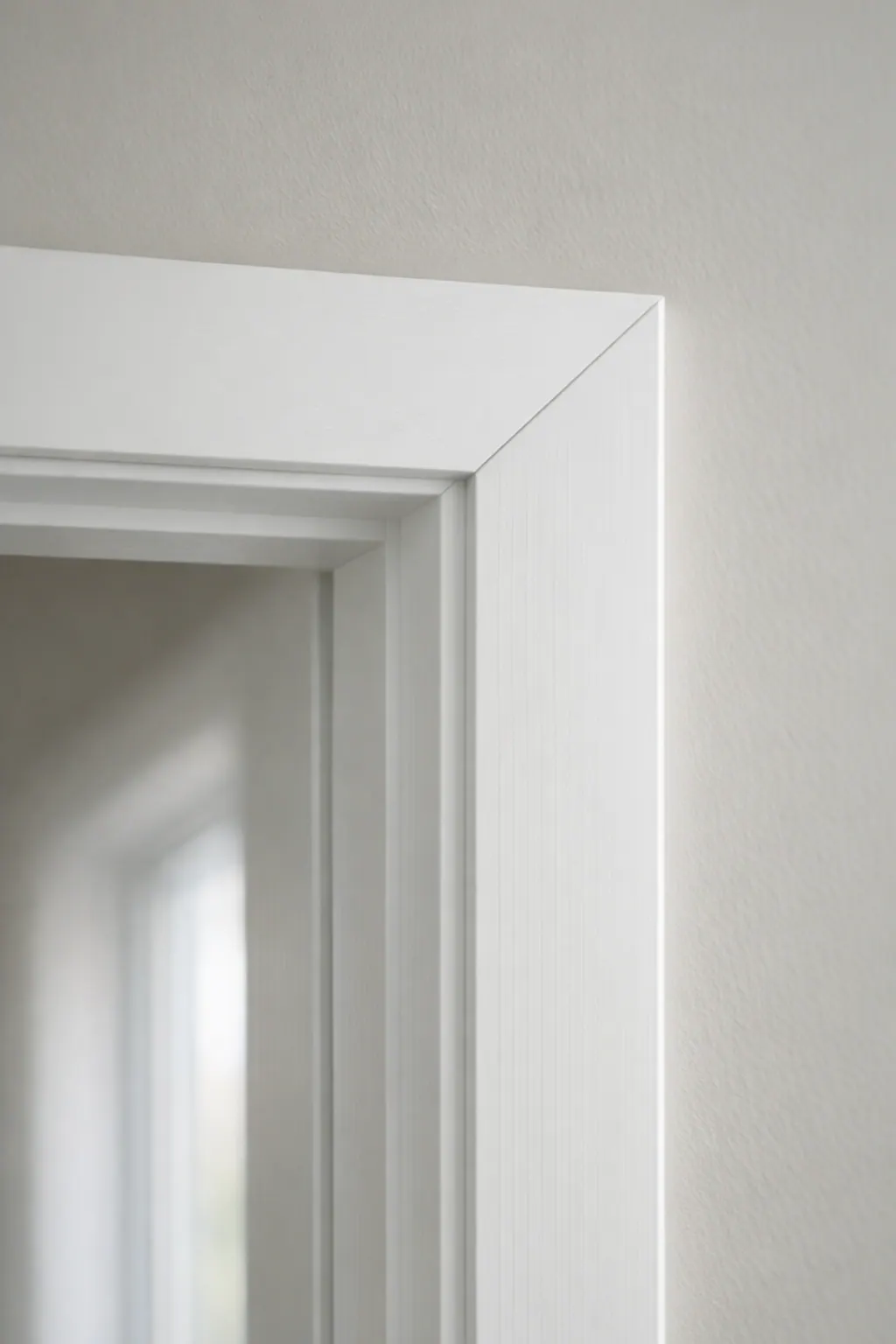
That border also gives finish carpentry some flexibility when real walls are not perfectly flat or openings vary slightly. A well-fitted casing line keeps the reveal consistent, lets the vertical legs meet the head piece cleanly, and avoids distracting gaps where trim meets the wall. When paint-grade trim is used, filled nail holes and smooth caulked seams help the completed frame read as one continuous detail.
Not every trimmed opening needs the same treatment. Simple casing is a single, straightforward profile around the perimeter, suited to a restrained look. A wider decorative surround uses broader or layered pieces to give a door or window more presence; it can be effective as a focal point, but it needs to relate in scale to the room and nearby trim. For door casing in Venice, FL, that relationship often matters most in hallways and connected rooms, where inconsistent widths are easy to notice.
Window trim adds a few terms of its own. A stool is the finished horizontal ledge at the bottom of the interior opening, while an apron is the trim board installed beneath it. An extension jamb brings the window frame outward to meet a thicker wall surface, creating a flush plane for casing and a properly supported stool. Together, these parts make window casing in Venice, FL look integrated with the rest of the room rather than attached as an afterthought.
The strongest result carries a common visual language from openings to baseboards, crown molding, and other built-in details: compatible profiles, purposeful widths, and clean transitions instead of a collection of unrelated pieces.
Interior Door Casing Options for a More Custom Look
A hallway with several doors is often where casing choices become most noticeable. Flat stock, smooth, square-edged boards with little or no ornament, creates a crisp outline that suits contemporary bedrooms, closets, and bathrooms. It keeps the visual weight light, especially when walls, doors, and trim share a restrained paint palette.
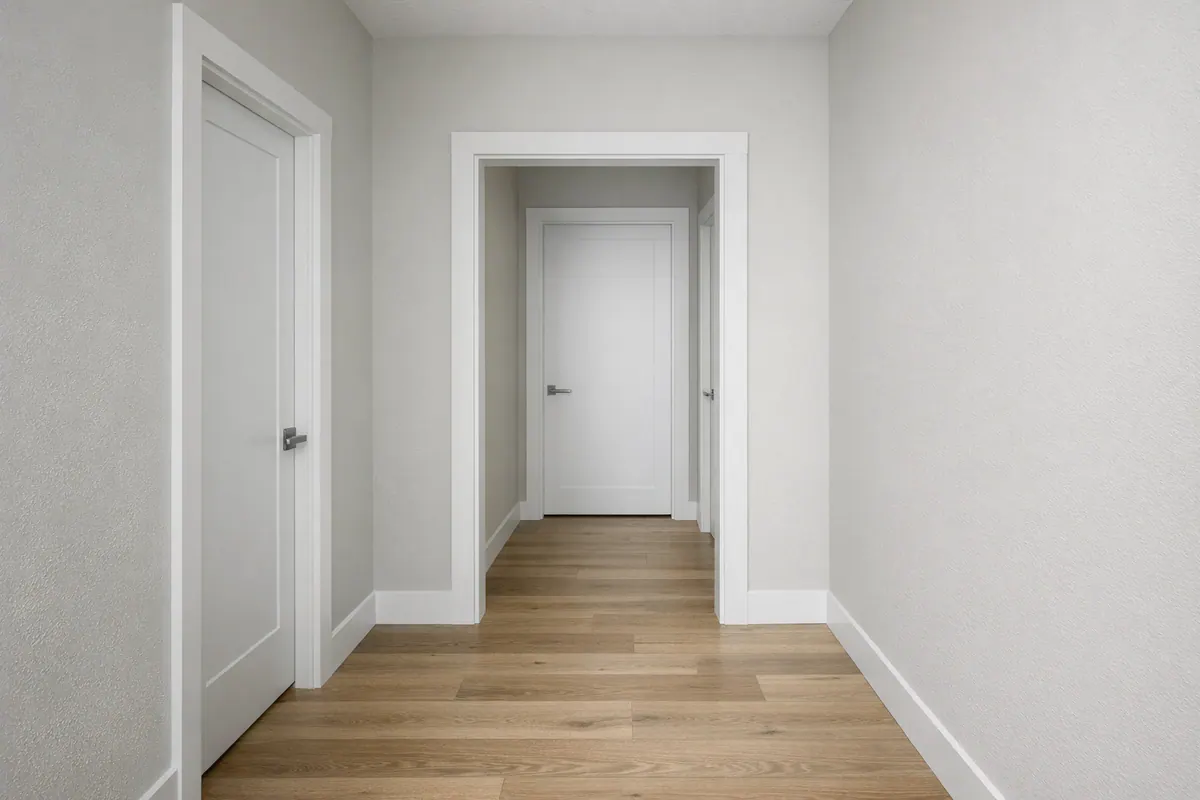
Colonial or stepped casing adds shaped edges or layered transitions that cast a little more shadow around the opening. That extra profile gives traditional rooms a softer, more detailed finish without making every doorway a focal point. For a larger room or one with taller ceilings, wider casing can give the opening enough presence to relate to broader baseboards or crown molding. The tradeoff is scale: a very wide, ornate profile can feel crowded around a compact, modern hallway.
Backband and built-up trim take the effect further. Backband is an additional molding installed along the outside edge of the casing, while built-up trim combines multiple pieces into a deeper surround. Both create stronger architectural definition around a cased opening, dining room transition, or primary bedroom entry. They work best when nearby doors receive the same treatment rather than appearing as isolated decorative upgrades.
Professional door casing installation in Venice, FL is as much about repetition as profile selection. Mitered corners should close tightly, vertical legs should line up cleanly, and the narrow jamb border should remain even from one side of the opening to the other. In connected spaces, matching head heights, casing widths, and alignment across nearby doors makes the interior door trim feel planned as a whole. When walls or openings vary, careful fitting keeps those everyday irregularities from becoming the detail people notice.
Window Casing, Decorative Surrounds, and Sill Installation
Windows offer more surface for a coordinated trim treatment because the lower edge can become a design feature of its own. A complete interior package typically includes side casing on the vertical edges and head casing across the top, creating the same clean border used around doors. Below the opening, a stool, often called the interior window sill, projects into the room, while an apron is the flat or shaped trim installed beneath that sill.
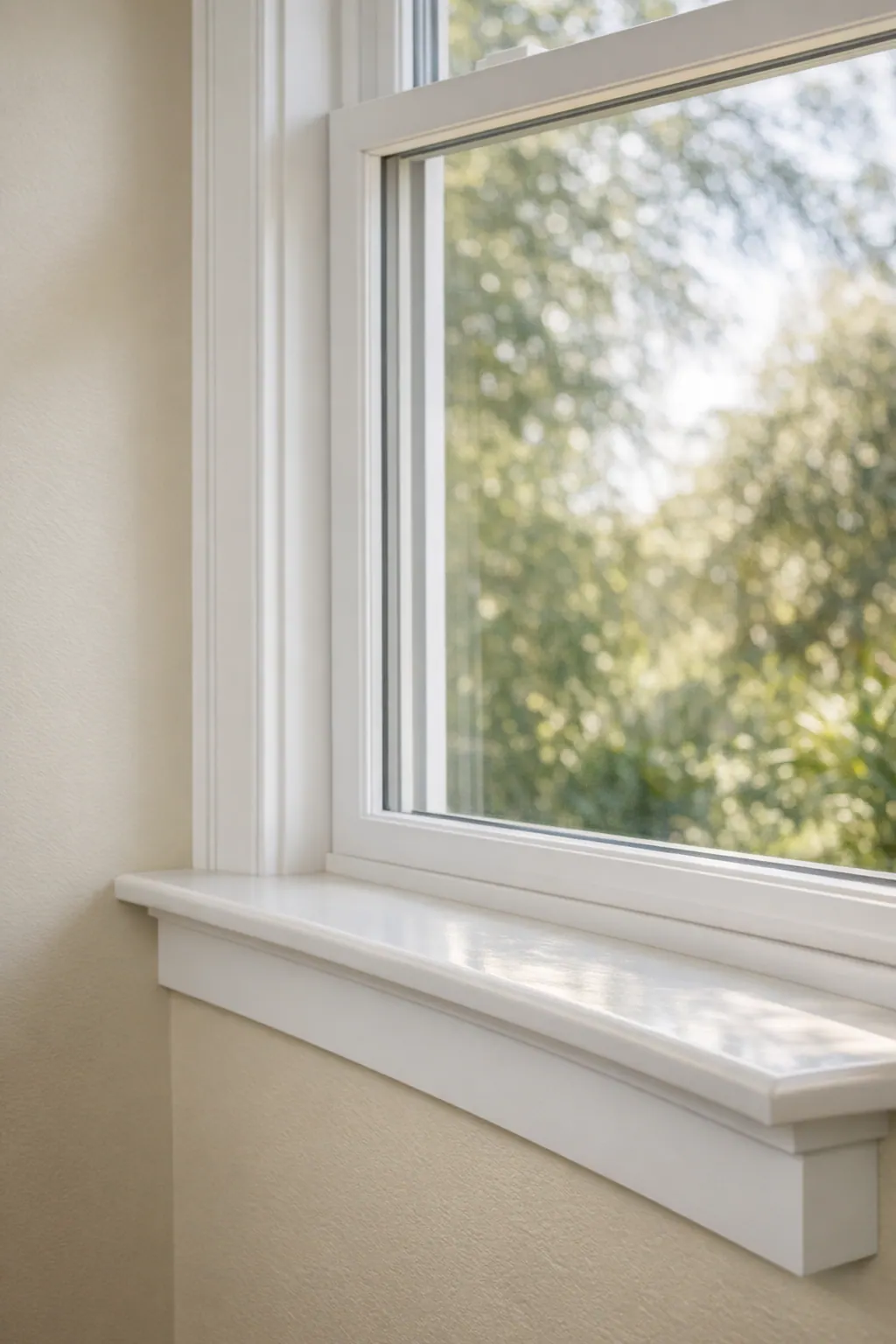
Those pieces can be simple and streamlined or built into a more decorative surround. A narrow, square-edged casing with a plain stool suits a clean-lined room; a wider casing, layered head detail, or added backband gives a window more formality and visual weight. The important comparison is with nearby trim: a substantial surround can look intentional beside broad baseboards and traditional door profiles, but may overwhelm a small room finished with minimal, modern details.
Window casing installation in Venice, FL can refresh the interior face of an existing window without changing the window itself. Replacing mismatched casing, dated profiles, or incomplete trim lets the opening relate more naturally to the rest of the room. Where the window frame sits back from the finished wall, an extension jamb bridges that depth so the casing has a solid, even surface to meet. This is especially valuable when an opening is not perfectly square or wall depth varies.
An interior sill replacement can also make a noticeable difference when the existing stool is stained, chipped, heavily painted, poorly proportioned, or out of character with the new casing. A well-fitted stool should sit securely, meet the side trim cleanly, and carry an apron that is centered beneath the window. For paint-grade window trim in Venice, FL, filled nail holes and smooth caulked seams keep the finished assembly looking like one considered detail rather than separate boards added around an opening.
Selecting Trim Styles and Materials for a Venice, FL Home
Material choice should follow the finish you want to see every day, not just the profile selected at the start. In a compact room or one with lower ceilings, a simple painted casing that relates to the baseboards can keep openings defined without making them feel heavy. Larger rooms and taller ceilings can carry wider trim, provided its scale also relates to nearby crown molding. A strong contrast, dark stain against light walls, for example, turns each opening into a focal point; matching trim and wall colors creates a quieter, more continuous effect.
MDF is a smooth, uniform engineered trim material often chosen for painted interior trim because it accepts a consistent paint finish and does not introduce visible wood grain. Paint-grade wood is another option for painted work, particularly where the project calls for wood trim or a profile that needs to coordinate with existing pieces. Both can create clean, even-looking casing when nail holes are filled and seams are caulked before painting.
Stain-grade wood is selected when grain is meant to remain visible. Its natural variation becomes part of the design, so new casing should be evaluated beside flooring, doors, and existing stained millwork rather than judged from a small sample alone. PVC trim has a smooth, paint-oriented appearance and may suit specific interior locations where its look and installation details fit the project; it is not a substitute for a stain-grade finish.
For interior trim in Venice, FL, coastal living can make finish planning especially worthwhile. Consider how the room is used, whether an opening is near a moisture-prone area, and whether the chosen material supports the desired painted or stained appearance. The best result is coordinated rather than uniform by default: matching casing widths through connected rooms, transitions that meet baseboards cleanly, and a profile whose visual weight suits the home's architecture.
When Trim Replacement and Professional Fitting Make Sense
Replacement becomes worthwhile when the existing trim distracts from an otherwise updated room. Cracks, chipped or damaged corners, loose casing legs, swollen sections, water staining, and layers of old paint can leave an opening looking tired even after the walls and flooring have been refreshed. It can also be the right time to replace a sill that no longer sits securely or casing left incomplete after a remodel.

Design consistency is another practical reason for trim replacement in Venice, FL. A new bathroom vanity, interior doors, or flooring may make a dated profile or mismatched casing width stand out more than it did before. Replacing only the pieces that are visibly different can help a room feel resolved; replacing trim across connected openings can create a more continuous result when the current pieces do not relate to one another.
Fitting is where a clean profile becomes convincing finish work. Older walls and openings are not always perfectly square, flat, or even from side to side. Careful measurement preserves an even reveal, keeps casing legs visually aligned, and allows small inconsistencies to be addressed without making the opening look crooked. Where the jamb sits too far back from the wall, an extension jamb creates a flush surface so the casing can meet it properly.
At the corners, tightly joined miters, secure fastening, and clean transitions into nearby baseboards matter as much as the trim itself. For paint-grade work, filled nail holes and smoothly caulked seams help the finished surface read as one intentional surround rather than separate boards. A properly supported sill, straight casing lines, and consistent gaps are the close-up details that give door and window trim in Venice, FL its finished, custom-looking effect.
Plan Your Door and Window Trim Project in Venice, FL
A trim project can begin with a single bedroom doorway, a window that needs a new sill, or a larger refresh that ties several connected rooms together. Bring photos of the existing openings and note which details you want to retain or move away from: the current casing profile, its width, nearby baseboards and crown, and whether the finish should be painted for a seamless look or stained to feature wood grain.
It also helps to identify the scope at each opening. A straightforward door casing update may only need new side and head pieces, while a window plan might include casing, a projecting sill, an apron below it, or a decorative surround with layered detail. Discuss any jambs that sit back from the wall, uneven wall surfaces, damaged trim, or mismatched transitions so the finished design accounts for those conditions rather than simply covering them.
For door and window trim in Venice, FL, a coordinated plan lets each opening relate naturally to the next without making every room feel identical. Whether the goal is one polished focal point or consistent casing throughout the home, a project discussion can turn your preferred profile, finish, sill needs, and surround ideas into an interior trim approach that feels complete and cohesive.
Plan the next step
Compare the broader Door and Window Trim service.
Review the Venice, FL service area for local planning context.
When you are ready, request a free estimate with the rooms, trim goals, city, and available photos.
FAQs
What is the difference between door casing and door trim?
Door casing is the trim installed around an interior doorway to cover the joint where the jamb meets the wall. Door trim is a broader term that can include casing, decorative surrounds, backband, and transitions into nearby baseboards.
Can new window casing be installed without replacing the window?
Yes. New interior window casing can replace mismatched, dated, or incomplete trim while leaving the existing window in place. If the frame sits back from the finished wall, an extension jamb creates a flush surface for the new casing.
Can trim be installed around uneven walls or older door openings?
Yes. Careful fitting preserves an even jamb reveal, aligns the vertical casing legs, and minimizes visible gaps when walls or openings are not square. Extension jambs can also bring recessed jambs flush with the wall before casing is installed.
What materials are best for paint-grade interior door and window trim?
MDF is a smooth, uniform engineered material that provides a consistent painted finish without visible wood grain. Paint-grade wood is also suitable when coordinating with existing wood trim or using profiles that require wood, while filled nail holes and caulked seams create a continuous finished appearance.
How should I choose a door and window trim style for a Venice, FL home?
Choose casing width and profile based on room size, ceiling height, and nearby baseboards or crown molding. Simple painted casing keeps compact rooms light, while wider or layered surrounds suit larger rooms when their visual weight matches the home’s existing trim.