
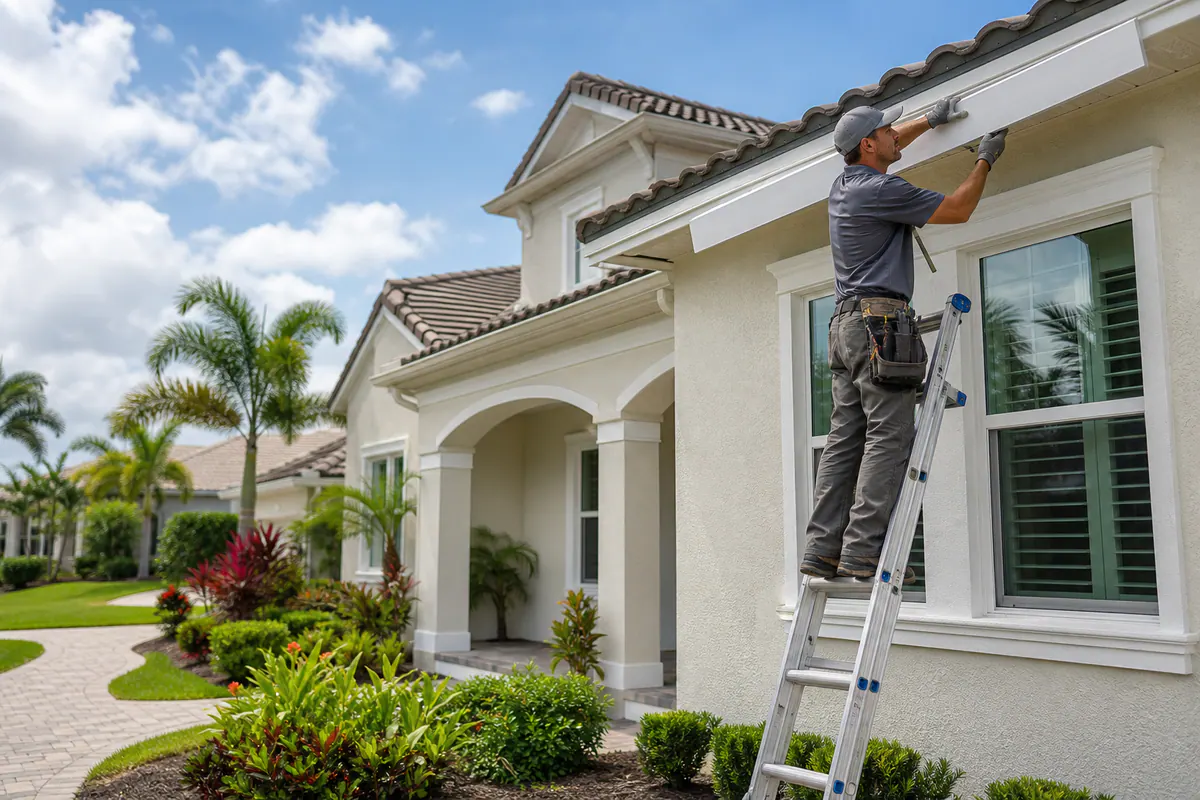
Exterior trim repair in Lakewood Ranch gives homeowners a practical way to address rotted, swollen, peeling, dated, or builder-grade details before small defects spread across an otherwise well-kept exterior. Around stucco walls, painted trim, covered entries, and porch columns, trim does more than frame the design: it finishes and protects the edges where different exterior materials meet.
Humidity, heavy rain, strong UV exposure, and wind-driven moisture make those edges worth a close look. Soft spots, open seams, cracked caulk, paint that repeatedly peels, or boards that no longer sit flat can signal that a trim detail needs more than a fresh coat of paint.
The right scope depends on the condition beneath the surface. Localized repair can preserve a sound assembly when damage is limited to one section. Partial replacement removes only the affected window casing, door trim, fascia run, soffit section, or column wrap while retaining matching areas. Full exterior trim replacement is a better reset when deterioration is widespread, profiles are outdated, or recurring failure suggests a moisture-management issue.
Work can include trim around windows and doors, roof-edge fascia, soffits, porch columns, and entry details, with attention to board condition, joints, fasteners, runoff, and the adjoining stucco or siding interface.
Common Exterior Trim Problems We See in Lakewood Ranch
A small break in a caulk line can be the first visible clue, while the more meaningful damage may be behind the board. In Lakewood Ranch, close inspection often starts at stucco-to-trim joints, window surrounds, fascia edges, and porch-column bases, places where water can linger at seams or run into an unprotected end grain.
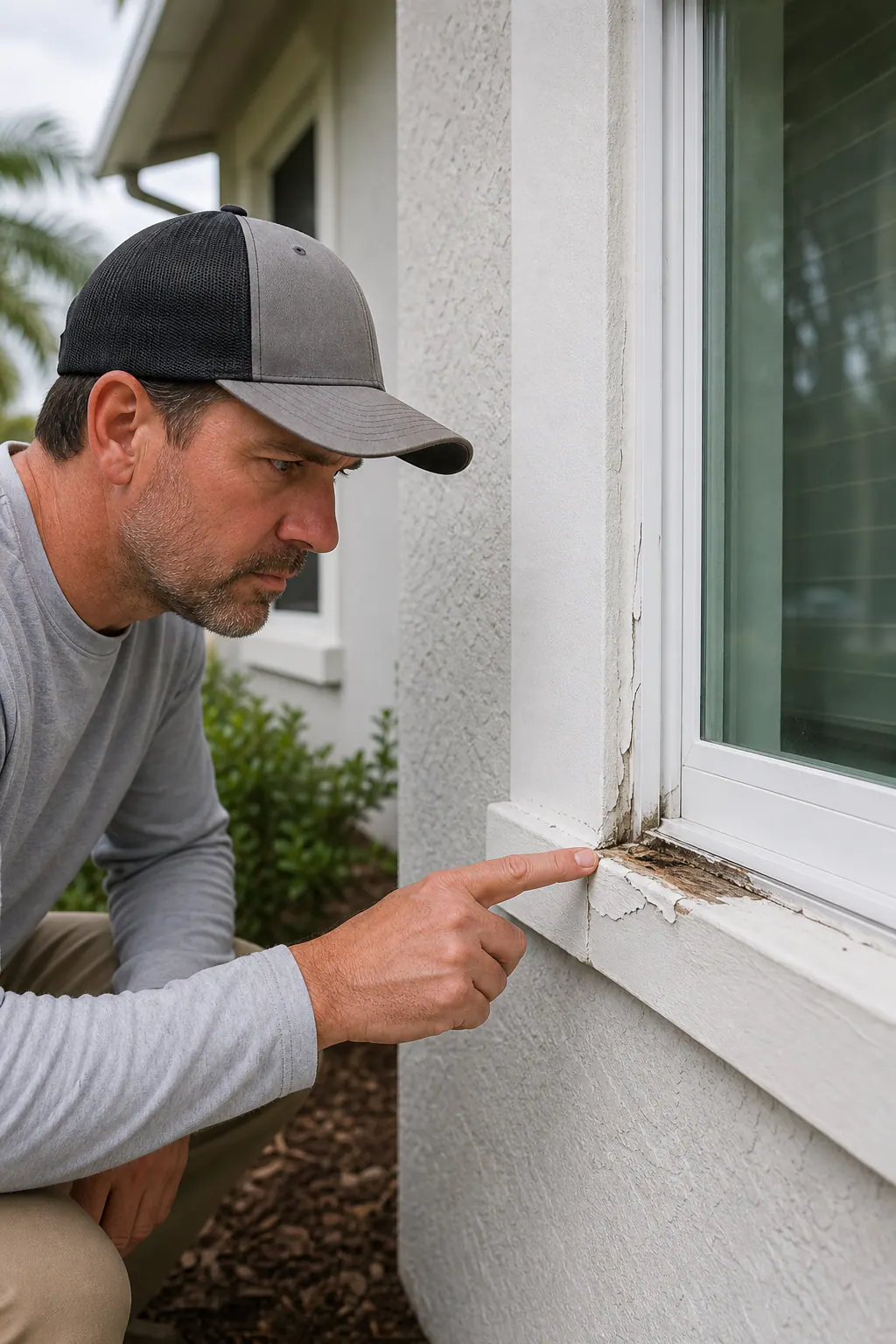
Soft wood, swollen edges, dark discoloration, loose boards, open joints, and recurring rot are signs to take seriously. Flaking paint alone may be surface wear, especially on a sunny elevation. Paint that peels alongside cracked caulk, widening gaps, or a board that feels soft or no longer sits flat points more toward moisture getting behind the trim. At rooflines, fascia damage can also follow overflowing or poorly directed gutter runoff; around openings, failed joints can leave the trim detail vulnerable during wind-driven rain.
Insect damage can resemble decay when it leaves hollowed, fragile sections, so the affected board and nearby material need a closer look rather than an assumption about the cause. Some builder-grade trim also becomes a repeat trouble spot when thin boards, exposed cut edges, weak seams, or inadequate detailing struggle with heat, rain, and frequent paint cycles. Rotted trim repair in Lakewood Ranch should address the visible board as well as the reason that location stayed wet; otherwise, a clean-looking patch may face the same failure again.
Trim Areas We Repair and Replace
The location of the defect helps determine what the trim needs to do, not just how it should look once painted. Window surrounds, including sill trim and lower corners, are common service areas where open caulk lines or a weak trim-to-stucco transition can allow damage to develop at the edges of the opening. The work can include replacing isolated exterior casing, rebuilding a deteriorated sill detail, or restoring surrounding trim so the profile remains consistent.
- Door and entry trim: Exterior casing around front entries, garage side doors, and patio doors takes frequent exposure from rain and splashback. Repair or replacement can address loose casing, worn threshold-adjacent trim, decorative entry surrounds, and joints that have separated from nearby stucco or siding.
- Fascia boards and soffit panels: Fascia finishes the roof edge and provides the mounting surface along gutter lines, while soffit closes the underside of the eave and may include ventilation openings. Fascia repair in Lakewood Ranch can involve damaged roof-edge boards, failed seams, and areas affected by gutter runoff; soffit work can address sagging panels, open edges, or trim that no longer fits cleanly against the wall and roofline.
- Porch columns and column wraps: These details are especially vulnerable at the base, where swelling, split seams, or soft material can spoil an otherwise sound porch. A column wrap is the finished exterior enclosure around a structural or decorative column, so its condition should be considered separately from what may be inside it.
Exterior house trim repair in Lakewood Ranch also covers corner boards, band boards, rake trim, decorative porch details, and other painted accents that tie the exterior together. The aim is to preserve the functional edge treatment while matching the home's existing proportions and finish as closely as practical.
Should Exterior Trim Be Repaired or Replaced?
The decision usually comes down to whether the problem is confined to the finish or has changed the board itself. Localized paint failure, a short section of failed caulk, or a small gap at an otherwise firm trim joint may be suitable for repair. The useful checkpoint is solid, dry-feeling material around the defect: if the board holds its shape and the surrounding seams remain sound, targeted preparation, sealing, and refinishing can restore the detail without replacing an entire run.
Replacement becomes the stronger option when probing reveals soft wood, broad swelling, delamination, hollowed insect-damaged areas, distorted boards, or rot that returns after earlier patching. A filler can smooth a shallow, stable imperfection, but it cannot restore moisture-damaged wood that has lost its integrity. Covering that condition may produce a neat painted surface briefly while leaving the weakened material and the reason it became wet in place.
For rotted trim repair in Lakewood Ranch, the assessment should extend beyond the visible face. At window corners, fascia, and column bases, the work should consider fasteners, seams, nearby flashing, roof or gutter runoff, and the adjoining stucco or siding edge. If moisture has reached the substrate behind the trim, replacing only the outer board can invite another failure at the same location.
Homeowners looking to replace exterior trim in Lakewood Ranch can often limit the scope to the affected section when adjacent boards are sound and a clean profile match is possible. When repeated failures trace along a run of fascia, around an opening, or across a column wrap, a more complete replacement creates a consistent, durable starting point rather than a series of visible patches.
PVC, Composite, Fiber Cement, and Wood Trim Options
Material choice should support the detail's location as well as the home's existing look. A wide fascia board beneath an exposed roof edge has different demands than a decorative window surround or a shaped porch-column wrap. Profile depth, joint layout, paint finish, maintenance expectations, and the ability to blend with adjacent stucco or siding all affect the best choice.
PVC trim, including AZEK-style cellular PVC products, is often a practical fit for highly exposed exterior details. It offers a clean, consistent painted appearance without the swelling, rot, or insect concerns associated with wood, making it especially appealing for window and door casing, lower column-wrap sections, and fascia details that see repeated wetting. PVC trim in Lakewood Ranch can be a strong option when long-term moisture resistance matters, though its expansion and contraction still need to be accommodated through thoughtful joint and fastening details.
Composite trim is another manufactured option for homeowners who want a painted, wood-like exterior detail with reduced concern about decay. It can suit broad trim runs, corner boards, and selected decorative elements where the desired profile and finish are available. The practical question is whether its texture, thickness, edges, and movement characteristics will match the surrounding trim closely enough for a cohesive result.
Fiber-cement trim can work well where it needs to integrate with an existing fiber-cement exterior system. Its crisp, paint-ready appearance may suit fascia, band boards, and simple window trim, but cutting, fastening, and edge detailing call for a careful installation approach. Wood remains useful when matching an older or more intricate profile is the priority, particularly on decorative entry or porch details. Its tradeoff in a humid Florida setting is a greater need for sound paint, sealed cuts, maintained caulk joints, and attention to places where water can collect.
For Lakewood Ranch exterior trim replacement, the goal is not to declare one material best everywhere. A durable PVC selection may make sense at a repeatedly wet exposure, while wood may be the better visual match on a protected architectural detail. The finished work should make the material, profile, and paint system feel intentional rather than patched together.
Fascia and Soffit Damage: Cosmetic Issue or Moisture Problem?
At the roofline, the pattern of damage matters as much as the board's appearance. Soft fascia, paint bubbling, dark staining, exposed seams, sagging sections, or a gutter that has pulled away from its mounting line can indicate that water has been reaching the trim repeatedly. Fascia repair in Lakewood Ranch may be limited to a firm, isolated section, but a longer damaged run calls for a closer look at the gutter line, roof edge, fasteners, and material behind the board.
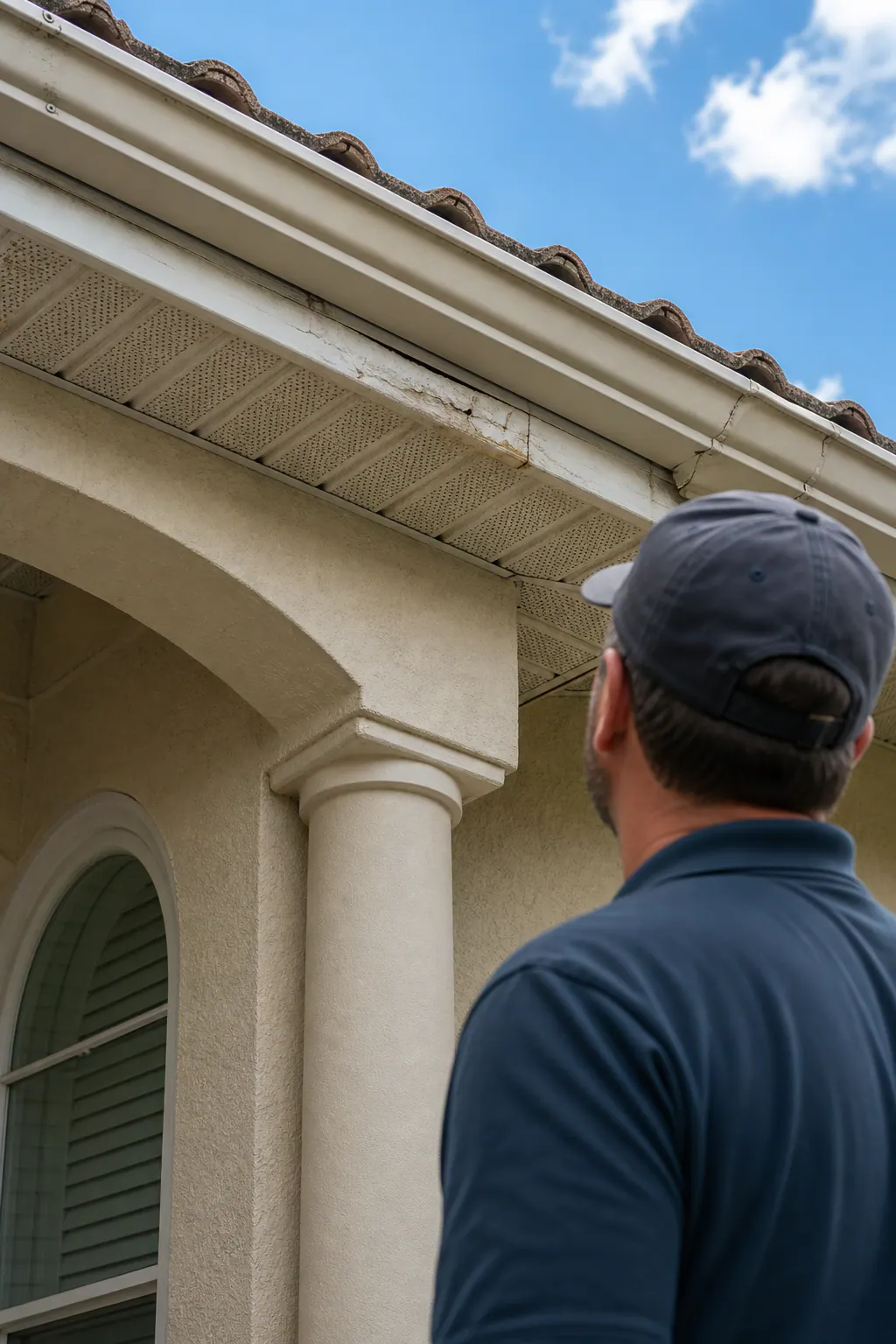
Soffit panels deserve the same attention because they close the underside of the eave while allowing the roof assembly to ventilate. Water marks, staining, loose or bowed panels, blocked vent openings, and animal entry points are useful checkpoints. New fascia or soffit should not simply conceal these clues. Gutter overflow, a roof-edge leak, ineffective drip-edge detailing, or hidden moisture at the eave may need correction first; otherwise, even carefully matched replacement trim can face the same conditions that caused the earlier failure.
Clean Trim Work That Matches Your Home and HOA Standards
A trim upgrade looks intentional when its proportions belong to the house rather than merely covering the area where an old board was removed. Matching the existing width, profile, and reveal, the portion of trim that remains visible beside stucco, siding, or an opening, helps window surrounds, entry casing, and porch-column wraps retain the home's architectural rhythm. A narrow, flat replacement beside wide, shaped original trim can look patched; a matched profile with aligned corners and consistent spacing reads as part of the original design.
Exterior trim replacement in Lakewood Ranch is also an opportunity to improve builder-grade details without making the facade look out of place. Cleaner lines at window and door surrounds, properly sloped horizontal details that shed water, and a more durable selection such as PVC trim at exposed locations can sharpen curb appeal while reducing vulnerable edges. Wood may still suit a protected detail where an exact shaped profile matters most.
Paint-ready work depends on smooth transitions: secure boards, neatly finished seams, consistent caulk lines, and surfaces prepared to accept the chosen coating. Color and sheen should coordinate with existing fascia, shutters, doors, and body color rather than creating an unintended contrast.
Many Lakewood Ranch communities set their own exterior standards. Before choosing a materially different trim profile, highly visible column treatment, or new exterior color, review the governing documents for the neighborhood. Keeping the visible design consistent can make an upgrade feel polished while respecting the established streetscape.
Our Exterior Trim Repair and Replacement Process
The work begins by tracing the defect beyond the board face. The inspection looks at firmness, seams, caulk separation, peeling paint, fasteners, and staining, along with the nearby stucco or siding transition. At fascia and soffit areas, it also follows the roof edge, flashing, and gutter runoff to determine whether a moisture path needs attention before new trim goes in.
That assessment sets the scope. A sound surrounding run may only need localized preparation and repair; damage confined to one section can call for a partial replacement that preserves matching material nearby. Broad softness, distorted boards, or repeated failure at the same detail points toward replacing the affected run and addressing the condition behind it rather than covering it with a patch.
For exterior trim repair Lakewood Ranch homeowners can expect careful removal of failed material while protecting adjacent finishes. Once the opening is exposed, the substrate and interfaces are reviewed for concealed deterioration. Replacement trim is selected for the location: rot-resistant PVC can be a strong choice at persistently exposed details, while a shaped wood piece may be retained where profile matching is the priority.
Installation focuses on secure fastening, aligned profiles, treated joints, and clean transitions at windows, doors, columns, and rooflines. Seams and appropriate exterior gaps are sealed, cut edges and surrounding surfaces are prepared, and the completed trim is left smooth and paint-ready so the finish coat can provide a consistent final appearance.
Schedule Exterior Trim Repair or Replacement in Lakewood Ranch
If you have soft or peeling trim, a fascia board pulling away, recurring caulk gaps, a tired builder-grade surround, or a porch-column wrap that no longer feels solid, it is a good time to schedule an inspection. Early attention can keep a visible trim defect from becoming a larger area to open up behind paint, along a stucco edge, or beneath a roofline.
Request an estimate for exterior trim repair in Lakewood Ranch and share a few clear photos of the affected area if possible: a close-up of the damage and a wider view showing the window, door, gutter, soffit, or column. An on-site assessment can determine whether a focused repair will restore the detail or whether replacement is the more durable path.
Whether the goal is to correct a failing board or update dated exterior details, the next step is straightforward: book an inspection and get a clear scope for clean, paint-ready trim work.
Plan the next step
Compare the broader Exterior Trim Repair and Replacement service.
Review the Lakewood Ranch, FL service area for local planning context.
When you are ready, request a free estimate with the rooms, trim goals, city, and available photos.
FAQs
What causes exterior trim around windows and doors to rot in Lakewood Ranch?
Exterior window and door trim commonly rots when cracked caulk, open joints, or weak trim-to-stucco transitions allow rain and wind-driven moisture behind the boards. Soft wood, swollen edges, dark discoloration, loose boards, and paint peeling alongside widening gaps are common warning signs.
Can rotted exterior trim be repaired, or does it need to be replaced?
Firm, dry trim with localized paint failure, a short failed caulk line, or a small gap can usually be repaired and refinished. Trim should be replaced when it has soft wood, broad swelling, delamination, distorted boards, hollow insect damage, or rot that returns after patching.
Can exterior trim be replaced without replacing the windows or doors?
Yes, isolated exterior casing, sill trim, door casing, and decorative surrounds can be replaced while the existing window or door remains in place. The work should also inspect the adjacent stucco or siding transition, seams, fasteners, and any moisture damage behind the trim.
How do I know if fascia damage is caused by a roof or gutter problem?
Soft fascia, bubbling paint, dark staining, exposed seams, sagging boards, or gutters pulling away from the mounting line can indicate repeated water exposure. Before replacing fascia, inspect gutter overflow, roof-edge leaks, flashing, drip-edge detailing, fasteners, and runoff paths.
Is PVC trim a good choice for homes in Lakewood Ranch?
PVC trim is a strong choice for highly exposed details such as window and door casing, lower column-wrap sections, and fascia because it does not swell, rot, or attract insect damage like wood. It still requires proper joint and fastening details to accommodate expansion and contraction, while wood may be preferable when matching an intricate existing profile.