
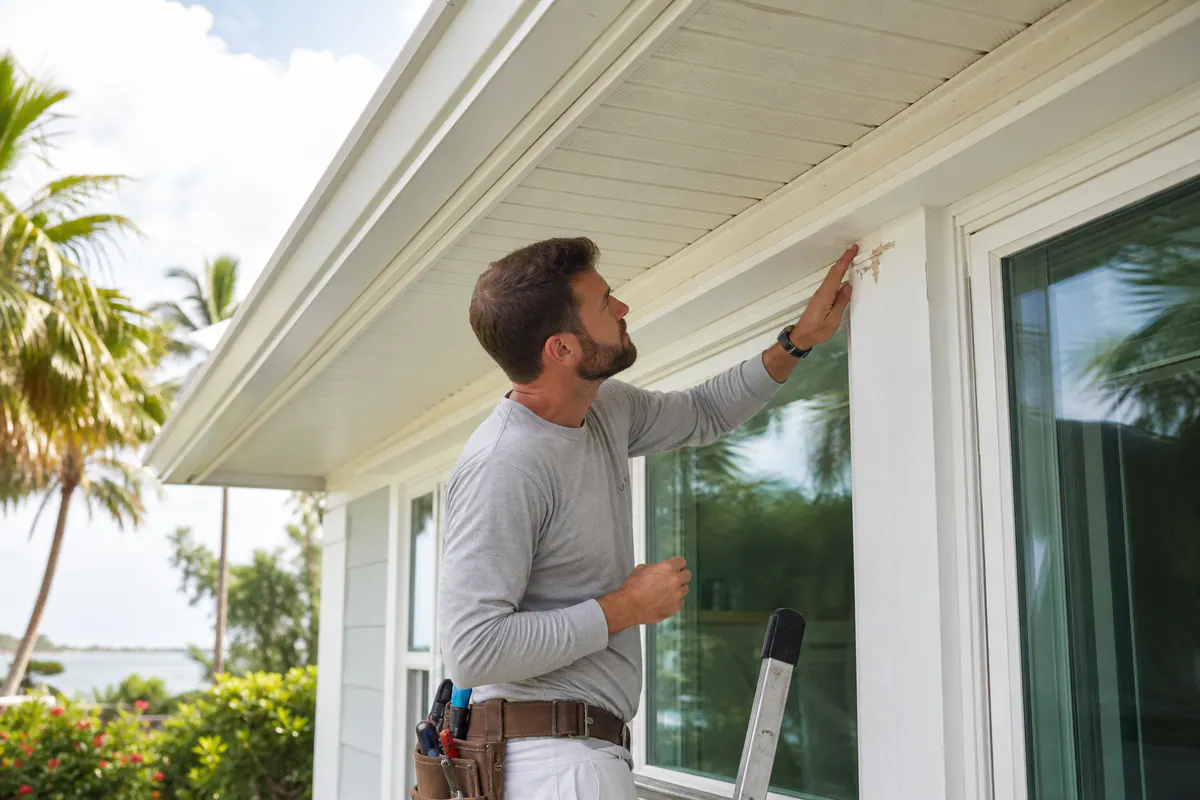
For exterior trim repair in Longboat Key, the goal is more than restoring a clean painted edge. Trim helps finish and protect vulnerable transitions around rooflines, eaves, windows, doors, and siding. Coastal moisture, salt air, humidity, and wind-driven rain can expose weak paint films, open caulk joints, and places where water may be working behind a board rather than simply staining its face.
Homeowners often first notice peeling or blistering paint, swollen trim, cracked caulk, separated corner joints, or wood that feels soft when gently probed. A small paint failure may be cosmetic, while a board that yields, crumbles at an edge, or repeatedly shows staining can point to a deeper moisture issue. Surface symptoms alone do not reveal the full condition of the material behind the trim, so a careful evaluation matters before choosing a fix.
Our exterior trim services in Longboat Key include both targeted repair and full exterior trim replacement. Repair can be appropriate when deterioration is confined to a sound, accessible area and the surrounding substrate remains solid. Replacement becomes the more practical path when rot, swelling, failed joints, or recurring moisture damage extends through the board or affects adjoining trim. We assess the damaged area, its connections, and likely water-entry points so the scope addresses the condition, not just the visible finish.
Why Exterior Trim Fails Faster in Coastal Conditions
On a barrier island, trim rarely gets a long, dry recovery period. Humid air can keep shaded edges and joints damp, while salt residue and strong sun stress painted surfaces. When a finish film or sealant bead begins to break down, repeated wetting and drying can open small cracks wider and leave wood more exposed to moisture.
Wind-driven rain does not have to strike a broad board face to cause trouble. It can be pushed into an open miter joint, a cracked caulk line, exposed end grain, a fastener hole, or the narrow gap where casing meets siding. Water that enters behind trim may be slow to drain or dry, especially at window and door openings with weak flashing details. That is why recurring paint blistering or a reopened joint can be more than a surface-prep problem.
Fascia and soffit edges face their own combination of roof runoff, eave moisture, and wind. Staining beneath an eave, loose fascia, or a sagging soffit may reflect localized water exposure, but it can also warrant a closer look at the adjoining roof edge and backing material. The visible board is not always the only affected part.
For rotted trim repair in Longboat Key, the useful question is how moisture reached the material and whether it was able to remain there. A failed sealant joint can be renewed when the surrounding trim is dry and sound; wood rot, a soft edge, or recurring separation calls for an evaluation of the trim, substrate, and water-management detail together. Fixing only the paint can leave the original moisture path in place.
Signs Your Exterior Trim Needs Professional Attention
A close look at the places where boards meet can reveal whether a finish issue is staying superficial or becoming a trim problem. Peeling paint on an otherwise firm, dry board may be limited to the coating. Paint that repeatedly blisters, flakes, or lifts alongside swollen edges deserves more attention.
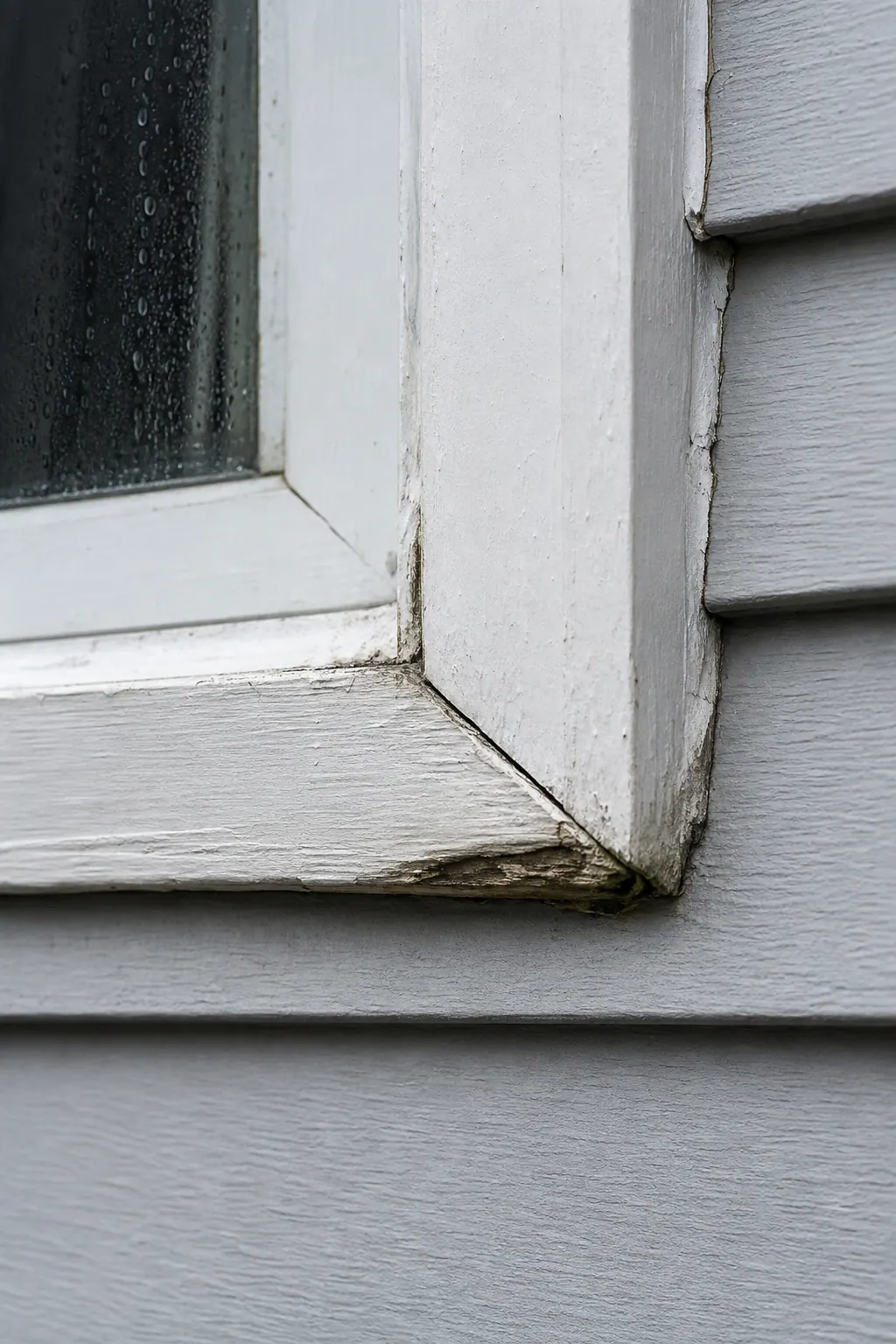
- Soft or spongy boards: Wood that yields under light pressure, crumbles at an edge, or feels noticeably softer than nearby trim may have lost its sound structure.
- Swelling and splitting: A board that looks thickened, has raised grain, or has split along its length may have been repeatedly exposed to moisture.
- Open joints and failed caulk: Separated miter joints, gaps at window or door casing, and caulk that has cracked, pulled away, or disappeared create visible paths for water to reach behind the trim.
- Dark staining or recurring mildew: Streaks beneath eaves, darkened end cuts, or mildew that returns after cleaning can point to an area that remains damp longer than it should.
- Loose fascia or sagging soffit material: Movement at the roof edge, loose fasteners, or panels that no longer sit flat can merit evaluation of the trim and material behind it.
- Insect activity: Small holes, frass-like debris, or insects emerging from damaged wood are reasons to assess the affected area rather than simply repaint it.
When these conditions repeat, spread, or occur around openings, Longboat Key exterior trim repair should begin with an assessment of the board and the surrounding substrate, not a surface patch alone.
Trim Components We Repair and Replace
Each trim location has its own water path, so the repair scope should follow the component rather than treating every painted board alike.
- Fascia boards: These boards finish the roof edge and often sit beside gutters. Fascia repair Longboat Key commonly addresses softened lower edges, loose sections, and staining where roof runoff or gutter overflow has kept the board wet.
- Soffit edges and panels: Soffits close the underside of an overhang and may include ventilation. Wind-driven rain can reach panel seams and outer edges; sagging panels, discoloration, or gaps can warrant soffit repair Longboat Key and a look at the framing behind them.
- Window and door casing: Casing frames an opening and covers the transition between the wall finish and the window or door unit. Open caulk lines, separated miters, and unsealed end cuts are common entry points, especially at lower window casing corners and door-side trim.
- Corner boards: Vertical boards at outside building corners cover siding ends. Their bottom ends and long siding seams can hold moisture, making splitting, open joints, and decay near grade important details to address.
- Rake and frieze boards: Rake boards follow a gable roof slope, while frieze boards run beneath the roofline. Both are exposed at eaves and joints, where water can work into end cuts or behind trim if edges separate.
- Decorative trim and penetration trim: Brackets, banding, vent surrounds, pipe collars, and trim around light fixtures or hose connections can create small ledges and seams. A crack around one of these details may be localized, but softness or staining nearby calls for a broader look.
The visible board is only part of the decision. Sound, dry material around a failed seam may support a focused repair, while movement, deterioration, or staining extending beyond the trim can change the scope.
When Trim Repair Makes Sense, and When Replacement Is Better
One soft spot does not necessarily mean an entire run of trim has failed. A focused repair can make sense when damage is confined to a small casing corner, a single open miter, or a patch of failed paint and caulk on a board that remains firm, dry, and securely fastened around the affected area. The repair should reach solid material, restore the joint or edge that admitted water, and leave the neighboring trim stable rather than simply freshly painted.
A few checkpoints help separate a focused repair from a short-lived cover-up:
- Good candidates for repair: Deterioration is limited to one accessible section; probing finds solid wood on both sides; a separated joint can be reset and sealed; and the likely moisture path is identifiable and correctable, such as a failed caulk line or a localized gutter drip.
- Reasons to replace the board or assembly: Softness continues along the board, the profile is swollen, split, or badly warped, fasteners no longer hold securely, or earlier patches have failed in the same location. Recurring paint blistering or staining beneath an eave can also justify opening the area to determine whether moisture has moved behind the trim.
Replacement does not automatically mean removing every nearby board. It means extending the scope through the failed material: perhaps one fascia run, several connected casing pieces, or a soffit edge and adjacent trim that are deteriorating together. For exterior trim replacement Longboat Key homeowners should expect the new work to tie into stable adjacent components, eliminating weak sections without creating unnecessary disruption.
Before closing a repaired or replaced area, the assessment should trace the likely moisture source and examine the substrate behind the trim. Dry, solid backing can support a limited scope. Staining, decay, or loose fastening beyond the face board changes the priority: that condition needs attention before new trim is installed over it.
Wood, PVC, and Composite Trim Options for Longboat Key Properties
The replacement material should suit both the profile being rebuilt and the way that trim location handles moisture and movement. A wide fascia board, a detailed window casing, and a simple corner board do not place the same demands on the material or the installation.
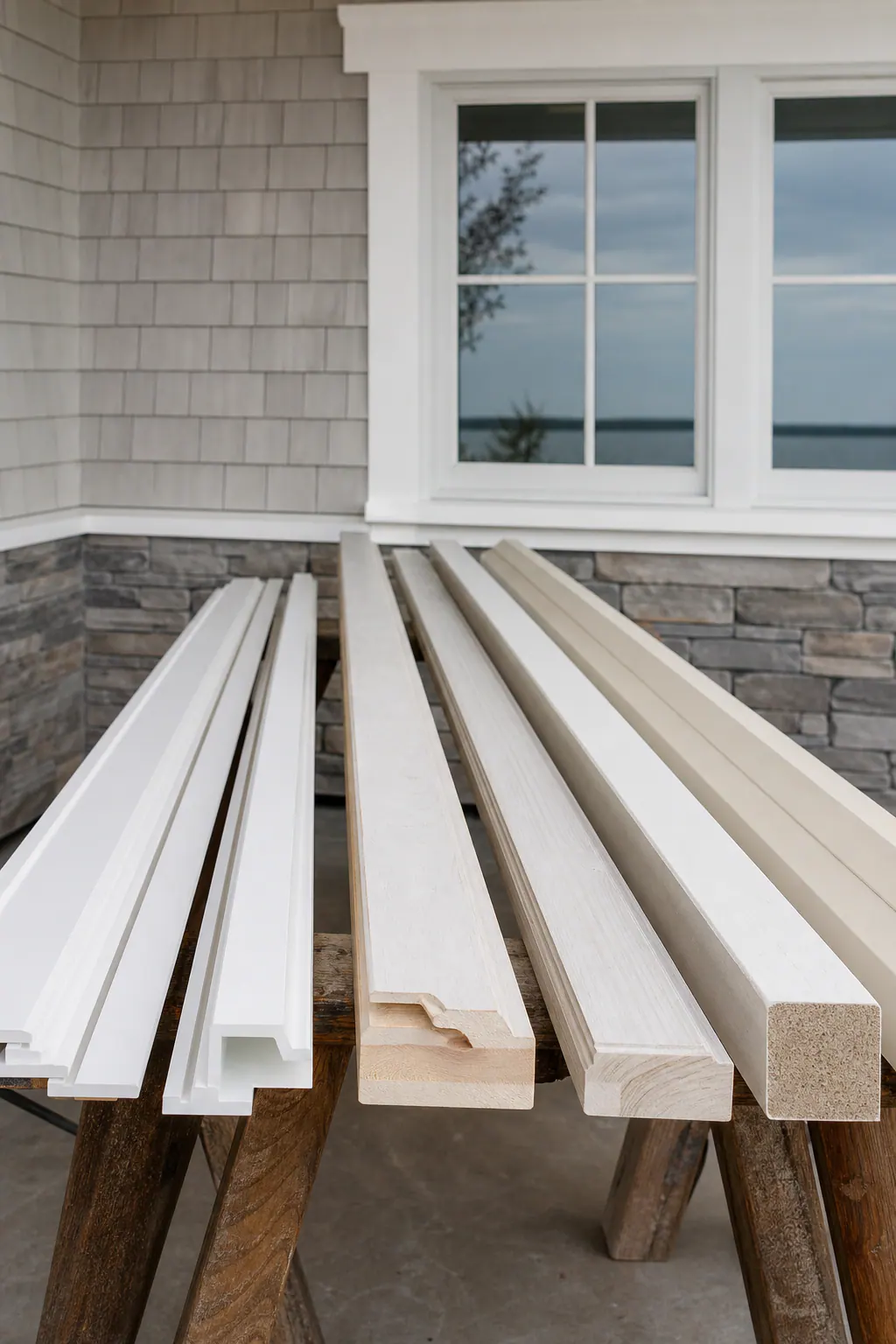
Wood trim remains a useful choice where an existing home has distinctive routed profiles, traditional details, or adjacent boards that need a close visual match. It can be shaped and repaired readily, but every cut end, joint, and exposed face needs a complete protective finish. On a coastal property, a clean paint system and well-maintained sealant joints are part of the material's performance, not optional finishing touches. Wood is often a sensible match; it is not the low-attention choice.
PVC trim is a cellular plastic trim material that does not absorb moisture or rot as wood can. That makes PVC trim Longboat Key homeowners consider especially practical for exposed fascia returns, rake edges, and exterior casing details where repeated dampness has damaged wood. It still moves with temperature changes. Long runs need appropriate fastening and allowance for expansion and contraction, while joints, transitions, and cut edges must be detailed cleanly so the finished work stays aligned.
PVC may be left with its factory finish or painted when a specific color is desired, but the coating needs to be compatible with the product and its expected heat exposure. A crisp, consistently spaced joint is a good sign; boards forced tightly together or fastened without room to move can telegraph movement through seams over time.
Composite trim combines materials into boards or molded profiles designed for exterior use. Depending on the product, it can offer stable, paintable options and useful design flexibility for casing, corner boards, and trim profiles that would be difficult to duplicate with standard stock. Its weight, cutting behavior, fastening approach, and edge treatment can differ from both wood and PVC, so it should be selected for the specific location rather than treated as a direct substitute for either.
For exterior trim replacement Longboat Key properties, architecture matters alongside durability. A material that suits a modern, clean-lined elevation may not preserve the proportions or finish expectations of a traditional home or managed community. The best result comes from pairing the chosen board with sound backing, properly handled flashing and drainage, secure fastening, and joints that accommodate the material instead of fighting it.
What to Expect During a Professional Trim Repair or Replacement
An on-site visit should turn a vague trim concern into a defined scope of work. A professional examines the failed board and the surfaces immediately around it: siding beside a corner board, flashing and roof edge above fascia, or the sill and casing joints around a window or door. A separated miter, stain beneath an eave, or recurring blistering at one transition can help identify where water intrusion may be occurring before new trim conceals the area.
Unsound material is removed back to firm, stable material rather than covered with filler or paint. Once the trim is off, the exposed backing and adjacent surfaces are checked for dark staining, soft wood, loose fasteners, gaps, or damage hidden behind the board face. At a fascia-and-soffit edge, for example, that inspection can show whether the repair stays within one board or must include a loose soffit panel or deteriorated eave backing.
After the opening is prepared, the replacement board is selected to match the agreed profile, location, and finish plan. An exterior trim contractor Longboat Key homeowners hire should cut and dry-fit pieces so casing reveals stay even and miter joints meet cleanly. Fasteners need to suit the selected wood, PVC, or composite trim; wood end cuts are sealed before installation, while PVC and composite pieces need joints and spacing that account for material movement.
Sealant is applied at the appropriate joints and trim-to-siding transitions, with clean lines rather than oversized caulk beads masking a poor fit. Wood is primed and painted as a protective finish system, including exposed cut ends. Painted PVC or composite also needs a clean surface and a coating compatible with the trim and expected heat exposure. Cleanup should include removing old boards, fasteners, paint debris, and cutting waste, followed by a walkthrough of the completed areas.
Timing for Longboat Key exterior trim replacement varies with the amount of concealed damage found after removal, material availability, access to upper fascia or multiple elevations, and weather interruptions. A single accessible casing repair can involve a much smaller scope than several runs of fascia, soffit edges, and window trim requiring coordinated fitting and finishing.
Schedule Exterior Trim Service in Longboat Key
Small trim defects are easier to scope when they are addressed before repeated moisture exposure has a chance to affect adjoining boards or concealed backing. If you have noticed soft wood, recurring paint failure, loose fascia, staining at an eave, sagging soffit panels, separated corner joints, or gaps around window or door casing, it is a good time to have the area assessed.
We work with homeowners, property managers, and condo association contacts who need a clear view of what is localized, what may require further investigation, and whether repair or replacement is the more practical investment. The assessment can focus on a single trouble spot or a coordinated exterior review across multiple elevations.
Contact us to schedule exterior trim repair Longboat Key service for fascia, soffit, exterior casing, corner boards, or full trim replacement. You will receive a defined scope that considers the board condition, nearby materials, water-entry details, desired profile, and whether wood, PVC, or composite trim fits the location and finish plan.
Plan the next step
Compare the broader Exterior Trim Repair and Replacement service.
Review the Longboat Key, FL service area for local planning context.
When you are ready, request a free estimate with the rooms, trim goals, city, and available photos.
FAQs
What causes exterior trim to rot faster in Longboat Key’s coastal climate?
Salt air, humidity, strong sun, and wind-driven rain can break down paint and caulk, allowing moisture into joints, end grain, fastener holes, and gaps behind trim. Damp shaded edges and poorly drained areas can keep wood wet long enough to swell, split, soften, or rot.
How do I know if exterior trim damage is cosmetic or caused by moisture?
Peeling paint on a board that is firm, dry, and securely fastened may be a coating issue. Repeated blistering, swollen edges, soft or crumbly wood, dark staining, loose boards, and reopened caulk joints indicate moisture may be affecting the trim or backing behind it.
Can soffit and fascia be replaced without replacing the roof?
Yes, fascia and soffit can be repaired or replaced independently when the adjoining roof edge and backing material are sound. Loose fascia, sagging soffit panels, or staining beneath eaves should also prompt inspection of roof runoff, flashing, eave backing, and possible gutter overflow.
Is PVC trim a good choice for Longboat Key homes?
PVC trim is a strong option for exposed fascia returns, rake edges, and exterior casing because it does not absorb moisture or rot like wood. It requires correct fastening and spacing for temperature expansion and contraction, and painted PVC needs a coating compatible with expected heat exposure.
Should rotted exterior trim be repaired or replaced?
Repair is appropriate when deterioration is limited to a small accessible area, solid wood remains on both sides, and the water-entry path can be corrected. Replace the board or connected trim assembly when softness extends along the board, the profile is swollen or warped, fasteners no longer hold, or previous repairs have repeatedly failed.