
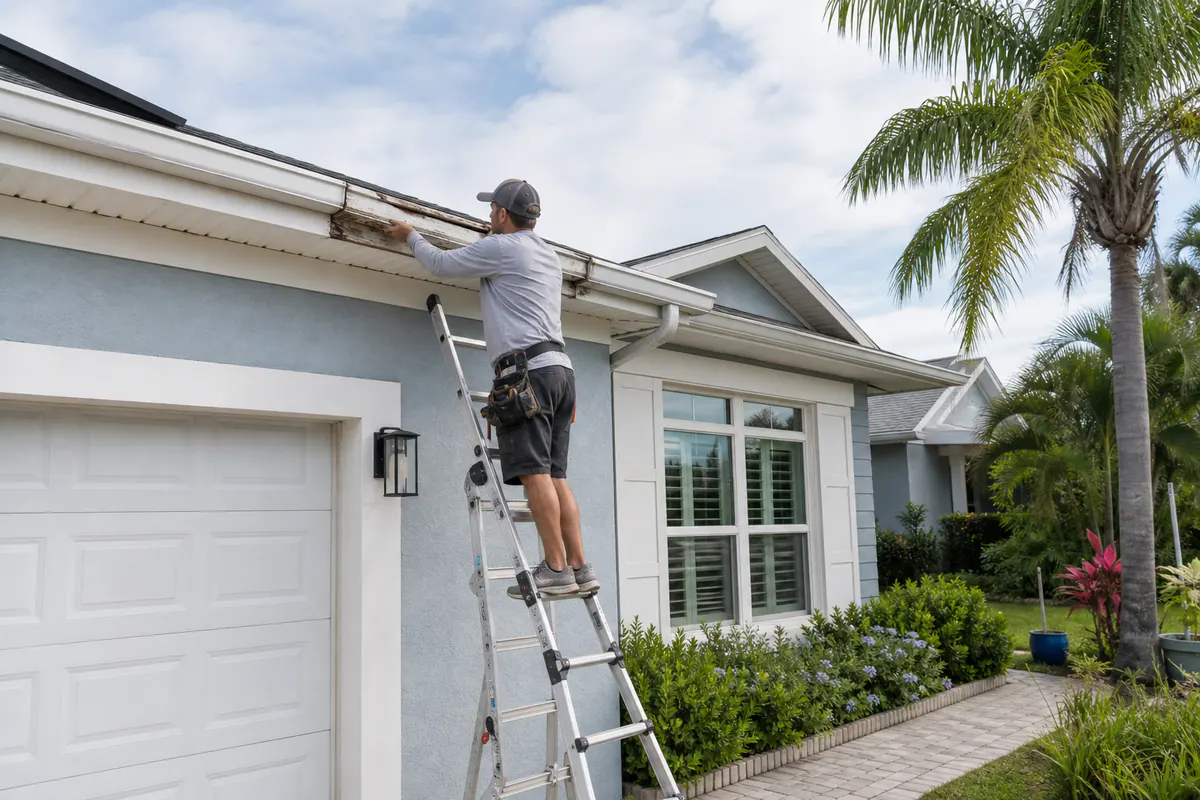
Exterior Trim Repair and Replacement for Nokomis Homes
For Nokomis homeowners, exterior trim repair is about protecting the vulnerable edges around a home, not simply refreshing its appearance. If paint is peeling, boards feel soft, joints have opened, or rot is visible near the roofline, windows, or doors, the affected trim deserves a closer look. Moisture, intense sun, salt air, and wind-driven rain can all be hard on exposed exterior details.
Our exterior trim repair in Nokomis covers fascia at the roof edge, soffit beneath the eaves, window trim and door casing, plus rake boards, corner boards, and other finished pieces that bridge siding, roofing, and openings. Fascia helps finish the eave line; soffit closes the underside of that overhang; casing frames doors and windows; and corner or rake boards protect and define exposed transitions.
A small, isolated split or surface-level paint failure may allow for a focused repair. Swollen boards, widespread softness, deep cracks, loose sections, gaps at joints, or damaged material behind the visible trim can point toward exterior trim replacement in Nokomis, FL. The goal is to address the failed material and the path that allowed moisture in, then restore matching profiles and clean transitions.
Where wood no longer makes sense for the exposure, PVC or composite trim can be considered. These materials are not automatic substitutes: profile matching, expansion behavior, adjacent materials, and the intended finished look all shape the right choice for the location.
Signs Your Exterior Trim Needs Repair or Replacement
A close look at the edges and joints often reveals whether a trim problem is limited to the finish or has moved into the board itself. Peeling or bubbling paint, hairline cracks, and a narrow failed caulk bead can be surface-level wear when the trim beneath remains firm, dry-looking, and securely attached. Even then, those openings should not be left exposed; they can give water a path behind the painted face.
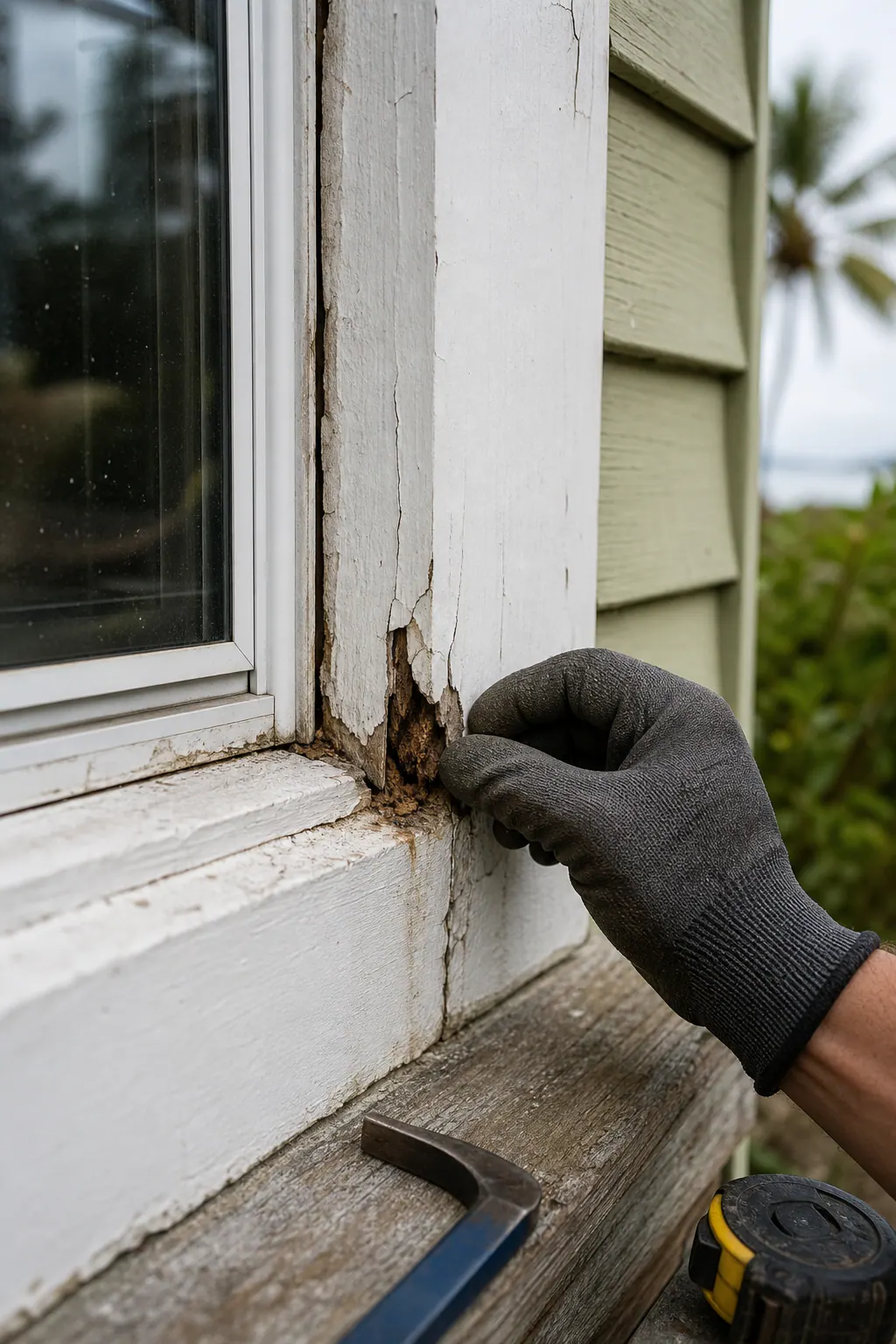
- Press gently along suspect areas. Wood that yields, crumbles, or feels spongy is a stronger warning sign of wood rot than paint failure alone.
- Watch for swollen edges, split grain, dark staining, or boards that no longer sit flat against siding, roofing, or an opening. These signs can indicate repeated moisture exposure.
- Look closely at mitered corners, butt joints, and seams. Cracked caulk or visible separation lets water reach end grain and concealed backing material.
- Check window and door perimeters for open gaps, loose casing, or staining below corners. A small break at an opening can spread beyond the visible trim if moisture remains behind it.
- Note insect holes, frass-like debris, or areas where trim has become thin and fragile. Damage from insects and moisture can occur together.
Fascia and soffit deserve attention when staining, sagging, or soft spots appear near roof edges, while exterior casing issues often show first at lower corners and seams. Rotted trim repair in Nokomis begins with separating cosmetic wear from material that has lost its shape or strength, then identifying the opening that allowed the damage to develop.
Why Exterior Trim Fails in Nokomis’ Coastal Climate
Damage patterns often follow the paths where water lingers or is forced against the building. In Nokomis, humidity can slow drying after rain, while salt air and intense sun put additional stress on painted surfaces, caulked joints, and exposed wood fibers. When the coating breaks down, the trim's edges and joints become easier entry points for moisture.
Roof edges are especially exposed. Wind-driven rain can reach behind fascia at loose flashing transitions, and repeated roofline runoff can soak fascia ends, rake boards, and the trim beneath gutters. Soffit staining or sagging may point to moisture moving through the roof-edge assembly rather than a problem limited to the visible panel.
Window and door casing tend to fail first at lower corners, miter joints, and horizontal ledges, where runoff collects instead of shedding cleanly. Lower wall trim is also vulnerable to splashback and persistent dampness. Poorly sealed end cuts deserve particular attention: exposed end grain can absorb moisture more readily than the painted face of a board.
For dependable Nokomis exterior trim repair, recurring rot should prompt a search for the water path, not just replacement of the damaged piece. A sound repair addresses drainage, flashing transitions, failed caulk, or a worn paint system so the new or repaired trim is not exposed to the same cycle.
Repair vs. Replacement: Choosing the Right Fix
A focused repair makes sense when deterioration is truly limited: a small area of wood rot can be removed and patched or spliced when the material behind it is firm, the surrounding board is sound, and the trim still holds its original line. Minor surface cracks, failed caulk at an otherwise tight joint, and peeling paint are also repair candidates. The goal is to restore a sealed, paint-ready surface, not to hide softness or leave an opening beneath fresh paint.
Replacement becomes the more dependable choice when a probe sinks deeply into the board, the face is soft through its profile, or the board has lost its ability to stay straight and securely fastened. Separated joints, repeatedly opening seams, loose fascia, and damage extending into nearby sheathing, soffit backing, siding, or window framing point beyond a simple patch. Recurring moisture damage also changes the decision: replacing the visible piece without correcting the entry path is likely to repeat the problem.
Exterior trim replacement in Nokomis does not have to mean removing every board on the house. A single fascia run, lower section of window casing, or damaged corner board can often be replaced while sound matching trim remains in place. The new section should match the existing dimensions and profile, and failed backing material should be addressed before the finish work begins. For highly exposed locations, PVC or composite can be a practical replacement option; wood may remain the better fit where preserving an existing profile or appearance matters most.
Fascia, Soffit, Window Trim, Door Casing, and Other Exterior Trim We Repair
Each trim component has its own job, so the repair should follow the way that piece manages water, air, and exterior transitions. Fascia is the vertical board along the roof edge where gutters commonly fasten. Loose gutter hardware, open joints, staining, or soft wood can let runoff work behind the board instead of shedding away cleanly. Fascia repair in Nokomis should restore a straight, solid fastening surface while addressing the roof-edge or gutter condition that allowed moisture to collect.
Soffit forms the protected underside of an eave. It closes the roof overhang, helps keep wind-driven rain and pests out of that cavity, and, when vented, provides an air path for the attic. Sagging panels, water stains, missing vent sections, or decay near the fascia deserve closer inspection because the issue may involve the roof edge or backing above, not only the visible soffit. Proper soffit repair in Nokomis, FL keeps the eave finished without blocking its intended ventilation.
Exterior window trim and door casing frame the opening and cover the transition between the wall finish and the window or door assembly. Failed caulk at miters, separated seams, swollen lower legs, and gaps at horizontal trim can direct water behind the casing. Exterior casing replacement in Nokomis may involve replacing only a damaged section when adjacent trim and the underlying area remain sound; widespread swelling or softened backing calls for a broader repair before the new profile is installed.
Corner boards protect and finish the outside corners where siding meets, while rake boards follow the sloped edge of a gable roof. Both receive strong sun, rain, and wind exposure, and their cut ends and joints can absorb moisture when coatings fail. Split boards, open end joints, or boards pulling away from the wall affect the home's finished appearance, but they can also expose the wall intersection behind them. Matching the board thickness, profile, and alignment keeps repaired areas from looking patched-in and helps maintain a weather-tight transition.
Wood, PVC, and Composite Trim Options for Coastal Florida Homes
Material choice is most useful when it follows the exposure and the look the repaired area needs to preserve. Primed wood remains a practical option for matching older profiles, detailed millwork, and protected areas where a like-for-like repair matters. It can be painted to blend with existing trim, but cut ends, joints, and the paint system need ongoing attention so moisture damage does not begin again at the most absorbent edges. Wood can also be the more budget-conscious choice for a small, carefully matched repair.
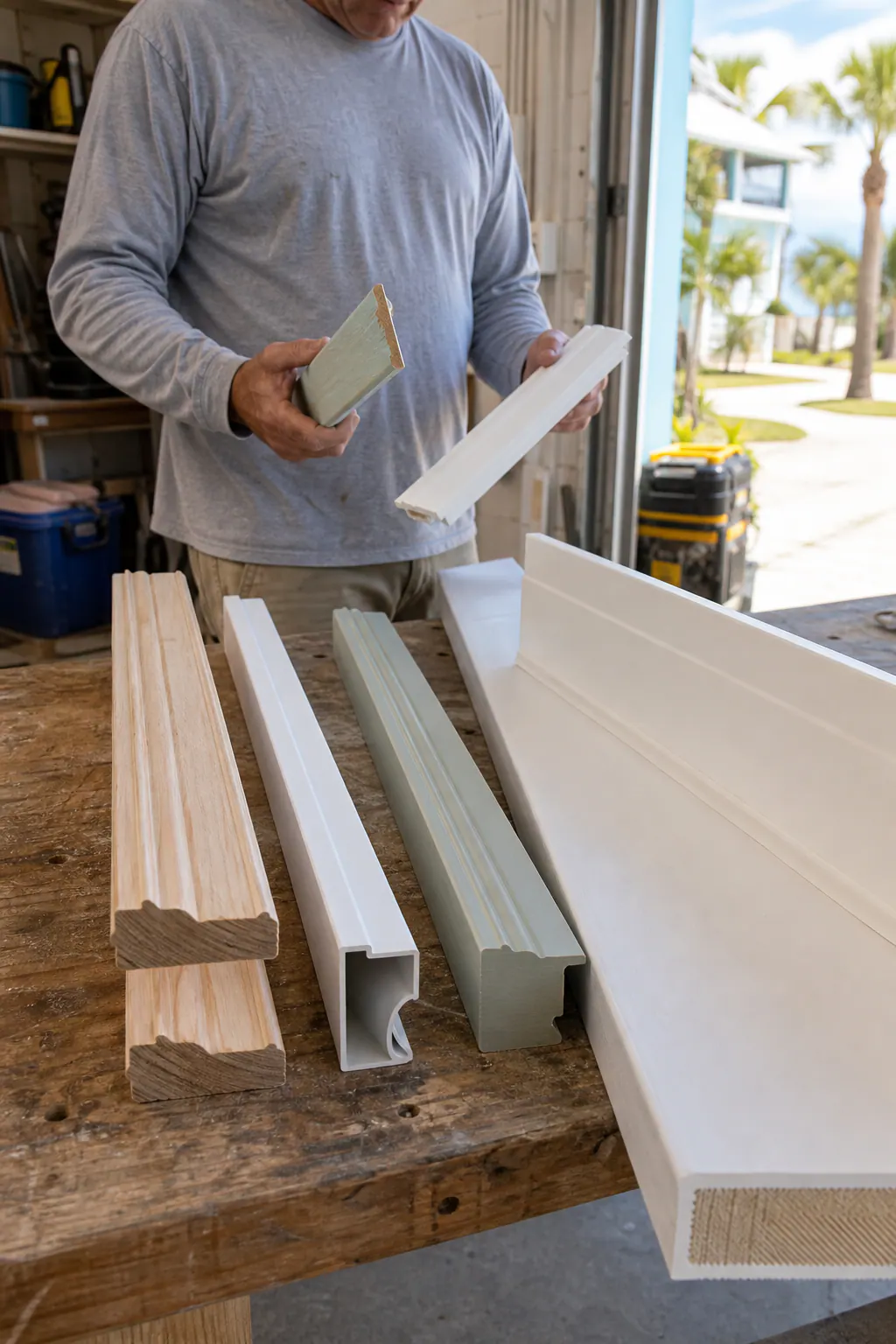
PVC trim in Nokomis, FL is often worth considering at highly exposed locations such as fascia returns, lower window and door surrounds, and areas that receive repeated splash or runoff. PVC does not absorb water like wood, which can make it a durable upgrade where rot has repeatedly occurred. It is typically available in clean, consistent profiles and can be painted when a specific color is needed, although dark finishes and direct sun can increase heat-related movement.
Composite trim offers another painted alternative, generally with a more wood-like surface than PVC. It can suit exterior casing and decorative details where appearance is a priority but added resistance to damp conditions is desired. Neither PVC nor composite is a universal replacement: profile availability, board thickness, the surrounding siding, and the desired finish all affect the result. These materials also cost more upfront than many wood options.
Good installation matters as much as the board selected. PVC and composite pieces expand and contract differently from wood, so joints need appropriate spacing and fastening rather than being forced tightly into place. Fasteners should hold the trim flat without creating visible distortion, and seams, cut edges, and paint preparation should follow the material's needs. For exterior trim repair in Nokomis, FL, the strongest choice is the one that matches the detail, handles the location's exposure, and can be maintained realistically over time.
Our Exterior Trim Repair Process
Reliable exterior trim work starts by tracing the failure, not by covering it. We inspect the damaged board, its joints, nearby siding, roof-edge details, and the surfaces behind it when removal exposes them. Staining, soft backing, loose gutter connections, or an open flashing transition can point to the water path that needs correction before new trim goes on.
- Failed sections are removed carefully so sound adjacent trim can remain in place when appropriate. Any deteriorated backing or loose material is addressed before the opening is closed.
- Replacement pieces are fitted to match the existing dimensions and profile, with attention to straight lines, clean transitions, and the movement needs of the selected wood, PVC, or composite material.
- Compatible fasteners secure the trim without crushing, splitting, or visibly distorting it. Joints and exposed cut ends are sealed as appropriate for the material, while caulk is used to close paintable gaps rather than hide a poor fit.
- The repaired area is primed and painted, or properly prepared for the final paint system, so the finish forms a continuous protective layer across faces, edges, and joints.
Before wrapping up exterior trim repair in Nokomis, FL, we remove debris and leave the work area clean. The small details, dry backing, tight fitting, sealed edges, and a maintained finish, are what help prevent repeat moisture damage.
Get a Practical Estimate for Trim Repair or Replacement in Nokomis
An on-site assessment turns a vague trim concern into a defined scope. The estimate can account for the number of affected areas, whether the work involves a small repair or exterior trim replacement in Nokomis, the chosen wood, PVC, or composite material, access at rooflines, and the finish work needed to blend repaired sections.
A single accessible casing repair may move quickly. Several fascia runs, soffit sections, paint matching, or deterioration found after removal can add time because the work must expand to include sound backing and a complete finished surface. A firm board surrounding one small damaged area is a better sign than soft material extending beyond the visible stain.
Schedule an inspection or request a quote for exterior trim repair in Nokomis, FL while the damage is contained. Early assessment makes it easier to plan the right repair, replacement, and finish work before minor rot spreads.
Plan the next step
Compare the broader Exterior Trim Repair and Replacement service.
Review the Nokomis, FL service area for local planning context.
When you are ready, request a free estimate with the rooms, trim goals, city, and available photos.
FAQs
Can rotted exterior trim be repaired, or does it need to be replaced?
Small, isolated rot can be patched or spliced when the surrounding board and backing remain firm, dry, and securely attached. Replacement is needed when the wood feels soft through its profile, a probe sinks deeply, joints keep separating, or damage extends into backing, siding, soffit, or framing.
What causes fascia boards to rot in Nokomis, FL?
Fascia commonly rots when roof runoff, wind-driven rain, loose flashing transitions, or gutter issues allow water to collect behind or along the board. Nokomis humidity slows drying, while salt air, intense sun, and failed paint or caulk expose wood edges and joints to moisture.
How do I know if damaged soffit is letting water or pests into my home?
Watch for sagging panels, water stains, soft spots, missing vent sections, or decay near the fascia. These signs can indicate moisture entering through the roof-edge assembly or openings that allow pests into the eave cavity.
Can exterior window and door trim be replaced without replacing the window or door?
Yes, a damaged section of exterior casing can be replaced without replacing the window or door when nearby trim and the material behind it are sound. Open miter joints, swollen lower legs, loose casing, and staining beneath corners should be inspected for hidden moisture damage before new trim is installed.
Should I choose wood, PVC, or composite trim for a Florida home?
Choose primed wood when matching an older profile, detailed millwork, or an existing appearance is the priority. PVC is a strong option for highly exposed fascia, lower casing, and splash-prone areas because it does not absorb water like wood, while composite provides a more wood-like painted surface with added damp-condition resistance; both require allowance for expansion and contraction.