
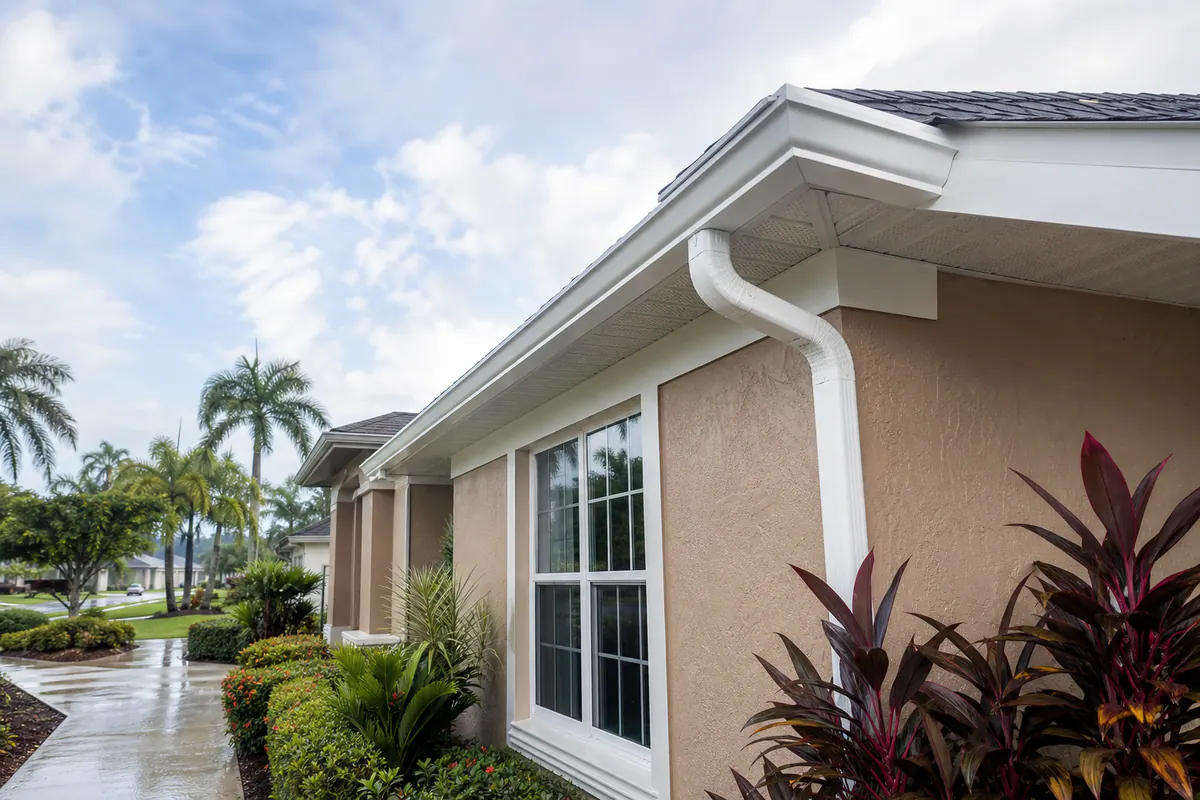
Exterior trim does more than frame a home's architecture. It creates finished edges at rooflines, openings, and wall transitions while helping direct weather away from the materials behind it. For homeowners looking for exterior trim repair North Port FL, the goal is not merely to make worn boards look freshly painted, it is to restore a clean, intentional appearance without leaving the cause of damage in place.
Heat, strong sun, humid air, and wind-driven rain can be hard on painted trim. Peeling paint or a split caulk bead may be a surface-finish problem when the board underneath remains firm and dry. Soft spots, crumbling wood, persistent staining, open seams, or fasteners that no longer hold point to deterioration below the paint and call for a broader repair decision.
A durable scope begins by tracing where the exposure starts. Water may be reaching trim through a failed joint, a leaking gutter, an unprotected cut edge, or a transition near flashing, not simply through the visibly damaged face. Covering that area with caulk and paint can improve its appearance briefly, but it will not restore weakened material or stop recurring moisture.
Thoughtful exterior trim work removes unsound material where needed, addresses the water path, and leaves tight, paint-ready transitions. That approach protects the exterior's details and helps fascia, soffit, casing, and other visible trim retain the crisp finish that makes a home look cared for.
Exterior Trim Areas That Commonly Need Attention
Damage often shows up first at a specific edge or transition, and the location helps narrow the scope of an inspection.
- Fascia boards run along the roof edge, behind the gutter line or drip edge. Water staining below a gutter, paint that repeatedly peels in one area, soft wood at fastener locations, or a gutter pulling away are reasons to look beyond the board face at the attachment area and nearby roof-edge details. This is often the focus of fascia repair in North Port, FL.
- Soffit boards and panels cover the underside of eaves. Sagging panels, staining, cracked sections, open seams, or loose fasteners can make an eave look unfinished and may point to an affected edge where the soffit meets fascia or the wall.
- Rake boards, frieze boards, and eave trim finish sloped gable edges and the horizontal transition beneath the roofline. Splits at ends, separated joints, insect channels, and boards that no longer sit flat deserve closer attention because these pieces meet other exterior materials at exposed corners and seams.
- Window and door casing creates the finished border around exterior openings. Cracked paint alone can be a finish issue, but a soft lower casing corner, open miter joint, visible gap at the siding transition, or fastener that will not hold suggests the casing and its backing should be assessed together.
For exterior wood trim repair in North Port, the useful distinction is between a firm board with isolated finish wear and material that is crumbling, split through, detached, or soft beneath the painted surface. A careful scope can then address the affected trim section and the adjoining joints or edges that need a clean, secure finish.
When Exterior Trim Can Be Repaired and When Replacement Is the Better Choice
The key decision is not whether a board has a blemish, but whether it still offers a solid, stable base for a lasting finish. Limited repair can make sense when the affected spot is small, the wood immediately around it is firm, fasteners still hold, and the board remains straight and functional. For example, a shallow damaged area at the end of otherwise sound casing may be repaired after the failed joint, gap, or other water path has been addressed.
That repair should stop at sound material rather than cover over soft fibers. A durable scope removes deteriorated wood, rebuilds the affected area with a suitable repair approach, and restores the edge or profile so it blends with adjoining trim. Paint and caulk are useful finishing layers: paint protects the prepared surface, while caulk closes an appropriate paintable joint. Neither reliably turns concealed rot, loose backing, or weakened board edges into a secure substrate.
Full-board replacement is often the cleaner choice when softness extends along the trim, paint failure returns in the same location, a board has split or warped out of profile, or screws and nails no longer bite firmly. It is also appropriate when opening the damaged face reveals crumbling material behind it. In those cases, rotted trim replacement in North Port removes the uncertainty of patching a board that may continue to break down beneath a fresh finish.
- Choose a localized repair when damage is contained, adjacent material is dry and solid, the board's shape can be retained, and the exposure that caused the damage has been corrected.
- Choose replacement when deterioration is widespread or hidden, fastening areas are weak, edges will not hold a crisp line, or recurring staining and failed joints point to damage beyond the visible spot.
Replacement also creates an opportunity to match the existing profile in wood or select PVC trim for an exposed location. The important distinction is that a new board needs secure attachment and neatly finished cuts, joints, and transitions; changing materials without correcting the water path only changes the surface, not the underlying problem.
Fascia, Soffit, and Eave Trim Repair Near the Roofline
At the roofline, a small drainage problem can affect several finished surfaces at once. Fascia is the vertical board along the eave where gutters are commonly attached; it provides a straight, finished edge beneath the roof covering. Soffit boards or soffit panels form the underside of the overhang, while eave trim closes and finishes the meeting points around those elements. Their condition depends on how well water is directed away at the edge.
For fascia repair in North Port FL, an inspection should look beyond peeling paint. Staining below the gutter, loose gutter fasteners, a bowed fascia line, open roofline joints, or soft wood around attachment points can indicate that water has repeatedly reached the board. Drip edge and flashing help guide water outward at roof-edge transitions; when those details are damaged, displaced, or poorly coordinated with the gutter, water may run behind the gutter rather than into it.
Damage visible on the underside is not always caused from below. Sagging or soft soffit panels, dark staining, insect entry points, or failed fasteners can trace back to water entering at an open joint, a roof-edge transition, or an overflowing or poorly draining gutter. The useful goal is to identify the path before closing the area again, so replacement material is not placed against an unresolved exposure point.
- Limited fascia work may be suitable where the affected area is accessible and the surrounding board remains straight and secure.
- Broader roofline work may be warranted when deterioration extends behind gutter hangers, along the soffit edge, or into adjoining trim transitions.
Gutters do not always have to come down, but they may need to be temporarily loosened or removed when they block access to damaged fascia. A clear scope should explain how gutters, drip-edge areas, and nearby flashing will be protected, then re-secured so the finished fascia aligns cleanly and the repaired soffit edge has a tight, paint-ready appearance.
Window and Door Casing: Protecting Exterior Openings From Water Entry
A crisp casing line can hide a vulnerable transition if its corners and edges are no longer tight. Window and door casing finishes the space between an opening and the surrounding exterior, but it also needs to shed water away from the wall-adjacent materials behind it. Gaps in caulk, cracked paint, open mitered corners, or soft lower casing sections are practical signals to inspect rather than simply paint over.
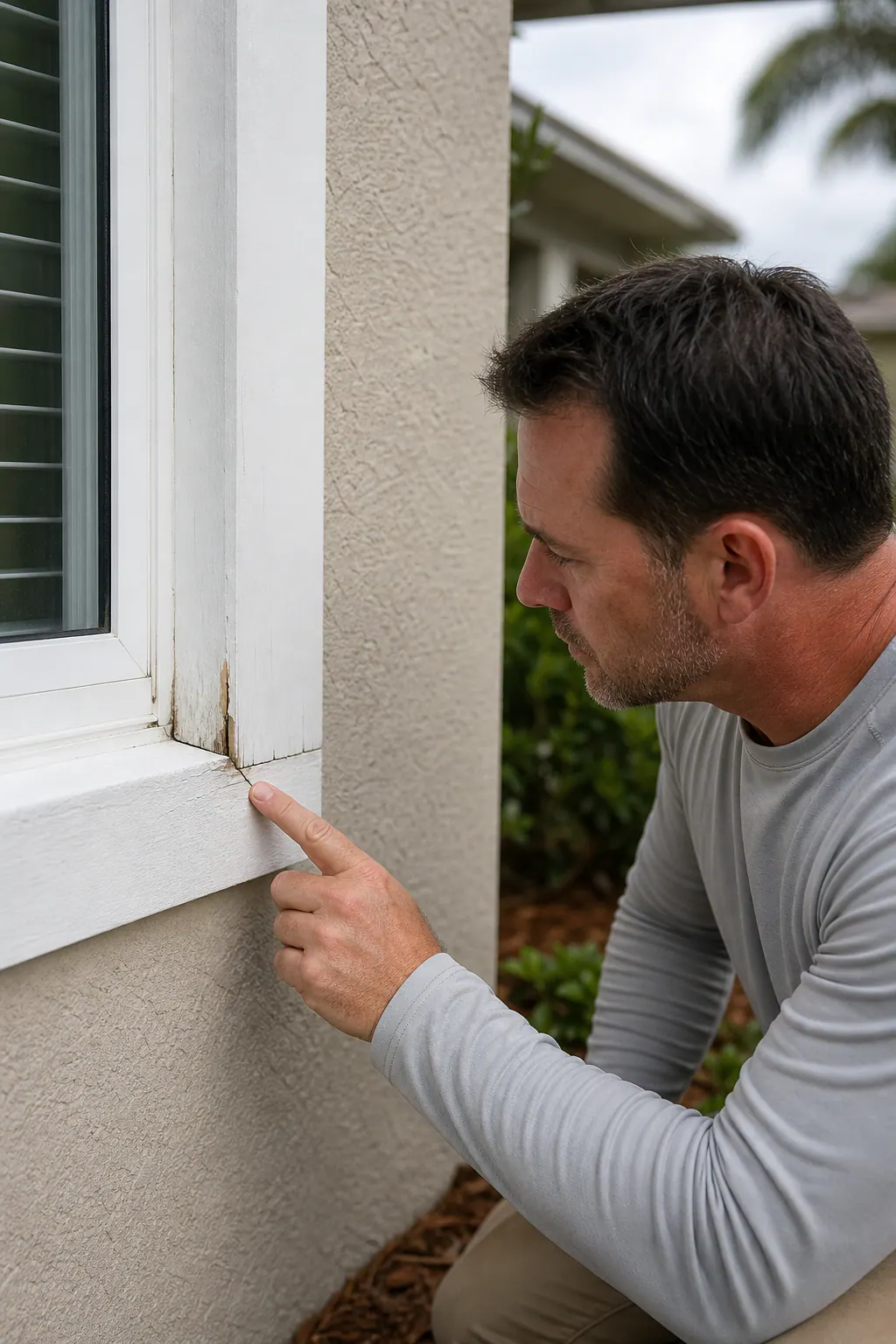
Lower corners deserve particular attention because they can remain wet after rain or irrigation. A narrow, firm area with an isolated failed joint may be a candidate for a localized repair. Casing that is soft, crumbling, split through, repeatedly losing paint, or no longer holding fasteners securely usually calls for removal back to sound material and a more complete replacement section.
Before selecting that approach, the casing should be viewed as part of the whole opening. The sill transition, head trim, side joints, visible or accessible flashing-related details, and nearby siding, stucco, or other trim can show whether moisture intrusion may be reaching more than the face of the board. Replacing exterior casing alone does not correct every water path, so adjoining conditions should be identified separately where they need further evaluation.
- Match the replacement profile, reveal spacing, and edge treatment to the existing architecture where practical, so the opening retains an intentional, even appearance.
- Finish cuts and joints for the chosen material, seal transitions where appropriate, and leave the repaired window and door casing aligned, secure, and paint-ready.
Wood and PVC Exterior Trim Options for North Port Conditions
Material choice can preserve the character of an opening or change how often an exposed trim location needs attention. Wood remains a sensible replacement choice when an existing casing, fascia detail, or decorative profile needs to match surrounding boards closely. It can also suit a localized compatible repair where adjoining wood is sound and a consistent profile, reveal, and painted appearance matter more than changing materials.
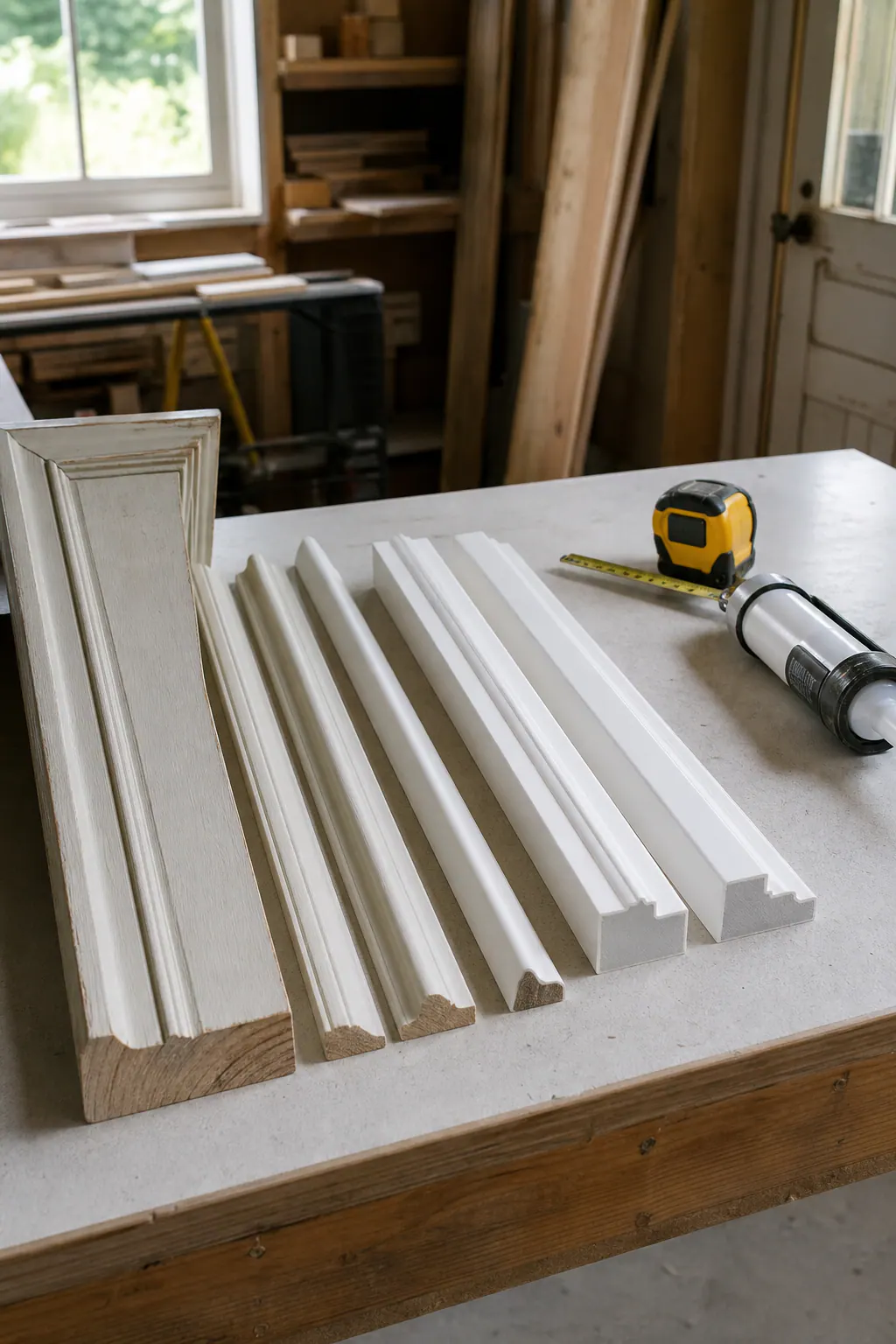
Cellular PVC is a solid, paintable trim option for locations that receive repeated wetting or strong exposure, such as vulnerable fascia sections, lower casing areas, and certain wall transitions. Unlike wood, it does not rot, which can make PVC exterior trim in North Port appealing after rotted trim replacement. That benefit does not make it interchangeable with every wood detail: profile availability, the look of adjacent trim, the board's location, finishing expectations, and budget still shape the better choice.
PVC and wood also behave differently after installation. PVC expands and contracts with temperature changes, so its joints, fasteners, and transitions need to accommodate that movement while remaining neat. A clean result has secure, appropriately placed fasteners, aligned edges, tight finished joints, and intentional transitions into wood, stucco, siding, or metal details. A weak installation may leave proud fasteners, uneven butt joints, visible gaps, or edges that look unfinished once painted.
- Choose a wood replacement when matching a detailed existing profile or maintaining a consistent established architectural appearance is the priority.
- Consider cellular PVC where recurring exposure makes rot resistance especially valuable, while planning the fastening, joint treatment, and expansion allowance required for that material.
- For either option, remove deteriorated material back to a sound base and finish cut ends, joints, edges, and transitions so the completed surface is straight, secure, and paint-ready.
A Clear Process for Exterior Trim Repair and Replacement
A sound trim project starts with an on-site look at the damaged board and the transitions around it. The scope should identify the likely exposure path, decide whether firm material can be repaired or compromised trim should be removed, then specify the replacement material and finish.
After removal, the attachment surface should be solid and dry enough for secure fastening. The finished work should address nearby joints, drip-edge or flashing details where relevant, cut ends, and paint-ready edges before a final review of alignment and overall appearance.
When choosing a trim repair contractor in North Port, look for:
- A written scope that names the affected fascia, soffit, casing, or other trim areas.
- A clear explanation of why repair or replacement fits the condition.
- Material options tied to the location, profile, and exposure.
- Attention to the moisture pathway, not just the visible damage.
- Photos or examples showing straight lines, neat joints, and clean finished transitions.
Request an on-site evaluation for damaged fascia, soffit boards, exterior casing, or other exterior trim to define a durable, polished repair plan.
Plan the next step
Compare the broader Exterior Trim Repair and Replacement service.
Review the North Port, FL service area for local planning context.
When you are ready, request a free estimate with the rooms, trim goals, city, and available photos.
FAQs
What are the signs that exterior trim needs repair or replacement?
Peeling paint or a split caulk bead can be a surface issue if the board remains firm and dry. Soft spots, crumbling wood, persistent staining, open seams, warped boards, or fasteners that no longer hold indicate deterioration that needs repair or replacement.
What are the signs that fascia boards need replacement?
Look for water staining below gutters, repeated paint peeling in one area, soft wood around gutter fasteners, bowed fascia, open roofline joints, or gutters pulling away. These signs often mean water is reaching the fascia through drainage, drip-edge, flashing, or gutter-related issues.
Can damaged window or door casing cause water intrusion?
Yes. Open miter joints, failed caulk, visible gaps where casing meets siding or stucco, and soft lower corners can allow moisture to reach wall-adjacent materials behind the casing. The sill, head trim, side joints, and accessible flashing details should be inspected along with the damaged casing.
Should gutters be removed to replace fascia boards?
Gutters do not always need to be fully removed, but they may need to be temporarily loosened or taken down when they block access to damaged fascia. After the repair, the gutters, drip-edge area, and nearby flashing should be re-secured so water drains into the gutter instead of behind it.
Is PVC exterior trim a good choice for homes in North Port, FL?
Cellular PVC is a paintable, rot-resistant option for trim exposed to repeated wetting or strong sun, including vulnerable fascia sections and lower window casing. Wood is often the better choice when matching an existing detailed profile is the priority, while PVC requires joint treatment and fastening that allow for temperature-related expansion and contraction.