
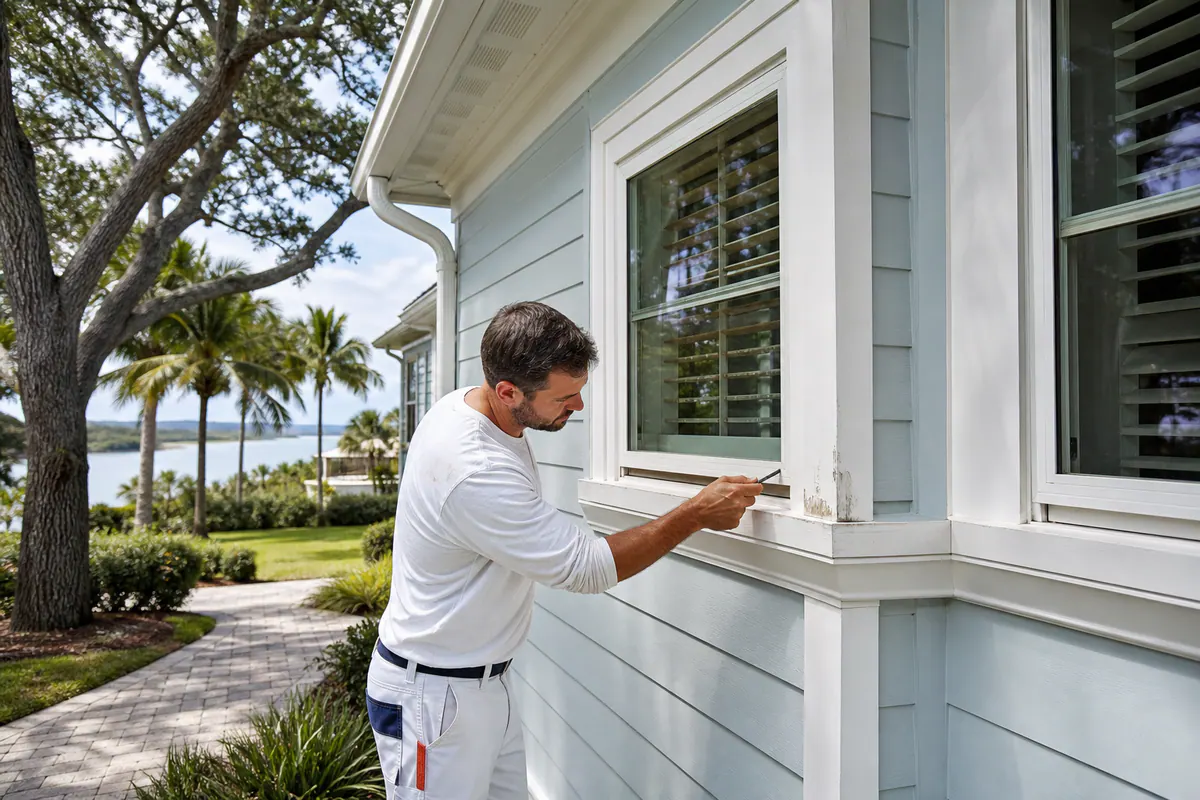
Exterior Trim Repair for Osprey Homes: More Than a Cosmetic Fix
For exterior trim repair in Osprey, FL, it helps to treat the work as envelope maintenance rather than a paint touch-up. Window casing, corner boards, roofline trim, fascia, and soffit-edge pieces cover the transitions where exterior materials meet. They give those edges a finished appearance, but they also reduce direct exposure at joints and help direct attention to places that need to shed water cleanly.
That does not make trim the waterproof layer. Flashing is the material that redirects water at vulnerable transitions; sealant closes smaller designed joints. If flashing is missing or compromised, a joint has opened, or water repeatedly reaches the same area, fresh trim, caulk, and paint can conceal the symptom without ending the moisture path.
In a humid, rain-exposed coastal setting, look beyond the face of the board. Soft wood around a window corner, a separating trim joint, staining below a roof edge, or paint that repeatedly peels near fasteners can point to water reaching the assembly. Fascia deserves attention because it sits at the roof edge, while a sagging or blocked soffit edge may warrant a closer look at the surrounding material and ventilation path.
A useful repair plan starts by identifying where water is entering or lingering, then deciding whether the affected trim can be retained or should be removed for a fuller inspection. The visible board matters, but so do the transitions behind and above it.
Signs Your Exterior Trim May Need Repair or Replacement
Start with a close look at the places that collect water or have the most exposed joints. Inspect window surrounds, especially lower corners and the bottom casing, along with lower corner boards, fascia beneath gutters, rake boards at sloped roof edges, and soffit edges. Open caulk lines, separated miter joints, gaps between trim and siding, dark discoloration, or a board beginning to pull away are all worth addressing before they become larger openings.
Peeling paint by itself can be a finish problem when the board beneath remains hard, dry, and firmly attached. It becomes a different concern when paint failure returns in the same spot or appears with swelling, cracked wood fibers, rusted or loosened fastener areas, soft spots, or wood that crumbles when lightly pressed. Those are signs that moisture may have moved beyond the painted surface into the trim or the material behind it.
- Window trim: Look for gaps at casing joints, staining below corners, and soft lower sections. Window trim rot repair may require more than replacing the visible casing if nearby material is also deteriorated.
- Fascia and rake boards: Watch for recurring stains below the roofline, split ends, sagging sections, and failing joints near gutters or roof edges.
- Soffit edges: Note sagging panels, blocked vents, staining, or trim joints that have opened along the underside of the eave.
Localized finish damage on otherwise solid trim may be suitable for preparation and refinishing. Water-damaged trim that is soft, swollen, separating, or repeatedly staining nearby surfaces usually calls for removal of the failed section and a closer look at the area above or behind it. That distinction helps keep rotted exterior trim repair in Osprey focused on the moisture path as well as the visible board.
Why Exterior Trim Fails: Find the Moisture Path Before Replacing Boards
Water rarely reaches failed trim through just one obvious opening. A split caulk bead or open miter can admit water at a joint, while a window leak or a roof-edge defect may deliver water behind the board from above. Sealant manages the small, moving gaps between trim pieces and adjacent surfaces; it is not a water-shedding layer. Flashing and drip edges perform that different job by directing water outward and away from the wall or roof transition. When flashing is damaged, poorly lapped, or absent, water can bypass the trim face and remain trapped where it cannot dry readily.
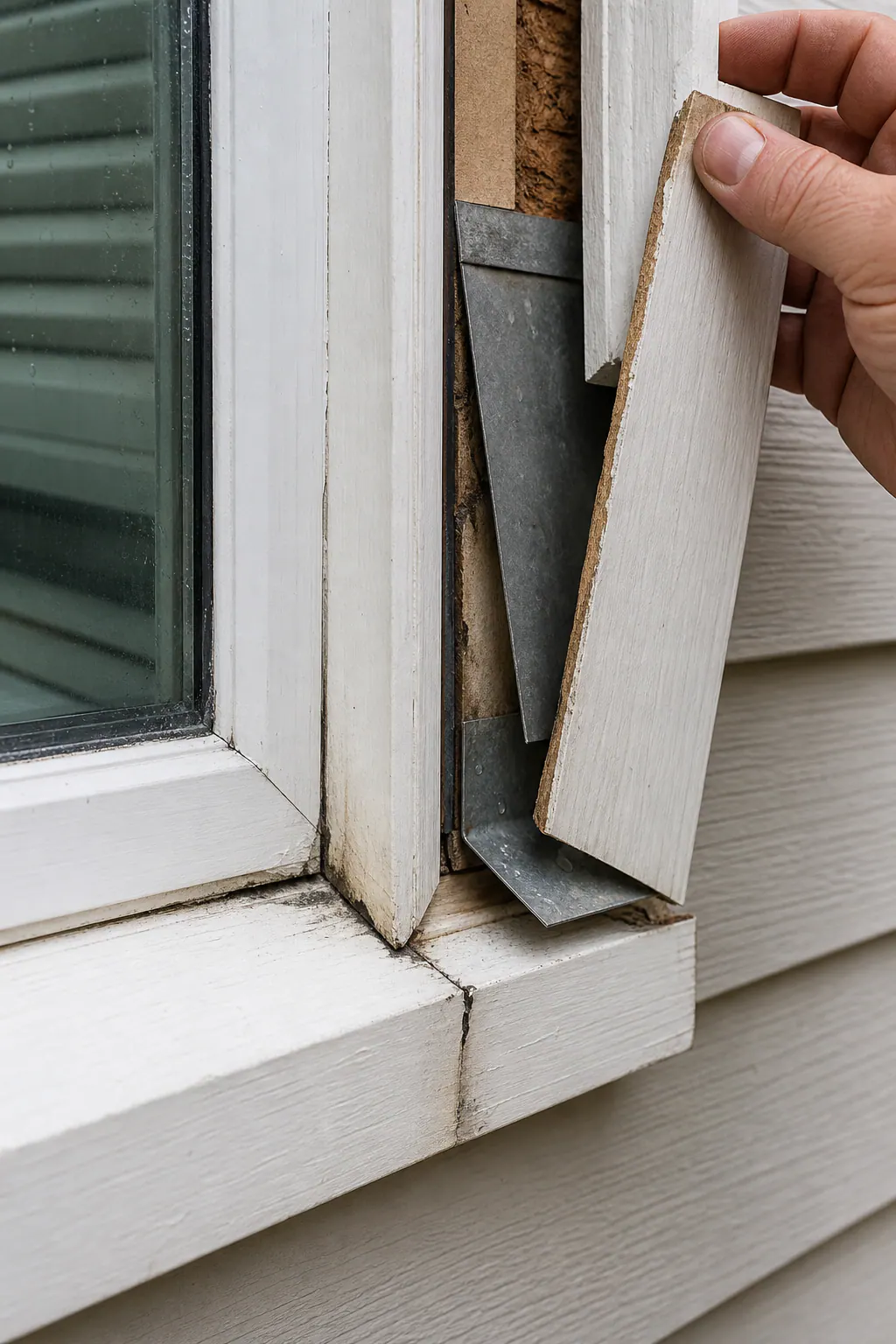
At rooflines, runoff that misses a drip edge or gutters that overflow against the fascia can repeatedly wet the same area. At windows, water may enter at the top or sides, travel behind casing, and show up later as deterioration at lower trim sections. Paint-film breakdown adds another path: once the coating cracks, peels, or loses adhesion, the board is more exposed, but repainting alone will not correct water arriving from behind.
Before setting a repair scope, failed trim should be removed as needed to inspect the adjoining sheathing, framing, window or roof transitions, and fastener areas. Darkened sheathing, softened wood, corroded fasteners, gaps at a transition, or evidence of a leak can change a simple board swap into a more involved repair. Correcting the runoff, flashing, drip-edge, gutter, or window-detail problem first gives replacement trim a sounder setting. Otherwise, even carefully installed new boards can face the same moisture intrusion and repeat the damage cycle.
Repair or Replace? Choosing the Sound Approach for Damaged Trim
A repair decision often comes down to the boundary of the damage. Localized surface wear may be a reasonable repair candidate when probing finds dry, firm wood around it, the board remains securely fastened, and the affected area does not trace back to an active water entry point. In that situation, the work can focus on removing loose finish, addressing a small defect, preparing the surface, and restoring protected joints and coating.
Replacement becomes the sounder approach when the trim feels soft or crumbles below the surface, fasteners no longer hold, joints keep opening, or paint failure and staining return after prior touch-ups. Those signals can mean the visible face is not the full extent of the problem. Rotted trim replacement in Osprey may also call for opening the area enough to judge whether the material behind the board is dry, solid, and capable of supporting the new installation.
- Targeted wood trim replacement fits a clearly limited failed section when the adjoining trim and substrate remain sound. The damaged portion is cut back to solid material rather than left buried beneath filler, cap trim, or a new layer of paint.
- Full-board replacement makes more sense when deterioration runs along the length of a casing, fascia, corner board, or rake board. A continuous new piece avoids retaining weak areas that could disrupt fastening, joint alignment, or the finished appearance.
- Further investigation is appropriate when damage appears to continue behind trim, especially near a window transition or roof edge. The repair scope should account for the supporting surface and the water-management detail, not just the board that is visible.
For exterior trim replacement in Osprey, the lasting choice is not simply patch versus new material. It depends on whether the remaining substrate is sound and whether the water exposure has been corrected. New trim needs a stable fastening surface, properly prepared joints, and a finish and sealant approach suited to the assembly; otherwise, a neat-looking repair can still leave the underlying issue in place.
Window Trim, Fascia, and Soffit Repairs Require Different Details
The same replacement method does not suit every exterior edge. Exterior window trim repair starts at the transition above and beside the casing: water should be directed outward rather than toward an open top joint or behind the side pieces. Separated miters, gaps along the casing, and staining at the lower corners warrant removal of enough trim to examine the surrounding opening and the condition of the backing before new pieces are installed.
Fascia repair in Osprey, FL needs a roof-edge view, not just a close look at the board face. Fascia sits beneath the roof edge and can receive repeated runoff, particularly where a drip edge does not carry water clear or a gutter overflows, pulls loose, or holds debris. Soft areas near gutter fasteners, dark staining below the roofline, and paint that repeatedly peels in one stretch are useful checkpoints. Replacement trim needs secure backing, while the adjacent drip-edge and gutter conditions need to shed water away from that new board.
Soffit repair in Osprey concerns the underside of the eave, including panels, edge trim, and vented sections. Vented soffit provides an air path at the roof overhang; it should not be blocked by loose insulation, paint buildup, or a replacement detail that closes the openings. Sagging panels, broken edge channels, missing screens, and gaps at the fascia-to-soffit connection can leave an untidy opening for wind-driven moisture or pests. The practical goal is a firmly supported, continuous soffit edge that preserves intended venting while closing damaged or separated joints.
Wood or PVC Exterior Trim: Selecting Material for the Location and Detail
A fascia run that stays wet near a gutter, or a lower trim piece repeatedly exposed to splashback, is a different material decision than a protected decorative profile. Properly installed wood trim can remain a good fit for painted architectural details when the board is protected on all faces and cut ends, then kept in a maintained paint system. Its advantage is a traditional look and easy profile matching; its tradeoff is that neglected coating, open joints, or repeated wetting can allow moisture into the wood.
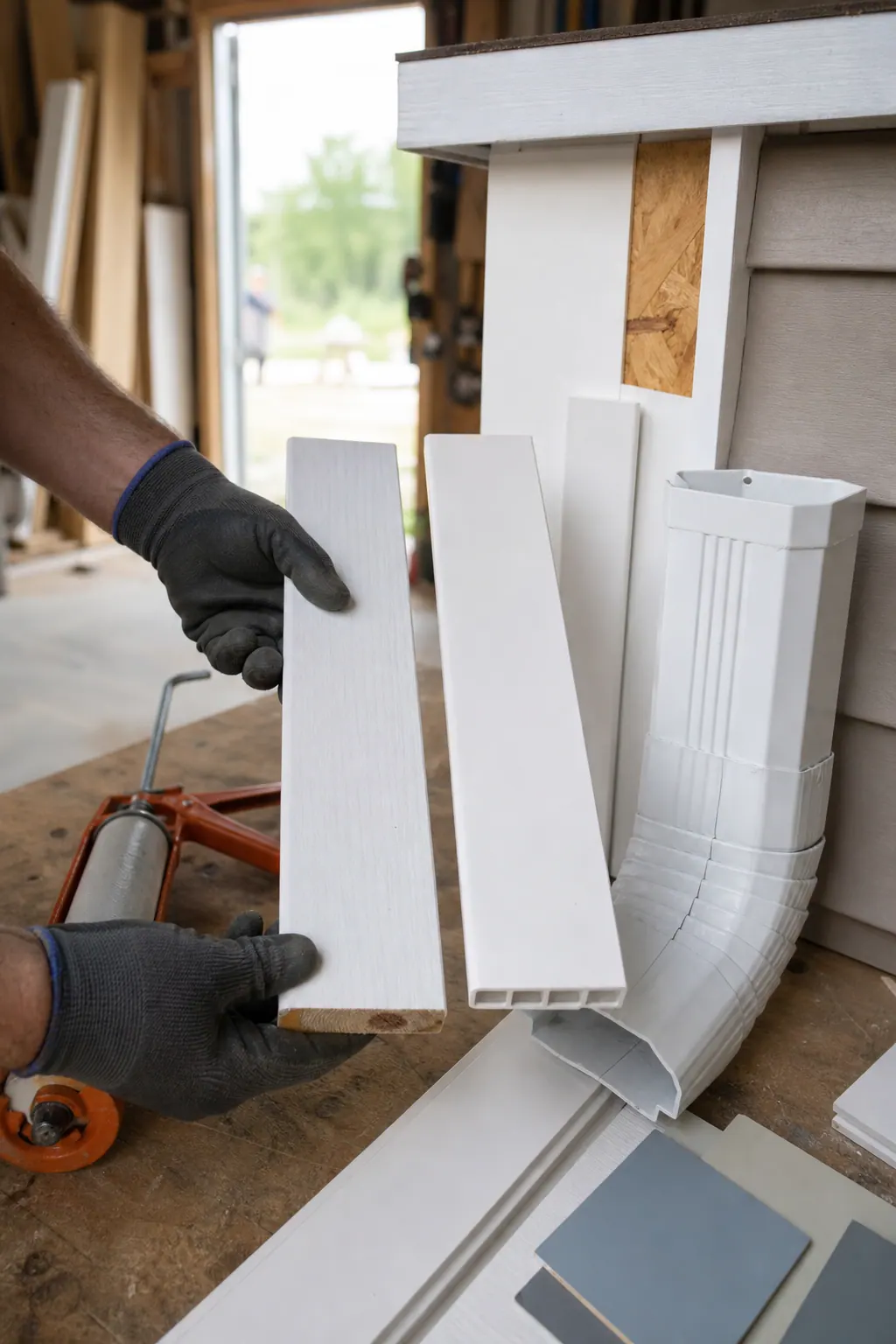
Cellular PVC is a practical option for trim that sees recurring moisture, such as fascia near troublesome gutter areas, lower casing components, or highly exposed corner and rake details. It does not absorb moisture in the same way wood does, but PVC trim replacement still depends on the surrounding assembly doing its job. Water must shed outward at roof and window transitions, and joints cannot be treated as an afterthought simply because the board itself is moisture resistant.
PVC exterior trim in Osprey also needs installation details suited to its movement. Long pieces require room for expansion and contraction, compatible fasteners need to hold the board without distorting it, and joints need to be laid out and treated for the profile and exposure. Where sealing is appropriate, it should finish a properly fitted joint rather than bridge a wide gap. Cellular PVC can be left with its factory finish or painted for a particular color scheme, but a painted appearance calls for a coating system intended for that material. Composite trim is another category to consider, yet its makeup, moisture behavior, movement, and finishing needs are not automatically the same as PVC.
The useful takeaway is simple: wood can perform well where it can stay protected and receive regular finish upkeep, while PVC may reduce the vulnerability of repeatedly wet trim locations. Neither choice corrects runoff, missing flashing, poor drainage, or unstable backing behind the board.
A Careful Exterior Trim Repair Process for Osprey Homeowners
A productive site evaluation follows the line of the water, not just the outline of the damaged board. The work begins by identifying the affected trim and looking for the likely entry or runoff path: an open window-casing joint, staining below a roof edge, overflow near a gutter, or a failed connection at fascia or soffit. Soft wood, loose fasteners, recurring paint breakdown, and sagging panels help define how much material may need to come off for a clear view.
After failed trim is removed, the important checkpoint is the surface behind it. Sound, dry backing can support a focused replacement; softened sheathing, deteriorated framing, corroded fastening areas, or a gap at a window or roof transition may require the repair scope to address more than the face board. Flashing, drip-edge, and joint details should be corrected where they are contributing to the water path before new trim covers the area.
Replacement pieces are then fitted to the location and material. Wood needs protected cut ends and finish preparation, while cellular PVC needs appropriate fastening and allowance for movement along longer runs. Properly supported trim should sit flat without forcing bowed material into place. Sealant completes tight, prepared joints and transitions; it should not be used to fill a broad void or conceal unstable backing. A compatible finish system helps protect paintable surfaces and provides a clean, maintainable appearance.
For exterior trim repair in Osprey, FL, a final walkthrough should include the repaired joints, roof-edge drainage, window transitions, and any soffit ventilation affected by the work. Request an evaluation when rot, repeatedly peeling paint, separating joints, gaps around casing, or visible fascia and soffit damage remains in view.
Plan the next step
Compare the broader Exterior Trim Repair and Replacement service.
Review the Osprey, FL service area for local planning context.
When you are ready, request a free estimate with the rooms, trim goals, city, and available photos.
FAQs
Can rotted exterior trim be repaired, or does it need to be replaced?
Localized surface damage can be repaired when the surrounding wood is dry, firm, securely fastened, and not connected to an active water entry point. Trim should be replaced when it is soft, swollen, crumbling, separating, unable to hold fasteners, or repeatedly staining and peeling after touch-ups.
What causes exterior window trim to rot?
Window trim often rots when water enters through open casing joints, separated miters, or failed window transitions and travels behind the trim. Soft lower casing sections, stains below window corners, and recurring paint failure can indicate moisture has moved beyond the surface.
How do I know if my fascia board needs repair or replacement?
Check for recurring stains below the roofline, split ends, sagging sections, soft spots near gutter fasteners, and paint that repeatedly peels in the same area. Overflowing gutters, debris, and a missing or poorly installed drip edge can repeatedly wet fascia and require correction before replacement.
Can damaged soffit lead to moisture or pest problems?
Yes. Sagging soffit panels, broken edge channels, missing screens, and gaps at the fascia-to-soffit connection can create openings for wind-driven moisture and pests. Repairs should maintain continuous support while preserving vented soffit openings for roof-overhang airflow.
Is PVC trim a good choice for homes in Osprey, FL?
Cellular PVC is well suited to repeatedly wet locations, including fascia near gutter problems, lower window casing, and exposed corner or rake trim, because it does not absorb moisture like wood. It still requires proper flashing, drainage, compatible fasteners, and expansion allowance on long runs.