
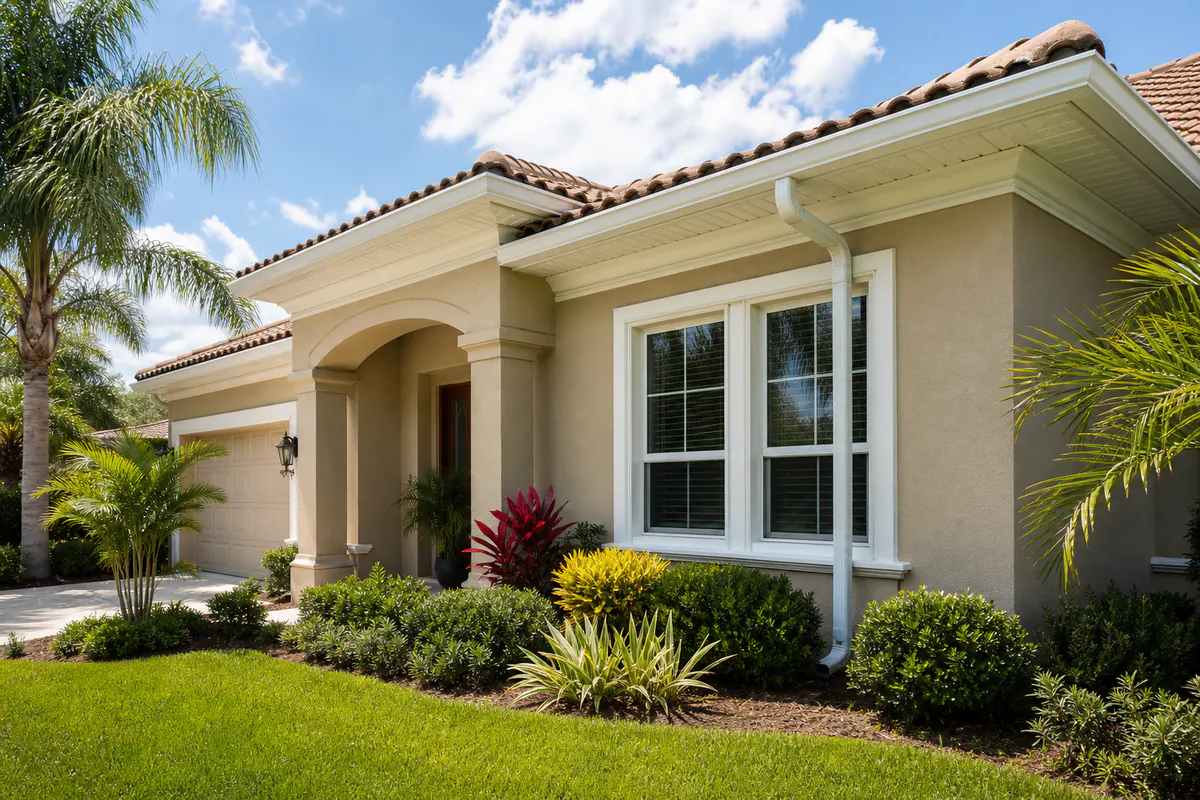
Exterior trim is the finished border around the parts of your home that take the most exposure, so it needs to look sharp while helping manage water at edges and transitions. For exterior trim repair in Palmer Ranch, the practical starting point is the condition of the material, not simply whether the paint looks worn.
Humidity, intense sun, wind-driven rain, irrigation overspray, and seasonal storms can leave trim swollen, split, soft, stained, or pulled open at a seam. Fascia boards at the roof edge, soffits beneath the eaves, window and door trim, exterior casing, corner boards, and rake boards all weather differently. A small failed joint or damaged section may suit a targeted repair; trim with deeper softness, recurring wetness, or widespread breakdown may call for partial or full replacement.
A durable scope goes beyond covering damage with caulk and paint. The affected area should be opened back to sound backing, the moisture path assessed, and nearby flashing, drainage, or transition details addressed where they are contributing to the problem. Replacement pieces should fit the existing profile, fasten securely, have joints and cut edges sealed as appropriate, and finish in straight, paint-ready lines.
Exterior trim replacement in Palmer Ranch can use like-for-like materials or a PVC trim upgrade in moisture-prone locations. Cellular PVC is a paintable, moisture-resistant trim option that can provide crisp edges and does not rely on wood fibers; it still requires well-planned joints, compatible fastening, and careful transitions. The right choice is the one that resolves the failed area cleanly and suits its exposure, not a one-material answer for every board.
Signs Your Exterior Trim Needs Repair Before Damage Spreads
Paint that peels in one isolated, dry-looking area can be a finishing issue. Paint that keeps lifting beside a joint, along a roof edge, or at the bottom of window or door casing is a reason to look beyond the surface. Staining, bubbling, swollen edges, and caulk that has separated from either side of a seam can all signal that moisture is reaching the trim or the area behind it.
- Pressable or soft wood, cracking that follows the grain, or a board that feels spongy points to deterioration beyond a paint touch-up.
- Open seams, missing caulk, and trim pulling away from the wall create exposed transitions where water can work behind the finished face.
- Gaps around exterior casing, especially at lower corners and horizontal sill areas, deserve attention because they interrupt the protective border around an opening.
- Dark streaks on fascia, discolored soffit panels, or staining at siding edges may trace back to water moving from the roofline, a failed transition, or a drainage issue.
Cosmetic wear is generally limited to an intact, firm board with stable joints and no recurring stain pattern. A professional evaluation makes more sense when the material is soft, distorted, separated, or repeatedly wet. Addressing those warning signs early can limit water damage around eaves, openings, and siding edges instead of allowing a small trim problem to spread into adjacent materials.
For Palmer Ranch exterior trim repair, photos can help identify the affected area, but an on-site look is important when seams have opened or trim has shifted. The useful question is not simply whether it can be repainted; it is whether the board and the backing behind it remain sound enough for a lasting repair.
Repair or Replacement: How the Right Scope Is Chosen
A sound board with a narrow, isolated defect often supports a limited repair. For example, a failed caulk line at an otherwise firm casing joint may be cleaned out, resecured if needed, resealed, and prepared for paint. If deterioration is confined to a short area and the surrounding trim and backing are solid, that damaged section can be removed back to sound material and replaced without automatically replacing every board in the run.
The decision shifts when probing finds softness beyond the visible spot, edges have swollen or broken down, or the same area has rotted more than once. A fascia board with deterioration along its length, casing with compromised lower corners on both sides, or trim that has distorted behind a painted face is usually a better candidate for full-board replacement. Keeping weakened material in place can leave an unstable base for new caulk, filler, and paint.
- Repair is appropriate when the damage is limited, adjacent material remains firm, and the affected seam or transition can be restored cleanly.
- Partial replacement fits a contained section of damaged wood when cuts can land on solid backing and the new piece can align with the existing profile and reveal.
- Full replacement makes sense when decay, failed edges, swelling, or concealed moisture affects much of the board or prevents a secure, straight installation.
Rotted trim repair in Palmer Ranch should not mean packing soft wood with filler and painting over it. Durable exterior trim replacement in Palmer Ranch removes unsound material, addresses the moisture path at the affected transition, fits replacement trim tightly, uses appropriate fastening, seals joints and cut edges as needed, and leaves crisp, paint-ready lines.
Rotted Trim Repair That Addresses the Moisture Source
Rot usually follows a repeat wetting pattern rather than appearing at random. Rain can work into an open seam, irrigation spray can repeatedly soak low trim, and clogged gutters can keep water moving over the same fascia area. Failed caulk, unsealed cut ends, and horizontal ledges or trim joints that hold water create similar trouble spots: moisture reaches exposed wood fibers and the board gradually loses its firmness.
A thorough rotted trim repair in Palmer Ranch looks for that pathway before new material goes in. The affected board is opened up far enough to probe adjacent trim and backing, including the board ends, nearby joints, and the area directly above or below the visible damage. A small soft patch beside a gutter may point to overflow, while decay at the bottom of casing can indicate water collecting at the transition rather than a paint-only problem.
- A lasting repair removes deteriorated wood back to solid material, corrects the drainage, flashing, joint, or spray exposure that can reasonably be improved, then installs and secures the replacement section on sound backing.
- A weak repair leaves soft wood in place and covers it with filler, caulk, and paint. Those finishes may improve the appearance briefly, but they do not restore a firm base or stop moisture already entering behind the surface.
After the new trim is fitted, joints and exposed cut edges need deliberate sealing where appropriate, followed by clean preparation for paint. That combination helps the repaired area shed water instead of trapping it at a seam, while keeping the lines straight and the finished exterior looking intentional.
Fascia, Soffit, and Eave Repairs
At the roofline, small defects can make an otherwise neat exterior look unfinished. Fascia is the vertical board along the eave where gutters commonly attach, while soffit covers the underside of the overhang and may include ventilation openings. Both need to meet cleanly at the roof edge so the eave has a continuous, intentional appearance.
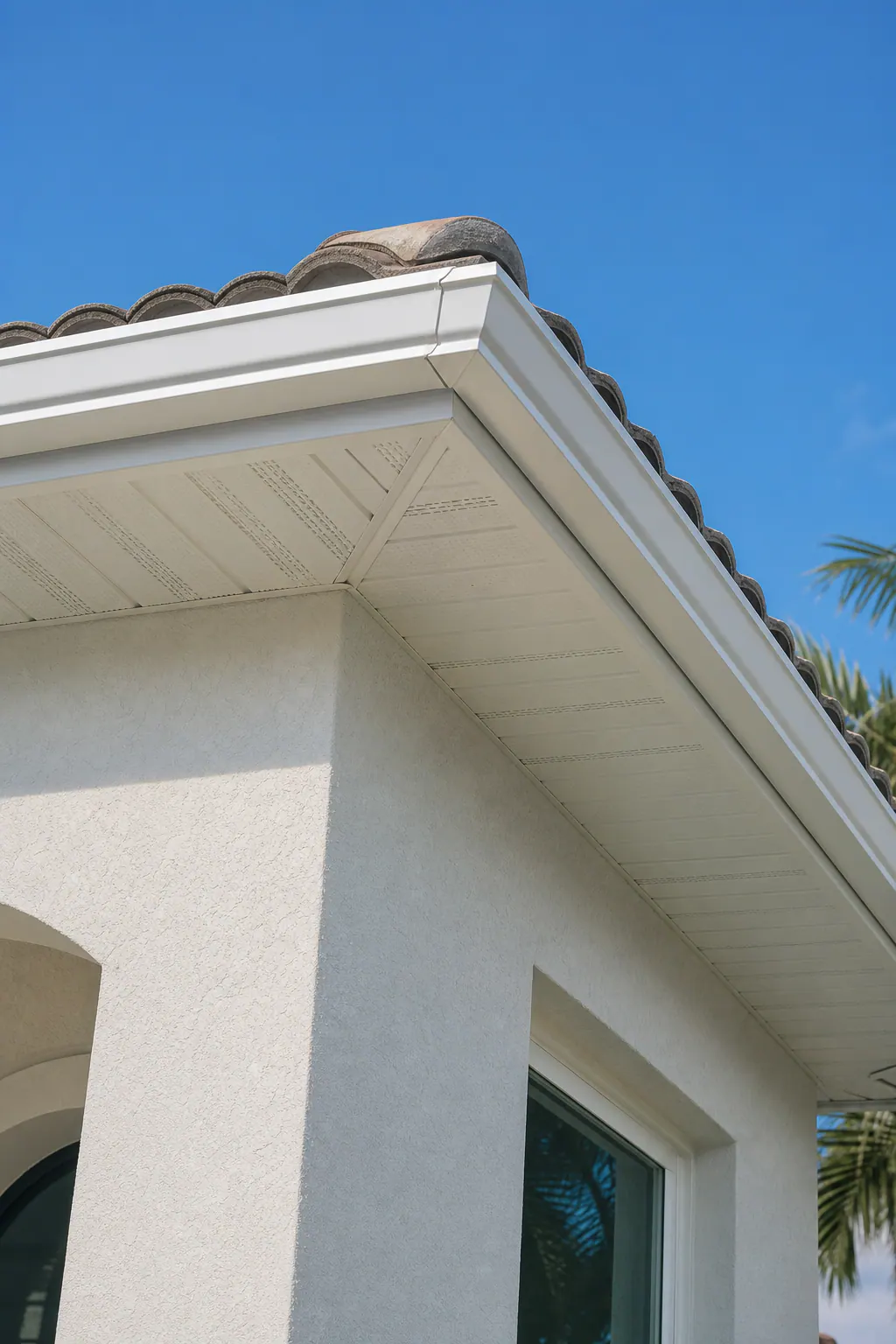
For soffit fascia repair in Palmer Ranch, visible clues help define the scope. Soft or split fascia near a gutter, dark water marks beneath the roof edge, loose soffit panels, sagging sections, open seams, and gaps at corners all deserve a closer look. A gap is more than a cosmetic line when it leaves an opening at the eave; it can also become an access point for pests. Staining alone does not automatically mean extensive deterioration, but recurring marks near a gutter or roof transition call for the surrounding trim and attachment area to be assessed.
- Fascia repair may suit a short, isolated section when the adjoining board remains firm and the gutter connection can be retained or reset neatly.
- Soffit repair focuses on restoring flat, secure underside panels while keeping any existing vented areas clear rather than covering them with solid trim.
- Partial replacement becomes more sensible when panels have pulled loose across a run, fascia has lost a straight edge, or multiple seams no longer align.
Clean eave work accounts for the gutter line, roof-edge transition, panel seams, and fastening locations before finish paint goes on. Replacement pieces should sit straight, close gaps without forcing misaligned material together, and leave crisp paint-ready lines instead of relying on heavy caulk to hide uneven edges.
Window Trim, Door Trim, and Exterior Casing Matched to Your Home
At eye level, uneven casing is often more noticeable than the small area that originally needed repair. Window trim and door trim should follow the home's existing visual rhythm: the board width, thickness, edge profile, and the narrow reveal line where trim meets siding or stucco. A replacement that is too wide, too flat, or set too proud can make one opening look patched even when the new board is sound.
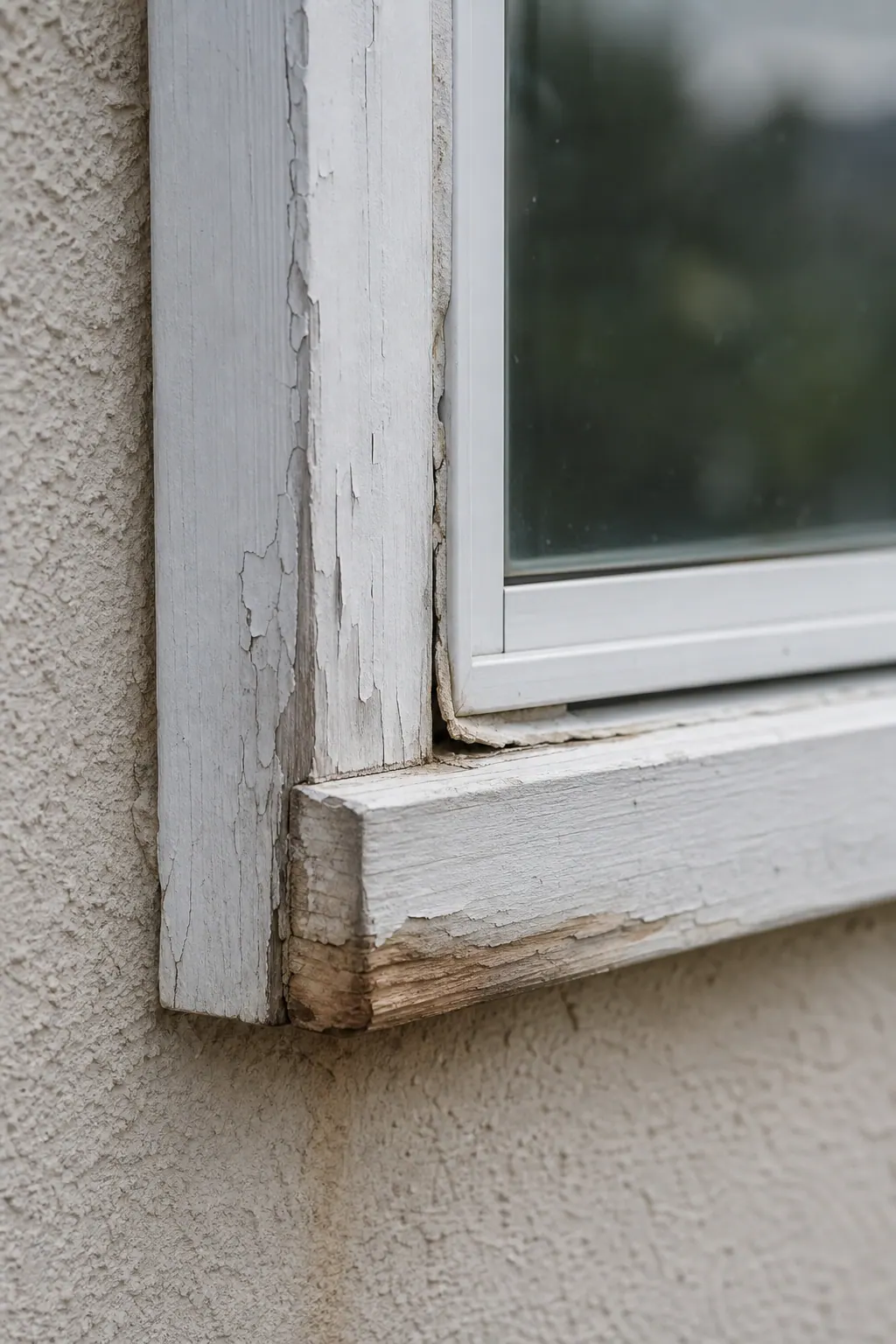
Exterior casing frames the opening and creates the finished transition between the wall surface and the window or door unit. Matching does not always require duplicating every board exactly; a carefully selected upgrade can work when its proportions and profile remain consistent across the opening. The practical goal is a continuous outline that aligns with nearby corners, adjacent trim, and existing architectural details rather than a collection of mismatched pieces.
- Square, simple homes often look best with clean butted joints and consistent reveals, while more decorative profiles may call for precise mitered corners that preserve the original visual detail.
- Boards should meet tightly at corners and against the opening, with seams sealed where appropriate so water is not directed behind the casing.
- A strong finish has straight lines, restrained caulk joints, concealed or neatly filled fasteners, and a smooth paint-ready surface, not oversized beads used to disguise uneven cuts.
When replacing damaged casing, the work should also address the transition that allowed water to reach the trim. Sound backing, properly fitted replacement boards, and a cleanly sealed perimeter help protect the opening while giving the repaired area an intentional, original-looking finish.
PVC Trim Options for Moisture-Prone Areas
Some trim runs face the same wetting cycle year after year, making a material upgrade worth considering when replacement is already needed. Cellular PVC is a solid, paintable plastic trim product that does not depend on wood fibers, so it can be a practical choice where recurring moisture has damaged wood trim.
PVC trim in Palmer Ranch can work especially well on lower boards exposed to irrigation, fascia sections affected by repeated gutter overflow, and window or door surrounds where a previous repair has repeatedly softened or split. It is an option for those vulnerable locations, not a requirement for every board. Sound, dry wood in a protected area may still support a like-for-like repair, while a repeatedly wet trim run may justify exterior trim replacement with PVC.
- Cellular PVC should be selected in a profile and thickness that preserves the surrounding casing, corner-board, or fascia proportions rather than creating a noticeably different patch.
- It needs room for normal movement with temperature changes. Proper fastening holds boards flat without pulling joints apart or leaving visible fastener problems.
- Seams, transitions, and connections to siding, stucco, flashing, or other trim still need careful fitting and sealing. PVC resists moisture, but it cannot correct water being directed behind the trim.
- A clean installation leaves straight edges, smooth joint treatment, and a paint-ready surface. If painting is planned, the coating system should be compatible with the PVC product and the desired finish color.
The best result pairs the upgrade with sound backing and correction of the moisture path, so the new trim looks deliberate as well as durable.
Request a Trim Repair Estimate in Palmer Ranch
An estimate is most useful when it turns a visible trim problem into a clear scope of work. During an on-site assessment, the affected boards can be reviewed for soft areas, open joints, recurring staining, failed paint, and signs that water is reaching the backing or nearby transition.
You should receive a straightforward recommendation on whether a small repair makes sense or whether exterior trim replacement in Palmer Ranch is the cleaner long-term choice. That can include rotted boards, fascia and soffit sections, corner trim, exterior casing, and window or door surrounds. The proposed material should match the existing profile and proportions where possible; when repeated moisture exposure is part of the problem, PVC may be presented as an upgrade option for the affected run.
- Remove failed material back to firm, sound backing rather than covering deterioration.
- Address the joint, flashing, gutter, drainage, or other transition contributing to repeat wetting where applicable.
- Fit replacement boards with straight lines, appropriate fastening, sealed joints and cut edges, and a paint-ready surface.
- Leave the work area clean once the repair or replacement is complete.
Request an exterior trim repair Palmer Ranch estimate if you have noticed a soft fascia edge, sagging soffit, splitting casing, or a seam that keeps reopening. Addressing a limited area while the surrounding trim is still sound can keep a smaller repair from becoming a broader exterior project.
Plan the next step
Compare the broader Exterior Trim Repair and Replacement service.
Review the Palmer Ranch, FL service area for local planning context.
When you are ready, request a free estimate with the rooms, trim goals, city, and available photos.
FAQs
What are the signs that exterior trim has water damage?
Common signs include peeling paint that keeps returning near joints or roof edges, staining, bubbling, swollen edges, separated caulk, and open seams. Soft or pressable wood, grain-following cracks, spongy boards, and trim pulling away from the wall indicate deterioration beyond a paint touch-up.
What is the difference between fascia repair and soffit repair?
Fascia repair addresses the vertical board along the roof edge where gutters commonly attach, often involving soft, split, or water-stained sections. Soffit repair restores the underside panels beneath the eaves, keeping them flat and secure while preserving any existing ventilation openings.
Can rotted exterior trim be repaired, or does it need to be replaced?
A limited repair can work when damage is confined to a short section, adjacent trim and backing are firm, and cuts can land on solid material. Full-board replacement is the better choice when softness extends beyond the visible area, edges are swollen or broken down, or the same location has repeatedly rotted.
Should gutters be removed or adjusted during fascia board replacement?
Gutters may need to be retained, reset, or adjusted so the replacement fascia can be installed straight and securely at the roof edge. Recurring staining or rot near a gutter should also prompt an inspection for overflow, drainage problems, and water moving over the same fascia area.
Is PVC trim a good choice for homes in Palmer Ranch?
Cellular PVC is a paintable, moisture-resistant option for trim exposed to repeated irrigation spray, gutter overflow, or chronic wetting around windows and doors. It should match the existing profile and thickness, allow for temperature movement, use compatible fastening, and still have properly fitted and sealed transitions.