
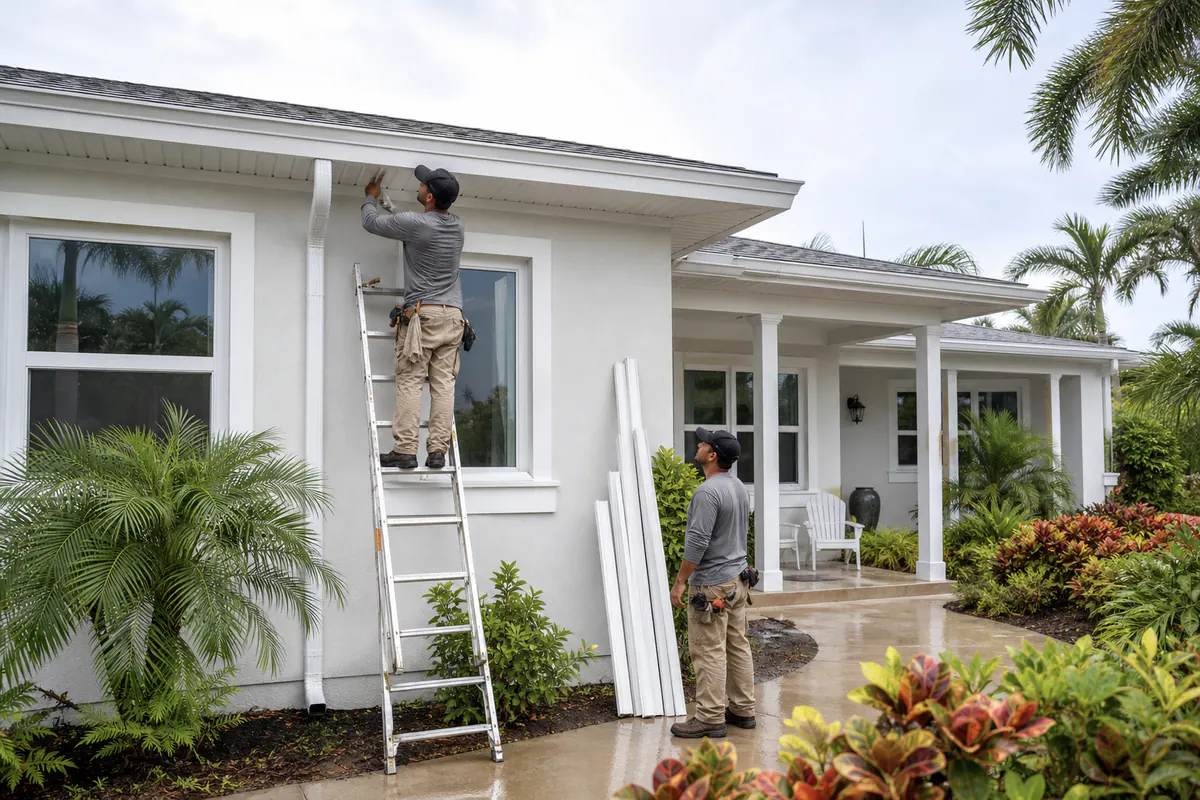
For Sarasota homeowners, exterior trim repair is about more than sharpening up curb appeal. Trim creates the finished outline around rooflines, openings, and porches, but it also covers and helps protect vulnerable exterior edges and joints from weather. Humidity, heavy rain, intense sun, and storm-driven moisture can expose weaknesses in painted wood, joints, and sealant, especially where water repeatedly reaches an edge or seam.
Exterior trim repair Sarasota FL services can address rotted, cracked, swollen, loose, or simply dated boards at fascia, soffits, windows, doors, porches, and roofline transitions. Fascia is the trim board at the roof's lower edge; soffit covers the underside of the roof overhang. Window and door casing finish the perimeter of an opening, while porch trim covers posts, beams, and decorative edges. Peeling paint may be a surface-maintenance issue when the board beneath it is firm and dry. Soft wood, a board that has swollen apart at a joint, recurring open gaps, or trim that pulls loose points to a deeper moisture-related problem.
The right scope depends on what remains sound. A small, isolated damaged area can sometimes be repaired when the adjacent trim and the material behind it are solid. Replacement becomes the more durable path when deterioration extends through a board, returns after prior patching, or affects the connection around an opening or roof edge. Caulking and paint finish properly prepared joints; they do not restore strength to decayed wood or stop an active source of water entry.
For replacement work, wood can preserve a traditional painted profile, while cellular PVC is a paintable, moisture-resistant trim option for many exterior applications. Wood and PVC differ in appearance, expansion and contraction, fastening, and finishing needs, so the best choice depends on the trim location and the home's existing details. The practical goal is a clean, properly sealed finish that suits the house and protects exposed edges.
Why Exterior Trim Matters in Sarasota’s Climate
A painted edge can look minor from the yard while the joint behind it is doing much more work. At rooflines, window and door openings, porch posts, and other transitions, trim helps cover the narrow places where separate exterior materials meet. When those seams open, moisture intrusion can reach unprotected edges instead of shedding away from the home.
Sarasota's mix of humid air, strong sunshine, heavy rain, and seasonal storm exposure can be particularly hard on painted trim and sealant. UV exposure can leave paint brittle or faded; repeated wet-and-dry cycles can contribute to swelling at board ends and seams. In coastal areas, salt-laden air may add another maintenance concern for exposed exterior details. Cracked caulk is not just a cosmetic line in these locations, it can leave a gap at a window casing, door frame, or porch connection where water can repeatedly collect.
From the ground, useful warning signs include paint that bubbles near a joint, dark staining below a roof edge, visible gaps around casing, sagging soffit sections, or trim that appears uneven or swollen. These conditions do not prove hidden water damage, but they are stronger reasons to look beyond repainting alone. Damp, deteriorating wood can also create a more inviting area for pest activity.
The important distinction is whether the finish is failing on an otherwise firm surface or whether the trim's shape, seams, and protective role have begun to break down. That difference guides a closer repair-or-replacement decision.
Exterior Trim Components We Repair and Replace
Different trim pieces call for different repair scopes because they finish different edges of the home. Our exterior trim repair Sarasota FL service covers the practical details that help manage weather exposure as well as the profile work that gives a home its finished look.
- Fascia boards and soffit panels: Fascia runs along the roof's lower edge, while soffit panels close the underside of an overhang. Work in this area can address deteriorated boards, loose sections, and trim transitions around the roofline.
- Rake boards and frieze boards: Rake boards follow a sloped gable edge; frieze boards form a horizontal band where a wall meets the roof structure. Both create clean roofline lines and cover vulnerable exterior transitions.
- Corner boards: These vertical boards finish outside wall corners. Open joints or damaged corners can leave siding edges looking unfinished and more exposed.
- Window casing and door casing: Casing frames the opening and covers the gap between the wall finish and the window or door assembly. Replacement can include restoring straight, consistent reveals and resealing the perimeter as needed.
- Porch columns and porch rail trim: Column wraps, base trim, cap trim, and rail details often combine a visible architectural role with protection at joints where water can linger.
- Decorative trim: Brackets, bands, louvers, and custom profile pieces may be primarily aesthetic, but damaged pieces still need secure attachment and properly finished edges.
Whether the work involves a simple casing section or a larger roofline rebuild, the priority is not merely covering deterioration. Replacement trim, joints, and sealant details should restore the finished appearance while helping direct water away from the edges and connections that need protection.
Signs Your Exterior Trim Needs Attention
A close look often reveals more than a faded finish. Soft or spongy wood, crumbling edges, darkened rotted sections, or boards that have swollen out of line suggest the problem may extend beneath the paint. Bubbling or peeling paint can be cosmetic when the board below remains firm, but it is a weaker sign when it appears alongside staining, softness, or a seam that will not stay closed.
- Roofline warning signs: Loose fascia, sagging soffit areas, dark water stains, and separating joints deserve attention before the affected section grows larger.
- Opening and porch warning signs: Gaps around window or door casing, cracked or missing caulk, open miters, insect damage, and loose porch trim can expose edges that should remain sealed and securely attached.
- What repairable damage looks like: A small, isolated defect in otherwise firm trim may be a candidate for localized rotted trim repair in Sarasota, FL, once the moisture path and surrounding material are assessed.
- What points toward replacement: Widespread rotted wood, repeated swelling, failed joints, or trim that has lost its shape and fastening strength usually calls for removing the deteriorated section rather than hiding it with filler, caulk, or paint.
Addressing early deterioration can limit how far moisture damage travels. Visible symptoms cannot show every condition behind trim, but they provide a practical reason to inspect the area before a minor finish problem becomes a larger replacement project.
Repair or Replace? How the Right Option Is Chosen
The decision turns on what is still sound behind the visible defect. A small gouge, isolated split, or limited patch of deterioration in a board that remains firm and securely fastened can often be repaired without replacing an entire run. The surrounding trim should hold fasteners, keep its shape, and provide a solid surface for a lasting finish.
Replacement becomes the stronger option when probing finds softness beyond one small area, or when boards are swollen, repeatedly opening at joints, badly split, or unable to hold caulk, paint, or fasteners. The same applies when the substrate behind the trim is damp, softened, or damaged; installing new face trim over a weak backing only hides the condition.
- Decorative versus structural role: A non-load-bearing window casing or porch detail may allow a localized section replacement. Trim associated with a porch post, roof edge, or another element that could be supporting or concealing support needs a broader assessment before material is removed.
- Profile matching: If an existing wood profile is intact through most of the elevation, a replacement piece can sometimes be milled or selected to preserve the original look. When matching is impractical or deterioration is widespread, replacing a complete, visually connected section often creates a cleaner result.
- Moisture first: Failed caulk, a leaking roofline connection, or water entering around an opening must be addressed with the trim work. New wood or PVC will not solve an active path for water.
For exterior trim repair and replacement Sarasota homeowners can rely on, the goal is not to remove more material than necessary, or to preserve rotted wood simply because it can be filled. The right scope restores a firm, well-secured edge and corrects the condition that caused the damage.
Material Options: Wood, PVC, Composite, and Rot-Resistant Trim
Material choice should follow the trim's location and the look you want to keep, rather than a one-material answer for the entire house. A sheltered decorative board has different demands than fascia, window casing, or porch trim that sees repeated rain and sun.
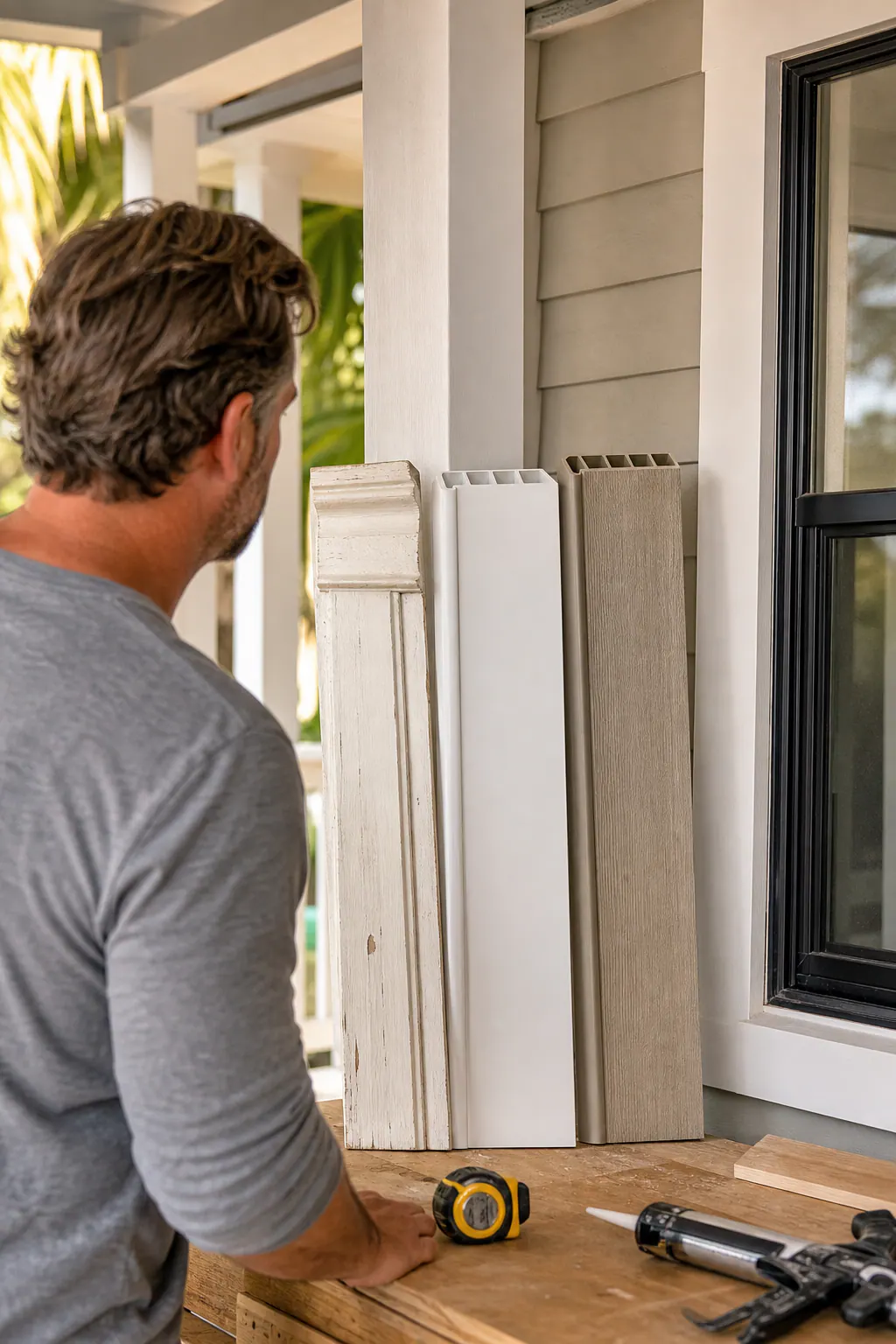
- Wood: Painted wood offers the most natural appearance and is easy to shape, cut, patch, and mill into a close match for an older or distinctive profile. It can be the right choice where preserving architectural character matters, but it needs a sound coating and well-maintained joints. Wood is less appealing where an edge repeatedly stays wet or has a history of rot.
- PVC trim: Cellular PVC is a solid, paintable trim material that does not absorb moisture like wood, making PVC trim Sarasota homeowners often choose a practical option at high-exposure fascia runs, window and door trim, and lower porch details. It reduces rot-related maintenance, but it expands and contracts with temperature changes, so joint layout and fastening need to allow for movement. Its crisp painted finish suits many homes, though matching a deeply detailed historic wood profile may take more planning.
- Composite and engineered trim: These products combine wood fibers, polymers, or other engineered materials to offer a more uniform, rot-resistant alternative to conventional wood. They can provide a wood-like painted appearance and may be useful when budget, profile availability, or a particular finish drives the selection. Their weight, cutting behavior, edge finish, and moisture tolerance vary by product.
For exterior trim replacement Sarasota projects, a useful checkpoint is to compare the new board's thickness, face width, and profile against the adjacent trim before committing to a material. A durable replacement that looks noticeably too thin, flat, or different at a connected elevation can interrupt the home's original character.
Paint color also matters. Dark finishes can make movement more noticeable on PVC, while wood and composite choices bring different repainting and upkeep expectations. The best fit balances the exposure at that specific location with the desired appearance, initial cost, and the maintenance you are prepared to take on over time.
Fascia, Soffit, Caulking, and Sealing Details
Roofline problems often begin at a small transition: a failed gutter connection, an open fascia joint, or an exposed cut end that repeatedly catches water. Fascia boards finish the roof edge and provide the straight face beside the gutter; when they soften, split, or pull away, fascia repair Sarasota work should include looking at the water path rather than simply skinning over the damaged area. A sound repair removes compromised material, restores a firm fastening surface, and keeps flashing-adjacent edges able to shed water.
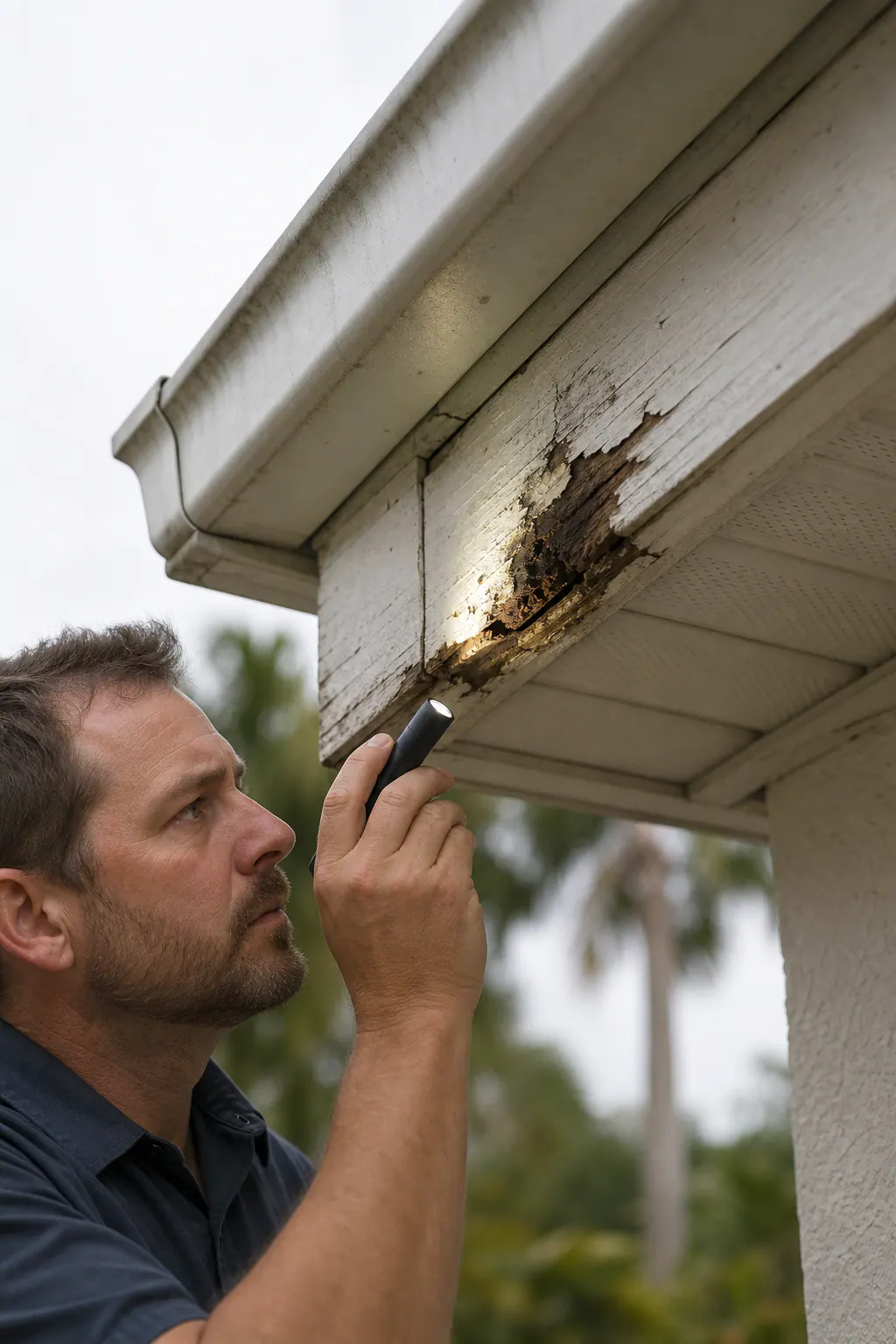
Soffit panels close the underside of an overhang, where staining, sagging, or loose sections can point to moisture reaching the roofline from above or into the cavity from an opening. Replacing a stained panel alone may improve the appearance, but it will not solve an active leak, overflow, or failed connection. The surrounding fascia, nearby trim joints, and edge details need to be addressed as one assembly.
- Seal joints and penetrations: Exterior-grade sealant belongs at trim-to-wall transitions, casing joints, nail holes, and other narrow gaps that should remain closed while materials move. It is not a substitute for a board that is soft or missing.
- Protect fresh cuts: Cut ends, exposed wood grain, repairs, and bare edges need primer before finish paint. Careful priming and painting help create a continuous protective coating instead of leaving the most absorbent parts of the trim exposed.
- Keep window and door casing details purposeful: Caulk can close a small perimeter gap where trim meets the wall, while the upper transition must still direct water outward rather than trapping it behind the casing. Cracked, shrunken, or detached sealant is a reason to inspect the joint and adjacent trim before resealing.
For exterior trim repair Sarasota FL homeowners can count on, the finish work is part of the repair, not the whole repair. Secure fastening, intact flashing-adjacent details, sealed transitions, and coated exposed edges give replacement or repaired trim a better chance to stay stable through Sarasota's rain, heat, and humidity.
What to Expect From a Professional Trim Repair Visit
A professional visit should leave you with a clear scope, not a vague recommendation to "patch it up." The evaluation begins with the affected trim and the nearby surfaces that can influence it: joints, fasteners, wall edges, roofline details, and the substrate exposed once damaged material is removed. Firm, isolated deterioration may support a targeted repair; softness that continues beyond the visible area, loose fastening, or recurring moisture staining may call for replacement and further investigation of the water path.
Before work begins, the estimate should separate the proposed repair or replacement areas, material choices, finish expectations, and any conditions that could expand the scope after trim is opened. Wood may be selected to match an existing profile, while cellular PVC can suit painted locations where moisture resistance is a priority. The practical decision is based on appearance, board dimensions, exposure, and how the new piece will meet adjacent trim.
During exterior trim repair in Sarasota FL, damaged sections are removed carefully so the adjacent substrate can be assessed rather than concealed. New trim is fitted, securely fastened, and sealed at appropriate joints and exposed ends. Caulk closes small finish gaps; it does not cover unsound material. The crew then primes bare wood or prepares paint-ready PVC, completes the agreed painting or finishing, removes debris, and reviews the completed areas with you.
Schedule Exterior Trim Repair or Replacement in Sarasota, FL
If your home has trim that looks tired, feels soft, opens at the seams, or no longer sits straight, an on-site assessment can turn those observations into a practical plan. A qualified Sarasota contractor can look beyond the visible board to the adjoining edges and water-exposed details, then recommend a limited repair or a more complete replacement based on the condition found.
Request an inspection or estimate for damaged fascia, loose or stained soffit, deteriorated window or door casing, worn porch trim, or failed caulking and sealing. It is also a good time to discuss PVC trim upgrades: cellular PVC is a paintable, moisture-resistant option, while wood may better preserve an existing profile or traditional appearance. The right choice depends on the location, exposure, adjacent trim, and finish you want to maintain.
For exterior trim repair Sarasota FL homeowners can schedule with confidence, ask for a scope that identifies the affected areas, proposed material, finish work, and any moisture-related conditions revealed once damaged trim is removed. A clear plan helps protect the home's finished edges while restoring the clean, well-kept curb appeal Sarasota properties deserve.
Plan the next step
Compare the broader Exterior Trim Repair and Replacement service.
Review the Sarasota, FL service area for local planning context.
When you are ready, request a free estimate with the rooms, trim goals, city, and available photos.
FAQs
What causes exterior window trim to rot in Sarasota, FL?
Window trim commonly rots when cracked caulk, open joints, or failed casing details let rain and humidity reach unprotected wood edges. Repeated wet-and-dry cycles can cause swelling at seams, while intense sun can make paint brittle and less protective.
How do I know if my fascia board has water damage?
Signs of water-damaged fascia include soft or split boards, dark staining below the roof edge, separating joints, loose sections, and boards pulling away near gutters. Fascia damage should also prompt an inspection of gutter connections, flashing-adjacent edges, and the water path causing repeated exposure.
How often should exterior trim caulking be inspected in Florida?
Exterior trim caulking should be inspected regularly, especially around rooflines, windows, doors, porch connections, and other rain-exposed joints. Cracked, shrunken, detached, or missing sealant should be inspected before resealing because caulk cannot restore decayed wood or stop an active water intrusion source.
Can rotted exterior trim be repaired, or does it need to be replaced?
A small, isolated damaged area can be repaired if the adjacent trim is firm, dry, securely fastened, and the moisture source is corrected. Replacement is the better option when rot extends through the board, joints repeatedly open, boards are swollen or badly split, or the substrate behind the trim is damp or soft.
Is PVC trim a good choice for homes in Sarasota, FL?
Cellular PVC is a paintable, moisture-resistant option for high-exposure fascia, window and door casing, and lower porch trim because it does not absorb moisture like wood. It expands and contracts with temperature changes, so proper fastening and joint layout are required, and wood may be better for matching detailed historic profiles.