
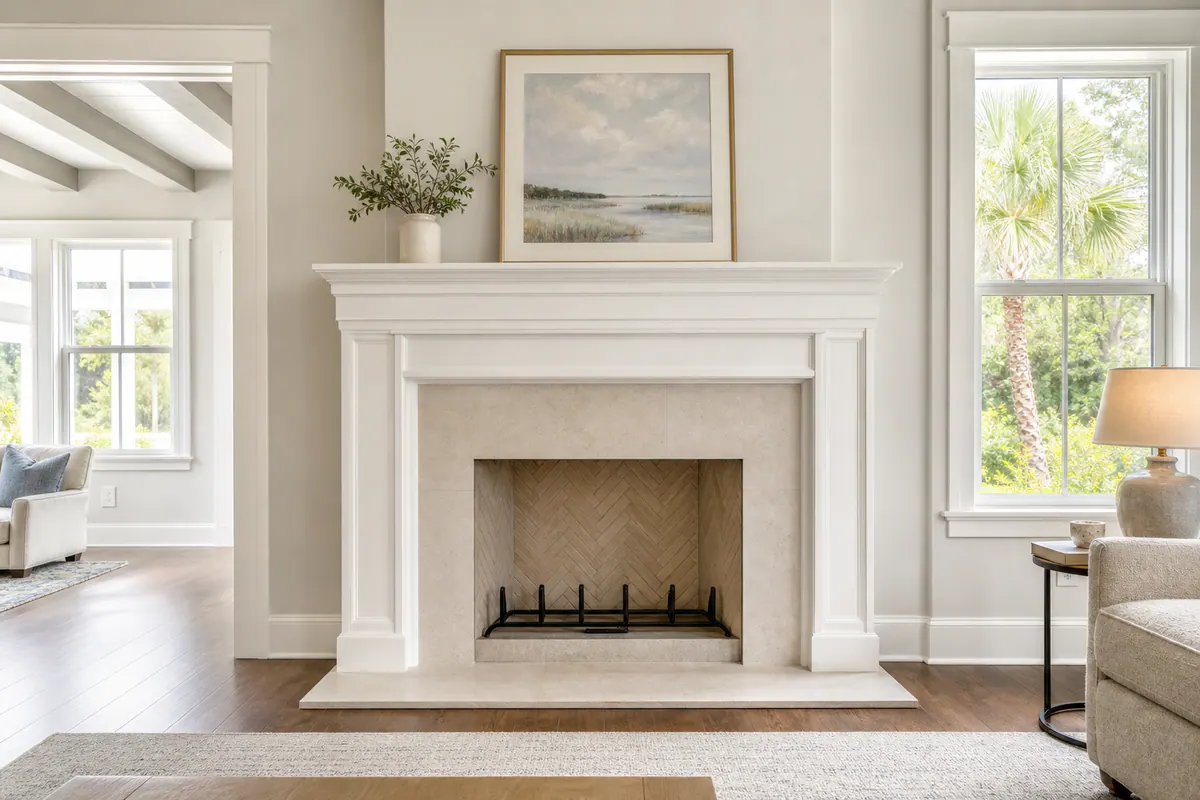
Fireplace Mantels and Surrounds That Create a Finished Focal Point
A fireplace can be structurally complete yet still feel disconnected from the room. A custom fireplace mantel in Laurel, FL turns a plain drywall opening, builder-basic tile field, or undersized shelf into a focal point with visual weight and a clear relationship to the surrounding trim and furnishings.
This is finish-carpentry work, not fireplace repair or appliance sales. The aim is to shape the wall around an existing fireplace with a properly proportioned shelf, trim, paneling, or a full wood surround. A simple mantel shelf can add a horizontal line for artwork and décor; a more complete fireplace surround adds vertical and header elements that make the opening feel framed and intentional.
The strongest designs carry details already present in the home. A painted surround can echo nearby door casings and baseboards, while a stain-grade wood mantel can relate to flooring, cabinetry, or ceiling beams. Where a fireplace sits beside built-ins, matching shelf thickness, panel proportions, and finish keeps the entire wall from looking pieced together.
Scale matters as much as style. An oversized shelf can crowd a narrow wall, while thin trim around a broad stone or tile facing may disappear visually. Custom fabrication is especially useful when the fireplace opening, wall width, adjacent cabinetry, or existing millwork does not suit a standard kit. The result is a fireplace trim treatment that looks designed for the room rather than added afterward.
What Is the Difference Between a Mantel and a Fireplace Surround?
The terms are often used together, but they identify different parts of the finished composition. The mantel is the horizontal shelf or ledge above the fireplace opening. It may be a slim floating beam, a painted shelf with a shaped edge, or a deeper stained-wood piece with room for art and seasonal décor.
A surround is the architectural frame beneath that shelf. It commonly includes two vertical mantel legs at the sides and a horizontal header across the top. Surround trim can be simple flat boards for a clean look or layered with panels, crown, and molding for more traditional detail. A full fireplace surround in Laurel, FL gives the fireplace a defined wall presence; a shelf alone keeps the update focused and visually lighter.
Other terms describe the fireplace itself rather than the carpentry around it. The firebox opening is the visible opening where the fire or insert is seen. The facing is the non-wood surface surrounding that opening, such as tile, stone, brick, or a manufactured panel. The hearth is the horizontal base at the bottom, whether it projects into the room or sits flush with the floor.
For example, a floating mantel can sit above an existing tile facing without adding legs or header trim. A full wood-trim surround can instead frame that same tile field, leaving the facing and hearth visible while integrating the fireplace with nearby casing or built-ins. Before selecting either approach, the fireplace or insert installation instructions need to govern what materials and placement are appropriate around the opening.
Mantel and Surround Material Options: Painted, Stained, Tile, and Stone
Material choice sets the balance between crisp architectural detail, natural texture, and visual weight. For a painted surround, paint-grade MDF trim offers smooth, clean faces and is well suited to flat panels, stepped headers, and built-up profiles. Paint-grade wood is a useful alternative when the design calls for a more substantial shelf or shaped edge. Both can tie into white or colored wall trim, but neither is intended to showcase grain.
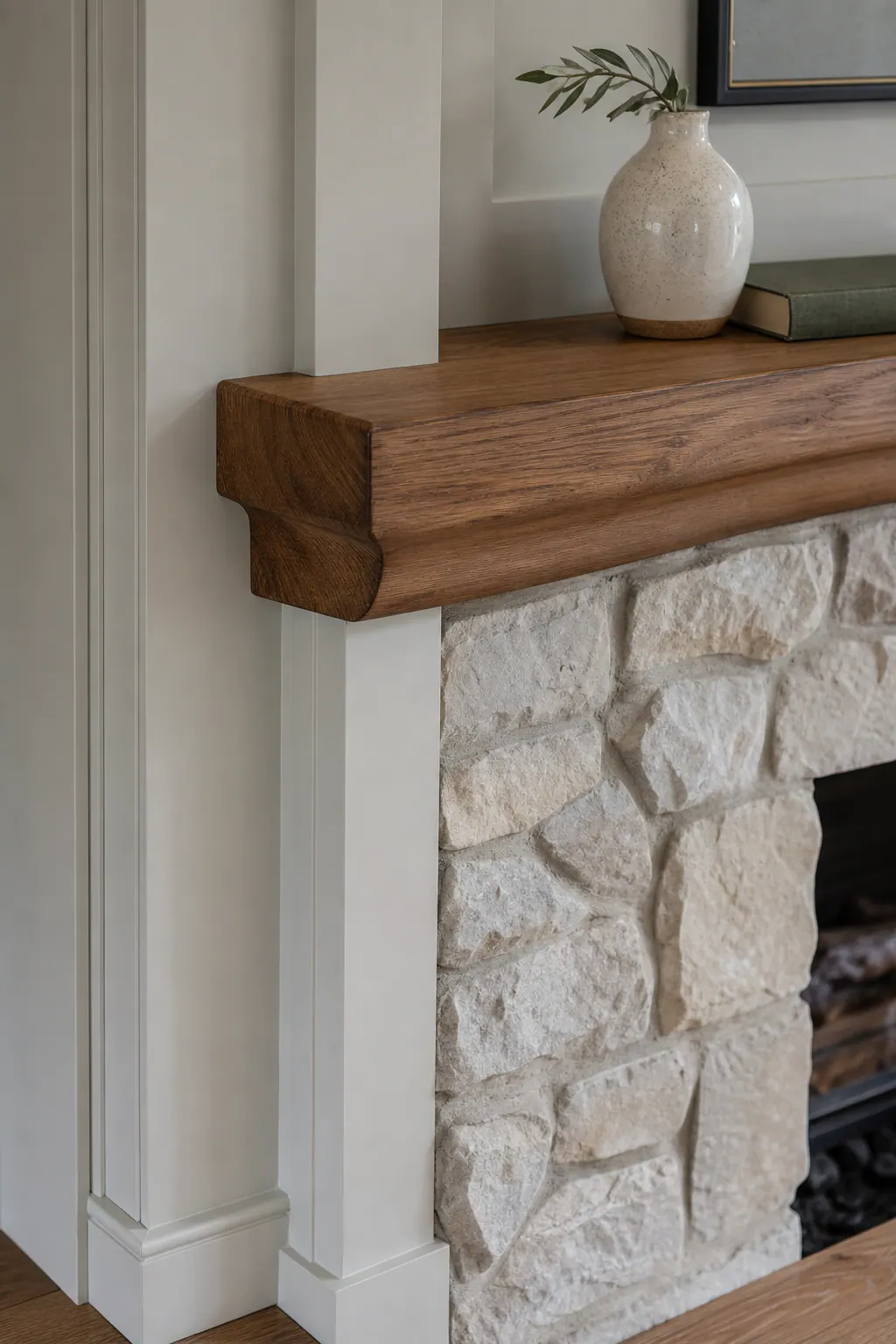
A stain-grade hardwood mantel makes the wood itself part of the design. Oak, maple, walnut, and similar species bring visible grain, color variation, and a warmer contrast against painted walls or light tile. This path works especially well for a simple beam-style wood fireplace mantel above a restrained facing. The tradeoff is that wood selection, grain direction, joints, and stain samples are more noticeable than they are on painted work, so a clean, intentional composition matters.
Custom millwork expands the options beyond a ready-made shelf: a painted panel surround can align with nearby door casing, while a stained mantel can meet painted legs and header trim for a layered finish. That combination can bridge a contemporary tile field and more traditional room trim. A custom mantel in Laurel, FL is particularly useful when the goal is to repeat the proportions or profile details of adjacent built-ins rather than introduce an unrelated kit.
Tile, stone veneer, brick, and existing masonry belong to the facing treatment, not the decorative woodwork around it. Tile can create a precise, low-visual-weight field behind a detailed painted surround; stone veneer or rugged brick typically asks for a simpler shelf so competing textures do not overwhelm the wall. Keeping sound existing masonry visible can also be the right choice, with a tailored mantel providing the transition to drywall and trim. A weak pairing is ornate wood molding pressed against a busy, multi-colored stone field; a calmer profile usually gives both materials room to read.
Finish selections should be made alongside the fireplace or insert requirements, because the approved materials and placement near the opening are specific to the appliance. A finish carpenter can then develop a custom fireplace surround that respects those constraints while making the facing, mantel, wall finish, and nearby millwork feel deliberately connected.
Choosing the Right Mantel Size, Profile, and Style for the Room
Proportion is what makes the chosen finish feel intentional rather than simply added to the wall. Start by looking at the whole elevation: the firebox opening and hearth establish the center, while the usable wall width, ceiling height, nearby windows or doors, and adjoining trim establish the visual boundaries. A measured sketch or simple wall mockup is useful before fabrication because it shows whether the shelf has enough presence and whether the surround has enough room to breathe.
A clean floating shelf is a horizontal mantel with no visible legs or header trim. It suits a streamlined room, a simple tile field, or a fireplace set on a narrow wall because it adds a focal line without widening the composition. Its depth and thickness still need to read from across the room: a shelf that looks like a thin strip against a broad firebox or substantial hearth is a weak signal. A simple framed surround adds vertical legs and a header beneath the mantel, giving the fireplace more height and a clearer connection to door casing or nearby baseboards.
For rooms with traditional millwork, layered profiles create a more architectural treatment. Stepped trim, a built-up header, and a shaped mantel edge add shadow lines that can echo crown molding, paneled walls, or detailed casing. The profile should repeat the home's visual language rather than introduce every available molding shape. For instance, a modest panel surround paired with the same clean casing profile used on nearby doors can look more convincing than ornate trim on otherwise plain walls.
Ceiling height and wall width help determine when to build outward. A tall room may need a stronger header, crown detail, panel molding, or a larger composition to prevent the fireplace from appearing low and isolated. On a wide uninterrupted wall, built-ins or symmetrical cabinetry can give a custom fireplace mantel in Laurel, FL a deliberate span and create storage or display space. The opposite is true on a compact wall: a full-width surround, heavy crown, and oversized legs can crowd adjacent openings. The strongest choice gives the fireplace visual weight while preserving comfortable margins around windows, doors, and the wall's existing trim.
Before the profile is finalized, compare the proposed shelf and trim location with the fireplace or insert manufacturer's installation requirements. Those appliance-specific instructions determine the acceptable placement of combustible decorative components; the design can then be adjusted without losing the intended scale or style.
When a Custom Mantel or Surround Is a Better Fit Than a Standard Kit
A standard shelf or trim kit can be the sensible choice when the fireplace wall is square, the opening follows common dimensions, and the room needs only a clean, uncomplicated finish. These ready-made options reduce design decisions, but their fixed widths, profiles, and finishes can leave awkward gaps or a visually generic result when the wall has corners, offsets, stone variation, or an unusually shaped opening.
Custom work earns its place when the carpentry must respond to those conditions instead of hiding them. A custom mantel in Laurel, FL can be sized to a requested shelf depth, built with a substantial edge profile, or fitted precisely between adjacent windows. A made-to-fit surround can carry the same casing profile used at nearby doors, so the fireplace reads as part of the room rather than as an unrelated addition.
Stain-grade designs are another strong reason to choose custom millwork. Unlike a prefinished shelf with a limited color selection, a hardwood sample can be evaluated beside existing flooring, beams, cabinetry, or furniture before the final finish is chosen. That process matters when the goal is to coordinate warm wood tones without forcing an exact-looking match that falls flat in the room.
Plans for flanking built-in cabinetry also benefit from one coordinated design. Cabinet widths, shelf lines, mantel projection, and the surround header can align on the drawing instead of competing after separate pieces are installed. The same approach supports a custom fireplace surround on a corner wall or an off-center firebox: the finished composition can account for the actual conditions while still looking balanced.
Before fabrication, a measured elevation and finish samples help settle the details that a kit cannot: where profiles begin and end, how the mantel meets the facing, and which trim lines should continue into the rest of the home. The proposed decorative components should then be located within the fireplace or insert manufacturer's stated installation requirements.
Planning Fireplace Mantel Installation Around the Existing Fireplace
Begin with a site record, not a catalog shelf: photos and field measurements should capture the firebox opening, facing, hearth, wall construction, and any outlets, television locations, or cabinetry that affect the planned mounting area. Tile and stone can create uneven surfaces that change how trim returns meet the wall, while a flat painted wall may suit a cleaner, more flush surround treatment.
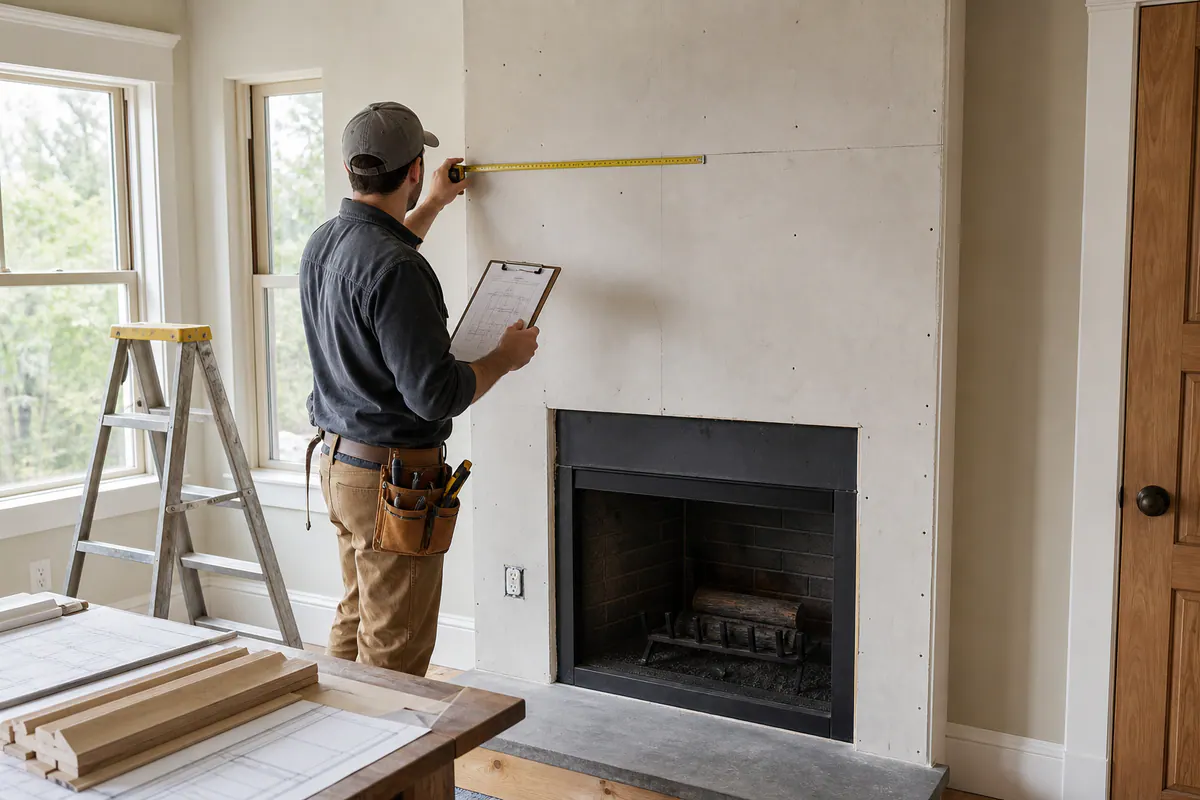
- Identify the existing fireplace or insert and the facing that will remain visible. Decorative wood trim is separate from the tile, stone, or other facing assembly around the opening.
- Build a measured elevation that shows the proposed shelf, legs, header, and nearby trim. This is the point to settle whether the design is a simple shelf or a full fireplace surround installation.
- Select the finish path before components are sourced or fabricated: paint-grade material supports a seamless painted surround, while hardwood makes grain and stain color part of the design.
- Review the current appliance manufacturer's installation instructions before finalizing the mantel's depth, height, material, and trim layout. Stated combustible-clearance limitations can affect shelf projection, placement, material choices, and the amount of trim used around the opening.
- Fabricate or order the approved components, then fit the surround, complete appropriate caulking, and apply paint or stain after the pieces are installed.
For fireplace mantel installation in Laurel, questions about the existing appliance or wall assembly should also be directed to the applicable local authority. That sequence keeps the finished surround responsive to the actual fireplace conditions rather than an assumed standard.
Plan a Fireplace Mantel and Surround That Belongs in Your Home
The most useful first conversation starts with a few visual references rather than a finished design. Bring photos of the fireplace wall and adjoining room, basic measurements, and close-ups of nearby baseboards, door casing, and crown molding. Those details show whether a new shelf should stay quiet and tailored or carry a deeper, more decorative profile.
Also decide which finish direction feels right: a painted surround can extend the room's trim language, while a stained custom mantel makes the wood grain a deliberate focal point. Save a few examples that show what you respond to, such as a simple floating shelf, a paneled surround, or built-ins that frame the fireplace, so the discussion can separate a preferred style from a layout that does not suit the wall.
For a fireplace mantel in Laurel, FL, include the make and model information for the fireplace or insert when applicable. That gives the proposed decorative layout a real starting point alongside the appliance requirements. If the fireplace wall could benefit from shelving, cabinets, paneling, or coordinated trim, explore custom finish carpentry services as part of one connected plan.
Bring the photos, measurements, finish ideas, and appliance details to begin planning a mantel shelf, full surround, or built-in upgrade that feels considered from every angle.
Plan the next step
Compare the broader Fireplace Mantels and Surrounds service.
Review the Laurel, FL service area for local planning context.
When you are ready, request a free estimate with the rooms, trim goals, city, and available photos.
FAQs
What is the difference between a fireplace mantel and a fireplace surround?
A mantel is the horizontal shelf or ledge above the fireplace opening. A surround is the architectural frame beneath it, typically including two vertical legs and a horizontal header.
Can I add a wood mantel to an existing fireplace in Laurel, FL?
Yes, a wood mantel can be added above an existing tile, stone, brick, or masonry facing without replacing the fireplace. Its height, depth, material, and placement must follow the existing fireplace or insert manufacturer’s combustible-clearance requirements.
What materials work best for a custom fireplace mantel or surround?
Paint-grade MDF and paint-grade wood work well for smooth painted surrounds, flat panels, and built-up trim profiles. Stain-grade hardwoods such as oak, maple, and walnut are suited to mantels where visible grain and wood color are part of the design.
How do I choose the right mantel size for my fireplace?
Choose the shelf width, depth, and thickness based on the firebox opening, hearth, usable wall width, ceiling height, and nearby doors, windows, or cabinetry. A measured wall elevation or mockup helps confirm that the mantel has enough visual weight without crowding the wall.
When is a custom fireplace mantel or surround better than a standard kit?
Custom work is a better fit when the fireplace wall has unusual dimensions, corners, offsets, adjacent windows, built-ins, or an off-center firebox. It also allows the mantel profile, shelf projection, casing details, and finish to align with existing trim, cabinetry, flooring, or ceiling beams.