
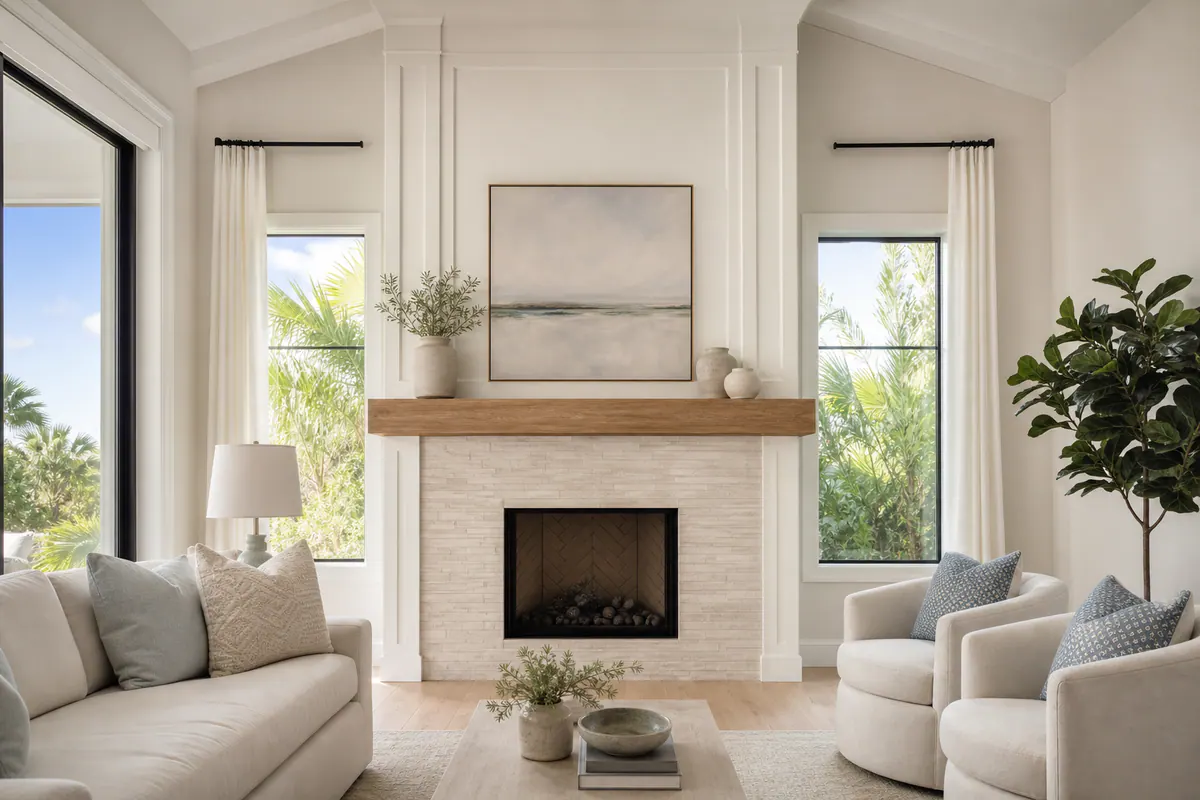
Fireplace Mantels and Surrounds for Refined Longboat Key Interiors
A fireplace finish is an interior upgrade, not a fireplace-system sale, and it can change the entire balance of a room. For a fireplace mantel Longboat Key homeowners can treat as part of the architecture, the goal is a focal point that feels intentional beside sunlit walls, soft coastal neutrals, pale woods, textured tile, and tailored millwork.
A mantel shelf adds a horizontal ledge for art or restrained display; a surround frames the opening itself; integrated trim gives the composition a more built-in appearance; and a feature wall extends the treatment across more of the wall for greater visual presence. A compact bedroom fireplace may benefit from a clean painted surround and simple shelf, while a taller gathering room can carry a more substantial surround, overmantel, or wall finish without feeling top-heavy.
Professional fireplace surround work begins with the room, not a catalog selection: measuring the existing fireplace and wall, laying out balanced proportions, coordinating paint, stone, tile, or millwork, and creating crisp transitions where trim meets adjacent finishes. The final design should also work with the existing appliance or insert and its manufacturer specifications, particularly where the finish approaches the fireplace opening. That attention to scale, material coordination, and finish quality helps the fireplace look built into the home rather than added onto the wall.
Understanding the Difference Between a Mantel, Surround, Trim, and Overmantel
The amount of structure around the opening should match the wall it occupies. A mantel shelf is the lightest treatment: it projects horizontally above the fireplace, creates a display ledge for a mirror or artwork, and leaves the vertical sides of the opening exposed. It suits a compact room when the existing facing is already finished attractively and a full frame would make the wall feel crowded.
A surround gives the fireplace a more deliberate outline. It frames the firebox or insert with two vertical legs and a header, using painted panels, tile, stone, or layered millwork; the facing is the finished surface immediately around the opening. That complete rectangular frame gives a wide, plain wall more visual weight, where a shelf alone can seem to float. For fireplace mantels Longboat Key homes often benefit from a surround that repeats a nearby finish, such as pale cabinetry paint, a tile backsplash tone, or a stone accent, rather than introducing an unrelated material.
Fireplace trim is the precision layer at the edges: it can cap a surround, create a narrow reveal between panel sections, cover a transition from tile to drywall, or align the fireplace treatment with adjacent baseboards, wall paneling, and crown molding. A consistent trim profile and clean returns make a modest painted surround read as tailored millwork; uneven widths or exposed termination edges draw attention to the construction instead of the fireplace.
An overmantel starts above the shelf and carries the composition upward through framed paneling, a mirror field, or another finished plane. It is useful when a high ceiling leaves a large blank area above the fireplace, while an integrated feature wall expands farther outward or runs floor to ceiling in tile, stone, wood detailing, or paint. The practical distinction is straightforward: choose a shelf for restraint, a surround when the opening needs definition, and an overmantel or feature wall when the room needs stronger vertical connection.
Selecting Materials and Finishes for a Coastal Longboat Key Home
Material is where the fireplace treatment begins to take on the room's character. Painted millwork creates a clean, tailored surround that can disappear gracefully into pale walls or echo nearby cabinetry; it is a good fit when the goal is crisp geometry rather than a heavy visual statement. A professionally prepared paint finish also makes the small details matter: tight joints, smooth profiles, and clean lines where the surround meets the wall.
Stained wood brings a different kind of presence. Its grain, tone, and edge profile can add warmth to a room with limestone-look flooring, woven textures, or otherwise light finishes. It tends to work best when the wood relates to another intentional element, cabinetry, ceiling beams, flooring, or furniture, rather than appearing as an isolated accent. For a custom mantel Longboat Key homeowners may prefer a restrained stain that complements the room's undertones instead of competing with them.
Tile and stone veneer shift the focus to the facing. Tile can introduce pattern, subtle sheen, or tactile texture in a controlled area around the opening; a handmade-look tile, for example, can soften a tailored painted surround. Stone veneer carries more variation and visual depth, making it useful when the fireplace wall needs a more grounded, dimensional finish. A painted mantel paired with a tile facing is often a balanced middle path: the millwork provides structure while the tile supplies detail.
In a coastal home, finish selection should account for the room's light, everyday upkeep preferences, and moisture-conscious material planning, not just a sample viewed in isolation. Comparing materials beside flooring, cabinet colors, wall paint, and hardware helps reveal whether undertones and textures belong together. Before materials are finalized around an operating fireplace, the finish layout should also be coordinated with the appliance's installation instructions so the completed design respects the requirements of that specific unit.
Designing the Right Scale: Mantel Proportions, Overmantels, and Feature Walls
Proportion is what keeps a fireplace treatment from feeling either undersized or overwhelming. The opening is the starting point, but the finished composition also responds to the full wall width, ceiling height, distance from the main seating area, windows, door casings, beams, and adjoining millwork. A measured elevation drawing makes those relationships visible before trim profiles, tile boundaries, or shelf depth are chosen.
In a compact coastal living room, restraint usually gives the wall more breathing room. A painted surround with a shallow mantel shelf can frame the fireplace without pushing too far into the room or crowding a nearby window and seating arrangement. The shelf should read as a deliberate horizontal line, not a bulky cap; artwork or a mirror above it can carry the eye upward while preserving the light, open character of the space.
A larger great room can accommodate a broader custom mantel and a more vertical composition. An overmantel treatment, such as paneled millwork, a centered mirror field, or a tall tile expanse, helps bridge the space between the shelf and a higher ceiling. A fireplace feature wall can also extend tile or another finish beyond the immediate opening, creating a stronger focal zone. Where cabinetry already anchors each side, the fireplace treatment should be balanced against it rather than competing through mismatched widths, crowded shelves, or too many visual divisions.
Television placement, art, mirrors, lighting, and display shelving belong in the first wall layout, not at the end of the project. Each changes the available blank space and the visual center of the composition: a television calls for a clean, intentionally sized field; a mirror can amplify daylight; and artwork may need a quieter surround to remain the focus. Planning those elements alongside the fireplace mantel in Longboat Key homes produces cleaner transitions and a wall that feels composed from every seat in the room. Any final mantel or facing layout around an operating appliance should be coordinated with that unit's installation requirements.
Custom Mantel and Surround Installation Around an Existing Fireplace or Insert
An existing fireplace does not necessarily need to be replaced to look fully reconsidered. Many updates begin by studying the visible opening, the facing already in place, the surrounding drywall or paneling, and the wall's available width. That field assessment identifies what can be refined visually: a tailored shelf over a simple opening, surround panels that create a more finished frame, new trim that ties into nearby millwork, or a tile facing that gives the fireplace a clearer architectural presence.
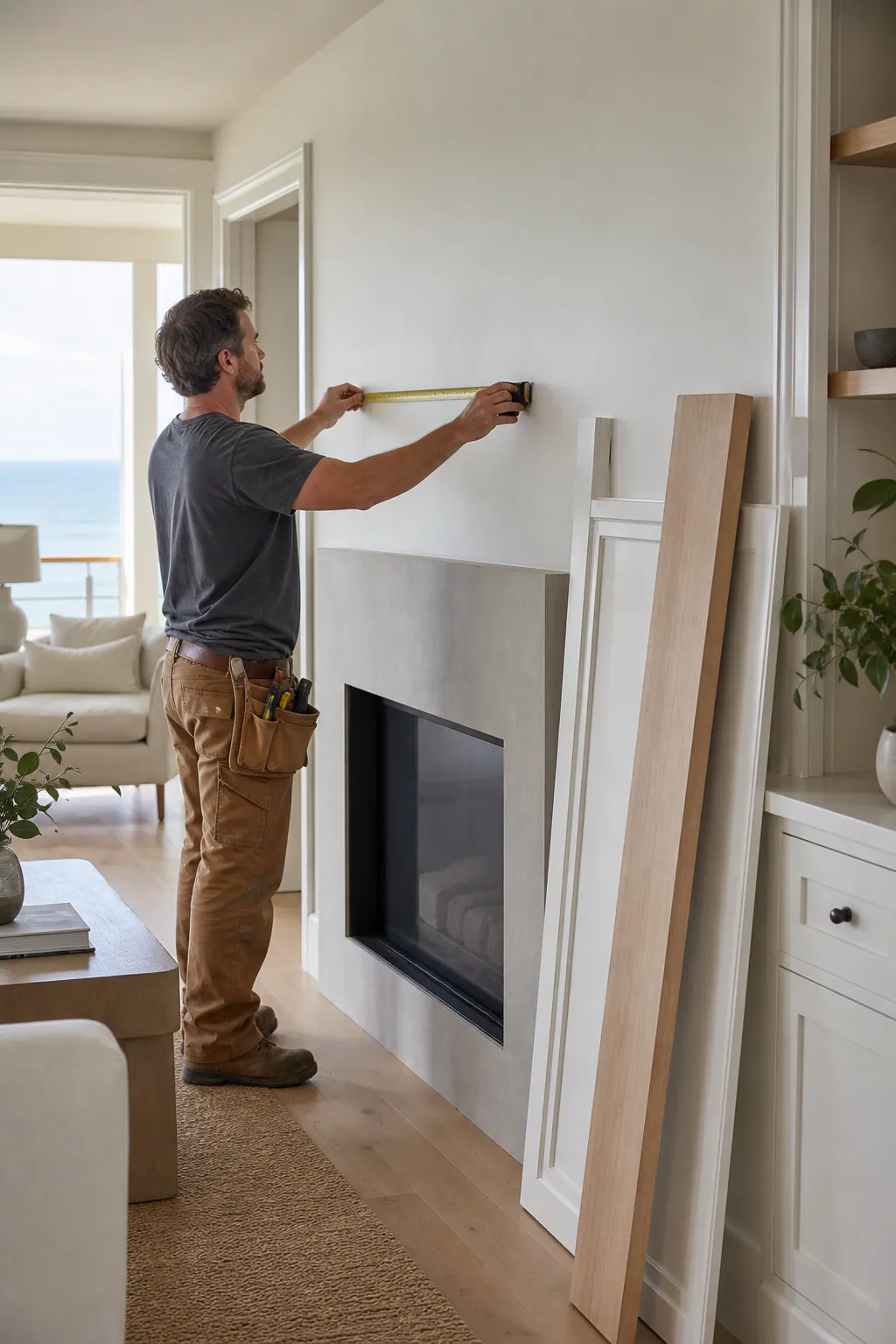
For mantel installation in Longboat Key, the design work should start with accurate site dimensions rather than a stock profile. The installer can map the opening, wall conditions, adjacent baseboards, cabinetry, outlets, and intended art or television location, then develop a layout that gives each finish a purposeful edge. A weak result often shows up in uneven returns, trim that stops awkwardly against another surface, or a shelf that appears unrelated to the fireplace below it. Clean alignment and balanced reveals are what make a new treatment feel original to the room.
The existing appliance also shapes the finishing plan. A fireplace surround can refresh the visual field around an insert, while a custom mantel shelf or trim package may be the better choice when the current facing already suits the room. Before finalizing materials or projection, the available fireplace or insert documentation should be reviewed so the proposed design respects the unit's specified clearances, access needs, and installation conditions. Those details vary by appliance and site, so they guide the finish rather than becoming an afterthought.
Once the design and materials are selected, custom millwork can be fabricated for the wall rather than forced into an off-the-shelf size. Installation focuses on precise layout, secure fitting, coordinated transitions between trim and facing, and a polished final paint or stain finish. This is finish work: it can elevate the visible fireplace wall without representing firebox repair, gas work, electrical changes, or unverified structural alterations.
Fireplace Finishing Combinations That Fit Coastal Rooms
These combinations give the design conversation a clear starting point while leaving room to tailor the final layout to the wall and adjoining finishes.
- Small living room: A simple painted surround paired with a tailored mantel shelf creates definition around the opening without making a compact room feel crowded. Matching the surround closely to the wall color keeps the treatment light; the shelf can introduce a subtle contrast or repeat nearby trim. The key is restraint: an overly deep shelf or heavily layered molding can make the fireplace appear wider and heavier than the room can support.
- Warmth with texture: A tile surround and stained wood mantel work well in an open living area that needs a little visual warmth against pale floors and soft neutral walls. Tile supplies a durable, textured field around the opening, while the wood shelf gives the composition a more relaxed furniture-like note. Choose one material to lead: a strongly patterned tile and a highly figured stain can compete rather than complement.
- Tall great room: A full-height painted overmantel carries the fireplace composition upward through framed panels or clean millwork. It helps a lower opening feel connected to a high ceiling. Keep its width related to the surround below so the upper treatment does not become a detached vertical column.
- Layered focal wall: A balanced feature wall can combine custom fireplace trim, one accent material, and optional built-in cabinetry where included in the project scope. This is a strong choice for a broad wall that needs symmetry and storage, but cabinetry, tile, paneling, and lighting should share a single visual order. Limiting competing profiles and colors keeps the result composed rather than busy.
Plan a Fireplace Finish That Feels Built Into the Room
Start with a dimensioned snapshot of the wall: the fireplace opening, full wall width, proposed mantel height, and ceiling height, along with straight-on photos. Those details show whether a shallow shelf will keep a compact composition light or whether the room has the vertical space to carry an overmantel or floor-to-ceiling finish. Include available fireplace or insert documentation so the finish layout can be coordinated with the appliance.
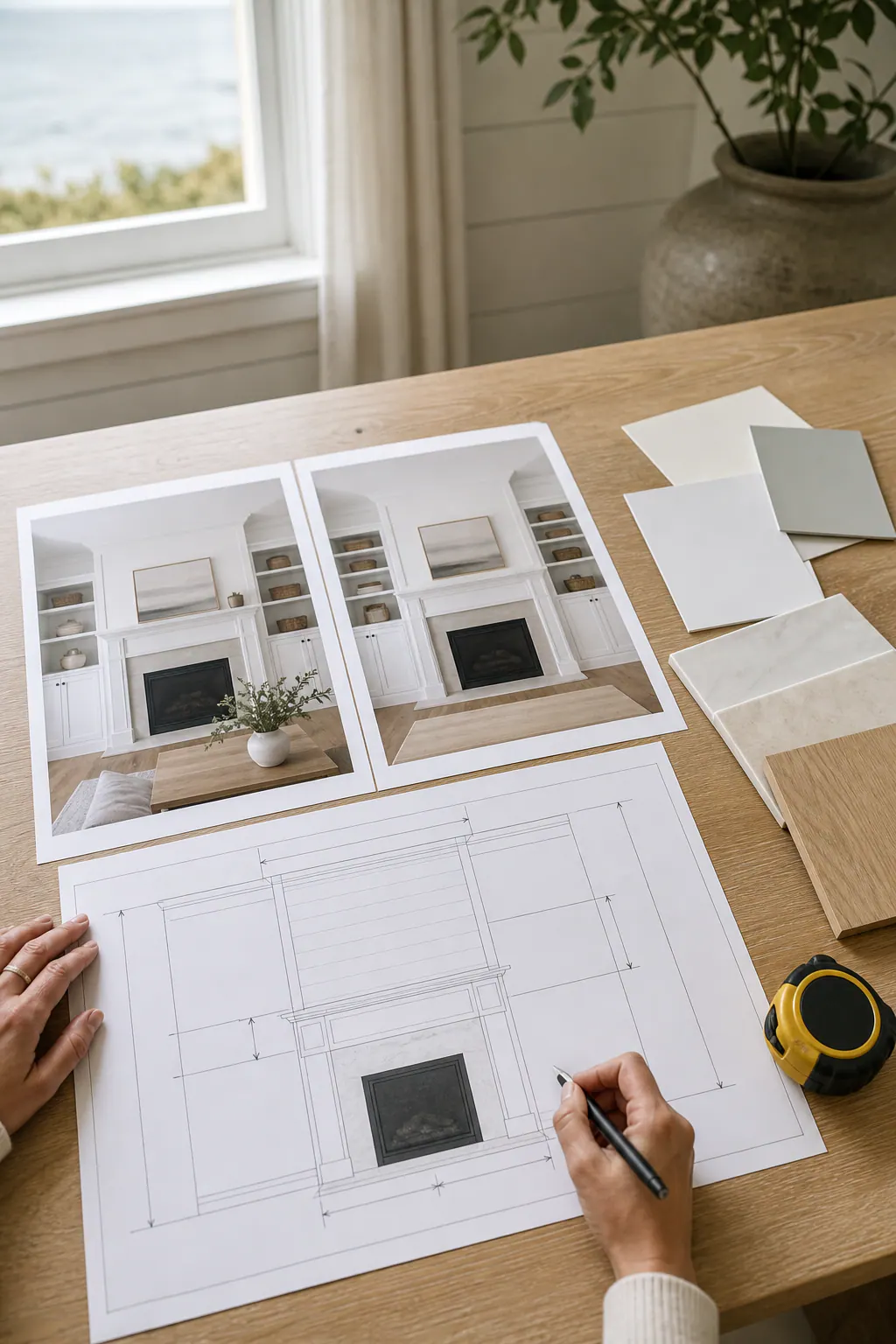
Inspiration images work best when they point to a specific preference, the crisp edge of painted millwork, the warmth of a wood shelf, or the texture and scale of a tile field. For a custom fireplace mantel Longboat Key homeowners can share those references with flooring, cabinetry, paint samples, and television or display plans. Professional coordination turns them into a measured layout, integrated trim, material pairings, clean transitions, and a polished finish that belongs in the room.
Plan the next step
Compare the broader Fireplace Mantels and Surrounds service.
Review the Longboat Key, FL service area for local planning context.
When you are ready, request a free estimate with the rooms, trim goals, city, and available photos.
FAQs
What is the difference between a fireplace mantel and a fireplace surround?
A mantel is a horizontal shelf above the fireplace that provides a display ledge for art or decor. A surround frames the opening with vertical legs and a header, using materials such as painted millwork, tile, stone, or layered trim.
What materials work best for a fireplace mantel in a coastal Longboat Key home?
Painted millwork, restrained stained wood, tile, and stone veneer all work well when coordinated with the home’s flooring, cabinetry, wall color, and hardware. Coastal selections should also account for natural light, upkeep preferences, and moisture-conscious material planning.
Can a custom mantel be installed around an existing fireplace insert?
Yes, a custom shelf, surround panels, trim package, or tile facing can update an existing fireplace insert without replacing it. The layout must be based on accurate site dimensions and coordinated with the insert’s specified clearances, access needs, and installation conditions.
How high should a fireplace mantel be installed?
Mantel height should be determined from the fireplace opening, full wall width, ceiling height, seating distance, nearby windows, cabinetry, and the planned television, mirror, or artwork. The final height and shelf projection must also comply with the operating appliance’s manufacturer installation requirements.
Should I choose a mantel shelf, surround, overmantel, or fireplace feature wall?
Choose a shelf for a compact room or an attractively finished facing that only needs a restrained horizontal accent. Choose a surround when the opening needs definition, and use an overmantel or feature wall when a tall ceiling or broad wall needs stronger vertical connection and focal presence.