
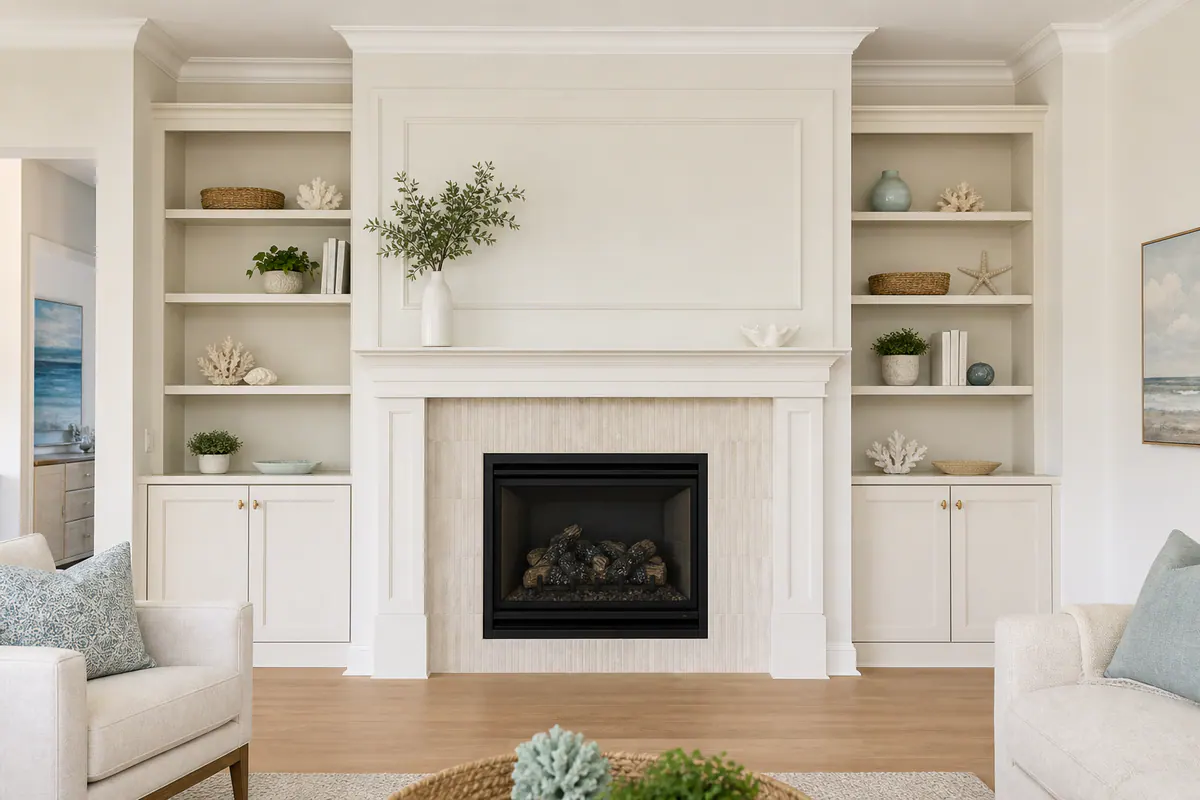
Fireplace Mantels and Surrounds for North Port Living Rooms
A fireplace wall can do more than hold an insert or firebox, it can give a North Port living room a clear focal point that feels considered rather than pieced together. Whether you are replacing dated trim or planning a larger remodel, this guide helps you sort out the choices behind a fireplace mantel in North Port, FL.
A mantel is the horizontal shelf or beam; a surround frames the opening; the hearth sits at its base; facing is the visible finish around it; and wall trim can extend the design into paneling, built-ins, or a feature wall. They can form one coordinated composition, but a simple new shelf may be all a room needs. A full surround and facing update creates a stronger architectural statement.
Start with the room's scale, the existing opening, and how the fireplace will be used. A slim painted surround can suit a bright transitional room, while a substantial wood beam with a clean wall finish can add warmth without making the wall feel heavy. Fireplace type matters, too: the chosen design must work with the installation requirements for the specific unit before materials and dimensions are finalized.
What Is the Difference Between a Mantel, Surround, Hearth, and Fireplace Trim?
Think of these elements as layers with different visual jobs, rather than interchangeable names for the same upgrade. The mantel shelf is the horizontal line that can break up a tall wall and provide a place for art or seasonal décor. A deeper, thicker mantel beam reads more casual and substantial; a slim shelf feels lighter and more tailored. Either can stand on its own when the opening already has a clean finish and the goal is simply to add warmth or definition.
The surround works closer to the firebox, forming the finished border at its sides and top. It may be painted millwork for a traditional profile or a minimal frame that keeps attention on the opening. Facing is broader: it is the field of tile, stone, brick veneer, slab, or other finish extending beyond that frame. The hearth completes the lower portion, whether it is a flush surface at the opening or an extension into the room. A hearth can make the fireplace feel grounded, while a tall facing can give a smaller opening more presence.
Fireplace wall trim in North Port, FL, takes the design beyond the opening itself. Panel molding can create a formal, built-in look; vertical paneling can add height; and flanking cabinets or shelves can make the fireplace part of a larger storage wall. A shelf-only update is often enough for an otherwise finished wall. Choose a full surround, facing, hearth, and trim package when the existing fireplace looks isolated, undersized, or disconnected from the room's architecture. Before final dimensions and materials are selected, the assembly should be planned around the installation requirements of the specific fireplace unit.
Choosing Mantel and Surround Materials: Appearance, Maintenance, and Use
Material is where the fireplace wall starts to set the room's mood. Painted wood is a natural fit for a tailored surround or traditional millwork package: it can blend with nearby baseboards, door casings, or built-ins and keeps the overall composition crisp. A stained wood mantel brings out grain and tonal variation instead, giving a more furniture-like finish that suits layered transitional, coastal, or traditional interiors. Paint tends to make profiles and panel details more prominent; stained wood makes the material itself the feature.
A reclaimed-look beam is a different visual move from a formal wood mantel. Its thicker profile, knots, texture, and aged character add warmth and visual weight, often working well above a simple tile or plaster-like facing. It is a strong choice when the wall needs contrast, but it can overpower a small opening or an already busy room. For a custom mantel in North Port, FL, finish samples are especially useful: a warm brown that feels grounded in daylight may look much darker against a shaded fireplace wall.
For the facing, porcelain tile offers the widest design range, from quiet large-format panels to stone-look, patterned, or handmade-look tile, while its grout layout becomes part of the finished appearance. Natural stone introduces genuine color shifts, veining, and texture, creating a more organic focal point that benefits from accepting variation rather than expecting a uniform pattern. Brick veneer reads more architectural and structured, with mortar joints that give the wall depth. A slab surround minimizes visible joints and can make a modern or transitional fireplace feel calmer and more continuous.
Maintenance should support the look you want to live with. Smooth painted surfaces show scuffs more readily than textured materials, while grout lines and heavily textured finishes create more visual detail to keep clean. Stone, brick, and wood also present natural variation that should be treated as part of their character rather than a defect.
Appearance alone cannot determine whether a finish belongs near a particular firebox. The fireplace product's installation instructions govern the allowable materials, placement, and heat-related limitations around the opening. Select the visual direction first, then finalize the wood mantel, surround, tile, stone, veneer, or slab assembly around the requirements of the specific unit before fabrication begins.
Designing the Right Scale for Your Fireplace Wall
Proportion is what makes a fireplace wall feel composed instead of assembled from attractive parts. Begin with the firebox opening: the mantel should read as a deliberate horizontal frame, not a narrow cap that stops abruptly at the sides or an oversized beam that dwarfs it. A thick beam creates a low, grounded visual line and suits a broad facing; a slim shelf carries less visual weight and can leave more breathing room around a compact opening.
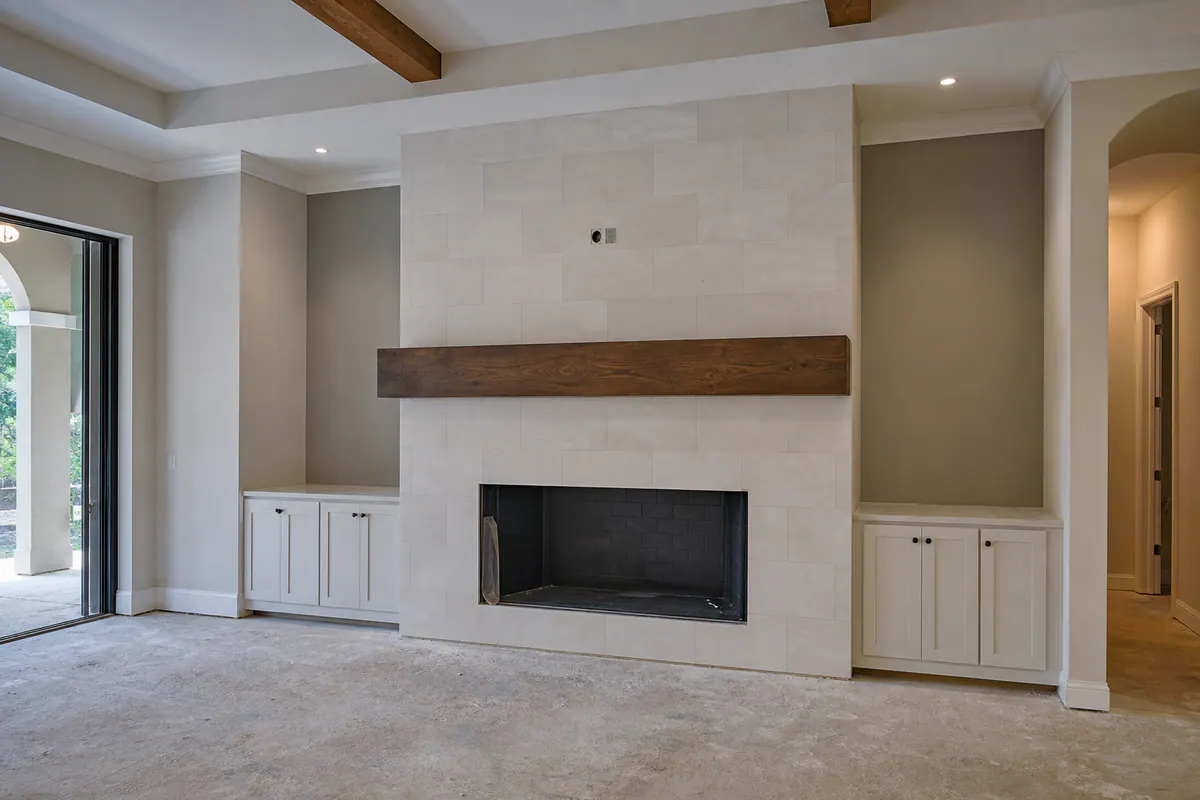
Let the surround and facing respond to the wall around them. In a smaller living room, a simple surround with restrained side widths and a shallow hearth can define the fireplace without pushing the room forward visually. On a large uninterrupted wall, a wider tile or stone facing, vertical paneling, or a built-in composition can give the opening enough presence to hold the space. Ceiling height matters here: tall ceilings often benefit from a design that extends upward, while a low, wide composition can make an already modest room feel compressed.
Nearby architecture should set the boundaries. Aligning a custom fireplace mantel in North Port, FL, with the outer edges of adjacent cabinets can make a built-in wall feel intentional. Windows, doors, and nearby corners may call for a narrower composition or asymmetrical storage rather than forcing every element to mirror the fireplace. Hearth depth also affects circulation, especially where seating or a walkway passes in front of the wall.
Before committing to fabrication, review a measured elevation alongside room photos and actual finish samples. An elevation shows the relationship among the opening, shelf, facing, ceiling, and built-ins at a glance; photos reveal sightlines, daylight, and competing architectural features. Use that review to compare a shelf-only option against a full surround or paneled wall, then finalize dimensions around the specific fireplace unit's installation requirements.
Updating an Existing Fireplace: What to Review Before Replacing the Mantel or Surround
Before anything comes off the wall, treat the existing fireplace as a measured condition, not a blank canvas. An unfinished wall may only need secure backing and a new shelf, while a dated wood surround may reveal old trim layers, uneven drywall, or attachment points that influence the replacement design. Covering an old facing with a new tile surround also changes the finished wall depth, which can affect how the firebox edge, mantel projection, adjacent baseboards, and nearby cabinetry line up.
A site review for fireplace mantel installation in North Port, FL, should identify the firebox opening, wall construction, appliance make and model, visible vents, electrical outlets, and possible mounting locations before materials are selected. A plain electric fireplace wall, for example, can become more architectural with paneling, a shallow surround, and a shelf, but the new finish still has to accommodate the unit's controls, power connection, and service access. If the goal is to conceal an older finish, the strongest result usually comes from planning the new face, trim thickness, and edge details as one assembly rather than simply adding material over whatever is there.
Televisions and sound equipment deserve the same early planning. Their size, cable path, outlet locations, wall blocking, and desired viewing height can change the mantel depth and the amount of open wall above it. Heat exposure around a combustible mantel and television placement are product- and installation-specific; there is no universal clearance number or above-the-fireplace TV layout that fits every unit. Use the relevant fireplace manufacturer information as part of the design review, then coordinate the shelf, surround, electrical work, and mounting approach before the finished wall is closed.
Coordinating Fireplace Finishes With Your North Port Home
Choose the fireplace wall as part of the room's finish palette, not as an isolated accent. In a bright transitional living room, a painted mantel with simple panel trim can echo white or softly colored cabinets, clean baseboards, and light wall paint. The result is tailored without feeling formal. A good signal is repetition: the trim profile or paint undertone appears elsewhere in the room; a weak signal is a bright-white surround beside noticeably creamy cabinetry.
For a warmer, more organic direction, a stained shelf or substantial beam introduces grain and contrast against pale walls, wood-look flooring, woven textures, or darker cabinet hardware. Let the stain relate to the flooring's overall temperature rather than trying to match every board exactly. A close-but-not-identical wood tone often looks intentional, while an almost-match can make both finishes seem off.
Clean contemporary rooms usually benefit from a quieter face. Large-format tile or a slab surround minimizes visual interruption, so the fireplace reads as one composed plane rather than a collection of small details. Consider the grout lines, veining, and edge treatment alongside nearby counters and flooring; a dramatic slab can be the feature, while a low-variation tile gives artwork, lighting, or built-ins more room to lead.
A stone surround or brick veneer brings texture and shadow, making it a stronger architectural focal point. Balance that visual weight with simpler paint colors and restrained cabinetry. Before choosing a finish for fireplace mantels in North Port, FL, view paint, stain, tile, stone, and trim-profile samples together in the room at different times of day. Daylight, ceiling fixtures, and adjacent built-ins can shift a color or texture from cohesive to competing far more than a showroom sample suggests.
Plan Your Custom Fireplace Mantel or Surround Project
Bring the project into focus by collecting a few simple references before you request a design conversation. Take wide photos of the room and straight-on photos of the fireplace wall, then note the firebox opening, the wall width, ceiling height, and the location of outlets, vents, built-ins, or a planned television. Inspiration images are useful, too, but mark what you like in each one: the beam thickness, tile scale, painted trim, or the way the surrounding wall is finished.
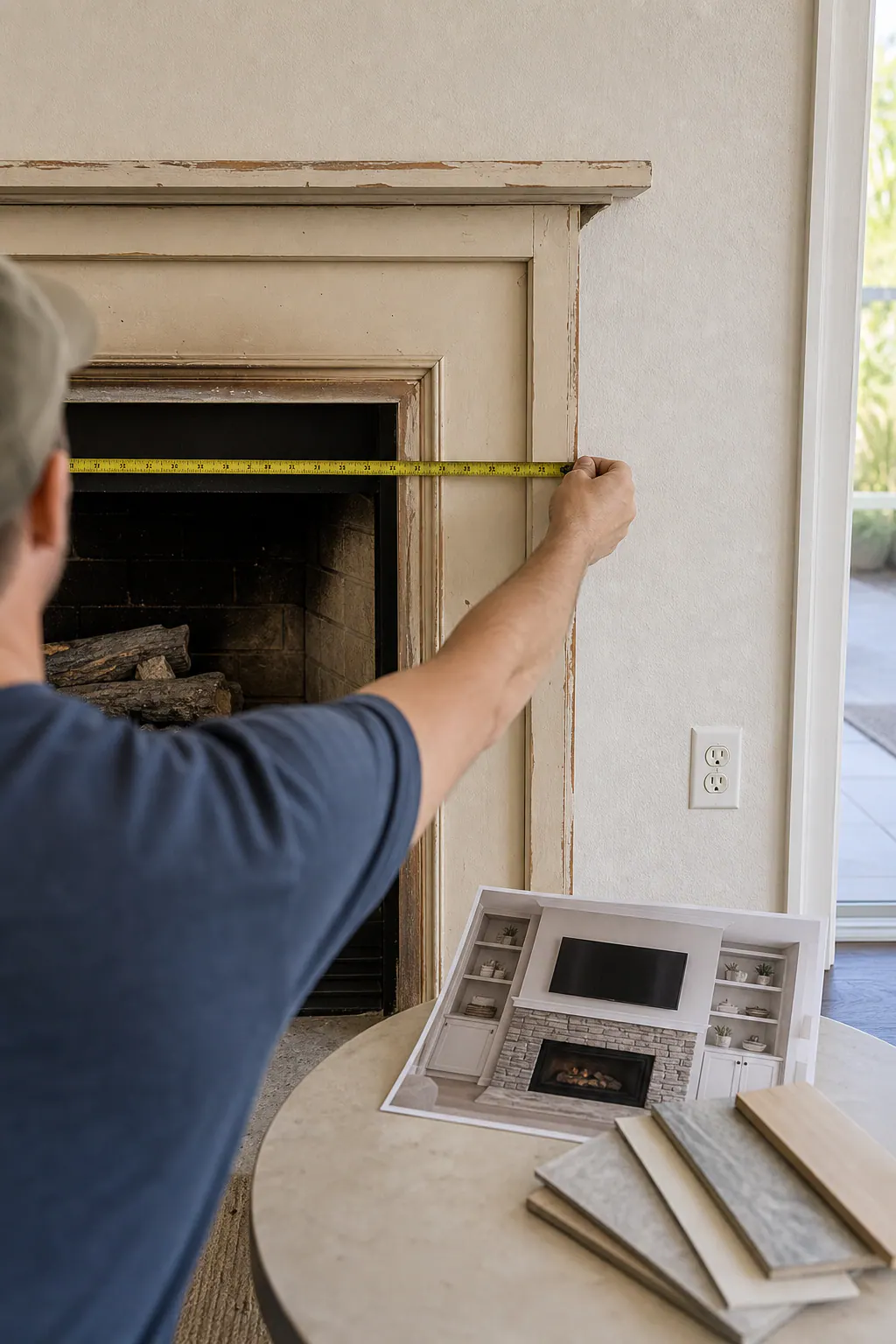
If you know the fireplace make and model, include it with those details. That information helps distinguish a shelf-only update from a full fireplace surround, a new facing, or a coordinated wall-trim package, while keeping the design grounded in the existing fireplace conditions.
A custom mantel consultation is the time to turn preferences into a defined scope. Share the room photos, measurements, finish samples, and inspiration so the conversation can narrow the material direction, visual weight, and extent of the work. Whether you are considering a custom mantel in North Port, FL, or a more complete fireplace-wall update, begin with a site-aware design discussion that gives every element a clear role in the finished room.
Plan the next step
Compare the broader Fireplace Mantels and Surrounds service.
Review the North Port, FL service area for local planning context.
When you are ready, request a free estimate with the rooms, trim goals, city, and available photos.
FAQs
What is the difference between a fireplace mantel and a fireplace surround?
A mantel is the horizontal shelf or beam above the fireplace opening, while a surround is the finished frame along the sides and top of the firebox. Facing is the broader visible field of tile, stone, brick veneer, or slab, and the hearth is the surface at the base.
What materials are best for a fireplace mantel in North Port, FL?
Painted wood works well for tailored surrounds and traditional millwork, while stained wood adds visible grain and a furniture-like feel. Reclaimed-look beams add texture and visual weight, but can overpower a small opening or busy room.
Can I add a custom mantel to an existing fireplace?
Yes, an existing fireplace can receive a shelf-only update, a new surround, or a full facing and trim package. First review the firebox opening, wall construction, appliance make and model, vents, outlets, old trim layers, and the added depth of any new finish.
Can a TV be mounted above a fireplace mantel?
A TV can be planned above a fireplace, but its size, viewing height, cable path, outlets, wall blocking, and sound equipment must be coordinated before the wall is finished. Mantel heat exposure and TV placement depend on the specific fireplace manufacturer’s installation instructions, not a universal clearance number.
How do I choose the right size mantel and surround for my fireplace?
Size the mantel around the firebox opening so it reads as a deliberate horizontal frame rather than a narrow cap or oversized beam. Use a measured elevation, room photos, and finish samples to compare shelf-only and full-wall options, while accounting for wall width, ceiling height, adjacent cabinets, walkways, and hearth depth.