
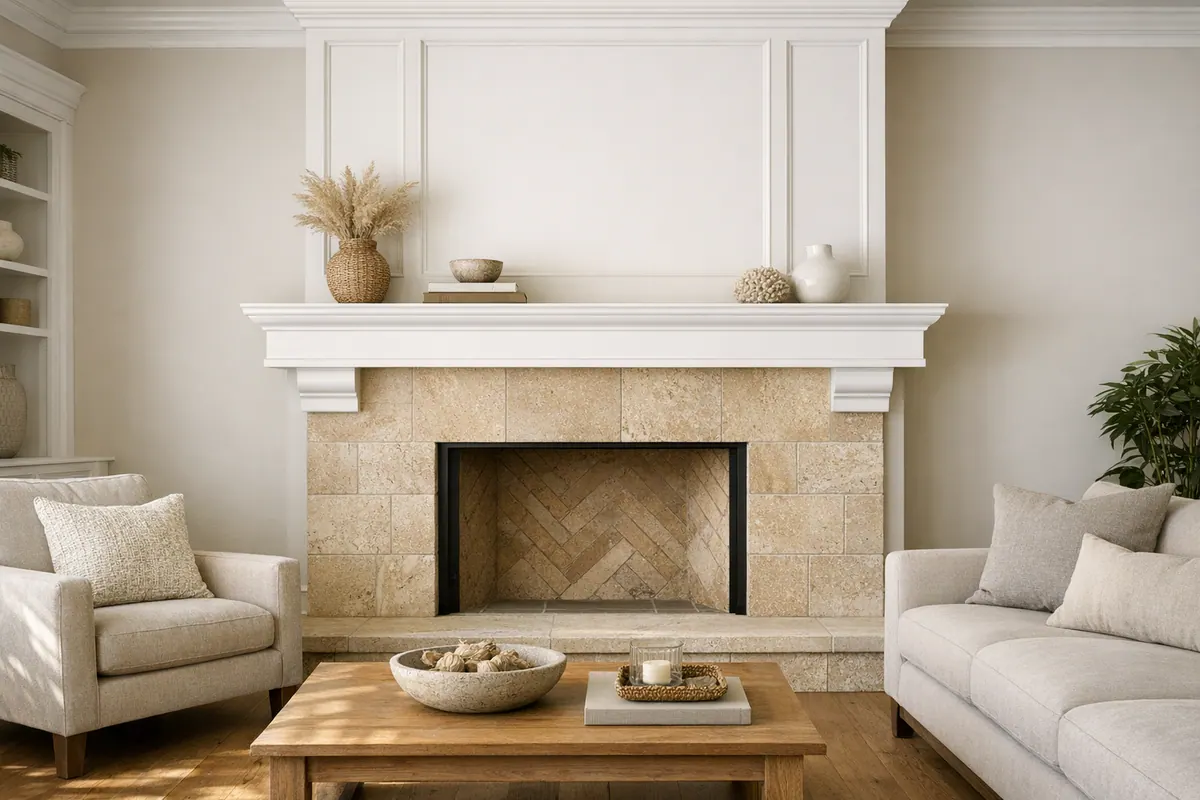
Custom Fireplace Mantels and Surrounds for Venice, FL Living Spaces
A fireplace wall can do more than hold an appliance, it can give the entire living room a clear visual center. For homeowners seeking a custom fireplace mantel Venice FL upgrade, finish carpentry adds the framing, scale, and material continuity that can make an existing fireplace feel deliberately connected to the rest of the room.
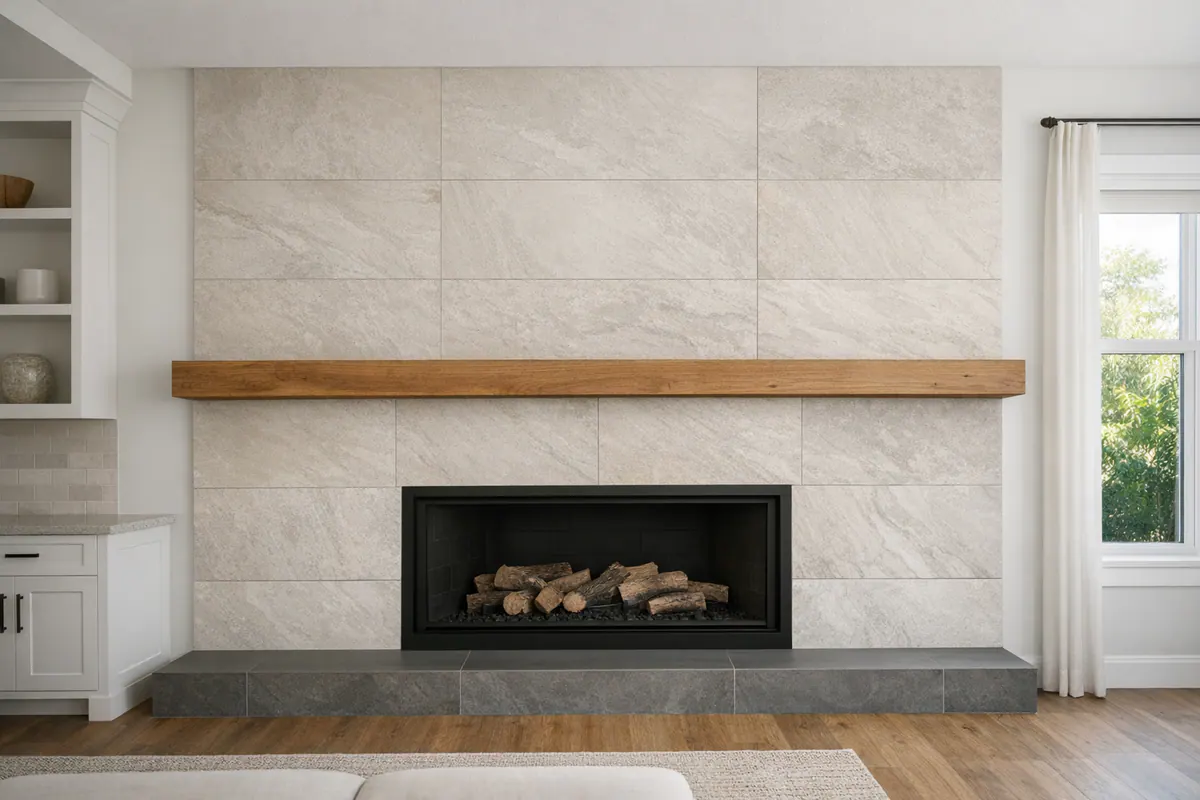
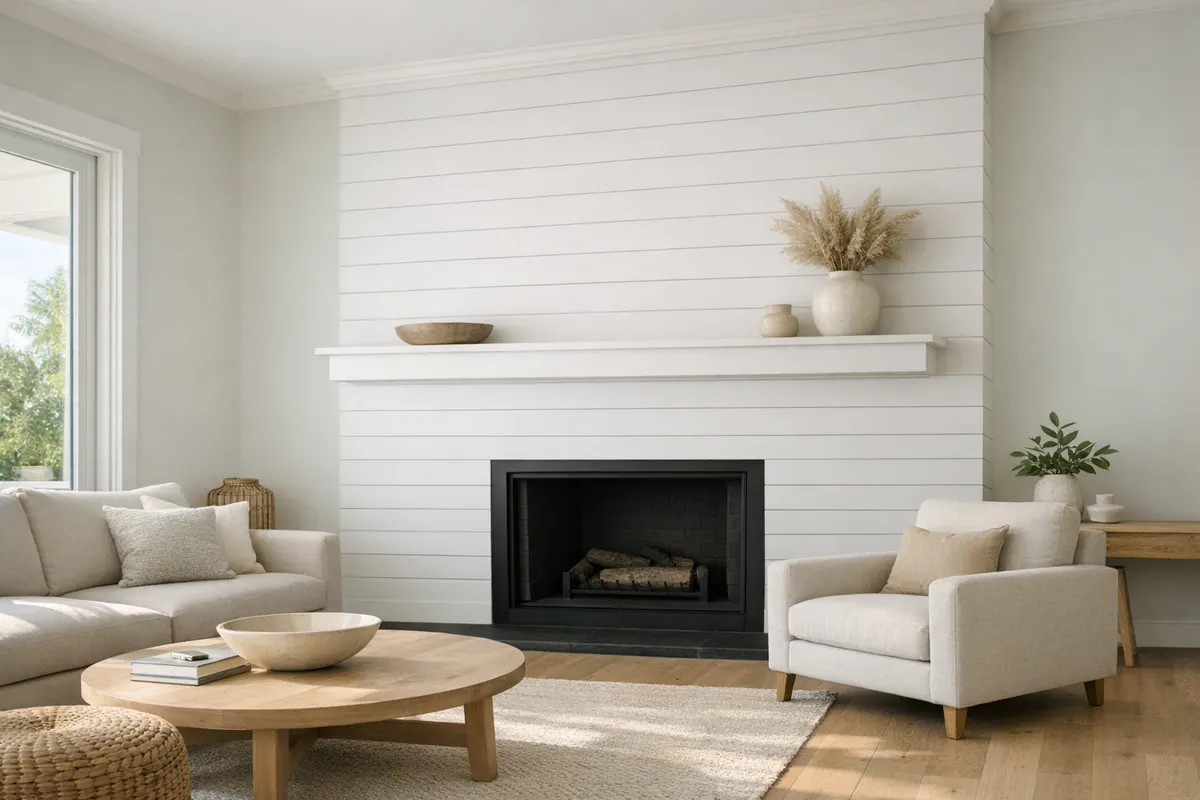
The scope can be as restrained or as architectural as the wall needs: a custom mantel shelf creates a horizontal display ledge; a trim-built surround frames the firebox area; an overmantel carries the composition upward; and a shiplap treatment turns the full wall into an accent feature. Where stone or tile already exists, carefully fitted wood trim can create a clean, intentional transition rather than leaving the materials to meet awkwardly.
Well-resolved fireplace surrounds in Venice FL rely on centered layouts, consistent reveals, proportionate shelf depth, and edges that follow uneven finished surfaces cleanly. This work focuses on the visible finish layer, not appliance installation, gas piping, electrical work, chimney repair, or masonry construction. Because mantel placement and nearby finishes can be affected by the particular fireplace appliance and its required clearances, the final design should work within the manufacturer's instructions and any needed trade coordination.
Mantel, Surround, Overmantel, and Fireplace Trim: What Each Element Does
These pieces work as a composition, but each solves a different visual problem. A mantel shelf is the horizontal member above the fireplace. It establishes a visual stopping point, gives the fireplace a broader presence, and can provide a ledge for restrained décor. A shelf-only treatment suits a fireplace that already has a finished stone, tile, or clean drywall face and needs definition without a larger built-out feature.
A surround is the frame around the firebox area, commonly made up of two vertical legs and a header. It gives the opening an architectural boundary and makes sense when the firebox looks underscaled, isolated, or visually disconnected from the room. A fireplace surround Venice FL project may be simple square-edged casing or a more layered assembly with panels, pilasters, and a substantial header; the latter carries more formal weight and needs enough wall area to avoid feeling crowded.
An overmantel begins above the shelf and adds height through paneling, applied molding, or a framed field for artwork or a television. It is not the same as the surround: the surround organizes the opening, while the overmantel organizes the wall above it. A full focal-point wall takes that idea farther, extending shiplap, panel molding, or another finish across a larger portion of the wall.
Fireplace trim is the finishing work that sharpens the assembly: casing, corner details, returns, edge profiles, and the transitions where wood meets stone, tile, or wall finish. Good fireplace trim Venice FL work leaves deliberate, even reveals and aligned legs and header. Weak detailing shows up as a shelf that feels too slight, trim that stops awkwardly against uneven stone, or competing materials with no clear hierarchy.
These elements are often combined because they reinforce one another, not because every fireplace needs all of them. The right scope depends on whether the wall needs a horizontal anchor, a stronger opening frame, more vertical presence, or a complete finish treatment.
Choosing the Right Fireplace Treatment for the Wall and Room
Start with the visual imbalance you want to correct. On a low, wide fireplace wall with an attractive finished face, a simple wood shelf can be enough: it adds a horizontal line and a display surface without making the wall feel heavier. This restrained approach works especially well when nearby furniture, windows, or built-ins already give the room plenty of structure.
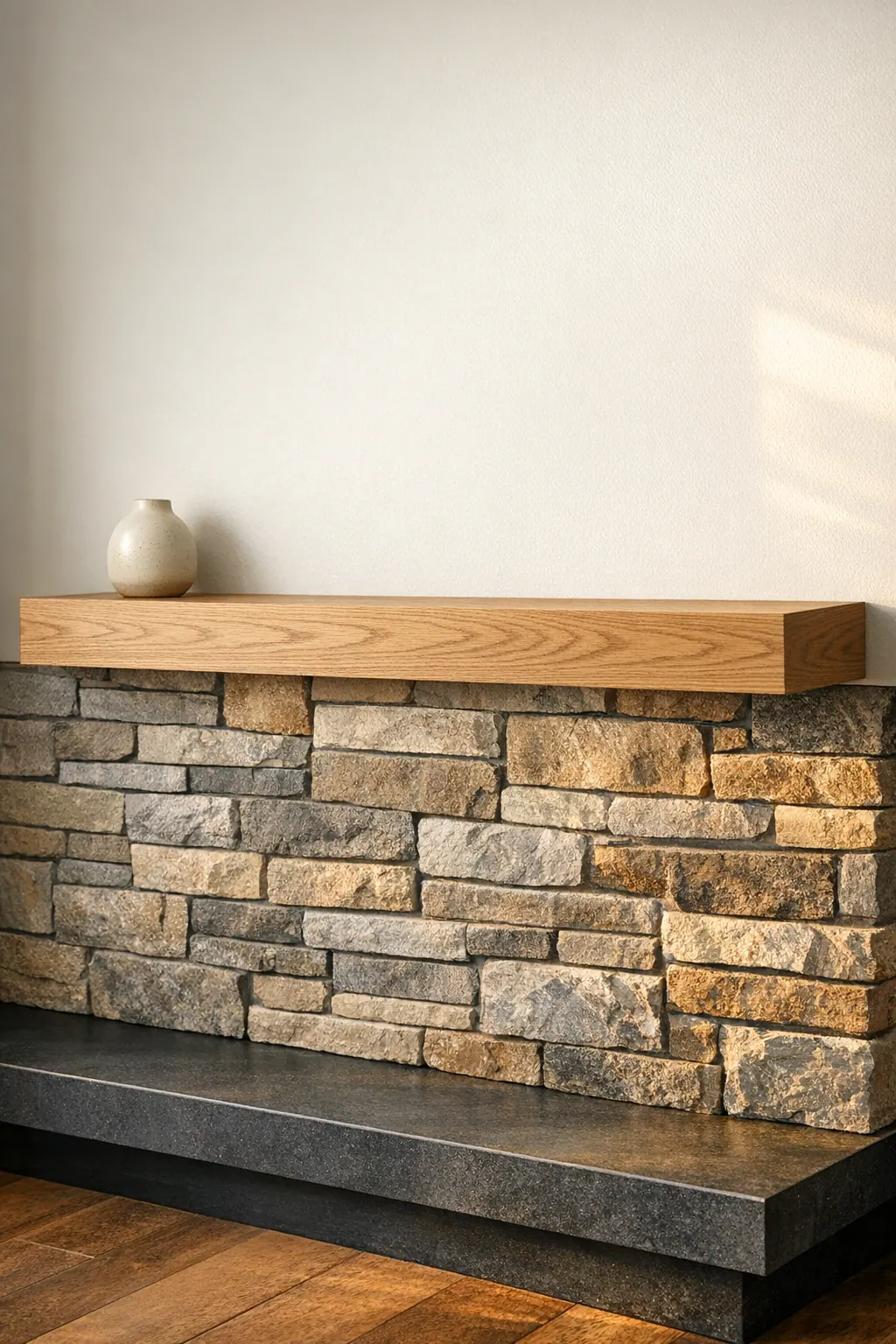
A built-up mantel adds layered thickness through a deeper shelf, substantial face board, and more pronounced returns. It gives a modest firebox greater presence and can relate visually to chunky cabinet crowns, ceiling beams, or wider baseboards. If the opening appears small against a broad blank wall, a full surround may do more than a shelf alone by extending that visual weight down both sides. The useful checkpoint is scale: the surround should feel centered and intentional, not like a narrow frame floating in unused wall space.
Tall ceilings create a different problem. When there is a large expanse above the mantel, an overmantel can carry the composition upward with panels, molding, or a framed field. It helps the fireplace read as part of the room's height rather than stopping abruptly below it. For a television location, the layout should be drawn as one composition so the screen, shelf, and surrounding trim do not compete for the same visual space.
For the strongest architectural change, a bump-out or full focal-point wall creates a new plane around the fireplace. Shiplap, paneling, or a carefully framed finish field can make sense when the existing wall is flat, narrow, or visually lost among open living areas. A custom mantel Venice FL project should also consider sightlines from the main seating area, alignment with adjacent built-ins, and whether the fireplace is meant to lead the room or support another feature.
Measured layout planning helps settle these choices before materials are selected. It reveals whether shelf depth feels useful rather than bulky, whether vertical details line up with cabinetry or ceiling elements, and where irregular stone or tile will require deliberate transition details. Appliance-specific constraints should be resolved before the finish design is finalized so the completed trim treatment suits both the room and the existing fireplace.
Painted or Stained: Materials, Profiles, and Finish Choices
Finish is where the same overall layout begins to take on a distinct personality. A painted mantel works well when the goal is a tailored, architectural look that relates to painted baseboards, cabinetry, or wall paneling. Paint-grade trim can combine flat panels, small applied moldings, crisp outside corners, and stacked cap details into a layered surround without asking the eye to follow wood grain across every piece.
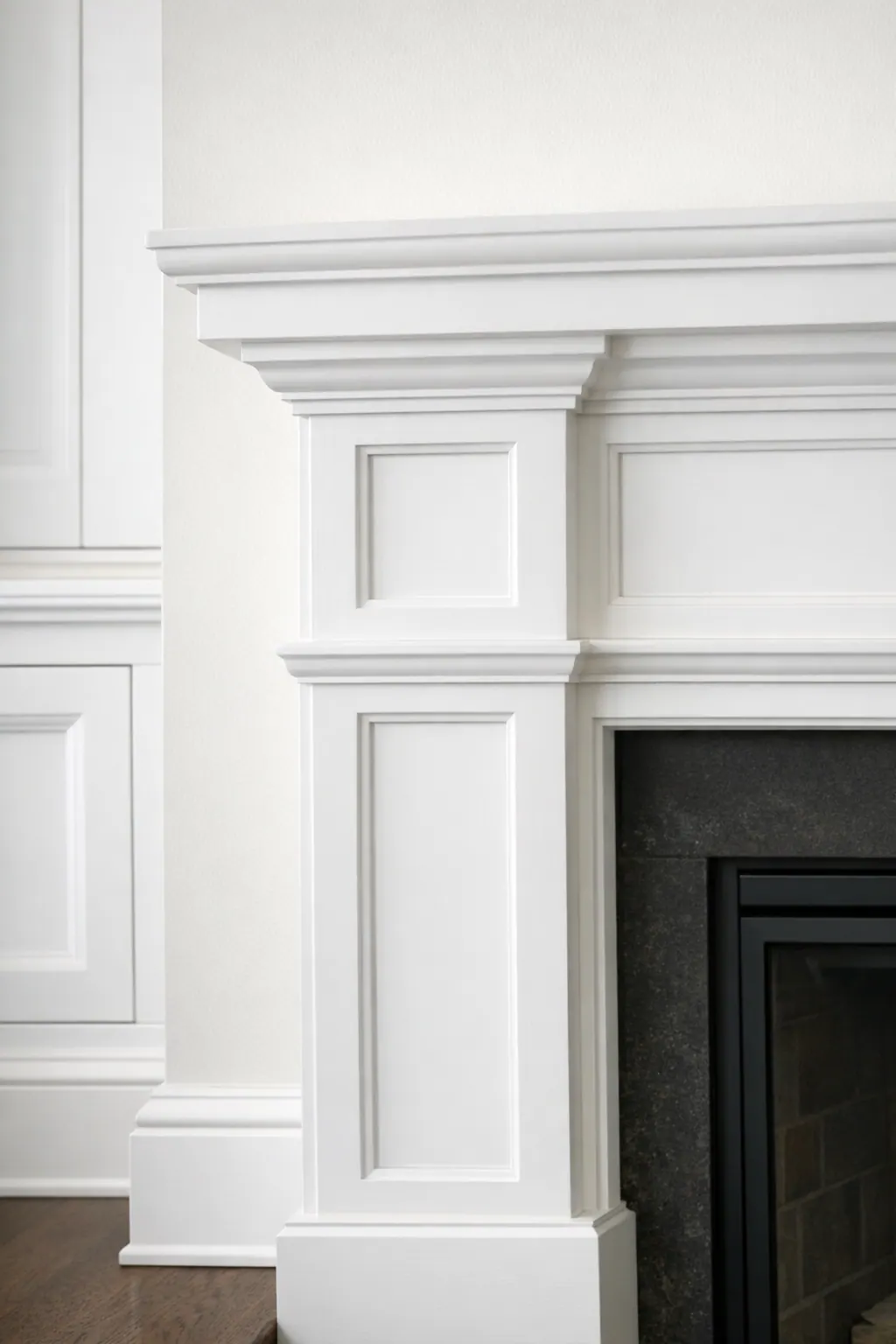
That flexibility makes paint-grade trim a strong fit for a more built-up design. A narrow reveal around a panel, clean mitered returns at the shelf, and aligned seams at the legs and header should read as deliberate lines. Weak finish work often shows up as uneven miters, profile changes that stop abruptly, or a heavy shelf sitting over trim that is too slight to support it visually.
A stained wood mantel takes the opposite approach: the material itself becomes part of the design. Grain direction, color variation, board selection, and joinery stay visible, so a simpler profile often feels more convincing than a surround crowded with small moldings. A broad shelf with a softened edge, restrained corbels, or a clean square profile can complement wood flooring, beams, or cabinetry while allowing the grain to carry the detail.
Neither choice is automatically more formal, modern, or appropriate. A painted treatment can be minimal when it uses flat planes and modest edge detail; it can become traditional when it adds deeper profiles and panel molding. A wood mantel can look rustic with pronounced character and substantial edges, or contemporary with a smooth finish and a thin, precise silhouette. Comparing samples beside nearby cabinetry, flooring, and existing millwork helps establish whether the fireplace should blend into the room's finish palette or stand apart as a warmer focal point.
The most successful selection matches finish to the intended visual weight. Deep profiles create shadow lines and stronger presence; shallow profiles keep the composition quieter. In either material, consistent edge treatment, carefully matched joints, and a finish that carries cleanly from face to return are the details that make the completed surround feel composed rather than assembled.
Detailing Around Stone, Tile, Masonry, and Shiplap Fireplace Walls
Where wood meets a hard, textured face, the transition deserves as much attention as the mantel itself. Stone veneer rarely presents one perfectly flat edge, so trim can either stop short with an intentional reveal, a consistent shadow-line gap, or be carefully scribed to follow selected contours. A reveal gives the materials room to read as separate finishes; a fitted edge creates a more integrated look. The weak version is an accidental-looking gap that opens and closes unpredictably along the stone.
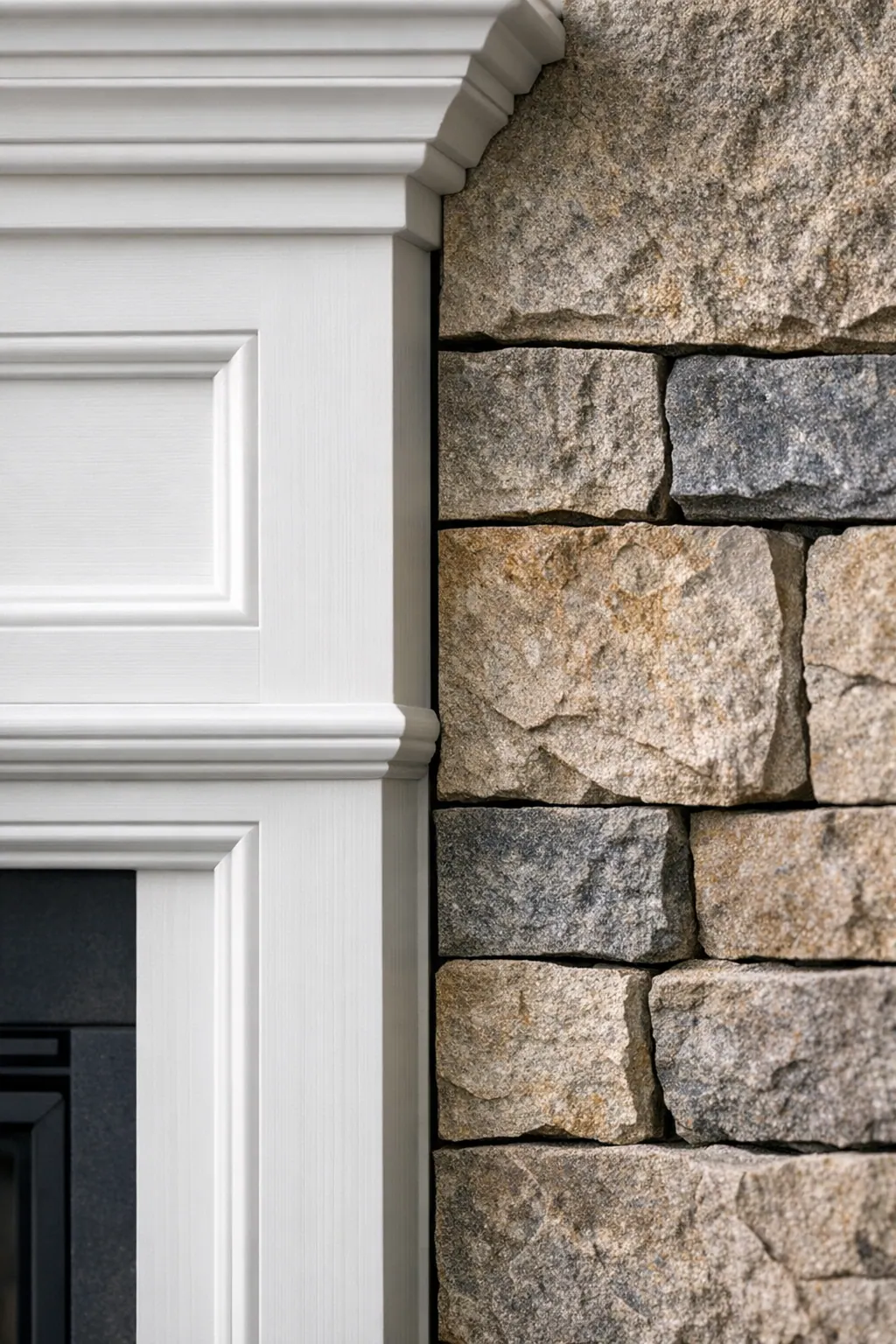
A smooth tile surround calls for a different approach. Because its edges establish crisp visual lines, the surround legs and header should align evenly with the tile field, use matching offsets on both sides, and terminate at a planned point rather than covering partial tile in an arbitrary way. Trim widths also need to carry the right visual weight: overly narrow casing can disappear beside a broad tile face, while excessively wide legs can crowd a compact firebox opening. Thoughtful fireplace trim Venice FL work makes the border feel measured rather than added on afterward.
Existing masonry can introduce uneven planes, proud edges, and irregular corners that affect how a shelf return or surround leg meets the wall. Careful measuring reveals whether the cleanest result is a small, consistent separation, a scribed edge, or a distinct termination block that visually resets the transition. The goal is not to force wood trim to imitate masonry; it is to give each material a clear, balanced endpoint.
Shiplap is a separate wall treatment, not a substitute for stone, tile, or a surround. It can frame the fireplace area or continue above the mantel to add vertical scale, with board courses planned so seams, edges, and nearby elements feel intentional. Its layout should be coordinated with the existing appliance requirements, television plan, and any electrical, gas, masonry, or other work handled by qualified trades before finish carpentry closes in the wall.
What Professional Mantel and Surround Installation Involves
Good installation begins before a single trim piece is cut. A finish carpenter evaluates the wall plane, fireplace face, nearby corners, and any existing damage or irregularity, then discusses how much visual weight the finished wall should carry. For a mantel installation in Venice, FL, that conversation turns a broad idea, such as "make this wall feel finished", into a layout with a defined shelf depth, overall width, vertical extent, and relationship to surrounding furniture or built-ins.
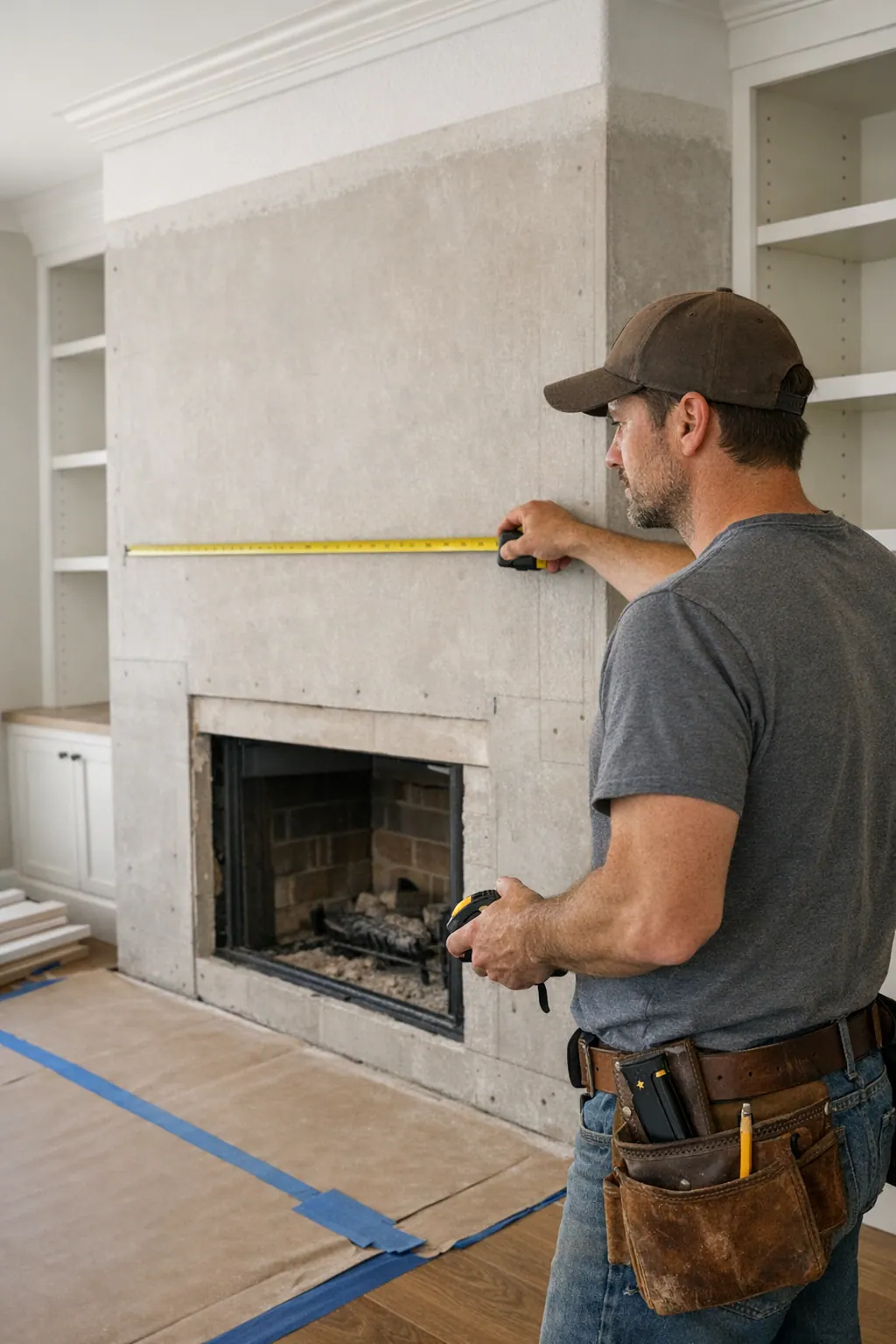
Measurements are used to establish centerlines and planned reveals before materials are prepared. The firebox opening, ceiling height, tile or stone boundaries, and adjacent features all influence the scale of the legs, header, shelf, and any upper-wall detail. A strong layout produces equal visual offsets and level horizontal lines; a weak one can leave a mantel slightly off-center, trim legs of unequal apparent width, or a top detail that ends awkwardly near a ceiling or outlet.
After the material, profile, and transition approach are selected, components can be fabricated or fit on site, then installed with attention to tight joints, aligned faces, consistent gaps, and clean caulk lines where a painted finish calls for them. The scope should also identify coordination points. Television location, recessed or surface outlets, stone or tile work, and wall modifications may involve other trades. Fireplace manufacturer requirements vary by appliance, so the final mantel, surround, and wall-treatment plan needs to respect the stated requirements for that specific unit rather than relying on a one-size-fits-all detail.
Plan a Fireplace Mantel or Surround Upgrade in Venice, FL
A useful first conversation starts with the room as it is, not a stock mantel shape. If you are remodeling a living room, replacing dated trim, adding a shelf above an existing fireplace, or extending the treatment into a full focal wall, reach out to discuss fireplace mantels in Venice, FL.
Share a few straight-on and angled photos of the wall, approximate wall and ceiling dimensions, and inspiration images that show the level of detail you prefer. Include close views of existing tile, stone, masonry, shiplap, outlets, a television location, and the fireplace components. Those details help distinguish a clean shelf addition from a surround, overmantel, or broader trim treatment, and reveal where a deliberate transition will matter.
The goal is a proposal shaped around the wall's actual proportions and finishes, with a layout that looks centered, intentional, and connected to the rest of the room. Use the contact form to begin planning a fireplace mantel Venice FL upgrade tailored to your space.
Plan the next step
Compare the broader Fireplace Mantels and Surrounds service.
Review the Venice, FL service area for local planning context.
When you are ready, request a free estimate with the rooms, trim goals, city, and available photos.
FAQs
What is the difference between a fireplace mantel and a fireplace surround?
A fireplace mantel is the horizontal shelf above the fireplace that adds a visual anchor and display ledge. A fireplace surround is the frame around the firebox, typically two vertical legs and a header, that gives the opening architectural definition.
Can you add a mantel to an existing fireplace in Venice, FL?
Yes, a custom mantel shelf can be added to an existing fireplace with stone, tile, or a finished drywall face. The design must follow the specific fireplace manufacturer’s required clearances and coordinate with any needed electrical, gas, masonry, or television work.
What trim works best around a stone or tile fireplace surround?
Stone veneer works best with either a consistent shadow-line reveal or carefully scribed trim that follows selected contours. Tile requires evenly aligned surround legs and headers, matching offsets on both sides, and trim widths sized to balance the tile field.
Can shiplap be installed around a fireplace?
Yes, shiplap can be installed around or above a fireplace as part of a focal-point wall, but it is a wall treatment rather than a substitute for a mantel or surround. Board courses, television placement, outlets, and appliance clearance requirements should be planned before the wall is finished.
Should I choose a painted or stained wood fireplace mantel?
Choose a painted mantel for a tailored look that coordinates with painted trim, cabinetry, paneling, and layered molding details. Choose stained wood when visible grain, board selection, and simpler profiles should become part of the focal-point design, especially near wood floors, beams, or cabinetry.