
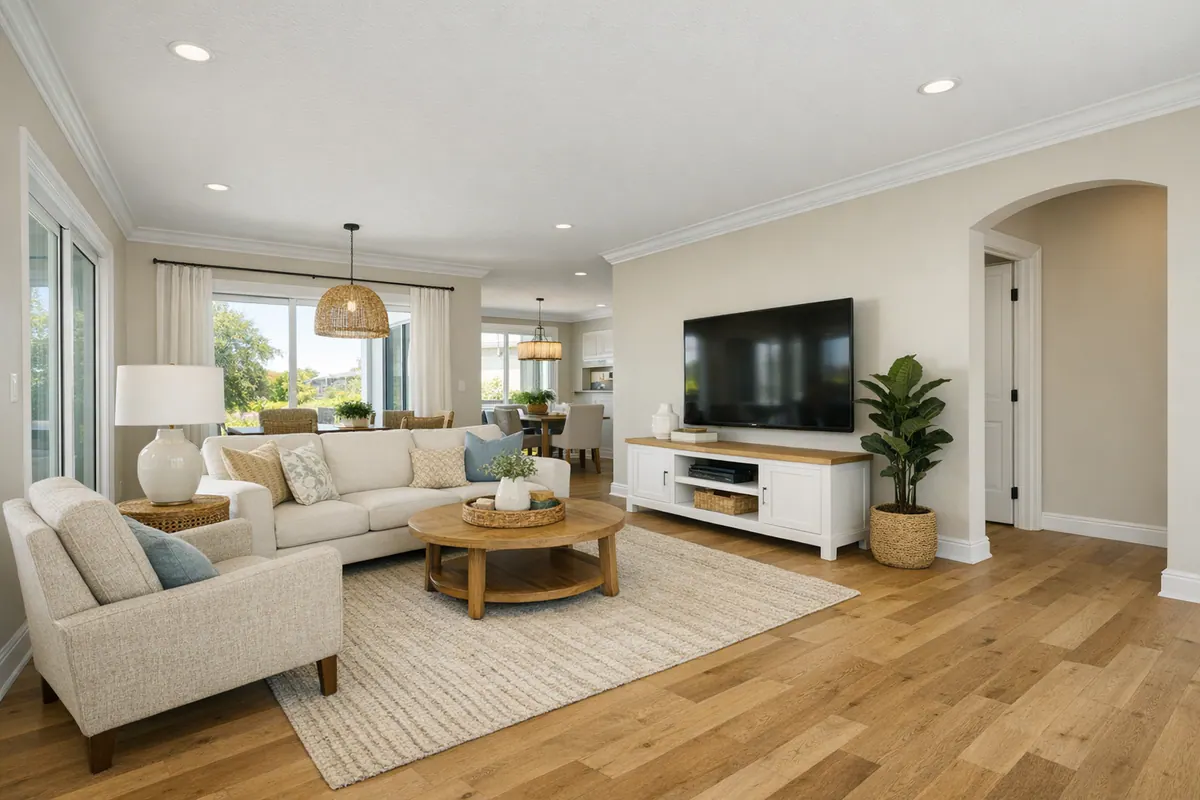
Interior trim is the detail that makes a room feel finished: baseboards create a clean line where flooring meets the wall, crown molding softens the wall-to-ceiling transition, door and window casing frames openings, and decorative wall trim can add character without changing the layout. For homeowners planning trim installation in Lakewood Ranch, the goal is usually simple: cleaner edges, better transitions, updated profiles, or replacement trim that looks intentional after repainting or remodeling.
This page walks through the trim options available locally, what separates polished installation from rushed work, when a trim project makes sense, and which details can affect an estimate. It is not a DIY tutorial; it is a homeowner-focused guide to choosing the right scope, understanding the finish you should expect, and knowing how professional interior trim installation can help newer homes, remodeled spaces, and rooms receiving fresh paint feel more complete.
Types of Interior Trim We Install
Different rooms call for different trim, so the right scope for trim installation in Lakewood Ranch may be a single room, a few problem areas, or a coordinated update throughout the home. These are the interior trim options homeowners most often consider when they want cleaner lines, better proportions, or a more custom look.
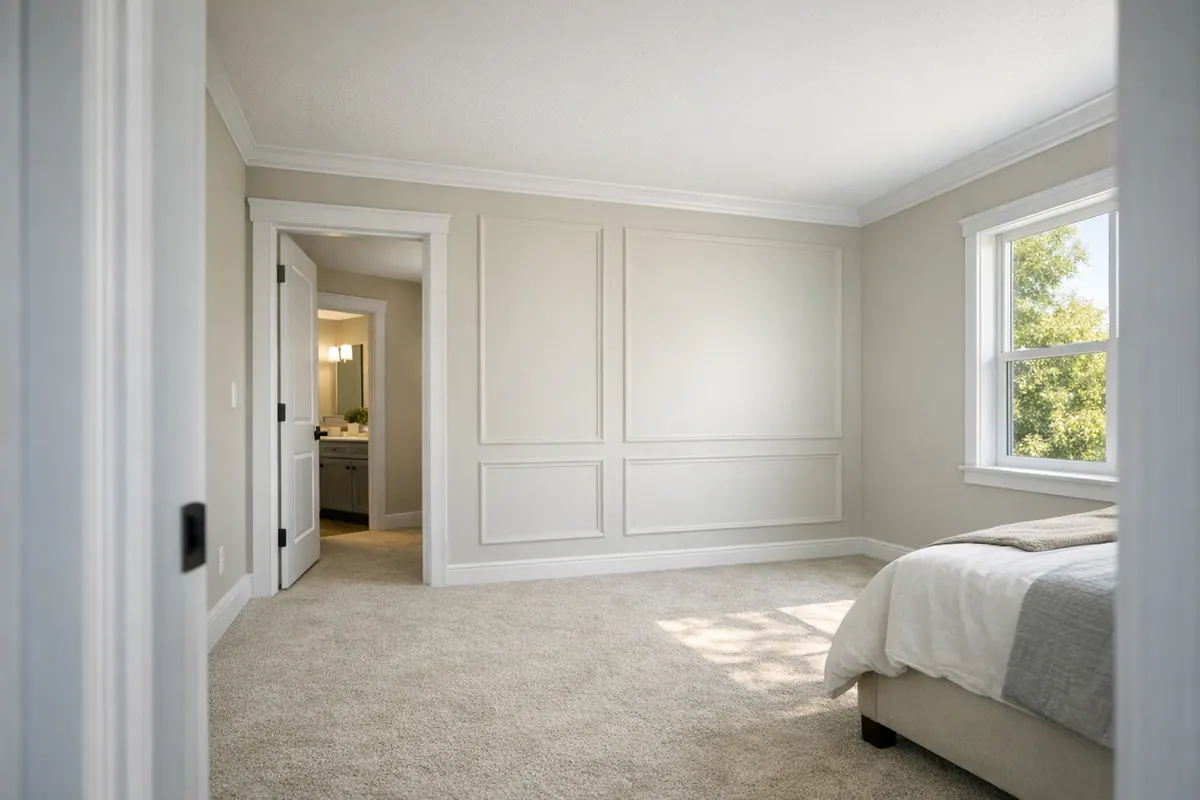
- Baseboards: Baseboards run along the bottom of the wall and help cover the transition between wall surfaces and flooring. A simple profile keeps things clean and understated, while a taller or more detailed profile can make open living areas and primary suites feel more finished. Baseboard installation Lakewood Ranch projects are especially common after new flooring, repainting, or replacing builder-grade trim.
- Crown molding: Crown molding sits where the wall meets the ceiling and adds a more formal, architectural edge to a room. Smaller crown works well in standard-height rooms, while larger profiles usually fit better in rooms with higher ceilings or more substantial trim elsewhere. Crown molding installation Lakewood Ranch homeowners request is often focused on dining rooms, living rooms, entries, offices, and primary bedrooms.
- Door and window casing: Casing frames an opening and defines the reveal around doors and windows. Door trim installation can be simple and square for a modern look or more detailed to match existing profiles. It is worth upgrading when old casing looks thin, damaged, mismatched, or out of scale with new baseboards.
- Shoe molding and quarter round: These smaller pieces sit at the bottom of baseboards where flooring meets the trim. Shoe molding has a slimmer, more tapered look, while quarter round has a rounded face. Either option can help create a cleaner floor line after hard-surface flooring changes.
- Chair rail: Chair rail runs horizontally along the wall and can visually divide the upper and lower wall sections. It is often used in dining rooms, hallways, and powder rooms, especially when paired with two paint colors or lower wall paneling.
- Wainscoting: Wainscoting adds panel-style trim to the lower portion of a wall. It can make a dining room, entry, staircase, or hallway feel more tailored, and the design can range from simple boxes to more built-up panel assemblies.
- Picture frame molding and accent wall trim: These decorative layouts create rectangles, grids, or geometric patterns directly on the wall. They are useful when a room needs a focal point behind a bed, sofa, dining table, or television without adding built-ins.
- Coffered ceiling details: Coffered trim creates a framed ceiling pattern that adds depth overhead. It works best where ceiling height, room size, and existing style can support a more substantial architectural feature.
When New Trim Is a Smart Upgrade
New trim is usually worth considering when the old trim will keep drawing attention after the rest of the room is updated. In Lakewood Ranch trim installation projects, that often means replacing thin builder-grade baseboards before new paint, correcting floor-line gaps after a flooring change, or updating casing after doors or windows have been replaced. The practical question is simple: will patching make the trim look clean, or will it leave mismatched profiles, uneven heights, and visible old damage?
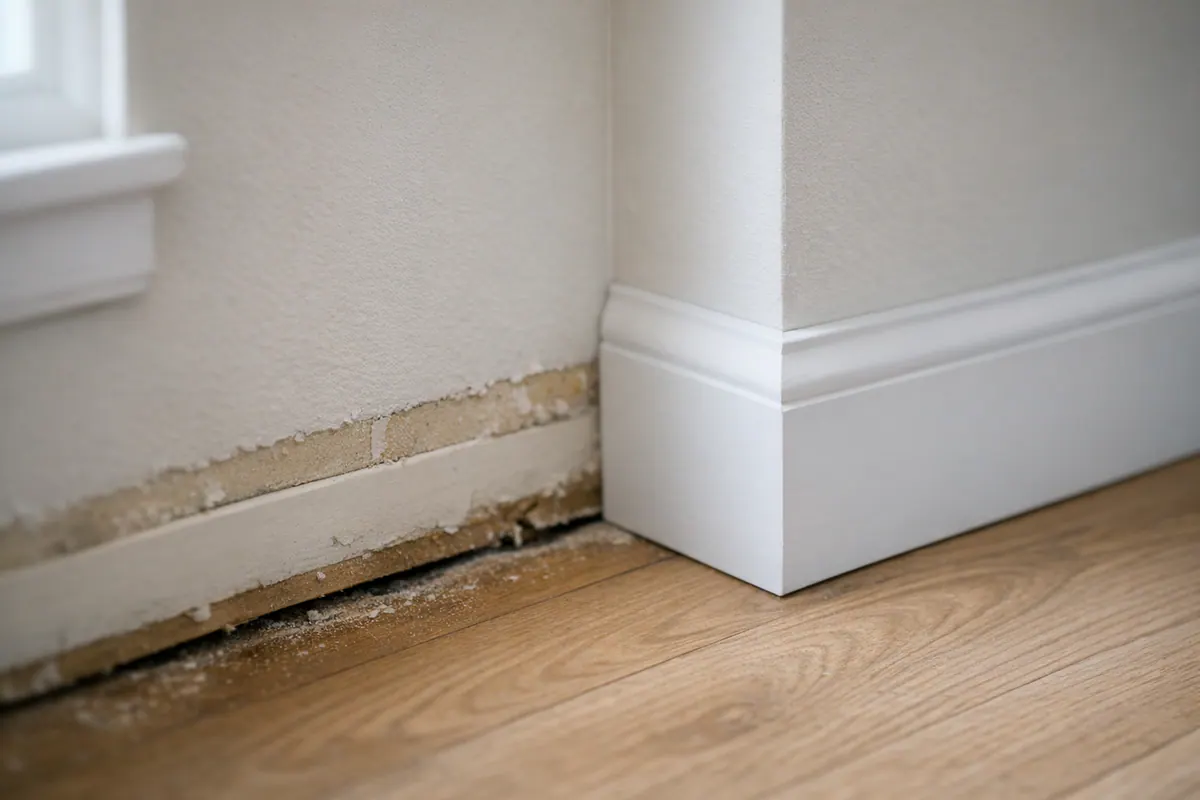
- Replace instead of patch when damage changes the shape of the trim. Swollen MDF, softened edges, cracked corners, and chipped profiles are hard to hide because the trim no longer has a crisp line to paint or caulk against.
- Upgrade when the room has outgrown the original profile. Older or very narrow baseboards can look undersized in open rooms, high-ceiling spaces, or areas where other finishes have already been improved.
- Plan trim replacement before interior painting when possible. If the existing trim is too short after flooring work, poorly matched from room to room, or visibly damaged, replacing it first helps the final paint finish look intentional rather than patched together.
- Add decorative trim when a room needs structure. Wainscoting, chair rail, or accent wall molding can give open floor plans, entries, dining areas, and primary bedrooms more definition without changing the layout.
Choosing the Right Trim Material, Size, and Profile
A paint-grade white baseboard and a stained wood casing can be the same width but give a room very different character. MDF is a common paint-grade choice because it gives a smooth, consistent surface when the plan is white or painted trim. Wood trim is the better fit when you want a stained finish, visible grain, sharper detail, or a more durable edge in areas that get bumped often.
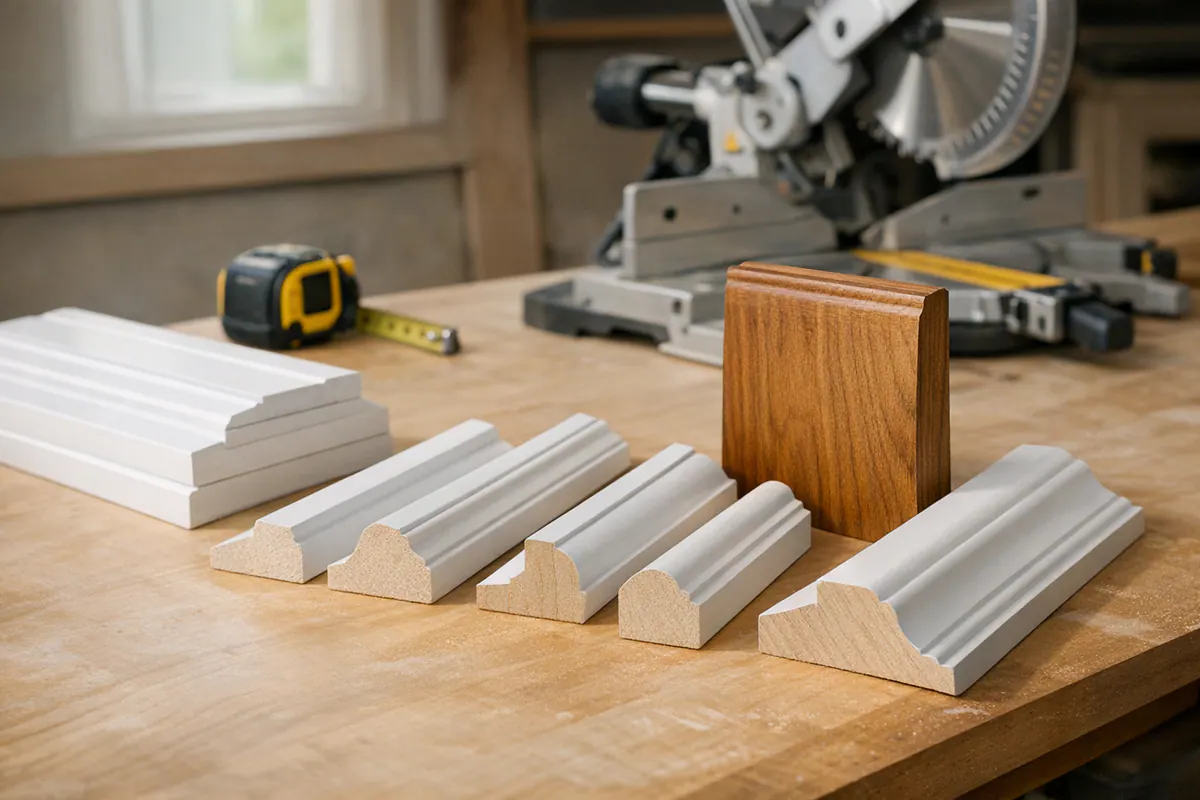
The tradeoff is practical: MDF can help control budget and create a uniform painted look, but it is less forgiving where moisture, swelling, or damaged edges are already a concern. Wood trim usually costs more, and stain-grade work requires more attention to grain and color consistency, but it can feel warmer and more custom when the room calls for a natural finish.
Profile choice matters just as much as material. If only one room or one damaged section is being replaced, matching the existing baseboard, casing, or crown profile helps the repair blend into nearby rooms. For a larger remodel or whole-home update, taller baseboards, layered crown, or more detailed casing can make the trim look intentional rather than like a patch.
Scale is the checkpoint homeowners should not skip. A slim baseboard may disappear in a room with high ceilings, while an oversized profile can crowd a smaller hallway. Door casing also affects the decision: baseboards should meet casing cleanly, not look heavier than the door trim or leave awkward blocks at the corners. Flooring transitions matter too, because new hard flooring may change the gap at the wall and influence whether baseboard alone is enough or whether shoe molding makes the edge cleaner. For custom trim installation Lakewood Ranch homeowners can use these choices to balance appearance, durability, and budget before installation begins.
Why Professional Installation Matters for Trim
A corner that is off by a small amount will stand out quickly once paint catches the edge. The installation stage is where careful measuring, clean cuts, and finish work decide whether the room looks crisp or starts showing little distractions.

Mitered corners are a good example. These are angled cuts where two pieces of trim meet, often at outside corners or around casing. A strong installation leaves those joints tight and aligned; a weak one leaves gaps, uneven points, or corners that need too much caulk to hide the cut. Inside corners matter too, especially with crown molding and baseboards, because walls are not always perfectly square.
Reveals are another small detail that make a big visual difference. A reveal is the consistent margin between the edge of a door or window jamb and the casing around it. When reveals are even, the opening looks balanced. When they wander, the trim can look crooked even if the door or window itself is fine.
A skilled trim installer in Lakewood Ranch also accounts for real-world walls and floors. Baseboards may need to be scribed or adjusted so the top line stays straight while the bottom follows slight floor variation. Fasteners should hold the trim securely without leaving obvious dimples, raised nails, or loose sections that open up later.
The final finish is where rushed work becomes most visible. Smooth caulk lines, filled nail holes, clean returns, matched profiles, and seams placed thoughtfully help the trim disappear as a flaw and stand out as a polished detail. Paint makes those choices easier to see, not easier to hide.
Trim Details That Fit Lakewood Ranch Home Styles
Style fit is often the difference between trim that feels added on and trim that feels like it belonged there from the start. In Lakewood Ranch homes with open-concept living areas or higher ceilings, taller baseboards can give walls a stronger finished edge, while simple crown molding can define the ceiling line without making the room feel overly formal.

For coastal-inspired or transitional interiors, understated profiles usually work best: clean baseboards, simple door and window casing, and decorative wall trim that adds texture without competing with light wall colors or wide sightlines. Wall trim, such as picture-frame molding or accent wall molding, is a good option when a homeowner wants a custom feature in a dining room, entry, office, or primary bedroom without changing flooring, cabinets, or layout.
For homes being customized after purchase, the main checkpoint is continuity. New trim should relate to the existing casing, ceiling height, flooring thickness, and paint plan so one upgraded room does not feel disconnected from the rest of the home.
What to Expect From a Trim Installation Project
The estimate should be built from the rooms themselves: measurements, existing conditions, the trim profile you want to match or change, and the material planned for the finish. That first walkthrough usually turns design choices into a workable sequence, from consultation and room-by-room measurements to profile selection and material choice.

The work plan may include removing old baseboards, casing, crown molding, chair rail, panel trim, or wainscoting before new pieces are installed. Removal matters because painted-over edges, damaged drywall, old caulk, and flooring changes can affect how cleanly the new trim sits against the wall, floor, ceiling, doors, or windows.
After installation, finish details typically include caulking seams, filling nail holes, touching up transitions, and preparing the trim for paint or stain. Painting should be spelled out in the project-specific estimate: it may be included, coordinated with a painter, or handled separately depending on the project and remodeling schedule.
Timeline and cost are best handled through a project-specific estimate because the labor changes with linear footage, trim type, material, room complexity, removal work, number of corners, ceiling height, and finish requirements. Crown molding, detailed wall trim, tall rooms, uneven surfaces, and many inside or outside corners usually require more layout and finish time than a simple baseboard run.
Schedule Trim Installation in Lakewood Ranch
If the main issue is mismatched profiles, worn baseboards, or rooms that need a cleaner final edge, start with the areas that will make the biggest visual difference: baseboards for floor transitions, crown molding for ceiling lines, casing around openings, wainscoting or accent wall trim for added wall detail, or a whole-home trim upgrade that coordinates profiles from room to room.
To schedule Lakewood Ranch trim installation, request an estimate or consultation so the rooms can be measured, existing trim can be reviewed, and the right material, profile, and finish plan can be matched to your update.
Plan trim installation in Lakewood Ranch, FL
Compare the broader Trim Installation service details, then use the Lakewood Ranch, FL service area page if you want the local overview. When you are ready, request a trim installation estimate with the rooms, trim goals, and photos that help explain the scope.
FAQs
What types of trim can be installed in a Lakewood Ranch home?
Common interior trim options include baseboards, crown molding, door and window casing, shoe molding, quarter round, chair rail, wainscoting, picture frame molding, accent wall trim, and coffered ceiling details. These can be installed in one room, a few problem areas, or throughout the home for a coordinated update.
Should I replace old baseboards before painting?
Old baseboards should be replaced before painting when they are swollen, chipped, cracked, mismatched, too short after flooring work, or visibly damaged. Replacing them first helps the final paint finish look intentional instead of patched together.
What details should I look for in professional trim installation?
Quality trim installation should have tight mitered corners, even door and window reveals, smooth caulk lines, filled nail holes, clean returns, and matched profiles. Baseboards may also need to be adjusted so the top line stays straight while the bottom follows slight floor variation.
What is the difference between MDF and wood trim?
MDF is a common paint grade option because it provides a smooth, consistent surface and helps control budget for white or painted trim. Wood trim costs more but is better for stained finishes, visible grain, sharper detail, and more durable edges in areas that get bumped often.