

Professional Trim Installation for Venice, FL Homes
For Venice homeowners, professional trim installation is the detail work that makes a renovated or newly personalized space feel finished rather than merely updated. It can complete a kitchen or flooring remodel, replace plain builder-grade boards in a newer home, sharpen a resale-ready refresh, or give one room a more intentional architectural look.
Trim installation in Venice, FL can mean several distinct kinds of finish carpentry. Interior trim frames the room: baseboards protect and finish the wall-to-floor transition, while door and window casing creates a clean border around openings. Crown molding finishes the wall-to-ceiling transition and adds height or formality. Each depends on careful measuring, aligned lines, tight joints, and paint-ready surfaces, not simply attaching boards to a wall.
Decorative wall treatments serve a different purpose. Paneling, applied molding, and feature walls are designed as focal points, using layout and proportion to add depth to a dining room, entry, bedroom, or living area. Exterior trim repair is different again: it addresses worn or damaged outside boards and requires an assessment of the affected material and surrounding area, especially where heat, humidity, sun, and moisture exposure are concerns.
Thoughtful finish carpentry in Venice, FL starts by matching the detail to the room's existing doors, flooring, ceiling height, and overall style. Clean transitions and consistent spacing create a deliberate result; open joints, uneven lines, and heavy caulk can make even an attractive profile look unfinished.
Interior Trim Options: Baseboards, Casing, Crown Molding, and More
Profile choice is where a room's character becomes visible. A straightforward baseboard creates a durable, clean finish along the floor, while a taller board or built-up profile gives a larger room more visual weight. For baseboard installation in Venice, FL, the flooring matters: the bottom edge should meet the finished floor neatly rather than leave a distracting uneven gap.
- Shoe molding and quarter round are small, flexible-looking finish pieces installed at the baseboard's lower edge. They conceal minor gaps where flooring meets the wall. Quarter round has a true rounded quarter-circle face; shoe molding is usually taller and narrower, so it reads as a lighter detail.
- Door and window casing frames an opening, covering the joint between the wall surface and the jamb. Matching casing across doors and windows creates a consistent rhythm, while a wider casing can make a plain opening feel more substantial.
- Crown molding bridges the wall-to-ceiling corner. Crown molding in Venice, FL is often chosen to give a living room, primary bedroom, or dining area a more finished ceiling line without changing the room layout.
- Custom trim combines profiles or adapts them to a particular condition, such as a stepped window surround, a built-up crown detail, or a tailored transition around cabinetry. Custom trim in Venice, FL makes sense when standard boards will not align cleanly with existing millwork or the intended style.
Scale should guide the selection. Low or standard-height ceilings usually suit simpler, narrower profiles; oversized crown or heavily layered casing can make a compact room feel crowded. Taller ceilings and larger open rooms can carry broader baseboards, wider casing, or a more detailed crown profile. Existing interior doors are an equally useful reference: slim, flat door panels tend to pair well with restrained square-edge trim, while more traditional doors can support shaped edges and layered details.
A good comparison is not simply "plain versus fancy." The better choice is the profile that repeats the home's existing lines, leaves balanced wall space around openings, and looks intentional from one connected room to the next.
Custom Wall Paneling and Feature Walls That Fit Your Home
A decorative wall treatment can give one surface a purpose of its own, framing a dining area, adding depth behind a bed, or making an entry feel more composed without changing the room's footprint.
- Wainscoting covers the lower portion of a wall, often capped with a rail. It adds a grounded horizontal line that works especially well in dining rooms, hallways, and entryways. A modest height keeps the effect calm; a taller treatment becomes a more formal architectural statement.
- Board and batten uses vertical strips over a flat backing to create repeated rectangular bays. It brings height and rhythm to stairwells, bedrooms, and living areas, but tight spacing or overly tall battens can make a smaller wall feel busy.
- Picture-frame molding forms shallow, outlined panels directly on the wall. Because it preserves more open wall area than full paneling, it is a strong choice for dining rooms or foyers that need detail without a heavy visual layer.
- Shiplap uses horizontal boards with visible shadow lines. It can give a single accent wall a relaxed texture, while wrapping every wall may compete with other finishes or make an open room feel overly themed.
- Coffered ceilings create a grid of recessed ceiling panels. They suit larger living spaces or dining rooms with enough ceiling height for the added depth to read clearly.
For wall paneling in Venice, FL, layout matters as much as the treatment itself. A feature wall should account for windows, outlets, furniture placement, and the room's strongest sightline. Aligning panel widths, rail height, profile shape, and paint color with nearby casing and doors makes the result feel built for the home rather than added as a passing trend. When the room already has strong flooring, cabinetry, or ceiling detail, a restrained accent wall may be the better finish.
Choosing Trim Materials for Venice Heat, Humidity, and Everyday Use
Material choice is easiest when it follows the room instead of a one-size-fits-all rule. For conditioned interior living areas, paint-grade MDF trim can provide a smooth, uniform surface for baseboards, casing, and built-up painted details. It is often a practical fit where the trim will stay dry and protected from repeated impacts. Near an exterior door, pet area, or frequently mopped floor, the location deserves more weight in the decision than the profile alone.
- Finger-jointed wood is a paint-grade option made from shorter wood sections joined together. It can suit interior casing, baseboards, and crown molding when a wood-based material is preferred, though the finished appearance depends on careful preparation and paint.
- Solid wood is the natural choice when the goal is a stained or clear-coated finish that shows grain. It also works for painted custom details, but color and grain variation are part of its character rather than a flaw.
- Moisture-resistant composite or PVC trim is worth considering in locations with greater moisture exposure, such as exterior applications or select wet-adjacent areas. These materials prioritize durability in demanding conditions, though their available profiles, fastening approach, and finished look can differ from interior wood trim.
For custom trim in Venice, FL, paint finish matters early. A crisp painted wall treatment can allow MDF or finger-jointed material to blend smoothly with painted doors and casing, while a stain-grade mantel surround or feature detail calls for solid wood selected for its visible grain. Material should also be considered alongside the wall or exterior substrate: a flat, sound surface supports tight installation, while swelling, soft areas, or uneven backing should be addressed before new trim covers the problem.
Venice heat, humidity, seasonal rain, and coastal moisture make indoor-versus-outdoor placement a meaningful distinction. Interior climate control, proximity to showers or exterior entries, expected bumps from daily life, and the intended coating all shape the recommendation. Good trim work in Venice, FL pairs the material with the exposure it will actually face, not simply the lowest-cost board or the most elaborate profile.
What Quality Finish Carpentry Looks Like
The difference often appears in the close-ups. Quality finish carpentry Venice FL work has even reveals, the intentional narrow gaps around a door casing, panel frame, or return, that stay visually consistent from one side to the other. Profiles should feel proportional, with baseboards, casing, and crown sized to the room rather than competing for attention.
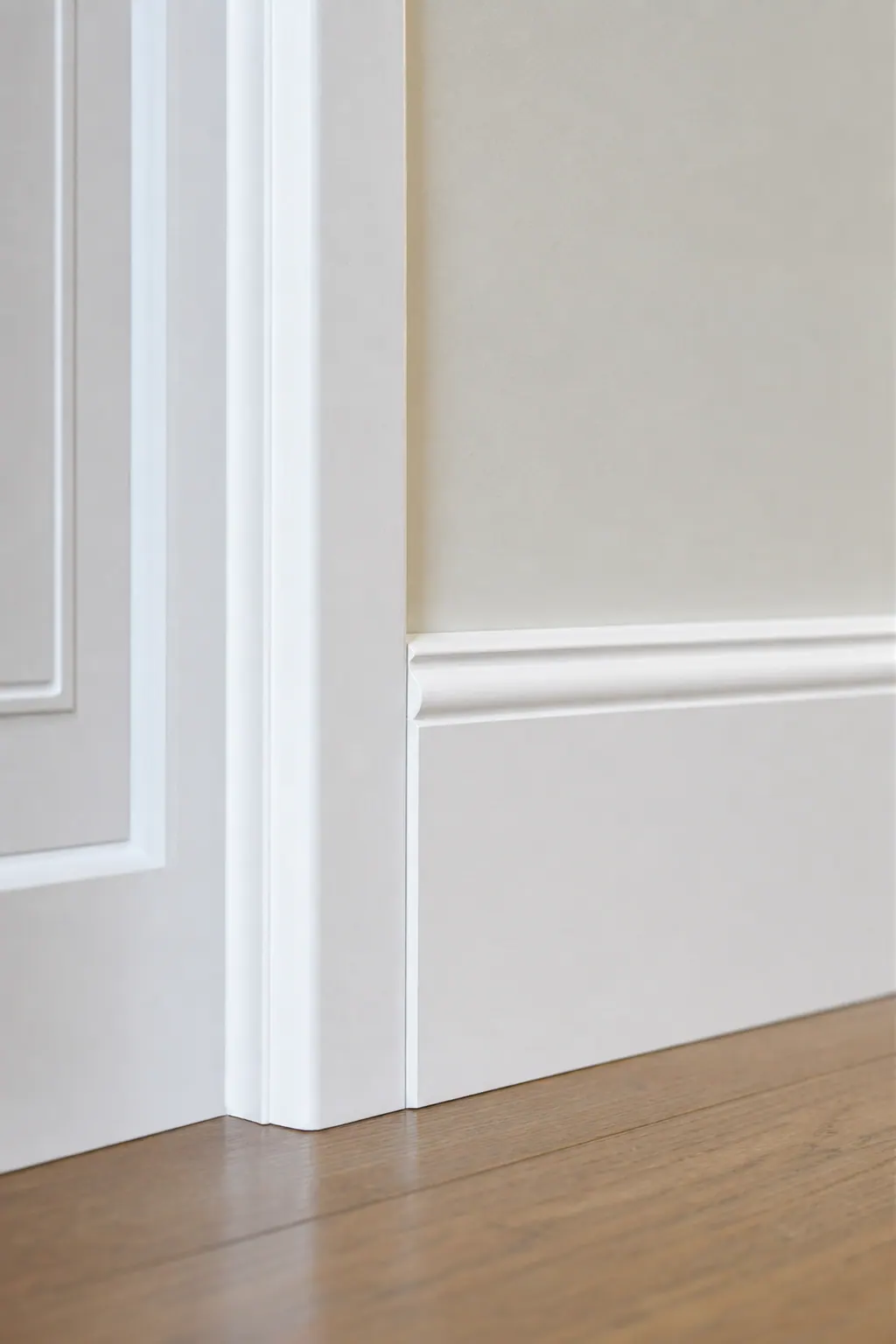
Accurate measuring shows at every intersection. Clean miter joints meet tightly at outside corners, while inside corners, wall intersections, and casing-to-baseboard transitions should look continuous rather than patched together. In lived-in homes, walls, floors, and ceilings are rarely perfectly straight or square. A scribe cut is a custom-trimmed edge that follows a slightly uneven surface, helping the installed piece sit close instead of leaving a long, irregular gap.
- Look for smooth transitions: door casing should terminate neatly at the baseboard, corners should align, and returns should look finished from normal viewing angles.
- Look for controlled fastening: trim should sit firmly against its backing without obvious face damage, shifting boards, or distracting rows of visible fasteners.
- Look for paint-ready preparation: small seams and nail holes can be filled and caulked for a clean painted appearance, but heavy caulk should not be used to disguise poor cuts or wide gaps.
When reviewing a trim contractor Venice FL project, ask to see close photos of corners, door openings, wall intersections, and floor transitions, not only wide room shots. Also make the finishing scope clear: painting may be included, coordinated separately, or left paint-ready after installation. Those details determine whether the completed work reads as crisp and integrated or merely installed.
Exterior Trim Repair in Venice: When a Cosmetic Fix Is Not Enough
Exterior trim has a different job from the interior details discussed above: it sits at the home's weather-facing edges. Peeling paint, a cracked seam, swollen board, soft spot, or open joint around a window, exterior door, soffit, or fascia deserves more than a fresh coat of paint, especially after repeated rain, humidity, sun, and coastal moisture exposure.

For exterior trim repair in Venice, FL, the key question is whether the condition is limited to a small, stable area or points to ongoing moisture contact. A localized crack in otherwise firm, dry-looking trim may be a repair-and-repaint candidate. By contrast, material that yields when pressed, has expanded at an edge, continues to separate at joints, or shows deterioration across a wider run may call for removal and replacement of the affected trim rather than surface patching.
- Repair can fit: a minor split, small open seam, isolated paint failure, or limited impact damage where the surrounding material remains sound and the area can be properly prepared for coating.
- Replacement may be the clearer path: trim that is soft, swollen, repeatedly opening at joints, badly deteriorated, or unable to hold a clean, durable edge.
- Look beyond the board: damage concentrated at a window, door, soffit, or fascia is a reason to assess the adjacent area and the likely moisture path before covering it over.
An on-site evaluation helps separate a finish repair from a condition needing broader attention. Ask for photos of the affected area before work begins and after damaged material is addressed, along with a clear explanation of what will be repaired, what will be replaced, and whether the visible trim condition suggests a separate window, roofline, drainage, or moisture concern should be evaluated.
Plan Your Venice Trim Installation Project
A productive project conversation starts with a clear picture of the room or exterior area you want to address. Request an on-site evaluation for baseboards, crown molding, door or window casing, wall paneling, a feature wall, custom built-ins or trim details, or an exterior concern that needs a closer look.
Before reaching out, gather a few practical reference points. Photos of the room show existing doors, flooring, ceiling height, and adjacent finishes; inspiration images communicate the level of detail you like, whether that is a simple painted baseboard or a more layered wall treatment. Approximate wall lengths and ceiling heights help frame the discussion, while a preferred paint-grade or stain-grade finish affects the material and preparation approach.
- Share your renovation timing, including work already completed and any flooring, paint, cabinetry, or door installation still ahead.
- For exterior trim concerns, include close and wider photos of peeling, cracks, open joints, soft areas, or swelling so the affected location is easier to understand.
- Point out the rooms or elevations that matter most if the work will be completed in phases.
For trim installation Venice FL homeowners can use as a lasting finishing detail, the final scope should follow the site conditions, measurements, design direction, and condition of surrounding surfaces. Material recommendations, product availability, installation sequence, and the written estimate all depend on that evaluation. Reach out to start the conversation and turn your ideas into a defined, well-planned trim project.
Plan the next step
Compare the broader Trim Installation service.
Review the Venice, FL service area for local planning context.
When you are ready, request a free estimate with the rooms, trim goals, city, and available photos.
FAQs
What is the difference between baseboard, casing, and crown molding?
Baseboards finish and protect the wall-to-floor transition, while door and window casing covers the joint between the wall and jamb. Crown molding bridges the wall-to-ceiling corner, creating a more finished ceiling line.
Can crown molding be added after a remodel is complete?
Yes, crown molding can be installed after a remodel to finish a living room, dining area, or bedroom without changing the room layout. Narrower, simpler profiles suit standard or low ceilings, while taller rooms can support broader or more detailed crown.
Is MDF trim a good choice for homes in Venice, Florida?
Paint-grade MDF is a good option for conditioned interior spaces because it provides a smooth, uniform surface for baseboards, casing, and painted built-up details. It should stay dry and protected from repeated impacts, so moisture-prone locations near exterior doors, pet areas, or frequently mopped floors may need a more durable material.
What should I look for in quality trim installation?
Look for even reveals, tight miter joints at outside corners, clean casing-to-baseboard transitions, and trim that sits firmly against the backing. Nail holes and small seams should be filled for a paint-ready finish, but heavy caulk should not hide wide gaps or poor cuts.
Can damaged exterior trim be repaired instead of replaced?
Minor splits, small open seams, isolated paint failure, and limited impact damage can be repaired when surrounding trim is firm and dry. Soft, swollen, repeatedly separating, or badly deteriorated boards usually need replacement, along with an assessment of potential moisture around windows, doors, soffits, or fascia.