
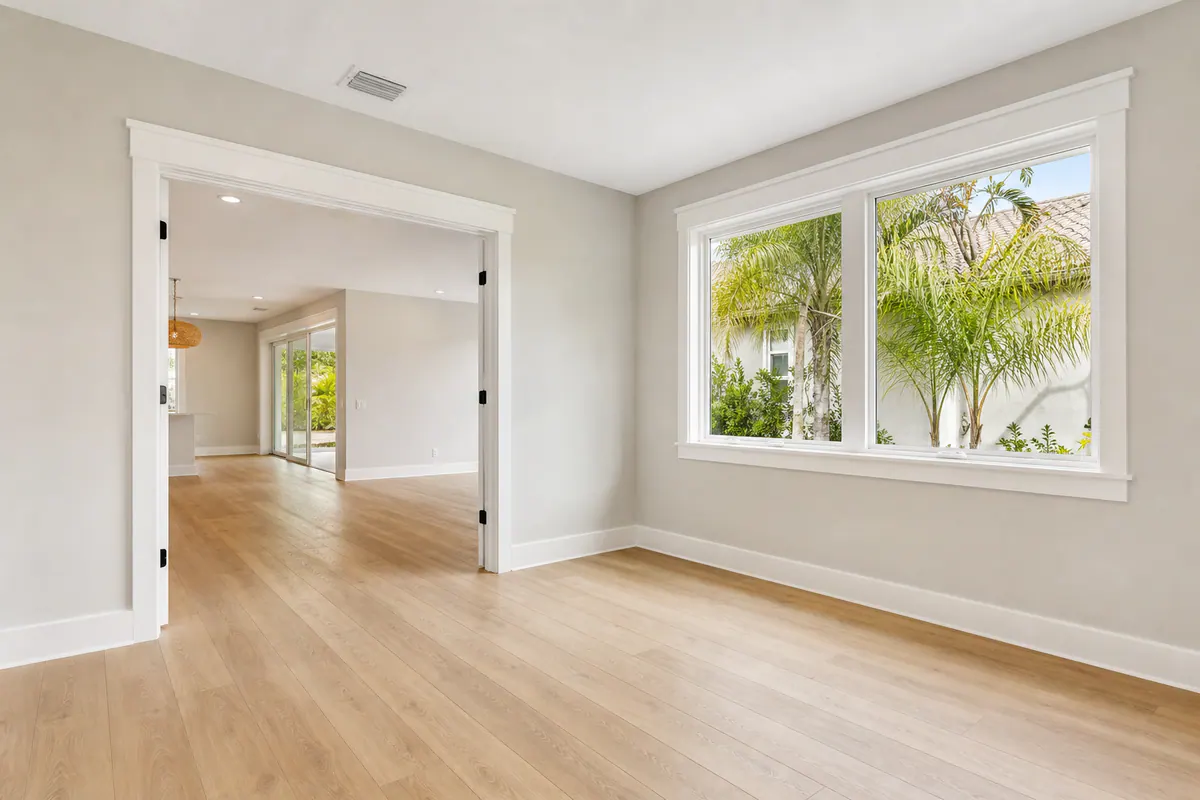
For homeowners considering trim repair in Lakewood Ranch, the trouble often starts at eye level, or right underfoot: scuffed and chipped baseboards, swollen material near a leak or damp area, cracked miter joints at corners, separated caulk lines, dented door casing, and patch pieces that never quite blend in. Dated builder-grade profiles can create the same unfinished feeling, especially after new flooring, paint, or doors make the existing trim stand out.
Interior trim does more than cover an edge. Baseboards finish the wall-to-floor transition, while casing frames doors and windows; matching the profile, proportions, and finish helps those transitions read as intentional rather than patched together. A shallow chip or small dent may suit a localized repair. Swelling, crumbling edges, a broken corner, or a visibly different replacement piece may point to replacing one section, or an entire run so the line remains consistent. When several areas are damaged or the profile no longer fits the room, a coordinated refresh can create a cleaner result across the space.
The right path begins with the condition of the material, the cause of the damage, and how well new trim can blend with what remains. Moisture-related damage deserves attention before it is covered, while paint-grade seams, filled fasteners, sanding, and careful caulking are the finishing details that make repaired or replaced trim look complete.
When Damaged Trim Can Be Repaired, and When Replacement Is the Better Choice
A useful dividing line is whether the trim is still solid, straight, and firmly usable beneath the visible flaw. A shallow dent from furniture, a small paint chip, a narrow separation at a paint-grade seam, or one loose length can often be preserved. Filling the defect, re-securing the piece, repairing a localized joint, sanding the repair smooth, and repainting can make sense when the surrounding material remains intact.
That approach is weaker when the damage affects the trim's shape or stability. Baseboards that have swollen at the bottom edge, MDF that has begun to delaminate, wood with soft or deteriorated areas, deeply cracked molding, a warped run, or a section with missing material usually calls for removal rather than a surface patch. A damaged outside corner also deserves a higher standard: because it catches the eye, a filled break may remain noticeable even after paint.
- Good repair candidate: one small chip on an otherwise straight casing board, or a minor joint gap caused by normal movement.
- Better replacement candidate: a baseboard edge that is puffy, crumbling, or repeatedly stained after moisture exposure; paint may hide color temporarily, but not restore a clean, crisp profile.
- Decision point: if a localized patch would leave an obvious change in profile, texture, or line, replacing that piece may produce the more cohesive result.
Before a new piece goes in, the reason for the damage should be identified. Moisture reaching the wall-floor edge, a door that repeatedly strikes casing, or an ongoing furniture-impact point can damage the replacement in the same way. For damaged molding repair in Lakewood Ranch, the scope should distinguish the trim work from any separate correction needed to stop the underlying issue. That makes baseboard repair or replacement a durable visual improvement instead of a short-lived cover-up.
Baseboard Repair, Replacement, and Clean Flooring Transitions
Flooring changes often make baseboard decisions more visible. A new floor can leave an uneven perimeter gap, reveal a wall that is not perfectly straight, or make a previously acceptable baseboard height look too short. New baseboards can be installed after flooring replacement, but the layout should account for the finished floor height and the line where wall meets floor rather than forcing a straight board against an irregular surface.
Replacing only a damaged stretch works best when the existing profile, height, thickness, and paint finish can blend into the adjacent run. If damage falls near a doorway, an inside corner, or the middle of a highly visible wall, replacing the full continuous run can avoid an awkward splice or a small but noticeable profile change. For baseboard replacement in Lakewood Ranch, the goal is not merely to cover an edge; it is to preserve a continuous, intentional line around the room.
Shoe molding and quarter round are separate small trim pieces installed at the floor edge to cover a narrow gap. Shoe molding has a taller, narrower profile and usually reads as lighter; quarter round has an equal-radius curve and appears more pronounced. Either can help where flooring movement space or an uneven floor prevents the baseboard from sitting tightly against the surface, but adding it where none existed can change the room's overall look.
Clean results depend on fitting rather than hiding. Scribing follows a wavy wall contour, coped inside corners overlap for a tighter joint, and outside miters join angled corners. Secure fastening, filled nail holes, sanded repairs, and neatly caulked paint-grade wall seams complete the transition without using caulk to disguise major gaps.
In dry areas, paint-grade wood or MDF may suit the desired profile and finish; at moisture-prone wall-floor edges, a moisture-tolerant trim option may be worth considering. The practical choice depends on the exposure, the surrounding trim, and whether a different material would create a visible mismatch.
Door Casing, Window Casing, and Decorative Molding Replacement
Door and window casing frames the opening, so its alignment is more noticeable than a break in a long baseboard run. A dent beside the jamb, a cracked outside corner, or a split miter at the top can sometimes be filled and refinished when the casing is still straight and secure. If door or window work has pulled the trim loose, left a missing section, or damaged the edge that meets the jamb, door casing replacement in Lakewood Ranch may produce the cleaner result.
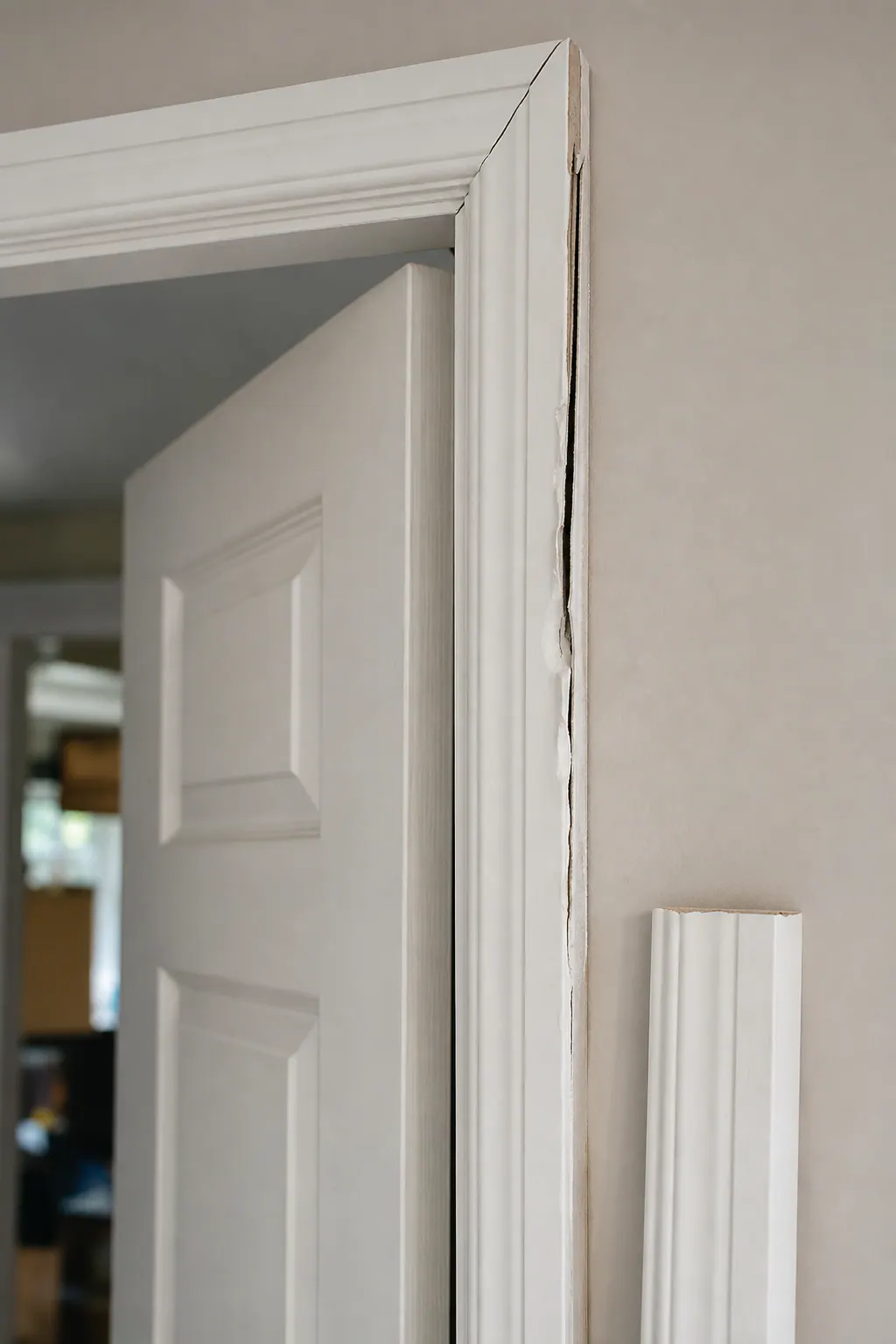
A short patch is often a weak choice on a vertical casing leg because it introduces two new seams at eye level. Replacing the entire side piece lets the profile run uninterrupted from floor to head casing. Replacing the head piece makes more sense when both top miters have opened or when a patch would fall close to a corner. When one new component differs in profile, width, thickness, or paint buildup from the other pieces, replacing the full opening can create a more balanced frame.
Careful work keeps the reveal, the narrow, consistent gap between casing and jamb, even, protects nearby wall finishes, and leaves miters tight rather than relying on caulk to hide a poorly fitted corner. Fastener holes and paint-grade seams can then be filled, sanded, and caulked before the agreed paint or touch-up scope is completed.
Crown molding, chair rail, and decorative wall molding deserve the same visual judgment. Crown follows the wall-ceiling line, chair rail creates a horizontal division on the wall, and applied panels or picture-frame molding form repeated shapes. A small isolated nick may suit localized molding repair in Lakewood Ranch, but a broken repeated pattern, mismatched replacement detail, or conspicuous seam can justify replacing a complete run or coordinating several pieces for a consistent finish.
Matching Existing Trim Profiles Without Overpromising an Exact Match
A replacement can fit neatly and still look wrong if its shape does not belong with the trim around it. Profile matching starts by comparing the board's height and thickness, the contours along its face and edges, the reveal where it meets an adjacent surface, and its finish. A sample should be held alongside an intact piece rather than judged from a photo or a rough description; even a small difference in edge detail can catch light differently along a long run.
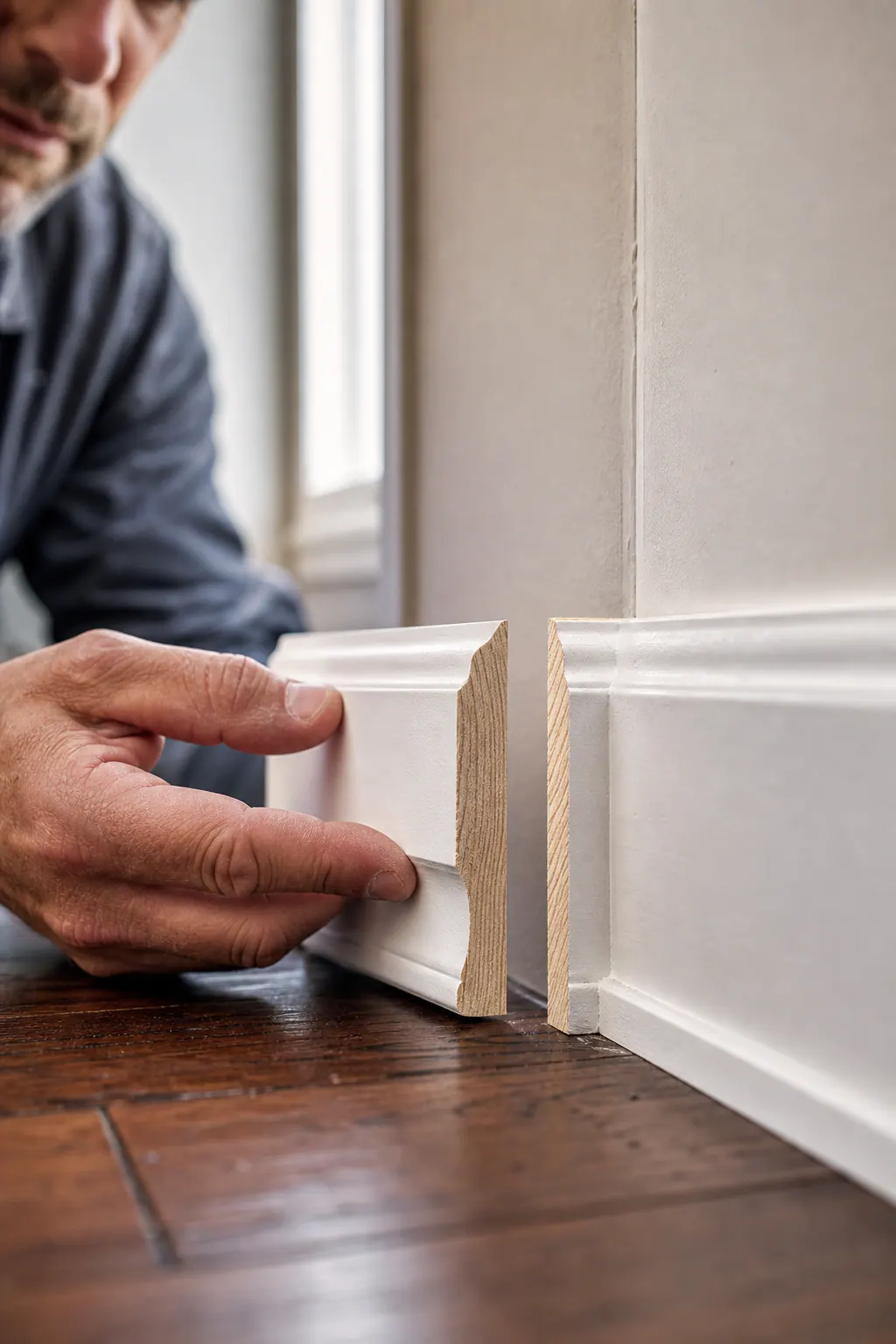
Common paint-grade baseboards and casing are often available as stock profiles, meaning standard shapes sold through local trim suppliers. Older molding, pieces softened by several paint layers, and original custom work may not have an identical stock counterpart. In those cases, the practical options are a close-match profile, a custom-milled piece shaped to resemble the original, or a broader replacement plan that makes the difference less noticeable.
A test piece is useful when the match is uncertain. It shows whether the new molding meets the existing trim at the same face depth, carries the edge detail convincingly, and accepts the planned finish in a way that blends. Paint can reduce the visual impact of a modest profile difference, especially when a complete run is prepared and painted together. It cannot make two distinctly different shapes disappear.
Stain-grade trim calls for a higher standard because its wood species, grain pattern, color, and sheen remain visible. A near-match may be acceptable in a concealed area, but it can stand out beside aged stained molding even when the dimensions are close. For trim replacement in Lakewood Ranch, replacing all casing around one opening, every piece on one wall, or the trim throughout a room can create intentional continuity when an isolated replacement would look patched in.
Trim Materials and Finish Details That Make the Work Look Complete
The material behind the finish affects both how the trim performs and how convincingly it blends. Paint-grade wood is a solid option when a painted room needs crisp edges or a detailed profile; it can be filled, sanded, and repainted after minor surface damage. MDF is a smooth, paint-ready engineered material that works well for stable interior locations and clean, simple painted profiles, but it is a weaker choice where repeated moisture exposure could swell or soften an edge. Stain-grade trim keeps its natural wood surface visible, so grain, species, color, and board selection matter as much as the profile.
Location should narrow the choice. A dry bedroom wall may allow the finish goal and existing trim to lead the decision, while a wall-floor edge near a moisture source calls for more attention to the material's condition and exposure. Higher-traffic areas also benefit from a material and profile that can tolerate routine bumps without leaving a conspicuous damaged edge. Deeply detailed molding can look polished, but it also gives paint lines and joints more contours to follow.
A finished-looking installation depends on preparation, not just a new board. The trim should be fastened securely, with joints aligned so their faces and edge details meet cleanly. Nail holes and small paint-grade imperfections are filled with suitable patching material, then sanded smooth before paint. Caulk can refine a narrow paint-grade line where trim meets wall, while coordinated touch-up or repainting brings the repaired section into the surrounding finish.
Caulk is not a cure for a loose board, a wide gap from poor fitting, a broken miter, or material that has failed from moisture. Those conditions need correction before finishing begins. When the structure, fit, patching, sanding, and paint work are handled as one scope, the replacement reads as part of the room rather than a newly added piece.
Refresh Trim Across a Room for a More Consistent Look
A room-wide refresh becomes the cleaner choice when individual fixes would leave a visible patchwork: several damaged baseboard sections, casing with a different edge detail, builder-grade trim that feels undersized after a renovation, or flooring that has changed the wall-floor transition. Replacing one more piece is rarely satisfying when the room already contains multiple profiles, heights, or paint conditions.
The scope should begin by separating trim worth preserving from trim that interrupts the overall look. Intact pieces in less visible areas may remain, while damaged runs, mismatched casing, or short baseboards beside new flooring may be replaced. The selected profiles should coordinate in scale: baseboards establish the room's lower edge, while casing frames doors and windows. They do not need to be identical, but their proportions and edge details should look intentional together rather than borrowed from separate updates.
A complete scope also identifies the finishing work needed after installation, including removal of affected pieces, protection for floors and walls, fastening and aligning new trim, filling fasteners, sanding, caulking suitable paint-grade seams, and defining whether touch-up or repainting extends across the room. Lakewood Ranch homeowners considering trim repair or a coordinated replacement can request an assessment of damaged areas, profile-matching options, and the repair or replacement scope that will give the room a more unified finish.
Plan the next step
Compare the broader Trim Repair and Replacement service.
Review the Lakewood Ranch, FL service area for local planning context.
When you are ready, request a free estimate with the rooms, trim goals, city, and available photos.
FAQs
Can damaged baseboards be repaired instead of replaced?
Yes, shallow dents, small paint chips, narrow seam gaps, and loose but intact boards can often be filled, re-secured, sanded, caulked, and repainted. Replace baseboards that are swollen, crumbling, warped, deeply cracked, delaminated, or soft from moisture.
Can new baseboards be installed after flooring replacement?
Yes, new baseboards can be installed after flooring replacement, but the layout must account for the finished floor height and uneven wall or floor lines. Shoe molding or quarter round can cover a narrow movement gap, although adding either changes the room’s trim appearance.
How do you match discontinued baseboard or door casing profiles?
Compare the existing trim’s height, thickness, face contours, edge details, reveal, and finish using a physical sample beside an intact piece. If no stock profile matches, use a close-match profile, custom-milled trim, or replace a complete run, wall, or opening so differences are less noticeable.
What trim material is best for areas exposed to moisture?
Moisture-tolerant trim is the better choice at wall-floor edges near leaks, damp areas, or repeated water exposure. MDF is smooth and paint-ready for dry interior locations, but it can swell, soften, and delaminate when exposed to moisture.
Should I replace all the trim in a room if only one section is damaged?
Replace only the damaged section when its profile, height, thickness, and paint finish can blend into the adjacent trim. Replace a full continuous run, an entire door casing opening, or multiple room sections when a patch would create visible seams, mismatched profiles, or a patchwork appearance.