

Clean lines and a consistent finish can make repaired trim feel like it has always belonged in the room. For trim repair Longboat Key homeowners can use to restore that continuity, the work may involve baseboards along the floor, crown molding at the ceiling, door and window casing around openings, or smaller finishing pieces such as shoe molding and quarter round.
The right choice starts with the damaged area in context. A shallow dent, paint chip, or small open joint may be a localized repair when the trim remains solid and the surrounding finish can blend cleanly. Swelling, soft material, broad splits, repeated separation, or a missing section can point toward replacing the affected length so the repair has a sound foundation.
In coastal interiors, the appearance of the surrounding paint, prior moisture exposure, and the trim material all matter. Profile matching means reproducing the trim's visible shape, its height, thickness, curves, and edges, so a new baseboard or molding section does not interrupt a continuous run. Finish restoration then brings the sheen and color into alignment with adjacent trim, helping the completed room look cared for rather than patched.
How to Assess Damaged Molding Before Choosing Repair or Replacement
Begin by looking at the damage as a defined area rather than judging it by the paint alone. A small, shallow dent or chip that has not crushed the trim's shape is different from a gouge that cuts into an edge, a crack that travels along the grain, or a broken piece that changes the molding's outline. Pressing gently near the affected spot also reveals whether the piece is firm or moving away from the wall.
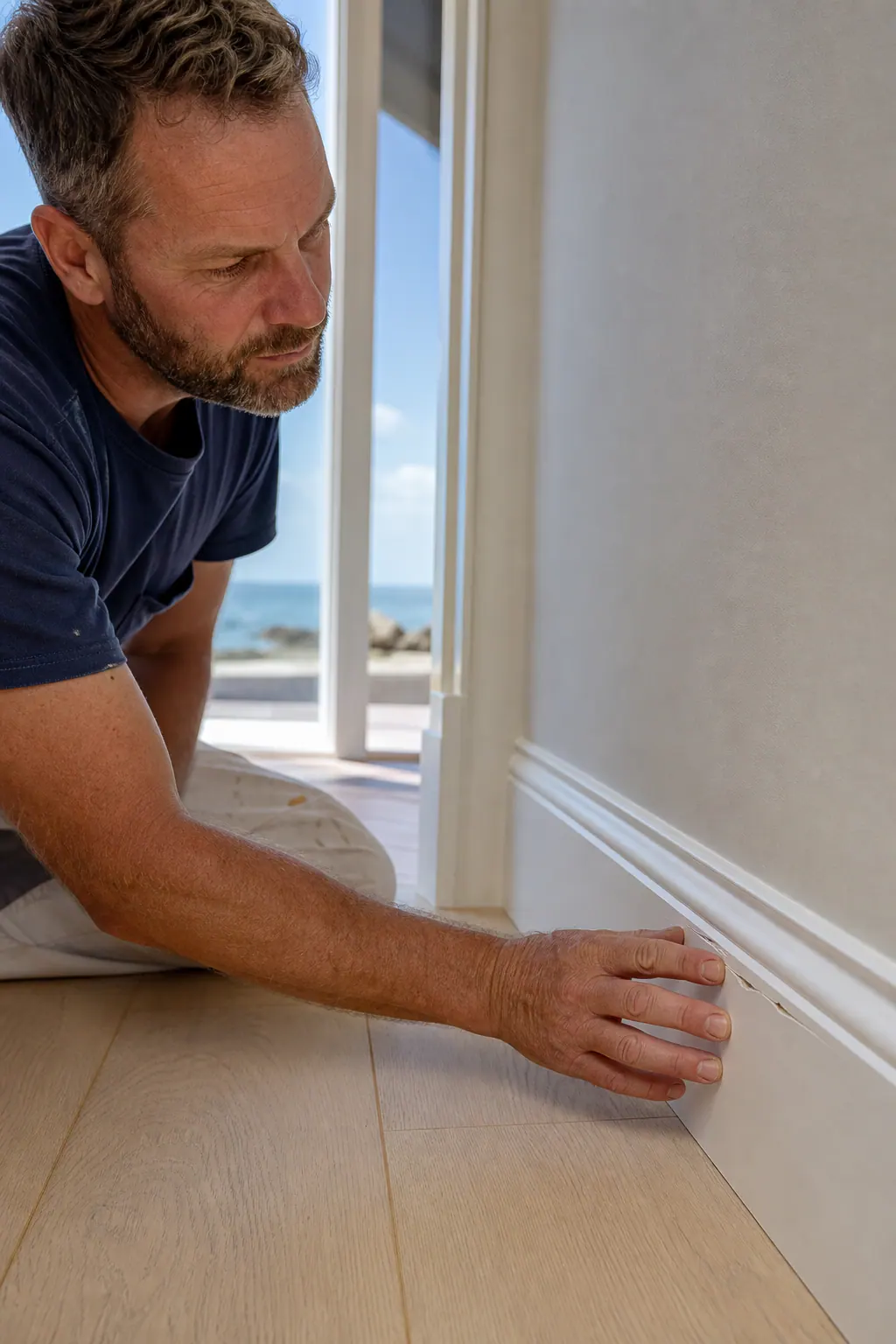
- Good repair signals: isolated nail holes, minor scuffs, shallow dents, a small paint failure, or a narrow seam opening where the molding itself remains hard, straight, and securely attached.
- Replacement signals: swollen edges, soft or crumbly material, deep splits, recurring gaps, loose lengths, or missing sections. These conditions can leave too little stable material for a clean, lasting patch.
Look beyond the trim line, especially with baseboards. Staining, bubbling paint, discolored drywall, a soft floor edge, or separation at a nearby seam can suggest that the surrounding area deserves attention as well. Water damaged baseboard repair is more dependable when the condition beside and behind the baseboard is considered, not simply covered with fresh paint. Near bathrooms, kitchens, windows, exterior doors, and air-conditioning equipment, the inspection may include nearby fixtures, window areas, or HVAC condensation paths that could be contributing to repeated moisture.
Moisture history changes the decision because cosmetic work can fail again if an active source is still affecting the area. Once that issue has been addressed, damaged molding repair Longboat Key homeowners request can be planned around the remaining sound material, the condition of adjacent walls or flooring, and the level of finish continuity desired. Clear photos taken before work begins can help distinguish the original problem from the completed restoration.
When Targeted Trim Repair Is the Right Choice
A limited flaw does not have to turn into a full-length replacement project. When the surrounding baseboard, casing, or molding is stable and holds its intended shape, targeted trim repair can restore the line of the piece while preserving material that already fits the room.
- Cosmetic repairs work well for nail holes, small dents, shallow gouges, isolated chips, and localized paint damage. These defects affect the surface rather than the trim's overall form, so a filled and refinished area can blend into an otherwise sound run.
- Minor joint repairs can address a narrow opening at a miter, a small crack in molding, or a caulk gap where trim meets the wall. The goal is not merely to hide the line; loose material is stabilized first so the finished joint has a better foundation.
- Localized baseboard repair may be appropriate when a single spot is marred but the board remains straight, firm, and well attached. This keeps a continuous baseboard line intact rather than introducing an unnecessary new section.
The repair sequence is tailored to the defect and finish. Loose edges or separated joints are secured, then holes, chips, or shallow damaged areas are filled or patched and sanded back to the surrounding contour. Caulk is renewed where a paint-grade trim joint needs a clean transition, and primer helps create an even base before the finish is blended across the repair area.
Painted trim is generally more forgiving because the repaired surface can be primed and recoated for consistent sheen. Stained or clear-finished wood requires a more selective approach: the grain, color variation, and existing sheen remain visible, so a patch may be less easily disguised. For trim repair Longboat Key homeowners want to look intentional, the practical aim is a smooth transition between the restored spot and the original material, not an unrealistic promise that every repair disappears completely.
When Baseboard or Molding Replacement Is the Better Long-Term Option
Replacement becomes the sounder choice when the trim itself has lost the strength or shape needed for a lasting finish. Swollen MDF with rounded, crumbling edges, wood that feels soft when pressed, visible rot, long splits, missing lengths, or repeated joint separation are all signs that filler and paint would be covering a weak foundation. The same is true when a damaged edge no longer holds a crisp profile or when several repairs would leave the run uneven.
- Partial replacement is often practical when damage is limited to one section of baseboard, a short piece of casing, or a defined length of crown molding. The affected piece can be removed while protecting adjacent wall surfaces and flooring, leaving sound trim in place.
- Room-wide replacement may make more sense when deterioration appears along multiple walls, joints continue to open throughout the room, or the existing profile cannot be matched closely enough for a localized insert to blend with the continuous line.
For baseboard replacement Longboat Key homeowners are considering after an isolated water event or impact, the decision is not automatically to replace every board. A new section can preserve the rest of the installation if its height, thickness, edge detail, and painted finish align with the surrounding baseboard. A clean cut at a logical location helps avoid an awkward patch line.
Molding replacement follows the same principle, but visual continuity is especially important around doors, windows, and ceiling runs. If an exact profile is available and the surrounding finish is in good condition, replacing one failed length can be a restrained, polished solution. If the new piece would stand out because the shape, wood grain, stain, or aged paint cannot be reconciled, extending the replacement to a natural break, or across the full run, can produce the more presentable result.
Matching Existing Baseboard, Crown Molding, and Casing Profiles
A replacement piece can be sound and neatly installed yet still look out of place if its shape interrupts the room's existing lines. Effective trim profile matching in Longboat Key begins with more than a quick measurement: the comparison should capture the trim's overall height and thickness, the contours of its face, the edge detail, and its reveal, the portion that projects beyond the wall or opening.
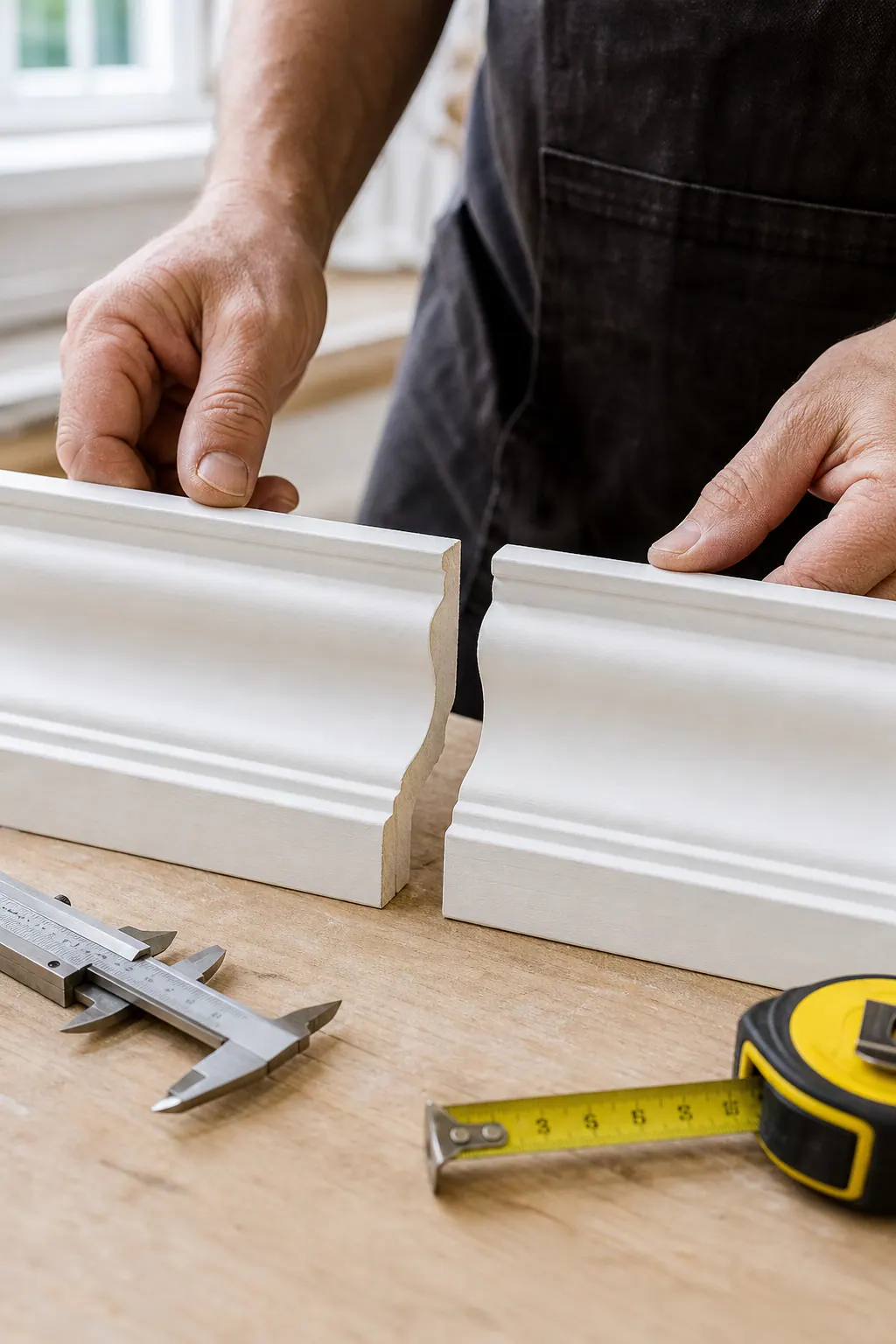
Photographs taken straight on and from the end of a piece help show details that a tape measure can miss. A baseboard's upper bead or stepped edge, for example, may need to align with attached shoe molding at the floor. Door and window casing should relate in width, thickness, and corner treatment, while crown molding must carry its shape consistently through ceiling corners. A mismatched corner can be more noticeable than a slight difference along a straight wall.
Corner treatment also affects the finished impression. Coped inside corners shape one molding end to fit the face of the adjoining piece; this approach follows the profile rather than leaving a simple butt joint. On a long run, a scarf joint uses angled ends to make the connection less conspicuous than a square-ended seam.
- A close stock profile can be a sensible option when its visible lines align well after installation and finishing.
- Custom milling creates a new piece from a sample or measured pattern when the existing contour is distinctive and continuity matters.
- Replacing a connected run avoids forcing a near-match into a highly visible continuous line.
- A deliberate transition, such as ending at a doorway or other natural break, can make a necessary profile change look intentional rather than patched.
For molding repair Longboat Key homeowners want to blend into an established interior, the goal is not merely similar dimensions. The new or restored section should preserve the visual relationship among baseboards, shoe molding, casing, and crown so the room reads as one finished space.
Durable Trim Materials and Finishes for Coastal Interior Conditions
The material behind a matched profile affects how well the restored line holds its appearance over time. In Longboat Key interiors, selection should reflect the trim's location, its exposure history, and the finish the room calls for, not a single "best" product for every application.
- Paint-grade wood suits rooms where a traditional wood profile, crisp machining, or future repairability matters. It can be shaped for detailed casing and crown, then primed and painted for a uniform finish. Where water has affected an area, the condition of the wood and the source of moisture deserve attention before refinishing.
- MDF trim provides a smooth painted face and is often used for consistent interior baseboards and molding profiles. It is generally a weaker choice where its edges have been exposed to repeated water, so placement matters more than its initial painted appearance.
- PVC trim and other moisture-resistant materials can be practical for lower trim near bathrooms, kitchens, laundry areas, or entry points where occasional splashes and damp cleaning are more likely. Their available profiles and finish expectations should still relate to the adjoining trim.
A clean result depends on the finish system as much as the replacement material. Primer creates the prepared surface for paint; it should suit both the trim material and the coating being applied. Sanding levels filled areas and seam treatment, while flexible paintable caulk closes small wall-to-trim gaps without disguising a wider installation problem. A consistent paint sheen across the repaired run helps baseboards and casing read as continuous.
Stain-grade wood requires a different standard: surface preparation, grain direction, color, and clear-coat sheen remain visible. For coastal trim repair Longboat Key homeowners seeking a polished restoration, painted moisture-resistant materials may fit utility areas, while carefully prepared wood can preserve the character of more visible formal rooms.
A Clear Process for Restoring Interior Trim in Longboat Key
The best starting point is a close look at the affected run and the trim that meets it. An assessment compares the damaged spot with adjacent baseboard, casing, or molding, then identifies whether the piece can be rebuilt and refinished or whether a replacement section will create the cleaner result.
Next comes the visual specification: profile shape, dimensions, corner details, paint color, and sheen for painted trim, or grain and clear-coat appearance for stained wood. Those details determine how a repaired area or new length will connect to the room rather than stand apart from it.
Preparation addresses the condition behind the visible flaw before filling, joining, or fitting the selected piece. The restoration can then be completed with careful surface work and finish blending, followed by a final review from normal viewing angles to catch uneven lines, gaps, or a sheen change along the run.
To begin a trim repair Longboat Key assessment, share clear photos of the damage and a wider view of the room. Include the trim type, such as baseboard, crown, or door casing; the visible issue; and any known moisture history. That context makes it easier to plan an appropriately focused repair or replacement conversation.
Plan the next step
Compare the broader Trim Repair and Replacement service.
Review the Longboat Key, FL service area for local planning context.
When you are ready, request a free estimate with the rooms, trim goals, city, and available photos.
FAQs
Can damaged baseboards be repaired instead of replaced in Longboat Key?
Yes, baseboards with isolated nail holes, minor scuffs, shallow dents, small chips, or narrow caulk gaps can usually be repaired if the board remains hard, straight, and securely attached. Loose areas are secured, damaged spots are filled and sanded, then primed and painted to blend with the surrounding run.
What signs mean water-damaged molding should be replaced?
Replace molding with swollen edges, soft or crumbly material, visible rot, deep or long splits, missing sections, or recurring joint separation. Check nearby drywall, flooring, windows, doors, plumbing areas, and HVAC condensation paths so the moisture source is corrected before new trim is installed.
How do you match an existing crown molding or baseboard profile?
Match the overall height, thickness, face contours, edge detail, and reveal of the existing trim. Straight-on and end-view photos help identify details, while coped inside corners and angled scarf joints preserve a more continuous appearance on connected runs.
What trim materials work best in humid coastal interiors?
Paint-grade wood works well for detailed profiles and future repairability, while MDF provides a smooth painted finish in dry interior locations. PVC and other moisture-resistant trim are practical near bathrooms, kitchens, laundry areas, and entries where splashes or damp cleaning are more likely.
Can one section of baseboard be replaced without replacing the whole room?
Yes, a damaged section can be replaced when the new piece matches the existing baseboard’s height, thickness, edge profile, and paint finish. A clean cut at a logical location or natural break helps the replacement blend, but room-wide replacement is better when multiple walls are deteriorated or the profile cannot be matched closely.