

Clean, cohesive rooms depend on the small transition details: baseboards where walls meet floors, casing that frames doors and windows, molding at ceilings, and caulk lines that finish the edges. A dented baseboard, open joint, swollen edge, damaged casing corner, or replacement piece with the wrong profile can draw attention even when the rest of the room is well maintained.
Trim repair in North Port, FL can be a practical choice when the issue is isolated and the surrounding material is solid. Filling a small chip, resetting a loose length, closing a minor seam, or renewing a failed caulk line preserves trim that still matches the room. The finished result should sit securely, follow an even reveal, have smoothly filled damage, and be ready for paint.
Replacement becomes the cleaner option when damage changes the shape or stability of the trim, such as swollen baseboards, broken molding profiles, missing sections, or casing that cannot blend with adjacent pieces. Interior finish carpentry is not simply about covering a flaw; it is about choosing a repair or replacement approach that restores aligned lines, tight joints, consistent profiles, and a deliberate-looking finish.
How to Tell Whether Interior Trim Needs Repair or Replacement
The most useful first distinction is surface damage versus material failure. Scuffs, shallow dents, nail holes, paint chips, and a short split in a caulk line affect the finish layer; if the trim still feels firm, holds its shape, and lines up with neighboring pieces, a localized repair can preserve the existing look. A strong repair disappears into the run of trim rather than leaving a lumpy patch, uneven edge, or fresh caulk bead beside old gaps.
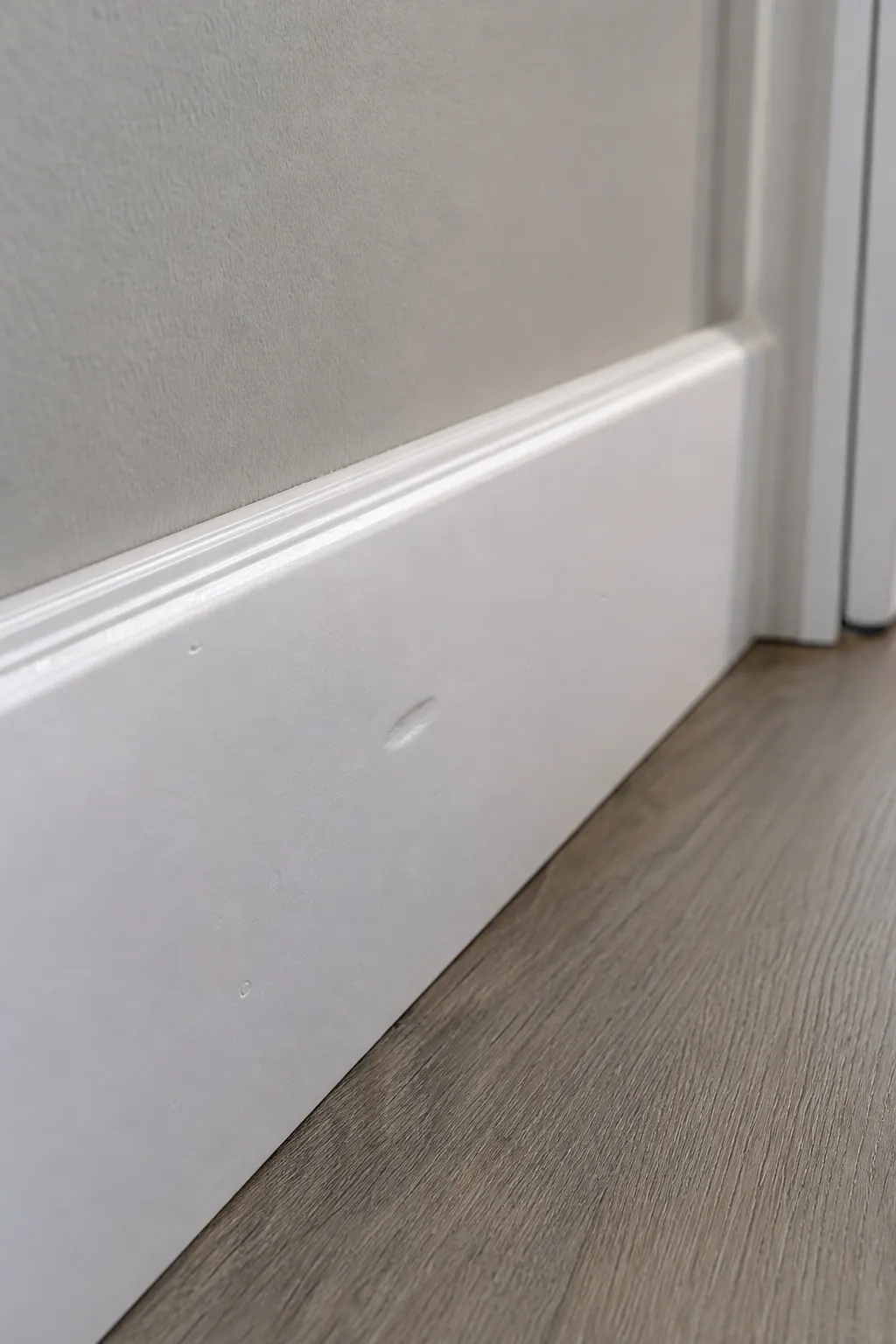
Movement and distortion point to a different problem. Press gently along a loose baseboard or casing section, look for joints that reopen after being closed, and compare the face of the piece with nearby trim. A piece that flexes, bows, separates at its miter, or no longer sits flat may need more than filler. The inspection should also account for why it moved, particularly if staining, soft material, or repeated finish breakdown suggests moisture exposure.
- Material changes the decision. MDF with puffed edges, a softened surface, or crumbling corners has lost its crisp profile and is often a poor candidate for cosmetic patching. Solid wood can sometimes be repaired when damage is confined to a small area, but splits, rot-like deterioration, or warped lengths change the scope. PVC trim does not absorb water like MDF, yet cracks, poor fastening, or an incompatible replacement profile can still spoil the finished line.
- Scope affects visual consistency. One damaged casing corner may be addressed selectively if an equivalent profile and paint finish can blend in. Several swollen baseboards, mismatched replacement pieces across an open room, or repeated open seams can make coordinated replacement the more cohesive choice.
For trim repair in North Port, FL, an on-site assessment should compare the affected piece with adjoining lengths: material condition, profile shape, reveal alignment, joint tightness, and finish matchability all matter. The goal is not merely to hide damage, but to choose the scope that leaves straight runs, clean transitions, and paint-ready details that read as one intentional installation.
When Targeted Trim Repair Is a Practical Option
A focused repair works best when the flaw is interrupting an otherwise continuous run of trim, not when the trim itself has lost its shape. A small dent from furniture, a few old nail holes, a shallow chip at a baseboard edge, or limited paint wear can be filled, smoothed, and blended so the repaired area reads with the rest of the room.
- Finish-level defects: Nail holes, minor dents, small chips, and worn paint are localized surface issues. The desired result is a level repair with no visible ridge, pinhole, or change in sheen once the trim is painted.
- Caulk and gap corrections: A short open caulk seam or minor gap where trim meets the wall can be renewed when the trim remains straight and firmly seated. Neatly tooled caulk should create a clean, even edge rather than a thick line that calls attention to the joint.
- Joint and fastening adjustments: A separated miter joint at a casing corner, or a short loose section of baseboard, may be repairable if the pieces are intact and can be brought back into position. Secure fastening, a tight corner, and consistent reveal lines are stronger finish signals than simply covering the separation with filler.
That makes baseboard repair North Port FL a sensible option for isolated wear near a doorway, along a single wall, or around a small damaged area where adjacent lengths remain sound. The same principle applies to door casing repair in North Port: if the profile is crisp and the casing can sit square to the opening again, a localized correction can preserve the room's existing trim pattern.
Repair work should restore alignment and finish continuity, not disguise weak material. If a chipped area is soft underneath, an edge continues to crumble, or a joint cannot stay closed after adjustment, the repair may not remain clean over time. In those cases, replacing the affected piece is generally the more dependable way to regain a straight, paint-ready line.
When Trim Replacement Delivers a Better Long-Term Result
Replacement earns its place when the trim can no longer provide a straight, stable edge. MDF baseboards that have swollen at the bottom, softened, or begun to crumble have lost the crisp shape needed for a clean finish. The same is true of molding with a broken profile, casing with a missing section, or a piece so deeply gouged that filling it would leave a flattened or uneven detail.
- Repeated moisture exposure: Water damage that returns in the same area can leave trim distorted, stained, or weak even after it dries. The moisture source, such as a leak, condensation, or another damp condition, should be identified and addressed before new trim is installed; replacement alone does not correct the underlying cause.
- Failed attachment: A loose baseboard or casing piece may need replacement when it cannot be reset flush and securely fastened. A lasting result should sit tight to the wall or opening, keep an even reveal, and hold its joints without relying on a heavy bead of caulk to hide movement.
- Widespread visual inconsistency: Previous patchwork can leave different heights, profiles, colors, or proportions along the same wall. When those differences remain visible after finishing, replacing the mismatched material produces a more intentional line.
Trim replacement in North Port, FL does not automatically mean redoing an entire room. One affected run of baseboard, one side of a doorway, or a damaged window casing can be replaced when the new piece can transition cleanly into sound surrounding trim. Expanding the scope to connected walls, nearby openings, or a full room becomes the stronger choice when a partial change would interrupt the profile, create uneven baseboard height, or leave contrasting finish details in plain view.
For baseboard replacement in North Port, the practical goal is continuity: aligned lengths, tight corners, consistent proportions, and a paint-ready surface that reads as one coordinated installation rather than a series of fixes.
Matching Existing Baseboards, Molding, Casing, and Finish Details
Matching is most noticeable where the eye follows a continuous line: along an open living area, through a hallway, around paired doors, or across neighboring windows. A replacement baseboard should agree with the existing height, top-edge shape, thickness, and the small gap or "reveal" it creates against the wall. Shoe molding and quarter round both cover the floor-to-baseboard edge, but their profiles differ; using one beside the other can make a patched area stand out.
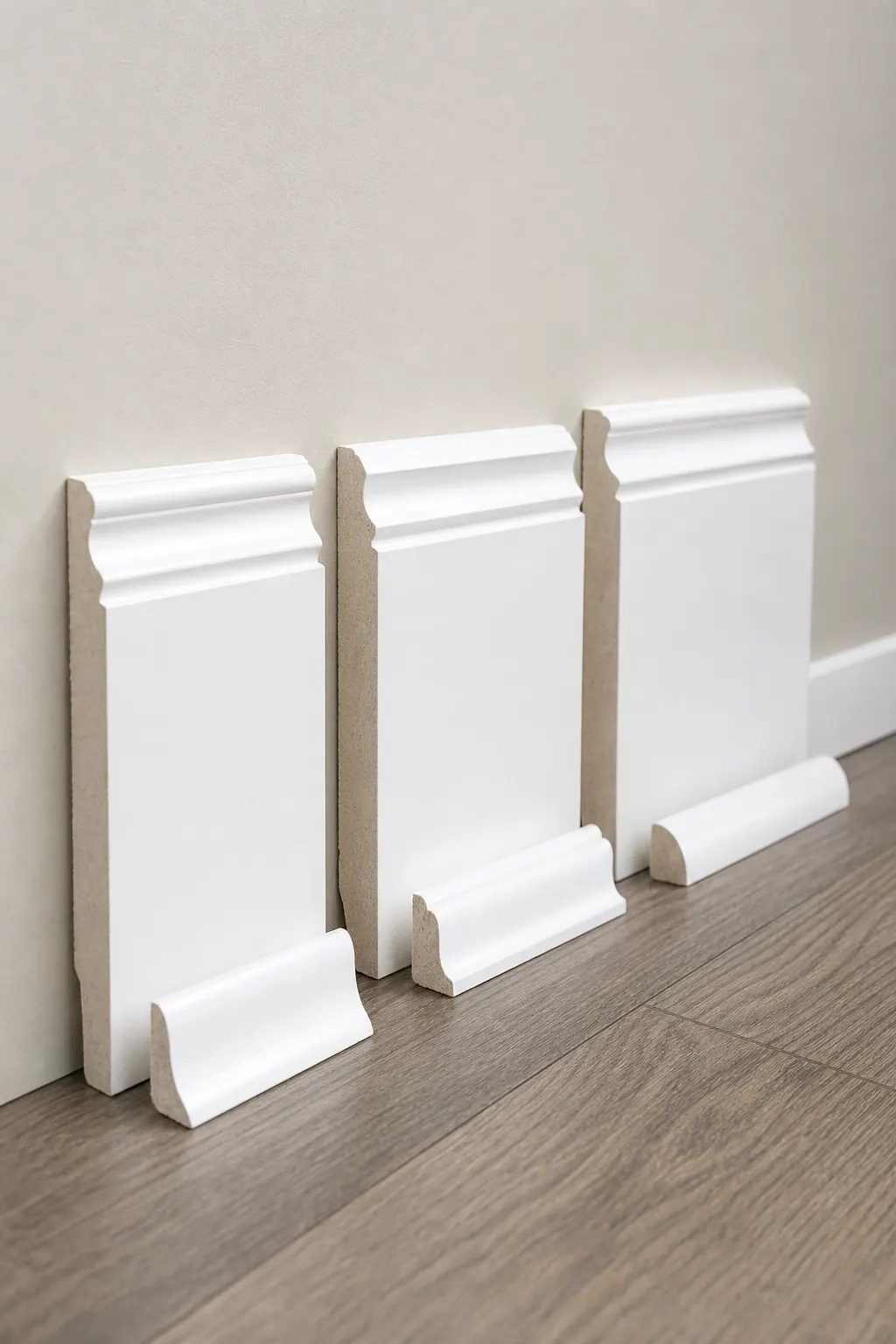
Door and window casing need the same attention. Casing frames an opening, so its width, edge detail, and corner treatment should relate to the other sides of that opening and nearby doors or windows. Crown molding draws attention at the ceiling line, where a slightly different profile or poorly aligned miter can be especially visible. For molding repair in North Port, FL, measuring an intact adjacent piece, not just the damaged section, helps establish the profile and proportions that need to be carried forward.
Paint-grade trim is generally more forgiving because compatible pieces can be filled, caulked, primed, and painted as a unified surface. Stained wood trim is less flexible: grain direction, color variation, sheen, and age can leave even a correctly shaped new piece visibly different. A good visual checkpoint is that repaired paint-grade trim has smooth filled areas and clean caulk lines, while stained trim should retain a consistent face grain and finish without an abrupt color break.
When an exact profile is unavailable, the practical choices depend on how visible the transition will be:
- Use a close profile: This can suit a short, less prominent section when its height and edge detail blend with surrounding trim.
- Replicate a compatible detail: Where feasible, shaping a replacement to echo the existing profile can preserve the room's character without pretending it is an identical stock piece.
- Replace a connected run: Changing one full wall of baseboard or the complete casing around an opening avoids an awkward mid-run change.
- Coordinate the affected area: A planned update to related baseboards, casing, or molding creates an intentional finish when isolated matching would look pieced together.
Wood, MDF, and PVC also affect the choice. Wood offers grain for stained finishes; MDF is commonly used for smooth paint-grade profiles; and PVC can suit areas where a moisture-tolerant trim material is desired. For mismatched trim correction North Port homeowners can judge the result by the visible whole: consistent lines, tight joints, flush attachment, and finish details that look deliberate from one connected space to the next.
A Detail-Focused Approach to Trim Work in North Port
The work starts by looking beyond the visibly damaged spot. A practical assessment follows the trim into adjoining lengths and checks the wall, floor edge, door jamb, or window opening beside it. That helps distinguish a loose fastener or isolated impact mark from a seam that has opened because the surrounding surfaces are moving.
In North Port homes, interior moisture exposure, humidity, air-conditioning condensation, and ordinary traffic can affect trim condition without making every flaw a moisture problem. Areas around exterior doors, bathrooms, kitchens, and utility spaces deserve a closer look for softened material, staining, repeat caulk separation, or a swollen bottom edge. If the material is still sound, a localized repair may be the cleaner scope; if it has distorted or continues to deteriorate, replacing the affected run creates a more stable finish.
Before work begins, the replacement profile, height, thickness, material, and finish plan should be set against the connected trim. The selected piece is then repaired or installed so it sits securely and keeps an even reveal. Corners and splices should close tightly rather than rely on a heavy bead of filler to hide a poor fit.
The final preparation is what gives North Port trim repair its finished look: filled nail holes and damage sanded smooth, seams blended, and caulk tooled into a narrow, consistent line where trim meets the wall. The result should be paint-ready, with straight runs, aligned casing, crisp joints, and no obvious patchwork competing with the room's clean lines.
Restore Clean, Consistent Interior Trim Lines
When interior details begin to distract from the room, it is worth deciding on a scope that restores continuity instead of adding another visible patch. A damaged spot in otherwise sound trim may call for targeted repair; one out-of-place piece after an update may be best handled with selective replacement; and a profile that changes across a doorway, corner, or open wall may look more cohesive when the connected run is replaced together. The practical difference is what the eye will follow once the work is painted and finished.
For trim repair North Port FL homeowners can request an evaluation of worn baseboards, separated caulk, loose door or window casing, damaged molding, water-affected material, and mismatched additions. The discussion should identify the condition of the surrounding trim and the finish outcome each option supports. Whether the right path is a small repair or a more coordinated replacement, the aim is straightforward: secure pieces, even lines, tight joints, clean caulk, and a paint-ready interior that feels deliberately finished.
Plan the next step
Compare the broader Trim Repair and Replacement service.
Review the North Port, FL service area for local planning context.
When you are ready, request a free estimate with the rooms, trim goals, city, and available photos.
FAQs
Can damaged baseboards be repaired instead of replaced in North Port, FL?
Yes, baseboards can be repaired when damage is limited to nail holes, shallow dents, small chips, worn paint, or a short open caulk seam. The trim should remain firm, straight, securely attached, and aligned with adjacent pieces.
How do you fix gaps between trim and walls?
Small gaps can be corrected with neatly tooled caulk when the trim is straight and firmly seated. If the baseboard or casing is loose, bowed, or continues to move, it must be reset or replaced rather than covered with a heavy caulk bead.
What causes caulk to crack around baseboards and door casing?
Caulk commonly cracks when trim or surrounding surfaces move, causing joints to reopen after they have been closed. Loose fastening, bowed trim, humidity, air-conditioning condensation, and moisture exposure can contribute to repeated seam separation.
Can you match existing baseboard or door casing profiles?
Matching requires comparing the replacement with intact adjoining trim for height, thickness, top-edge shape, profile, reveal, and finish. If an exact profile is unavailable, use a close profile in a less visible area, replicate a compatible detail, or replace a connected run for a consistent appearance.
When should I replace water-damaged or mismatched trim instead of repairing it?
Replace trim when MDF has swollen, softened, or crumbled; when molding has a broken profile or missing section; or when a piece cannot sit flush and stay securely fastened. Coordinated replacement is also the better choice when several pieces have different heights, profiles, colors, or proportions that remain visible after finishing.