
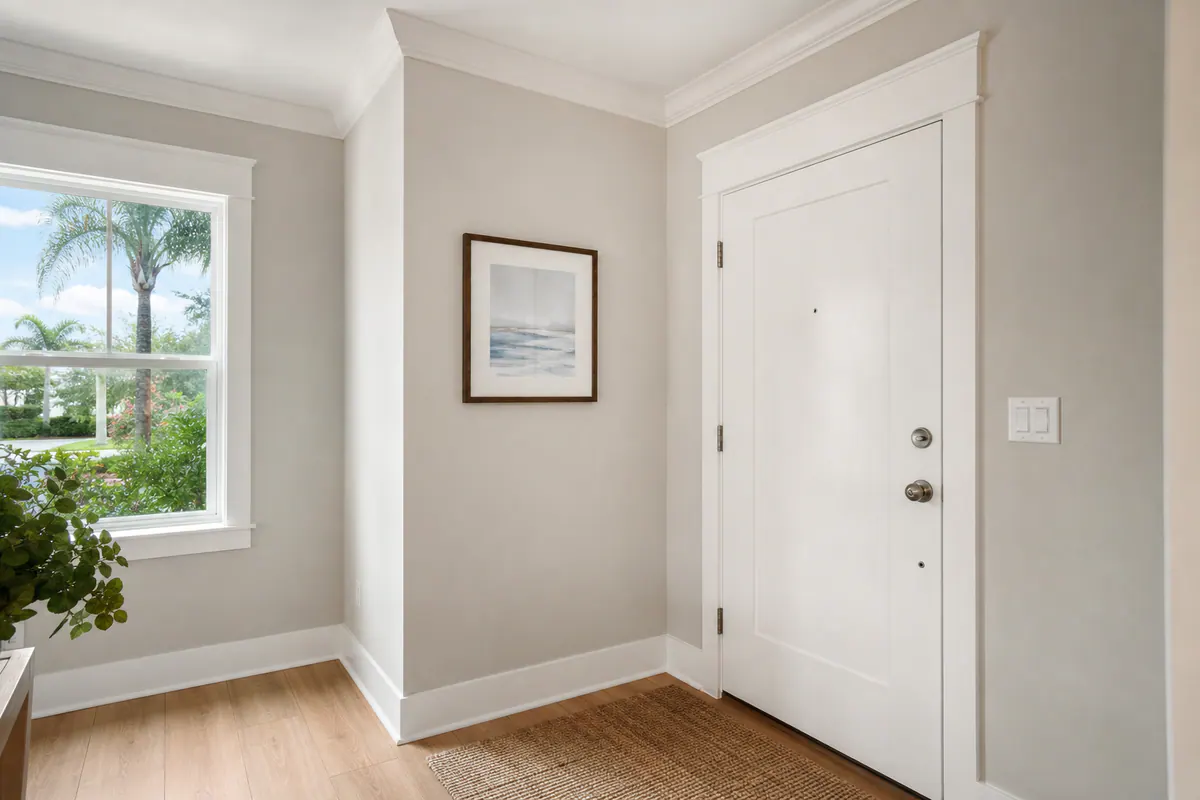
Trim Problems Osprey Homeowners Commonly Notice
Interior trim often starts asking for attention in small, visible ways: a baseboard that has cracked or pulled away from the wall, a miter joint at an outside corner that has opened, or door casing marked by vacuum, furniture, or everyday bumps. These are common candidates for interior trim repair in Osprey when the surrounding molding remains solid and the damage is limited.
Other signs call for a closer look at what happened before choosing a cosmetic fix. Water-stained window trim, soft wood, or MDF that has puffed up along its bottom edge points to moisture exposure rather than an ordinary dent. Caulk, filler, and paint can improve minor surface flaws, but they will not correct an active leak, a damp wall, or trim that has lost its shape.
Movement can show up as separated joints, gaps where casing meets the wall, or crown molding that no longer sits tightly at the ceiling. Impact damage is usually more localized: a chipped shoe molding run near a doorway or a crushed casing edge. Outdated decorative profiles are different again, they may be intact but no longer suit the room. Identifying whether the issue is surface damage, moisture, movement, or style helps determine whether a targeted repair, a new section of molding, or a broader update makes the most sense.
When Trim Repair Makes Sense, and When Replacement Is the Better Choice
The deciding question is whether the molding is still sound enough to hold its shape and finish. Localized, paint-grade damage is often a strong repair candidate: a shallow dent, nail holes, a small chip on a casing edge, or a short gap at a stable joint can be filled, patched, resecured, recaulked, and repainted. This approach preserves the surrounding trim when its profile and attachment remain intact.
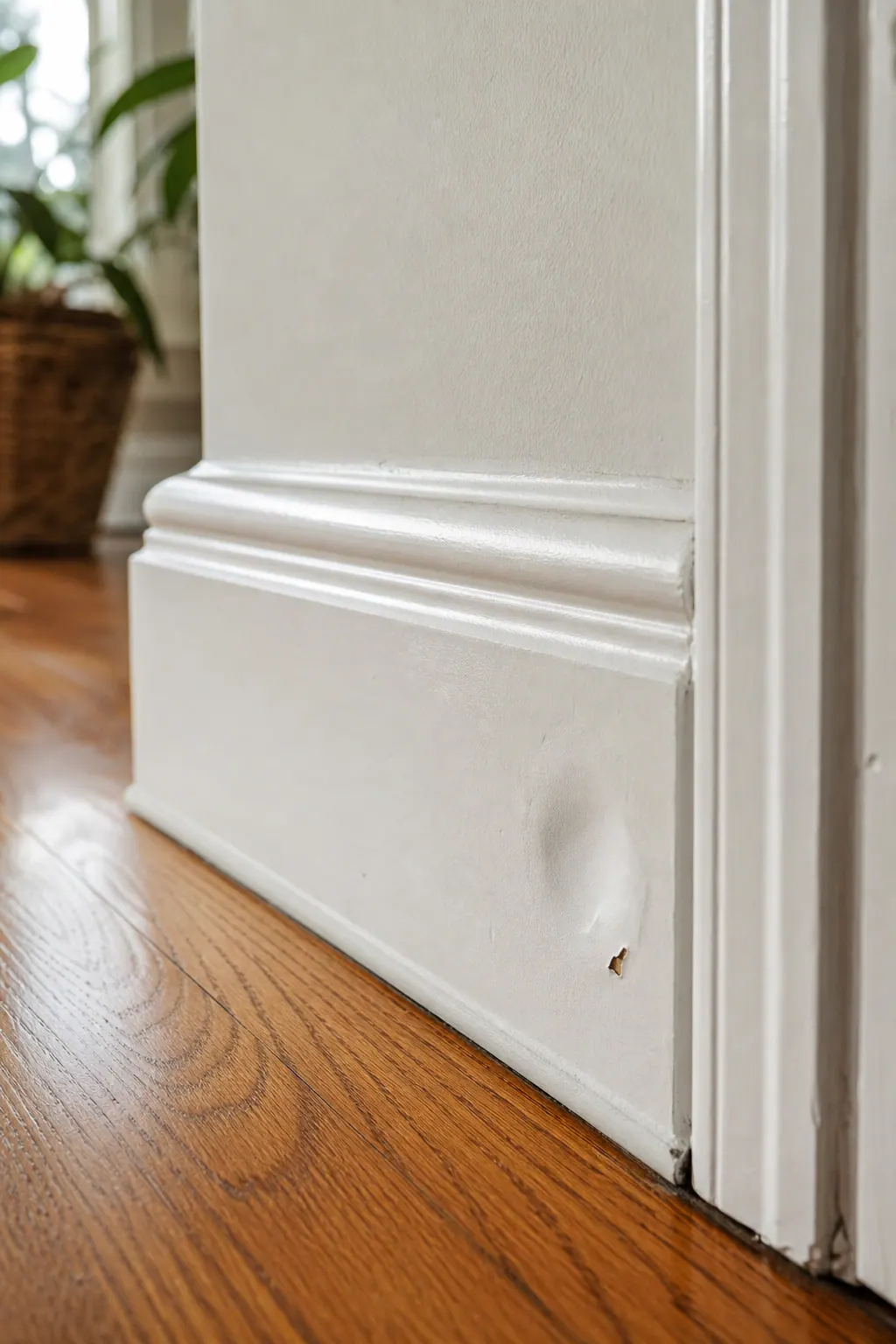
- Repair one area when the damage is limited and the piece is firm. For example, damaged molding repair in Osprey may involve patching a gouge in a baseboard or tightening one loose casing leg without disturbing the rest of the doorway.
- Replace one section when a single run has lost its shape but adjacent trim is in good condition. A swollen length of baseboard beneath one window or one badly broken piece of door casing can be removed and matched to the existing width, thickness, and profile.
- Update the room together when the problem repeats across multiple walls or the goal is a deliberate change in style. Coordinated trim replacement in Osprey, FL can make more sense when mismatched repairs would leave the room looking pieced together.
Replacement is usually the clearer path when material integrity, not just the painted surface, has been compromised. Widespread swelling, rot, deep loss of a decorative profile, recurring joint separation, pest damage, or trim that stays soft or distorted are weak candidates for filler and paint. Those measures can disguise a flaw briefly, but they do not rebuild stable molding.
Moisture deserves attention before finish carpentry begins. A leak at a window, damp drywall behind baseboard, or moisture entering at the floor edge can damage new trim in the same place. The source should be corrected and the affected area allowed to dry before repair or replacement proceeds. Once the condition is stable, the choice can focus on a discreet patch, a matched replacement section, or a room-wide trim change that supports the intended look.
Repair Options for Baseboards, Door Casing, Window Trim, and Crown Molding
Small dents, nail holes, and shallow chips in painted baseboards or casing can be filled, sanded flush, spot-primed, and painted. A loose piece, by contrast, needs to be pressed back into its original position and secured with fasteners; filler can restore a face defect, but it cannot hold molding that has pulled away.
- Baseboards and shoe molding: A short baseboard run can be cut out and replaced without changing the entire room when the new piece matches the existing height, thickness, and top-edge shape. Shoe molding or quarter round, the narrow strip covering the floor-to-baseboard edge, can also be replaced by a limited run when it is split, deeply scuffed, or swollen. For baseboard repair in Osprey, FL, an opened outside-corner miter may be reglued, held tightly in alignment, then filled and refinished at the hairline seam.
- Door and window casing: A cracked lower casing leg is often more practical to address than an entire opening because that vertical piece can be removed while the head casing and opposite leg remain in place. Adhesive closes a separated miter or split joint; fasteners keep the casing seated against the jamb and wall. Replacing one leg works best when the remaining pieces are straight, firmly attached, and capable of receiving a matching replacement.
- Crown molding: Crown meets both the wall and ceiling, so even a small alignment error can be visible along its shadow line. Outside corners typically use miter cuts, while inside corners are often coped so one profiled end fits over the face of the adjoining piece. A loose length can be reset, and one section may be replaced when the adjacent crown is solid and its profile can be reproduced. Caulk can soften a slight edge gap after fitting, but it cannot make a poorly aligned crown joint look crisp.
Caulk and filler solve different finish problems: flexible caulk closes narrow gaps where trim meets a wall or ceiling, while filler rebuilds nail holes, dents, and chipped faces. Sanding the filled area level, spot-priming bare material, and applying a blended paint or stain touch-up helps the repaired section read as continuous trim rather than a visible patch.
Matching Existing Molding Profiles Without Overpromising
Matching Existing Molding Profiles Without Overpromising
A replacement piece can look close at the store yet stand out once it meets older trim. Profile matching starts by comparing the face shape and its small details, beads, coves, steps, and rounded edges, along with the piece's overall width, thickness, and how far it projects from the wall or jamb. Material matters too: wood grain can remain visible beneath stain, while a painted MDF edge, layers of old paint, and years of wear can change the apparent shape and color.

An exact match is not always realistic. Older molding may be discontinued, obscured by heavy paint buildup, damaged at the very edge needed for comparison, or made from a one-off decorative profile. The practical aim for molding repair in Osprey, FL is to choose a solution that looks intentional from normal viewing distance rather than promising an invisible match where the original itself is difficult to identify.
- Close stock profile: A readily available molding with similar height, thickness, and contour may work well for a short painted repair, particularly where an adjacent corner or doorway breaks up the run.
- Built-up profile: Combining simple pieces, such as a flat backer with a smaller decorative cap, can recreate the layered appearance of more detailed trim. This changes the installation approach but can produce a more convincing visual proportion.
- Shaped wood: When stain, grain, or a distinctive contour is central to the look, wood may be milled or shaped to echo the original. This option is most useful when enough intact trim remains to use as a reference.
- Longer replacement run: Replacing from corner to corner, across one wall, or around an entire opening removes the abrupt meeting point between old and new profiles. For trim replacement in Osprey, FL, that broader scope can create the most cohesive result when a localized match would be obvious.
Choosing Wood, MDF, or PVC Trim for the Room and Condition
Choosing Wood, MDF, or PVC Trim for the Room and Condition
The material behind the finish affects how a replacement section blends, how easily it can be shaped, and how it responds to the conditions in that room. The right choice is less about declaring one material "best" than matching the molding to the existing style, planned paint or stain finish, and likelihood of repeated moisture contact.
- Wood: Wood trim is a practical choice for stained work because its grain can remain part of the finished appearance. It can also be shaped for detailed casing, crown, or custom profile work, and minor dings or edge damage may be repairable. It makes particular sense in bedrooms, living areas, formal entries, or around an opening where existing stained wood needs to continue.
- MDF: Medium-density fiberboard provides a consistently smooth surface for painted baseboards, casing, and simple decorative profiles. It is often a good visual fit in dry bedrooms, hallways, and living spaces where a uniform painted finish is the goal. MDF is a weak choice for an area with recurring wetting, however, because swollen edges or faces do not return to their original shape simply by repainting.
- PVC: PVC trim is generally more tolerant of moisture exposure, which can make it worth considering near baths, laundry areas, or entry locations that see damp shoes and routine cleaning. Its appearance and finishing approach may not suit every stained design or highly detailed interior profile, so it should be chosen for the intended look as well as the exposure.
For baseboard replacement in Osprey, a useful checkpoint is the room's actual pattern of use: a painted MDF profile may suit a dry guest room, while a bath baseboard needs a material decision that accounts for repeated humidity or splashes. If moisture caused the previous failure, that condition needs correction before new trim is installed.
Why Tight Joints, Surface Prep, Caulk, and Paint Finish Matter
Why Tight Joints, Surface Prep, Caulk, and Paint Finish Matter
A clean-looking trim line is created at the wall, floor, ceiling, and corners, not just at the face of the molding. Before a piece is secured, the installation needs to account for floors that dip, walls that bow, and jambs or ceilings that are slightly out of plane. A narrow scribe molding or a carefully fitted edge can help close an uneven transition; forcing a straight piece tightly against an irregular surface can create a new gap elsewhere.
Attachment and joinery also affect the final appearance. Trim needs secure fastening into a sound backing so it does not flex or pull away after finishing. Outside corners commonly use miter joints, where two angled cuts meet; they need to align tightly at the visible point. Inside corners are often coped, meaning one piece is shaped to follow the face of the adjoining piece. Coping can make an inside corner read more cleanly when walls are not perfectly square.
Finishing follows the fitting work. Fastener holes, shallow chips, and small face repairs are filled, allowed to dry, and sanded so the patch does not show as a raised or rough spot under paint. Flexible paintable caulk belongs along small wall-to-trim or ceiling-to-trim gaps, where it softens a shadow line; it is not a substitute for a loose board, a poorly fitted joint, or a damaged substrate. Primer helps repaired or bare areas receive paint more evenly before the finish coats are applied.
For trim repair in Osprey, FL, completing these steps before final interior painting usually produces a more consistent result. The wall paint and trim paint can then be cut in around finished edges, while patches, caulk lines, and spot-primed areas receive their final coating as part of the same finish plan rather than as obvious later touch-ups.
Room-by-Room Trim Upgrades for a More Cohesive Interior
A room-by-room plan lets trim work support a visible refresh without turning every space into a remodeling project. In a bedroom or dry living area, replacing only the battered baseboard run can remove the most noticeable damage while retaining sound molding elsewhere. In an entry, updating both door casing and nearby window casing creates a deliberate focal area; keeping their face width and profile family aligned prevents the new pieces from looking accidental beside one another.
Crown molding can be repaired where a short section is damaged or used selectively to give a dining room, living room, or primary bedroom a more finished transition at the ceiling. Wainscoting and other wall trim offer another contained upgrade: repairing loose rails or damaged panels preserves a traditional detail, while replacing the treatment across one wall or one room makes a style change read as intentional.
Connected spaces benefit from a simple visual plan. Matching baseboard height, casing profile, trim color, and paint sheen through an open entry, hall, and living area creates continuity; a different profile can still work in a separate room when it is clearly treated as its own design zone. Before setting the scope for trim replacement in Osprey, FL, an onsite review should compare the damage, any moisture history, existing profile relationships, and the desired painted or stained finish. That makes it easier to choose between a contained repair, a single-room replacement, or a coordinated upgrade where it will have the most visual value.
Plan the next step
Compare the broader Trim Repair and Replacement service.
Review the Osprey, FL service area for local planning context.
When you are ready, request a free estimate with the rooms, trim goals, city, and available photos.
FAQs
Can damaged baseboards be repaired instead of replaced in Osprey, FL?
Yes, shallow dents, nail holes, small chips, and stable outside-corner gaps can usually be filled, sanded, spot-primed, and repainted. Replace a section when it is swollen, soft, split, badly distorted, or no longer holds its shape.
Can water-damaged trim be repaired after a leak?
Water-stained trim can only be repaired cosmetically after the leak or moisture source is corrected and the area is fully dry. Soft wood, puffed MDF edges, rot, or distorted molding generally require replacement because filler and paint cannot restore structural shape.
Can only one section of door or window casing be replaced?
Yes, one cracked lower casing leg can be removed and replaced while leaving the head casing and opposite leg in place. This works when the remaining pieces are straight, firmly attached, and can be matched for width, thickness, and profile.
How do contractors match an existing trim or molding profile?
They compare the molding’s face contour, including beads, coves, steps, and rounded edges, plus its width, thickness, and wall projection. Options include a close stock profile, a built-up profile made from multiple pieces, shaped wood, or replacement from corner to corner when an exact localized match is not practical.
What is the difference between MDF, wood, and PVC trim for replacement?
Wood is best suited to stained trim, detailed profiles, and areas where visible grain needs to match existing work. MDF provides a smooth painted finish for dry rooms but swells after repeated moisture exposure, while PVC is more moisture-tolerant for baths, laundry areas, and damp entry locations.