

In Palmer Ranch, interior trim can make an otherwise updated room look unfinished when baseboards are dented, crown molding has opened at a joint, or door and window casing no longer meets the wall cleanly. Flooring changes and wall repairs can leave visible edge gaps; mismatched replacement pieces, cracked corners, swollen material, and worn paint lines can draw attention for the same reason.
Effective trim repair in Palmer Ranch involves more than covering flaws with paint. Baseboards protect and define the floor-to-wall transition, while crown molding, casing, and other decorative pieces frame ceilings, doors, and windows. Each needs to be evaluated for its material, how securely it is attached, whether it still fits the surrounding surfaces, and whether its profile, the face shape, dimensions, thickness, and edge detail, can blend with nearby trim.
A polished result shows up in the details: secure, aligned pieces; clean transitions at corners and flooring; filled fastener holes; controlled caulk lines; and paint that visually unifies repaired and existing areas. Small cosmetic defects may be candidates for repair, while unstable, swollen, badly split, or incompatible trim may call for replacement. An in-home assessment helps determine what can be restored and whether an older or discontinued profile can be matched closely enough for the room to look intentional.
When Damaged Trim Can Be Repaired, and When Replacement Makes More Sense
The decision often comes down to whether the problem is localized and the surrounding trim is still sound. Small dents, nail holes, shallow scratches, a minor opening at a mitered corner, or one loose stretch of baseboard can often be addressed without removing an entire run. Limited gaps where trim meets a wall may also be manageable when the trim is secure and the surfaces are otherwise stable.
Repair is most useful when it preserves a consistent look across the room. For example, retaining an existing casing or baseboard can be preferable when its profile is difficult to find, provided the damaged area can be filled, reset, or refinished without leaving a visible weak spot. The expected finish matters: a repair should blend into the face of the piece and allow adjoining joints and paint lines to look deliberate, not merely hide the damage from a distance.
Trim replacement in Palmer Ranch can make more sense when the material itself has failed. Swollen, soft, or crumbling MDF; wood with major splits; repeatedly moisture-affected sections; missing lengths; and trim carrying several incompatible patches may not provide a reliable foundation for a polished repair. A single replacement piece can work when its height, thickness, face shape, edge detail, and relationship to nearby trim can be matched. When those details cannot blend convincingly, replacing a longer run or related pieces may create the more unified appearance.
- Likely repair candidate: damage is shallow, isolated, dry, and surrounded by firmly attached material.
- Likely replacement candidate: damage affects the trim's structure, keeps returning, or would leave a noticeable mismatch after patching.
For damaged molding repair in Palmer Ranch, an in-home review determines the practical path. Looking at the affected piece alongside adjacent walls, flooring, corners, and existing profiles helps establish whether a localized repair can meet the finish expectation or whether replacement will produce the cleaner result.
What Professional Interior Trim Repair Can Address
The work begins by making the existing pieces sit correctly again. A loose baseboard or door casing can be re-secured so it lies flat and holds its intended line against the wall. Minor separations between pieces can be drawn back into alignment, while a miter joint, the angled joint commonly seen at outside corners, may be reset or reinforced when the surrounding trim is stable. The goal is a closed, even corner rather than a seam that is simply covered with caulk.
- Fastening and alignment: Loose sections are brought back into position so their top edge, face, and transition to adjacent trim read as one continuous run.
- Joint correction: Small openings at corners or straight seams can be adjusted before finishing. A properly repaired joint has consistent alignment across the face of the molding, not one piece sitting proud of the other.
- Surface repair: Dents, shallow chips, nail holes, and small surface defects can be filled with an appropriate filler, shaped smooth, and sanded so they do not telegraph through the final coating.
For baseboard repair in Palmer Ranch, the floor edge is part of the visual equation. A repair has to account for where the baseboard meets the flooring, whether a wall has an uneven plane, and how the repaired section meets the next length at a corner or doorway. The same applies to casing: a filled spot may be smooth, but it will still look patched if the casing has shifted away from the wall or no longer aligns with the adjoining leg.
Caulk and paint belong at the end of the sequence, after the trim is secure and surface repairs are prepared. Flexible caulk can refine a small, stable line where trim meets the wall, while filled fastener holes and repaired defects need a smooth, paint-ready surface. Primer or finish paint then helps visually unify the repaired area with the existing trim. Caulk is not a substitute for correcting movement, failed material, or a joint that will not stay closed.
Replacing Baseboards and Molding Without Creating a Mismatched Look
A replacement piece has to belong to the room, not merely cover the damaged area. Planning starts by comparing the existing trim's profile, the face shape and contours, along with its height, thickness, top-edge detail, material, and painted or stained finish. Two baseboards can be close in height yet still look noticeably different when one has a rounded top and the other has a square edge, or when their thicknesses create different shadows along the wall.
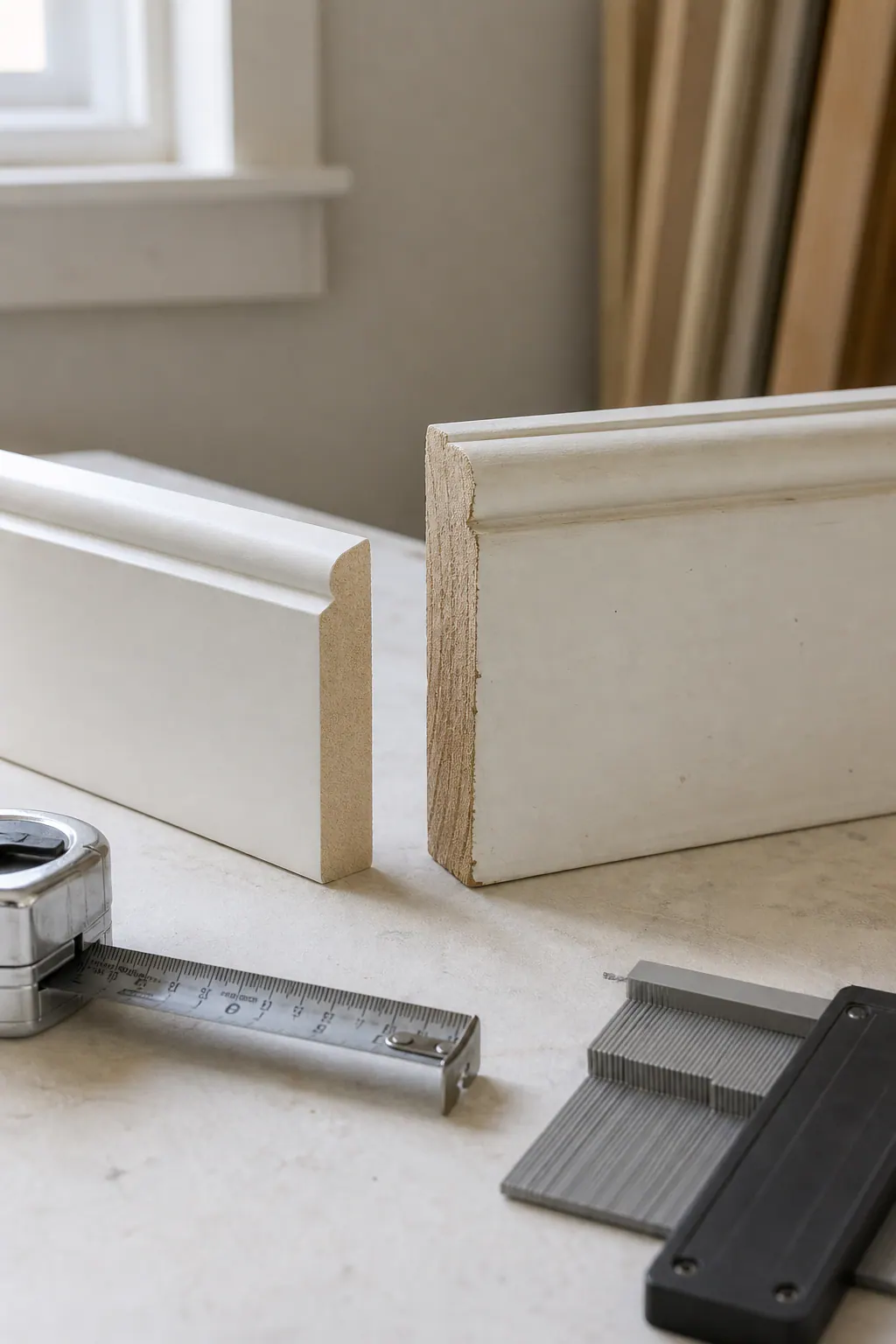
A single damaged section can be a sensible replacement when the new piece can meet the retained trim cleanly at a corner, doorway, or other natural break. For baseboard replacement in Palmer Ranch, that might mean replacing one length between two door casings rather than splicing a visibly different board into the middle of an uninterrupted wall. If the available material differs in profile, thickness, or finish, extending replacement through a longer run, or replacing adjacent pieces, can create a more consistent visual result.
- Stock-profile comparison: A readily available molding may work when its face shape, dimensions, edge treatment, and material sit convincingly beside the original after finishing. A similar-looking sample that projects farther from the wall or ends at a different height can make joints and room transitions stand out.
- Custom millwork: When stock options do not align, a custom-made piece may be practical for matching a distinctive baseboard, casing, or crown detail. This route is considered against the amount of trim affected and the desired continuity across the room.
- Transition planning: Door casing, outside and inside corners, built-ins, stair trim, and openings to adjacent rooms determine where a new section can begin and end naturally. Clean work keeps faces aligned and avoids abrupt changes in reveal, thickness, or edge detail.
Crown molding repair in Palmer Ranch can call for the same close comparison, especially where a replacement section meets retained molding at a corner or continues into another room. Discontinued and custom profiles cannot be promised as exact matches until the existing trim and available materials are evaluated in person. A sample and measurements make it possible to judge whether selective replacement will blend after preparation and paint, or whether a broader replacement plan will look more intentional.
Correcting Gaps, Seams, and Uneven Paint Lines for a Finished Appearance
The final visual test is often a line of light across the wall: it reveals a wavy caulk bead, an open seam, a proud corner, or a paint edge that does not blend with the rest of the room. Small, stable gaps where secure trim meets a slightly uneven wall can usually be refined with flexible, paintable caulk. Applied in a narrow, controlled bead, caulk softens the shadow line without changing the shape of the molding.
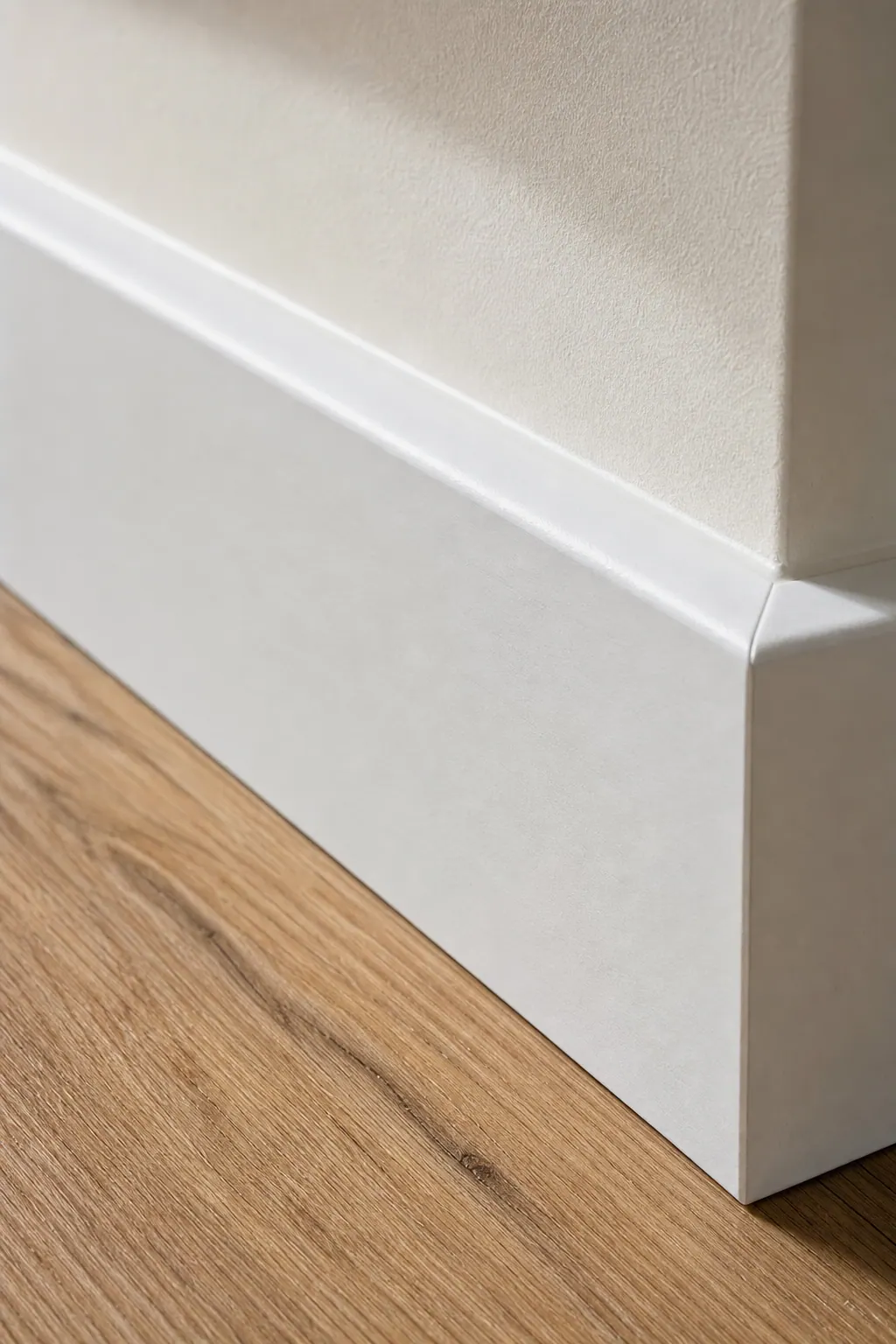
Caulk is not a filler for a larger problem. A gap that reopens, trim that moves when pressed, a separated corner joint, or a board pushed out by swelling needs its fit, attachment, or surrounding surface addressed first. The same applies where a wall has a pronounced irregularity or moisture has repeatedly affected the material. Covering those conditions with a heavy bead may look acceptable briefly, but it leaves the underlying issue visible again as the trim shifts.
- Wall edges and seams: Straight, consistent lines help baseboards, casing, and crown molding read as one continuous installation rather than a series of patched pieces.
- Corner joints: Tight miters and aligned faces should be corrected before the seam is lightly finished; caulk should not be used to disguise a wide, misaligned corner.
- Nail holes and surface repairs: These are filled, sanded smooth, and prepared so they do not telegraph through the paint.
- Floor transitions: The trim should meet the flooring cleanly without forcing caulk into a gap created by loose material or an uneven installation.
When repainting is part of trim and molding repair in Palmer Ranch, preparation makes the repair disappear more effectively: sand repaired areas smooth, remove dust, prime where needed, and apply paint with a finish that blends in both color and sheen. A close color match can still stand out if the repaired section is noticeably glossier or flatter than the surrounding trim. An in-home assessment helps determine whether older paint, moisture marks, or uneven adjacent surfaces require more than cosmetic finishing.
Material and Site Conditions That Affect Baseboard and Molding Work
What is behind the trim matters as much as the visible damage. Solid wood may show a localized split, dent, or impact mark that can be evaluated for repair when the board remains stable. MDF, a dense engineered fiberboard often used for painted baseboards, can lose its clean edge when moisture causes it to swell or soften; a raised, fuzzy bottom edge is a different condition from a shallow paint chip. Other painted composite materials may have their own limits, so the practical choice follows the piece's condition, its location, and whether it can still hold a crisp finished line.
Repeated door strikes, furniture contact, pet damage, or vacuum impacts can also change the recommendation. One isolated damaged area may be workable, while several patched sections along a high-traffic run can make a fresh, consistently profiled replacement more convincing. Recurring moisture, wall movement, or an unstable substrate should be addressed before new trim is installed; otherwise, the same separation, swelling, or distortion can return through the finished surface.
New flooring changes the baseboard-to-floor relationship. Removing old flooring can reveal a wall-edge gap that the previous baseboard concealed, while thicker flooring may reduce the visible baseboard height or require removal and reinstallation for a clean transition. Shoe molding or quarter round can cover a small, consistent floor-edge gap when its rounded profile suits the room and existing trim; it should not become a catch-all solution for uneven floors, loose baseboards, or a poorly planned height change.
For baseboard replacement in Palmer Ranch, an in-home look at the material, wall condition, and flooring transition helps establish whether retained trim can be reset and finished cleanly or whether replacement will create the more unified result.
Planning Trim Repair or Replacement in Palmer Ranch
Photos of the affected areas are a useful starting point, especially when they show the full wall or doorway as well as close-ups of the damage. Note whether the concern is one damaged section, new flooring, an outdated profile, moisture-related deterioration, or trim that no longer looks consistent from room to room.
For trim repair in Palmer Ranch, the on-site review should include the rooms involved and the trim's relationship to nearby walls, corners, doors, and flooring. From there, the scope can distinguish a localized repair from interior trim replacement, assess whether a compatible profile is feasible, and define which surfaces will be prepared, caulked, primed, and painted.
The recommendation should be specific to the condition and finish goal, not a default patch or wholesale replacement. The intended result is secure trim with aligned joints, corrected transitions, filled fastener holes, restrained caulk lines, and a paint-ready surface that helps the completed work read as one clean, intentional detail.
Plan the next step
Compare the broader Trim Repair and Replacement service.
Review the Palmer Ranch, FL service area for local planning context.
When you are ready, request a free estimate with the rooms, trim goals, city, and available photos.
FAQs
Can damaged trim be repaired instead of replaced in Palmer Ranch?
Yes. Shallow dents, nail holes, minor scratches, small miter-joint openings, and isolated loose baseboard sections can usually be repaired when the surrounding trim is dry, firmly attached, and structurally sound.
Can gaps between trim and walls be fixed with caulk?
Small, stable gaps between secure trim and a slightly uneven wall can be finished with a narrow bead of flexible, paintable caulk. Caulk should not be used for moving trim, separated corners, swelling material, or gaps caused by loose installation.
How do you match an existing baseboard or crown molding profile?
Match the profile by comparing its face shape, height, thickness, top-edge detail, material, and painted or stained finish. Stock molding may work if it aligns convincingly, while distinctive or discontinued profiles may require custom millwork or replacement of a longer run.
Should baseboards be repaired after new flooring is installed?
Baseboards should be evaluated after flooring changes because removed flooring can expose wall-edge gaps and thicker flooring can change the visible baseboard height. Shoe molding or quarter round can cover a small, consistent floor-edge gap, but it should not conceal loose trim or uneven installation.
When is trim replacement better than repair?
Replacement is the better choice for swollen, soft, or crumbling MDF, wood with major splits, repeatedly moisture-affected sections, missing lengths, or trim with multiple incompatible patches. Replace a single section only when its profile, thickness, finish, and transitions can match the retained trim cleanly.