

Interior finish trim is the detail work that makes a room's surfaces look connected: baseboards finish the wall-to-floor edge, casing frames doors and windows, crown molding meets wall and ceiling, and shoe molding or quarter round covers a small flooring-edge gap. When one piece is cracked, loose, dented, water-stained, or patched with a visibly different profile, the problem can draw attention away from an otherwise well-kept room.
For Sarasota homeowners seeking trim repair Sarasota FL services, the first question is not simply whether a mark can be painted. A solid section with a shallow dent, a small open joint, or a few nail holes may still be a good repair candidate. A swollen, soft, badly warped, missing, or repeatedly loosening piece points more strongly toward replacement. Water staining also deserves a closer look: a historical stain and sound material call for a different approach than staining tied to an unresolved moisture issue.
A convincing result depends on the final appearance as well as the damage itself. Replacement trim must relate to the existing material, thickness, shape, and nearby connected runs; a close profile can still look wrong if its dimensions or paint sheen differ. Interior trim repair in Sarasota should restore intentional lines at walls, doors, windows, and flooring transitions, not leave mismatched patches or gaps disguised by paint.
What Causes Damaged Baseboards, Molding, and Casing?
A mark at floor level often has a simple origin: vacuum heads, shoes, moving furniture, and door swings leave scuffs, chips, and shallow dents. Pets may scratch corners or chew exposed edges. These are usually surface problems when the trim remains hard, straight, and firmly attached; the damage is visible, but the material beneath the finish has not broken down.
Cracks and separated joints point to a different issue. A miter joint is the angled meeting point at a corner; when it opens, the gap may reflect normal movement, settling, weak adhesive, or pieces that were not fastened securely. Baseboards or casing that flex when pressed, show raised nail heads, or pull away from the wall may have failed fasteners or a poor prior installation rather than a damaged face alone.
Paint can also obscure the condition. Heavy paint buildup may round over crisp molding details, bridge a joint that is already separating, or leave an uneven patch after several touch-ups. Removing or replacing a section without accounting for those built-up layers can make the repaired area look noticeably sharper or thinner than the surrounding run.
Moisture calls for the closest inspection. Around bathrooms, kitchens, exterior entryways, and plumbing leaks, trim may stain, swell at its bottom edge, feel soft, crumble, or develop rot. Unlike a furniture scuff or nail hole, these signs can mean the material is damaged below the paint. The active moisture source needs to be corrected before new trim or finish work is installed, or the same failure can return.
That surface-versus-depth distinction guides damaged molding repair in Sarasota: a stable piece with cosmetic wear is assessed differently from one that is warped, soft, loose, or separating through the material.
How to Decide Between Trim Repair and Trim Replacement
The deciding question is whether the existing piece still provides a sound, usable base for a lasting finish. Repair keeps the original trim in place and corrects isolated defects. It is usually the sensible path when the woodwork is hard, straight, and secure overall, with shallow dents, nail holes, a small crack, limited joint opening, or damage confined to the painted surface. A loose length can also be repairable when it can be firmly reattached without splitting or distorting the surrounding run.
Replacement removes material that no longer has enough integrity to hold its shape or stay fastened. Soft spots, swollen edges, deep breaks through the profile, broad warping, crumbling material, repeated moisture damage, and trim that will not hold securely against the wall are stronger replacement signals. Painting over those conditions may improve color briefly, but it does not restore a crisp edge, stable joint, or straight line.
The extent of the problem matters as much as its severity. One damaged section does not automatically mean every baseboard or casing piece in the room must be removed. When a compatible material and profile are available, baseboard replacement in Sarasota can be limited to the affected length or a single casing leg. When the damaged piece meets a connected run at a corner or doorway, replacing a larger visual section may create a more consistent result than inserting a short patch.
Profile matching shapes that decision. Width, thickness, edge detail, material, paint buildup, and sheen all affect whether a new piece will disappear into existing trim. A close-looking molding can still stand out if its face is thinner or its curved detail breaks differently in side light. If an isolated match is not realistic, replacement of the connected run may offer the cleaner finished appearance.
Budget and finish expectations belong in the same conversation. Trim repair in Sarasota, FL can preserve original material when damage is localized; trim replacement is the better investment when patching would leave a weak structure or a visibly compromised profile. The goal is not simply the smaller immediate scope, but a result that can be secured, filled, caulked, sanded, primed, and painted into an intentional-looking finish.
What Quality Interior Trim Repair Looks Like
The repair becomes convincing in the small details that remain visible after the paint dries. A loose baseboard or casing should be drawn back into its proper position and securely re-fastened, rather than simply covered with caulk. Fasteners that sit proud of the surface are reset or replaced, then their holes are filled so the face of the trim remains clean and continuous.
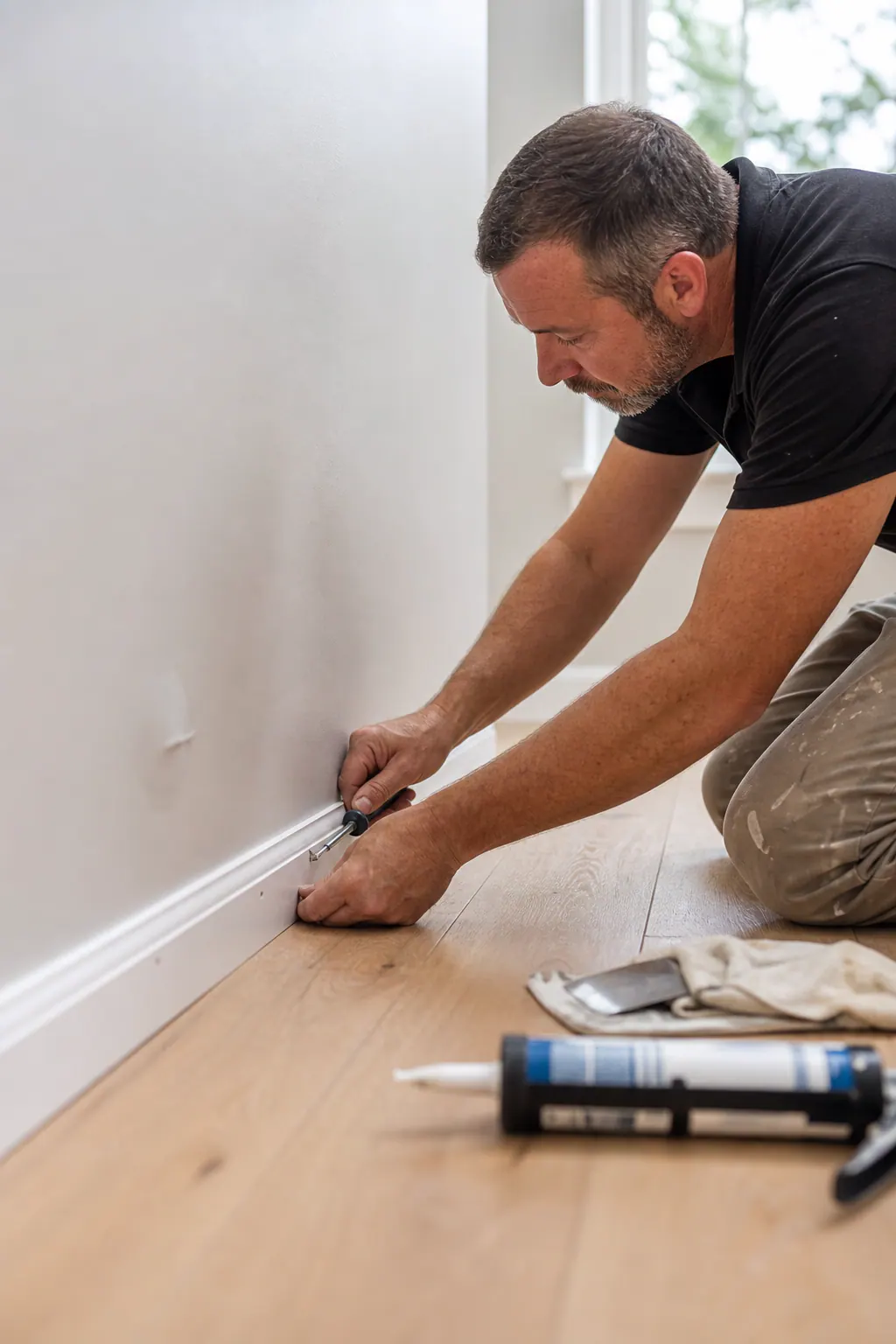
For cracks, chips, dents, and small corner losses, the repair material needs to suit the depth and shape of the defect. Filler rebuilds missing surface material; it should be shaped without flattening a rounded edge, softening a bead detail, or creating a hump beside the repair. After it cures, careful sanding feathers the patch into the surrounding face. The goal of Sarasota trim repair is to retain the original profile, not leave a smooth but noticeably altered spot.
Open seams need the same attention. At a miter joint, the angled meeting point commonly seen at outside corners, both pieces should align closely before the joint is refined. A narrow remaining line can be filled and finished, but a broad, uneven opening will still read as a broken corner beneath paint. Small wall-to-trim gaps are similarly addressed so the transition looks deliberate instead of shadowed or ragged.
Quality work is easiest to judge from normal standing distance and in side light. Casing should sit straight against the wall, repaired dents should not show a raised or hollow outline, and nail holes should disappear into an even finish. Visible fasteners, lumpy filler, uneven sanding scratches, cracked corner seams, or uncaulked edges signal a patch that stopped short of a finished repair. Whether the work involves a baseboard, door casing repair in Sarasota, or window trim, the completed surface should read as one intact piece of trim.
Replacing Damaged Trim and Matching Existing Molding
Before a damaged piece comes out, the painted edges around it are carefully separated so the adjoining wall and trim can stay as intact as possible. A failed baseboard, door or window casing, crown section, or wall-trim piece is eased away rather than pried out aggressively, limiting torn drywall paper and unnecessary paint damage. The new section can then be fitted to the actual opening instead of a nominal measurement.
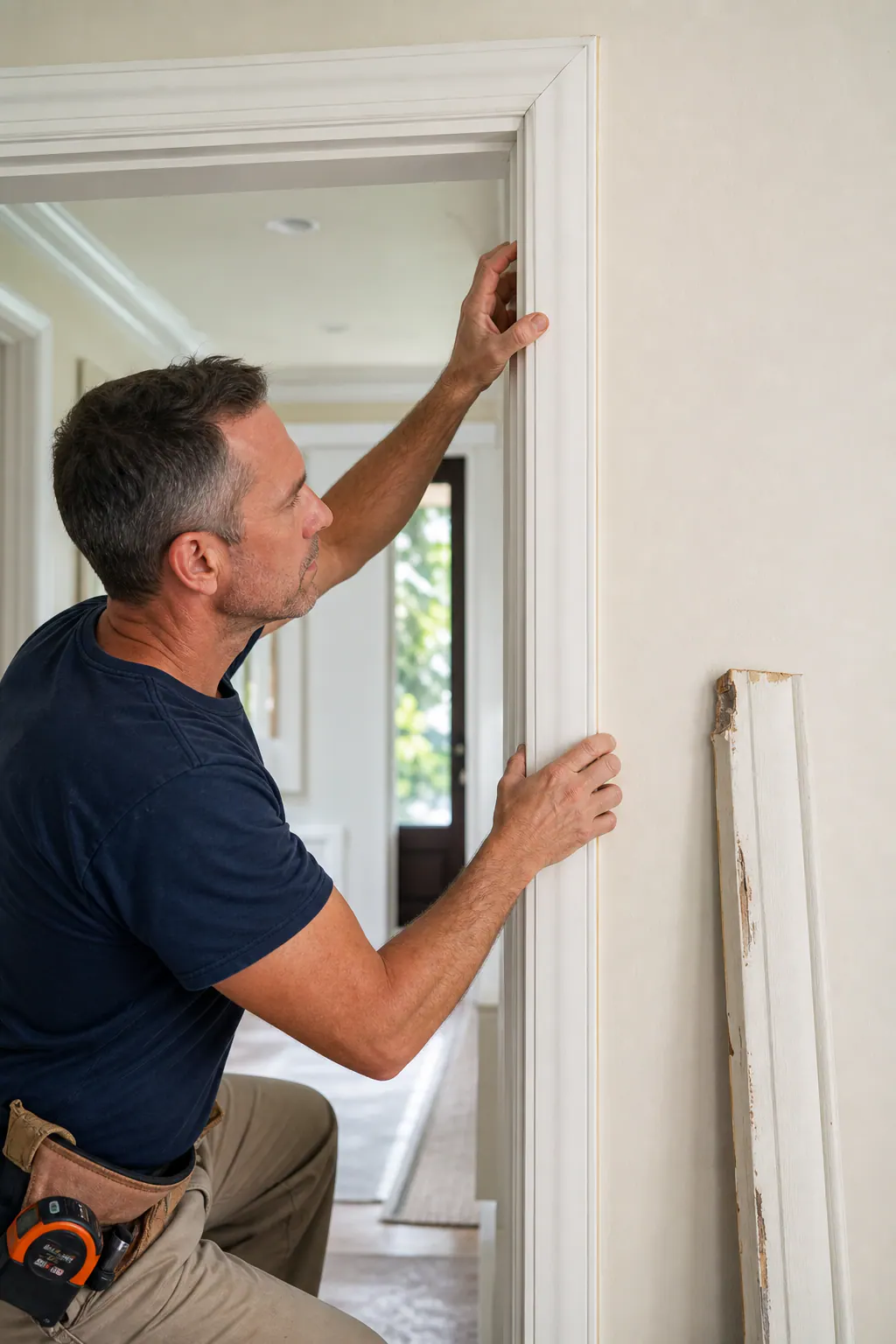
A useful match involves more than the width of the board. The existing piece is measured for face width, thickness, edge details, curves, beads, and orientation; a loose offcut or inconspicuous sample makes those details easier to compare. A close stock profile may be located, or a profile may be milled when practical. Material matters, too: painted wood, MDF, and composite trim can take finish work differently and may not reproduce one another's edges in quite the same way.
Clean joinery keeps the new section from looking inserted. Outside corners use accurately aligned miter cuts, while inside corners are often coped, one piece is shaped to follow the face of the adjoining piece, so the joint reads tightly. A scribed edge can follow a slightly uneven wall or floor. Keeping the profile facing the correct direction is especially important with crown molding and decorative casing.
Exact duplication is not always realistic in older homes, where profiles may be discontinued and prior paint layers can alter both shape and color. In those cases, trim replacement Sarasota FL work may mean using the closest practical profile or extending replacement through a connected run so the difference does not stop abruptly at one damaged spot. Careful fitting and finish preparation help the completed molding look cohesive rather than pieced together.
Caulking, Sanding, Priming, and Painting Are Part of the Finish
Paint makes the last few imperfections easier to notice, not harder. A narrow, consistent caulk line closes small gaps where trim meets the wall and helps the transition read as one clean edge. Caulk is for that finish seam; it is not a substitute for pulling loose molding tight, correcting a bad joint, or hiding a wide opening. A wavy bead, gaps at corners, or caulk smeared across the trim can remain visible through paint.
Nail holes, repaired chips, and filled joints need to be sanded flush after the filler has set. The goal is a level surface that follows the surrounding profile, without a ridge that catches side light or a shallow spot that leaves a shadow. In baseboard repair Sarasota FL projects, this preparation is particularly noticeable along long, low runs where light from windows can reveal rough filler, exposed fasteners, or sanding scratches.
Primer gives bare material and patched areas a uniform base before the finish coat. It is especially useful over exposed wood, porous filler, and new or repaired trim sections because those areas can absorb paint differently from the surrounding painted surface. Skipping that step can leave a dull patch, uneven color, or a repair outline that appears once the paint dries.
Color matching is only part of paint blending. Existing paint may have faded, been touched up at different times, or vary in sheen from one wall or trim run to another. When a spot repair still shows after a test area is painted, extending paint to a natural break, such as a full baseboard length, a casing leg, or a corner, can make the transition less apparent. Finish-ready work has smooth faces, crisp controlled edges, filled fasteners, and clean corners; rushed work leaves visible seams and a patch that still announces itself.
Planning Interior Trim Work in Your Sarasota Home
Before scheduling trim work, take clear photos of each affected area from across the room and close up. Include adjoining corners, doorways, flooring edges, and any paint or wall damage nearby. Note whether staining, swelling, or softness is tied to an active moisture problem or to an older, resolved event; active moisture changes the scope because new trim should not be installed over material that is still deteriorating.
If a piece has already come loose, save it rather than discarding it. A sample can reveal the profile shape, thickness, material, paint layers, and how it meets the connected run. Also decide whether you want localized restoration, addressing only the damaged section, or a broader visual update that carries a new profile or finish through a room or connected area.
An on-site assessment can evaluate the condition behind the paint, the practicality of matching the existing molding, the amount of removal and fastening required, and the preparation needed for a cohesive painted result. For trim repair Sarasota FL homeowners can request, the useful outcome is a clear scope that distinguishes stable areas worth preserving from sections that need replacement.
Ready to improve damaged interior molding, casing, or baseboards? Schedule an assessment for repair or replacement work that brings the details of your Sarasota home back into alignment.
Plan the next step
Compare the broader Trim Repair and Replacement service.
Review the Sarasota, FL service area for local planning context.
When you are ready, request a free estimate with the rooms, trim goals, city, and available photos.
FAQs
Can damaged baseboards be repaired instead of replaced?
Yes. Baseboards with shallow dents, scuffs, nail holes, small cracks, or limited joint gaps can be repaired when the material is hard, straight, and securely attached.
Can water-damaged baseboards be repaired?
Water-stained baseboards can be repaired only when the material remains sound and the moisture source has been resolved. Swollen edges, soft spots, crumbling material, rot, or recurring moisture damage require replacement.
Do trim repairs include caulking, sanding, priming, and painting?
A finished trim repair includes filling nail holes or chips, sanding patches flush, caulking narrow wall-to-trim gaps, priming bare or repaired areas, and painting for an even finish. Caulk should not be used to hold loose trim in place or hide wide joint openings.
How do you match existing trim molding in an older Sarasota home?
Match the existing trim by measuring face width, thickness, edge details, curves, beads, material, orientation, paint buildup, and sheen. If the exact profile is discontinued, replacing a connected run can create a more cohesive appearance than inserting a visibly different short patch.
When should cracked or loose interior trim be replaced instead of repaired?
Replace trim that is deeply broken through its profile, broadly warped, soft, swollen, crumbling, repeatedly moisture-damaged, or unable to stay securely fastened to the wall. Repair is appropriate when a loose section can be firmly reattached without splitting, distortion, or a mismatched finish.