
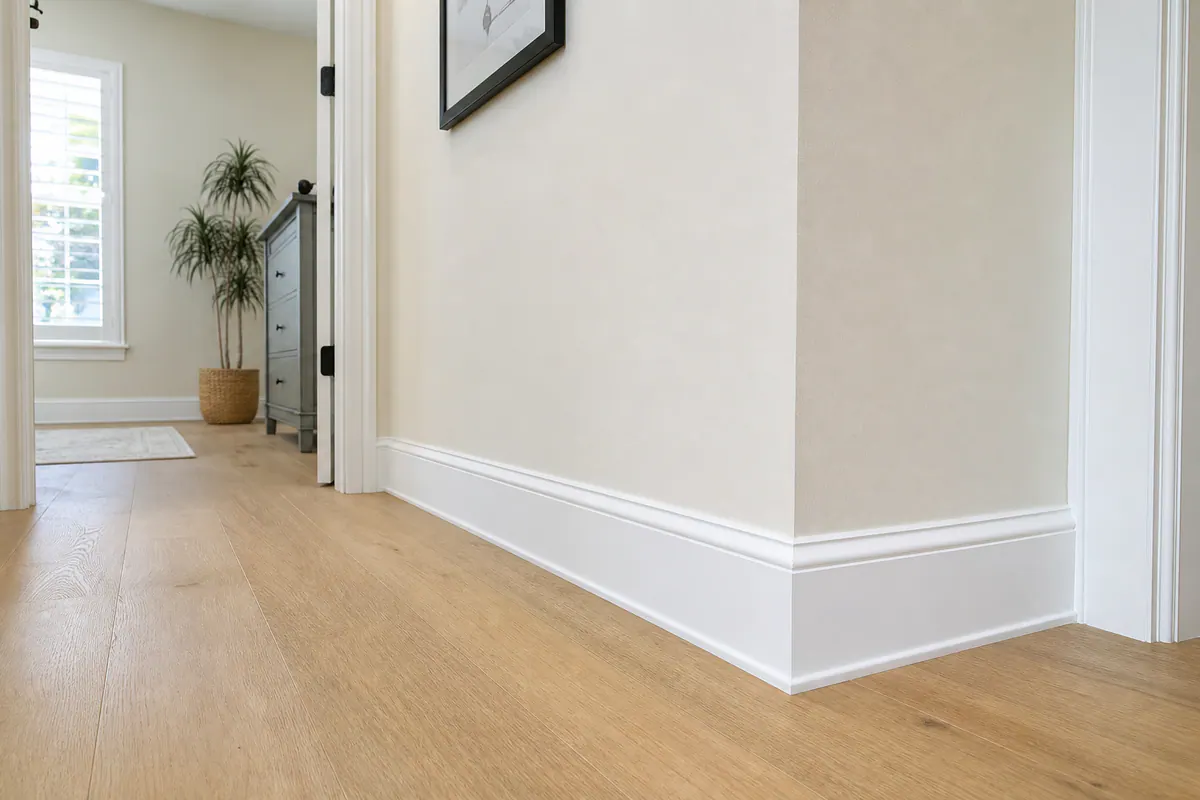
Cracked or separated caulk, a gap where baseboard meets the wall, dents from daily traffic, chewed corners, loose molding, nail pops, worn paint, and battered door casing can all interrupt an otherwise finished-looking room. For Venice homeowners, trim repair can address small but noticeable defects that make interior walls, doors, and floors look unfinished. A single open seam or shallow dent is different from a pattern of gaps along several walls, and that distinction helps determine the appropriate scope.
Targeted repair may suit trim that is dry, solidly intact, and damaged only in a limited area. The goal is to restore secure attachment, aligned joints, filled holes or dents, smooth caulk lines, and touch-up blending where that finish work is included. Replacement becomes the more practical option when material has deep loss from pet damage, has swollen or deteriorated, remains loose, includes missing sections, or cannot be made to match convincingly with the surrounding profile.
The visible defect is only part of the decision. Repeated separation can point to movement, while swelling, staining, or soft material can signal moisture; fresh damage may also continue if pest activity has not stopped. Those underlying conditions need attention before cosmetic trim work, or repaired caulk and newly installed molding may simply open, loosen, or discolor again. Interior trim repair in Venice should leave the detail looking intentional, not merely covered over.
Common Interior Trim Problems That Need Attention
The pattern and location of a flaw often tell more than the flaw itself. A thin crack in caulk at one door casing joint can be ordinary finish aging, while the same break reopening along several walls may reflect movement at the wall-to-trim connection. Caulk repair around trim should leave a continuous, neat line, but recurring separation deserves attention beyond the visible bead.
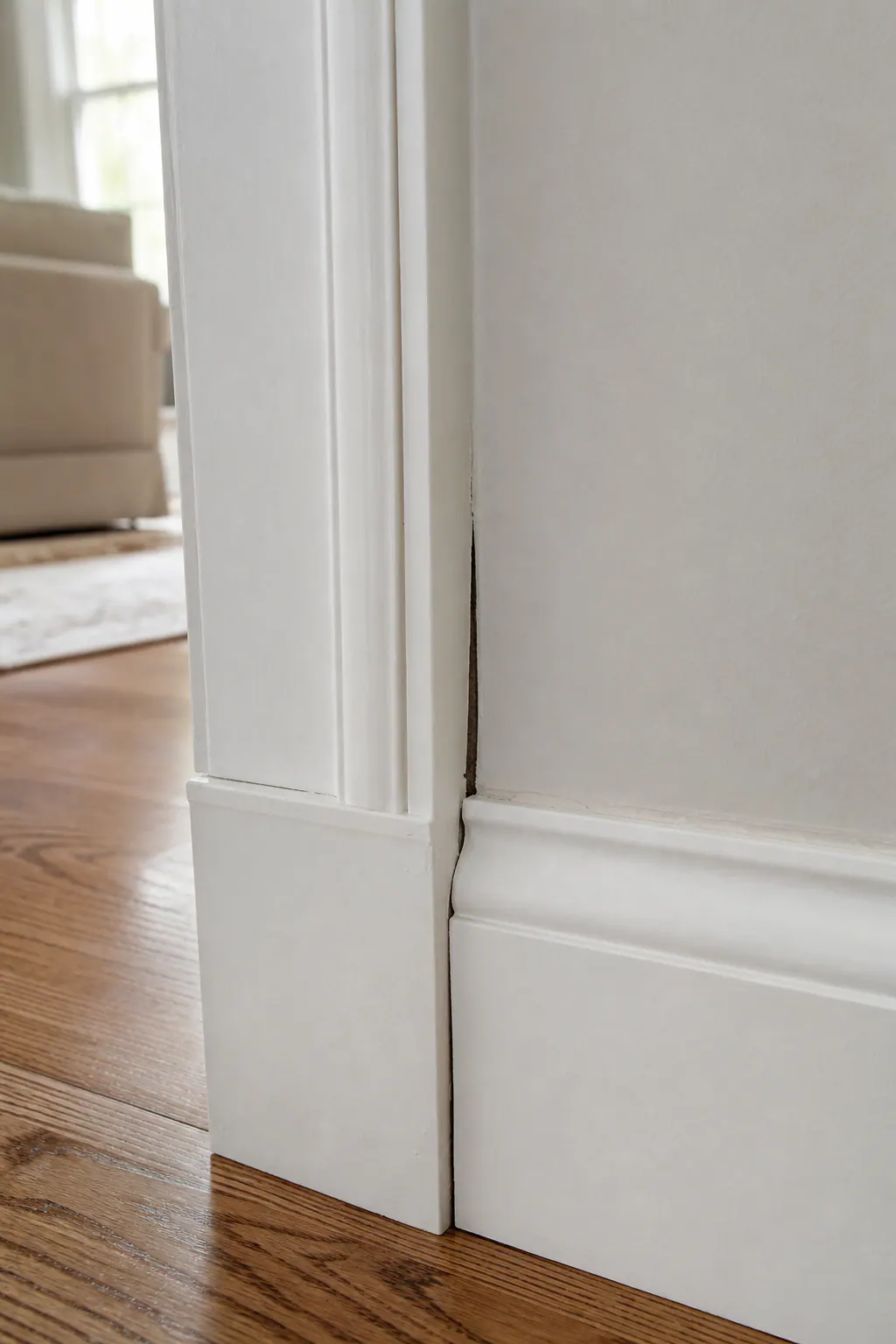
Open seams take several forms: a gap above baseboard, a split where shoe molding or quarter round meets the floor, or a miter joint at an outside corner that has pulled apart. An isolated trim gap may be a localized finish issue. Repeated gaps, misaligned crown molding, or casing that no longer sits flat can indicate that the material or its attachment is shifting.
Loose baseboards, door casing, and window casing can move when pressed, lift at an edge, or show a shadow line behind the molding. Popped fasteners are another sign of a failed attachment: a nail head may become visible or push a small bump through painted trim. Nail pop repair trim work addresses the visible fastener and restores a flush surface, but it should not simply hide an area that continues to loosen.
Small nail holes, shallow dents, chips, and scuffed paint are generally surface-level defects. They interrupt the finish but do not necessarily mean the trim itself has failed. Deep gouges, broken corners, or pet-chewed baseboard edges are different because material is missing; the remaining profile may no longer be sharp enough to blend cleanly with adjacent molding.
Worn baseboards commonly show repeated impacts near entries, furniture paths, and cleaning areas. Watch more closely for swelling, staining, softness, crumbling edges, or peeling finish concentrated near a floor, window, or plumbing wall. Those localized moisture signs are different from routine wear and can return after cosmetic work if the exposure remains. A finished correction should bring the affected pieces back into alignment, secure them firmly, fill visible defects, and leave joints and touch-up areas looking deliberate rather than patchy.
When Trim Repair Makes Sense and When Replacement Is the Better Choice
A repair decision comes down to whether the existing piece can still serve as a sound, finishable base. Stable, dry paint-grade or wood trim with one shallow dent, a few small holes, a short failed caulk line, a limited seam opening, or a small chipped area can often be corrected without removing the full length. Targeted trim repair Venice FL work preserves material that is otherwise straight, firmly attached, and able to accept a smooth patch and touch-up.
The practical test is continuity. After repair, the profile, the shaped face and edges of the molding, should still read as one uninterrupted piece beside the surrounding trim. A filled nail pop should sit flush rather than leave a bump; a repaired joint should align cleanly; and a touched-up area should blend into the intended painted or finished appearance. Replacement is not automatically necessary simply because trim has an imperfection.
Replacement becomes the stronger option when damage has changed the piece's shape, strength, or ability to look convincingly finished. Extensive swelling, soft or crumbling material, rot, missing sections, heavily chewed baseboard edges, distorted molding, and loose lengths that will not sit flat leave too little sound material for a lasting patch. The same is true of old repairs that have built up uneven filler, visible patch lines, or mismatched contours. In those cases, trim replacement Venice FL can provide a cleaner starting point for matching the adjoining profile and restoring a consistent line around the room.
Repeated failure matters as much as the size of the visible flaw. One separated corner may be repairable, but gaps that reopen, casing that keeps pulling away, or swelling concentrated near a wall or floor point to a condition that could affect new work as well. Moisture exposure or ongoing movement should be addressed before installing replacement trim; otherwise, even a carefully fitted new piece may repeat the same problem.
A good outcome is measured at normal viewing distance as well as up close: trim sits secure and aligned, holes and small defects are properly filled, caulk lines are smooth, joints look intentional, and any included paint touch-up does not call attention to the repair. Where deep loss or a poor match would remain obvious, replacement is usually the more convincing way to restore the finished look.
What Targeted Trim and Baseboard Repair Can Involve
The repair itself is usually a sequence of small corrections intended to make the damaged area read as part of the original trim again. Loose molding can be drawn back into position and secured with suitable fasteners so its face sits flat and adjoining joints stay aligned. For nail pop repair trim, the raised or loosened fastener is addressed, the surface is brought flush, and the remaining hole is prepared for filling rather than left as a visible bump under new paint.
Failed caulk is not simply covered with another bead. Caulk repair around trim begins by removing loose or split material so the new line can follow a clean joint. A short gap at a stable baseboard or casing edge may then be closed and caulked for a continuous finished line. If the trim shifts, the wall surface is compromised, or there are signs of moisture, that condition needs resolution before a cosmetic seam repair is expected to hold.
For baseboard repair Venice FL homeowners may also need small dents, nail holes, chips, or limited pet-damaged edges filled or rebuilt where enough of the original profile remains. The repaired spot is shaped to follow the surrounding edge, sanded smooth, and prepared for touch-up painting. Paint-grade trim is generally the more forgiving finish plan because filler, caulk, and minor profile work can be blended beneath a compatible coat of paint. The intended result is a secure piece with straight visual lines, filled defects, and no rough transition at the repair.
Stained wood calls for a different expectation. A patch may restore the shape and protect a damaged area, yet matching the surrounding wood grain, stain color, and sheen can be more difficult than blending painted trim. A repair that is unobtrusive at normal viewing distance may still be detectable up close, especially on prominent casing or molding. Where a seamless stained-wood appearance is the priority, the visibility of the repair is an important part of deciding whether a localized correction is worthwhile.
Replacing Worn Baseboards, Door Casing, and Other Molding
Replacement begins with taking out the failed piece without needlessly disturbing the surrounding wall, flooring, or adjoining molding. Once it is off, the exposed area can be assessed for a sound, dry surface that will hold the new trim. Soft drywall edges, deteriorated backing, or moisture-related damage should be corrected before new material is installed; otherwise, even a well-fitted replacement may loosen or separate again.
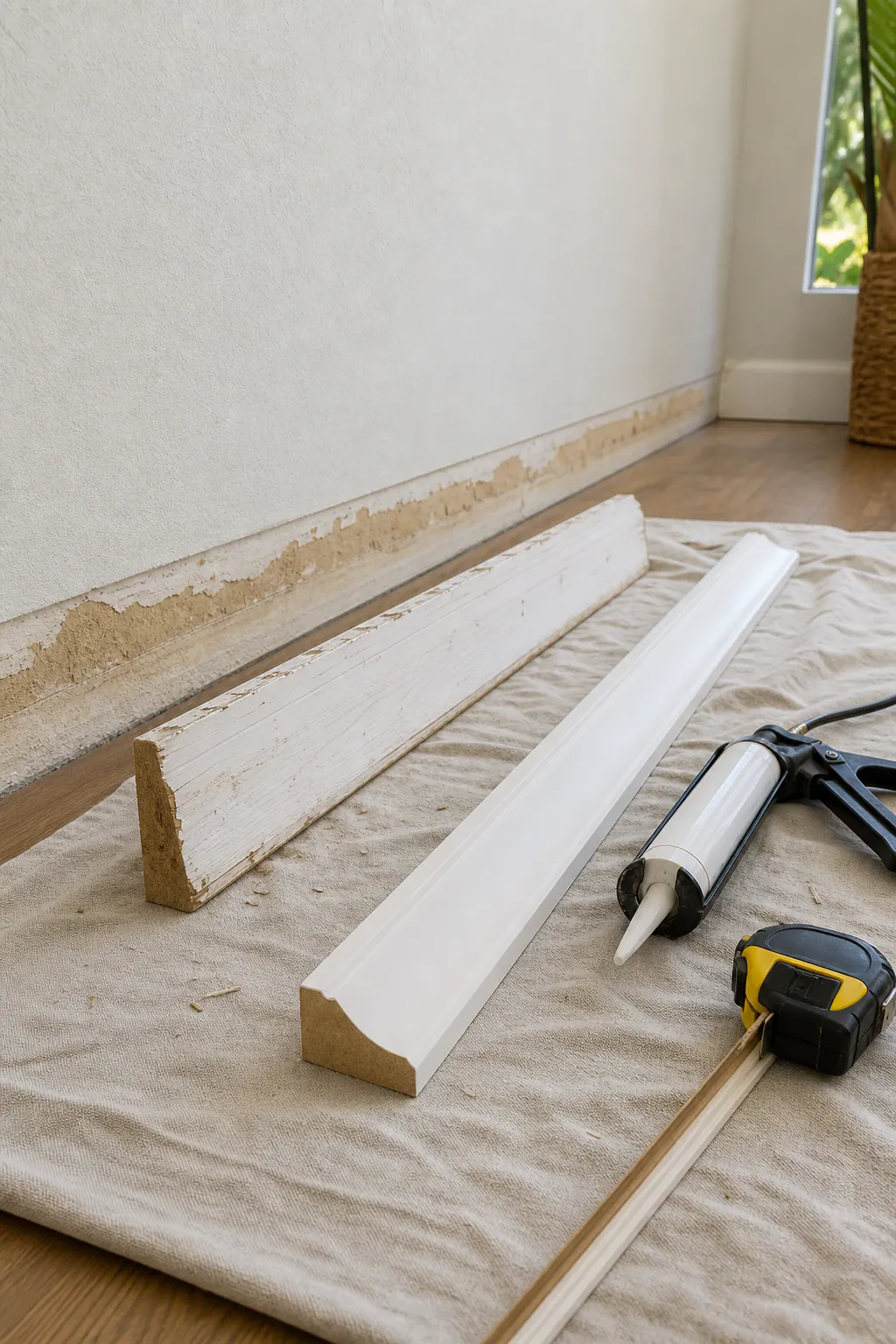
A focused baseboard replacement Venice FL project can involve one damaged run, a doorway section, or coordinated pieces around a room where a patch would stand out. The replacement profile needs to work with what remains: its face shape, height, thickness, material, paint or stain finish, age, and the way it meets nearby trim all affect how continuous the result will look. Baseboard, door casing, window casing, crown molding, shoe molding, and quarter round each have different profiles and connections, so a close-looking piece that is too thick or differently shaped can still create an obvious transition.
New sections are cut and fitted so outside corners have clean miters and straight runs meet with deliberate seams. They are secured so the face sits flat, joints align with adjacent molding, and the trim does not shift when lightly pressed. On paint-grade work, appropriate wall-to-trim joints can be caulked, fastener holes filled, and surfaces smoothed for finish touch-up. That sequence is what turns replacement material into a finished detail rather than a visibly added board.
An exact match is not always available, particularly with older profiles, stained wood, or discontinued molding. When one new piece would make the mismatch more noticeable, a coordinated replacement of connected baseboards, casing legs, or an entire opening can create a more intentional layout. This is often the practical consideration behind replacing worn door or window trim rather than trying to force a single near-match into a prominent area.
Plan the Right Trim Repair or Replacement for Your Venice Home
An in-person look at the affected area makes the scope easier to set. One loose casing joint or a single chewed baseboard corner may be an isolated finish problem; gaps reopening in several locations, soft material, staining, or continued pest damage point to a condition that cosmetic trim work alone will not solve.
For trim repair in Venice FL, the useful questions are straightforward: Is the existing piece dry and secure? Is the loss shallow enough to rebuild without changing the profile? Will a filled defect, reset fastener, and touch-up blend with the surrounding finish? If replacement is the better path, the assessment can compare the new section's shape, thickness, height, and finish with the connected trim so the transition does not become the next visible problem.
The goal is a finished detail that sits firmly against the wall, has aligned joints, filled holes and defects, neat caulk lines where appropriate, and touch-up that fits the agreed scope. Moisture, pest activity, or wall movement should be addressed first when it is driving the damage; otherwise, repaired or new molding can separate again.
Venice homeowners can request an assessment for damaged baseboards, molding, door casing, window trim, and related interior finish details to determine whether focused repair or coordinated replacement will produce the cleaner result.
Plan the next step
Compare the broader Trim Repair and Replacement service.
Review the Venice, FL service area for local planning context.
When you are ready, request a free estimate with the rooms, trim goals, city, and available photos.
FAQs
Can damaged baseboards be repaired instead of replaced?
Yes. Stable, dry baseboards with shallow dents, small nail holes, short caulk failures, limited chips, or minor pet damage can often be filled, shaped, sanded, and touched up without replacing the full length.
What causes gaps between trim and walls in a Venice home?
A single gap can be a localized finish issue, but repeated separation along several walls can indicate movement at the wall-to-trim connection. Swelling, staining, soft material, or recurring gaps can also point to moisture that must be corrected before caulk or molding repairs.
How are nail pops in trim fixed?
Nail pop repair addresses the raised or loosened fastener, restores a flush trim surface, and prepares the remaining hole for filling. The trim must also be secured so it does not continue loosening behind the repaired area.
Can new trim be matched to existing baseboards and door casing?
New trim should match the existing profile, face shape, height, thickness, material, and paint or stain finish. If an exact match is unavailable, replacing connected baseboards, casing legs, or an entire opening can create a more intentional result than installing one near-match.
When should old molding be replaced instead of recaulked or repaired?
Replace molding when it is swollen, soft, crumbling, distorted, missing sections, heavily chewed, or too loose to sit flat. Moisture damage, pest activity, and wall movement should be fixed first, or replacement trim can separate, loosen, or discolor again.