
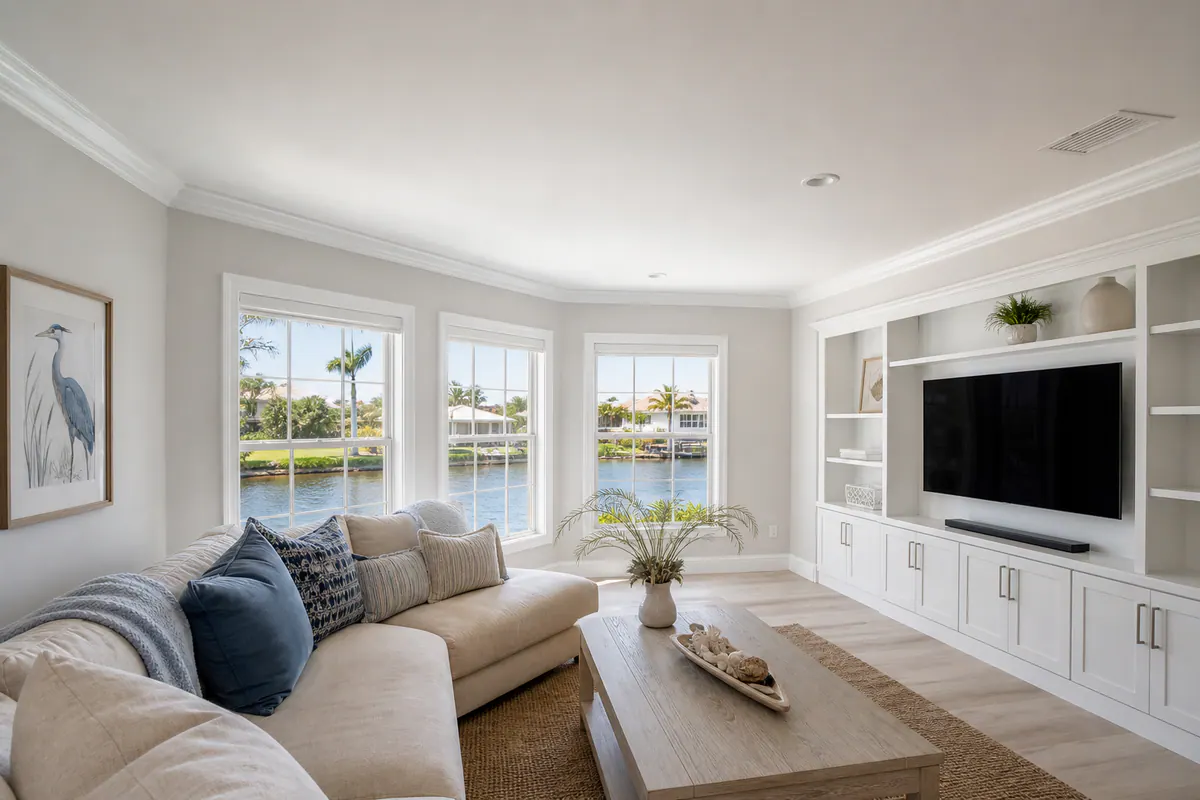
A slim crown profile can keep a lower-ceiling bedroom or updated living area from feeling visually heavy, while still giving the ceiling perimeter a deliberate edge. It covers the ceiling-to-wall transition, the joint where those two surfaces meet, and creates a defined line that can tie the ceiling to nearby trim. In an open-plan space, that detail can help the ceiling read as part of a cohesive room rather than an unfinished expanse.
The best choice is not automatically the widest or most ornate profile. A slim, uncomplicated crown suits clean-lined interiors; a traditional shaped profile adds shadow and presence; and a larger built-up treatment can give a taller, more formal dining room stronger architectural weight. The practical goal is to match the molding's visual weight to the room and to nearby door casings, baseboards, cabinets, or window trim.
Professional crown molding installation in Englewood, FL starts with the surfaces already in place. Crown can refine a slightly uneven transition, but it will not correct major wall, ceiling, or moisture damage. Room proportions, paint or stain goals, indoor humidity exposure, material selection, and careful fitting at corners and seams all influence whether the finished line looks crisp and consistent.
What Crown Molding Can Add to a Room
A room often feels more settled when its upper edge relates to the trim below it. Crown molding can carry a visual line around the perimeter, linking door and window casing, baseboards, built-ins, or kitchen cabinetry into one finish scheme rather than leaving the ceiling to read as an abrupt stop.
Its effect depends on what is already happening in the room. A narrow, simple profile keeps the ceiling line quiet and can be a better fit where the space is compact, the light is limited, or the existing trim has clean, restrained lines. A traditional shaped profile adds shadow and a more familiar architectural presence, while a decorative or layered treatment creates a stronger focal border that generally suits rooms with enough height, wall area, and surrounding detail to support it. The practical takeaway is that crown should add balance, not compete with every other surface.
Color and light change that balance, too. White crown against a deeper wall color can make the perimeter more distinct; crown painted to blend with the wall gives a softer transition. In a bright room, deeper profiles may show more of their contour, while low-contrast colors can keep even a more substantial treatment from feeling overly formal. A finish carpentry plan should consider these relationships before a profile is selected.
For interior trim Englewood FL projects, it also helps to look at the room as a connected set of details. Matching every molding exactly is not required, but casing, baseboards, cabinet crowns, and the new ceiling treatment should look intentional in scale and style. That coordinated approach adds architectural character while respecting the home's existing finishes.
Choosing a Crown Molding Profile for Ceiling Height and Home Style
Profile selection becomes easier when the molding is viewed at the same scale as the room, rather than as a short sample held in isolation. A finish carpenter can compare a proposed trim profile against the ceiling height, wall area, and nearby casing so the new detail looks like it belongs in the space.
Simple cove molding has the lightest visual weight. Its smooth, concave curve creates a quiet shadow line without calling much attention to itself, making it a natural choice for lower ceilings, smaller bedrooms, and updated interiors with streamlined door and window trim. In a compact room, a slim cove can give the ceiling edge a finished appearance while preserving an open feel.
Traditional crown profiles use a more defined combination of curves, angles, and ledges. That added contour creates stronger shadow and a familiar architectural look, often fitting living rooms, dining areas, and homes with moderately sized casing and baseboards. It offers a middle ground for homeowners who want more presence than a simple cove but do not want the ceiling line to become the room's dominant feature.
Ornate or built-up molding carries the most visual weight. Decorative ridges, stepped pieces, dentil-like details, or layered crown assemblies can create a formal border suited to taller ceilings, larger rooms, and interiors with substantial trim, cabinetry, or traditional furnishings. A larger built-up profile can look appropriately intentional in a spacious formal room where a narrow molding might disappear.
Scale is the deciding factor. A wide, highly detailed crown can feel crowded in a room with a low ceiling, short wall sections, narrow casing, or minimal baseboards; instead of adding polish, it may make the ceiling seem heavier. Likewise, an elaborate profile can clash with flat modern casing or simple slab-style cabinetry. For crown molding Englewood homeowners should consider whether they want understated definition or a more formal architectural statement, then compare full-length samples or drawings in the actual room before committing.
The strongest choices create a hierarchy: crown should relate to the trim below it without overwhelming it. A finish carpenter can help pair a restrained profile with modest existing millwork or build a more substantial treatment where the room's height and surrounding details can support it.
Crown Molding Materials: Wood, MDF, Polyurethane, and PVC
Material choice affects more than the final color: it changes the character of the molding, how it receives a finish, and where it makes the most sense within the home.
Wood crown molding is the natural choice when a stained or clear-coated finish is part of the plan. Its grain can complement wood doors, beams, cabinetry, or traditional millwork, and it can also be painted when a more uniform look is wanted. Because grain, color, and joints remain part of the visual result, wood is strongest where those natural variations are welcome rather than something to disguise.
MDF crown molding is a smooth, engineered paint-grade option. It gives painted rooms a consistent surface with no wood grain showing through, making it well suited to a clean white ceiling treatment or trim color that matches existing casing and baseboards. It is generally a less suitable choice for a stained finish, since it is intended to be covered with paint. In a conditioned bedroom, living room, or hallway, it can provide a crisp painted appearance; areas with recurring moisture call for a more deliberate material and finishing conversation.
Polyurethane molding is a molded option that can reproduce detailed contours, including ornate patterns that would be more involved to create in wood. It is typically selected for paint-grade work and can be useful when a homeowner wants a decorative profile without relying on visible wood grain. Its finished appearance depends on careful surface preparation, joints, and paint application, particularly where strong daylight makes seams or uneven sheen easier to notice.
PVC trim is another paint-grade material worth considering for locations where moisture exposure is a larger part of the decision. A bathroom with frequent steam, a laundry area, or a transition near an exterior entry may call for a different approach than a climate-controlled living room. PVC is not automatically the answer for every Englewood interior, however: the profile, nearby trim materials, intended paint finish, and room conditions should still work together.
Englewood's coastal setting makes indoor conditions part of the selection process, not a reason to use one material throughout the house. A finish carpenter can assess whether the room is regularly conditioned, whether moisture is isolated or persistent, and whether the surrounding trim is stain-grade or painted. The practical goal is a material and finish combination that suits the room's appearance and exposure rather than forcing the same solution into every space.
Installation Details That Shape the Finished Result
The measuring stage is where a clean-looking crown treatment begins. A finish carpenter maps each wall run, notes ceiling height changes, and looks for dips, bows, and corners that are not truly square. Those conditions are common in finished homes and do not automatically prevent crown molding installation in Englewood, FL. They do, however, affect where the molding sits, how its lines read from across the room, and whether a slimmer profile or a more forgiving layout will produce the better visual result.
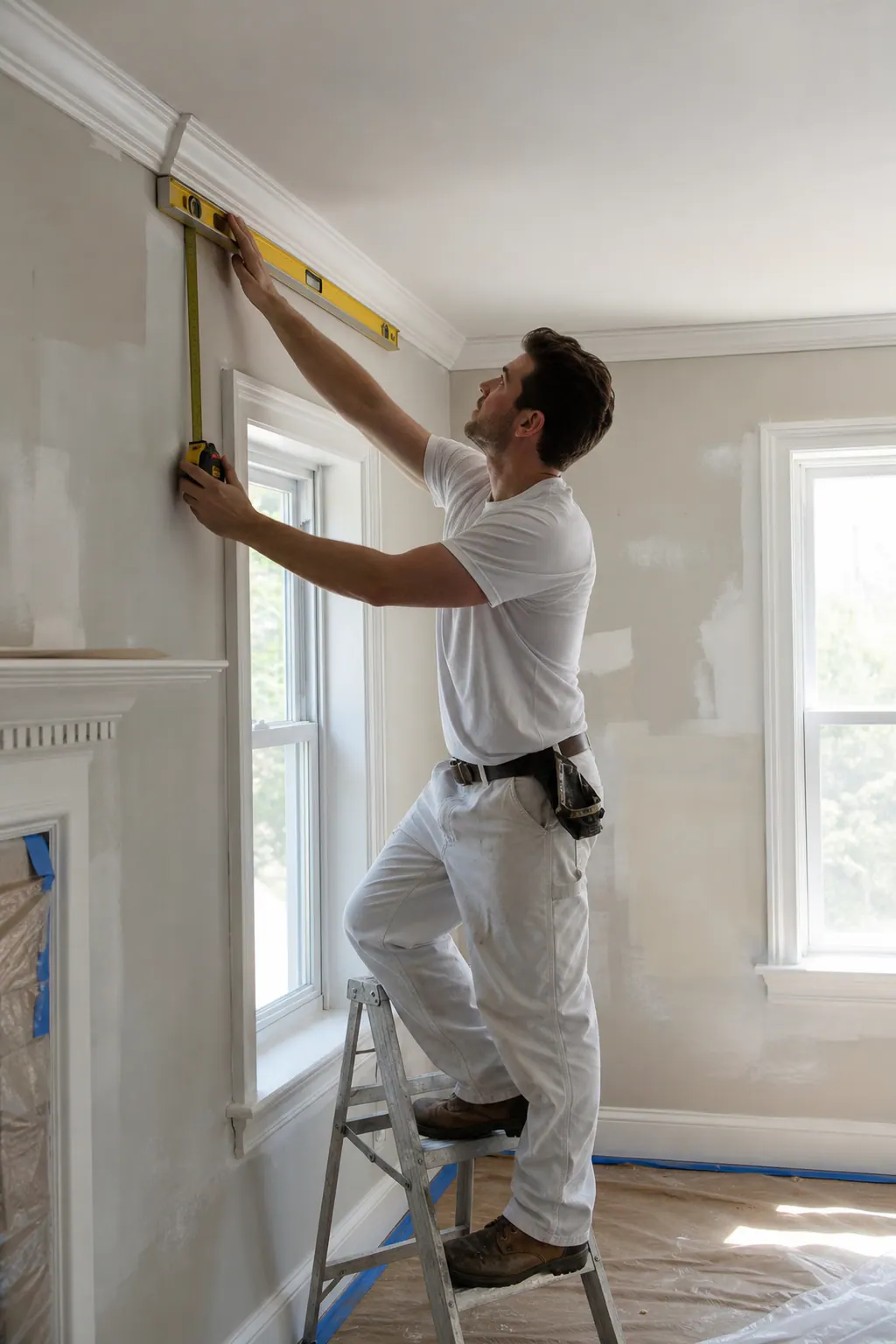
Corner work deserves close attention because it is where small gaps become most noticeable. Coping inside corners means shaping the end of one piece to follow the face of the adjoining profile, rather than relying only on two angled cuts meeting at the corner. This approach helps the joint read as a continuous profile when the walls vary slightly. Mitered outside corners, such as those wrapping around a chimney bump-out or projecting wall, create the crisp angled return visible from the room. Their appearance depends on careful layout and secure alignment, not simply on making a cut at a nominal angle.
Long walls also call for a seam plan. When one length of molding cannot cover the run, a carpenter can place the joint where it is less conspicuous, rather than letting it land in the center of the main sightline or immediately beside a focal window. The same planning applies where crown meets tall cabinets, a fireplace surround, a beam, or built-ins. A deliberate termination or return looks integrated; an abrupt stop can make otherwise well-chosen trim feel added on.
Before paint, the finishing work brings those decisions together. Fastener holes, joint lines, and small paint-grade gaps are prepared for filling and caulking so the molding, wall, and ceiling read as a unified edge. Caulk can soften minor irregularities, but it cannot turn major surface damage or pronounced movement into a straight, seamless plane. A qualified finish carpenter evaluates those limits early and adjusts the profile, layout, and finishing approach to suit the room rather than forcing one installation method everywhere.
When to Add Crown Molding During a Remodel or Refresh
Crown molding is often easiest to plan while the surrounding finish work is still taking shape. As part of a coordinated package, it can be selected alongside cabinet trim, door casing, baseboards, and paint colors so the upper wall detail has a deliberate relationship to the rest of the room. In a kitchen, for example, the installer can plan whether crown dies into upper cabinets, continues past them, or returns cleanly at a soffit or tall pantry.
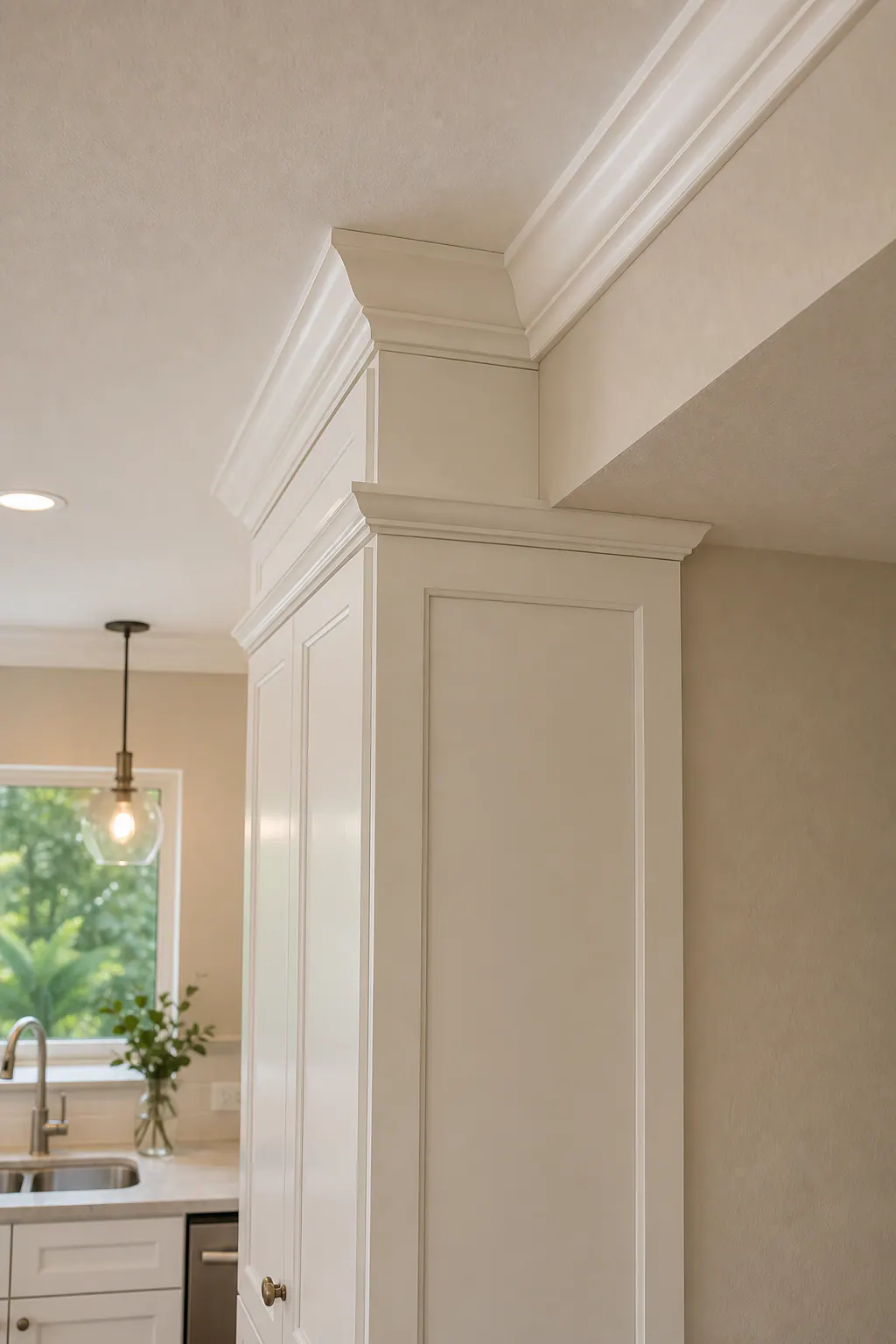
Adding crown later is still a practical option for a refresh, especially when the room's layout and existing trim already suit the proposed profile. The tradeoff is protecting completed work and working around surfaces that may already be freshly painted, floored, or furnished. A pre-installation walkthrough should identify cabinet clearances, ceiling access, drywall patches, and any built-ins or beams that require a planned termination rather than an improvised stop.
Sequencing is project-specific rather than a fixed rule. Wall and ceiling repairs generally need attention before finish work can look consistent, while the paint plan affects whether crown is installed before final coats or carefully finished afterward. During flooring replacement, crown is usually less directly involved than baseboard, but the crew still needs a clear plan for ladders, dust control, and protecting new surfaces. For an Englewood crown molding installation, coordinating these details early can make a remodel feel unified without forcing the molding work into an unsuitable stage of the project.
Why Hire a Qualified Finish Carpenter for Crown Molding Installation
The right installer brings judgment to the details that are easiest to notice once the room is painted. Look for a finish carpenter in Englewood, FL whose work includes close views of inside corners, outside returns, long-run seams, and transitions at cabinets or beams, not only wide photos of completed rooms. Tight, orderly joints and consistent alignment are stronger signals than an elaborate profile alone.
A useful consultation should be specific to the room. The installer should be able to explain why a slim painted profile may suit a lower ceiling, or why a larger built-up treatment may better fit a taller, more formal space, while weighing the surrounding trim and indoor conditions. That conversation should also clarify whether the selected material and finish approach fit the project rather than treating one option as best everywhere.
Ask for a written scope that identifies the profile, material, rooms, planned terminations, surface-preparation needs, and who handles filling, caulking, priming, and final painting. For crown molding installation in Englewood, FL, a site-specific evaluation and estimate gives both sides a clearer starting point before work is scheduled.
Plan the next step
Compare the broader Crown Molding Installation service.
Review the Englewood, FL service area for local planning context.
When you are ready, request a free estimate with the rooms, trim goals, city, and available photos.
FAQs
What crown molding profile works best for low ceilings?
A slim, simple cove profile works best for low ceilings because its concave curve creates a quiet shadow line without adding heavy visual weight. It suits compact bedrooms, smaller rooms, and clean-lined interiors with restrained casing and baseboards.
Can crown molding be installed on uneven ceilings or walls?
Yes, crown molding can be installed where ceilings or walls have minor dips, bows, or out-of-square corners. It can refine slight irregularities, but it will not correct major wall damage, ceiling damage, moisture problems, or pronounced surface movement.
Do coastal humidity conditions affect crown molding installation in Englewood, FL?
Yes, indoor humidity and recurring moisture should influence the material choice. MDF is best for conditioned, paint-grade rooms, while PVC may be a better paint-grade option near frequent steam, laundry areas, or exterior-entry transitions.
Can crown molding be installed after new flooring, cabinets, or paint?
Yes, crown molding can be added after flooring, cabinets, or paint are completed, but the installer must protect finished surfaces and plan around cabinets, beams, built-ins, and drywall patches. In kitchens, crown can die into upper cabinets, continue past them, or return cleanly at a soffit or tall pantry.
How do I choose between simple and decorative crown molding?
Choose simple crown for lower ceilings, compact rooms, minimal trim, and modern interiors, and choose traditional or built-up crown for taller rooms with substantial casing, cabinetry, or formal furnishings. The crown should relate to nearby baseboards, door casing, window trim, and cabinets without overpowering them.