
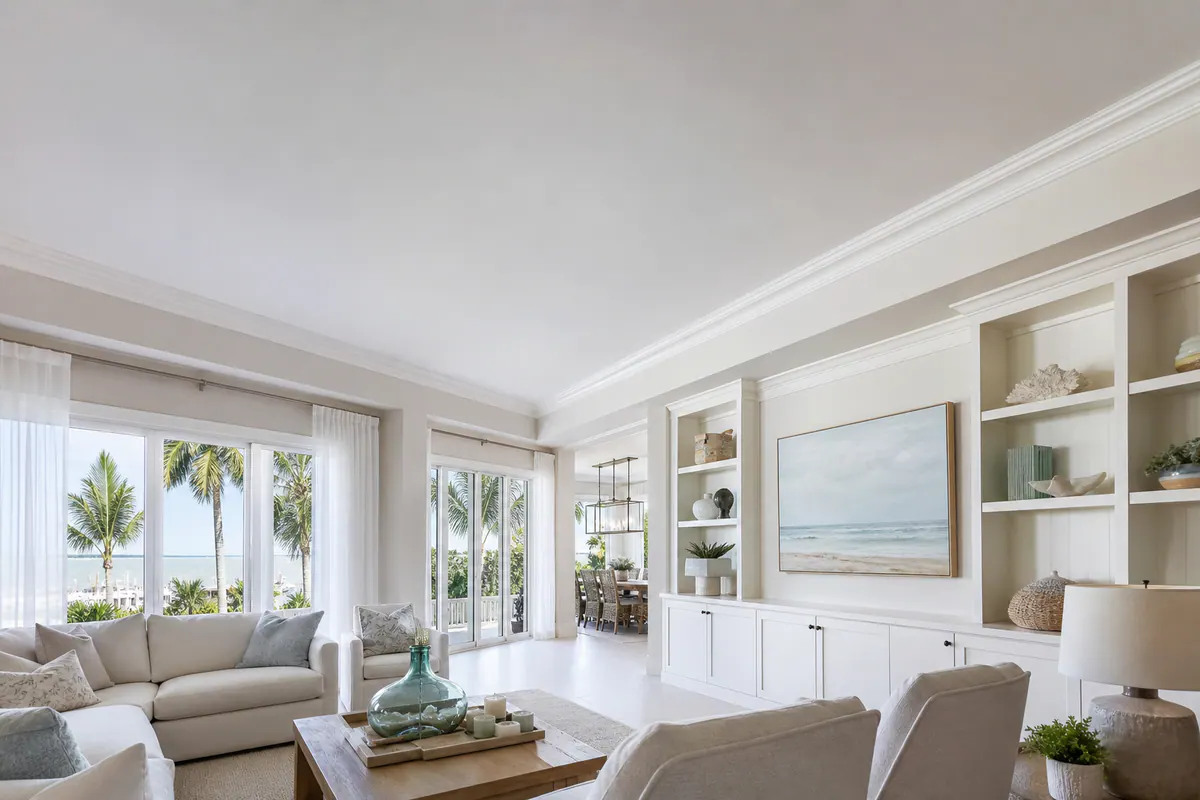
A crown profile earns its place when its scale suits the ceiling and its edges read as one continuous line around the room. In Siesta Key interiors, that ceiling-to-wall transition can frame airy spaces, carry the eye through an open plan, and connect painted walls, cabinetry, and existing trim with a more composed coastal finish. The goal is not ornament for its own sake, but a profile that feels native to the home.
Material and room conditions shape that choice. Wood brings natural character when a stained finish is part of the design, while paint-grade MDF suits many controlled interior spaces. Lightweight polyurethane can provide detailed profiles with less handling weight, and PVC is a practical non-wood option to consider in rooms with greater moisture exposure. The right fit depends on the finish, ventilation, maintenance expectations, and the specific product, not simply on a material label.
A polished result also depends on proportion and execution. A profile should relate to ceiling height and nearby baseboards, door casings, or cabinetry rather than overpower them. Tight inside corners, purposeful transitions, secure fastening, filled nail holes, and restrained caulking create the paint-ready ceiling line homeowners expect. Those details keep crown molding from looking added on and help it feel integrated from the start.
Why Crown Molding Complements Coastal Interior Design
In a bright living room, the difference is often easiest to see at the perimeter: without crown, a painted drywall plane can stop abruptly at the ceiling; with it, the room gains a continuous visual border that guides the eye upward. That horizontal line can make the wall plane feel taller while softening a stark ceiling transition, especially when walls and trim are finished in closely related light tones.
Crown also gives the rest of the room a stronger framework. It can visually connect baseboards and door casing below, so cabinetry, pendants, woven shades, and furnishings sit within an intentional trim scheme rather than against bare drywall edges. For coastal trim Siesta Key homes, this is usually a quiet background effect, not a demand for elaborate ornament.
An understated cove, small stepped profile, or gently curved crown suits relaxed bedrooms, kitchens, and open living areas because its shadow line adds definition without making the ceiling feel busy. A built-up profile combines multiple molding shapes into a deeper, more layered band. It has greater presence and can suit a formal dining room, entry, or a larger room with a higher ceiling, but the extra projection and detail can overwhelm a compact space.
The useful design test is balance: crown should relate to the room's scale and the weight of its existing millwork. When the profile feels proportionate, decorative millwork becomes a composed backdrop for the home's finishes instead of the first thing visitors notice.
Choosing Crown Molding Materials for Siesta Key Humidity
The same profile can call for a different material in a dry, air-conditioned bedroom than it does near a frequently steamy bath or a damp-prone entry. The decision is not simply wood versus synthetic; it starts with the room's moisture exposure, the desired finish, and whether the new crown needs to blend with existing trim.
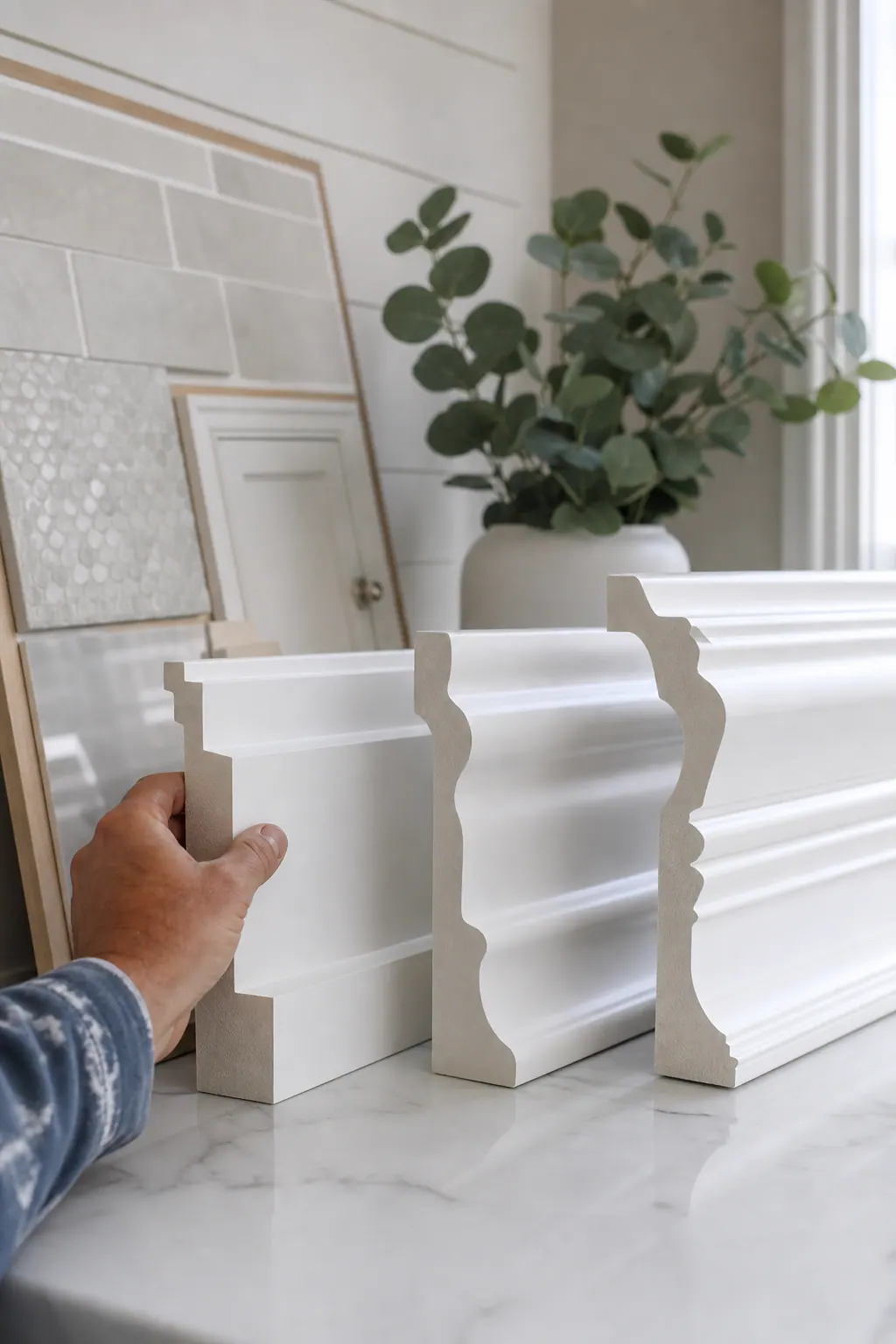
- Paint-grade MDF is an engineered fiberboard molding intended for an opaque painted finish. Its consistently smooth face makes it a compelling choice for crisp white or soft coastal-color trim in conditioned, low-moisture interiors. It is generally a weaker default where repeated humidity or water exposure is a concern, since damaged edges and joints can be difficult to disguise with paint alone.
- Solid wood is the natural choice when crown will be stained or when a room already has wood doors, casing, or beams worth matching. Grain, color variation, and species selection become part of the finished look. That character can be a strength in a study, dining room, or traditional space, while the installer must allow for the reality that natural material and finish conditions can vary.
- Finger-jointed wood uses shorter wood sections joined together, then is normally painted. It provides a wood-based paint-grade option with a more uniform appearance than many clear-grade boards, but the joints should be carefully prepared so they do not telegraph through a smooth finish.
- PVC is a non-wood molding option often considered for locations where moisture awareness matters more than a stain-grade appearance. It is typically painted to coordinate with surrounding trim. A clean result still depends on suitable adhesive or fastening choices, controlled joints, and a finish system intended for the product.
- Urethane is a lightweight molded option that can reproduce detailed crown profiles and is usually paint-finished. It can be useful when a decorative profile is wanted without introducing natural wood grain into the design. Its edges, seams, and transitions still need deliberate finishing rather than heavy caulk.
For crown molding installation Siesta Key homeowners often benefit from separating "moisture-aware" from "maintenance-free." PVC and urethane may suit certain higher-humidity interior applications, while no molding choice removes the need to consider ventilation, incidental water, paint condition, cleaning practices, and the specific product's intended use. Natural wood remains worth considering when its stain-grade character or a convincing match to existing woodwork is central to the room's design; for a seamless painted ceiling line in a stable interior, MDF or finger-jointed wood may better support the finish goal.
Selecting the Right Crown Profile, Size, and Finish
A finish carpenter starts by reading the room as an elevation: ceiling height, wall width, window and door head heights, beam locations, and the visual weight of nearby trim all affect how much crown the perimeter can carry. Lower or standard-height rooms usually benefit from a smaller cove, restrained ogee, or simple stepped profile; these create a finished edge without pressing the ceiling downward. Taller rooms can support a deeper projection, built-up layers, or a more articulated shadow line, provided the added detail relates to the architecture rather than becoming the room's focal point.

The strongest selections treat crown as part of a trim package. Its scale should feel intentional beside baseboards, door casing, and any cabinet crown, even when the profiles are not identical. For example, slim square casing and a heavy, ornate crown can look disconnected, while a simple crown with a complementary step or bead can tie those elements together. Samples held in place, or a measured wall elevation, make it easier to spot a profile that feels proportionate before installation begins.
Painted crown is often the natural fit for bright coastal interiors because it can carry the ceiling color, match white trim, or create a quiet tonal transition between wall and ceiling. Stained wood is more appropriate when it continues existing wood doors, beams, cabinetry, or other visible grain; introducing a lone stained crown into an otherwise painted room can make it look unrelated.
Ceiling geometry changes the approach. A tray ceiling may use crown around its recessed border to emphasize the stepped shape, while coffered ceilings can call for a quieter profile that does not compete with the grid. At a vaulted ceiling, the design needs a deliberate ending or transition where slopes meet. Above cabinets, crown can bridge the gap to the ceiling or finish the cabinet top cleanly, but its projection and profile must align with the cabinet style rather than crowd doors or lighting.
What Quality Crown Molding Installation Looks Like
Quality becomes most visible when the walls or ceiling are not perfectly straight. Before pieces are cut, a finish carpenter maps the perimeter, notes dips, humps, out-of-square corners, and changes in ceiling plane, then establishes a consistent visual line. The goal is not to force every piece against an irregular surface until it distorts; it is to fit and manage those variations so the reveal, the visible edge and shadow line, stays even around the room.
Corner treatment is a reliable indicator of finish carpentry. Outside corners need precise matching cuts because even a small error catches the eye at a projecting edge. For inside corners, a coped joint shapes the end of one molding piece to follow the face of the adjoining profile; it can produce a closer-looking connection than relying solely on two opposing miter joints. On long walls, scarf joints join two lengths with angled, overlapping ends rather than a blunt butt seam, helping the run read as continuous when it is fitted tightly and kept in alignment.
Controlled fastening matters just as much as cutting. Crown should be held securely at suitable backing or framing without pulling the profile out of position, splitting an edge, or leaving a wavering line. A careful installer keeps the profile's spring angle consistent from piece to piece, manages transitions at beams or ceiling changes, and dry-fits demanding areas before committing to final attachment.
The finish sequence turns fitted trim into a finished ceiling detail. Fastener holes are filled, joints are refined, and surfaces are sanded before paint. Caulk belongs in narrow, stable paintable gaps where it softens a wall or ceiling transition; a thick bead used to disguise poor fitting can shrink, crack, or leave a rounded, obvious edge. After preparation and paint, the homeowner should see crisp outside corners, seams that do not interrupt the profile, and a smooth, continuous finish, not a collection of individual boards. That close-up standard is what separates a thoughtful finish carpenter Siesta Key homeowners can evaluate from an installation that merely puts molding on the wall.
What to Expect When Hiring a Crown Molding Installer
A productive first visit is a design conversation as much as a measuring appointment. The installer should ask which rooms are in scope, how the new crown should relate to doors, cabinetry, baseboards, and ceiling color, then look closely at the wall and ceiling conditions that will affect the work. That review helps turn a preferred look into a workable profile, material, and finish plan.
For Siesta Key crown molding installation, the written scope should make the work easy to picture: selected profile and material, rooms or linear runs included, treatment of beams or ceiling changes, surface protection, installation, filling and sanding, caulking, paint preparation, cleanup, and any painting or touch-up responsibility. Stain-grade work deserves separate attention because grain, color matching, and finish consistency create a different standard from paint-grade trim.
Scheduling and cost change with the number of rooms, total linear footage, ceiling height, vaults or trays, access around furnishings, material choice, and the amount of wall or ceiling irregularity that must be managed. A straightforward single-room perimeter is a different scope from connected rooms with transitions, tall ceilings, or trim that must be closely matched.
Before hiring a crown molding installer in Siesta Key, ask how existing trim will be matched, how inside corners, long seams, and outside corners will be finished, and whether protection, cleanup, hole filling, caulking, sanding, and final touch-ups are included. At the walkthrough, review the work in natural and artificial light, noting any visible seam, inconsistent line, unfinished transition, or paint-prep item before the project is considered complete.
Bring a Finished Coastal Look to Your Siesta Key Interior
The right finishing detail can make a room feel intentionally connected, from the ceiling line to the cabinetry, doors, and window trim below. A tailored crown profile, selected for the room's scale and its interior conditions, keeps the look refined without competing with the relaxed character of a coastal home.
Request a consultation or estimate for custom crown molding in Siesta Key, coordinated trim updates, or cabinet crown work. Bring room photos, ceiling heights, close-ups of existing casings or baseboards, and paint or stain preferences. Those details make it easier to shape a useful conversation around profile proportion, material direction, clean transitions, and the finish level you want before work is scoped.
Whether the goal is a quiet painted border or a more layered millwork treatment, crown moulding installation in Siesta Key should end in crisp lines, controlled joints, subtle caulking, and surfaces prepared for a cohesive final coat.
Plan the next step
Compare the broader Crown Molding Installation service.
Review the Siesta Key, FL service area for local planning context.
When you are ready, request a free estimate with the rooms, trim goals, city, and available photos.
FAQs
What does crown molding add to a room?
Crown molding creates a continuous visual border between walls and the ceiling, softening an abrupt drywall transition. It can make wall planes feel taller and connect baseboards, door casings, cabinetry, and other trim into one coordinated design.
How do I choose the right crown molding size for my ceiling height?
Lower or standard-height rooms typically suit smaller cove, restrained ogee, or simple stepped profiles. Taller rooms can carry deeper projections, built-up layers, and more articulated shadow lines when they remain proportionate to nearby baseboards, casing, cabinetry, and beams.
Can crown molding be installed on uneven walls or ceilings?
Yes, a finish carpenter maps dips, humps, out-of-square corners, and ceiling-plane changes before cutting to maintain an even reveal around the room. Quality installation manages irregular surfaces without forcing the molding out of position or creating a wavering line.
Do you paint crown molding after installation?
Yes, paint-grade crown is typically installed first, then fastener holes are filled, joints are refined, surfaces are sanded, and narrow stable gaps are caulked before painting. Painted crown can match white trim, carry the ceiling color, or create a subtle tonal transition between wall and ceiling.
Should I choose wood, MDF, polyurethane, or PVC crown molding for a humid Siesta Key home?
Choose paint-grade MDF for smooth painted crown in conditioned, low-moisture rooms, and use solid wood when a stained finish or matching existing woodwork is important. PVC and urethane are moisture-aware painted options for higher-humidity interior areas, while finger-jointed wood is a paint-grade wood alternative that requires careful joint preparation.