
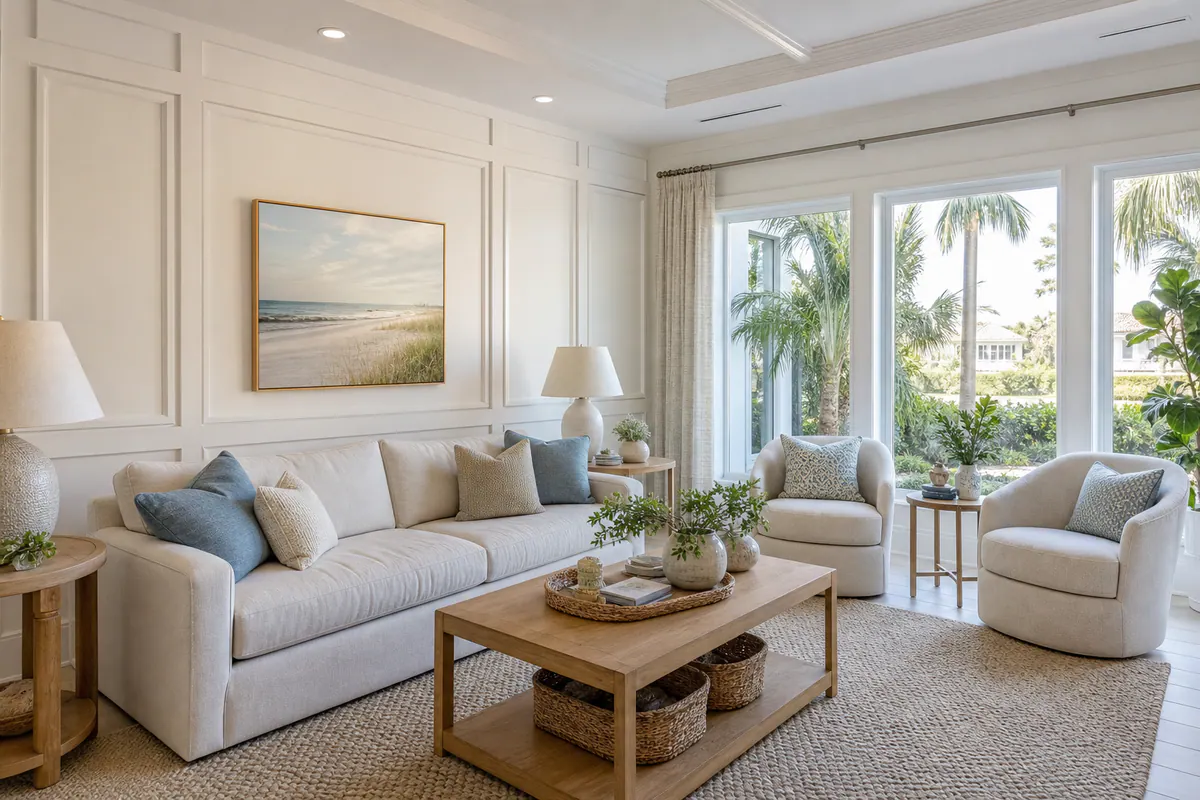
Custom Feature Walls Designed for Englewood Homes
Custom feature walls give an otherwise plain surface a clear job: anchor the room, frame a focal point, and make the finish feel intentional. For custom feature walls in Englewood, FL, the strongest choice begins with the room, not a one-size-fits-all pattern. A living room may need a composed backdrop for seating, a bedroom may benefit from quieter character behind the bed, and a TV wall often calls for texture that still leaves the screen visually dominant.
Shiplap uses repeated boards to create broad horizontal or vertical rhythm, making it a natural fit for relaxed coastal home interiors. Slat walls use narrower, evenly spaced vertical pieces for a more linear, contemporary texture. Picture frame molding builds symmetrical inset rectangles for a tailored, transitional look, while geometric molding uses angled or intersecting trim for a bolder graphic statement. The tradeoff is visual weight: a detailed pattern can energize a large, open wall, but a restrained layout often suits a smaller room or one with busy furnishings.
Paint-grade finishing is the layer that makes molding and trim read as part of the architecture. Measured spacing, balanced panel proportions, straight slat alignment, clean transitions into baseboards or crown, planned outlet locations, filled fastener holes, smooth sanding, and consistent caulk joints are the visible details that separate a deliberate feature wall from an added-on surface. Existing wall irregularities, adjacent trim, ceiling height, and furniture placement should shape the layout before materials are selected.
Choosing the Right Feature-Wall Style for Your Room
Start with what the room already has to say. In a bright, open-plan living area, a high-contrast geometric pattern can pull attention away from nearby kitchen finishes, large windows, or layered furnishings. A quieter accent wall design, such as closely matched paint-grade molding or softly colored vertical shiplap, can provide structure without breaking up the visual flow. Conversely, a large blank wall with simple furniture may have enough breathing room for stronger slat spacing or a more graphic layout.
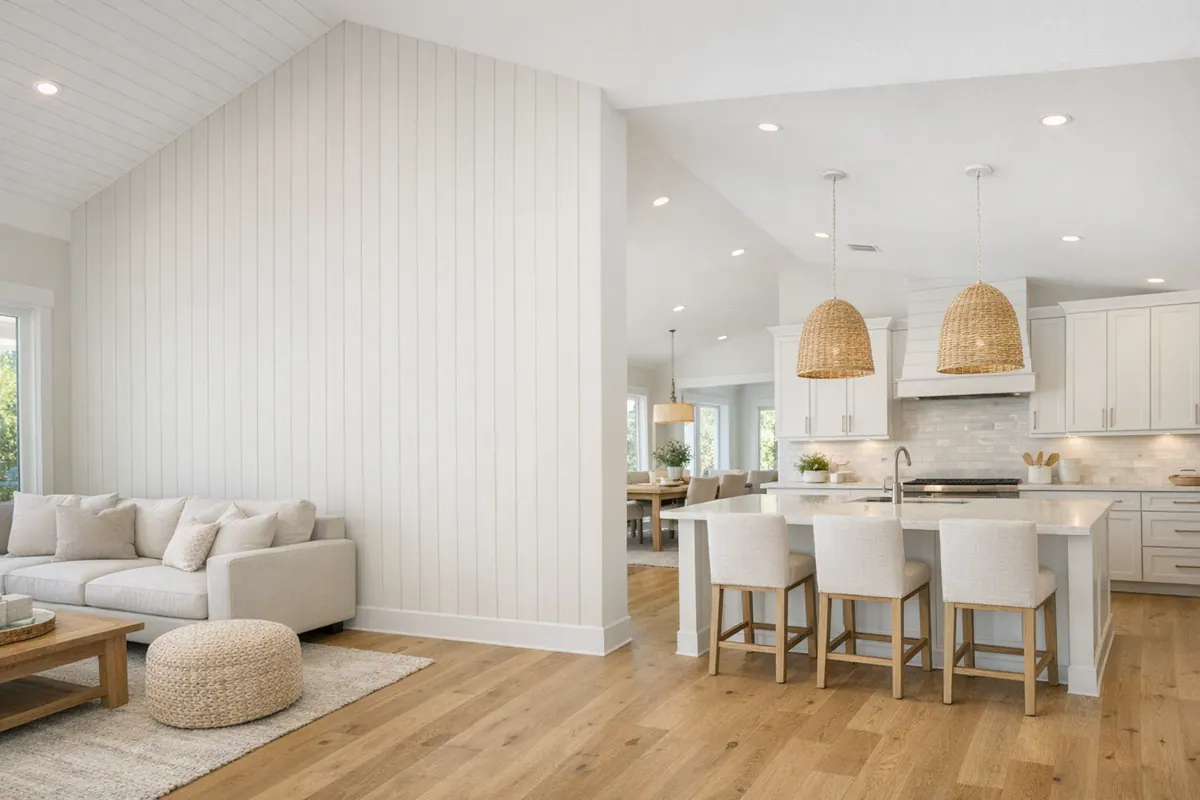
Each treatment carries a different visual weight. Shiplap reads as broad, relaxed rhythm and can be oriented to emphasize width or height. Slat walls create finer linear texture, which often suits a clean TV-wall composition or contemporary seating area. Picture frame molding brings order through repeated, balanced panels and works especially well when nearby doors, windows, baseboards, and crown already have traditional or transitional trim language. Geometric molding is more expressive; its angles and intersections make layout discipline especially important, since uneven spacing or an off-center pattern is immediately noticeable.
Wall condition should influence the design before a pattern is chosen. In remodeled homes, surfaces may be uneven, trim may not align cleanly from one wall to the next, and outlets or switches may interrupt otherwise symmetrical panels. A successful plan accounts for those elements rather than treating them as afterthoughts. Look for proportions that land intentionally at corners, clean transitions into existing baseboards and crown, and outlet covers that feel integrated with the layout.
Coastal light also changes the read of color and texture throughout the day. Deep paint, pronounced shadow lines, and heavily textured slats can feel dramatic in one room yet overly busy in another with abundant daylight. For custom accent walls in Englewood, FL, the best choice is often the one that supports the room's architecture and daily use: restrained enough for a restful bedroom, composed enough for an open living space, or detailed enough to give a simple focal wall real presence. Whatever the style, smooth sanding, filled fastener holes, consistent caulk lines, and paint-ready seams determine whether the finished wall feels built in rather than applied afterward.
Shiplap and Slat Walls: Rhythm, Warmth, and Modern Texture
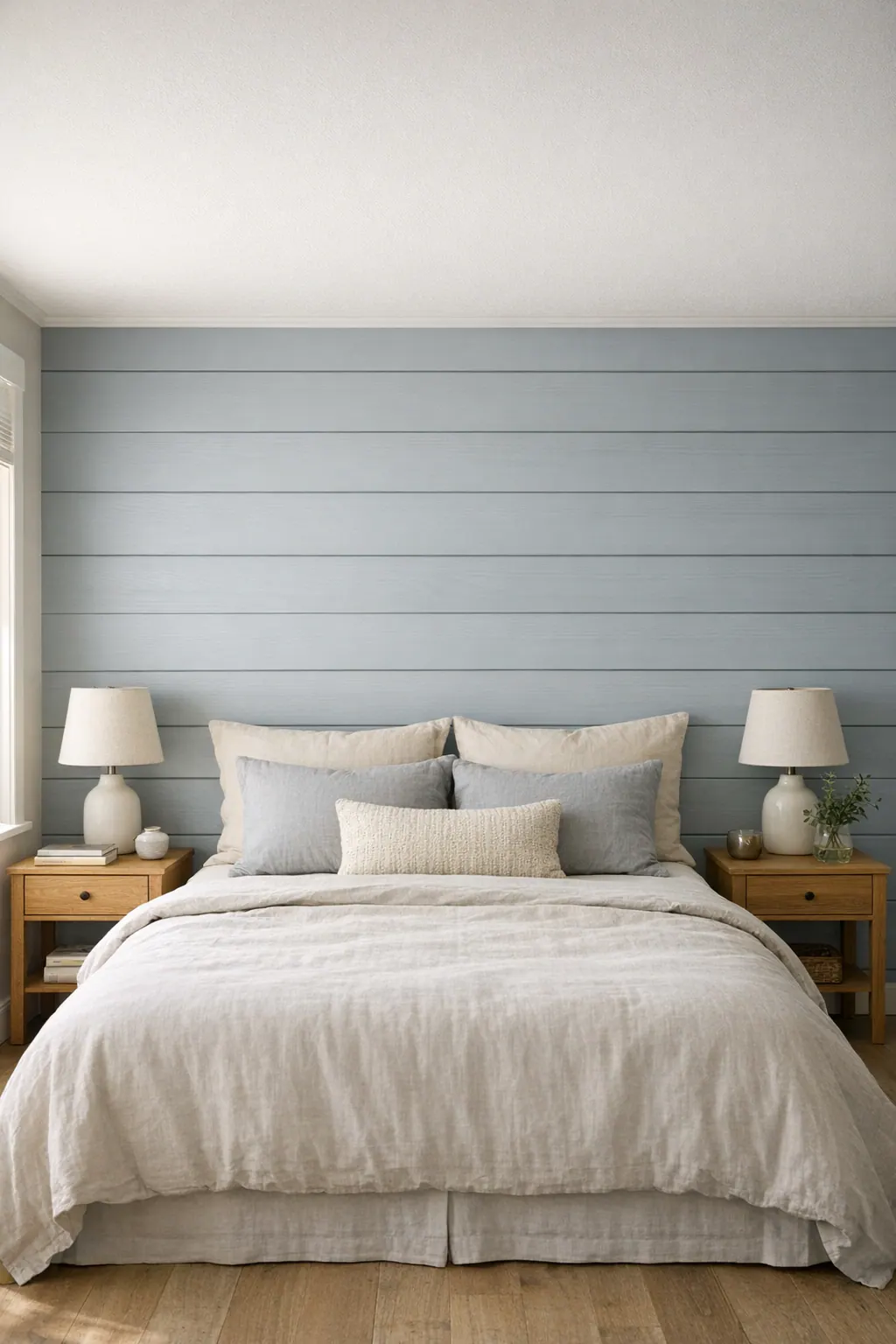
Orientation is the first decision with shiplap. Horizontal boards stretch the eye across the wall, making them well suited to a wide bedroom headboard wall, a relaxed living-room backdrop, or a coastal-inspired space that benefits from an easy, broad rhythm. Vertical shiplap shifts that rhythm upward; on a lower ceiling, it can make the room feel visually taller. Its wider board faces and restrained reveals tend to read casual rather than busy, fitting coastal, casual, and transitional interiors without competing with furnishings.
Slat walls create a finer pattern. Individual narrow strips project from the backing surface, producing more depth and repeated shadow lines than typical shiplap. That dimensional effect adds warmth and structure to a contemporary focal wall, especially behind a television or seating arrangement. A well-composed slat wall depends on consistent spacing, straight alignment from floor to ceiling, and intentional termination at baseboards, crown, or adjacent cabinetry. Fluted wood panels offer a related linear look, but their grooves are formed into a continuous panel face; separate slats create distinct gaps and a more pronounced layered profile.
TV-wall planning should happen before the layout is set. The television, mount location, soundbar, outlets, and any desired concealed wire route all affect where slats begin and end. A strong composition keeps the screen centered within the pattern rather than leaving awkwardly narrow strips at one side or forcing cords across the finished surface. On shiplap, the same planning keeps outlet covers and media components aligned with board courses instead of appearing randomly placed.
Texture also changes routine upkeep. Shiplap's broad faces and shallow seams are generally straightforward to wipe down. Slat gaps, fluted profiles, and deeper shadow lines can collect more dust, so they reward a design that suits the room's cleaning routine as well as its style. For an accent wall in Englewood, the practical choice is not simply the bolder profile, it is the one whose scale, finish, and maintenance needs feel right for the way the room is used.
Picture Frame Molding and Geometric Walls: Custom Layout Matters
Molding-based walls succeed or fail on the layout before the first piece is installed. Picture frame molding organizes a wall into balanced rectangles, using repetition and symmetry to bring a more traditional, transitional, or quietly refined character to a dining room, entry, bedroom, or formal living area. The rectangles do not need to be identical in every room, but their proportions should relate to the wall's width, ceiling height, and the furniture they frame. A low console or headboard can sit comfortably within a larger centered panel arrangement; a tall wall may call for stacked panels that keep the composition from feeling squat.
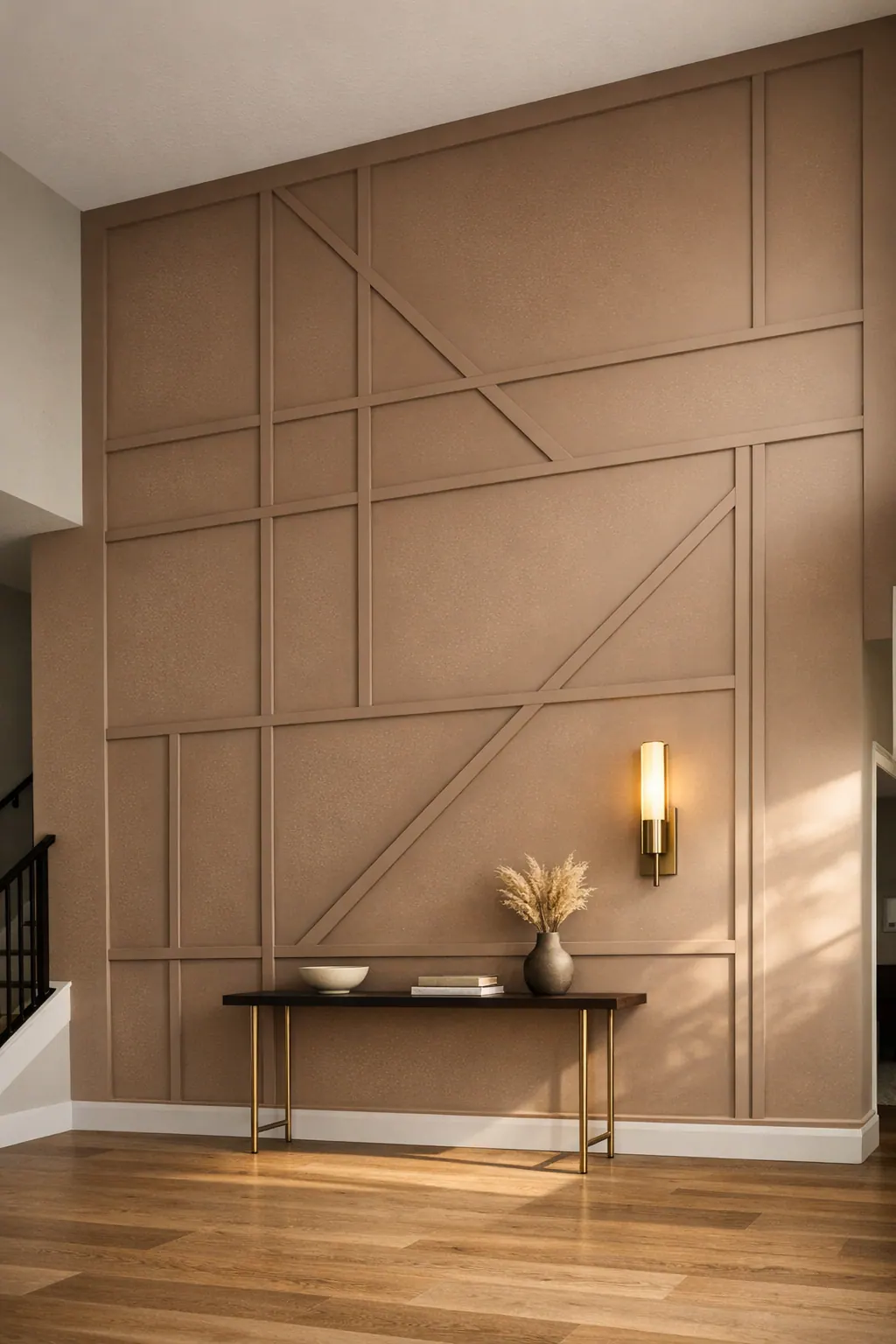
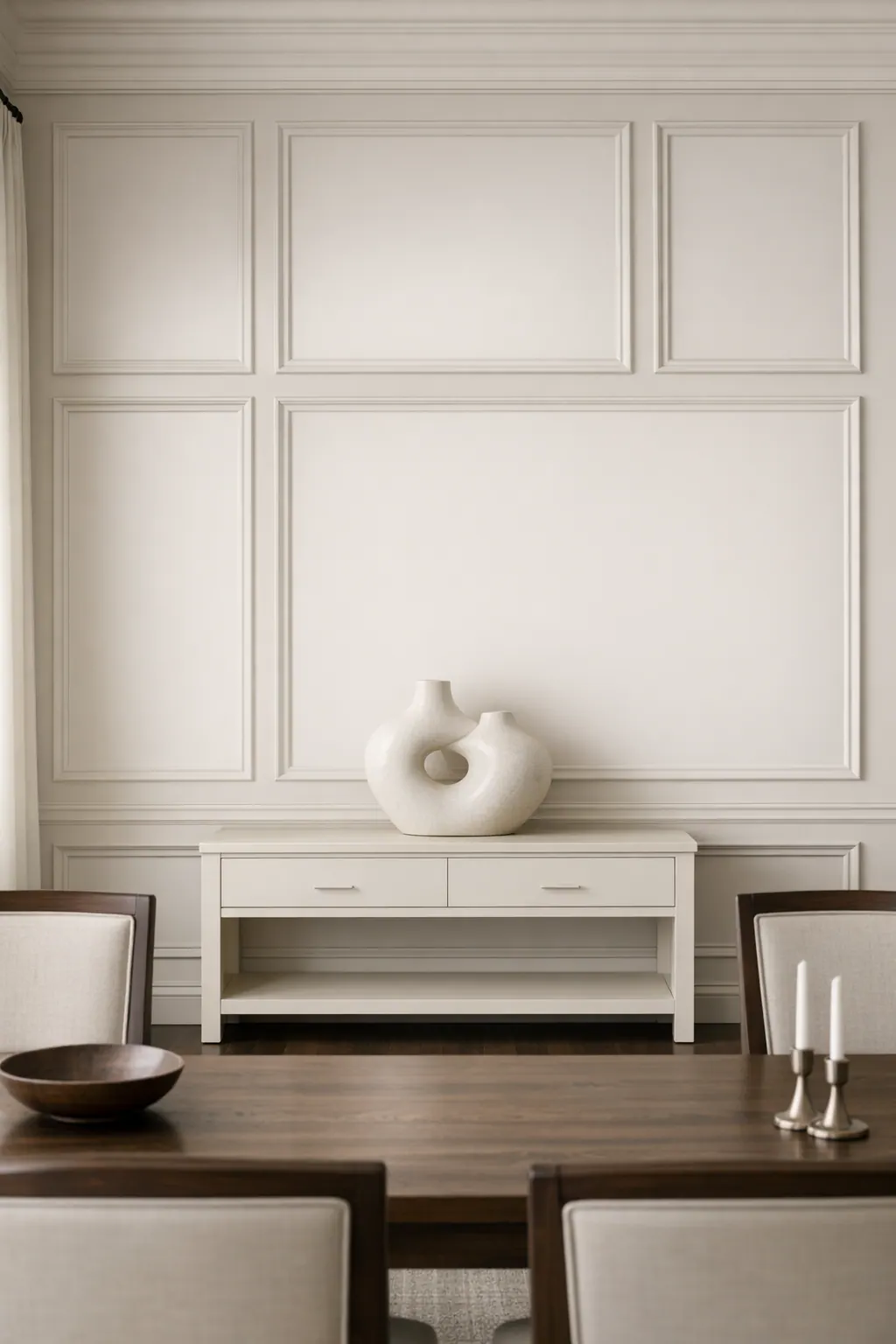
Openings are part of the composition, not obstacles to work around afterward. Doors, windows, switches, return vents, and existing baseboards establish the usable field for decorative wall molding in Englewood homes. Strong layouts maintain consistent margins, center the primary focal area where the room calls for it, and transition deliberately into nearby trim. Weak execution shows up quickly: uneven reveals at each side, arbitrary panel sizes, a layout shifted off center, or a narrow strip of molding crowding an outlet or vent. Those details make even an otherwise simple wall feel improvised.
Geometric molding takes a different approach. Instead of orderly rectangles, it uses intersecting diagonals, angled shapes, or graphic linework for a bolder custom statement. That visual energy can suit a large, uninterrupted wall in a contemporary room, but it needs restraint when the space already has prominent windows, busy furnishings, or several competing finishes. Pattern balance matters more than pattern complexity: lines should land with purpose, joints should meet cleanly, and the design should feel composed from the main viewing position rather than merely filled in.
For either style, the quality signals are easy to see once the wall is painted: straight runs, measured spacing, matching panel proportions, clean connections at baseboards and crown, and seams that read as one intentional architectural detail. That discipline is what gives picture frame molding and geometric molding their finished, built-in presence.
Why Paint-Grade Finishing Defines the Final Look
The last coat of paint is where trim work either settles into the wall or exposes every shortcut beneath it. Paint-grade finishing is the preparation standard for molding and trim intended to be painted, and it matters most on picture frame and geometric walls because their joints, edges, and repeated lines are so visible. The goal is not simply to cover the material; it is to make the assembled wall read as one deliberate surface.
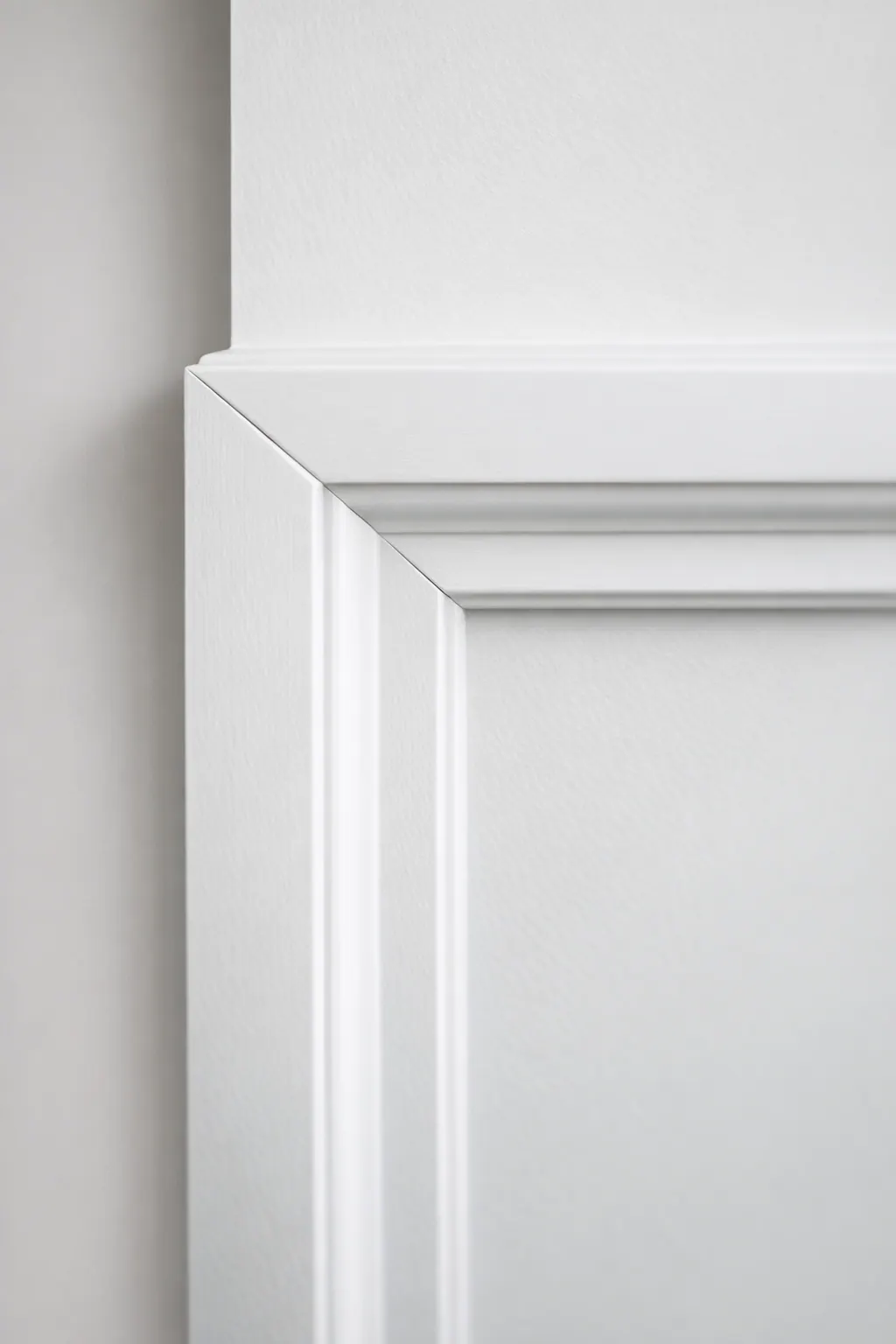
That appearance is built in layers. Trim needs to sit securely and meet cleanly at seams before fastener holes are filled. Filler should be sanded flush rather than left as a raised patch, and transitions where molding meets the wall, baseboard, or crown should feel continuous. Controlled caulk lines close the small visual breaks at those edges without leaving lumpy beads or smeared residue. Under strong side lighting from a window or lamp, rushed work can reveal itself as hairline gaps, uneven seams, rough filler, and wavering lines that may be missed in flat overhead light.
A smooth paint finish also depends on choosing the intended visual effect. A monochromatic approach, molding and wall in the same color, softens the pattern and lets shadows provide restrained texture. Tonal color, with the trim slightly lighter or darker than the wall, gives panels more definition without becoming dominant. A contrasting color makes every border and angle a stronger focal point, which can suit a simpler layout but leaves less room for imperfect preparation. Sheen has a similar role: lower-sheen paint can mute minor surface variation, while a higher sheen catches more light and makes crisp edges, as well as flaws, easier to see.
For custom feature walls in Englewood, FL, finish preparation belongs in the build plan from the start, not as an optional detail after the pattern is installed. It is the difference between trim that merely sits on a wall and a feature wall that feels integrated with the room.
From Wall Assessment to Finished Feature Wall
A successful build starts by making the wall itself part of the conversation. A feature wall contractor in Englewood should begin with the room's goal, framing a bed, TV, console, or open seating area, then take field measurements rather than rely on a single wall-width number. Ceiling height, baseboard and crown profiles, corners, openings, studs or other mounting points, switches, outlets, and any wall-mounted equipment all affect where the design can begin and end.
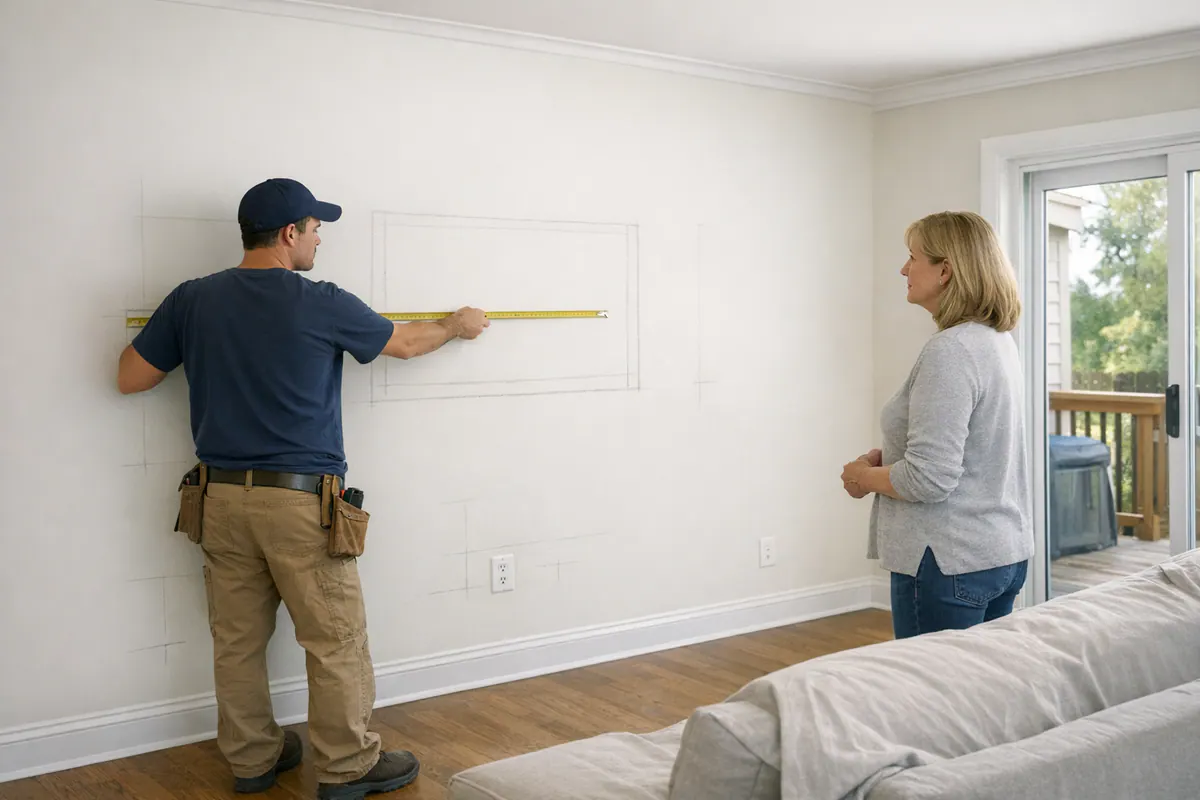
Existing walls deserve a close look, particularly in remodeled homes where surfaces may be bowed, out of plumb, patched, or interrupted by older trim. A straight slat pattern or crisp geometric layout makes irregularities more apparent than broad shiplap or a restrained molding arrangement. The practical choice may be to correct the surface first, adjust the treatment's depth, or select a layout that can meet adjacent trim cleanly rather than forcing a pattern to follow a wandering wall.
Before installation, a measured layout or dry-fit maps the full composition. It reveals whether end panels become awkwardly narrow, picture-frame rectangles lose their balance, or wall battens land too close to an outlet. Outlets and switches should be intentionally incorporated, not covered or treated as a last-minute interruption, and TV mounts, sconces, and floating furniture should have their locations established before lines are set.
Material and finish decisions follow the layout: board width and reveal for shiplap, slat size and spacing for a linear wall, or molding profile for framed and geometric work. Installation should preserve straight reference lines and clean transitions into existing baseboards, crown, and side trim. The final review is the homeowner's chance to look across the wall in natural and side light, checking panel balance, aligned details, filled holes, smooth sanding, controlled caulk joints, and a clear understanding of paint responsibility and the intended finished appearance.
Plan a Custom Feature Wall for Your Englewood Home
Photos that show the full room, not only the target wall, help establish where the focal point should sit and how strongly it should read. Bring approximate wall width and ceiling-height measurements, inspiration images, and plans for a TV, fireplace, sconces, outlets, or floating furniture to the conversation, along with any existing trim or wall-condition concerns.
It also helps to name the design direction plainly: relaxed shiplap, warmer linear slats, formal picture frame molding, or a more graphic geometric pattern. Share the intended paint color or whether you prefer a low-contrast, color-matched look; that choice changes how prominently seams, reveals, and trim profiles appear.
A finish carpenter in Englewood can use those details to create a layout that belongs to the room rather than applying a preset pattern. The completed wall should show balanced spacing, purposeful transitions at existing trim, and a paint-grade surface with smooth sanding, filled holes, and controlled caulk lines. Request a consultation or estimate when you are ready to discuss the room, your preferred direction, and the finished level of detail you expect.
Plan the next step
Compare the broader Custom Feature Walls service.
Review the Englewood, FL service area for local planning context.
When you are ready, request a free estimate with the rooms, trim goals, city, and available photos.
FAQs
What is the difference between shiplap, slat walls, and decorative molding?
Shiplap uses wider repeated boards for broad horizontal or vertical rhythm, while slat walls use narrow, evenly spaced strips that create deeper shadow lines. Picture frame molding forms balanced inset rectangles, and geometric molding uses angled or intersecting trim for a bolder graphic pattern.
Can a feature wall be installed behind a TV or fireplace?
Yes, a feature wall can be installed behind a TV when the screen, mount, soundbar, outlets, and concealed wire route are planned before the layout is set. The pattern should keep the TV centered and avoid awkwardly narrow slats, misplaced board courses, or exposed cords.
How are paint-grade feature walls finished for clean seams and crisp lines?
Paint-grade finishing includes securely installed trim, filled fastener holes sanded flush, smooth transitions at baseboards and crown, and controlled caulk joints. Straight alignment, measured spacing, and clean seams are especially important because side lighting exposes gaps, rough filler, and wavering lines.
Are feature walls a good fit for remodeled homes with uneven existing walls?
Yes, but bowed, patched, or out-of-plumb walls should be assessed before choosing the design. Straight slat and geometric layouts make irregularities more visible, so the surface may need correction or a more forgiving shiplap or restrained molding layout may be the better choice.
What should I look for when choosing a feature-wall style for an Englewood home?
Choose the style based on room size, daylight, furniture, existing trim, wall condition, and the focal point such as a bed, TV, or seating area. Horizontal shiplap emphasizes width, vertical shiplap can make lower ceilings feel taller, slats suit contemporary TV walls, and picture frame molding works well with traditional or transitional trim.