
Exterior Trim Damage in Englewood: Why It Needs Prompt Attention
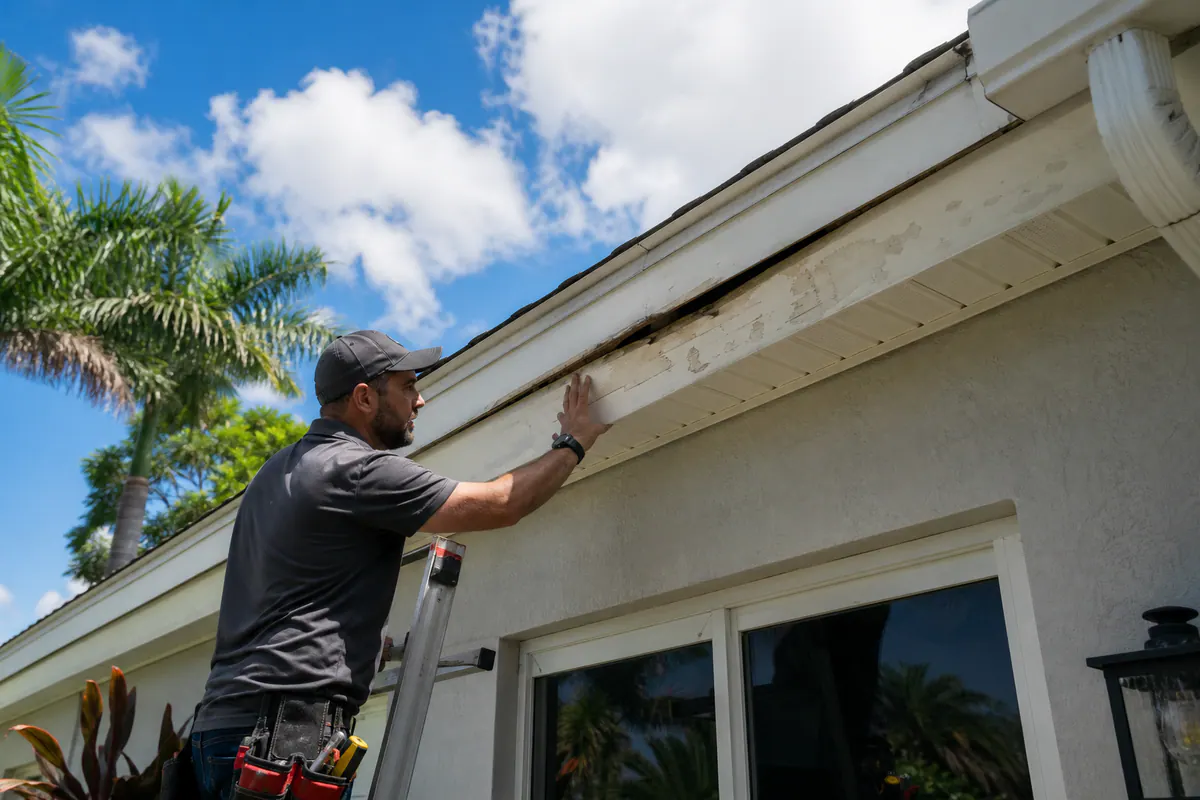
Exterior trim does more than frame the home's appearance. Fascia and other roofline boards finish the eaves, while window and door casing, corner boards, and trim at siding transitions cover joints and help create clean edges where exterior materials meet. In Englewood, those exposed edges contend with humidity, strong sun, wind-driven rain, and salt air, conditions that can wear down paint and leave vulnerable seams more exposed to moisture.
Peeling paint, hairline cracks in caulk, or a single weathered board can be finish-level concerns when the material beneath remains firm and the joint is still closed. Those symptoms still deserve attention: an open seam at a window casing or roofline can give water a route behind the visible trim rather than simply affecting curb appeal.
More concerning signals include wood that feels soft when gently pressed, dark staining that returns after repainting, separated joints, crumbling edges, or paint that repeatedly peels in the same area. These signs do not identify the water source on their own, but they justify an evaluation of nearby roof edges, flashing, gutters, siding transitions, and openings. Exterior trim repair in Englewood, FL starts by separating a localized finish problem from deterioration that may require damaged material to be removed and the moisture path corrected.
Signs Your Exterior Trim May Need Repair or Replacement
A close walk-around can help distinguish a tired finish from trim that has lost its integrity. Press lightly on suspect wood with a fingertip or blunt tool: intact trim feels firm, while compromised areas may dent, crumble at the edge, or reveal a hollow, soft spot beneath paint. Look for split boards, missing chunks, small insect-damaged holes or channels, casing that has pulled loose, and joints that have opened enough to show a dark gap.
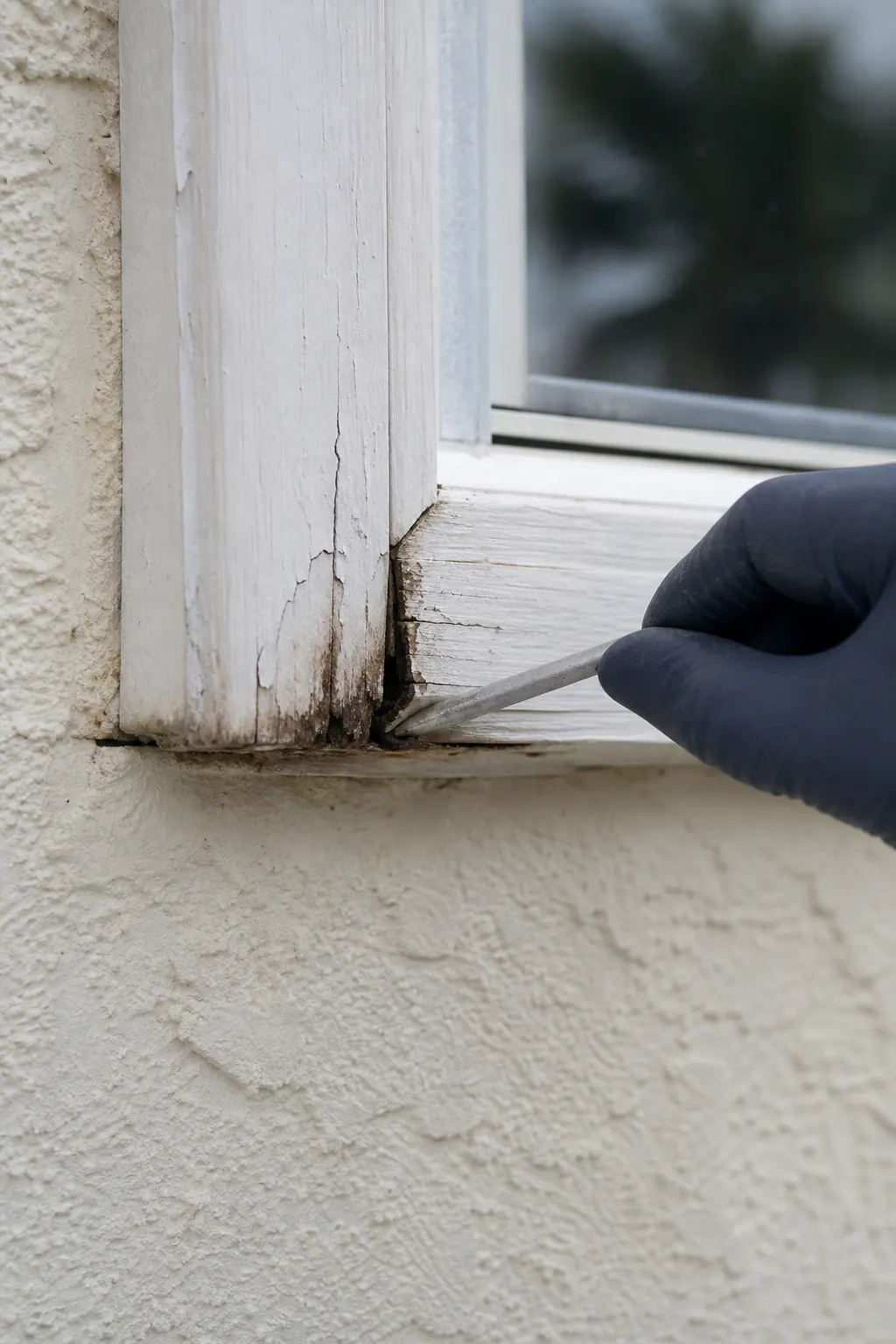
- Inspect window and door casing, especially lower corners where failed caulk or water at the sill can work behind the board.
- Scan corner boards and lower trim near grade for staining, swelling, or deterioration where rain splashback repeatedly wets the surface.
- Look along fascia, rake boards, and soffit transitions for sagging edges, soft wood, or paint loss below roof runoff, drip edges, and flashing details.
- Note paint that blisters or peels again in one specific spot after repainting. That pattern is a symptom to investigate, not proof that paint itself is the problem.
Dark staining can mark an old surface event, but staining paired with softness, loose fasteners, or recurring finish failure is a stronger reason to assess the area. The visible damage may sit below the actual entry point: water can travel behind casing from an opening above, behind fascia from a roof-edge issue, or into lower trim from a siding transition. Water damaged trim repair therefore starts with exposing enough of the affected area to tell whether the damage is limited to one board or extends into adjoining trim or backing.
For exterior wood rot repair, a firm surrounding board and a clearly localized damaged section are encouraging signs. Widespread softness, separated assemblies, or material missing across several connected pieces points more toward a broader rotted exterior trim repair plan.
When Exterior Trim Can Be Repaired, and When Replacement Is the Better Choice
The practical dividing line is not how rough the trim looks from the ground; it is whether the affected area can still provide a solid, stable base after the damaged finish or small defect is removed. Trim repair in Englewood, FL can make sense for a shallow split, a chipped edge, an open but otherwise sound joint, or a limited patch of deterioration when the material around it remains firm, the board is securely held, and the backing behind it is dry and intact.
A repair should stop at sound material rather than cover questionable wood. For example, a small damaged spot at the end of otherwise solid window casing may be rebuilt after the loose material is removed and the joint that admitted water is corrected. That is different from filling or caulking over soft fibers: the surface may look improved briefly, but the weakened section remains underneath.
- Replacement is the stronger choice when wood is soft through its depth, crumbles away, has missing sections, or has deteriorated across much of a board or several connected trim pieces.
- Loose boards or fasteners that no longer hold can indicate that the trim, its attachment area, or the material behind it needs to be opened up and assessed rather than simply re-nailed.
- Recurring damage in the same location calls for a search beyond the trim itself. A new fascia board will not correct water entering from a roof edge, flashing transition, gutter issue, siding joint, or window detail.
- Removal sometimes exposes concealed deterioration in backing, adjacent casing, soffit edges, or roofline components. The repair scope should follow what is sound after that area is opened, not only what was visible before work began.
For rotted trim replacement in Englewood, the durable sequence is to remove compromised material back to a firm substrate, identify and correct the likely moisture path, then fit and seal the replacement trim at its adjoining transitions. This condition-based approach avoids treating paint failure as rot while also avoiding a cosmetic patch where a full board replacement is warranted.
Wood, PVC, and Composite Exterior Trim: Choosing the Right Material
Once a board has been selected for replacement, the next decision is what that new piece should be made of, and the best answer can differ between a window casing, corner board, soffit edge, and fascia run.
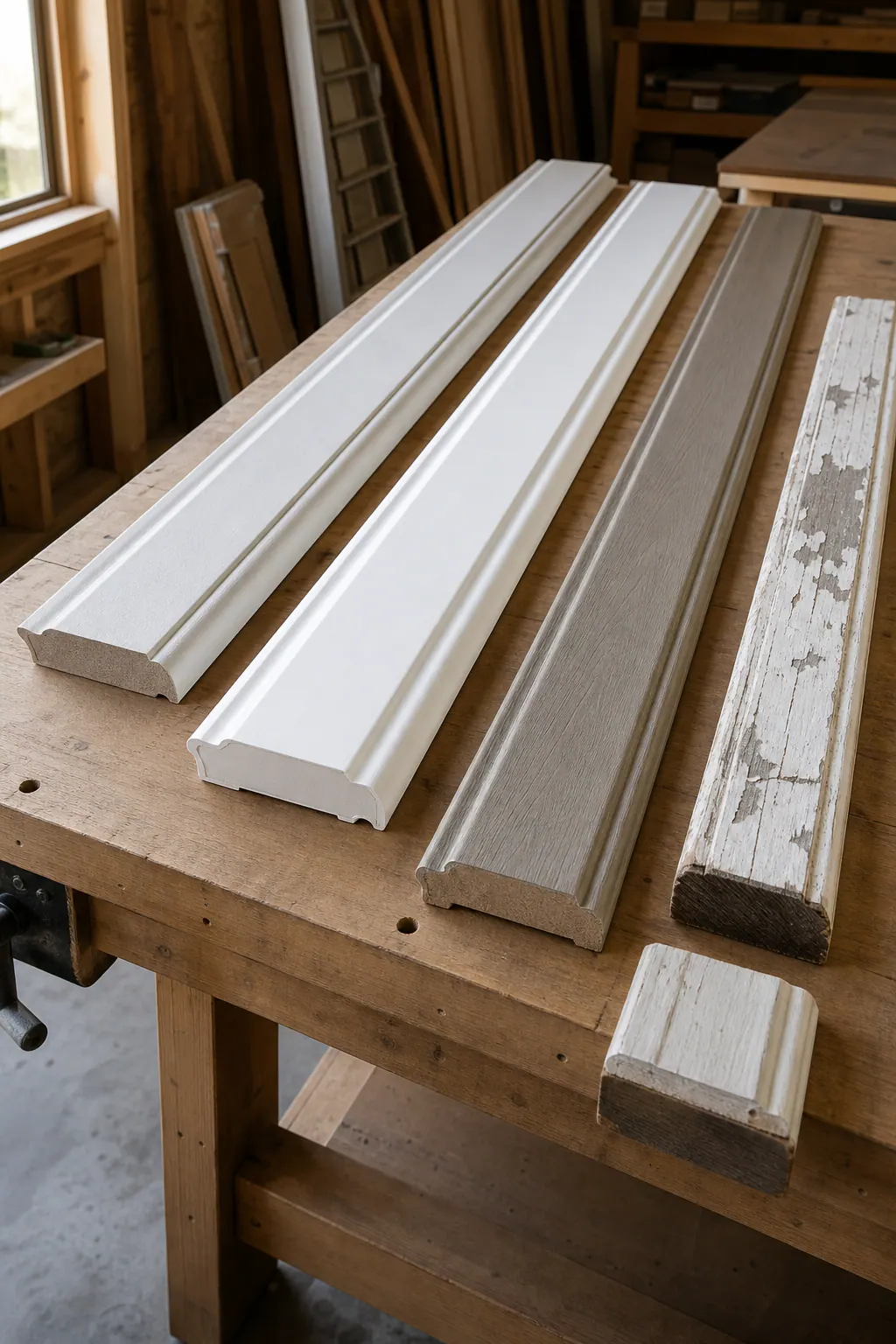
Wood remains a practical choice when the home has an existing profile that needs to blend in. It can be shaped to match older trim details and keeps a consistent look where only part of an assembly is being replaced. Its tradeoff is ongoing care: exposed cuts, joints, and paintable faces need to be detailed so water does not repeatedly reach the board. A wood replacement makes the most sense when its adjoining edges can be properly protected and maintained rather than left as a vulnerable patch.
PVC trim is a moisture-resistant alternative often considered for exposed casing, corner boards, and other painted trim. It does not behave exactly like wood, however. PVC expands and contracts with temperature changes, so long runs need appropriate movement allowance, fastening, and joint treatment. It also needs a clean, well-supported layout at corners and transitions; forcing it tightly between fixed materials can leave joints under stress. For PVC exterior trim in Englewood, the visible profile, board thickness, attachment surface, and paint or finish plan should all suit the specific product.
Composite trim can offer another painted, low-maintenance-looking option, but "composite" describes a category rather than one uniform material. Products differ in profile availability, edge treatment, intended locations, cutting requirements, and fastening approach. That makes it especially important to match the product to the particular use rather than assume one composite board belongs everywhere on the exterior.
- A good match preserves the existing reveal and thickness so replacement window or door casing sits cleanly against siding and adjacent trim.
- A weak match may be moisture-resistant on its face but leave an awkward joint, unsupported edge, or incompatible transition at a roofline or corner.
- Material selection does not solve an active leak. Water entering at a roof edge, flashing detail, siding transition, or window opening can still damage the structure behind wood, PVC, or composite trim.
The material is therefore one part of the repair plan, alongside sound backing, correctly fitted boards, secure attachment, and sealed transitions that direct water out rather than conceal the path it is taking.
Fascia Repair, Roofline Trim, and Eaves: Finding the Water Path
At the roof edge, the visible fascia board is only one part of a small assembly that has to shed water cleanly. Fascia faces the outside of the eave; rake boards follow a sloped gable edge; and soffit material closes the underside. A stain or soft spot in any one of them may be localized, but it can also point to water arriving from above or behind.
For fascia repair in Englewood, FL, the assessment should look beyond peeling paint. Sagging paint, softened lower edges, open seams, loose trim, or fasteners that no longer hold are signals to examine the drip edge, roof flashing at nearby transitions, gutter condition where gutters are installed, and the soffit immediately behind the fascia. The drip edge helps guide runoff away at the roof perimeter; if its relationship to the roof covering or gutter is poor, water can repeatedly wet the board rather than drain clear of it.
- A localized repair may fit a short damaged section when the adjoining fascia is firm, the attachment surface remains sound, and a specific drainage issue can be addressed.
- Fascia board replacement becomes more sensible when softness continues along the run, the board has pulled away, or the backing no longer provides reliable fastening.
- A weak repair covers deteriorated wood without looking at a bent drip edge, an overflow point, an open flashing transition, or a damaged soffit edge that may be admitting water.
Replacing roofline trim can restore a clean, secure edge, but it does not diagnose or resolve every roofing concern. The practical goal is to identify the visible damage, inspect the nearby water-management details, and correct contributing trim-level issues before the new board closes the area.
What Durable Exterior Trim Repair and Replacement Should Include
A sound repair begins with an open view of the affected assembly, not a decision made from the painted face alone. The work should trace likely entry points at joints, siding transitions, window or door edges, and roofline details before removal starts. During water damaged trim repair, the goal is to preserve adjacent finishes where practical while taking out softened, split, or poorly supported material back to a firm edge.
- Inspect what is exposed. Once the damaged board is off, the backing, fastener locations, nearby sheathing, soffit edge, and adjoining trim can be evaluated. This is when hidden deterioration, an open transition, or a water-shedding detail that is no longer directing water clear of the trim may become visible.
- Set the repair boundary at sound material. A small repair can be fitted where the surrounding board and attachment surface are solid. If removal reveals unreliable backing or deterioration extending beyond the visible spot, replacing the affected run may create a more dependable base.
- Fit the replacement as part of the assembly. Existing profiles can often be matched closely so new casing, corner board, or fascia does not look pieced together. The replacement material, wood, PVC, or composite, needs a thickness, joint layout, fastening approach, and finish plan suited to that location.
Water management is restored before the trim is closed up. That can mean correcting a flashing transition, re-establishing a drip edge relationship, or addressing a gap where adjoining materials meet so water is guided outward rather than behind the board. Findings discovered after removal should be explained clearly, because they can change a localized repair into a broader scope.
Durable exterior trim sealing belongs near the end of the sequence. Sealant closes appropriate exterior joints after the substrate and water-shedding details are sound; it is not a way to bridge over rot, loose material, or an active water path. Paint likewise protects and finishes the completed surface, following the requirements of the chosen trim material, but repeated coats cannot stabilize failed backing or cure a leaking transition. That is the practical standard for exterior trim repair in Englewood, FL: repair the assembly first, then use caulk and paint to finish it.
Get a Clear Plan for Exterior Trim Repair in Englewood
If soft wood, repeat paint failure, open trim joints, a questionable fascia edge, or visible staining has caught your attention, it is a good time to arrange an on-site assessment. Exterior trim repair in Englewood, FL should start by separating a finish-only issue from material that has deteriorated beneath the surface, not simply by applying another coat of paint or caulk.
A useful evaluation looks at the affected board, its attachment and backing, and nearby places water may be entering, such as a roof edge, flashing transition, gutter area, siding joint, or window and door perimeter. It should also establish the right scope: a small, contained repair where the surrounding material remains dependable, or rotted trim replacement in Englewood when deterioration continues beyond the visible spot.
You can then choose a replacement approach suited to the location, wood when profile matching matters, PVC or composite when those options fit the assembly, and receive a clear plan for removal, fitting, sealing, and finishing. Addressing a localized concern promptly can help keep it from becoming a larger trim or backing repair.
Plan the next step
Compare the broader Exterior Trim Repair and Replacement service.
Review the Englewood, FL service area for local planning context.
When you are ready, request a free estimate with the rooms, trim goals, city, and available photos.
FAQs
What are the signs that exterior trim has water damage or rot?
Warning signs include soft wood, crumbling edges, dark staining that returns after painting, separated joints, loose casing, and paint that repeatedly peels in the same spot. Inspect lower window and door casing corners, trim near grade, and fascia below roof runoff because moisture often enters behind visible trim.
Can rotted exterior trim be repaired, or does it need to be replaced?
Repair can work for a shallow split, chipped edge, open joint, or small damaged section when the surrounding trim is firm, securely attached, and backed by dry, sound material. Replacement is better when wood is soft through its depth, crumbles, has missing sections, or deterioration extends across much of a board or connected trim pieces.
What causes fascia boards to rot in Florida?
Fascia commonly deteriorates when roof runoff repeatedly wets the board because of poor drip-edge placement, gutter overflow, damaged flashing, open roofline transitions, or a compromised soffit edge. Humidity, strong sun, wind-driven rain, and salt air in Englewood can also wear down paint and expose seams to moisture.
How do contractors repair water-damaged exterior trim?
They remove softened or split trim back to firm material, inspect the exposed backing, sheathing, fasteners, soffit edge, and nearby transitions, then correct the likely water-entry path. Replacement boards are fitted with the proper profile, thickness, fastening, joint layout, sealing, and finish plan for the location.
Is PVC exterior trim a good choice for homes in Englewood, FL?
PVC can be a strong moisture-resistant choice for painted window casing, corner boards, and exposed exterior trim, but it must be installed with room for temperature-related expansion and contraction. Choose PVC only when the profile, board thickness, attachment surface, joint treatment, and paint plan fit the specific application; it will not solve an active leak behind the trim.