
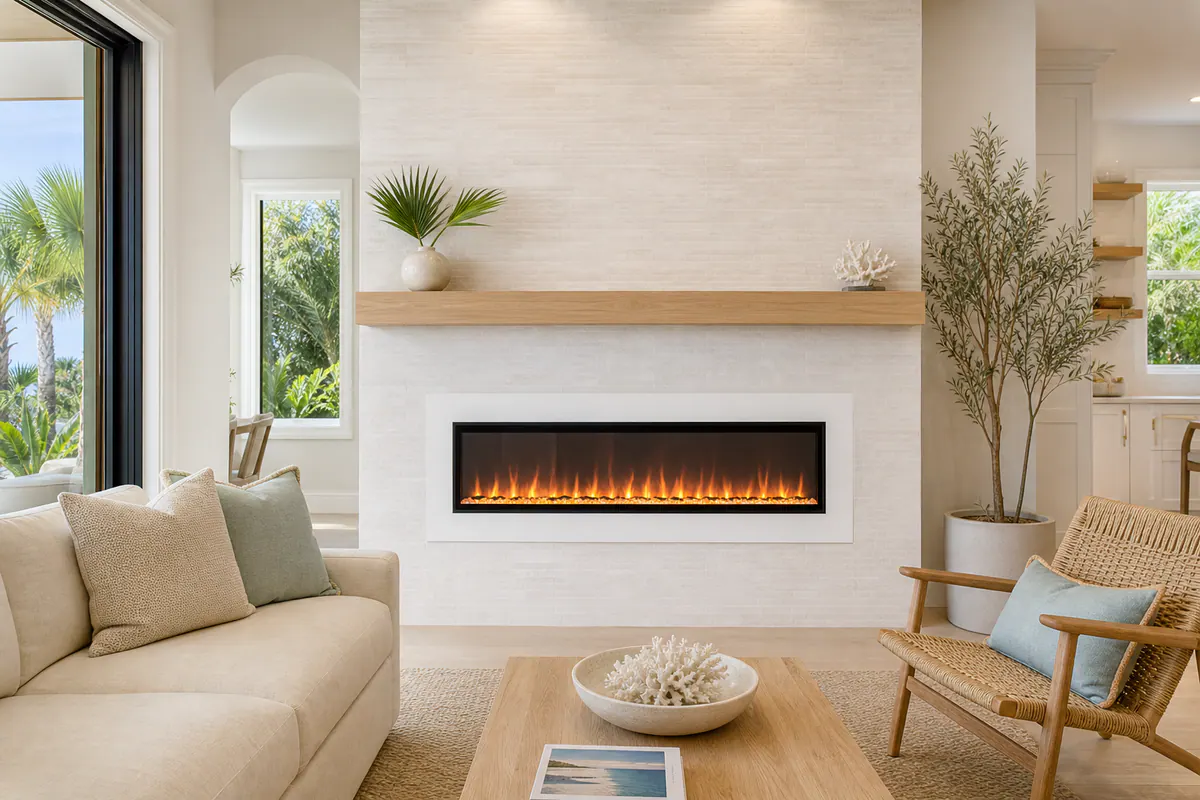
Fireplace Mantels and Surrounds That Finish a Siesta Key Living Space
A fireplace mantel in Siesta Key can do more than frame an appliance: it can give the whole living space a deliberate center. A crisp painted shelf can add a light horizontal line above a firebox, while a tailored surround or new facing can turn a dated opening into a balanced architectural composition.
The right scope depends on what is already there. A simple mantel shelf suits a fireplace wall that needs warmth and definition without added bulk. Surround trim frames the opening for a more finished, built-in appearance. A tile, stone-look, or paneled feature wall carries the design farther, adding visual weight where a large room or tall ceiling would make a small surround feel lost. In a compact room, an oversized reclaimed-wood beam or heavy stone treatment can overwhelm the wall rather than ground it.
For coastal-contemporary interiors, the strongest results usually come from restrained proportion, clean edges, and finishes chosen to wear gracefully, not theme-driven details. Fireplace type, wall construction, existing facing, room scale, and the desired level of maintenance all shape the design. Before any material or shelf profile is finalized, the fireplace model's installation requirements and the site conditions must guide required clearances and suitable surrounding materials.
Understanding Mantels, Surrounds, Trim, and Fireplace Feature Walls
Think of the fireplace wall as a composition with layers, rather than a single piece of trim. The smallest intervention is a mantel shelf: one horizontal ledge above the opening. It gives a compact electric fireplace or a modest existing surround a place to land visually, but a narrow shelf can disappear against a tall, uninterrupted wall.
A full mantel adds vertical legs below the shelf, creating a more formal frame around the firebox. This option gives a tall living-room wall stronger structure without changing the entire wall surface. In contrast, a surround trim package focuses on the immediate perimeter of the opening: flat stock, casing, panels, or layered molding that sharpens transitions between the firebox, facing, and adjacent wall. A fireplace surround in Siesta Key is often a fitting choice when the opening feels unfinished but the room does not need more depth or mass.
The facing is the visible field around the opening, such as tile, stone-look material, or a smooth panel treatment. It changes texture and contrast more than trim alone can. A light large-format tile can keep the treatment quiet; a strongly veined or heavily textured facing becomes the focal point. The hearth area, where present, should read as part of that same composition rather than an unrelated strip at floor level.
A larger feature wall expands the scope with a bump-out, a shallow framed projection that adds depth, or built-in shelving that extends the fireplace's lines outward. This can anchor a broad wall, but deep side units or oversized trim may crowd a small room. For any fireplace trim Siesta Key project, the selected assembly also needs a site-specific review of the fireplace model, wall construction, and material limitations before dimensions are finalized.
Coastal Fireplace Design: Proportion, Palette, and Visual Weight
Start by giving the fireplace wall a clear hierarchy. The opening, mantel line, and facing should feel centered within the usable wall area, not simply centered between two studs. Nearby windows, built-ins, and seating sightlines all affect that visual center. A wide wall with low furniture can carry a broader surround or longer shelf; on a compact wall, a deep shelf and thick side trim can make the firebox feel crowded.
Height and depth shape how the wall is experienced. A mantel set too high can leave the firebox visually detached from the seating area, while one that projects too far can become the room's dominant horizontal element. For a custom fireplace mantel in Siesta Key, it helps to sketch the opening, ceiling line, adjacent windows, and furniture before choosing the shelf length or surround width. Symmetry is usually calming in a coastal-contemporary room, but it does not require identical features on both sides: a window on one side and a shallow built-in on the other can still feel balanced when their visual weight is similar.
A television above the fireplace needs to be part of the elevation rather than an afterthought. Its size, mounting position, visible wiring, and relationship to the mantel can determine whether a slim surround is more appropriate than a tall, layered treatment. The fireplace model's specified clearances and the proposed TV arrangement should be reviewed together before the design is finalized.
For a restrained coastal direction, painted trim in warm white, pale wood-look detailing, soft mineral-toned tile, and simple square or gently eased profiles create quiet contrast without resorting to themed decoration. A streamlined painted surround suits a bright room with nearby windows; pale wood can add warmth where floors and furnishings are otherwise light. A more substantial stone-look surround can work on a high-ceilinged great room or a broad feature wall, especially when it is balanced by plain built-ins and a low-contrast palette. The goal for coastal fireplace trim in Siesta Key is measured visual weight: enough presence to anchor the room, without turning the wall into a heavy backdrop.
Choosing Materials and Finishes for a Coastal Fireplace Surround
Surface sheen and edge detail often determine whether the finished wall feels tailored or pieced together. Paint-grade trim is made to be painted rather than displayed for its grain, making it a flexible choice for square-frame surrounds, layered moulding, and mantel shelves that visually blend into a light wall. It suits a bright, quiet room; a good signal is a simple profile with tight mitered corners and a low-sheen paint finish. Thick, ornate moulding or uneven caulk lines can make the same approach feel busy.
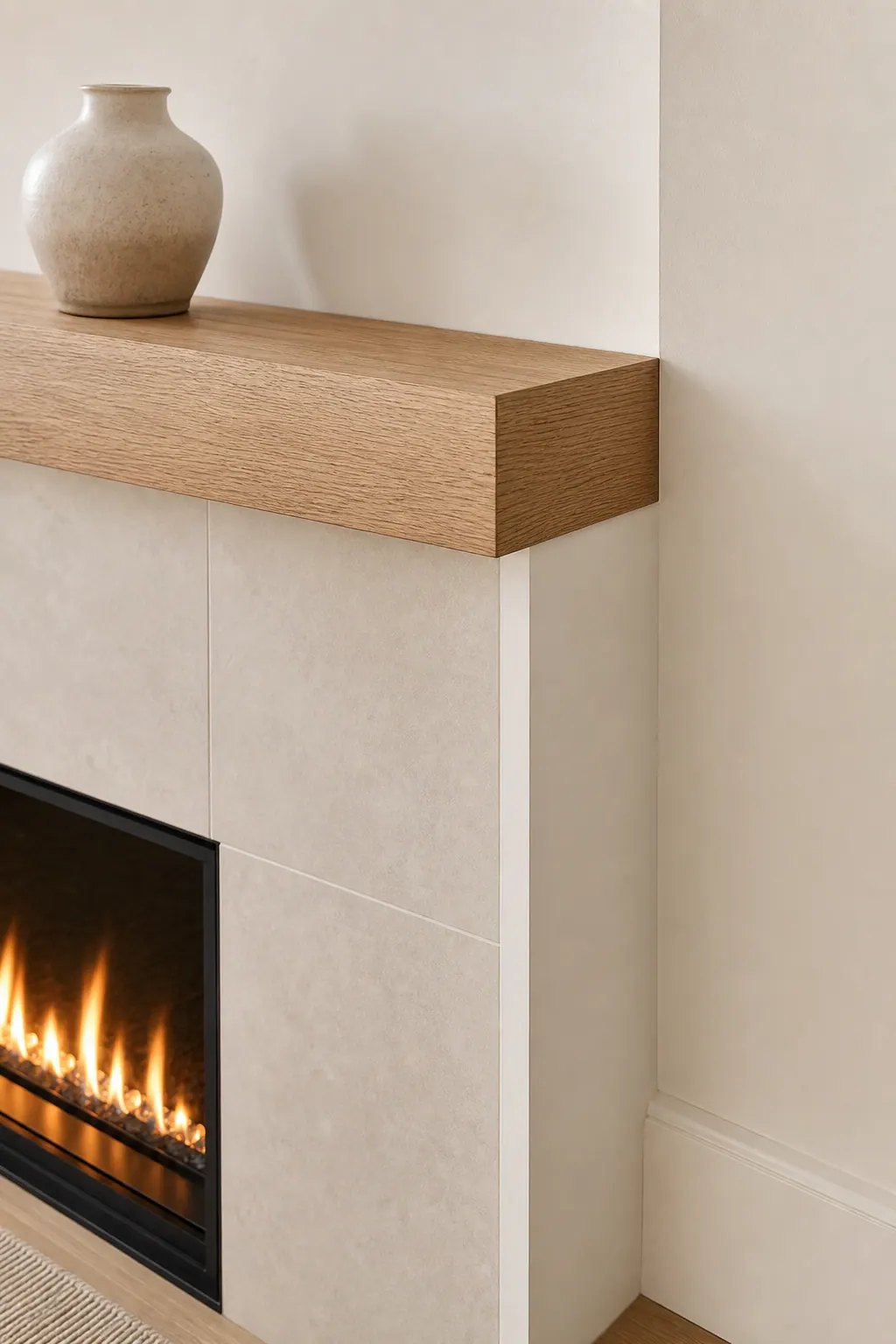
Stained wood foregrounds natural grain and variation, while wood-look finishes provide a more controlled color and pattern. Both add warmth beside pale tile, but they serve different design goals: choose stained wood when variation is welcome and a wood-look finish when consistent tone matters more. A softly finished medium or pale wood can balance cool flooring; a dark, heavily distressed beam is often a weak fit beside crisp cabinetry. For moisture-conscious interiors, sealed faces, sealed end grain, and neatly protected joints make routine wiping easier and keep changing conditions from drawing attention to the joinery.
Tile creates a patterned or textured facing field. Matte porcelain offers an understated mineral look and straightforward cleaning, while long-format tile reduces the number of grout lines. Grout is part of the design: closely matched color and even, restrained joints let the tile read as one surface; contrasting grout turns every tile edge into a graphic grid. Stone-look slabs or panels create a broader, more continuous visual field, but require deliberate edge returns and clean transitions where the facing meets drywall or trim.
Where a particular fireplace system calls for noncombustible materials near its opening, that requirement changes both the finish selection and the placement of painted or wood elements. A noncombustible facing can still look warm through soft-toned tile or stone-look material, while a shelf may need to begin outside the unit's specified zone. Review the model's installation instructions, listed material requirements, clearances, and the existing wall condition before finalizing the samples and joint layout for a fireplace surround in Siesta Key.
Ways to Update an Existing Fireplace Without Replacing the Entire Unit
A dated fireplace does not automatically call for a new firebox or insert. The practical starting point is the amount of visual change needed, and what the existing opening, venting path, and wall can reasonably support.
- Shelf update: Adding a simple mantel shelf is the lightest-touch option. It introduces a finished horizontal line and a place for restrained decor without disturbing an otherwise sound facing. This suits a compact electric unit or a room that needs warmth but not more visual bulk.
- Trim update: New side trim, a header, or a tailored painted surround can make an uneven-looking opening read as intentional. It is a strong choice when the firebox is staying in place but the current drywall transitions, proportions, or finish details feel unfinished.
- Facing update: Replacing dated tile or covering a worn facing changes the field immediately around the opening. Large-format porcelain or a quiet stone-look surface can simplify a busy fireplace wall; it also involves removing or preparing the existing finish so the new surface lies flat and its edges meet the wall cleanly.
- Feature-wall update: A framed bump-out or built-in composition creates a deeper architectural change. It can organize an electric fireplace, television location, and side shelving into one elevation, or give a gas fireplace a more substantial surrounding wall. This level may require framing adjustments, electrical planning, and a careful approach to any existing venting.
For a fireplace remodel in Siesta Key, wall flatness and hidden conditions often decide whether a refresh stays simple or becomes a larger rebuild. A shallow shelf can work where a full bump-out would crowd a narrow room; conversely, built-ins can give a broad, blank wall the scale that trim alone cannot provide.
Gas and electric installations need to be evaluated as their own systems. The firebox or insert model, required clearances, listed facing materials, venting configuration, and available electrical access determine which finishes and framing details can safely surround the unit. Reviewing those conditions before demolition helps keep the desired upgrade aligned with the fireplace rather than forcing a design onto it.
Why Professional Mantel and Surround Installation Matters
The difference between a design that looks tailored and one that feels improvised often appears at the edges: where trim meets drywall, where tile terminates at a painted wall, and where a mantel shelf aligns with the firebox below. Professional mantel installation in Siesta Key begins with field measurements rather than assumptions from a photo or plan. That means locating the true center of the opening, noting walls that are out of plumb or uneven, and accounting for outlets, vent locations, television components, and adjacent finishes before materials are cut.
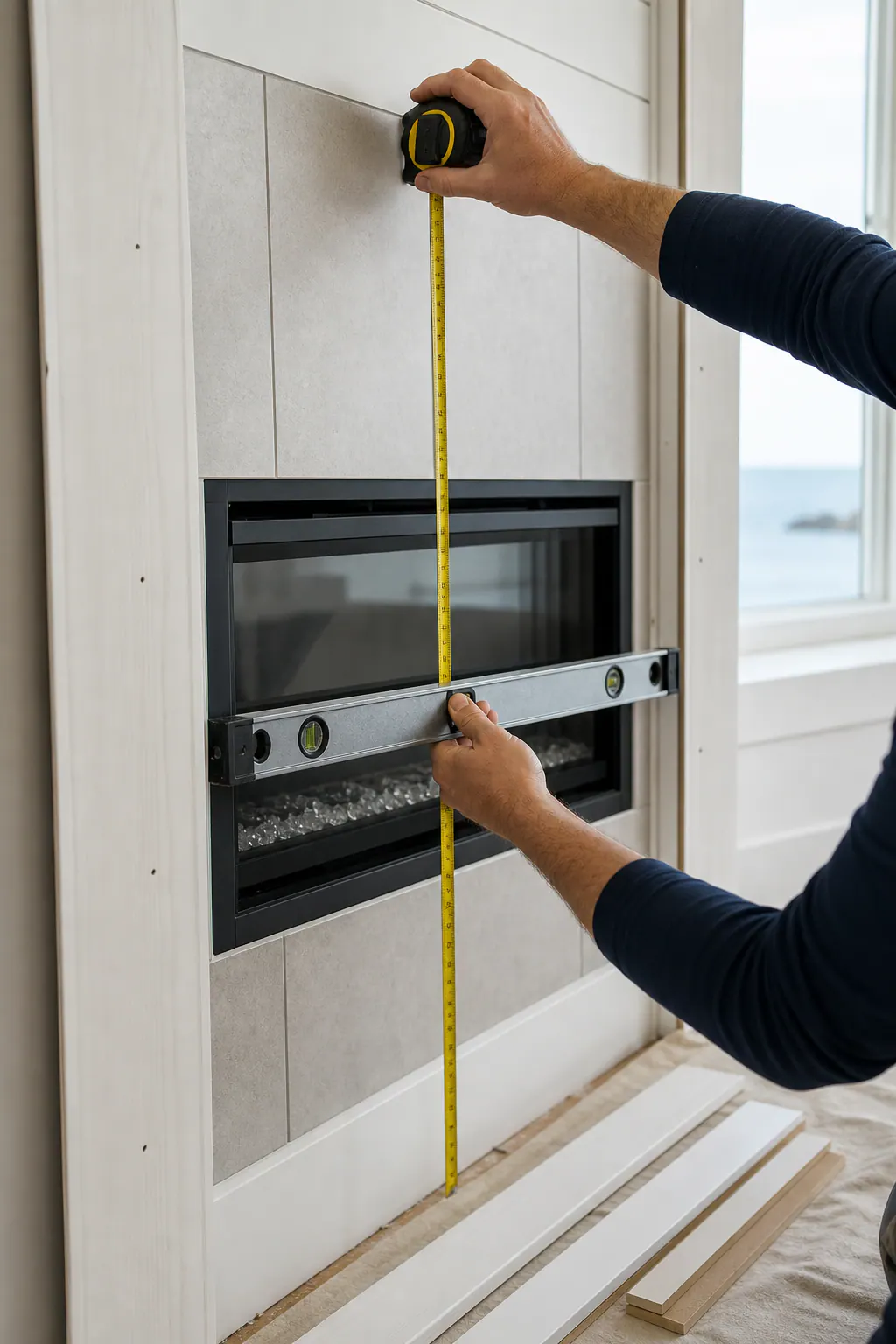
The fireplace itself also sets real design boundaries. Its model information, installation instructions, listing, and on-site configuration determine the permitted relationship between the appliance and surrounding framing, facing, and mantel materials. Heat clearance is not a universal dimension to apply from memory; it is a constraint that must be resolved for the particular unit before a wood shelf, painted trim profile, tile field, or built-out wall is finalized.
Installation planning coordinates the layers so each has a clean place to end. Framing creates a straight substrate for a bump-out or surround; tile or other facing is set to maintain even lines; then trim, shelf details, and caulked transitions are fitted around those finished surfaces. Consistent reveals, the intentional narrow gaps or shadow lines around panels and trim, keep a painted surround from looking crowded or uneven. A well-resolved transition also prevents the new work from appearing pasted onto the old wall.
- Consultation and measurement: define the desired visual weight and record the opening, wall, and adjoining-room conditions.
- Specification and selection review: align the chosen shelf, trim, facing, and framing approach with the fireplace's requirements and the intended finish.
- Preparation and installation: address wall repairs, backing, layout, and sequencing before fitting finish materials.
- Final finish review: inspect alignment, caulk lines, paint coverage, grout or tile edges, and transitions to adjacent walls for a complete appearance.
Project duration can vary with wall repair needs, tile preparation, custom fabrication, material lead times, and the overall scope. Building those variables into the plan helps the finished fireplace mantel Siesta Key homeowners envision retain its crisp lines from the first reveal through everyday use.
Plan a Fireplace Wall Upgrade That Fits Your Home
Bring the details that make the decision specific: the fireplace model information, wide and straight-on room photos, wall and opening measurements, a few inspiration images, and the finish colors or materials you prefer. Those items make it easier to distinguish a project that needs only a slim mantel shelf from one that benefits from a tailored surround, new tile or panel facing, or a larger coastal feature wall.
A shelf is the focused choice when the firebox already sits well on the wall and needs a stronger horizontal line. A surround adds more framing presence around the opening; refreshed facing changes the visible surface; and a feature wall is best reserved for a broad, underused wall that can carry added depth or built-ins without overwhelming the room. A favorite photo is useful, but its proportions should be adapted to your wall, furnishings, and fireplace requirements.
For fireplace mantels in Siesta Key, start a conversation with the existing conditions rather than a preset package. Share your priorities, painted trim, pale wood warmth, quiet tile, storage, or a cleaner television arrangement, and request an estimate shaped around the finish work and wall scope your home actually needs.
Plan the next step
Compare the broader Fireplace Mantels and Surrounds service.
Review the Siesta Key, FL service area for local planning context.
When you are ready, request a free estimate with the rooms, trim goals, city, and available photos.
FAQs
What is the difference between a fireplace mantel and a fireplace surround?
A mantel is the horizontal shelf above a fireplace opening, while a full mantel can also include vertical legs. A surround is the trim or facing immediately around the firebox, using materials such as flat stock, casing, panels, tile, or stone-look surfaces.
What fireplace mantel styles work best in Siesta Key coastal homes?
Coastal-contemporary homes typically suit restrained designs with clean edges, warm-white painted trim, pale wood-look details, soft mineral-toned tile, and simple square or gently eased profiles. Oversized reclaimed beams, heavy stone, and ornate moulding can overwhelm compact rooms or conflict with crisp cabinetry.
Can I add a mantel to an existing fireplace without replacing it?
Yes, a simple mantel shelf is a light-touch update that adds a finished horizontal line without changing a sound existing facing. New trim, tile, or a larger feature wall can also update the appearance while keeping the current firebox or insert in place.
How do fireplace heat clearances affect mantel and surround design?
Heat clearances are determined by the specific fireplace model, its installation instructions, listing requirements, and on-site configuration. If noncombustible materials are required near the opening, tile or stone-look facing may be needed and wood or painted shelves must begin outside the unit’s specified clearance zone.
Should I choose a mantel shelf, surround, new facing, or a fireplace feature wall?
Choose a shelf when the fireplace already fits the wall but needs more definition, and choose a surround when the opening needs a more finished frame. Select new tile or panel facing to change the visible surface, or use a feature wall with a bump-out or built-ins for a broad wall that can support added depth without crowding the room.