
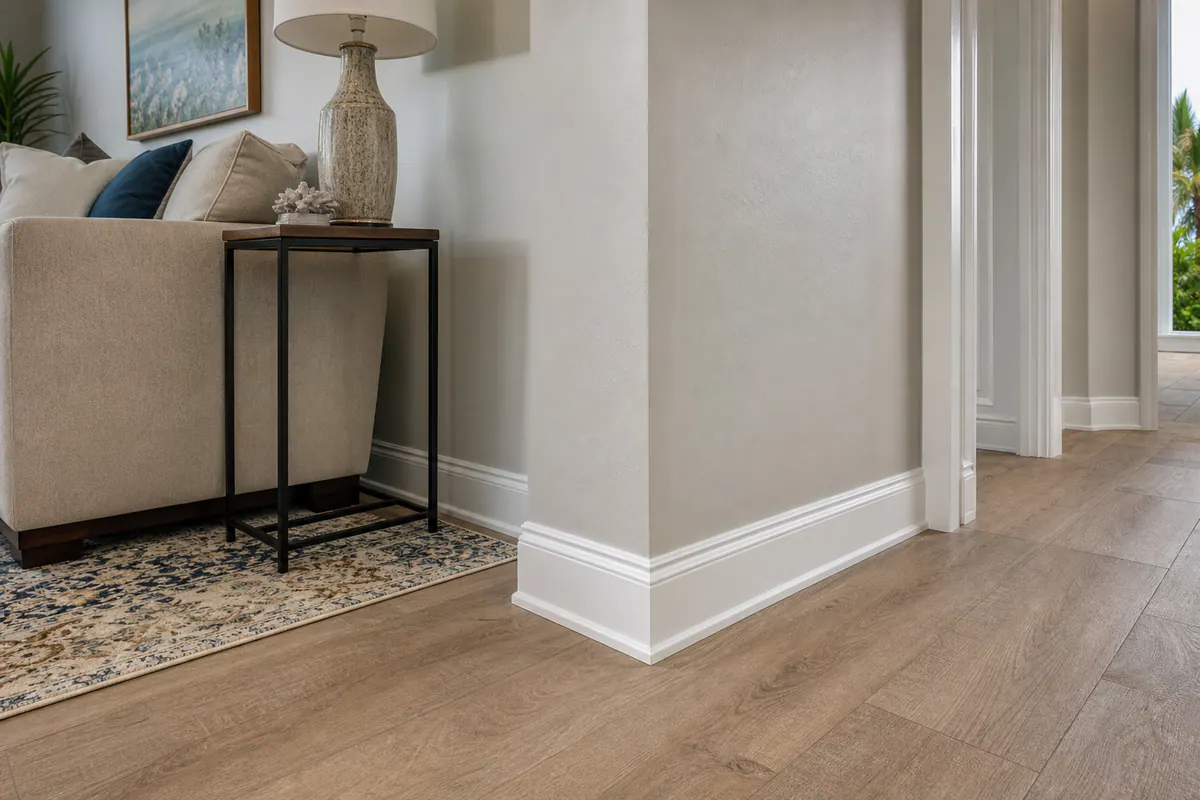
Trim Repair and Replacement for Englewood Homes
Interior trim is easy to overlook until a room starts to feel unfinished: chipped or dented baseboards, caulk lines that have pulled apart, swollen molding, pet claw marks or tooth damage, loose door casing, and a replacement piece that does not blend with the rest of the room. Trim repair in Englewood, FL focuses on these visible details around floors, doors, windows, and ceilings, not a broad remodel.
The best approach depends on what is damaged and why. A shallow dent, small scratch, isolated open joint, or loose section may be a repair issue when the trim itself remains sound. Puffed edges, soft areas, peeling paint near a prior leak, recurring gaps, or heavily chewed sections can point toward replacement, especially when a patch would leave an uneven profile or a hard-to-clean finish. Baseboards, shoe molding, door casing, window trim, and decorative molding each need to match the surrounding height, shape, and paint finish for the repair to disappear into the room.
Moisture changes the decision. Before repairing or replacing water-affected trim, any active leak, flooding condition, or persistent moisture source should be corrected so new finish work is not exposed to the same problem. Material also matters: painted wood, MDF, and moisture-tolerant trim options can create different appearance and durability tradeoffs depending on the location and exposure.
When Interior Trim Can Be Repaired and When It Should Be Replaced
A useful dividing line is whether the damage is on the surface or has changed the trim itself. Isolated nail holes, shallow dents, light claw marks, small tooth marks, cracked caulk, and a single open joint are usually surface-level problems. When the profile is still firm and intact, trim repair can involve filling the imperfection, resetting a loose piece, sanding the repair smooth, recaulking the edge, and repainting so the line looks continuous again. This is often the sensible scope for baseboard repair in Englewood, FL when damage is limited to one small area.
Replacement becomes the stronger option when a patch cannot restore a straight, solid, clean-looking surface. Swollen MDF, soft or crumbly edges, peeling layers, delamination, rot, broad warping, or damage that returns after previous touchups suggests the material has failed beyond its finish. Repeated water exposure matters more than one dry, isolated spill: if paint has lifted near a leak or the baseboard remains distorted after drying, the moisture source needs to be addressed before new trim is installed. In Englewood's warm, humid conditions, replacing compromised material rather than coating over it can provide a more dependable finished appearance.
Replacing a section means removing only the visibly failed length and tying a matching new piece into sound trim on either side. It can be a practical choice when the same height, thickness, profile, and paint finish can blend cleanly. Replacing a full run, the uninterrupted length along a wall, often makes more sense when damage appears in several places, the existing profile is difficult to match, or seams would land in conspicuous locations. A room-wide interior trim replacement may be appropriate when multiple runs are mismatched or deteriorated, but it is not automatically necessary for one damaged baseboard.
For pet damage, depth is the checkpoint. A few shallow scratches can disappear under filler and paint; chewed corners or gouges that erase the molding shape generally need a new section. The goal is not simply to cover damage, but to leave baseboards and molding with crisp edges, even joints, and a finish that looks intentional from across the room.
Common Causes of Baseboard and Molding Damage in Englewood Homes
Damage often reveals the event that caused it. Scuffs at the lower edge of a baseboard commonly follow vacuum contact, shoes, toys, or furniture being moved against the wall; a single dented stretch behind a chair is different from wear scattered throughout a busy room. Aging paint and caulk can also leave cracked joints or thin, separated lines where trim meets the wall, making an otherwise sound installation look neglected.
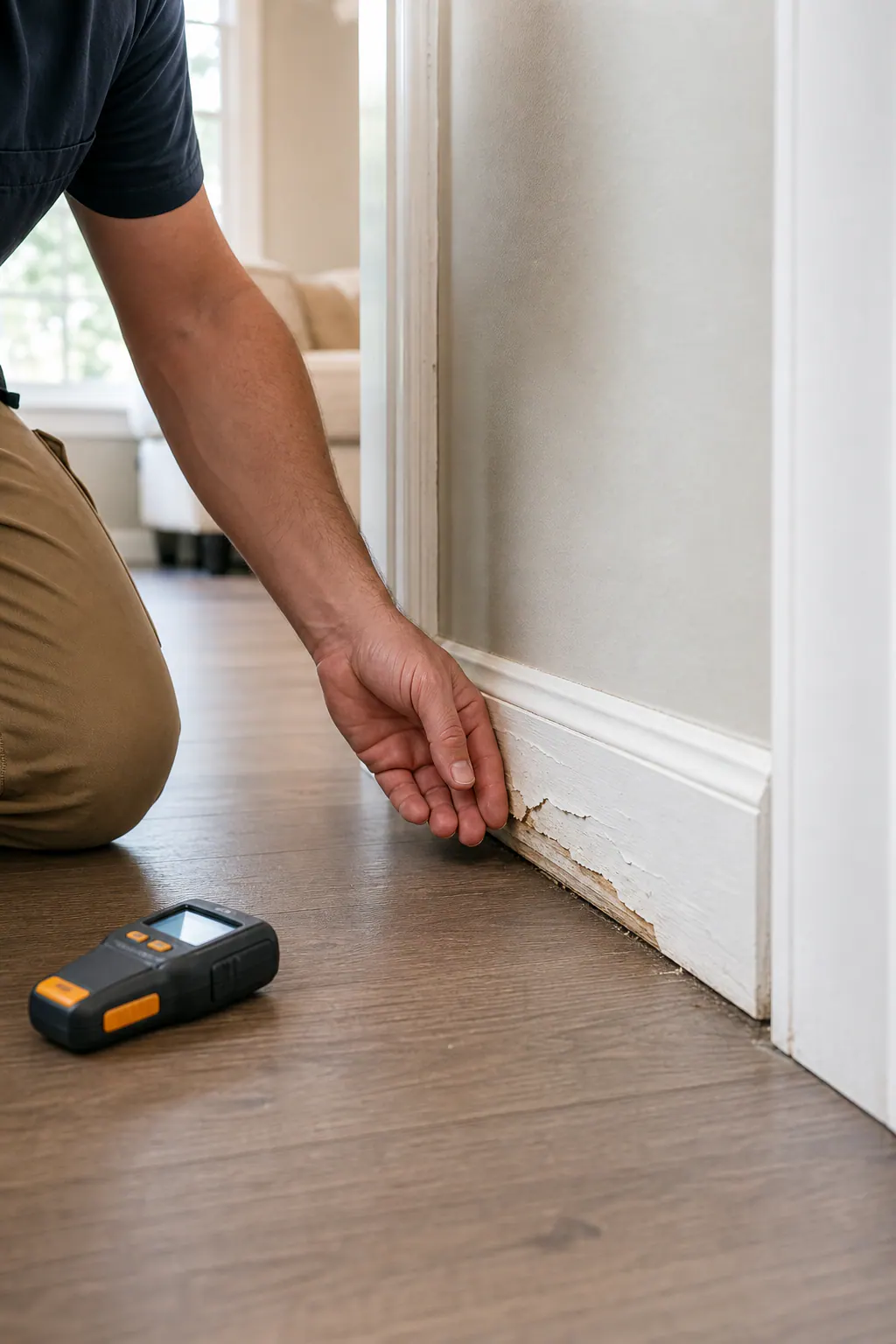
Pets create a similarly useful pattern. Claw marks concentrated beside one doorway or a chewed baseboard corner near a favorite resting spot may allow a contained pet damaged trim repair. Deep tooth damage along several walls, however, can leave repeated breaks in the profile and make pieced-in repairs conspicuous. The practical aim is to restore consistent edges and lines, rather than leave a room with several visibly patched sections.
Moisture deserves closer attention in Englewood's warm, humid setting. Wet mopping, plumbing leaks, spills, and persistently damp conditions can leave staining, peeling paint, puffed edges, soft spots, warping, or seams that keep reopening. Humidity may contribute to minor joint movement, while direct or repeated wetting is more likely to affect vulnerable trim materials. Water damaged baseboard repair should begin by resolving the active leak or moisture condition; new trim will not correct the source. Once the area is dry and the cause has been addressed, one affected length may be removable and replaceable, while staining or distortion across multiple walls can point to a broader scope of damaged molding repair in Englewood.
Choosing Replacement Trim for Florida Humidity and Everyday Use
The replacement piece should suit both the profile already in the home and the conditions at that particular wall. A tall baseboard, small shoe molding or quarter round at the floor, door casing, window trim, and crown molding do not all face the same bumps, cleaning, or moisture exposure. For baseboard replacement in Englewood, FL, the most convincing result is usually one that keeps the room's existing proportions while choosing a material that makes sense for the location.
Painted wood remains a flexible choice when a natural wood profile, crisp machined detail, or easy custom shaping matters. It can work well for casing, window trim, and crown molding in dry interior areas, and paint can create a polished finish. MDF is a smooth, engineered fiberboard option often selected for painted trim because its face finishes evenly and many common profiles are available. Its limitation is water exposure: a puffed lower edge, softened corner, or separating layers are signs that an MDF piece has been affected beyond a simple paint touch-up.
PVC trim is a plastic-based option that is useful where repeated dampness is a concern, such as near a bathroom, kitchen, exterior entry, slab edge, or a location with a resolved leak history. It can provide a practical moisture-tolerant choice for moisture resistant baseboards, although its profile selection and feel may differ from the woodwork elsewhere in the home. Composite trim offers another manufactured alternative, with product lines that vary in profile detail, density, cutting behavior, and intended use. It can be a worthwhile middle ground when a homeowner wants a painted finish with more resilience than standard MDF in a higher-exposure area.
The right choice is not automatically the most water-tolerant material throughout every room. A dry bedroom may call for a close visual match to existing painted wood or MDF, while a bathroom perimeter may benefit from a different replacement material that can still be painted to blend. Trim replacement in Englewood, FL should account for the room, the trim's exposure, the existing style, and whether the moisture condition that damaged the original section has actually been corrected.
Matching Existing Baseboards, Molding, and Paint Finishes
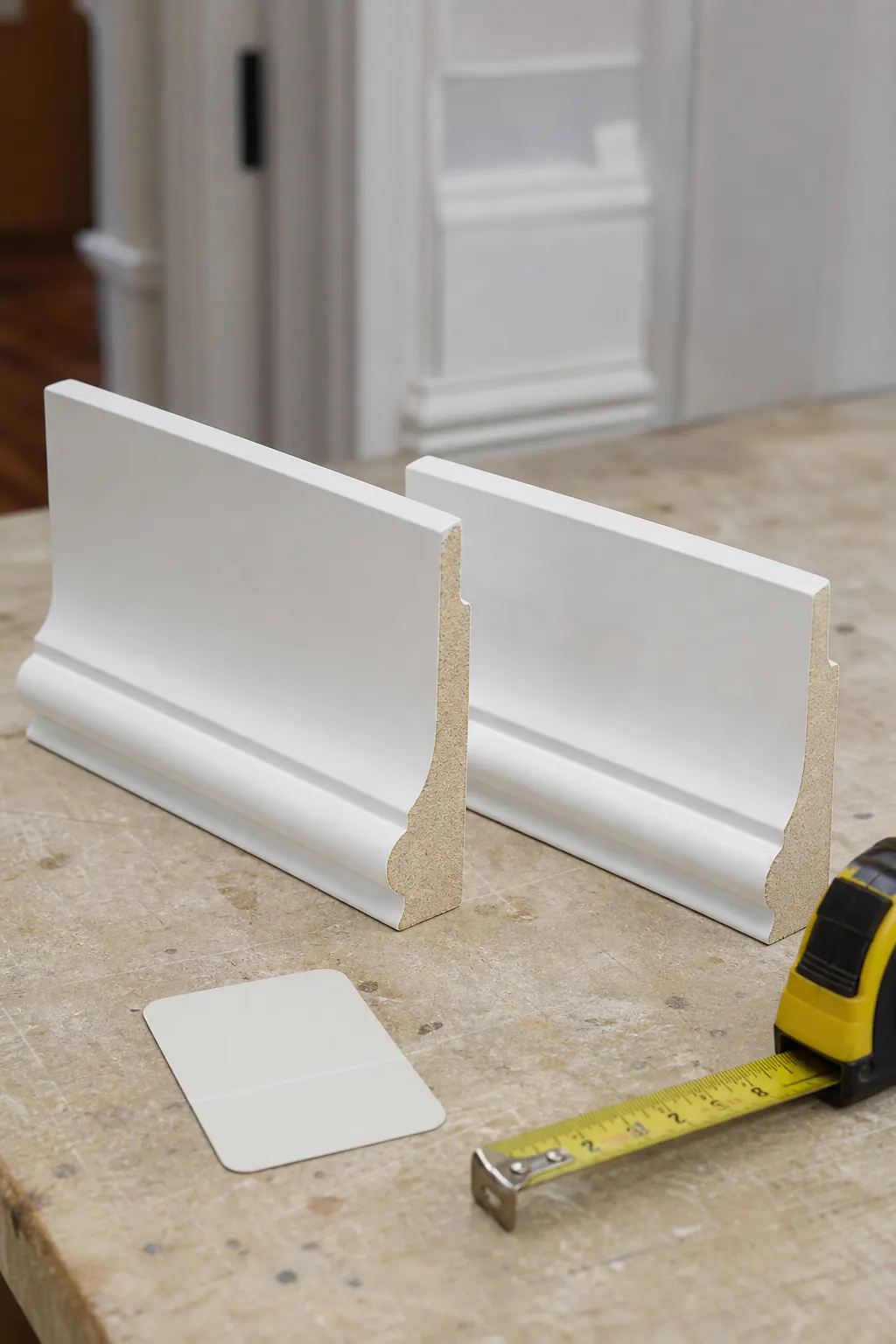
Profile is the first checkpoint when new trim meets old. The curved or stepped face shape of a baseboard needs to align with the existing piece, but height, thickness, top-edge detail, and setback from the wall matter too; a piece that is close in color but thinner or shorter can still look added later. The small floor-edge molding should also continue at the same size and position rather than ending abruptly beside a replacement.
Door casing deserves the same attention. A narrow replacement beside wider existing casing can make a doorway look off-center, and mismatched edge beads or square edges become especially noticeable where casing meets baseboard. Clean transitions at inside corners, outside corners, and doorways help the room retain a continuous visual line.
When removal is planned, saving a short undamaged offcut is useful for matching. A sample shows the exact face profile and thickness better than a photo alone; photos of the full wall, corner returns, doorway transitions, and trim height add useful context. This matters in older homes, where a molding profile may no longer be stocked and a near match can look noticeably different once installed.
A small filled dent, nail hole, or shallow pet scratch can often disappear after careful sanding, priming, and paint blending. The better signal is a smooth surface with the original edge shape still intact. If a replacement profile is only close, not exact, or a patch would interrupt a long, prominent wall, replacing a longer run to a natural corner or doorway usually creates the cleaner result.
Paint is the final unifier. Matching sheen matters as much as matching white: a glossy patch beside satin-painted trim can stand out even when the color is similar. A molding repair service can blend repaired areas by feathering the surface and coating the connected trim section when needed, leaving baseboards, casing, and molding with a consistent finished appearance.
What a Careful Trim Repair or Replacement Process Includes
The final coat only looks right when the work underneath has been handled in the right order. A careful visit begins by looking at the damage, the surrounding wall, and any moisture history. Soft baseboard edges, peeling paint near an earlier leak, or gaps that repeatedly reopen call for the underlying condition to be addressed before new trim or finish work is applied.
- Floors, nearby walls, and adjacent finishes are protected before repair begins. Sound trim may be resecured or repaired in place; failed pieces are removed without needlessly disturbing the surrounding run.
- The exposed area is prepared for a stable fit. That can include cleaning away old caulk, dealing with loose fasteners, and smoothing damaged drywall edges so the replacement section sits straight rather than following an uneven surface.
- New or reset trim is aligned with the existing profile and attached securely. Tight joints at corners, door casing transitions, and splice points prevent a repaired area from looking like an add-on.
- Fastener holes, small seams, and repair areas are filled and sanded until they feel smooth. Caulk is applied at appropriate wall-to-trim transitions to create a finished line, not to conceal a loose piece or wide gap.
- Primer, touch-up paint, or a broader repaint is used to blend the work with connected trim. Consistent color and sheen help the finished repair disappear into the room.
For trim replacement in Englewood, the visible quality is in these details as much as in the new material itself: straight runs, secure attachment, clean joints, smooth filler, and even paint transitions.
Get Help Restoring Damaged Trim in Your Englewood Home
Bring the visible problem into the conversation: a photo of the affected baseboard or molding, the room it is in, the trim material if known, and whether there has been a leak, wet mopping, or repeated dampness can help frame an evaluation.
For trim repair in Englewood, FL, sound pieces with shallow scratches, small dents, cracked caulk, or minor pet marks may be worth restoring when they can again hold a smooth, durable painted finish. Puffed or soft edges, deep chewed corners, warped lengths, and sections that no longer match the profile usually call for replacement instead.
Share whether the goal is to blend one damaged section into an existing run or update worn trim more broadly. Replacement can be selected to match the room's profile and finish while considering where humidity or water exposure has occurred. If moisture is still active or the surrounding wall shows broader damage, that cause should be addressed before new trim is installed. Request help with trim replacement in Englewood, FL to bring baseboards, casing, and molding back to a clean, cohesive finish.
Plan the next step
Compare the broader Trim Repair and Replacement service.
Review the Englewood, FL service area for local planning context.
When you are ready, request a free estimate with the rooms, trim goals, city, and available photos.
FAQs
What is the difference between repairing a damaged baseboard and replacing it?
Repair is appropriate for surface-level damage such as nail holes, shallow dents, light pet scratches, cracked caulk, or one loose joint when the trim profile is still firm and intact. Replacement is needed when trim is swollen, soft, warped, delaminated, rotted, or too deeply damaged to restore a straight, clean profile.
Can pet-chewed baseboards be repaired without replacing the whole room?
Shallow claw marks, scratches, and small tooth marks can often be filled, sanded, primed, and repainted. Deep chewing that removes the molding shape or damages corners usually requires replacing the affected section, not the entire room.
What type of trim holds up best in Florida humidity?
PVC trim is a moisture-tolerant option for damp-prone areas such as bathrooms, kitchens, exterior entries, slab edges, and locations with a resolved leak history. Painted wood works well in dry interior areas, while standard MDF is vulnerable to water exposure and can develop puffed edges, soft corners, and separating layers.
How do you match new trim to existing molding in an older Englewood home?
Match the existing trim’s face profile, height, thickness, top-edge detail, wall setback, and paint sheen. Save a short undamaged offcut when possible, because it shows the exact profile and thickness better than a photo, especially when older molding is no longer stocked.
Should I replace MDF trim after a plumbing leak?
Replace MDF trim if it has puffed lower edges, softened corners, peeling layers, swelling, or distortion after drying. The plumbing leak or moisture source must be corrected before installing new trim, because new material will fail if repeated wetting continues.